
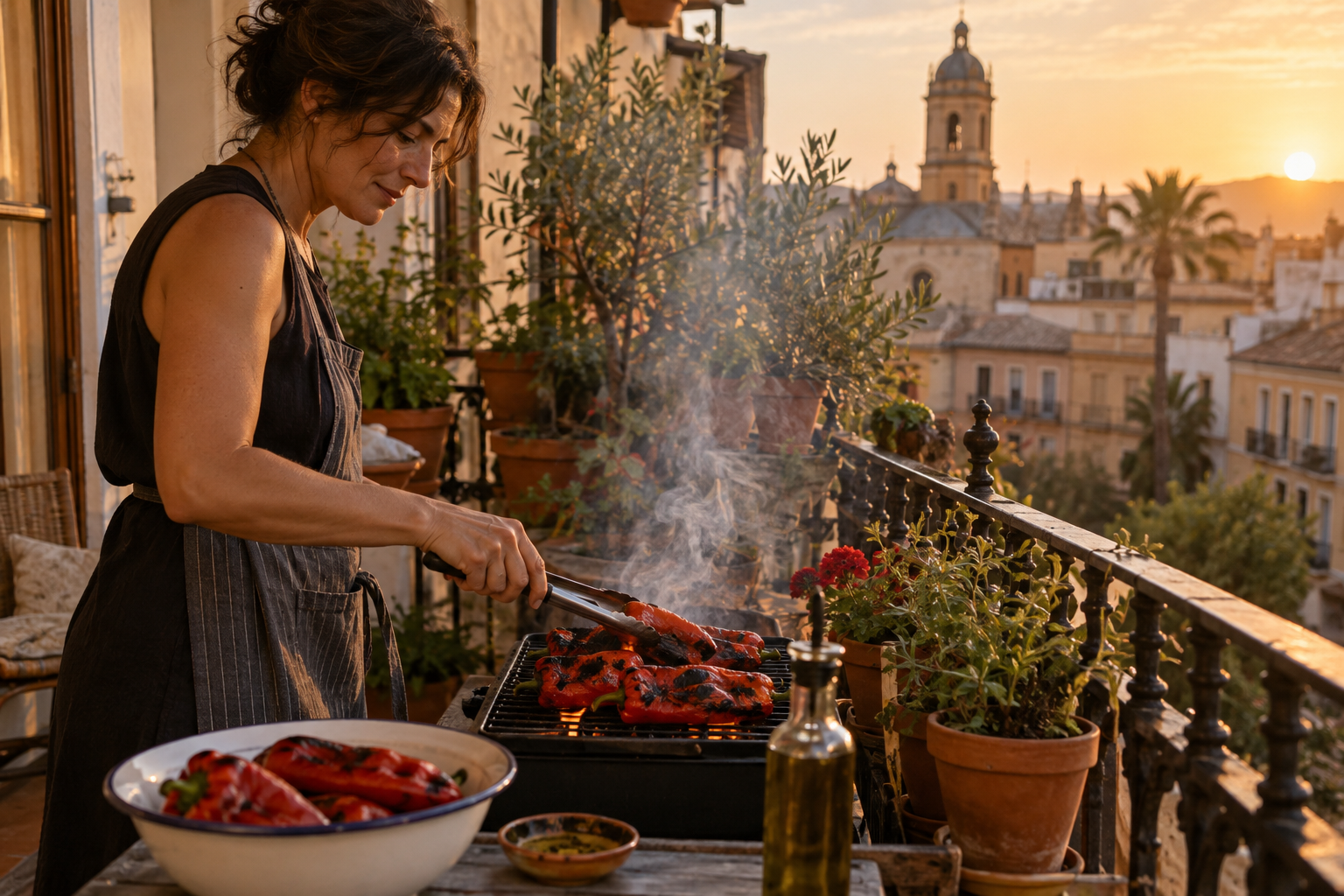
Walk through a Spanish town in September and you will notice something in the air, a sweet, smoky, unmistakable smell drifting from windows and balconies and courtyards. It is the unmistakable smell of roasting peppers, and for a few weeks each autumn it seems to fill the whole country entirely, because this is the season when Spaniards char, peel, and preserve peppers in one of the most beloved and enduring rituals of the Spanish kitchen. Nowhere else does a single vegetable so completely take over the senses of a nation for a few short weeks. When the peppers come in at the end of summer, cheap and plentiful and perfectly ripe, families all across Spain fire up their grills, ovens, and open flames to blister them black, then patiently peel them and pack them in olive oil, capturing the taste of summer to carry them through the cold months ahead. It is part cooking, part tradition, and part small act of community, and once you understand it, you may very well want to do it yourself at home. It is also, happily, one of the easiest and most rewarding pieces of traditional cooking a curious home cook can take on, needing nothing more than peppers, a flame, and a little patience.
What follows is what the ritual actually is, why Spaniards do it every autumn, the simple technique that turns a raw pepper into something sublime, and how to bring a little of it into your own kitchen. It is one of those small seasonal traditions that, once you know it, makes autumn a little richer.
A Smell That Means Autumn
In Spain, the smell of charring peppers is as much a signal of the changing season as falling leaves are elsewhere, a sensory marker that summer is ending and autumn has arrived. For a few weeks in September and October, when the pepper harvest peaks, that smoky aroma becomes the background scent of daily life, seeping out of kitchens and hovering over neighborhoods. Ask any Spaniard and they will tell you it is one of the defining smells of the year, instantly evocative, tied to childhood and home and the turning of the seasons. It ranks alongside the smell of the first rain on hot ground or of oranges in winter as one of those scents that quietly mark the Spanish calendar. A smell like that does more than announce a season, it carries memory with it, so that a single breath of charring peppers can take a grown Spaniard straight back to their grandmother’s kitchen on an autumn afternoon.
The reason it happens all at once is simple seasonality, the whole country responding to the same harvest at the same moment. Peppers ripen in late summer and early autumn, and for a brief window they are everywhere, abundant and inexpensive and at the very peak of their flavor. Rather than let that bounty pass, Spaniards seize it, roasting great quantities of peppers while they are cheap and good and good, so that the smell of the ritual is really the smell of a whole country making the most of the season. It is the aroma of thrift and abundance at once, of people refusing to waste the best the year has to offer. There is real wisdom in that instinct, the old, sensible habit of catching a good thing at its peak and keeping it for later, rather than letting the harvest come and go and buying pale, out-of-season versions in December.
Why They Do It
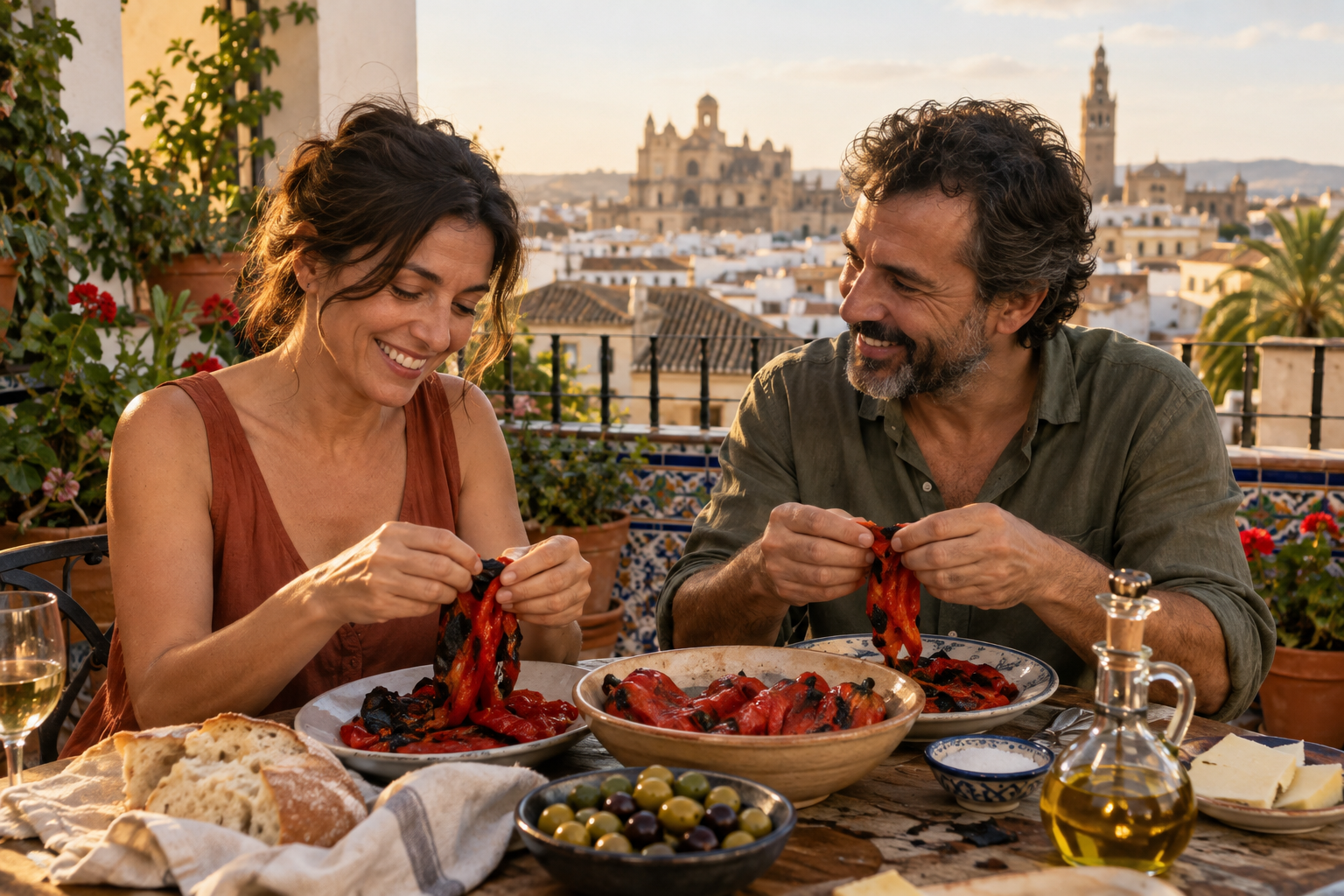
At its heart, this autumn ritual is about preservation, about capturing the flavor of peak-season peppers to enjoy long after the peppers themselves are gone. Once a pepper has been roasted, peeled, and submerged in olive oil, it will keep for months, so a few busy afternoons in September can stock a larder with jars of soft, smoky, sweet roasted peppers to draw on all winter long. It is remarkable how much a single day’s work can yield, a whole shelf of jars that will quietly improve dozens of meals over the months to come, each one a little taste of the autumn they were made in. In a country with a deep tradition of preserving the harvest, this is simply the pepper’s turn, the same instinct that fills Spanish pantries with cured meats and preserved vegetables applied to the autumn glut. A well-stocked Spanish larder is a record of the whole year’s seasons, each preserved at its best, and the roasted peppers of September take their place beside the hams and the oils and the tinned tomatoes as one more way of holding onto a good thing. To open such a cupboard in midwinter is to see the year laid out in jars, and the peppers are among its brightest, most cheerful contents, a little burst of red and gold against the grey days outside.
But it is not only practical, because roasting transforms the pepper into something far better than it was raw. The char of the flame does two things at once, cooking the flesh until it turns meltingly soft and sweet, and lending it a deep, smoky flavor that a raw pepper simply does not have.
A roasted, peeled pepper dressed in good oil is a different creature entirely from the crisp raw vegetable, silky and rich and intensely flavored, one of the great simple pleasures of Spanish food. The fire concentrates the pepper’s natural sugars and adds a savory, smoky depth, so that what was merely refreshing becomes deeply, satisfyingly delicious, the sort of thing you find yourself eating far more of than you intended. So the ritual is both sensible and delicious, a way to store the harvest that also happens to produce something wonderful. That double payoff, practical and pleasurable at once, is a hallmark of the best traditional cooking, where the thrifty thing and the delicious thing so often turn out to be the very same thing.
The Communal Side of It
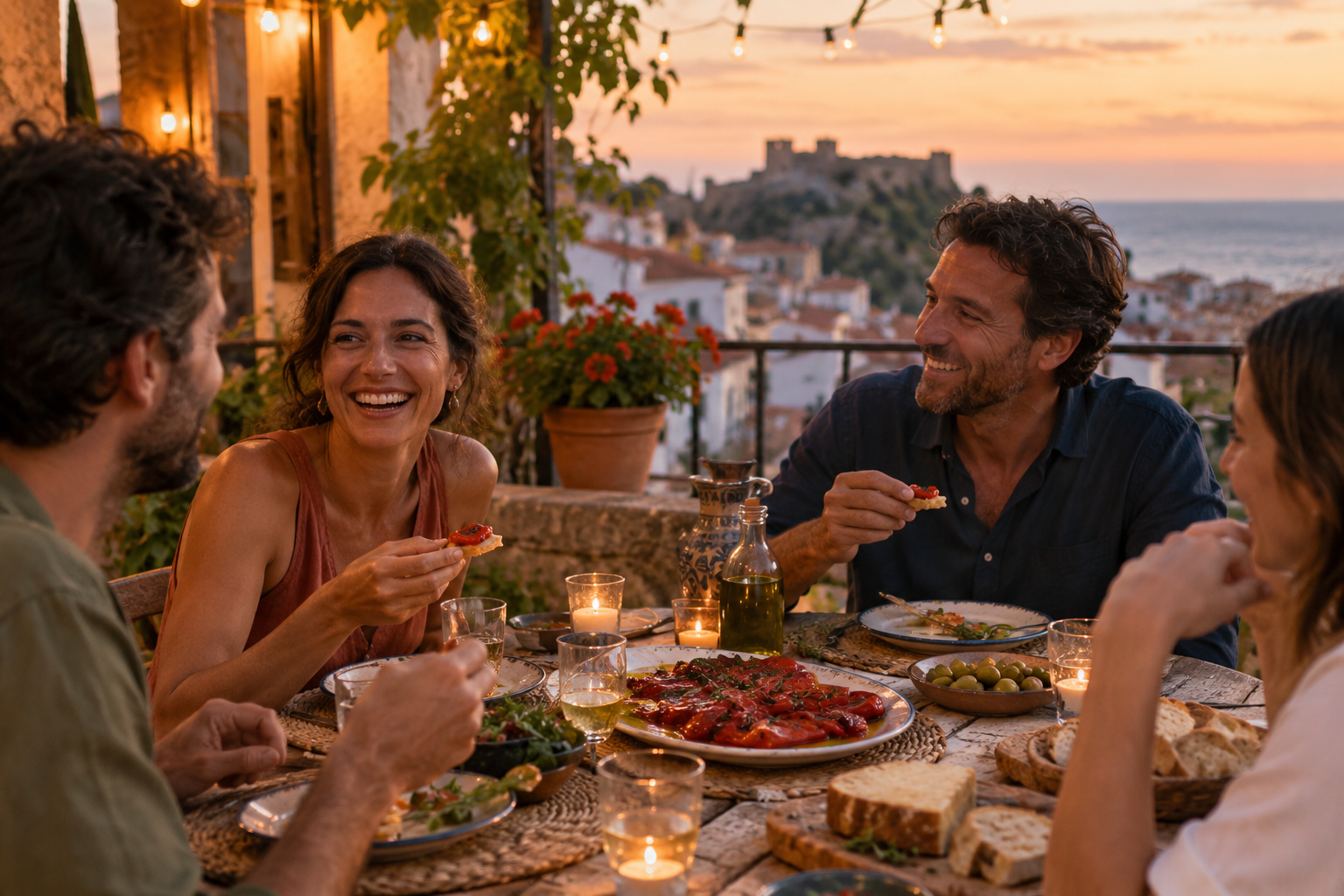
There is a lovely social dimension to the pepper ritual that is easy to miss, because in many places it is not a solitary task but a shared one. In pepper-growing regions especially, families and neighbors have traditionally gathered to roast their peppers together, sometimes over a communal fire in the street or courtyard, turning what could be a chore into an occasion. What might be tedious done alone becomes convivial done together, and the sheer volume that needs peeling makes many hands genuinely welcome rather than merely pleasant. Great quantities of peppers are roasted at once, the work of peeling shared among many hands, and the results divided up, so that the ritual becomes a small annual gathering as much as a cooking task. There is chatter and laughter over the blackened trays, older hands showing younger ones how to peel without losing the juice, and by the end everyone goes home with jars enough to last the winter and the memory of an afternoon well spent.
This communal aspect is part of what has kept the tradition so alive and so cherished.
It ties the roasting of peppers to family and neighborhood and the rhythm of the year, making it not just something you do but something you do together, a marker of belonging to a place and a community. Even where it has become a more private, kitchen-bound affair, that spirit lingers, the sense that preserving the harvest is a shared inheritance passed down through generations. A young Spaniard roasting peppers alone in a city apartment is still, in a small way, repeating a gesture their grandparents made, keeping alive a thread that runs back through the whole family and the whole country. The peppers taste of the season, but they also taste, in a way, of togetherness, of the afternoon and the company in which they were made. That is the thing a jar bought in a shop can never quite capture, the memory of the afternoon it was made, the hands that peeled it, the people who gathered to do the work, all folded invisibly into the flavor.
The Technique, Step by Step
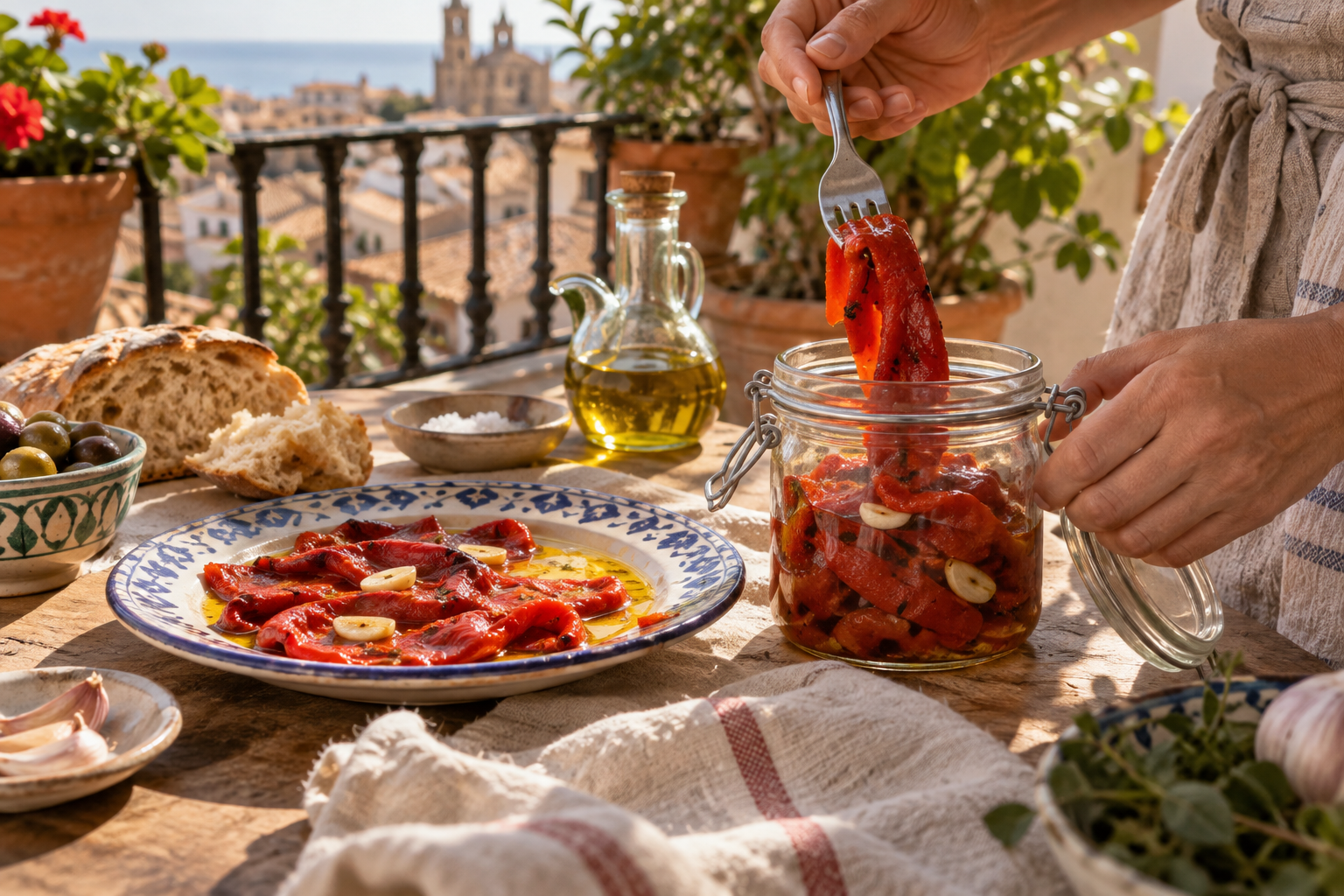
The method behind the ritual is beautifully simple, and once you know it, you can do it anywhere with a flame or a hot oven. The first step is the char: you cook whole peppers directly over a strong heat, on a grill, over a gas flame, or under a hot broiler in the oven, turning them until the skin is blistered and blackened all over. Red peppers are the classic choice, sweeter and meatier than green, and the fleshier the pepper the better it holds up to the fire. This is not burning the pepper but scorching its skin while the flesh inside softens, and the blacker and more evenly charred the skin, the easier the next step and the smokier the flavor. The distinction matters, since a nervous cook who pulls the peppers off too soon, their skins still patchy and pale, will struggle to peel them and miss out on the smoke that is half the point.
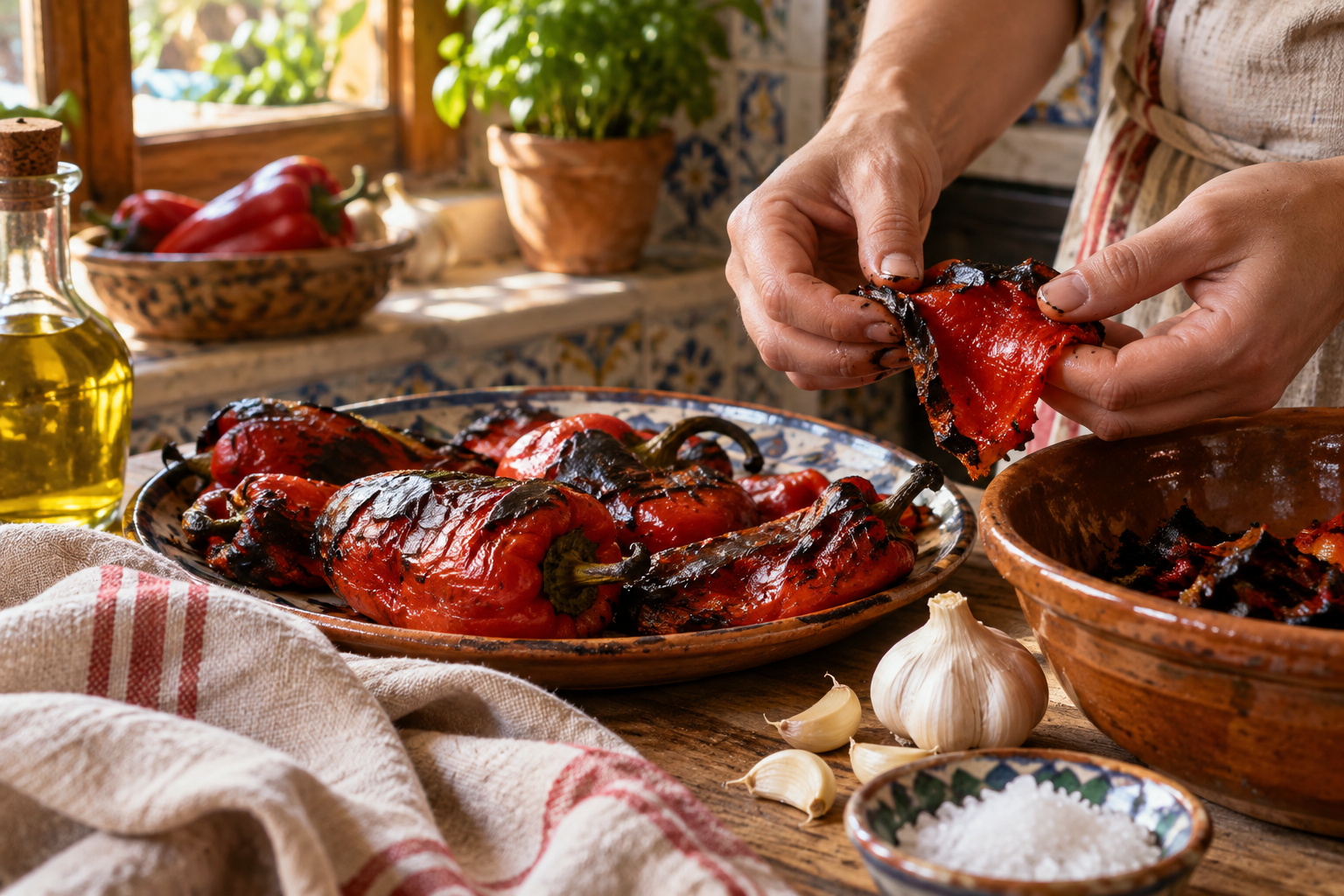
Then comes the trick that makes peeling easy. As soon as the peppers are charred, you put them in a bowl and cover it tightly, or seal them in a bag, and leave them to steam in their own heat for ten or twenty minutes.
This resting step is quietly essential, and skipping it makes the whole job far harder, since the trapped heat and moisture work between the skin and the flesh to loosen the one from the other while you get on with something else. This steaming loosens the burnt skin from the flesh, so that once the peppers have cooled enough to handle, the blackened skin slips off easily with your fingers. Crucially, you do not rinse them under water to remove the skin, tempting as it is, because water washes away the precious smoky flavor and the sweet juices, so you peel by hand and let any stray flecks of char remain. This is the one rule the Spanish are firm about, and the reason a home-roasted pepper tastes so much better than a bland, waterlogged supermarket one, since every drop of that dark, sweet liquid is flavor you do not want to lose down the drain.
The Many Faces of a Roasted Pepper
The basic ritual of charring and peeling peppers is the foundation for a whole family of beloved Spanish dishes, which is part of why it is so deeply woven into the country’s cooking. In Catalonia, roasted peppers join roasted eggplant, onions, and sometimes tomatoes in escalivada, a smoky, silky dish of charred vegetables torn into strips and dressed with olive oil, one of the great tapas of the region. The word comes from a Catalan verb meaning to cook in embers, a reminder of the ritual’s roots in the open fire. Long before ovens and gas hobs, this was food cooked in the dying coals of a hearth, and something of that ancient, smoky simplicity survives in every plate of it made today.
Elsewhere the peppers take other famous forms. In Navarra, a particular variety is wood-roasted and hand-peeled into the celebrated piquillo peppers, small, sweet, triangular, and prized enough to carry a protected regional status, sold in tins and often stuffed or served with cheese. In the central region of La Mancha, roasted peppers and tomatoes are combined into asadillo, dressed with cumin and oil, a humble dish from a humble land that tastes far grander than its handful of ingredients would suggest. Each of these is a local expression of the same essential act, the charring, peeling, and dressing of peppers, and together they show how one humble technique, repeated across a country, becomes a whole tradition of dishes, each region making the ritual its own.
Dressing and Keeping Them
Once peeled, the peppers are torn or cut into strips, their seeds removed, and any juices that have collected carefully saved, because that liquid is pure flavor and belongs back with the peppers. Tearing rather than slicing them is traditional and, some insist, better, giving rough edges that hold the dressing and a rustic look that suits the dish. Then they are dressed, simply and classically, with a good glug of extra-virgin olive oil, a little minced garlic, and a sprinkle of salt, and perhaps a splash of sherry vinegar for brightness. That is all a great plate of Spanish roasted peppers needs, the smoky sweet flesh, good oil, garlic, and salt, and it is one of the most satisfying tapas there is, wonderful piled onto bread. There is no need to gild it further, since the pepper, transformed by fire and dressed with a little care, is already close to perfect, and the restraint of the dressing is part of what makes it feel so purely, honestly Spanish.
To keep them for the winter, which is the whole point of the September ritual, you simply pack the peeled peppers and their reserved juices into clean jars, cover them completely with olive oil to seal out the air, and store them cool, where they will keep for weeks or months.
A jar of these in the cupboard is a small treasure, ready to be spooned over toast, tucked into a sandwich, laid over grilled meat or fish, stirred into a stew, or eaten straight from the jar. Few pantry staples are so versatile or so instantly transformative, able to lift the plainest piece of chicken or the simplest slice of bread into something that tastes of Spain and sunshine. Having done the work in autumn, you get to taste the best of the Spanish summer all through the grey months, which is exactly why, every September, the whole country fills the air with smoke. There is a deep satisfaction in opening a jar of your own roasted peppers in the depths of winter, a small edible memory of warmer days, and in knowing you made it yourself from the season’s cheapest, finest fruit.
Making Spanish Roasted Peppers
Here is the ritual as a recipe, enough for a generous tapa or a couple of small jars to keep.
Ingredients
- 6 large red bell peppers, whole, or a mix of red and yellow
- 3 tablespoons extra-virgin olive oil, plus more for storing
- 1 to 2 cloves garlic, finely minced
- 1 teaspoon sherry vinegar, optional, for brightness
- Flaky salt, to taste
Instructions
- Char the whole peppers over a strong heat, on a grill, directly over a gas flame, or under a hot broiler, turning them until the skin is blistered and blackened all over. Do not be timid, since you want them evenly black.
- Transfer the charred peppers to a bowl, cover it tightly or seal them in a bag, and leave them to steam in their own heat for 10 to 20 minutes, which loosens the skins.
- Once they are cool enough to handle, peel the blackened skin off with your fingers. Do not rinse them under water, which washes away the smoky flavor and the sweet juices, and let any stray flecks of char remain.
- Tear or cut the peppers into strips, discarding the stems and seeds, and save any juices that collect, since that liquid is pure flavor.
- Dress the strips with the olive oil, the minced garlic, a good pinch of salt, and the sherry vinegar if using, along with the reserved juices. Serve at room temperature, wonderful piled onto bread.
- To keep them, pack the peppers and their juices into clean jars, cover completely with olive oil to seal out the air, and store somewhere cool, where they will keep for weeks.

About the Author: Ruben, co-founder of Gamintraveler.com since 2014, is a seasoned traveler from Spain who has explored over 100 countries since 2009. Known for his extensive travel adventures across South America, Europe, the US, Australia, New Zealand, Asia, and Africa, Ruben combines his passion for adventurous yet sustainable living with his love for cycling, highlighted by his remarkable 5-month bicycle journey from Spain to Norway. He currently resides in Spain, where he continues sharing his travel experiences with his partner, Rachel, and their son, Han.