
Look at where your olive oil lives right now. If it is a pretty bottle sitting on the counter next to the stove, in the clear glass it came in, cap loosely on, catching the afternoon light through the window, then you are, with the best intentions, slowly ruining it. Olive oil is a living, perishable thing, far more delicate than most people realize, and the three most common places and ways we store it are exactly the three things that destroy it fastest. An Italian, or anyone who cooks with really good oil, can taste the difference immediately, because badly stored oil turns flat, stale, and eventually rancid, losing the fresh, peppery, fruity character that made it worth buying. The good news is that fixing it costs nothing and takes about a minute, once you know the three simple rules. You do not need to buy anything or change your cooking at all, only to move a bottle and remember to cap it, and your oil will reward you by staying fresh and delicious for far longer.
What follows is the three enemies that ruin olive oil, the three easy fixes that protect it, and how to tell whether the bottle you already have has gone off. None of it is complicated, and all of it is worth knowing. By the end you will look at that bottle by the stove a little differently, and you will probably move it before you finish reading.
The Three Enemies
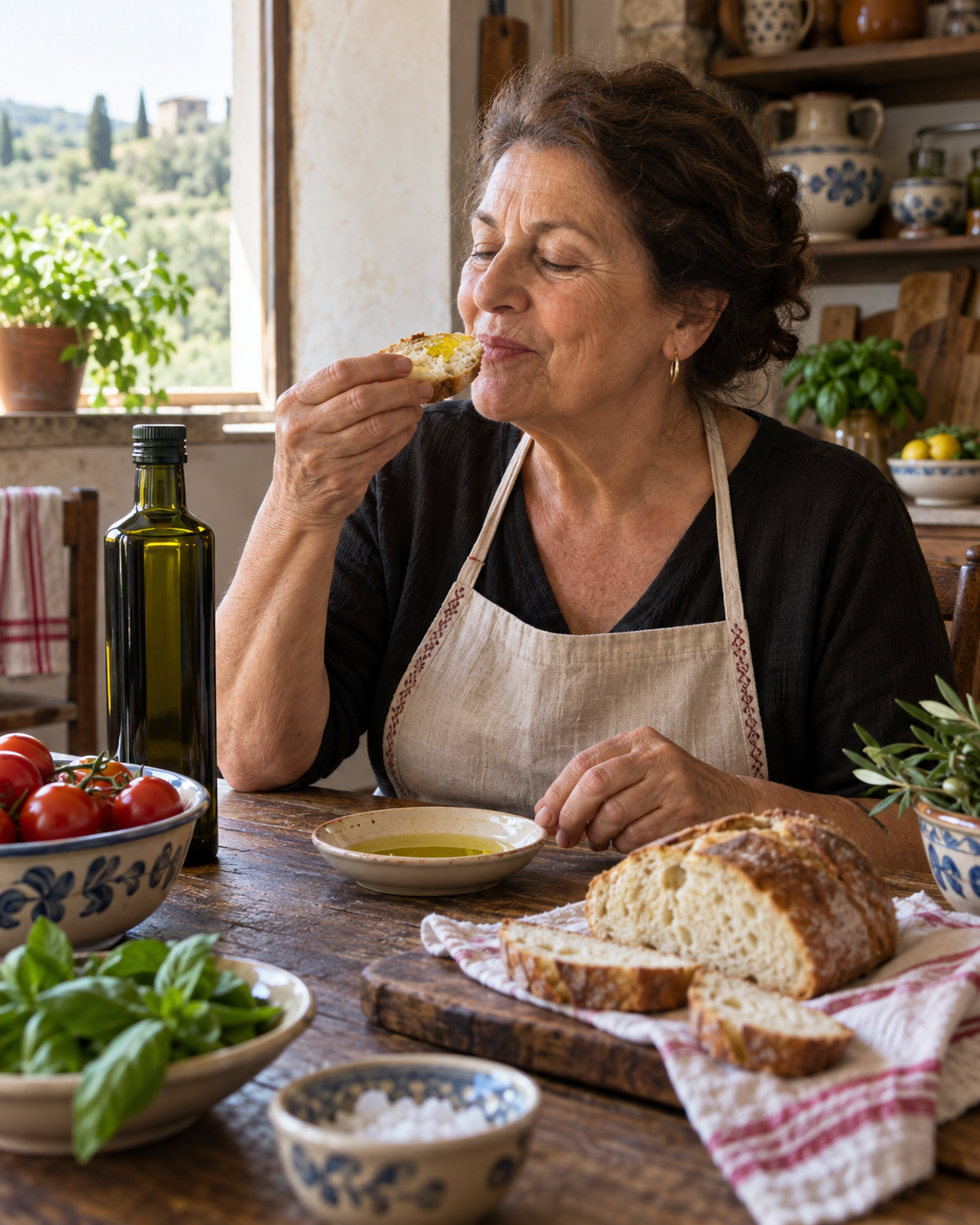
To store olive oil properly, you first have to know what you are protecting it from, and helpfully, the answer is short. Olive oil has three great enemies, and they are heat, light, and air. Each one speeds up a chemical process called oxidation, which is the gradual breakdown of the oil that dulls its flavor, destroys its beneficial antioxidants, and eventually turns it rancid. These three are not exotic hazards but everyday features of an ordinary kitchen, which is exactly what makes them so easy to overlook. Time is really a fourth enemy, since oil degrades on its own even in perfect conditions, but heat, light, and air are the three that our storage habits control, and the three we almost always get wrong.
The frustrating thing is that the most convenient way to store oil is also the most damaging. Everything that makes oil easy to reach for, keeping it out, keeping it close to the heat, leaving it uncovered, is precisely what harms it, so good storage is really just a matter of trading a tiny bit of convenience for a great deal of freshness. We keep it by the stove because that is where we use it, in the bottle it came in because why not, out on the counter because it looks nice, and with each of those choices we hand the oil straight to one of its enemies. Understanding the three enemies is the whole battle, because once you know that heat, light, and air are what you are fighting, the three fixes become obvious, and each of them is genuinely effortless. There is no special equipment to buy and no habit to laboriously build, just a handful of small choices about where the bottle lives and how you handle it, and your oil stays good for far longer.
Fix One: Get It Away From the Heat
The single most common mistake, and the easiest to fix, is storing olive oil next to the stove. Nearly every kitchen has a bottle sitting right there within arm’s reach of the burners, and it is such a natural, sensible-seeming spot that almost nobody questions it, which is precisely why so many bottles of good oil are quietly cooked to staleness. It is the natural spot, right where you reach for it while cooking, but a stove and oven throw off heat constantly, during cooking and long after, and that repeated warmth is one of the fastest ways to degrade oil. Heat accelerates oxidation dramatically, so an oil kept in the warm zone around your cooktop will go stale and rancid far sooner than it should, no matter how good it was when you bought it.
The heat need not be dramatic to do harm, since even the steady, moderate warmth of a spot near the oven, day after day, adds up over the weeks a bottle sits there, quietly aging the oil before its time.
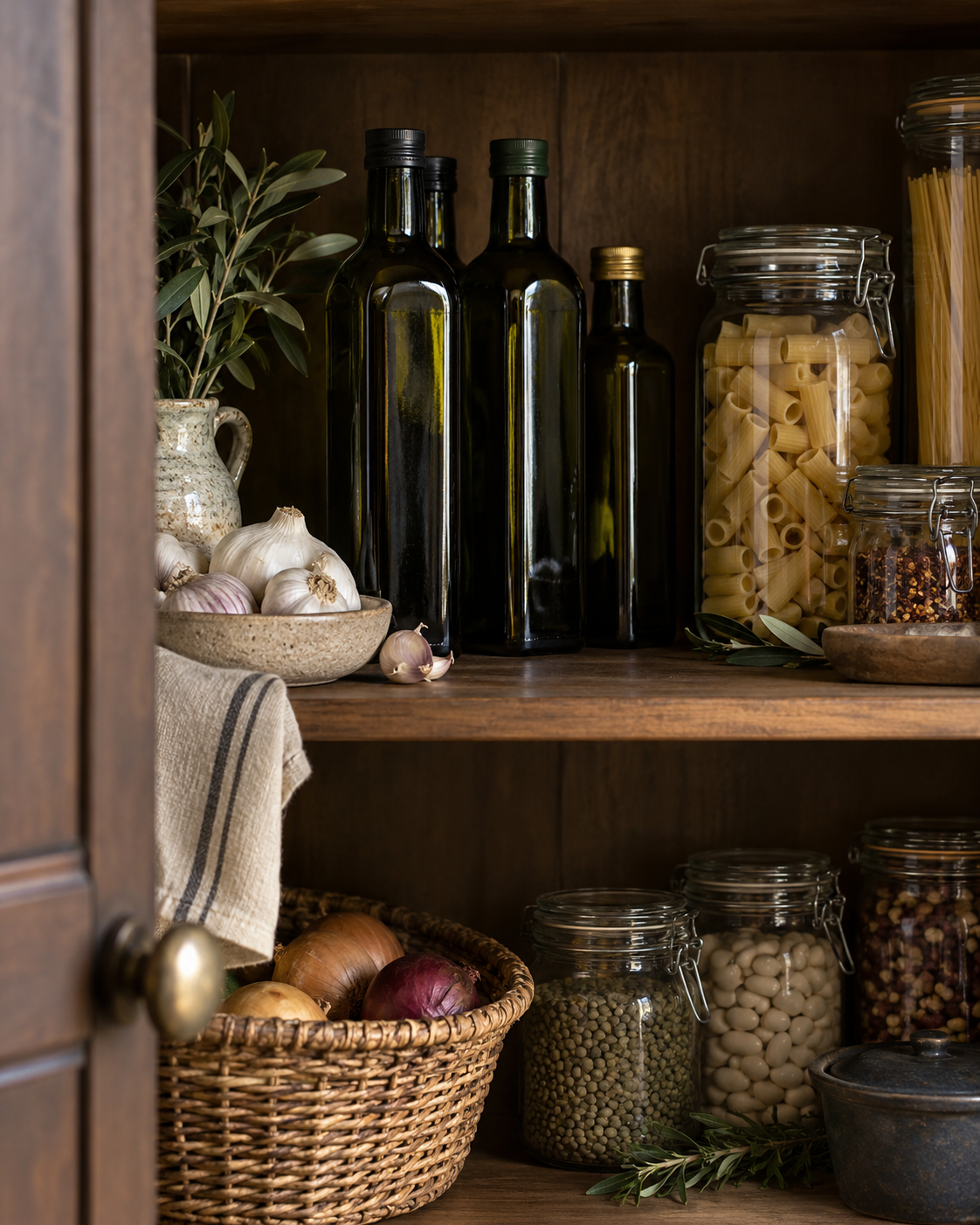
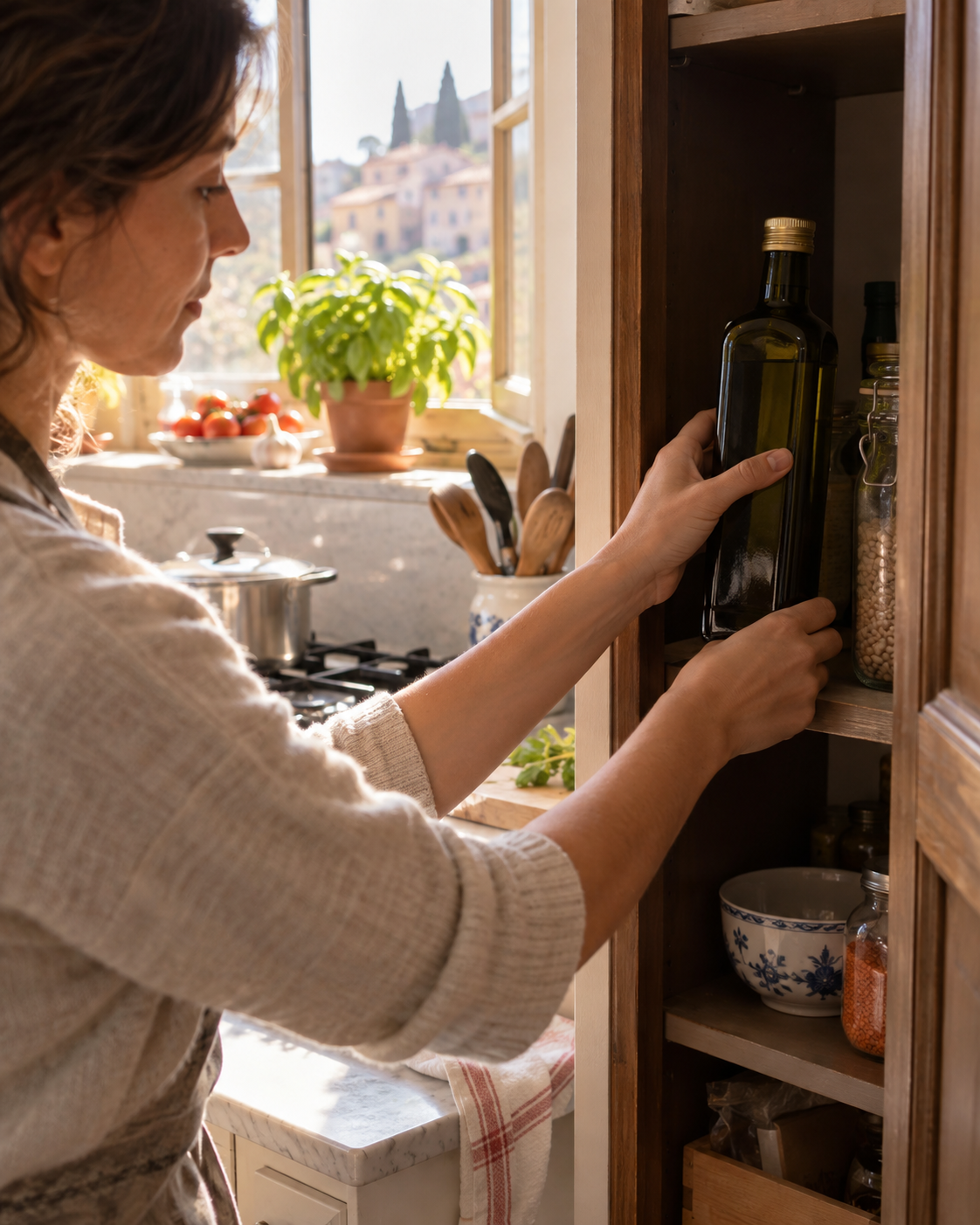
The fix is simply to move it. Store your olive oil in a cool cupboard or pantry, away from the stove, the oven, and any other heat source, and away too from the top of the fridge, which is warmer than people think.
A cool, stable spot, ideally somewhere around normal room temperature or a little below, is all it needs.
You do not need to refrigerate it, and for extra-virgin oil refrigeration is not recommended anyway, since it makes the oil cloud and solidify without offering real benefit. Just get it out of the heat and into a cool, dark cabinet, and you have already done the most important thing. If you change only one habit after reading this, make it this one, since heat is the fiercest of the three enemies and the stove-side bottle is the most common mistake of all, so simply relocating your oil a few feet away does more good than any other single step.
Fix Two: Keep It in the Dark

The second enemy is light, and it does its damage quietly, which is why so many people miss it. Light, especially direct sunlight but also the fluorescent light of a kitchen, breaks olive oil down over time, degrading its flavor and its healthful compounds through the same oxidation that heat causes. That gorgeous bottle displayed proudly on the windowsill or the open counter is being slowly damaged every hour the sun is up, which is a shame for something you paid good money for. It is one of those cruel little ironies of the kitchen that the prettier the display, the worse it usually is for the oil, since the light that shows off its golden color is the very thing degrading it.
There are two easy fixes here, and you can do either or both, though doing both is best. The first is the container: good olive oil is often sold in dark green or brown glass, or in a tin, precisely because those block the damaging light, so if your oil came in clear glass, you are better off decanting it into a dark, opaque bottle or keeping it out of the light entirely. The second, simpler fix is location: just store the bottle inside a closed, dark cupboard rather than out on display.
This is the easier of the two and requires no new container at all, since even a clear glass bottle is perfectly safe from light once it is tucked away behind a cupboard door, which is why relocating the bottle solves both of the first two problems in one go. A dark cupboard solves the light problem completely, no matter what the bottle is made of, which is why the humble closed cabinet, away from the stove, is the ideal home for your oil. It is worth noticing how neatly the first two fixes combine, since a cool, dark cupboard defeats both heat and light at once, so a single sensible choice of storage spot takes care of two of the three enemies in one move.
Fix Three: Seal It and Use It Fast
The third enemy is air, or more precisely the oxygen in it, and this one starts working the moment you first open the bottle. Every time oil meets air, oxidation begins, so an oil left with its cap off, or in a bottle with a wide, uncovered pour spout, is being steadily degraded by the very air in your kitchen. Those decorative open-topped cruets and dip bottles, however charming, are among the worst offenders, leaving the oil in constant contact with the air and hastening its decline. The fix for this is twofold and just as simple as the others, and it comes down to sealing the bottle and not letting it linger. Air is the sneakiest of the three enemies, because unlike heat and light it is invisible and unavoidable the moment you open the bottle, so the goal is not to eliminate it, which is impossible, but to limit its contact with the oil as much as you reasonably can.
First, always close the cap tightly after every use, keeping the air out between pours, and avoid open spouts that leave the oil permanently exposed. Second, and just as important, buy and use oil at a sensible pace, because even sealed, an opened bottle is best used within a month or two while it is fresh, so it is wiser to buy a size you will finish than a giant bottle that sits half-full for a year. It feels thrifty to buy the biggest bottle for the best price, but if you cannot use it up before it turns, the saving is false, since much of that cheap oil will go stale in the cupboard before it ever reaches your pan. If you do buy a large tin for value, decant a small working amount into a dark bottle and keep the rest sealed and cool, so that only a little is exposed to air at a time while the bulk stays protected. This is exactly how thrifty cooks who buy oil in bulk keep it fresh, treating the big tin as a reserve and the little bottle as the one in daily use. Use it up while it is good, and you will always be cooking with oil at its best.
Why This Is Worth the Bother
It would be fair to ask whether any of this really matters for an everyday bottle of oil, and the honest answer is that it matters more than most people think, on three separate counts. The first is simply money. Good olive oil is not cheap, and storing it badly means the lovely extra-virgin bottle you splurged on is quietly losing the very qualities you paid for, so that within weeks you are cooking with something no better than the cheapest oil on the shelf. Protecting it properly is simply protecting the investment you already made.
The second is flavor, and it is the one you taste every day. Fresh, well-kept oil actively makes food better, lending its bright, peppery, fruity character to everything it touches, while tired, oxidized oil drags a faint staleness into every dish, a dullness you may not even consciously notice but that flattens your cooking all the same. And the third is health, since much of the celebrated benefit of olive oil comes from its antioxidants and delicate compounds, exactly the things that heat, light, and air destroy. A rancid oil has not only lost its flavor but much of its goodness too, so poor storage quietly robs you of the health benefits, not just the taste. Between money, taste, and health, the case for a cool, dark cupboard and a tight cap is about as strong as a kitchen tip ever gets. Few pieces of kitchen advice cost so little and give back so much, which is exactly why it is worth the small effort of changing where and how you keep your oil.
How to Tell If Yours Has Gone Off

Because most people have been storing oil badly for years, there is a fair chance the bottle in your kitchen right now is past its best, so it is worth knowing how to check. The tell is in the smell and the taste, and once you know what rancid oil is like, you cannot un-know it. It is worth doing this little test on whatever bottle you have open right now, since there is a good chance it will teach you something surprising about the oil you have been cooking with all along. Fresh, good olive oil should smell and taste vibrant, a little grassy or fruity, often with a peppery kick at the back of the throat that signals a healthy, lively oil. That little catch in the throat, which can even make you cough, is not a flaw but a sign of the beneficial compounds still present, and it is one of the first things to fade as an oil ages badly. That liveliness is exactly what good storage protects.
Rancid oil, by contrast, smells and tastes flat, stale, and unpleasant, often compared to crayons, old nuts, putty, or plastic.

If your oil has that dull, waxy, slightly off character rather than a fresh green brightness, it has oxidized and is past its prime. It will not hurt you, but it will make everything you cook taste faintly stale, and it will have lost the antioxidants that make good olive oil so worth using. Many people cook with mildly rancid oil for years without realizing it, having grown so used to the dull taste that they no longer register it as wrong, which is a quiet shame given how easily it could be avoided.
This is exactly the difference an Italian tastes instantly, the gap between a fresh, peppery oil and a tired, rancid one, and it is entirely a product of how the oil was stored. In a culture where good oil is treated with real reverence, a rancid drizzle is immediately obvious and mildly scandalous, which is why the care taken over storing it there is second nature rather than a chore. Fix the three things, heat, light, and air, and your oil, and everything you cook with it, will simply taste better. It really is that simple, a cool dark cupboard, a bottle that blocks the light, and a tight cap on oil you use up while it is fresh. Do those small things, and you will get every bit of the flavor and goodness you paid for, right down to the last drop.

About the Author: Ruben, co-founder of Gamintraveler.com since 2014, is a seasoned traveler from Spain who has explored over 100 countries since 2009. Known for his extensive travel adventures across South America, Europe, the US, Australia, New Zealand, Asia, and Africa, Ruben combines his passion for adventurous yet sustainable living with his love for cycling, highlighted by his remarkable 5-month bicycle journey from Spain to Norway. He currently resides in Spain, where he continues sharing his travel experiences with his partner, Rachel, and their son, Han.