
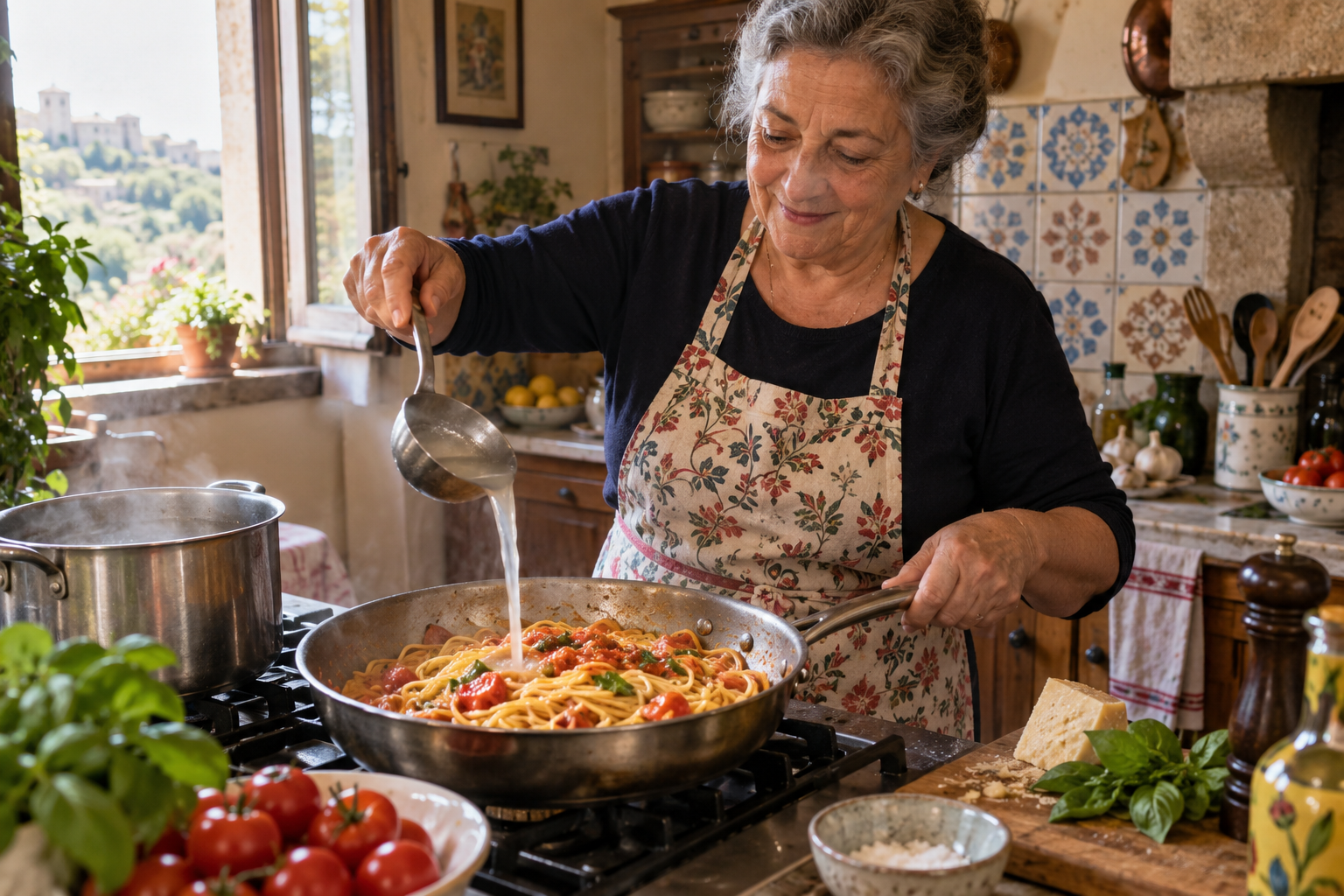
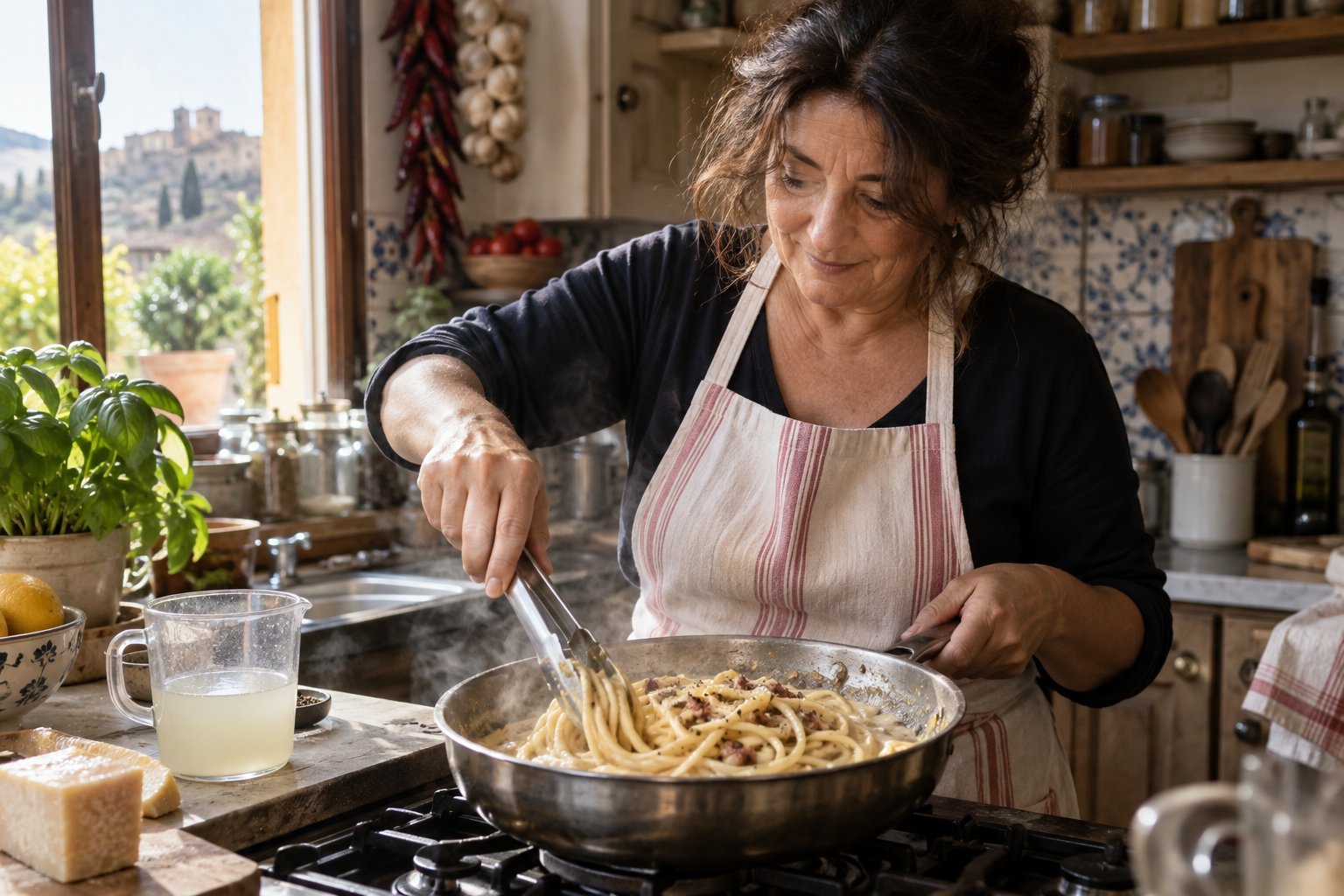
Watch an Italian grandmother cook pasta and you will notice a small ritual that most Americans skip entirely. Just before she drains the pot, she dips a cup or a ladle into the cloudy, starchy water and sets it aside, and only then does she pour the rest down the sink.
That saved cup of what looks like dirty dishwater is one of the great secrets of Italian cooking, the single ingredient that separates a glossy, restaurant-quality sauce that clings lovingly to every strand from the sad American version where the sauce slides off and pools at the bottom of the bowl. It costs nothing, it takes two seconds, and it transforms your pasta, which is exactly why no Italian grandmother would ever dream of throwing it away. That small, deliberate scoop before the pot hits the sink is one of the most quietly consequential things that happens in an Italian kitchen. Once you understand what that water actually does, you will never drain a pot the same way again. It is the rare cooking secret that is genuinely free, genuinely easy, and genuinely transformative all at once, and it hides in plain sight in every pot of pasta you have ever made.
What follows is why pasta water is so magical, the science that makes it work, the technique Italians use to turn it into a silky sauce, and how to do it yourself tonight. It is quite possibly the single highest-value cooking tip you will ever get for free.
The Liquid Gold in the Pot
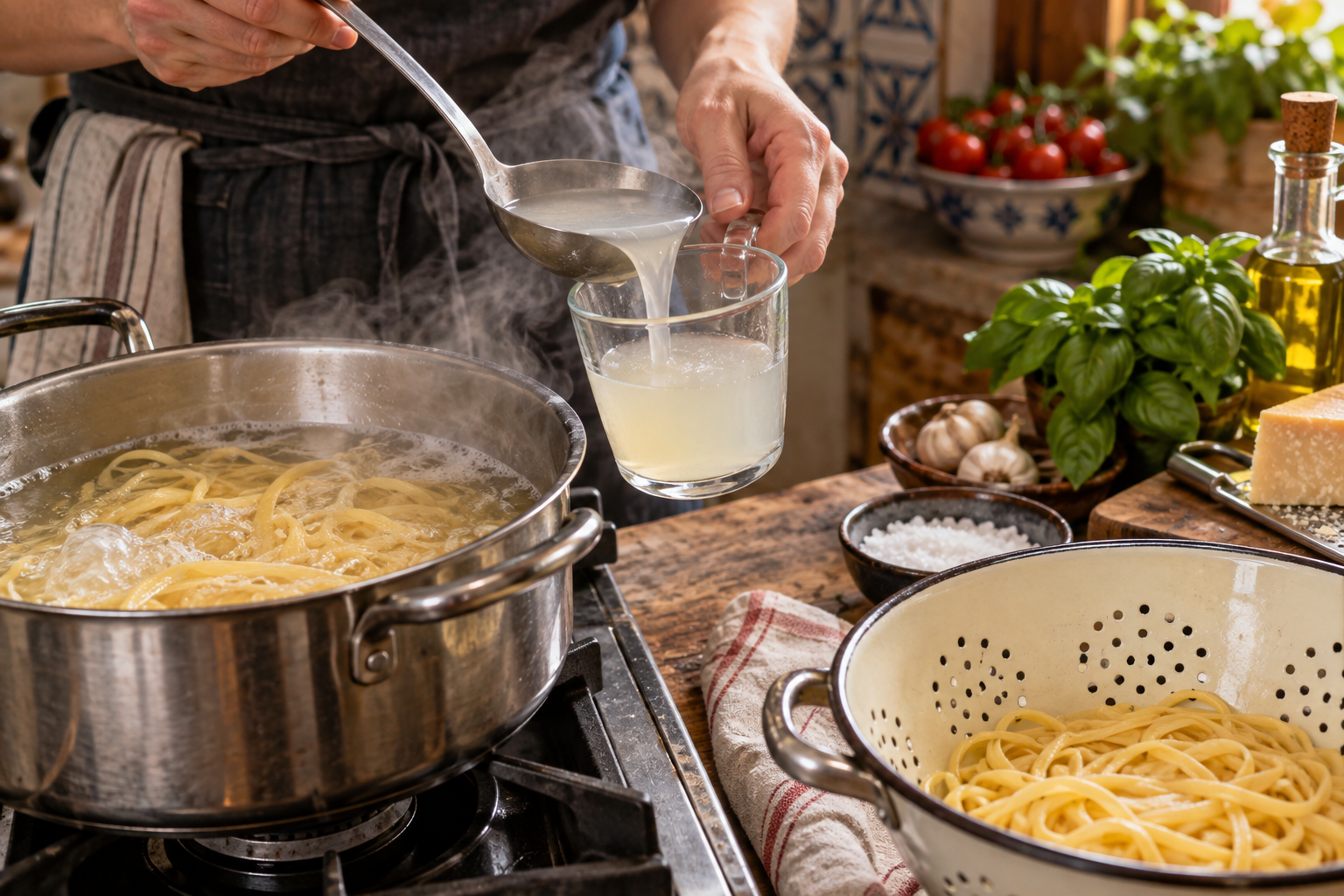
Italians have a name for that saved cup of cooking water, and it translates roughly to liquid gold, which tells you exactly how highly they regard something the rest of us pour straight down the drain. As pasta boils, it steadily releases starch into the water, which is what turns the water cloudy and slightly thick, and that starch is the whole point. It is not dirt or waste, it is a powerful natural thickener and binder, and a few tablespoons of it stirred into a sauce can completely change the texture of a dish. Because it is also seasoned, having been salted for the pasta, it brings a little seasoning along with its thickening power, adding flavor as well as body, which is another small reason it beats plain water or cream. Every splash you add is doing three jobs at once, thickening, binding, and gently seasoning, all from a liquid you were about to throw away.
The reason it matters comes down to how sauce and pasta actually meet. Most home cooks drain their pasta completely, plate it, and pour the sauce on top, at which point the sauce simply sits there, sliding off the smooth noodles and gathering in a puddle at the bottom. The starchy water fixes this by helping the sauce grip the pasta, binding the fat and the liquid and the noodles into one glossy, cohesive whole, so that every strand is evenly coated and the sauce clings where it belongs. That difference, sauce that clings versus sauce that slides, is the whole gap between homemade pasta and the plate you get in a good Italian restaurant. It is why the pasta at a proper trattoria looks glossy and unified, every strand slicked with sauce, while the same recipe at home so often ends up as a heap of plain noodles under a pool of sauce that never quite made contact.
The Science of the Silky Sauce
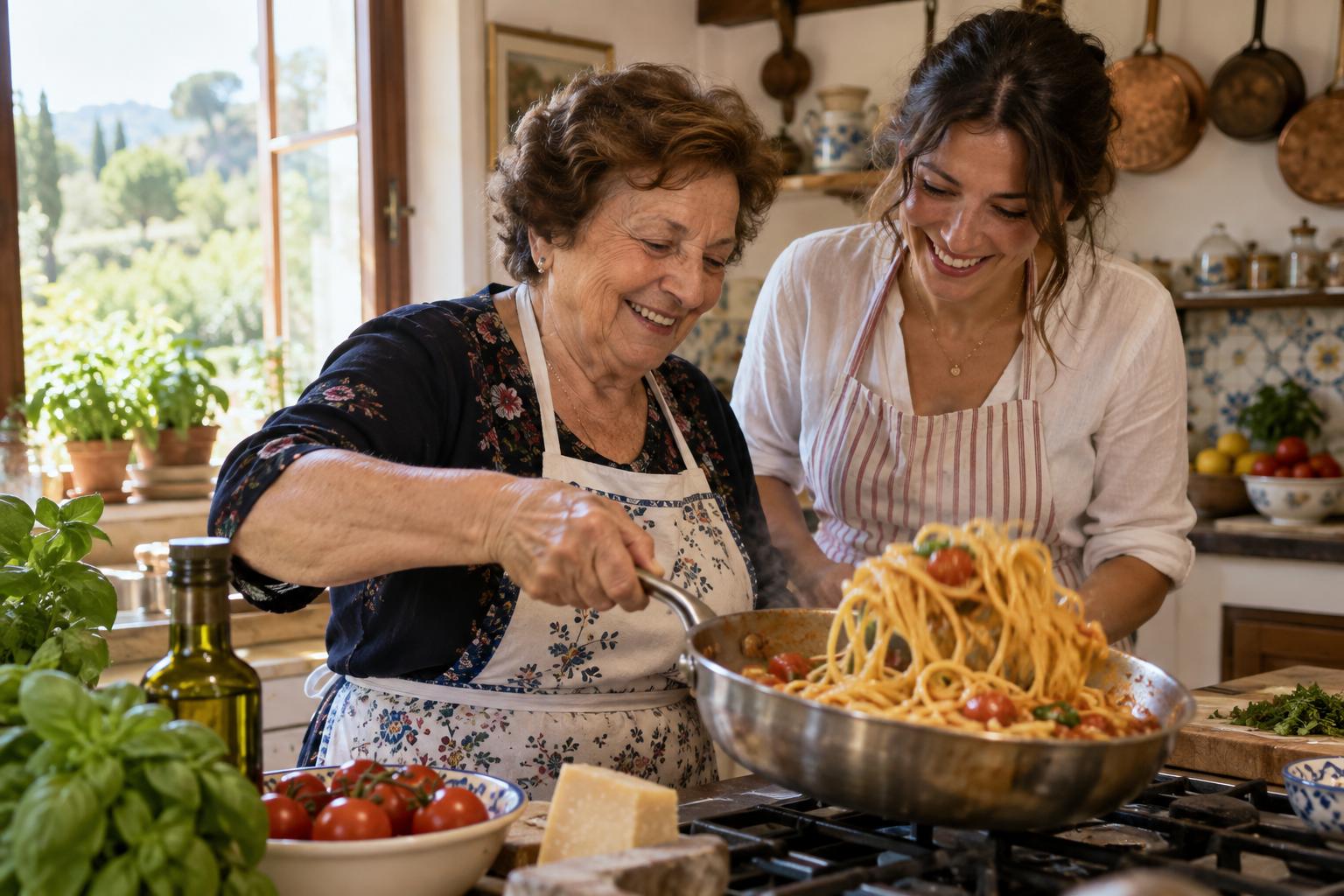
There is real chemistry behind the magic, and it has a name: emulsification. An emulsion is what you get when you force two things that normally refuse to mix, like fat and water, to combine into one smooth, stable, creamy mixture, and it is the secret behind countless great sauces. The problem is that fat and water want to separate, which is why a simple sauce of olive oil and pasta can end up greasy and split, the oil pooling apart from everything else rather than coating the noodles.
This is where the starch does its quiet work. When you add the starchy pasta water to a hot sauce, the starch molecules act as a natural emulsifier, forming a network that traps the fat and the water together and holds them in a stable, glossy suspension instead of letting them separate. The result is a sauce that is smooth, rich, and clinging rather than oily and broken. It is the same principle whether the fat is olive oil, butter, cheese, or the rendered fat from a bit of cured pork, and in every case the humble starch is the thing binding it all into silk. This is why the trick is so universal, working across nearly every style of Italian sauce, because it is not about any one recipe but about the basic physics of getting fat and water to become one. No cream required, and often none wanted, since the starch does the job better and without dulling the flavor.
Mantecatura, the Technique That Matters
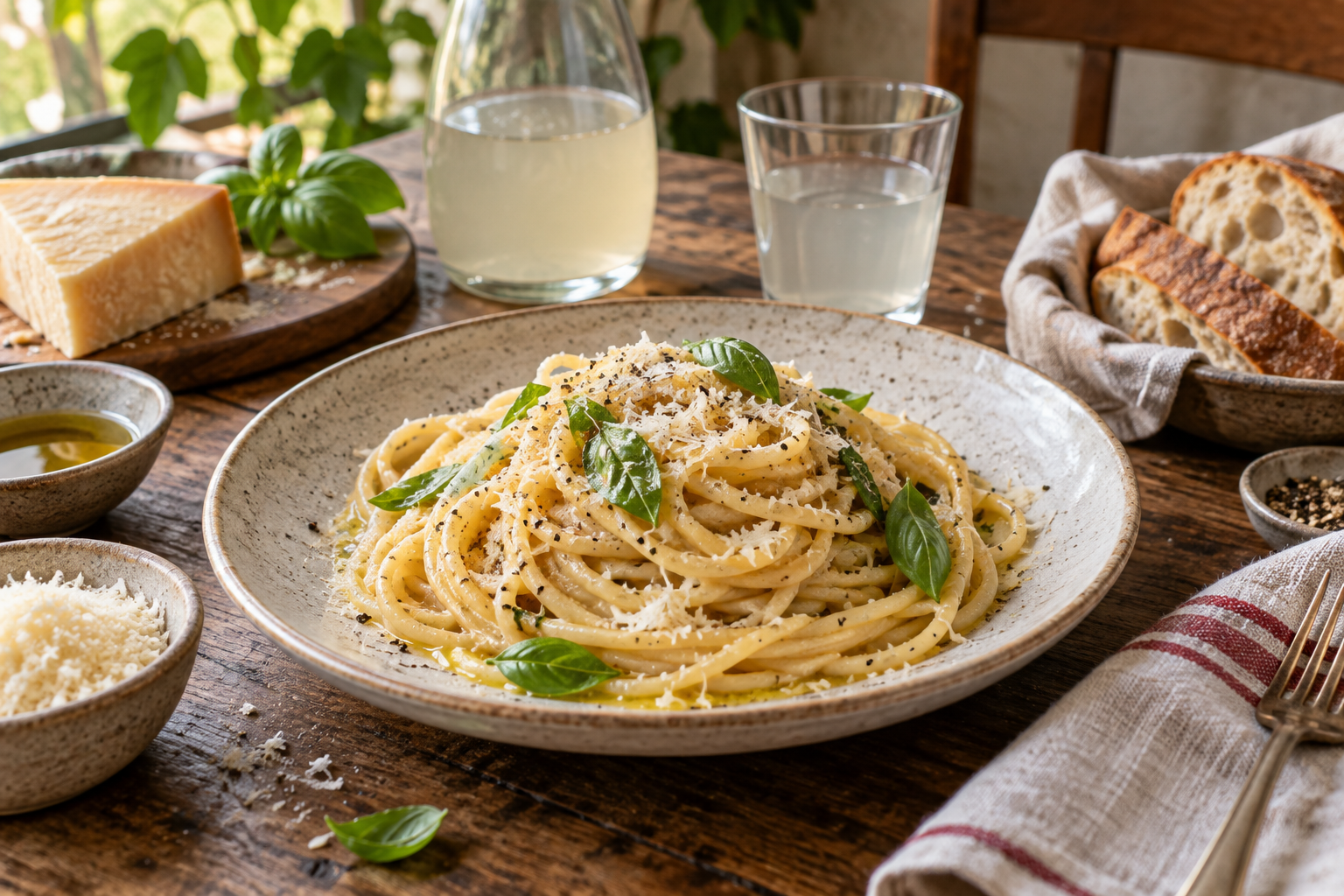
Knowing about the water is only half of it, because there is a technique for using it, and the Italians have a word for that too: mantecatura. It describes the crucial final step of finishing the pasta in the pan with the sauce, rather than draining it and topping it, and it is where the whole silky transformation actually happens. You cook the pasta until it is just shy of done, then move it straight into the pan of sauce along with a splash of the reserved water, and you finish cooking it right there in the sauce. Those last couple of minutes, with the pasta bubbling away in the sauce rather than sitting in a colander, are when the dish truly comes together, the noodles drinking in flavor and releasing yet more starch as they finish.
The key to it, and the part people get wrong, is the motion. You do not gently stir, you toss the pan vigorously, or use tongs to keep everything in constant, energetic movement, because it is the agitation that forces the starch, fat, and water to bind into an emulsion.
You add the pasta water gradually, a splash at a time, tossing continuously, watching the sauce go from loose and separate to glossy and cohesive before your eyes, and you stop when it clings to the pasta in a smooth, even coat. Add too much at once and the sauce goes thin and watery, so the golden rule is a little at a time, judging by eye, since you can always add more but cannot easily take it away. Done right, a sauce that looked thin and broken pulls together into something velvety, and that transformation in the pan is the single most useful pasta skill an American cook can learn. The first time you see it happen, a loose, oily mess suddenly turning glossy and cohesive as you toss, it feels a little like a magic trick, and once you have done it once you will do it every time.
Where You See It Work Best
Some dishes show off the pasta-water trick so vividly that they are practically demonstrations of it, and the most famous is cacio e pepe. This Roman classic is nothing but pasta, pecorino cheese, black pepper, and pasta water, with no cream and no butter, and yet it comes out as a silky, creamy sauce, because the starch in the water emulsifies with the cheese into a smooth coating that clings to every strand. It is, in effect, a magic trick performed with three ingredients and a cup of cloudy water, and it simply does not work without the starchy water doing the binding. Try to make cacio e pepe with cheese and pepper alone and you get a clumpy, greasy mess, but add the starchy water and toss, and the very same ingredients transform into a glossy, creamy sauce, which is the clearest proof of the water’s power you will ever taste.
The same principle rescues all sorts of simple sauces. A basic garlic and olive oil dressing that would otherwise slide off and pool turns glossy and clinging with a splash of pasta water, a tomato sauce grips the noodles instead of sitting on top, and even a rich, cheesy sauce comes together smooth instead of clumping and splitting. Anywhere you need fat and water to become one clinging sauce, the pasta water is the tool, which is nearly everywhere in Italian cooking, and it is why the grandmothers guard that cup so carefully. Once you start looking for it, you realize the trick is quietly at work in an enormous share of Italian dishes, from the humblest weeknight aglio e olio to the most refined restaurant plate, always doing the same invisible job of binding sauce to pasta.
Why Americans Never Learned This
Given how simple and transformative the trick is, it is worth asking why so many American cooks never picked it up, and the answer is a small but decisive difference in habit. The standard American way to cook pasta is to boil it, drain it completely in a colander, plate it, and ladle sauce over the top, treating the pasta and the sauce as two separate things brought together only at the last second on the plate. It is tidy and intuitive, and it is also exactly the wrong approach for a clinging, silky sauce.
The Italian way treats pasta and sauce as one dish finished together, married in the pan rather than introduced on the plate, which is a genuinely different piece of technique that simply never crossed the ocean intact. Somewhere in the journey from Italy to the American kitchen, the crucial final step of finishing the pasta in the sauce with a splash of starchy water got lost, replaced by the drain-and-pour habit that produces a lesser result. There is nothing wrong with American home cooks, they were simply never taught the one move that Italian children absorb by watching their grandmothers, and learning it now closes the gap almost instantly. It is one of those rare skills where a single evening of practice takes your pasta from ordinary to genuinely impressive, no new ingredients, no new equipment, just a change in the last two minutes of cooking.
The Wisdom in the Ritual

There is something lovely in the fact that this is not a modern chef’s discovery but old, inherited kitchen wisdom, passed down through generations of Italian home cooks who never read a word about emulsification. The grandmother saving her cup of pasta water does not think in terms of starch molecules and stable suspensions, she simply knows, from her mother and her mother before her, that the water makes the sauce better, and that is enough. Ask her to explain the chemistry and she would likely laugh, because she does not need it, the proof being the plate of glossy pasta she has been turning out effortlessly her whole life. It is folk knowledge, learned by watching and doing rather than studying, and it works perfectly whether or not you understand the chemistry beneath it. There is a humility in that worth admiring, the reminder that the best cooking often comes not from clever theory but from paying close attention over a lifetime and remembering what worked.
That is the quiet beauty of traditional cooking, that centuries of trial and error arrived at techniques that science only later explained, and that a grandmother with no training can out-cook a novice with a shelf of cookbooks simply because she absorbed the right habits young. The saved pasta water is a small monument to that kind of knowledge, an instinctive, unwritten rule handed down at the stove, and picking it up connects you to a long line of cooks who understood, without needing to be told, that the humblest cup of cloudy water was worth keeping. It is the sort of tradition that survives not in cookbooks but in the muscle memory of families, taught by example on a thousand ordinary evenings. All you have to do is start saving it too, and you inherit the whole of that wisdom in a single easy habit.
How to Do It Yourself Tonight
Putting this into practice is genuinely simple, and it requires no special skill, only a new habit and a couple of small adjustments. First, use a little less water to boil your pasta than the box suggests, since less water means a higher concentration of starch, making your saved cup more powerful. Second, and most important, before you drain, scoop out a mugful of the cooking water and set it aside, because the whole thing is impossible if you have already poured it down the sink, which is the one mistake to never make. A useful habit is to set a mug right next to the colander before you even start cooking, as a physical reminder to scoop before you tip, since forgetting is the single most common way this goes wrong.
Then finish the pasta properly. Drain it a minute early, still al dente, while it is still slightly firm, move it into the pan with your sauce, add a splash of the hot reserved water, and toss it all together over the heat, adding more water bit by bit until the sauce turns glossy and coats every strand. Keep the water hot while you work, since cold water can make the starch seize and turn gummy, and never rinse your pasta, which washes away the very starch clinging to it. Do these few small things, and an ordinary weeknight pasta will suddenly have the silky, clinging, restaurant-quality sauce that Italians have taken for granted for generations, all thanks to the cup of cloudy water their grandmothers always knew to save. It is the smallest possible change for the biggest possible improvement, and once it becomes second nature you will wonder how you ever cooked pasta without it, quietly scooping your cup of liquid gold every time, just as the grandmothers always have.
Making Cacio e Pepe
Nothing shows off the power of starchy pasta water like cacio e pepe, the Roman classic whose silky sauce is nothing but pecorino, pepper, and that cloudy water, no cream in sight. Here it is for two.
Ingredients
- 200 g spaghetti or tonnarelli
- 100 g Pecorino Romano, very finely grated, ideally on a microplane
- 2 teaspoons black peppercorns, freshly and coarsely ground
- Salt, for the pasta water, but go lightly, as the pecorino is very salty
Instructions
- Bring a pot of water to a boil and salt it lightly, using less water than usual so it grows extra starchy. Cook the pasta until just al dente.
- While it cooks, toast the coarsely ground pepper in a dry, wide pan over medium heat for a minute or two, until fragrant, then take the pan off the heat.
- Before draining, reserve at least a large cupful of the starchy pasta water. In a bowl, stir the grated pecorino together with a few tablespoons of warm, not boiling, pasta water into a smooth, spreadable paste, which is what helps it melt in without clumping.
- Add the drained pasta to the pan with the toasted pepper, off the heat, along with a splash of the hot pasta water, and toss well to coat.
- Now the step that matters most: with the pan still off the heat, add the pecorino paste and toss vigorously, the mantecatura, adding more pasta water a little at a time, until the cheese and the starchy water emulsify into a glossy, silky sauce that clings to every strand. Keep it away from high heat, or the cheese will seize into clumps.
- Loosen with a little more pasta water if it tightens, then serve at once, finished with extra pecorino and another crack of pepper, since the sauce keeps thickening as it cools.

About the Author: Ruben, co-founder of Gamintraveler.com since 2014, is a seasoned traveler from Spain who has explored over 100 countries since 2009. Known for his extensive travel adventures across South America, Europe, the US, Australia, New Zealand, Asia, and Africa, Ruben combines his passion for adventurous yet sustainable living with his love for cycling, highlighted by his remarkable 5-month bicycle journey from Spain to Norway. He currently resides in Spain, where he continues sharing his travel experiences with his partner, Rachel, and their son, Han.