
Of all the strange and wonderful rituals of a British Christmas, none is quite as theatrical as the pudding. After the turkey and the trimmings, someone carries in a dark, dense, dome shaped pudding, douses it in warmed brandy, and sets the whole thing alight, so it arrives at the table wreathed in flickering blue flames while everyone cheers. It is a dessert that is deliberately set on fire in front of the family, and it is the grand finale of the Christmas meal, as much a performance as a pudding.
What makes it stranger still to an American is the timing. The Christmas pudding is not made on Christmas Day, or even that week, but weeks or even months earlier, often on a specific Sunday in late November, and then left to sit and mature until the big day. This piece explains what the Christmas pudding is, the “stir up Sunday” ritual of making it weeks ahead, why it is aged for so long, the all important brandy rule that governs setting it alight, and how to make and flame your own. A recipe follows the story, because the pudding is one of the great make ahead projects of the festive kitchen.
What the Christmas Pudding Is
The Christmas pudding, sometimes called plum pudding or figgy pudding, is a dense, dark, intensely rich steamed pudding packed with dried fruit, spices, and alcohol. It is not a cake and not a light dessert but something altogether heavier and more concentrated, a solid dome of fruit held together with suet, breadcrumbs, eggs, and a little flour, flavored with warm spices and soaked through with brandy, stout, or sherry. The color is almost black, the texture is dense and sticky, and the flavor is deep, boozy, and aromatic.
Despite the old name plum pudding, there are usually no plums in it, “plums” being an archaic English word for raisins and other dried fruit, so the pudding is really a dried fruit pudding: raisins, currants, sultanas, candied peel, and often grated apple or carrot, bound and spiced and steamed for hours. The suet, the hard fat that enriches it, is traditionally beef suet, though vegetable suet is now common, and the whole mixture is laced generously with alcohol, which flavors it and, crucially, helps preserve it.
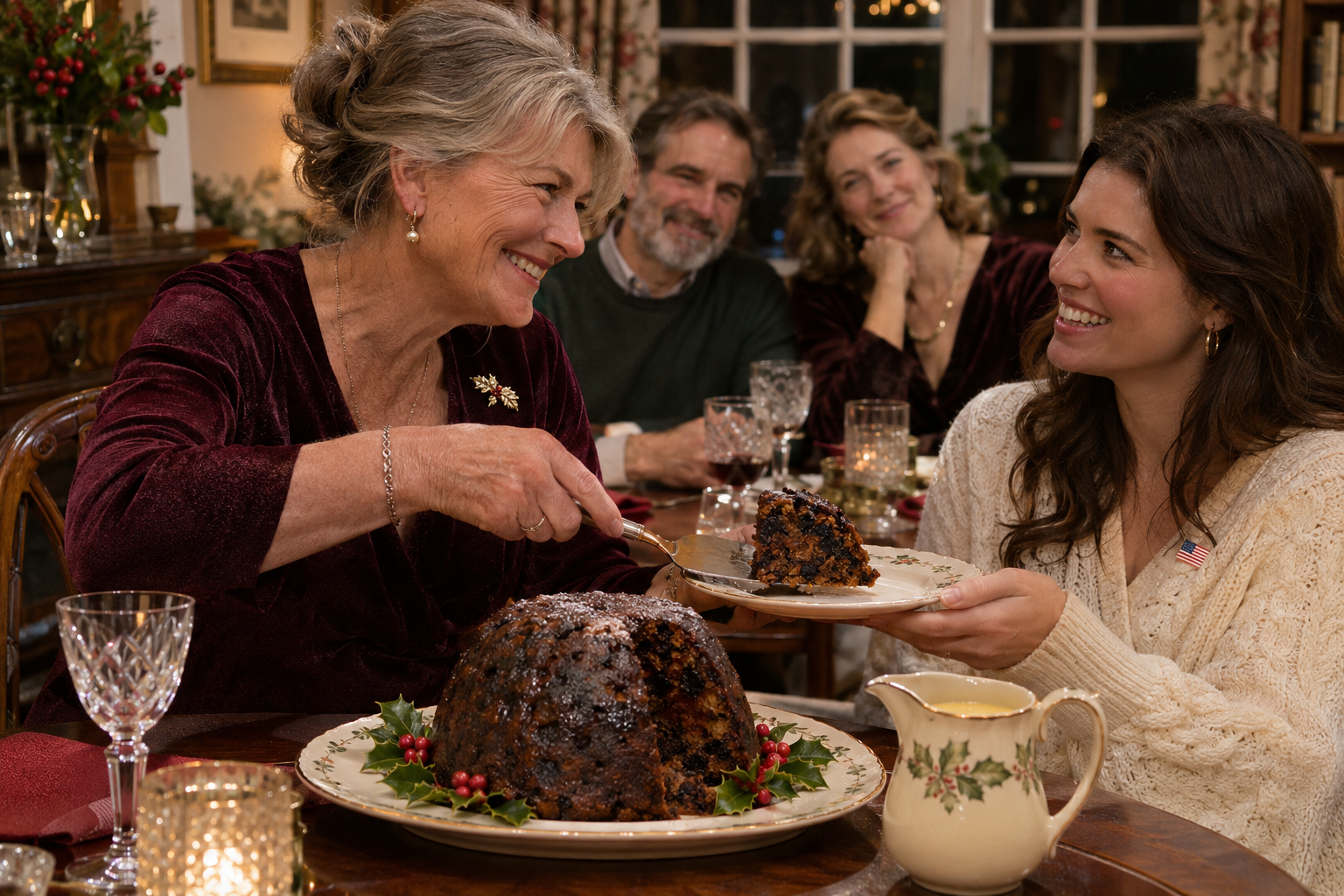
It is served in small portions, because it is extraordinarily rich, usually with something creamy and boozy alongside: brandy butter, brandy cream, custard, or clotted cream. A good Christmas pudding is the dense, dark, spiced heart of the British Christmas dinner, a dessert that tastes of concentrated festivity, and the small slice you are given is plenty. It is also, thanks to its alcohol and its long maturing, a pudding built to be made far in advance, which is where its most distinctive ritual comes in.
Stir Up Sunday
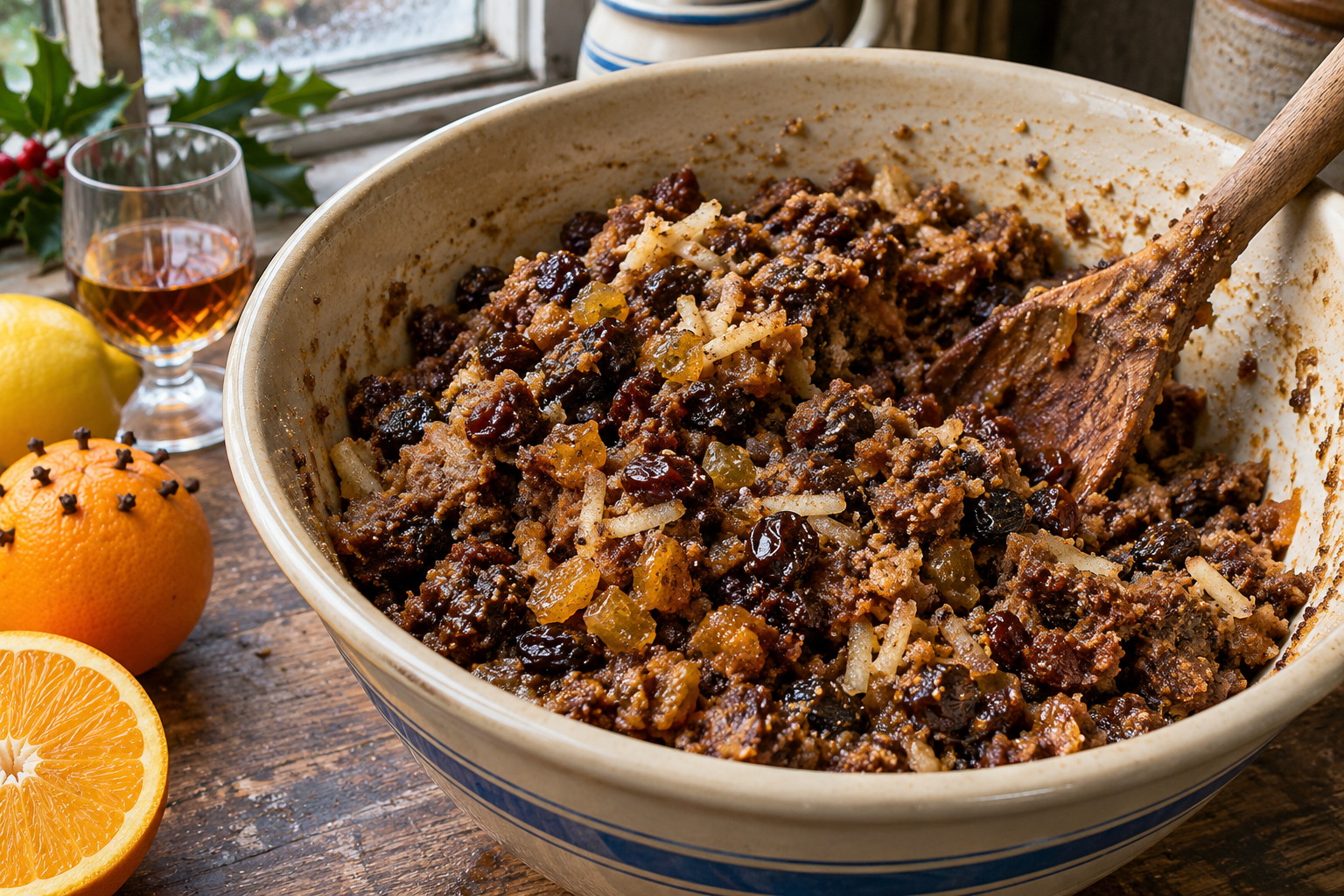
The making of the Christmas pudding has its own day, and its own ritual, known as Stir up Sunday. Traditionally the pudding is made on the last Sunday before Advent, usually in late November, roughly five weeks before Christmas, a date that gives the pudding time to mature before the day. The name comes from a prayer once read in church on that Sunday that began “Stir up, we beseech thee,” which happily coincided with the reminder that it was time to get the pudding mixed.
The ritual is a family affair, and a lovely one. Everyone in the household takes a turn stirring the pudding mixture, and tradition holds that you should stir from east to west, in honor of the journey of the three wise men, and that each person should make a silent wish as they stir. The stirring of a heavy fruit laden mixture is hard work, so passing the spoon around is practical as well as symbolic, and the shared stirring and wishing turns the making of a dessert into a small family ceremony weeks before Christmas.
There is often a hidden surprise too, in the old custom of stirring a silver coin into the pudding, a sixpence traditionally, so that whoever finds it in their portion on Christmas Day gets good luck for the year. Sometimes other little charms were added, each with its own meaning. For an American, the idea of a fixed day, five weeks out, on which the whole family gathers to stir a pudding, make wishes, and hide a coin, is a glimpse of how deep and how early the rhythms of a British Christmas run. The pudding season begins long before December.
Why It Is Aged for Weeks
Making a dessert weeks or months ahead and then leaving it to sit might sound like a recipe for staleness, but with the Christmas pudding the aging is the whole point, and it genuinely improves the thing. The pudding is made, steamed for many hours, and then stored in a cool place, often being “fed” with occasional spoonfuls of brandy, right up until Christmas Day, when it is steamed again to reheat and served. That long rest is what develops its flavor.
The reason it works is the alcohol and the richness. The high proportion of sugar, fat, and spirit acts as a preservative, keeping the pudding safe to store for weeks or even a year, while over that time the flavors meld, deepen, and mature, the dried fruit and spices marrying into something far richer and more rounded than a freshly made pudding could ever be. A pudding eaten the day it is made tastes raw and sharp by comparison; one that has rested for weeks, fed with brandy, tastes mellow, complex, and complete. Time is an ingredient.
This is why the pudding is one of the great make ahead triumphs of the kitchen, a dessert that positively demands to be made in advance and that only gets better for the waiting. Some families make theirs a full year ahead, keeping a pudding from one Christmas to the next, and swear by the result. The aging, far from being a quirk, is the secret to the pudding’s depth, and it is the reason the whole ritual is built around making it so early. The weeks of rest are not idle; they are the pudding quietly becoming itself.
The Brandy Rule and the Flaming
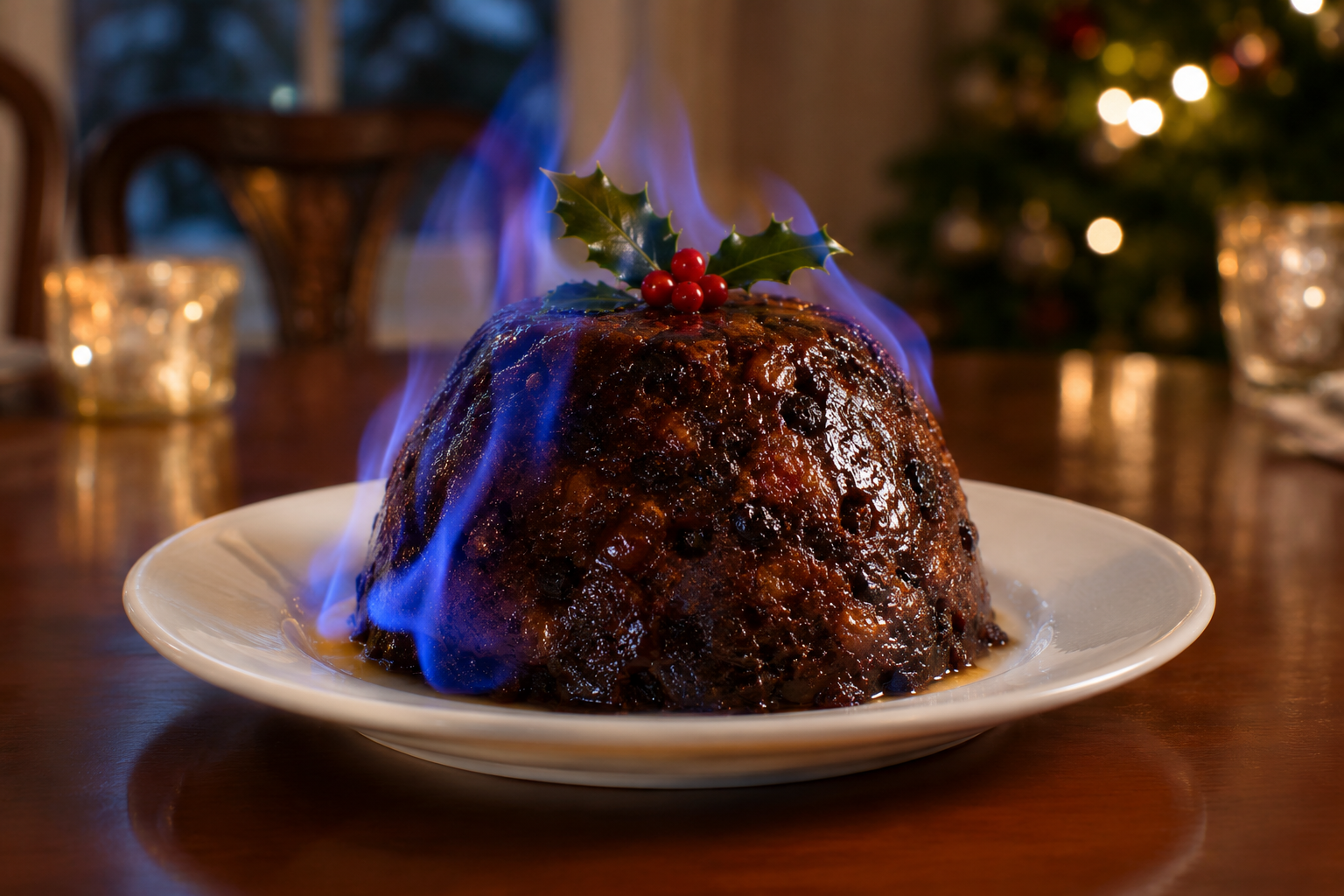
The pudding’s moment of glory is the flaming, and there is a right way to do it, a brandy rule that governs the whole theatrical business. The pudding, reheated and turned out onto a dish, is doused with brandy that has been gently warmed, and the warmed brandy is then set alight so that blue flames dance over the surface of the pudding as it is carried to the table. The warming of the brandy is the key: brandy flames best when it is warm, because it is the alcohol vapor that catches, so you gently heat the brandy first, almost to a simmer but not boiling off the alcohol, before lighting it.
The technique matters for both drama and safety. You warm a small ladle or pan of brandy, pour it over the pudding, and light it carefully with a long match or taper, standing back as it catches, and the flames, a ghostly blue in a dimmed room, burn for a short while as the alcohol cooks off, then die away, leaving the pudding warm and ready. Dimming the lights makes the blue flames visible and turns the whole thing into the spectacle it is meant to be, the flaming pudding processed into a darkened room to applause.
A few sensible cautions go with the fire, because you are carrying a flaming dish. Keep it well away from anything flammable, from hair and decorations and low hanging lights, use warmed but not boiling brandy, light it at arm’s length, and let the flames die naturally rather than blowing at them. Done properly it is safe and spectacular; done carelessly it is a hazard, so the brandy rule is as much about care as about showmanship. When it works, the flaming Christmas pudding is one of the great sights of the British Christmas table, a dessert that arrives, quite literally, in a blaze of glory.
A Dessert Worth the Ritual
For all its richness and its faff, the Christmas pudding is worth every bit of the ritual, and making your own is a deeply satisfying festive project. It connects you to centuries of tradition, fills the house with the smell of spiced fruit steaming for hours, gives the family a reason to gather and stir and wish weeks before Christmas, and ends in the glorious theater of the flaming on the day. Few desserts carry so much ceremony, and few reward it so well.
It is also, practically, a wonderful thing to make ahead, ticking a major component of Christmas dinner off the list weeks in advance and then needing only a reheat and a flame on the day itself. In the chaos of cooking a Christmas dinner, a pudding that was made in November and only needs steaming again is a genuine gift to the cook. The make ahead nature that seems so strange to the newcomer is, to anyone who has cooked Christmas dinner, one of the pudding’s great virtues.
For an expat or a curious American wanting to take on a real piece of British Christmas, the pudding is the grand project, more involved than mince pies but enormously rewarding, and the recipe below walks through making it on Stir up Sunday and flaming it on the day. Even a store bought pudding can be flamed with warmed brandy for the full effect, so the theater is available to everyone, but making your own, stirring in a wish and a coin, and feeding it brandy for weeks, is the complete experience. It is Christmas in a dome, set alight.
Make It: Christmas Pudding
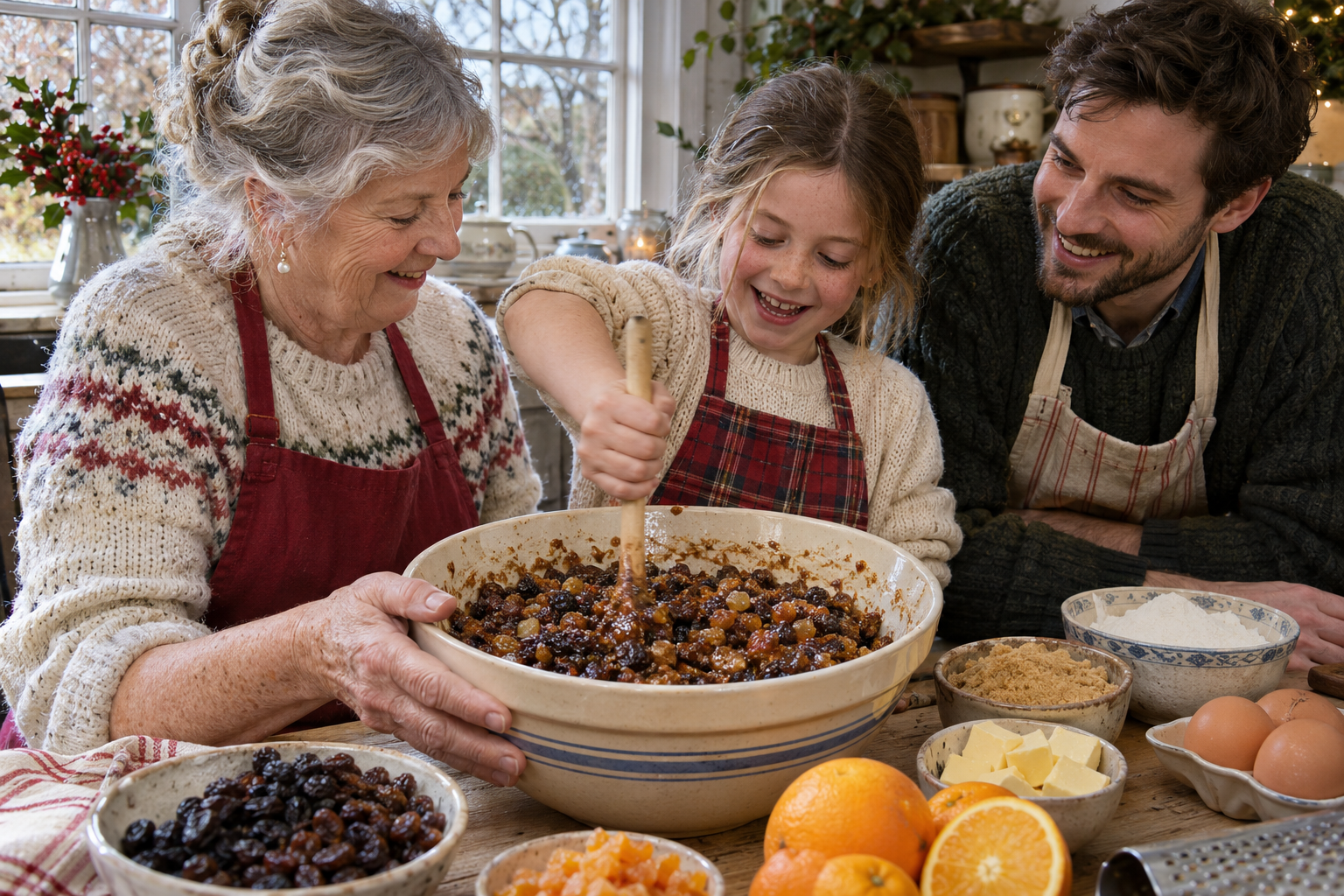
This makes one large pudding, best made several weeks ahead on or around Stir up Sunday, fed with brandy, and flamed on Christmas Day. Steaming is long but mostly hands off.
Ingredients:
- 250 g raisins
- 250 g sultanas
- 150 g currants
- 100 g chopped candied peel
- 1 apple, grated
- 100 g plain flour
- 150 g fresh breadcrumbs
- 150 g suet (beef or vegetable)
- 200 g dark brown sugar
- 2 eggs
- Zest and juice of 1 orange and 1 lemon
- 2 teaspoons mixed spice, 1 teaspoon cinnamon, half a teaspoon grated nutmeg
- 150 ml brandy (plus more for feeding and flaming)
- Optional: a clean silver coin, well washed and wrapped in a little baking paper
Method:
- On Stir up Sunday, combine all the dried fruit, peel, and grated apple in a very large bowl with the brandy, orange and lemon zest and juice, and leave to steep for a few hours or overnight.
- Add the flour, breadcrumbs, suet, sugar, and spices and mix well. Beat the eggs and stir them in to make a soft, dark, dropping mixture.
- Gather the family, and let everyone take a turn stirring from east to west and making a wish. Stir in the wrapped coin now if using.
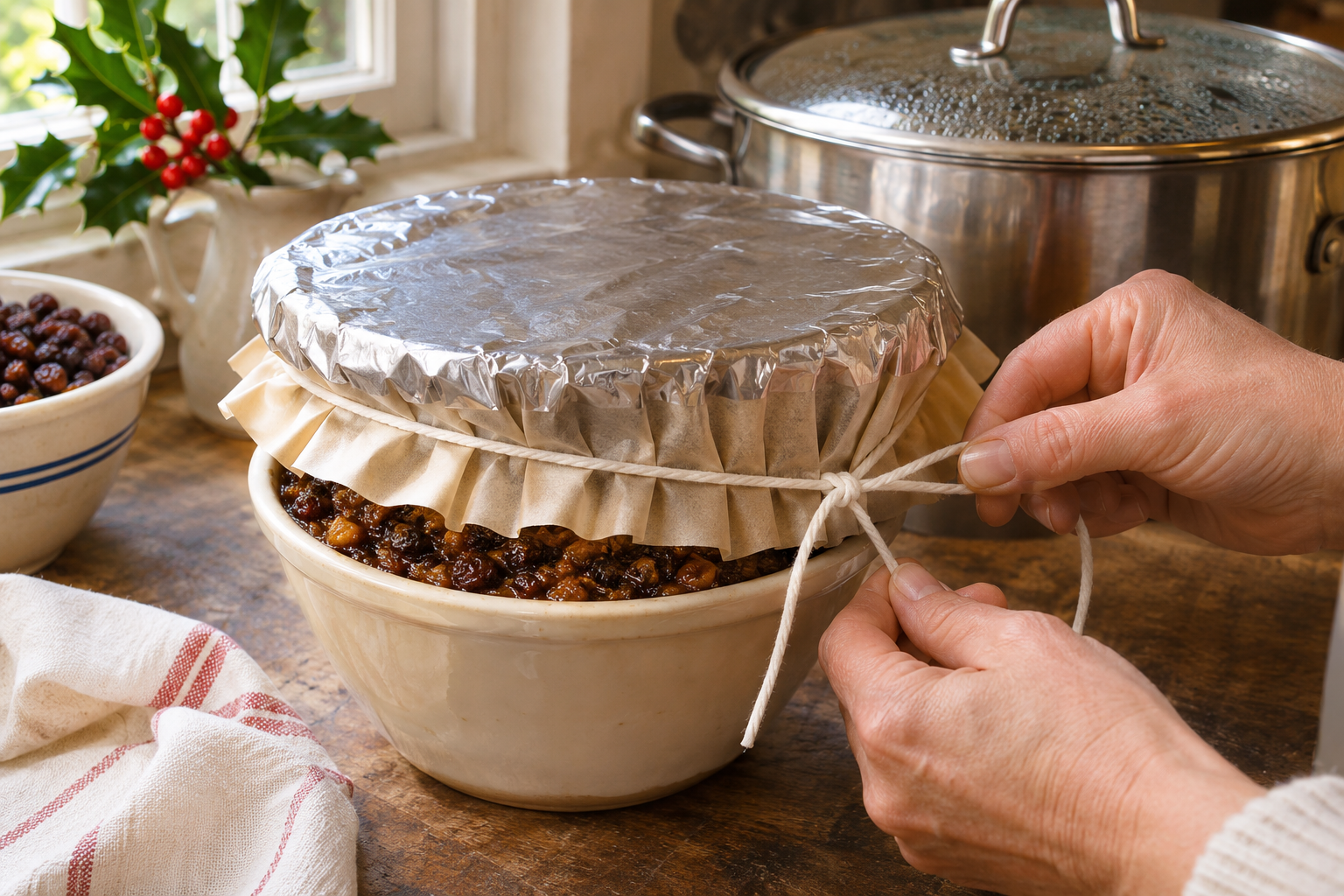
- Butter a 1.2 litre pudding basin and pack the mixture in. Cover with a pleated layer of baking paper and foil (the pleat allows for expansion), and tie securely under the rim with string, making a handle.
- Steam the pudding for about 6 hours, in a large covered pan with the basin sitting on a trivet or folded cloth and boiling water reaching halfway up the basin. Top up with boiling water as needed so it never boils dry.
- Cool completely. Remove the wet coverings, and every week or two until Christmas, prick the pudding and spoon over a tablespoon of brandy to feed it. Re cover with fresh paper and foil and store somewhere cool and dark.
- On Christmas Day, steam again for about 2 hours to reheat thoroughly. Turn out onto a warmed dish.
- To flame: gently warm a small ladle of brandy (do not boil), pour it over the hot pudding, dim the lights, and carefully light it with a long match. Carry it flaming to the table, let the flames die, and serve with brandy butter, cream, or custard. Warn whoever gets the coin.

About the Author: Ruben, co-founder of Gamintraveler.com since 2014, is a seasoned traveler from Spain who has explored over 100 countries since 2009. Known for his extensive travel adventures across South America, Europe, the US, Australia, New Zealand, Asia, and Africa, Ruben combines his passion for adventurous yet sustainable living with his love for cycling, highlighted by his remarkable 5-month bicycle journey from Spain to Norway. He currently resides in Spain, where he continues sharing his travel experiences with his partner, Rachel, and their son, Han.