
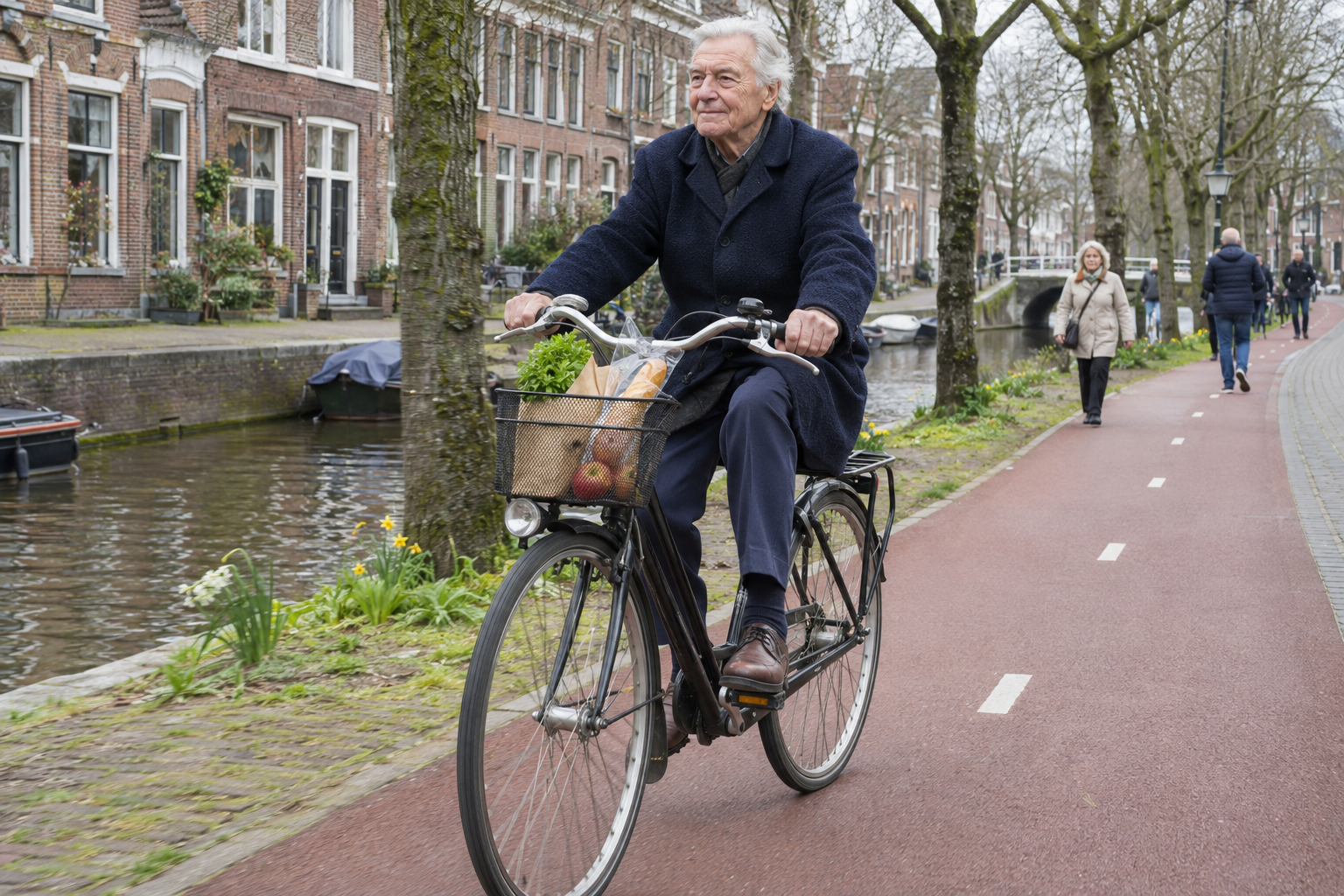
Go to the Netherlands and you will see them everywhere, so ordinary that the locals do not even register them: men and women in their seventies and eighties, pedaling calmly along on upright bicycles, a basket of groceries on the front, going about their day. They are not athletes, not fitness enthusiasts, not making any kind of statement. They are just old Dutch people on bikes, doing what they have done every day of their lives, and they think absolutely nothing of it.
To a visitor, especially an American, the sight is quietly astonishing. An eighty-year-old cycling to the shops, unbothered and unremarkable, is simply not something you see back home, where people that age have usually long since given up anything so physical, if they ever cycled at all. But in the Netherlands it is completely normal, because the Dutch cycle their entire lives and never stop, and that lifelong habit is bound up with why they are among the healthiest and longest-living people on earth.
Here is the Dutch cycling life, why they keep pedaling into deep old age without thinking about it, what makes it possible, what it does for them, and the honest lesson, and its real limits, for everyone else. None of this is medical advice; it is a look at a way of living that keeps a whole country moving well into old age.
They Never Stopped
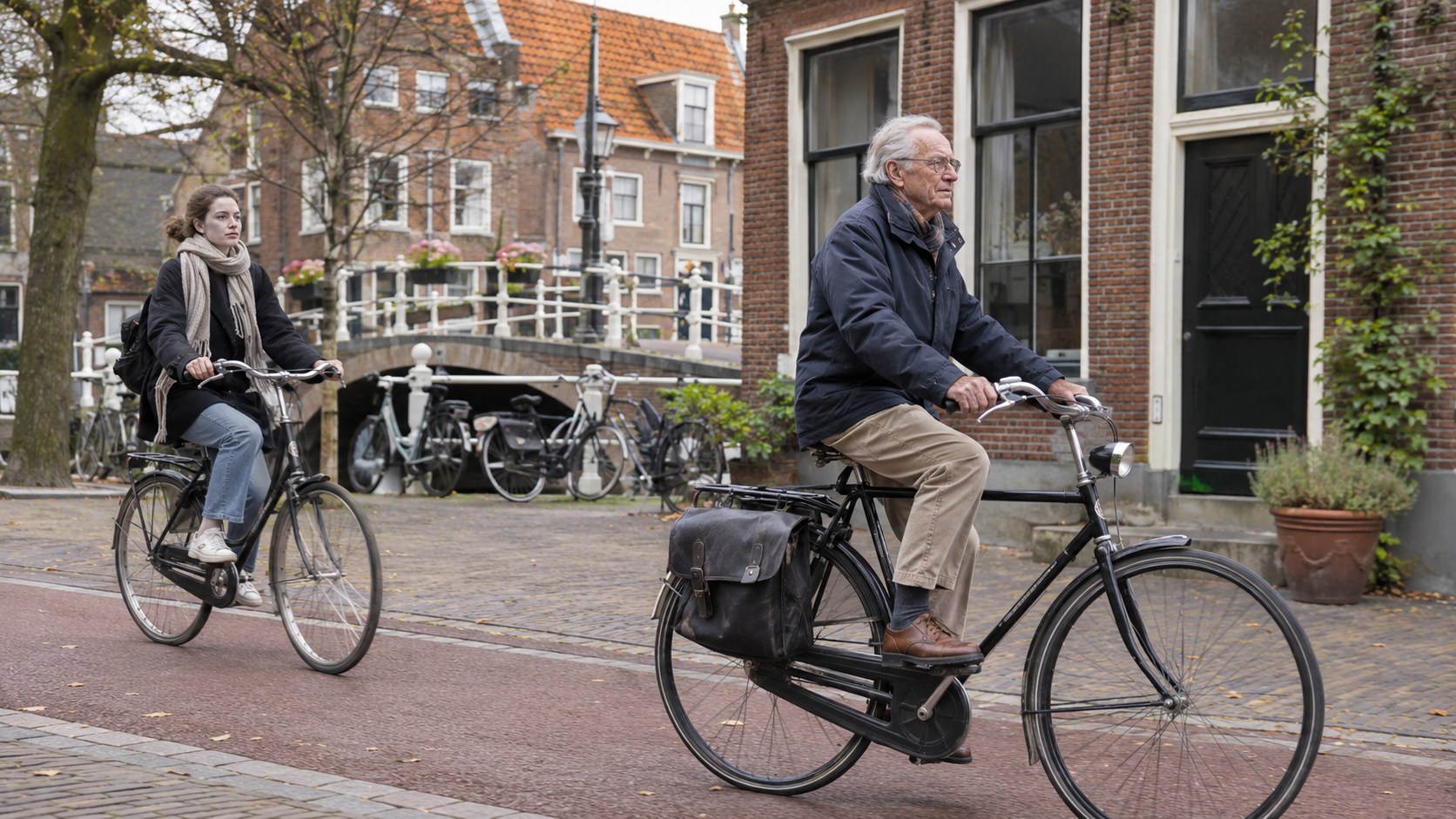
The first thing to understand is that the elderly Dutch cyclist is not doing anything new or special; they are simply continuing. The Dutch cycle at every stage of life, from childhood to old age, and the people you see riding at eighty have been riding since they were small, through every decade in between, and have never had any reason to stop.
This is the crucial difference from how most of the world treats cycling. In the Netherlands, the bicycle is not a phase of youth or a hobby to be taken up and dropped; it is simply the way you move through your life, decade after decade, and so an eighty-year-old on a bike is not someone who went back to cycling but someone who never left it. They did not take it up for their health or decide to get back in shape; they just kept doing the ordinary thing they had always done, the way someone else might keep walking or keep driving. The continuity is the whole point, and it is why the habit reaches so deep into old age.
And because it is so ordinary, they genuinely think nothing of it. Ask a Dutch person in their eighties about cycling to the market and they will look at you blankly, because to them it is not an achievement or a health regimen; it is just getting around, as unremarkable as putting on your shoes. That unselfconsciousness, the complete absence of any sense that cycling at eighty is a feat, is itself part of why it works. A thing you simply do, without pride or effort, as a plain part of daily life, is a thing you keep doing, and the Dutch keep cycling precisely because they have never thought of it as anything worth stopping.
It Is Transport, Not Exercise
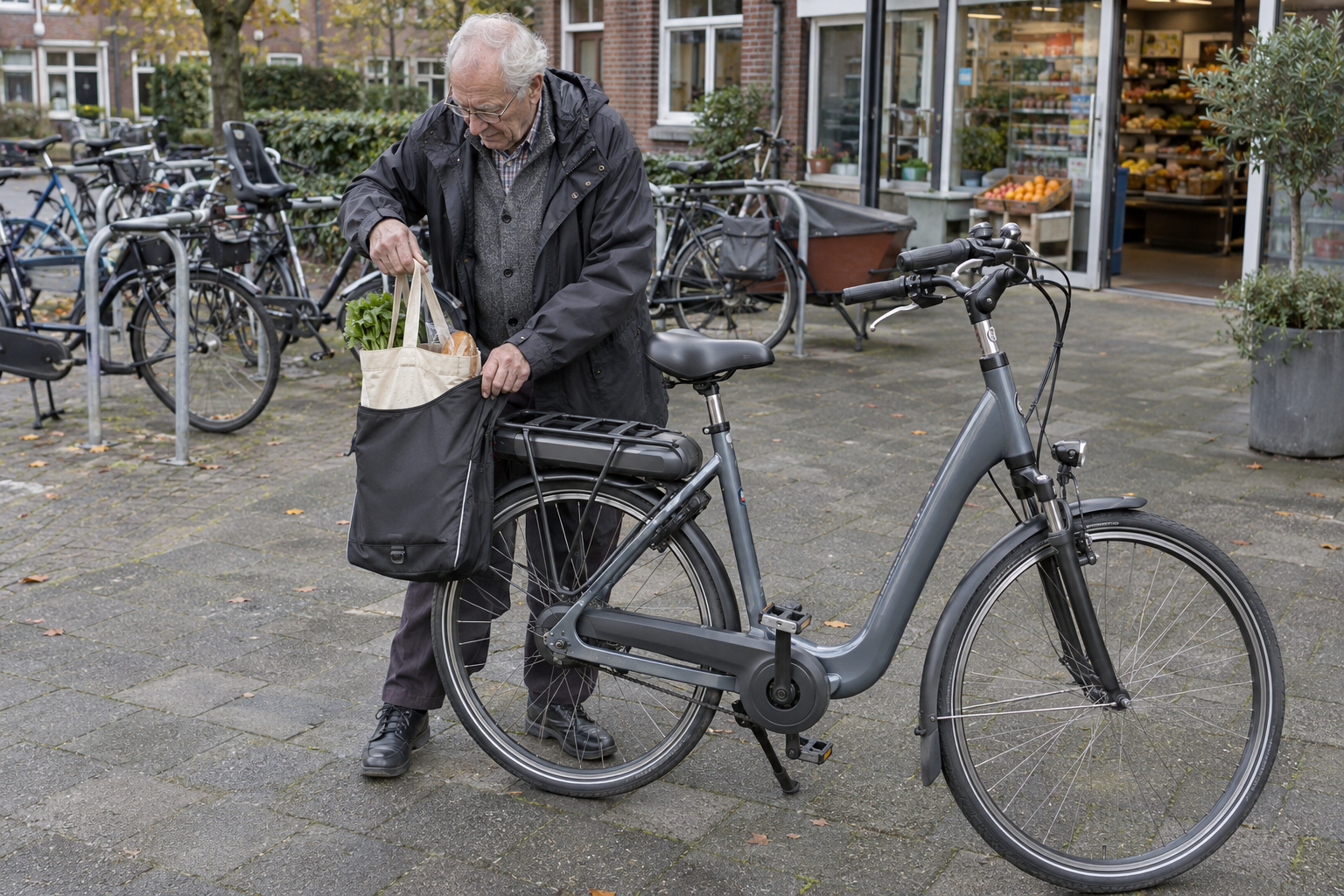
The key to the whole phenomenon, the thing that makes it so different from how other countries think about cycling, is that for the Dutch it is transport, not exercise. This distinction changes everything about how, and how long, people ride.
In most of the world, cycling is framed as sport or fitness, something you do in special clothing, on a fast bike, for the purpose of exertion, as a workout to be fitted into your week. In the Netherlands it is nothing of the kind. The Dutch cycle to get places, to the shops, to a friend’s house, to the doctor, to anywhere, as their ordinary daily transport, in their normal clothes, at an unhurried pace, exactly as others might drive or take the bus. The exercise is entirely incidental; nobody is cycling to burn calories, they are cycling because it is simply how you go somewhere, and the movement comes free with the errand.
This is precisely why it endures into old age when fitness cycling does not. A workout is a chore that requires motivation and that people abandon as they age and energy flags; everyday transport is just life, and it continues as long as life does. Because the Dutch cycle as a means of getting around rather than as exercise, there is no motivation to summon, no regime to keep up, nothing to quit; there is only the ongoing business of living, which happens to involve a bike. The daily movement is woven invisibly into ordinary tasks, which is the only way a lifetime of daily movement is ever actually sustained, and it is the deepest reason the Dutch are still pedaling at eighty.
The Bike That Suits a Life
The bicycle itself matters, because the Dutch do not ride the sort of bike most people picture, and the kind they ride is a large part of why it suits every age. The classic Dutch bicycle is built for comfort and practicality, not speed, and an eighty-year-old can ride one as easily as a teenager.
This is the upright bike, often called an omafiets, a grandma bike, and the name tells you everything. It has a step-through frame that is easy to get on and off without swinging a leg high, an upright riding position that is comfortable and lets you see the world around you, sturdy construction, and a basket or rack for carrying things. You ride it slowly, in whatever clothes you happen to be wearing, sitting up like a person going about their day rather than hunched over like a racer. It is, in short, a bicycle designed for ordinary people to use for ordinary purposes at every age, including the oldest, rather than a sporting machine, and that design is exactly what makes lifelong cycling comfortable and realistic.
Modern technology has extended the cycling life even further, through the electric bike. The e-bike, which provides gentle motorized assistance, has been a genuine boon for older cyclists, flattening the small hills and easing the effort just enough that people can keep riding comfortably into even greater age and through declining strength, and it has become hugely popular among the older Dutch. Between the forgiving upright bike and the assistance of the e-bike, the Dutch have the tools to keep cycling long past the point where a sporty road bike would have forced them off, which is one more reason the habit lasts a lifetime there.
The Infrastructure Makes It Possible
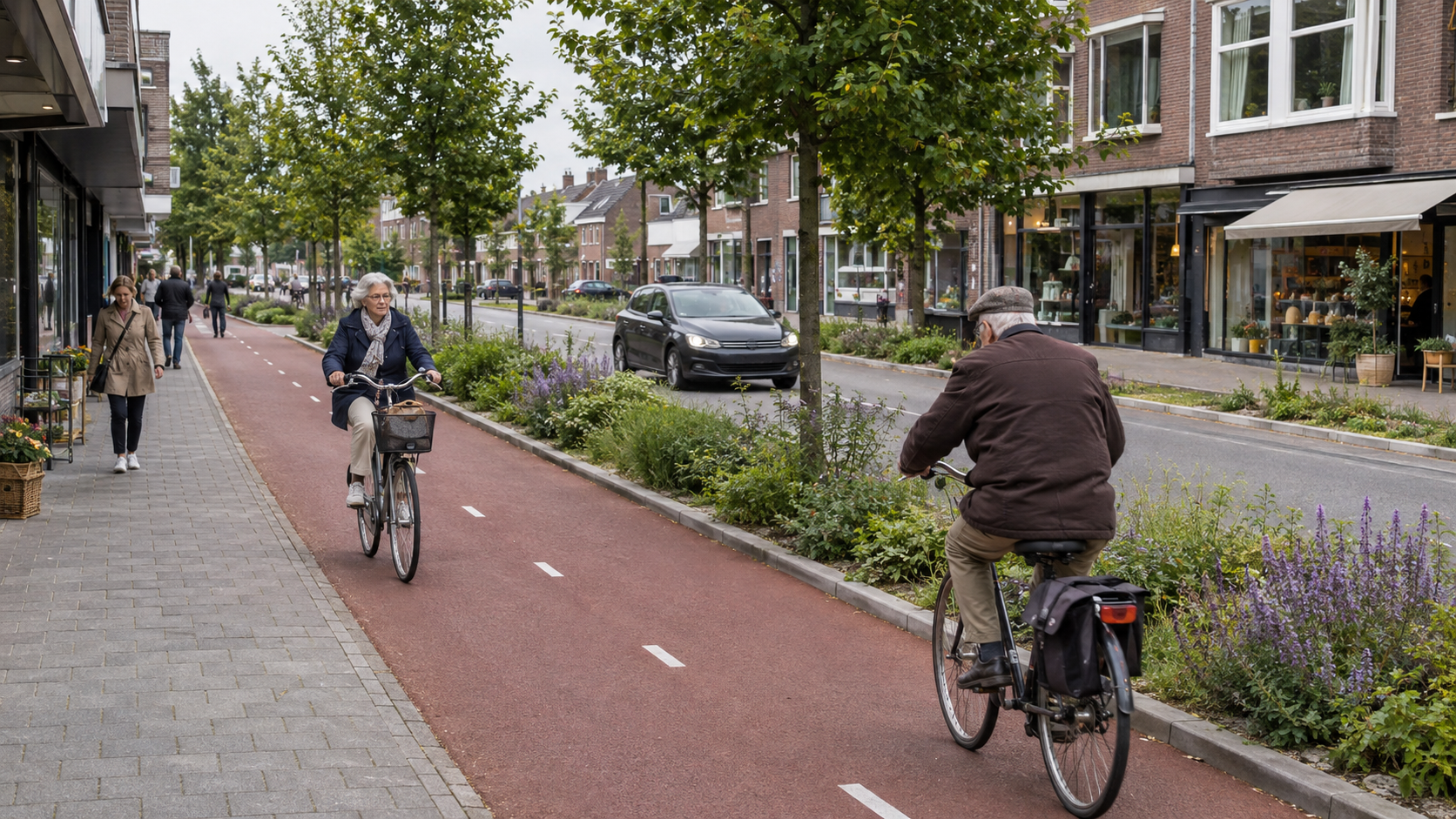
Here is the single most important thing to understand, and the one that most complicates any attempt to simply copy the Dutch: they cycle at eighty because the Netherlands is built for it, and that infrastructure is the precondition for everything else. The Dutch cycling life rests on a foundation that most countries do not have.
The Netherlands has spent decades building one of the finest cycling environments in the world. There are separated bike paths almost everywhere, protecting cyclists from cars; the land is famously flat, making riding easy; traffic is calmed and drivers are deeply accustomed to cyclists and legally protective of them; and the whole country, its towns, its distances, its rules, is arranged around the assumption that people cycle. This is what makes it safe and comfortable for an eighty-year-old to pedal to the shops, because they are doing so on a protected path, on flat ground, among drivers who expect and respect them, rather than taking their life in their hands on a fast road. The elderly Dutch cyclist is only possible because the country made cycling safe enough for the elderly to do.
This is the crucial caveat for anyone tempted to draw a simple lesson, because you genuinely cannot just tell an older person elsewhere to cycle like the Dutch. In a place without the infrastructure, without separated paths, with hostile traffic and car-centric design, cycling at eighty would not be healthy but dangerous, and telling a vulnerable older person to do it would be irresponsible. The Dutch achievement is as much a triumph of urban planning and public investment as of personal habit, and the daily cycling of the elderly is the fruit of a safe system, not just a good attitude. The infrastructure is not a detail; it is the whole enabling condition, and it is exactly what most of the world lacks.
What It Does for Them
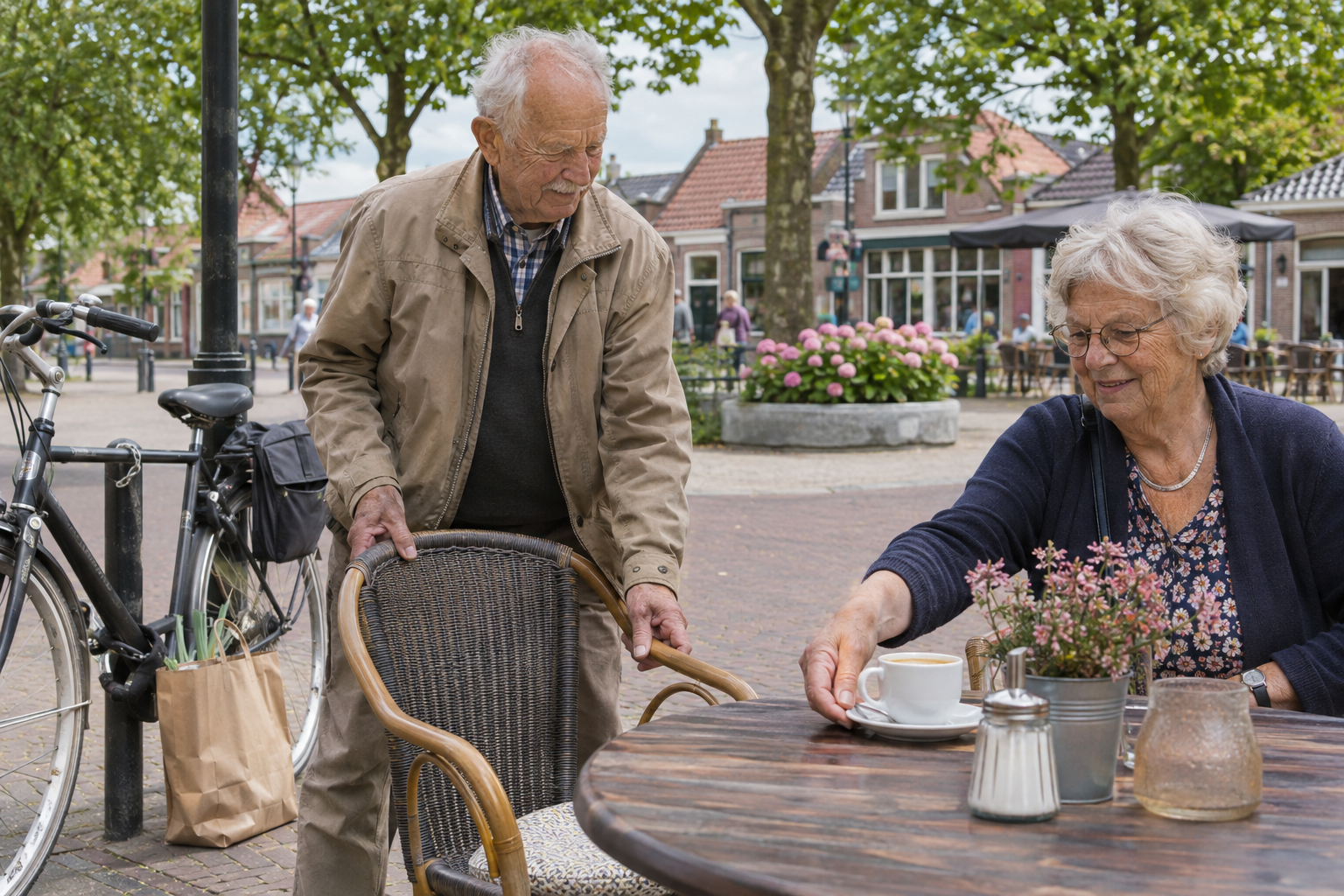
With that caveat firmly in place, it is worth looking at what this lifelong cycling appears to do for the Dutch, because the associations with health and long life are genuinely striking. The Netherlands is consistently among the healthiest and longest-living nations in the world, and its cycling culture is widely thought to be part of the reason.
The logic is one of built-in daily movement. By cycling as their ordinary transport, the Dutch get a steady dose of moderate physical activity woven into every single day, without ever setting foot in a gym or thinking of it as exercise, and that constant, lifelong, low-intensity movement is exactly the kind of activity associated with better cardiovascular health, healthier weight, preserved mobility, and lower mortality. Studies have linked regular cycling to meaningful reductions in the risk of many of the conditions that shadow old age, and the Dutch, pedaling daily for eighty years, accumulate an extraordinary lifetime of that gentle activity. It is, in effect, a national exercise program that nobody experiences as exercise, which is the only kind that ever truly sticks.
Just as important, and often overlooked, is what the cycling does for independence and engagement in old age. The eighty-year-old who can still cycle to the market, to friends, to appointments, retains a mobility and an autonomy that keeps them active, connected, and out in the world, rather than stranded and dependent. The bike is not only moving their body; it is preserving their ability to run their own life, see other people, and remain a participant in their community, all of which matters enormously for wellbeing in later life. The Dutch cycling life delivers movement and independence together, and the combination may be worth more than either alone.
What Americans Lose
The contrast with the typical American experience of old age is stark, and it throws the value of the Dutch way into sharp relief, because it shows what is lost when daily movement is tied to the car. In much of America, the moment an older person can no longer drive, or simply drives less, a great deal of their life contracts at once.
The problem is car-dependence. When getting anywhere requires a car, the elderly who stop driving, through failing eyesight, slower reflexes, or simple caution, lose not just their transport but their daily movement, their independence, and much of their social world in a single stroke, because all of it was bundled into driving. The American eighty-year-old who can no longer drive is often left stranded at home, sedentary and isolated, dependent on others to go anywhere, their world shrinking as their mobility disappears. There is no equivalent of the bike to fall back on, no safe, easy, lifelong alternative that keeps them moving and independent when the car is gone, so the loss of driving becomes the loss of an active life.
This is the same structural gap that appears wherever these European habits of healthy aging are examined. The Dutch cycle, the Spanish walk together in the mornings, the Germans keep up their daily routines, and in each case a culture has built in a way for older people to keep moving, keep going out, and keep participating, where American car-centric life has not. The elderly Dutch cyclist and the stranded American non-driver are two different answers to the same question of how an old person gets through their day, and the difference between them, in movement, independence, and connection, is enormous. What Americans lose, when the car is the only option, is precisely what the bicycle preserves for the Dutch.
The Lesson, and Its Limits
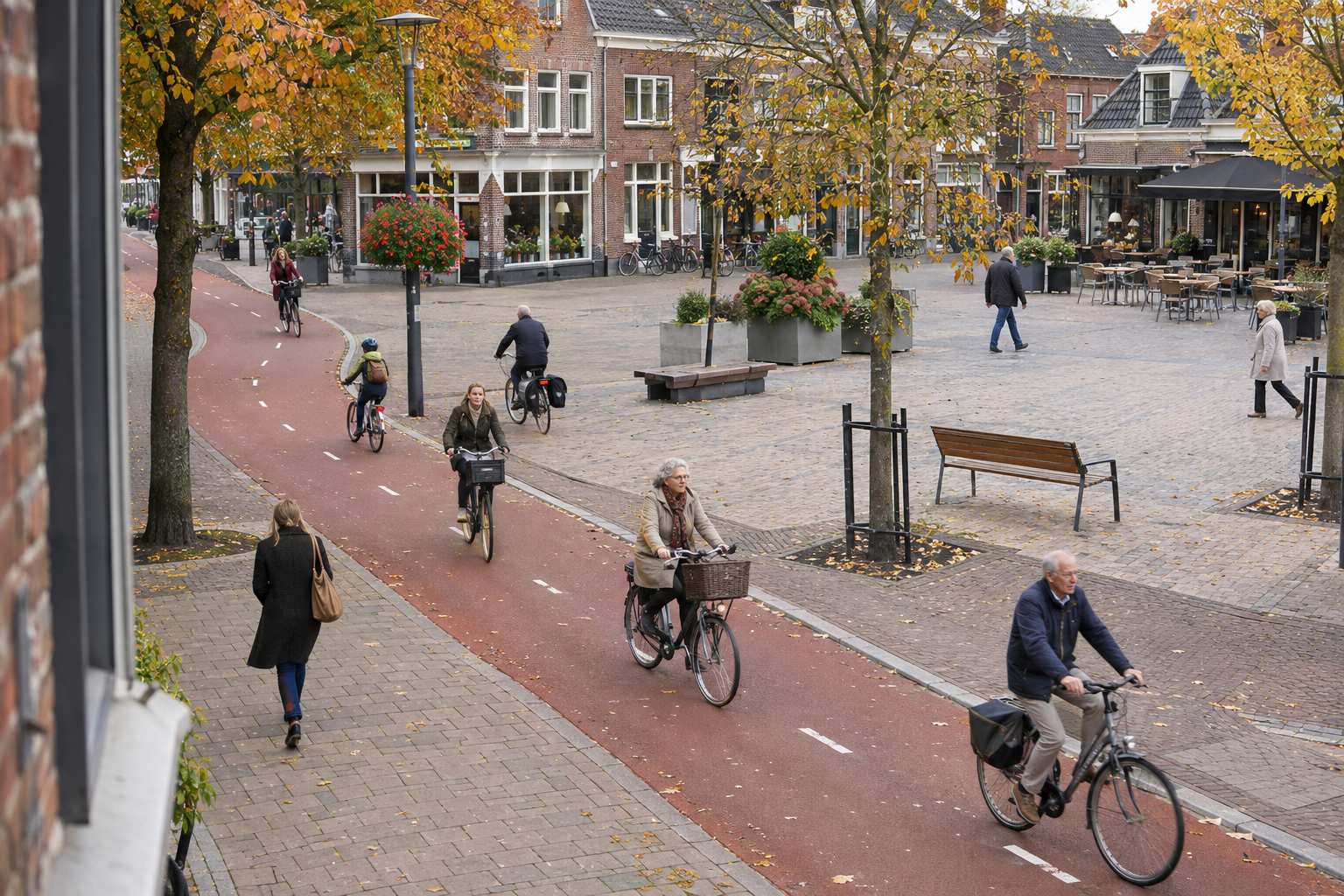
So what is anyone to take from the sight of the Dutch pedaling cheerfully into their eighties? The lesson is real, but it has to be stated carefully, because the simple version, just cycle more, is both incomplete and, in the wrong setting, unwise. The deeper lesson is about the value of daily, lifelong, built-in movement and the independence it preserves, which is worth pursuing however you can.
For the individual, the takeaway is to build gentle movement into the fabric of daily life rather than relying on it as a separate chore, and to protect your mobility and independence into old age by whatever means your circumstances allow, cycling if you safely can, walking, or using the growing array of e-bikes and assisted options that make riding possible for more people and longer. The point is not specifically the bicycle but the principle it embodies: movement woven into ordinary life, sustained for a lifetime, keeping you active and independent as you age. Where it is safe to cycle, cycling is a wonderful way to do that, and the e-bike has widened who can; where it is not, the same principle can be pursued on foot or by other means.
But the honest, larger lesson is about what makes the Dutch way possible at all, and it is aimed as much at societies as individuals. The elderly Dutch cyclist exists because the Netherlands built a country where cycling is safe for everyone, which no amount of personal willpower can substitute for, so the real lesson is that keeping people moving into old age is as much a matter of how we build our towns as of how we choose to live in them.
These benefits are associations rather than guarantees, the Netherlands has its own problems like anywhere, and cycling is no magic shield against age. But the picture it offers, of a whole population still moving, still independent, still out in the world at eighty because their daily life was built around gentle movement, is a genuinely inspiring one, and it points, for individuals and societies both, toward a better way of growing old.

About the Author: Ruben, co-founder of Gamintraveler.com since 2014, is a seasoned traveler from Spain who has explored over 100 countries since 2009. Known for his extensive travel adventures across South America, Europe, the US, Australia, New Zealand, Asia, and Africa, Ruben combines his passion for adventurous yet sustainable living with his love for cycling, highlighted by his remarkable 5-month bicycle journey from Spain to Norway. He currently resides in Spain, where he continues sharing his travel experiences with his partner, Rachel, and their son, Han.