
You sit down in a Japanese restaurant, and before the menu, before the water, before anything, a small rolled hot towel arrives, steaming slightly, often on a little tray. It is one of the first and nicest things that happens to you in Japan, a warm, damp, faintly scented towel offered the moment you arrive, and it feels like an invitation to freshen up after a journey. So the tired American traveler does the natural thing, unrolls it and presses it to their face, maybe wipes their neck, perhaps mops their brow, sighing with relief. And in doing so they have, gently, broken the rule, because the oshibori is for your hands, and wiping your face with it is a small faux pas that marks you instantly as someone who does not know the custom.
There is no fine here, no fee, nothing but the quiet stakes of etiquette, but in Japan those stakes are real, because the oshibori is a piece of a deep culture of hospitality and the way you use it signals whether you understand that culture or not. It is one of the most common small mistakes visitors make, precisely because the towel is so inviting and the correct use so counterintuitive to a hot, tired traveler. Here is what the oshibori actually is, the etiquette around it, why it is for hands and not faces, the errors Americans make, and how to use it like someone who belongs. This is cultural guidance rather than a rule with a penalty.
What the Oshibori Is
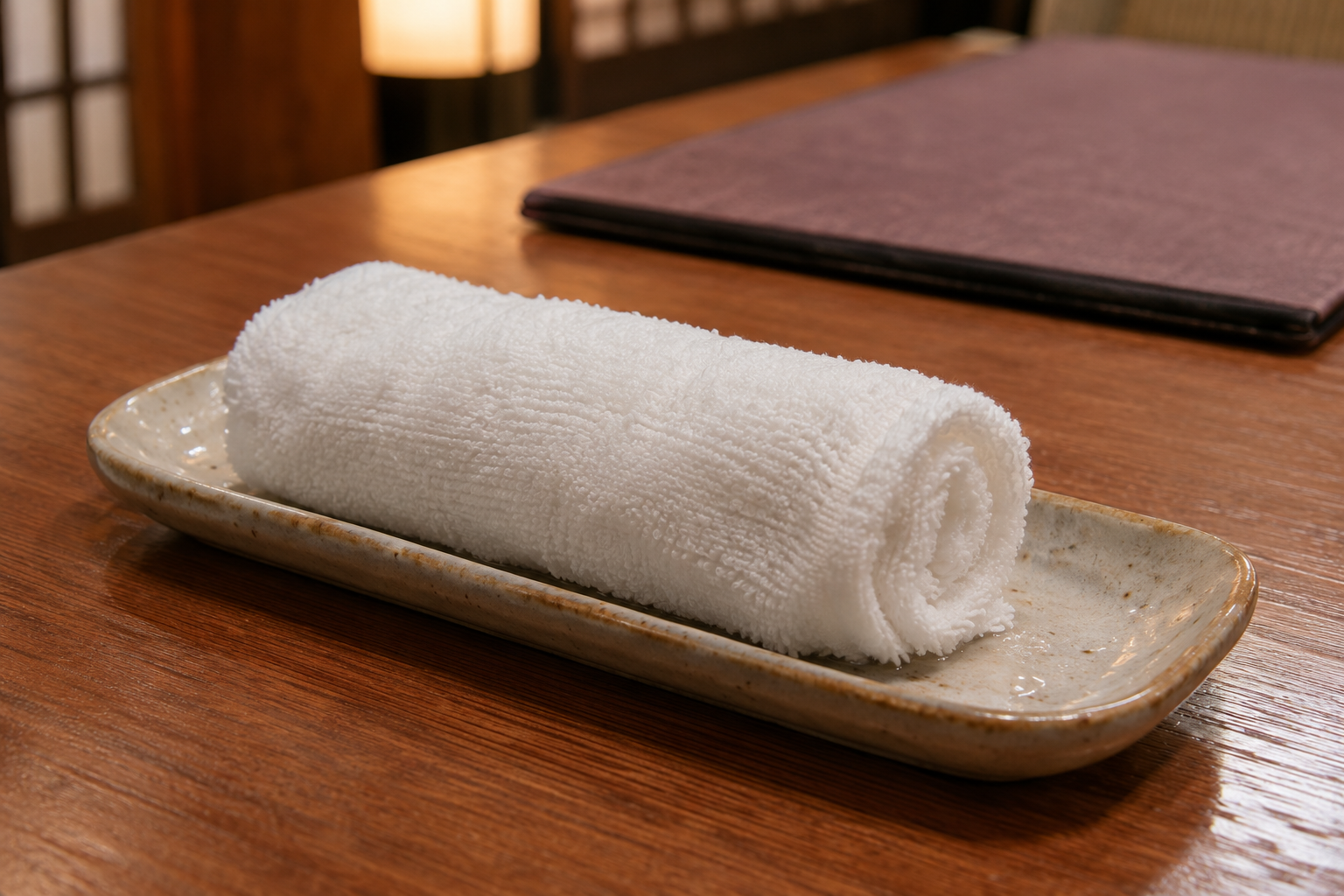
The oshibori is the small, damp, rolled hand towel provided at the start of a meal, or on arrival, in Japanese restaurants and many other establishments, and it is a near-universal feature of Japanese hospitality. In the cooler months it comes hot, steaming and comforting, and in the heat of summer it is often served cold, chilled and refreshing, the temperature chosen to suit the season and the comfort of the guest. It can be a cloth towel in a good restaurant or a sealed disposable one in a casual place, but the gesture is the same.
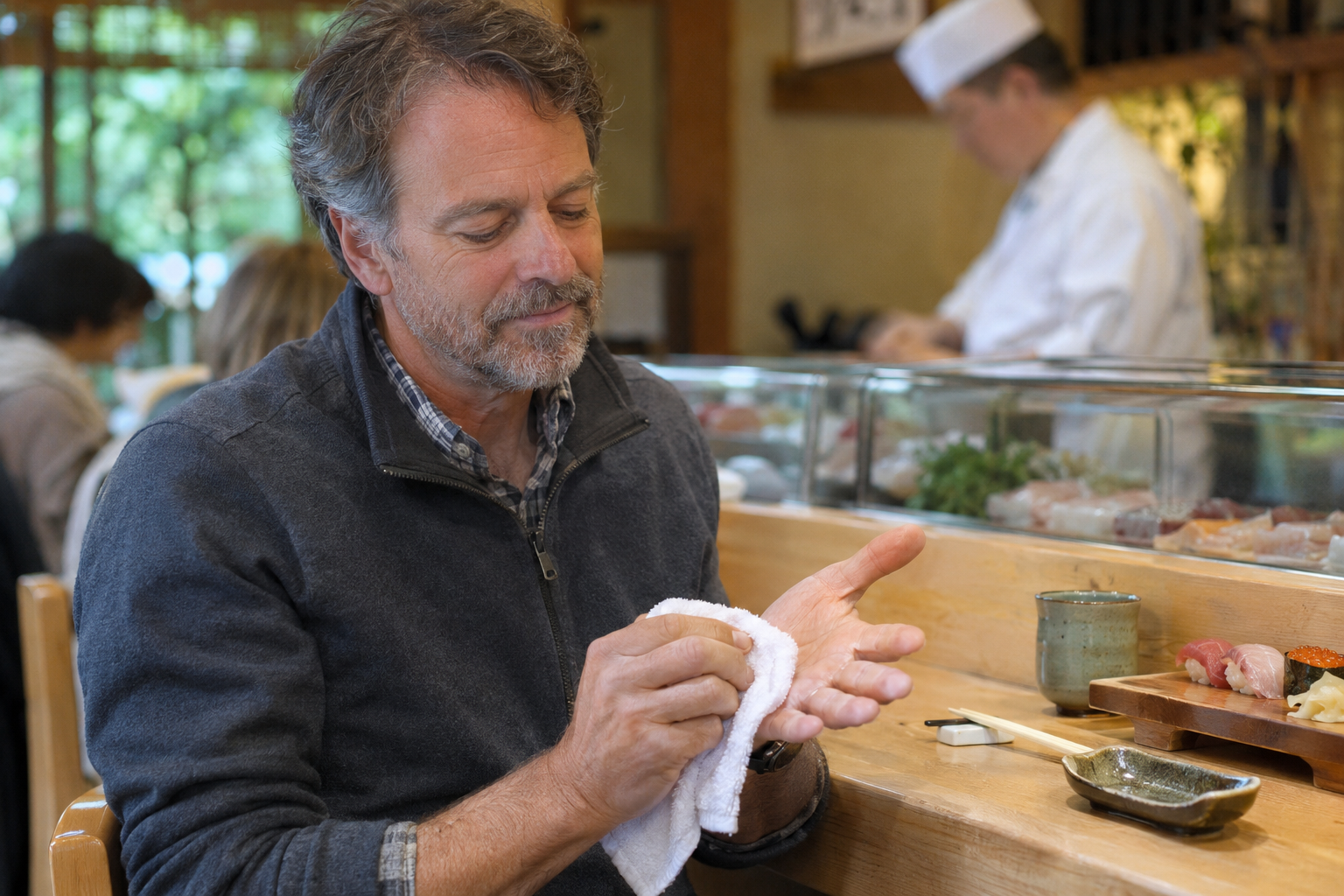
Its practical purpose is to let you clean your hands before eating, and this matters more in Japan than it might elsewhere because of how Japanese food is eaten. A great deal of Japanese food, sushi above all, is traditionally eaten with the hands, picked up and dipped and brought to the mouth directly, so clean hands before the meal are not a nicety but a genuine part of dining well. The oshibori readies your hands for food you may well touch, which is the functional heart of the custom.
But the oshibori is far more than a practical wipe, and this is the part that gives it its weight. It is a gesture of omotenashi, the Japanese concept of wholehearted, anticipatory hospitality, the host’s care for the guest’s comfort offered before the guest even asks. The warm towel waiting for you the moment you sit down is a small act of welcome, a way of saying you are cared for here, and it carries that meaning of hospitality and respect. Understanding that the oshibori is a courtesy extended to you, part of a philosophy of care, is what makes using it correctly feel like good manners rather than arbitrary rules.
The Rule: Hands, Not Face
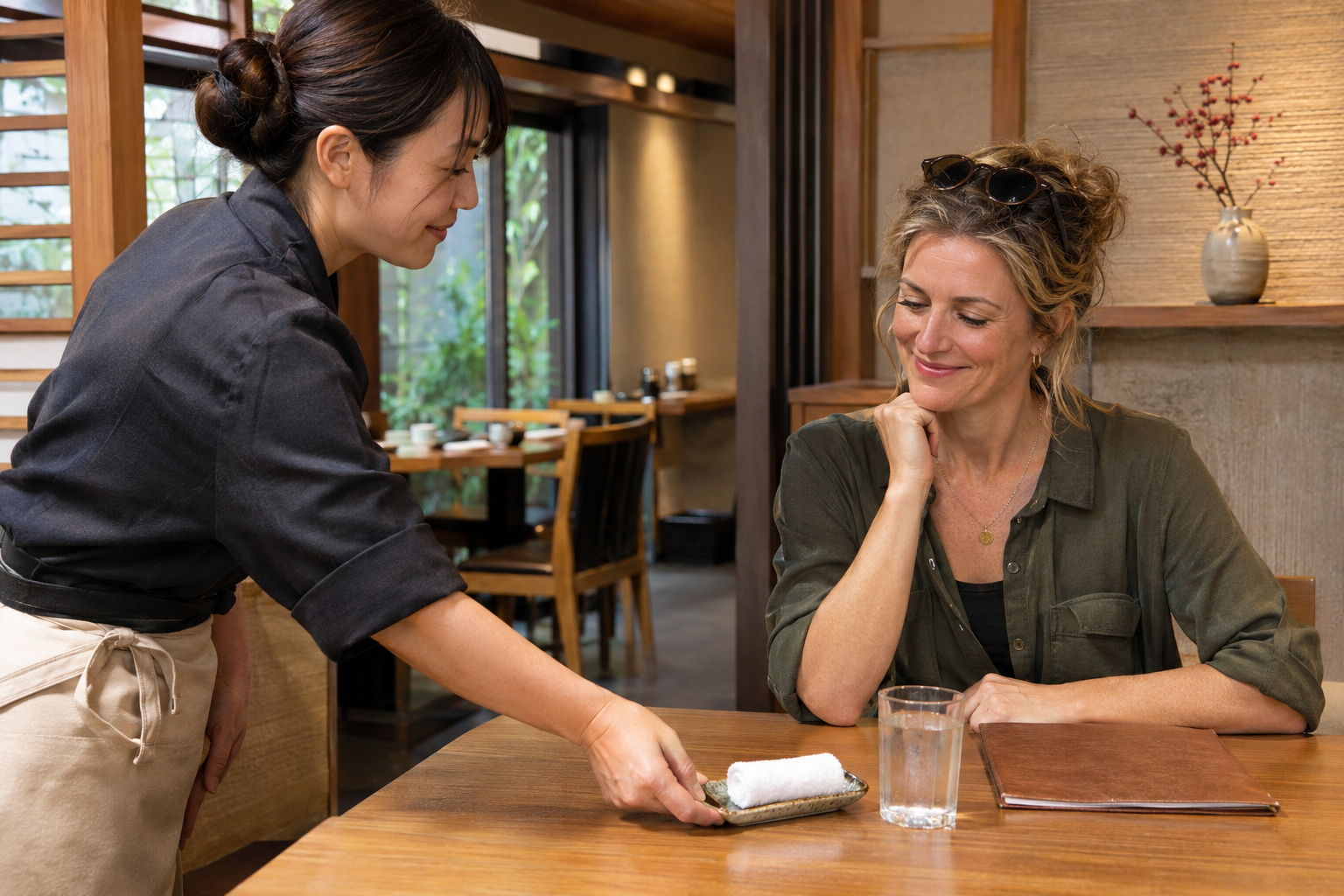
The central rule, the one Americans break, is simple to state: the oshibori is for your hands, and not for your face, neck, or anywhere else. You take the towel, you wipe your hands with it, and that is its proper use. Wiping your face, mopping your neck or brow, or giving yourself a general freshen-up with it is considered improper, a misuse of the towel that treats a dining courtesy as a washcloth, and it reads to those around you as not knowing how things are done.
This feels counterintuitive to the visitor precisely because a hot towel is so obviously perfect for a tired face, and the instinct to press it to your cheeks after a long day is almost irresistible. But the custom is specific, the towel is for the hands that are about to handle food, and extending it to the face crosses a line of etiquette that is clear to every Japanese person at the table even if it is invisible to the newcomer. The very thing that makes the towel so tempting to misuse, its warmth and size and comfort, is what the uninitiated visitor cannot resist and the knowing diner never does.
It is worth an honest note that you may well see Japanese men, particularly older ones in casual settings like an izakaya, wipe their faces with the oshibori, which can make a visitor think the rule does not really hold. But this is generally regarded as informal and technically improper even when done, a known small breach that casual settings tolerate rather than a sign that face-wiping is correct, and it is far more accepted in a relaxed pub than in a proper restaurant. For a visitor wanting to do the right thing, the safe and correct course is always hands only, regardless of what the salaryman at the next table does, because you will never be wrong wiping only your hands and you may well be judged for more.
Where You Will Meet It
The oshibori is not confined to sit-down restaurants, and knowing how widespread it is helps you recognize it as the standard courtesy it is rather than a one-off. You will meet it in izakaya, the casual Japanese pubs, in traditional ryokan inns, in many ordinary eateries, and famously aboard Japanese airlines, where carriers hand out hot towels before the meal service in a small airborne version of the same hospitality. Some cafes, bars, and even taxis offer them too, so the warm towel becomes a recurring feature of Japanese life, not just a restaurant moment.
The temperature tells you something about the care behind it, shifting with the season to suit your comfort, steaming hot to warm your hands in the cold months and chilled and refreshing in the summer heat. That seasonal thoughtfulness is itself a small expression of the hospitality the towel embodies, the host anticipating what will feel good to you at that time of year, and it is a lovely detail to notice once you know to look for it.
Because the oshibori turns up in so many settings, the etiquette you learn for the restaurant travels with you everywhere, from the izakaya to the airplane seat. The same rules, hands not face, folded back, used once, apply wherever the towel appears, so learning them once equips you for every encounter with the oshibori across a whole trip through Japan.
The Rest of the Etiquette
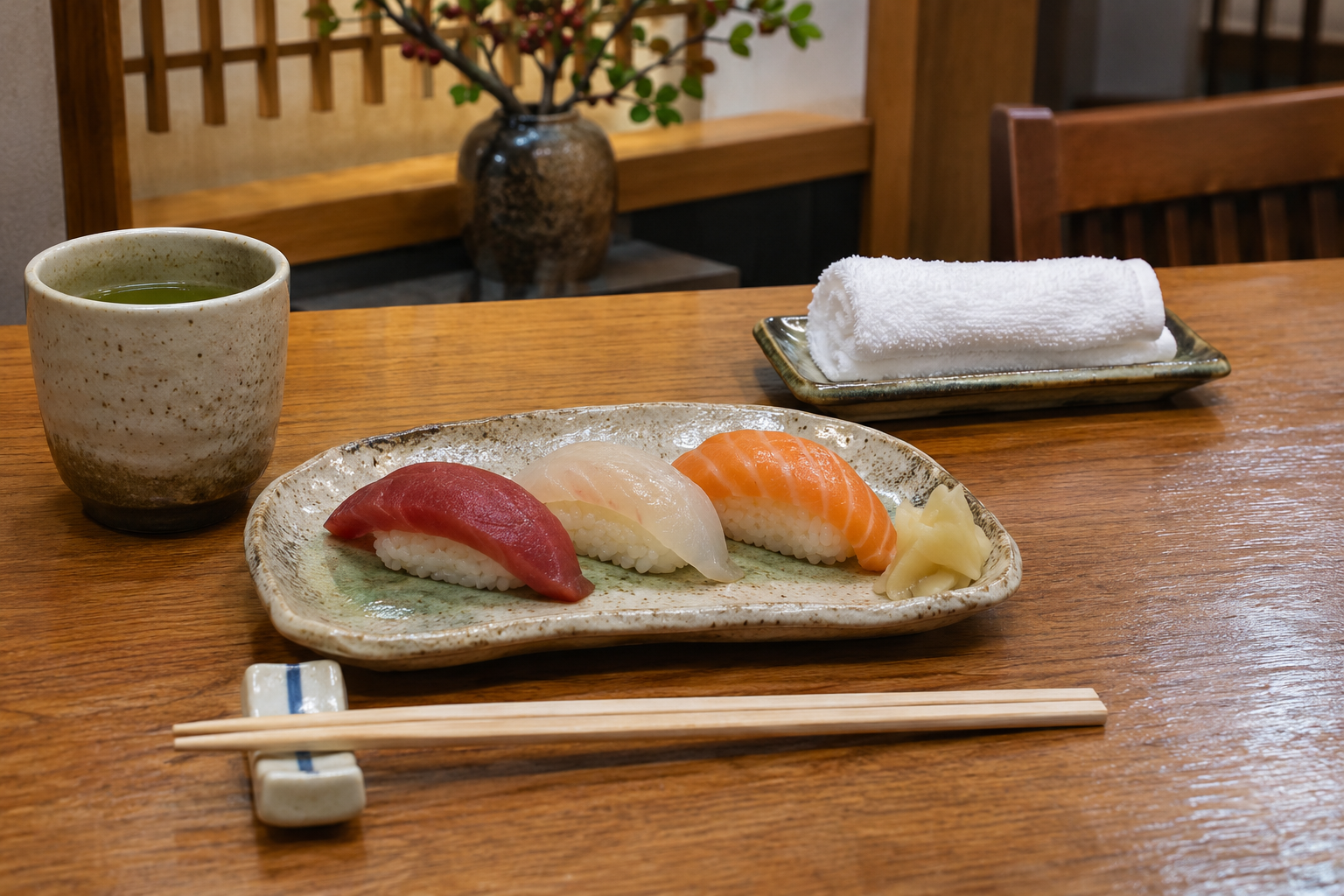
Beyond the hands-not-face rule, a few more points of oshibori etiquette complete the picture, and they are easy to observe once known. After you have wiped your hands, you should fold or re-roll the towel neatly and set it back down, on its tray or beside your place, rather than balling it up, leaving it crumpled, or tossing it aside. The neat return of the towel mirrors the care with which it was given, and a tidily folded oshibori is part of using it gracefully, a small courtesy answering a small courtesy.
Just as important is what the oshibori is not for during the meal. It is not a napkin, and you should not keep it out to wipe your mouth or your hands repeatedly through the meal, nor use it to clean the table or spills; its job is done once you have cleaned your hands at the start, after which it is set aside and your actual napkin takes over. Treating the oshibori as an all-purpose napkin for the whole meal is another common misuse, and the correct pattern is to use it once, at the beginning, for your hands, and then leave it folded and at rest.
And there is one firm prohibition worth stating plainly: never blow your nose on the oshibori, which is a serious breach, far beyond the gentle faux pas of the face-wipe, and genuinely offensive to Japanese sensibilities. The oshibori is a clean courtesy connected with eating, and using it as a handkerchief is deeply improper, so if you need to attend to your nose, use a tissue, never the towel. Keep to these few points, hands only, fold it back, not a napkin, never for your nose, and you have the whole etiquette of the oshibori in hand.
Why It Matters More Than It Seems

It would be easy to dismiss all this as fuss over a towel, but to do so is to miss what the oshibori represents and why handling it well matters in Japan. Japanese dining is woven through with etiquette and ritual, small codified courtesies around chopsticks, pouring drinks, receiving dishes, and the oshibori is one thread in that larger fabric, so using it correctly is part of showing that you respect and understand the culture you are a guest in. The towel is small, but it sits inside a whole system of manners that the Japanese take seriously and notice.
Getting it right is a form of respect, a way of honoring the hospitality being offered to you by receiving it correctly, and that respect is felt and appreciated even when nothing is said. A visitor who uses the oshibori properly, hands only, folded back, demonstrates without a word that they have taken the trouble to understand how things are done, which in a culture that values exactly that kind of consideration lands as a quiet compliment to the host. The stakes are not a fine but something subtler and, in its way, more meaningful, the difference between being a guest who honors the customs and one who tramples them without knowing.
This is why the oshibori belongs in the category of small gestures worth learning before you travel, not because the consequences of getting it wrong are severe, but because getting it right is such an easy and genuine way to show respect, and the gap between the two is a single piece of knowledge. The face-wipe is forgivable, and no Japanese host will scold a foreigner for it, but avoiding it, and using the towel as it is meant to be used, turns a daily restaurant moment into a small, repeated act of cultural respect. In a country where such respect is noticed and valued, that is worth far more than the trivial effort it takes.
The First Step Into a Bigger Code

The oshibori is worth taking seriously partly because it is the first of many dining courtesies you will meet in Japan, the opening move in a whole code of table manners, and handling it well sets the tone for the rest. Japanese dining carries a rich set of etiquette: the chopstick rules, never standing them upright in rice or passing food chopstick to chopstick because both echo funeral rites; the custom of pouring drinks for others rather than yourself and letting them pour for you; the saying of itadakimasu before eating and gochisosama after. The oshibori is your introduction to this world.
Getting the towel right is, in a sense, a promising first note that you are paying attention to the whole code, and a visitor who then goes on to handle their chopsticks thoughtfully and pour for their companions is received as a considerate guest rather than an oblivious one. None of these customs is hard, and none carries a penalty, but together they make the difference between dining in Japan as a respectful participant and blundering through as a tourist who never noticed the manners around them.
So treat the oshibori as the doorway it is, the easiest of the dining courtesies to learn and the first you will encounter, and let getting it right be the start of paying attention to the rest. Master the warm towel of welcome, and you are already thinking in the right way about the meal that follows, which is the whole spirit the oshibori was offered in.
Using It Like You Belong
Putting it all together, the correct sequence is simple and quickly becomes second nature. When the oshibori arrives, take it, wipe your hands with it, enjoying the warmth or the cool without letting it travel up to your face, then fold or roll it neatly and set it back on its tray or beside your setting. Use it once, for your hands, at the start, and then leave it at rest and use your napkin for the remainder of the meal. That is the whole of it, and done smoothly it marks you as a diner who knows the custom.
A few reminders keep you on track. Resist the powerful urge to press the hot towel to your tired face, however good it would feel, because that single gesture is the one that gives the newcomer away. Never use it as a napkin through the meal or, above all, as a handkerchief for your nose.
And return it neatly rather than crumpled, matching the care it was offered with. None of this is difficult, and all of it becomes automatic after a meal or two, at which point you simply use the oshibori correctly without thinking, the way everyone around you does.
The reward for this small effort is to move through Japanese restaurants as someone who understands and honors the hospitality being extended, which is a quietly lovely way to travel in Japan. The oshibori is the very first courtesy you meet when you sit down to eat, the warm towel of welcome, and meeting it correctly sets the tone for a meal taken with respect. Learn the one rule that trips up nearly every visitor, that it is for your hands and not your face, add the few supporting courtesies, and you will have turned the most commonly broken small rule in Japanese dining into one more thing you quietly get right, from the very first towel of the trip.

About the Author: Ruben, co-founder of Gamintraveler.com since 2014, is a seasoned traveler from Spain who has explored over 100 countries since 2009. Known for his extensive travel adventures across South America, Europe, the US, Australia, New Zealand, Asia, and Africa, Ruben combines his passion for adventurous yet sustainable living with his love for cycling, highlighted by his remarkable 5-month bicycle journey from Spain to Norway. He currently resides in Spain, where he continues sharing his travel experiences with his partner, Rachel, and their son, Han.