
Raising American kids in Spain comes with a delightful seasonal puzzle that families back home never have to think about. Your children expect Santa on the twenty-fifth of December, as they always have and as every American child does.
But in Spain, the twenty-fifth is not actually the big gift day. The real magic, the day Spanish children wait all year for, falls on the sixth of January, when the Three Kings arrive with the presents.
So expat kids in Spain end up straddling two worlds, with two gift-giving days, two separate pieces of Christmas magic to keep alive, and two sets of expectations to manage. For their parents, this raises a genuine question every December: how do you honor both? Here is the two-Christmas problem, where it comes from, how the magic differs from the American version, and the clever way families in Spain solve it year after year. It turns out to be one of the happier puzzles of raising children abroad.
In Spain, the Kings Bring the Gifts
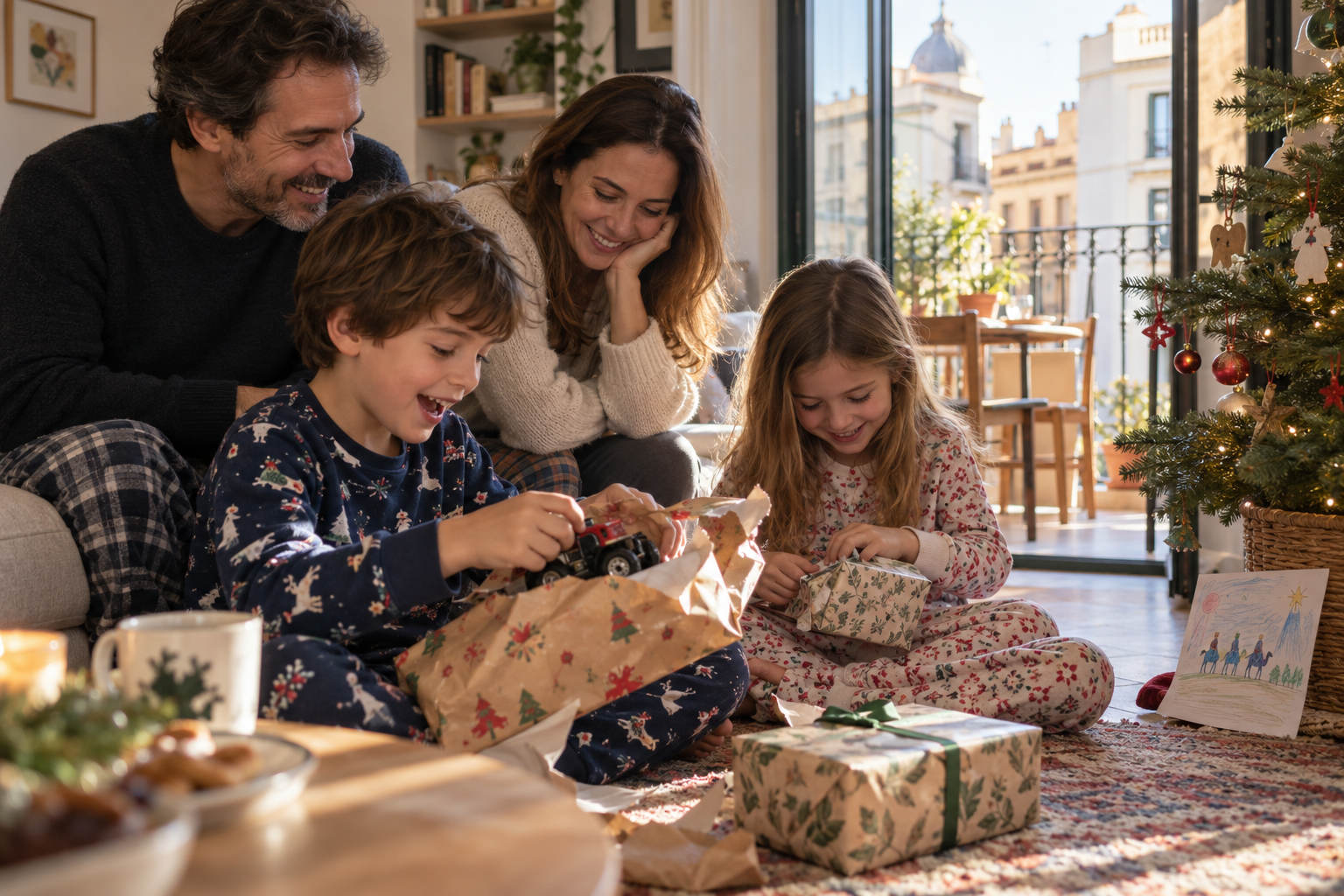
To understand the puzzle, you have to understand that in Spain, the great gift-giving day of the season is not Christmas Day at all. It is the sixth of January, known as Dia de Reyes, the Day of the Kings, or Epiphany.
The gift-bringers are not a jolly man in a red suit but the Three Kings, the Wise Men of the Christmas story, Melchor, Gaspar, and Baltasar. In the biblical tale they brought gold, frankincense, and myrrh to the baby Jesus, and in Spain they bring presents to children, arriving in the night to leave gifts just as they once did in Bethlehem.
This is the deep, traditional heart of a Spanish Christmas. For generations, Spanish children did not hang stockings on Christmas Eve or watch for Santa.
They waited, patiently, through the whole long holiday, all the way until the morning of the sixth of January to tear into their presents. The Kings, not Santa, were the stars of the season, and in many Spanish homes they still are.
The Night of the Kings
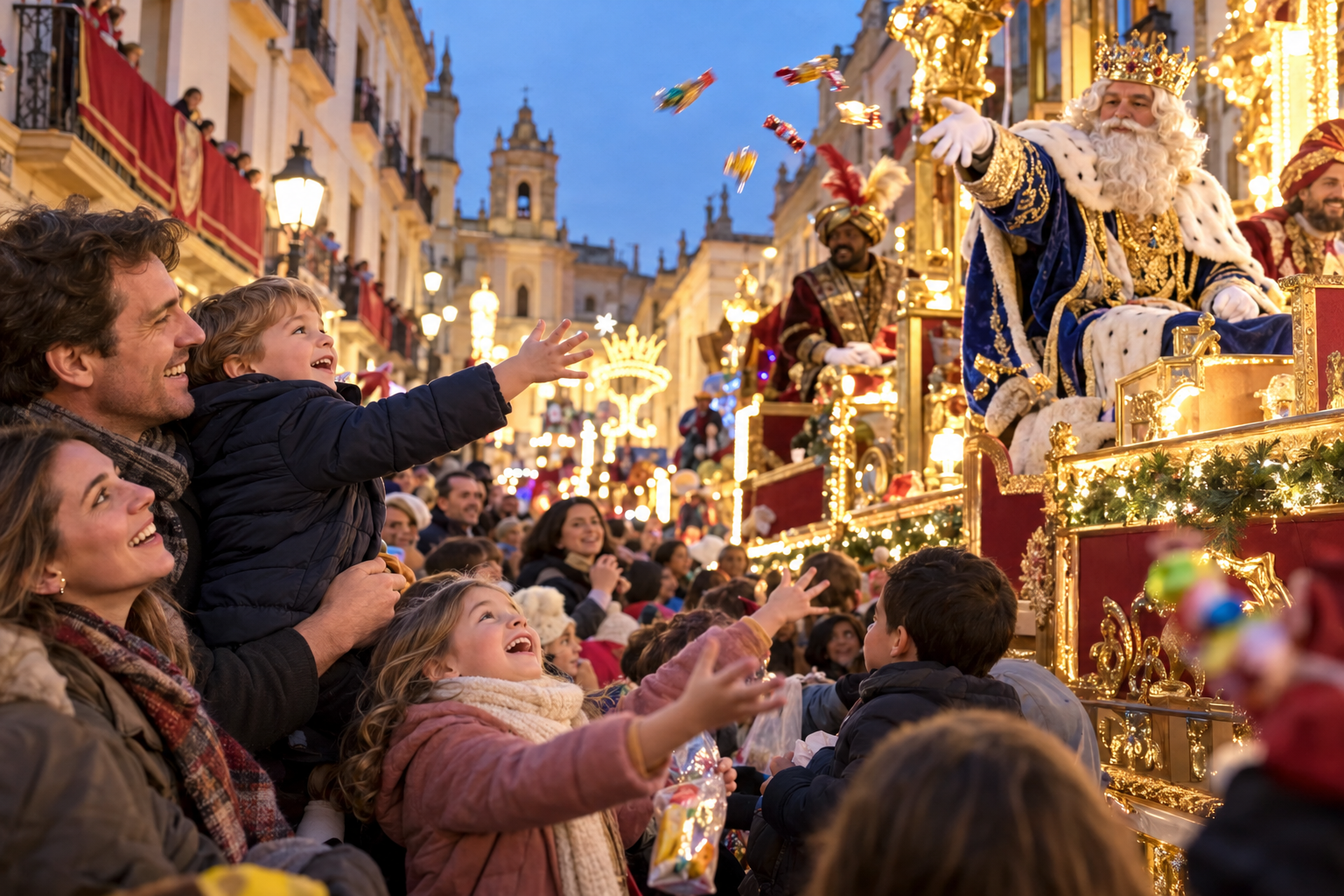
The real spectacle happens the evening before, on the fifth of January, and it is one of the loveliest nights in the Spanish calendar. Nearly every town and city holds a Cabalgata de Reyes, a grand parade in which the Three Kings ride through the streets on dazzling floats, tossing handfuls of candy to the crowds of children who line the route to greet them.
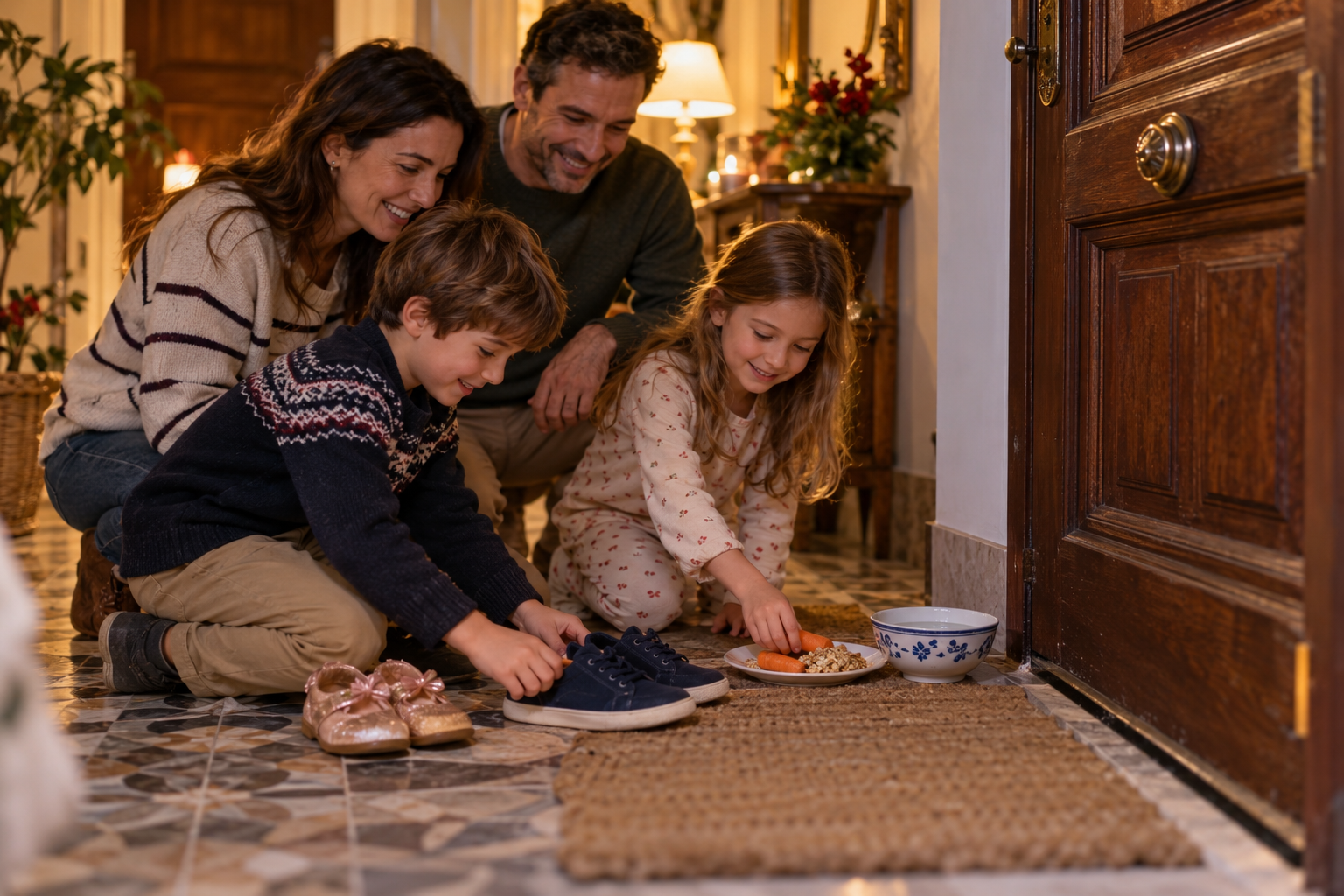
After the parade, the bedtime rituals begin, and they will feel familiar in shape even though the details differ. Children leave out their cleanest shoes, by a window, a door, or the tree, so the Kings know where to leave the gifts. In place of milk and cookies for Santa, they set out food and water for the Kings and their weary camels, a small kindness for travelers who have come a very long way.
In the morning, the children rush to find their shoes surrounded by presents, left by the Kings in the night. Well-behaved children get gifts; the ones who have misbehaved are told they will find only coal, though in practice this coal is a sweet candy version, more joke than punishment. Later that day, families gather to share the roscon de reyes, the ring-shaped king cake with its hidden surprises baked inside, and the long Christmas season finally comes to its sweet close.
Letters to the Kings, Not the North Pole
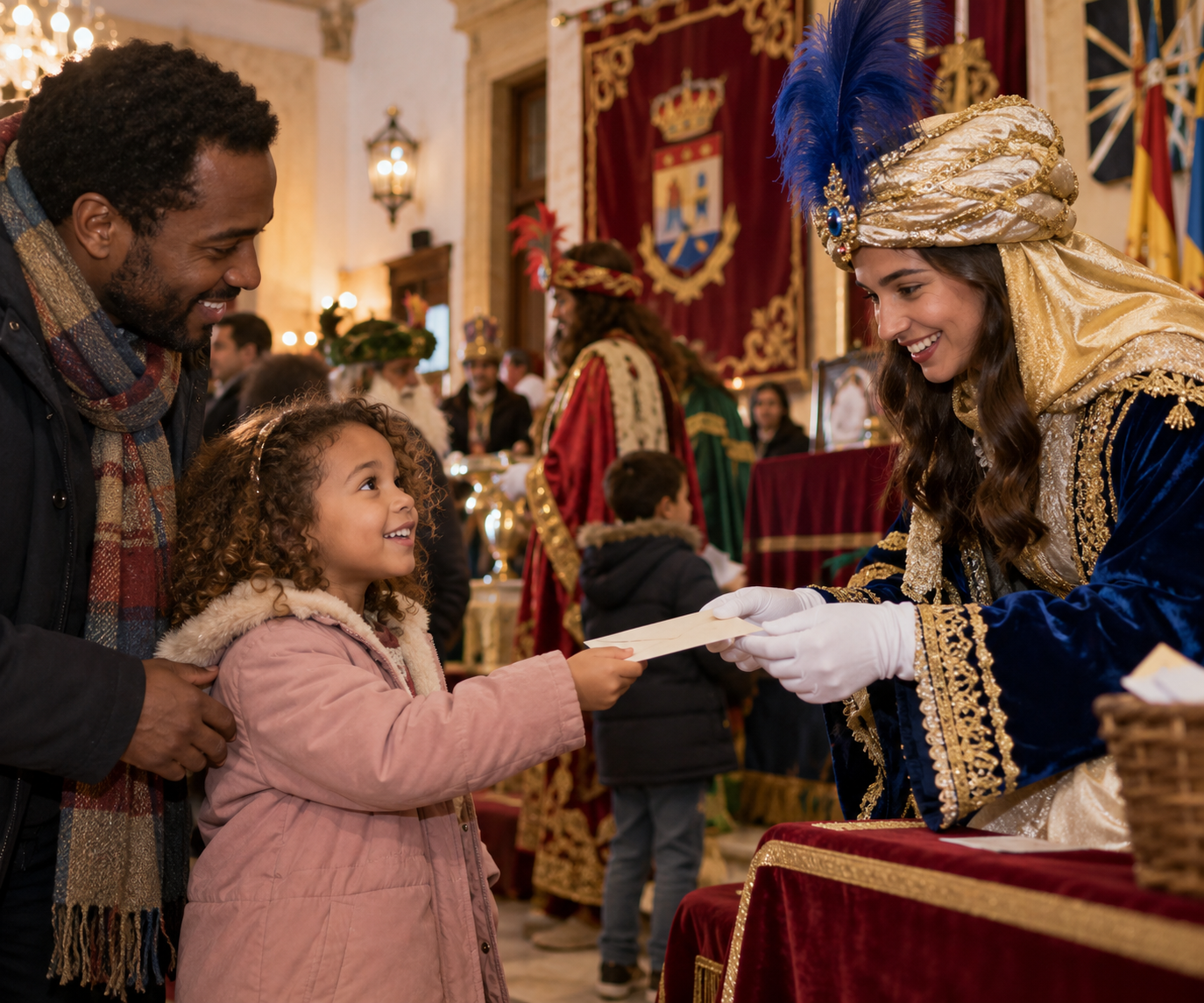
The details of the magic differ from the American version in ways that charm expat families once they get used to them. Spanish children do not write to Santa at the North Pole; they write to the Three Kings, laying out their wishes and promising they have been good.
Those letters have somewhere real to go. In the days before the sixth, the Kings’ royal pages appear around the country, at town halls, shopping centers, and special postboxes, to receive the children’s letters in person and pass them along.
The letters themselves often come with a sweet twist: children are expected to have been good, and the Kings, like Santa, are said to bring coal to those who have not. In Spain that coal has become a joke and a treat in one, sold as carbon de Reyes, a hard black sugar candy that mischievous children receive alongside, or instead of, their real presents. Getting a lump of sweet coal in your shoe is a gentle ribbing rather than a real punishment, and most children end up with both the coal and the gifts.
The season has its own special cake, too, which expat families quickly come to love. On the sixth, Spaniards eat the roscon de Reyes, a ring-shaped sweet bread decorated with candied fruit to look like a jeweled crown.
Baked inside are two surprises: a little figurine and a dried bean. Whoever finds the figurine is crowned king or queen of the day, and whoever gets the bean, by tradition, has to pay for the cake. It is a small game of luck that turns dessert into an event, and children adore the suspense of cutting into their slice.
For an expat family, folding in the roscon, the Cabalgata, and the shoes by the door is not a chore but a delight, a set of new rituals that make the adopted country feel like home. The children get to be fully part of what their Spanish friends are doing, and the parents get to watch their family’s Christmas grow richer and more layered than it ever was back in the States.
There is a practical kindness in the arrangement for the parents, as well. Spreading the gifts across two days takes some of the frantic pressure off the twenty-fifth.
The long gap before the sixth gives a little breathing room, even a chance to catch the January sales before the Kings arrive. What looks at first like twice the work turns out, handled well, to be a season that is not only richer for the children but genuinely easier on the grown-ups who run it. The two-Christmas problem, in the end, mostly solves itself once you stop seeing it as a problem at all. For a child, handing a letter directly to a King’s envoy is every bit as thrilling as a mall Santa, and arguably grander.
And then there are the camels. Where American children leave carrots for reindeer, Spanish children leave food and water out for the Kings’ camels, the animals that carried the Wise Men across the desert. It is a small difference, but for an expat child it is a lovely new wrinkle in a familiar ritual, and swapping reindeer for camels is one of the easiest and most delightful ways to let a child step into the local version of the magic.
Santa Moved In Too
Here is where the modern picture gets more complicated, and more interesting. Over the last few decades, Santa Claus, known in Spain as Papa Noel, has steadily gained ground, especially in the cities, carried in on a wave of films, advertising, and global culture.
The result is that many Spanish families now celebrate both days. Papa Noel brings some gifts on the twenty-fifth of December, and the Kings bring more on the sixth of January, with the presents often divided between the two dates. The old Kings-only tradition is still cherished, and some families hold firmly to it, but for a great many Spanish children today, Christmas already means two gift days rather than one.
This long, generous season stretches all the way from Christmas Eve, Nochebuena, on the twenty-fourth of December, through to the Day of the Kings on the sixth of January. Spanish children are off school for the whole of it, nearly two full weeks of festivity, with the gifts now often bookending the holiday at both ends. The season is simply longer and more drawn out than the single-day American Christmas.
The Expat Family’s Puzzle
Now put an American family down in the middle of all this, and you can see the puzzle take shape. Their children arrived in Spain already believing wholeheartedly in Santa and in presents on the morning of the twenty-fifth, because that is the tradition they were born into and the one all their relatives back home still keep.
But now those same children are surrounded by Spanish friends buzzing about the Kings, talking about the Cabalgata, comparing the presents they got on the sixth of January.
An expat kid who only does Santa risks feeling out of step with everyone around them, missing the magic their classmates are all sharing in the new year. Children feel these differences keenly, and no parent wants their child to be the odd one out when the whole class is comparing Kings’ gifts.
So the parents face a real decision, and it is not a trivial one. Lean only on Santa, and the children miss the beloved local tradition and feel different from their friends. Go all in on both, with a full haul of gifts on the twenty-fifth and another full haul on the sixth, and you risk doubling the expense and raising children who expect two complete Christmases every single year. Somewhere between those extremes lies the sensible path, and finding it is the two-Christmas problem.
A Longer, Slower Season
One of the unexpected gifts of the two-Christmas setup is what it does to the shape of the whole holiday, stretching it out in a way that takes the pressure off. In the American model, everything piles onto a single morning: all the gifts, all the excitement, all the expectation crammed into the twenty-fifth, and then a slightly flat feeling afterward as it is suddenly all over.
The Spanish calendar spreads things out instead. The season runs from Christmas Eve through to the sixth of January, nearly two weeks, with gifts at both ends and the long, relaxed middle given over to family, food, and rest. For expat kids, this means the magic does not end abruptly on the twenty-fifth; there is still the Kings to look forward to, still the Cabalgata parade to come, still presents waiting at the start of the new year.
Many expat families come to prefer this gentler rhythm. The drawn-out season feels less frantic and less commercial, more about the time together than the single frenzied morning of unwrapping. What starts as a logistical headache, two gift days to manage, often ends up as something they actively treasure: a Christmas with room to breathe, that unfolds slowly over two weeks rather than exploding and vanishing in a single day.
How Families Solve It
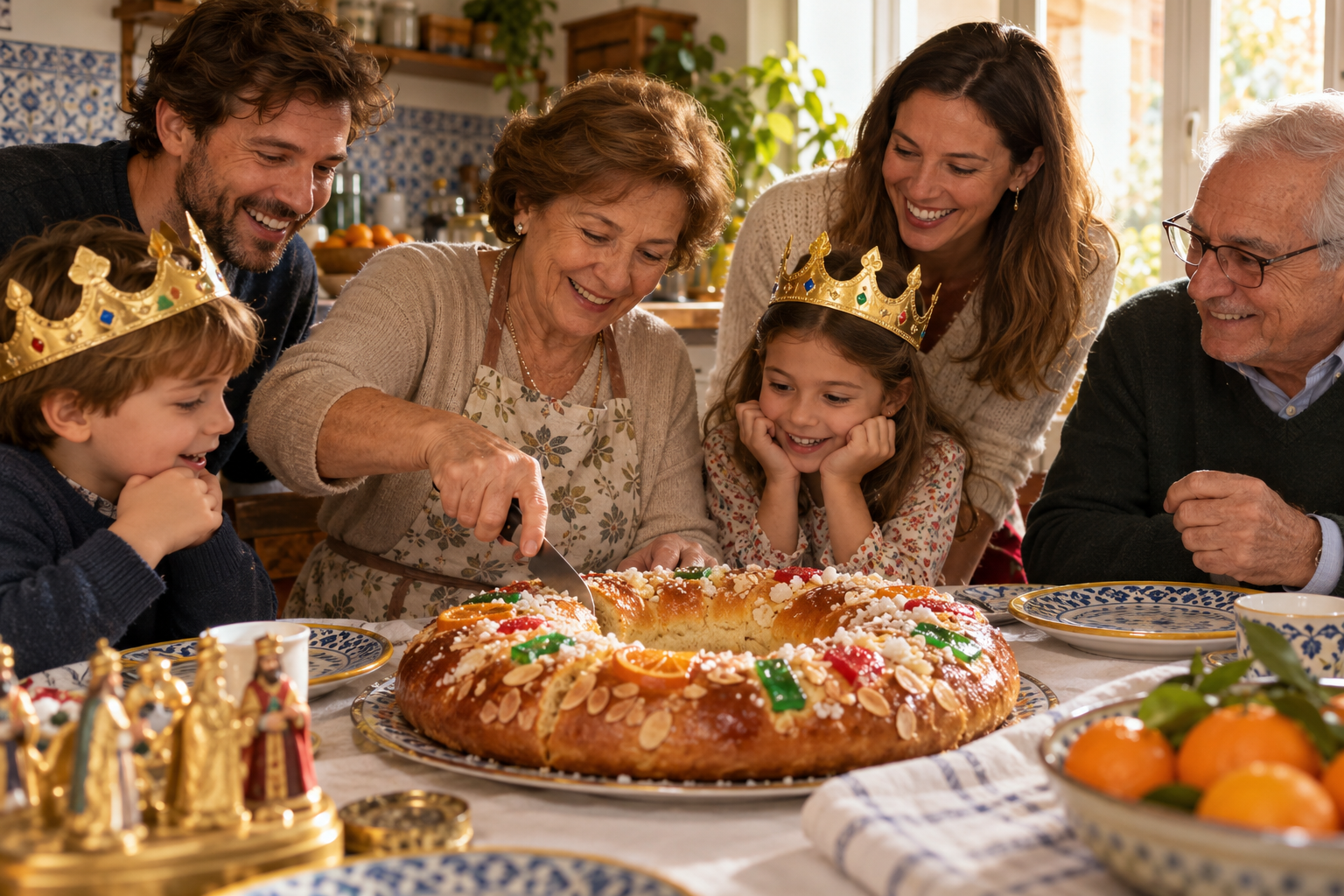
The solution most expat families land on is simple and rather elegant: do both days, but split the gifts between them. Rather than two complete Christmases, the presents are divided, so Santa brings a few things on the twenty-fifth and the Kings bring a few more on the sixth of January.
This quietly solves everything at once. The total number of gifts stays sensible, so nobody is doubling the budget or spoiling the children. The home tradition of Santa stays alive, keeping the connection to family back in America and to the Christmas the parents themselves grew up with. And the local tradition of the Kings is fully embraced, so the children get to join their Spanish friends in the whole glorious business of the Cabalgata, the shoes, the camels, and the morning of the sixth.
Seen this way, the two-Christmas problem turns out to be more of a two-Christmas gift. Expat children in Spain get a season that is longer, richer, and more magical than the one in either country alone, a Christmas that begins with Santa and ends, almost two weeks later, with Kings riding through the streets throwing candy.
The parents do a little extra juggling and a little careful dividing of the presents, and in return their children get the best of both worlds. It is one of those small complications of expat life that, once solved, you would not actually want to give up.

About the Author: Ruben, co-founder of Gamintraveler.com since 2014, is a seasoned traveler from Spain who has explored over 100 countries since 2009. Known for his extensive travel adventures across South America, Europe, the US, Australia, New Zealand, Asia, and Africa, Ruben combines his passion for adventurous yet sustainable living with his love for cycling, highlighted by his remarkable 5-month bicycle journey from Spain to Norway. He currently resides in Spain, where he continues sharing his travel experiences with his partner, Rachel, and their son, Han.