
Say the word paella almost anywhere in the world and point at a pan of saffron rice studded with shrimp, mussels, and slices of chorizo, and you will have a perfectly nice dinner and a completely wrong idea.
Say it in Valencia, and someone will gently, or not so gently, set you straight, because to a Valencian that dish is not paella at all. Real paella, the original, the one that gave the dish its name, is paella valenciana, and it is a humble land dish of chicken, rabbit, and beans, with no seafood and absolutely no chorizo. Valencians are famously protective of it, quick to correct outsiders who get it wrong, and here is the thing that surprises people: they are right. This is their dish, their heritage, and they know exactly what belongs in it. Here is what real paella actually is, what it is emphatically not, why Valencians defend it so fiercely, the great chorizo war, the sacred crust called the socarrat, and how to make the genuine article yourself. By the end you will understand both the dish and the passion it inspires, and you will never again put chorizo in a paella.
What follows is what real paella actually is, what it is not, the chorizo war, the sacred socarrat, and how to make it yourself.
What Real Paella Actually Is
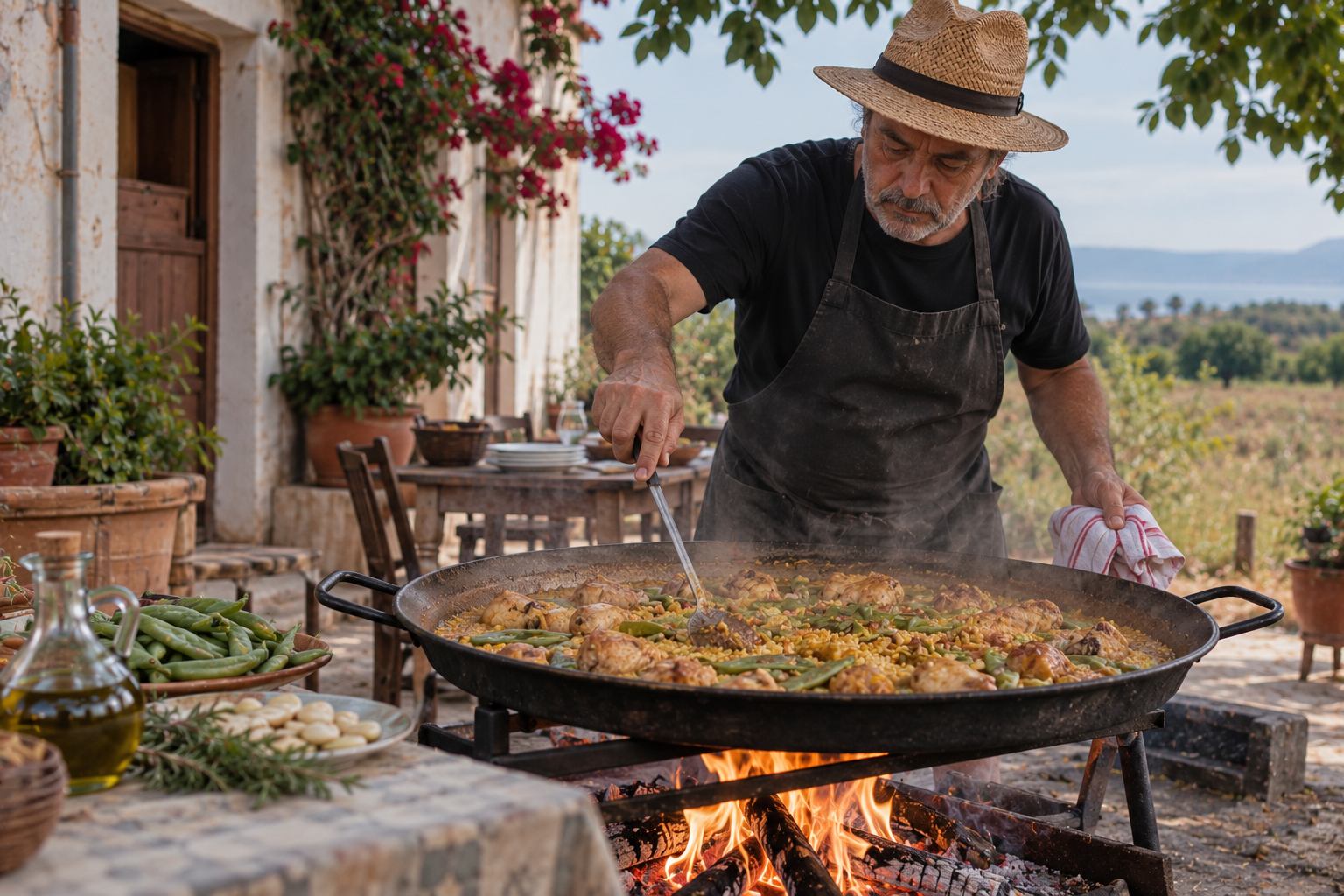
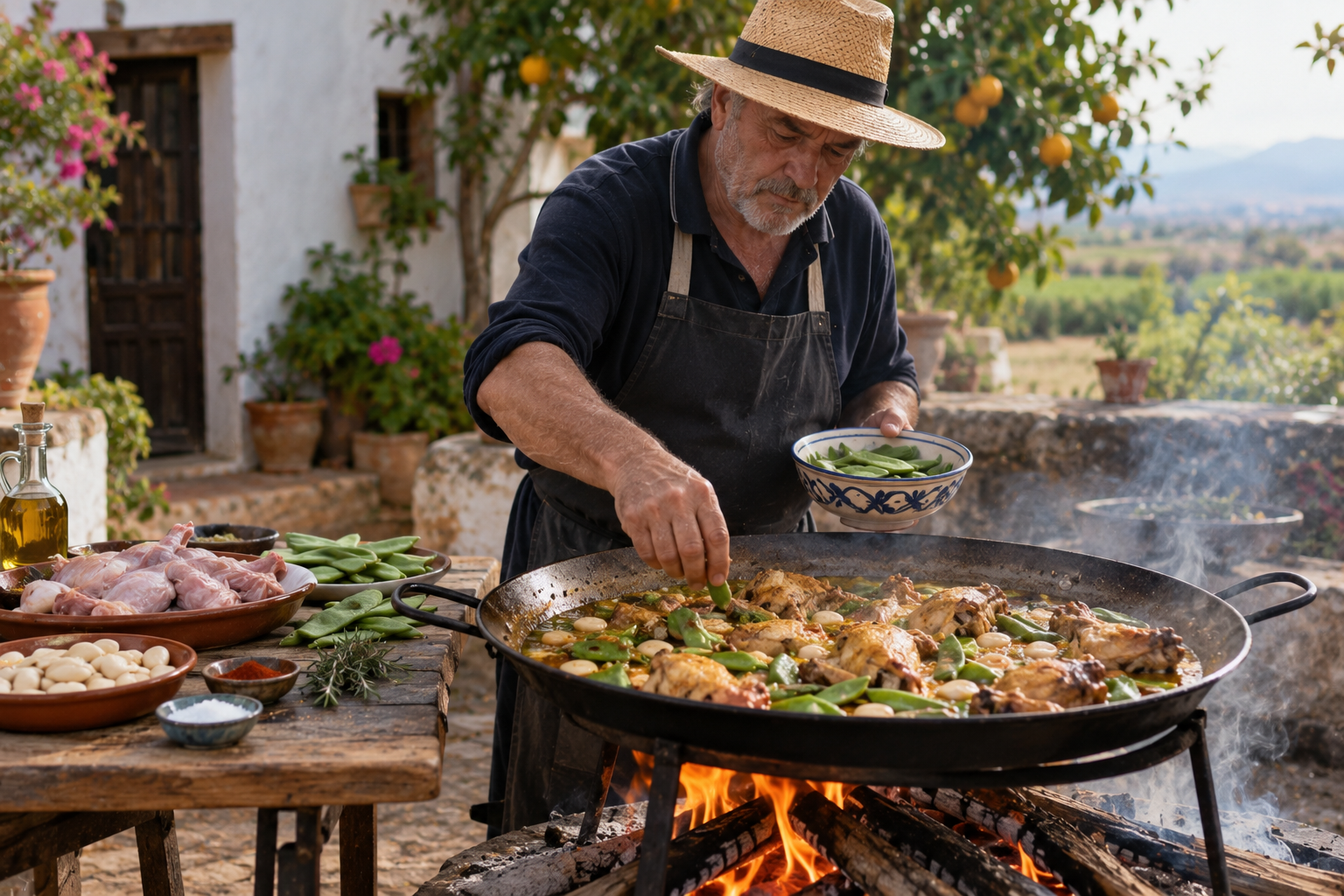
Authentic paella valenciana is a dish of the land, not the sea, and understanding that is the beginning of understanding everything about it. It was born in the sixteenth century in the Albufera, the rice wetlands south of Valencia, the rice-growing wetlands just south of Valencia, where farm workers cooked rice over an open fire with whatever the fields and the farmyard provided: rabbit, chicken, sometimes snails or duck, the beans and vegetables of the Valencian orchard, and the rice that grew all around them. That humble origin is the whole character of the dish, a peasant meal of rice and farm meat cooked outdoors over wood.
The traditional recipe, as defended by Valencian authorities on the subject, is remarkably specific. It is built on short-grain Valencian rice, chicken, and rabbit, together with two particular vegetables that are essential and a little hard to find outside Spain: ferradura (the flat green bean) and garrofo (a native white butter bean).
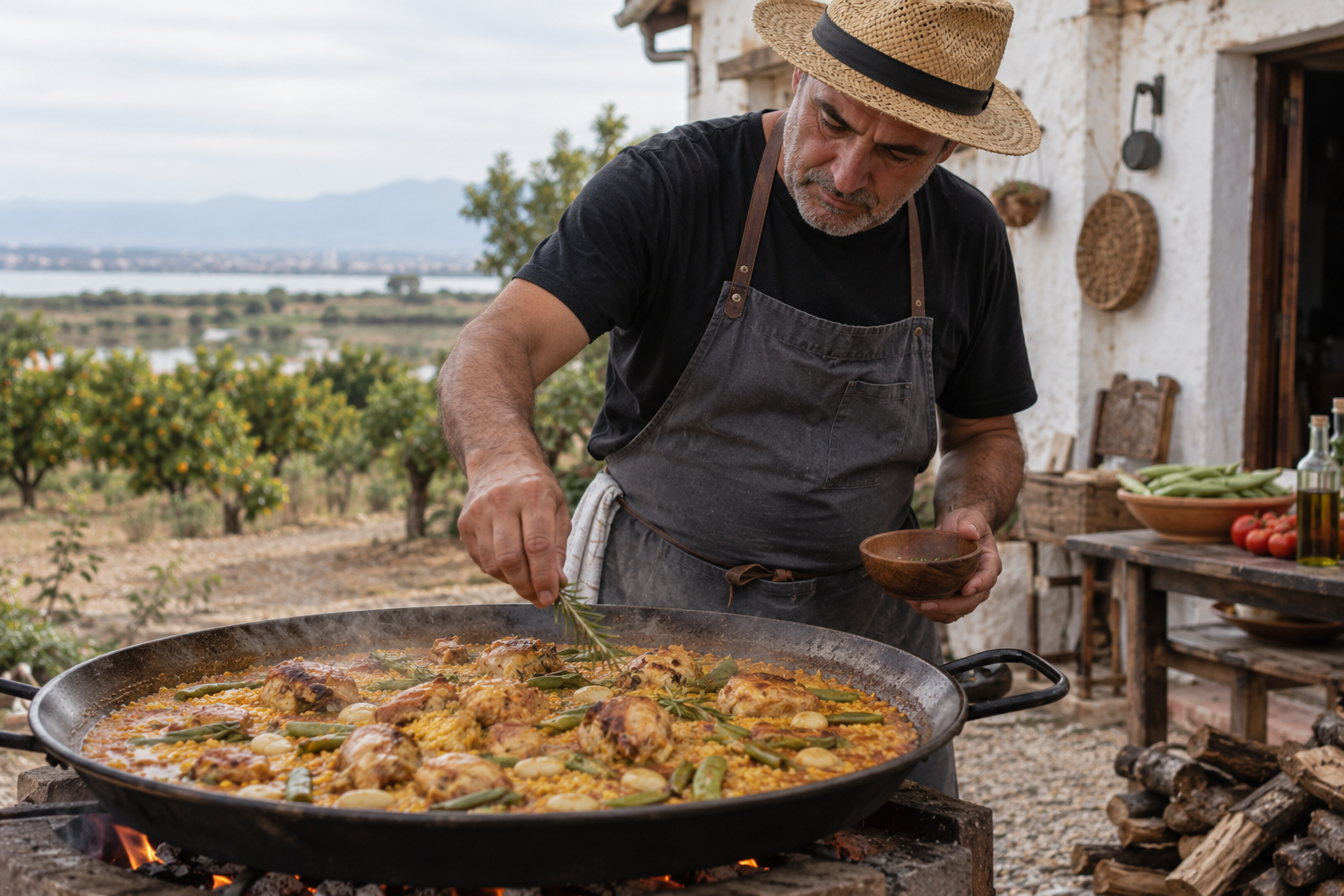
To those go grated tomato, good olive oil, saffron for its color and aroma, a little sweet paprika, salt, water, and a sprig of fresh rosemary that perfumes the dish and is then removed. It is cooked, always, in the wide, flat pan that is itself called a paella, over an even fire, so that the rice spreads out in a thin layer and cooks evenly. That is the real thing: rice, farm meat, Valencian beans, saffron, and fire. Everything about it, the rice, the rabbit, the local beans, the saffron, speaks directly of the rice paddies and the orchards where it was born, which is exactly why Valencians feel it so deeply and personally as theirs rather than as a generic Spanish dish. It is not Spain’s paella to them; it is Valencia’s, specifically, and the distinction matters enormously.
What It Is Not
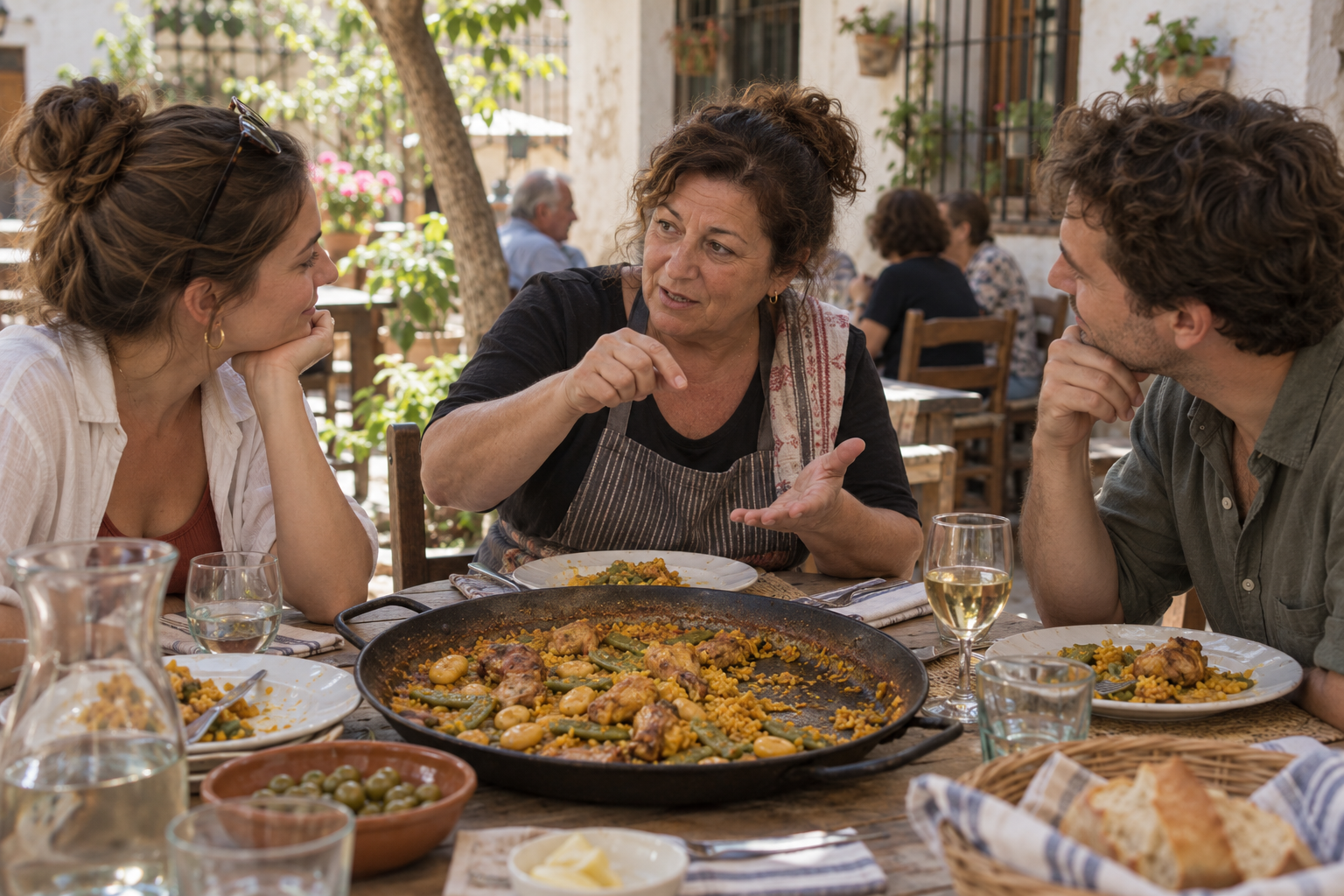
Here is where the corrections come in, and where a lot of the world’s idea of paella collides with the Valencian reality. To a Valencian, a great many dishes called paella elsewhere are simply not paella valenciana, and the differences are not snobbery but definition. Seafood is the big one: the shrimp-and-mussel version on tourist menus is a different dish, paella de marisco and foreign imaginations is a different dish entirely, paella de marisco, a seafood rice that developed later in the coastal communities and is perfectly respectable on its own terms, but it is not the original paella valenciana and should not be confused with it. Mixing meat and seafood together, the so-called paella mixta, is regarded by purists as a tourist invention, a combination no traditional Valencian cook would make.
Then there are the additions that simply do not belong at all. Chorizo is never, ever part of traditional paella, a point Valencians will make with real feeling. Peas are not traditional. Onion is left out of the classic recipe.
And when a dish strays far enough from the real formula, Valencians have a wonderfully dismissive phrase for it: arroz con cosas, rice with stuff, a polite way of saying it is a rice dish, sure, but do not dare call it paella valenciana. The line they draw is not arbitrary; it traces the actual historical recipe, the one handed down from the rice fields, and everything outside that line is, to them, something else. You can make and enjoy all the variations you like, and plenty of them are genuinely delicious dishes in their own right, but if you call a chorizo-and-shrimp rice a paella valenciana in Valencia itself, you should fully expect to be corrected, and here is the crucial point: the correction will be factually accurate. They are not gatekeeping out of arrogance; they are simply stating what the dish is and is not.
Why It Matters So Much to Them
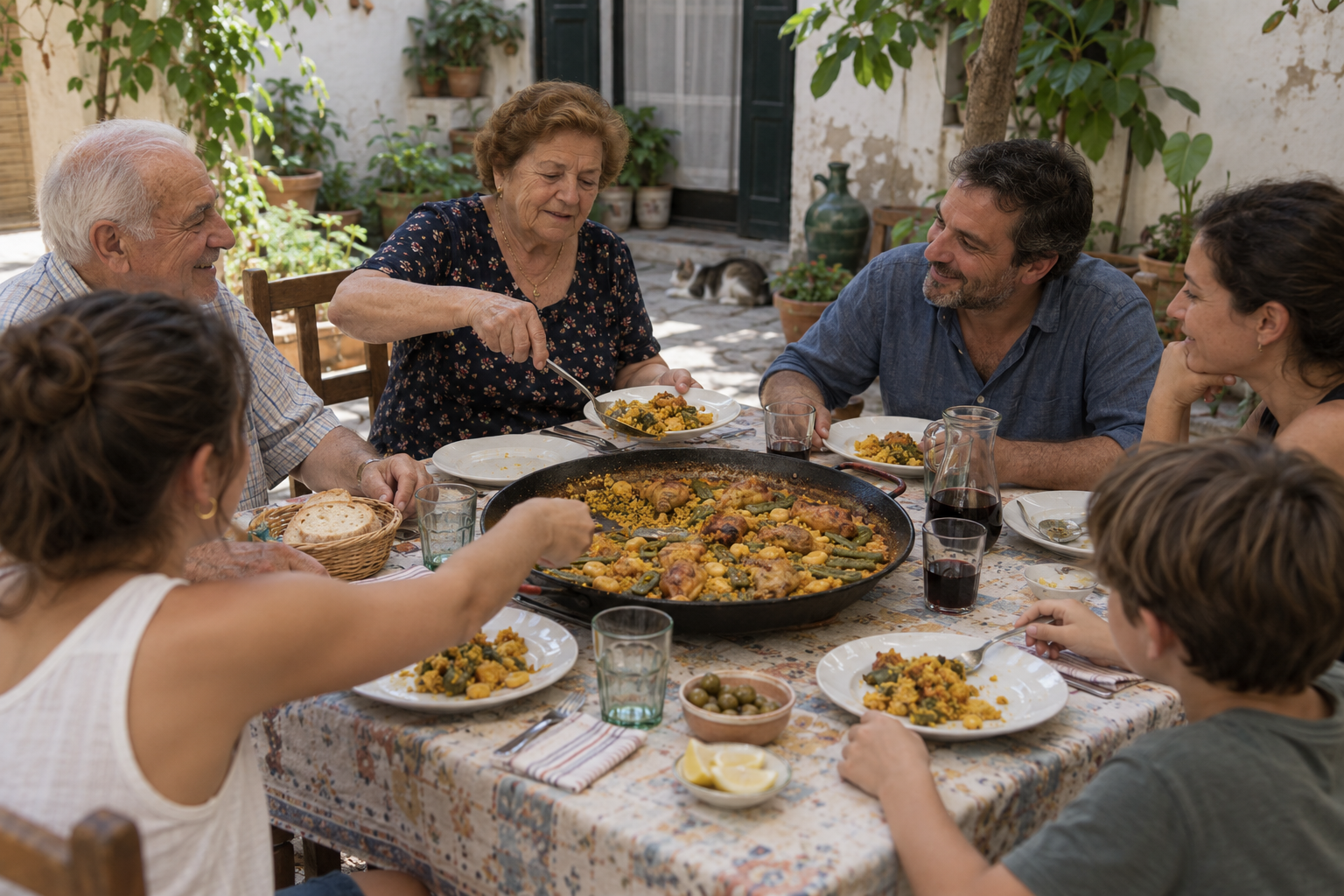
To understand why Valencians get so genuinely worked up about all this, you have to understand that paella is not merely a food to them but a cornerstone of their regional identity, bound up with family, place, and belonging in a way that transcends the plate. In Valencia, paella is the Sunday dish, the centerpiece of the weekly family gathering, traditionally cooked outdoors over a wood fire by whoever in the family has earned the role of paella master, with everyone gathered around the great pan. It is tied to childhood, to home, to the landscape of the rice fields, and to the whole culture of the region. To mess with the recipe is, in a real sense, to mess with their heritage.
This depth of feeling is why there are even semi-official guardians of the dish, Valencian bodies and chefs who document and defend the authentic recipe and its handful of essential ingredients, treating it almost as a cultural monument to be protected. When outsiders casually reinvent paella with chorizo and shrimp and call it the real thing, Valencians experience it not as harmless culinary creativity but as the erasure of something precious and specific that belongs to them. Seen in that light, their corrections are not food snobbery but an act of cultural preservation, the entirely understandable impulse of a people to protect a dish that carries their history and their sense of themselves. That is the context that makes them right: they are not defending a rigid rule for its own sake, but safeguarding the authentic form of something that genuinely matters to who they are.
The Chorizo War
No part of this is more famous, or more explosive, than the matter of chorizo, which has become the great flashpoint of international paella arguments and the clearest example of Valencians being right. The controversy erupted onto the world stage when celebrity chefs abroad published paella recipes that included chorizo, and the reaction from Spain was immediate and ferocious. Spaniards took to social media in droves to object, because to them, putting chorizo in paella is not a creative twist but a small act of cultural vandalism, an insult to a dish that is a point of regional pride and identity.
It is easy to laugh at the intensity of it, the idea of a nation roused to fury over a sausage, but underneath the memes there is a serious and legitimate point. Chorizo has genuinely never been part of the recipe; it is history, not opinion, and its smoky, paprika-heavy flavor overwhelms the delicate saffron-and-rosemary character of real paella, turning it into something else entirely. When Valencians object, they are not being precious; they are defending the authentic form of a dish that is central to who they are, against a well-meaning but genuinely incorrect version being broadcast to the world under their dish’s name. This is the heart of why they are right to correct you: it is their heritage, the recipe is real and specific, and chorizo was simply never in it. Enjoy chorizo rice if you like it, by all means, but do not call it paella, and you will have made peace with Valencia.
The Socarrat Is Sacred
If there is one element of paella that a Valencian prizes above all others, it is not an ingredient but a texture: the socarrat, the thin layer of rice at the very bottom of the pan that toasts and caramelizes into a crisp, golden, slightly chewy crust during the final minutes of cooking. To a Valencian, the socarrat is the most coveted bite in the whole pan, the prize at the bottom that everyone scrapes for, and a paella without it is, to a purist, a real failure rather than a minor shortcoming. It is the mark of a paella cooked correctly.
The socarrat is not an accident but the product of technique, and it is where most home cooks go wrong. It forms only if you do not stir the rice once the liquid is in, because stirring releases the rice’s starch and makes the dish creamy like a risotto, which is precisely what you do not want, and it destroys any chance of the crust forming. Instead, you add the rice, spread it out, and then leave it completely alone, letting it cook undisturbed, and in the last couple of minutes you turn the heat up so the bottom layer sizzles and caramelizes against the hot metal, listening and smelling for the toasty, almost-but-not-quite-burnt moment when the socarrat is perfect. The wide, shallow pan matters here too, because it spreads the rice thin for proper evaporation and maximizes the surface of crust. Master the socarrat, resist every urge to stir, and you will have understood the single most important technique in all of paella, the one that separates the real thing from a pan of merely pleasant rice.
Make It: Paella Valenciana
Here is the authentic Valencian version, serving about four to six. A proper wide paella pan is ideal, but any wide, shallow pan will do; the key rules are the right ingredients and never stirring the rice once the liquid is in. If you cannot find garrofo, large dried or frozen lima beans or butter beans are the usual substitute, and flat romano beans stand in for the ferradura.
Ingredients
- 1/3 cup olive oil
- 1/2 chicken, cut into small bone-in pieces
- 1/2 rabbit, cut into small bone-in pieces (or more chicken, if you prefer)
- 1 cup flat green beans (ferradura or romano), cut into pieces
- 3/4 cup garrofo or lima beans
- 1 ripe tomato, grated
- 1 teaspoon sweet paprika
- a good pinch of saffron threads
- 2 cups short-grain rice (such as bomba)
- 5 to 6 cups water or light stock
- 1 sprig fresh rosemary
- salt
Instructions
Cover the paella loosely with a cloth or foil and let it rest for 5 minutes. Serve straight from the pan, making sure everyone gets a scrape of the precious socarrat from the bottom, with lemon wedges alongside. You will have made the real thing, the one Valencians would actually recognize as paella.
Heat the olive oil in the pan over a medium fire and season the chicken and rabbit with salt. Brown the meat well on all sides, taking your time, until it is deeply golden, then push it to the edges.
Add the green beans and the garrofo to the center and saute for a few minutes, until the beans blister a little. Stir in the grated tomato and the paprika and cook, stirring, until the tomato darkens and reduces into a rich base.
Pour in the water or stock, crumble in the saffron, add the rosemary sprig, season with salt, and bring everything to a boil. Let it bubble for several minutes so the flavors come together and the broth takes on color, then taste and adjust the salt (it should be slightly well-seasoned, since the rice will absorb it). Remove the rosemary.
Scatter the rice evenly across the whole pan, give it one gentle shake to settle it, and do not stir it again. Cook over a medium-high fire until the liquid is mostly absorbed and the rice is nearly tender, about 15 to 20 minutes, turning the pan if your heat is uneven.
For the final minute or two, turn the heat up and listen for the crackle of the rice toasting against the bottom of the pan, which is the socarrat forming. Pull it off the heat when you smell that lovely toasty aroma, just before it would burn.

About the Author: Ruben, co-founder of Gamintraveler.com since 2014, is a seasoned traveler from Spain who has explored over 100 countries since 2009. Known for his extensive travel adventures across South America, Europe, the US, Australia, New Zealand, Asia, and Africa, Ruben combines his passion for adventurous yet sustainable living with his love for cycling, highlighted by his remarkable 5-month bicycle journey from Spain to Norway. He currently resides in Spain, where he continues sharing his travel experiences with his partner, Rachel, and their son, Han.