
It is your first night as a guest in a Spanish home, or in a room you have rented in a shared flat in Madrid, and you go through your usual bedtime routine until you reach the last step and find it missing. You close your bedroom door, you reach for the lock, and there is no lock. Just a handle, perhaps, or a door that clicks gently shut but does not secure. You look again, in case you missed it. You did not. The door to the room where you are about to sleep, in a place that is not your home, simply cannot be locked.
And so you lie there in the dark, more awake than you should be, quietly aware that the door could open at any moment, feeling a low hum of unease that you cannot quite talk yourself out of. If this has happened to you, you have run into one of the small, rarely-discussed culture shocks of staying in a Spanish home: interior doors, bedrooms very much included, often have no locks at all. Here is why that is, why it is far from unique to Spain, what it reveals about how Spain thinks about home and trust, and how to make your peace with the door that will not lock. It is one of the quieter, more intimate culture shocks of actually staying in a Spanish home rather than just visiting the country.
What follows is the door that does not lock, why it keeps Americans awake, what it reveals about Spanish homes, why it is trust and not danger, and how to make peace with it.
The Door That Does Not Lock
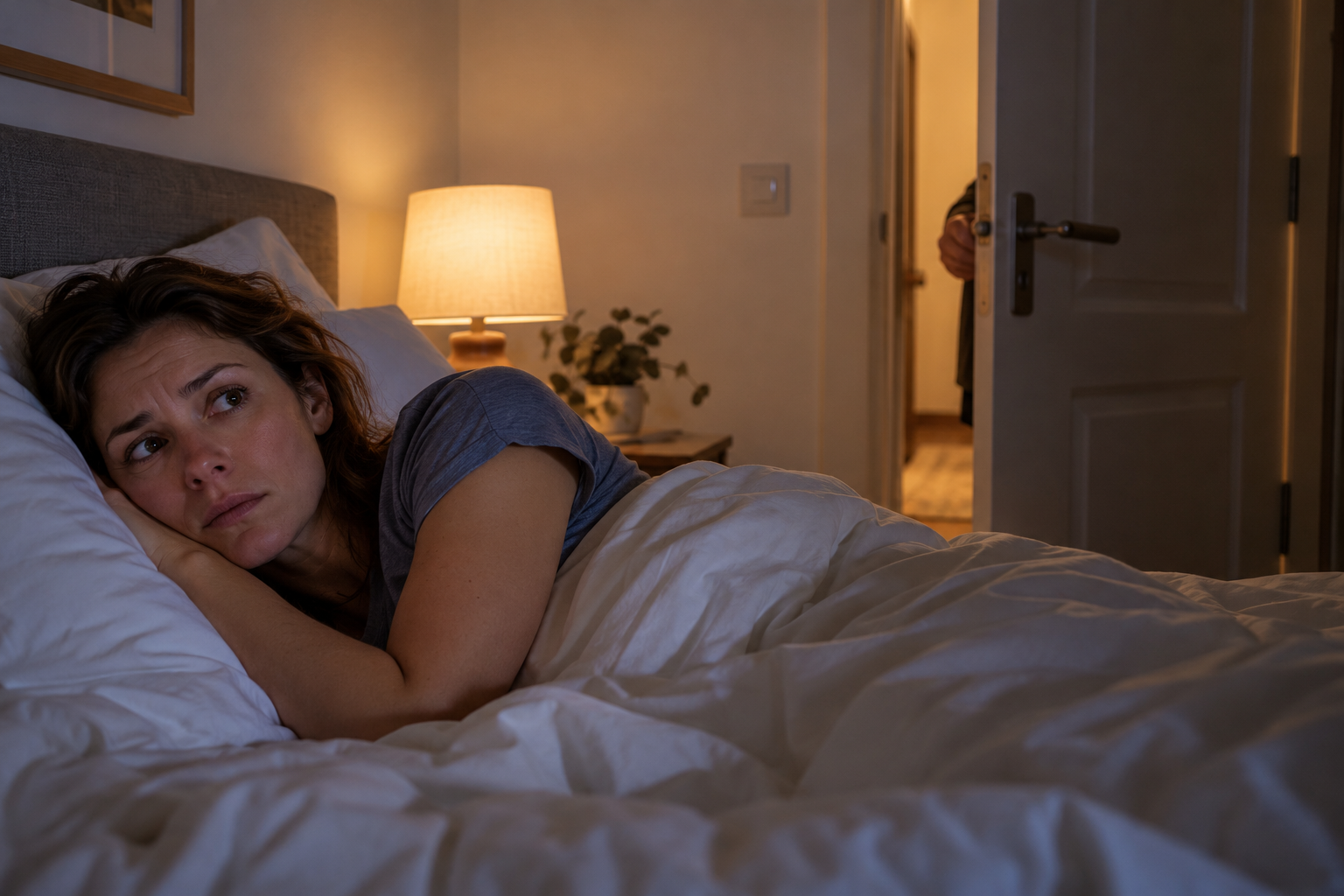
The plain fact that catches Americans off guard is that in Spanish homes, and in much of Europe, interior doors are simply not built to lock the way they are in the United States. Bedroom doors, and often bathroom doors too, typically have a handle and perhaps a latch that holds the door closed, but no proper lock, or at most a flimsy, symbolic one that would not stop anyone. The lockable bedroom, the idea that the door to your private sleeping space should bolt securely from the inside, is largely an Anglo-American expectation, not a universal feature of homes everywhere. In Spain, a closed door means private; it does not mean locked, because it was never meant to.
You can see how deeply this runs in the fact that, in the world of rented rooms and shared flats, a lock on the bedroom door is treated as a notable feature worth advertising rather than something assumed. Browse room rentals in a Spanish city and you will see hosts specifically listing lock on bedroom door as an amenity, precisely because it is not standard and a certain kind of guest, often a foreign one, specifically wants it. Some rooms instead offer a personal locker or safe for your valuables, quietly acknowledging that the room itself does not lock. For an American, who grew up assuming every bedroom door has a little push-button or turn-lock as naturally as it has a handle, discovering its absence is genuinely disorienting, a small missing thing that suddenly feels very large at bedtime in an unfamiliar house. It is the kind of detail you never think about until it is gone, at which point you can think of little else as you lie there in the dark.
It Is Not Just Spain
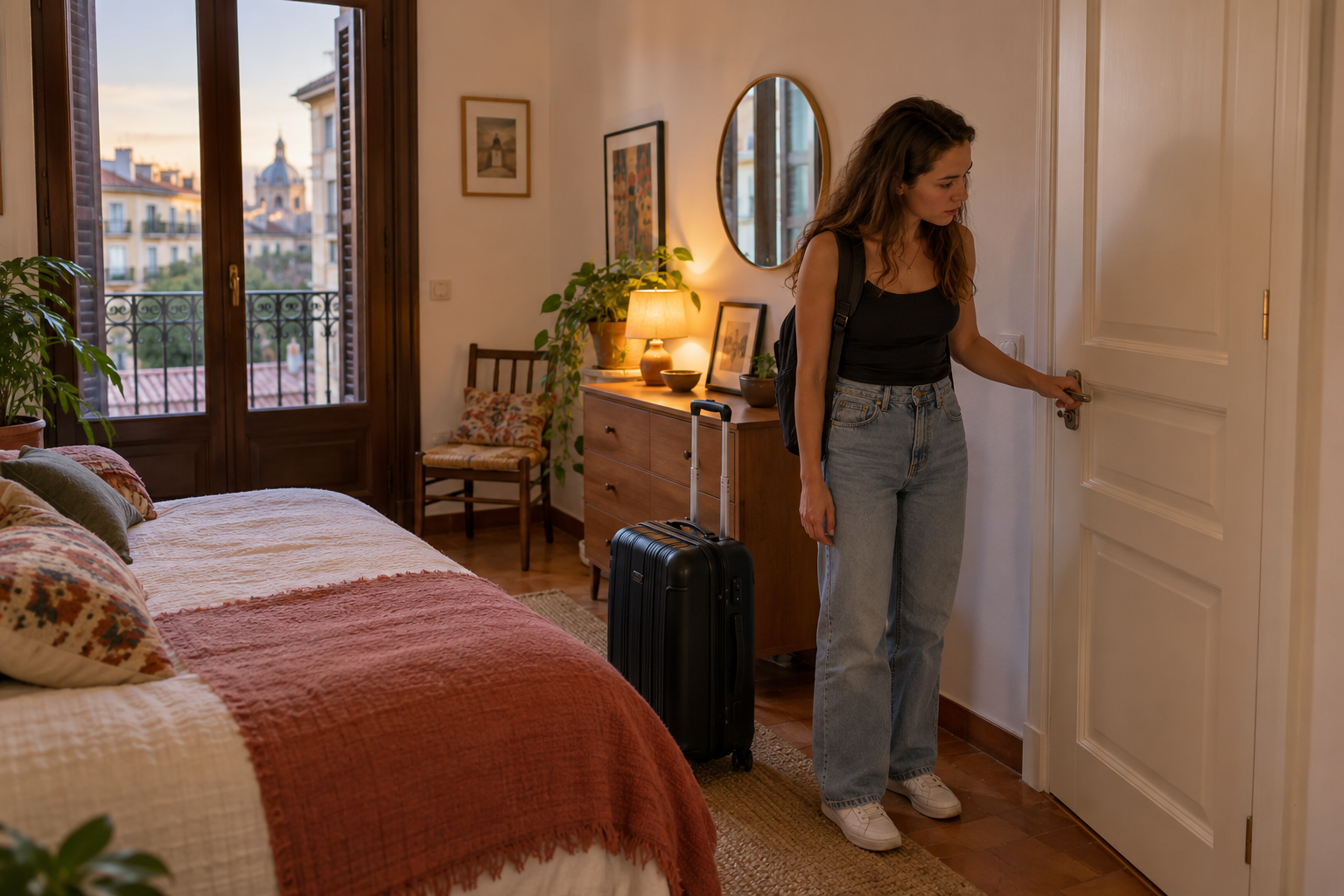
Before going further, it is worth knowing that this is not some peculiarly Spanish quirk but a much wider pattern, so if you travel beyond Spain you will meet it again and again. Across much of continental Europe, interior door locks on bedrooms are uncommon in ordinary homes, and the same is true in many other parts of the world. The expectation that a bedroom door should lock from the inside is, in global terms, far more an Anglo-American assumption than a universal one, and it is Americans, more than almost anyone, who carry it with them and feel its absence so keenly.
This matters because it reframes the whole experience from something is wrong with this house to this is simply how homes work in much of the world. The lockless bedroom you encounter in a flat in Madrid is the same lockless bedroom you will find in a family home in Italy, in France, in many parts of Europe and beyond, which tells you it is not an oversight or a budget cut but a genuine, widespread way of building and living in homes. Seeing it as a broad cultural norm rather than a one-off strangeness makes it far easier to take in stride, because you are not encountering a flaw but a difference, and a very common one at that. The American lockable bedroom, not the European open one, is the local custom that happens to be unusual once you step outside its borders.
Why It Keeps Americans Awake
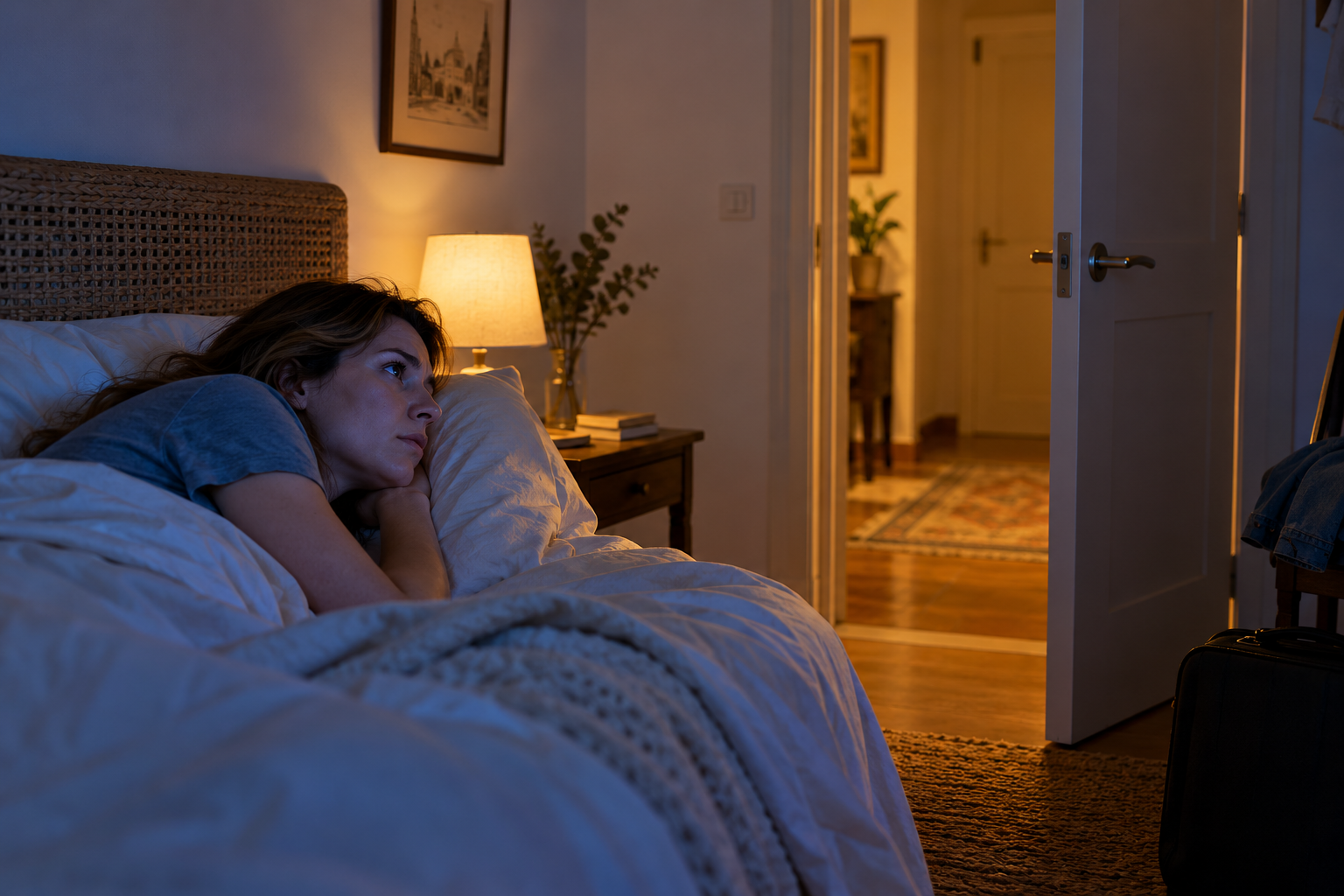
The reason this bothers Americans so much more than it bothers the locals is about deep conditioning, not real danger. Americans are raised with a strong, almost unconscious sense that a bedroom is a private, securable space, that your room is your castle, and that when you sleep, especially somewhere that is not your own home, the door should lock. It is tied up with the American emphasis on personal boundaries, individual space, and the ability to physically secure your own privacy. So when that lock is simply not there, a quiet instinct is thwarted, and the mind, left without the reassurance of the bolt, keeps circling back to the unsecured door.
And so you lie awake. It is rarely a rational fear of your hosts, who are presumably kind people who invited you in, or of your flatmates, who are just living their lives. It is something more primitive and more conditioned than that: the simple animal unease of sleeping in a space you cannot seal, in a place that is not yours, with the awareness that the door could, in theory, open. The discomfort is real even when the risk is nonexistent, which is exactly what makes it so hard to shake, because you cannot reason your way out of a feeling that was installed long before reason. For the first night or two in a lockless Spanish bedroom, many an American guest sleeps lightly and poorly, half-listening in the dark, waiting for a morning that invariably confirms what they already rationally knew: that nothing happened, that no one came near the door, that the trust the open door quietly assumed was entirely and completely warranted. The feeling is real; the threat is not; and only time and a few uneventful mornings seem to convince the body of the difference.
What It Reveals About Spanish Homes
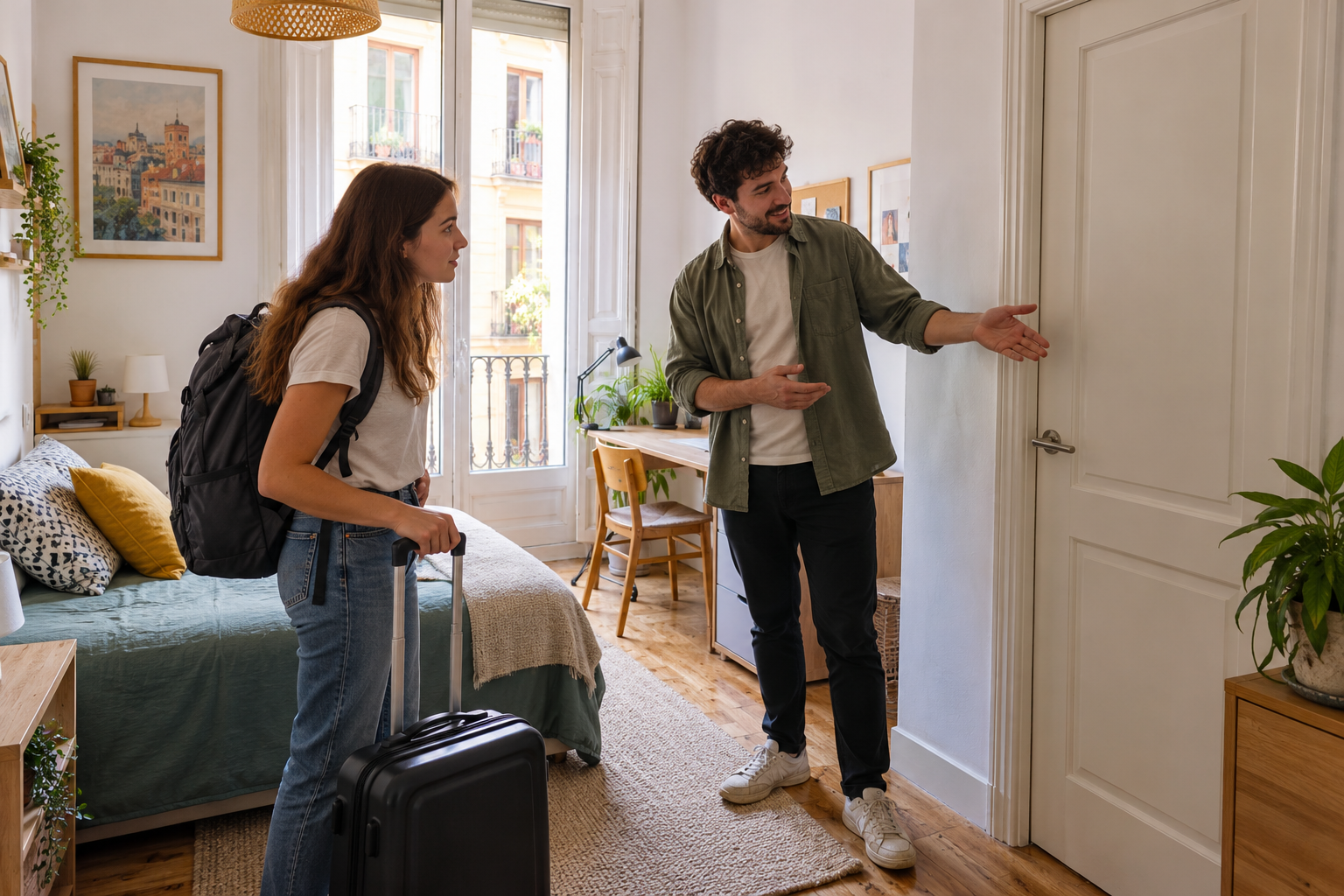
Once the initial unease passes, the lockless door turns out to be a window into something genuinely interesting about how Spanish culture thinks about the home, and it is worth understanding on its own terms. Spanish homes are designed around trust and shared family life rather than around a collection of private, defensible fortresses. The interior lock is simply unnecessary in a culture where privacy is maintained by custom, by knocking, by announcing yourself, by the shared understanding that a closed door means leave me be, rather than by a physical bolt that enforces it. The social contract does the work the lock does in America.
This reflects a broader difference in how the two cultures draw the line around personal space. The American model leans toward individualism and firm, physical boundaries: my room, my space, my lock. The Spanish model leans toward shared living, informality, and mutual trust, where the family and the household move through a more open, flowing common life and privacy is a matter of respect rather than hardware. There is even a quiet practical logic woven in, the kind that explains why many Spanish parents teach children not to lock interior doors at all: in a home without interior locks, no one, not a small child, not an unwell elderly relative, can ever lock themselves in or be locked in, and no door can ever become a barrier in an emergency. What looks to an American like a strange and faintly unsettling absence turns out, on closer inspection, to be a coherent, considered way of organizing a home around trust and around a different conception of safety entirely, and once you genuinely see the logic of it, the missing lock stops feeling like an oversight or a failing and starts looking like a deliberate, sensible choice. It is not that Spanish homes forgot the lock; it is that they never wanted it.
It Is Trust, Not Danger
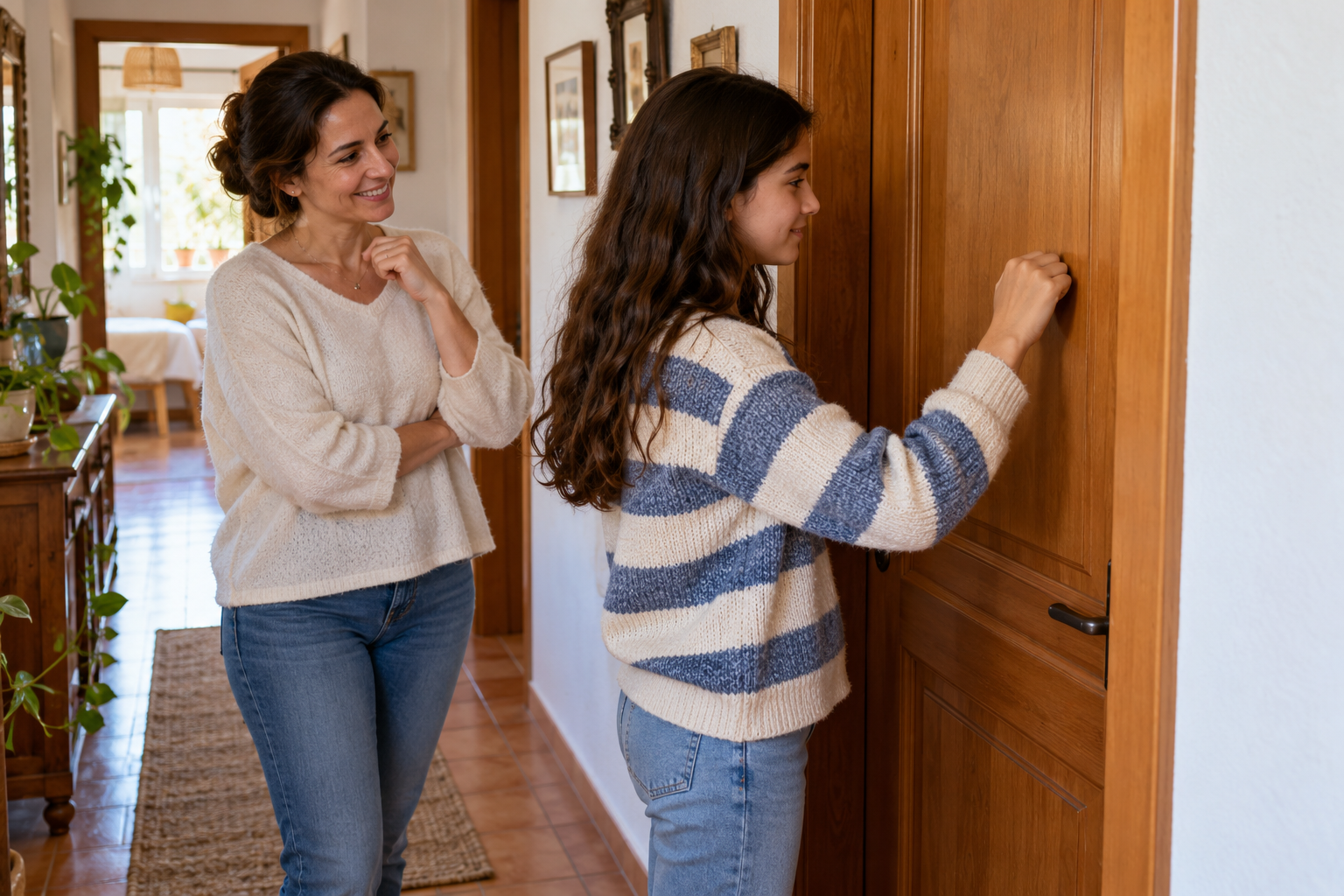
The single most important thing to understand, and the thing that finally lets an anxious American guest relax, is that the absence of locks is not a sign that Spanish homes are unsafe. It is close to the opposite. The open, lockless interior door reflects a culture confident enough in the trust between the people under one roof that it does not feel the need to bolt them apart from one another. In a home where you do not lock your bedroom, the assumption built into the architecture is good faith: that the people you share the space with mean you no harm and will respect a closed door, and that this can simply be taken for granted rather than enforced.
Seen that way, the lockless bedroom is not a vulnerability but a quiet expression of trust, the physical form of a culture that assumes the best of the people in your home rather than preparing for the worst. Spanish homes are, by any measure, perfectly safe places to sleep, and the unease an American feels is a product of their own conditioning, not of any real threat on the other side of the door. There is even something worth envying in it, if you let yourself feel it: a way of living in which you do not have to secure yourself against your own household, in which the home is a place of assumed safety rather than managed risk. The American reflex to lock up, useful as it is in its own context, carries a faint undercurrent of wariness that the Spanish open door simply does without. Once you understand that the missing lock is a statement of trust rather than a gap in security, the whole thing reframes, and the door that kept you awake can start, instead, to feel like a small welcome.
How to Make Peace With It
Understanding all this is comforting, but if the lockless bedroom genuinely keeps you from sleeping, there are gentle, practical ways to give yourself peace of mind without offending anyone or rejecting the hospitality offered. The simplest is a small portable travel lock or door wedge, an inexpensive device you can bring with you that temporarily secures a door from the inside and then comes away cleanly in the morning, leaving no trace and casting no judgment on your hosts. It is a quiet, private solution to a private discomfort, and it lets your conditioned nervous system settle without making a cultural statement. For valuables, use the personal locker or safe if one is provided, or simply keep important things in your luggage, which addresses the practical worry separately from the emotional one.
Beyond the gadgets, though, the real adjustment is internal, and it is worth making. Try, as the nights go by, to lean into the trust the custom reflects rather than resisting it, to let the evidence of your own safe mornings gradually retrain the instinct that kept you awake. Many Americans who live in Spain long enough find that the unease fades entirely within a few weeks, and some come, over time, to feel that the lockless, open-doored home is actually a warmer, gentler, more trusting way to live than the one they left behind, where even parents and grown children quietly bolt themselves into their separate rooms at night. Once the fear lifts, what is left is something that can feel surprisingly like relief.
The deeper lesson is the one that runs through so much of travel: the way your own culture does things is a particular way, not the only way, and the Spanish open door reflects a genuinely different and genuinely humane set of assumptions about trust, family, and home. Bring your door wedge if you need it at first, by all means, but give the trust a chance, because you may find, in the end, that the door that would not lock has nothing to teach you about danger and a great deal to teach you about how comfortably people can live together when they simply assume the best of one another.

About the Author: Ruben, co-founder of Gamintraveler.com since 2014, is a seasoned traveler from Spain who has explored over 100 countries since 2009. Known for his extensive travel adventures across South America, Europe, the US, Australia, New Zealand, Asia, and Africa, Ruben combines his passion for adventurous yet sustainable living with his love for cycling, highlighted by his remarkable 5-month bicycle journey from Spain to Norway. He currently resides in Spain, where he continues sharing his travel experiences with his partner, Rachel, and their son, Han.