
Tell an American you ate most of your meals in Japan at convenience stores and they will picture something grim: a sad gas-station hot dog rotating under a heat lamp, a bag of chips, a questionable coffee. Tell a seasoned Japan traveler the same thing and they will nod knowingly, maybe a little enviously, because they know the truth that first-timers discover with genuine disbelief: the konbini is one of the best food experiences in the entire country, routinely better than sit-down restaurants back home, and it happens to double as a bank, a post office, and a ticket counter besides. The gap between what an American expects from the words convenience store and what Japan actually delivers is one of the great happy shocks of a first trip. Here is why the konbini is so astonishing, why Japan manages it when no one else does, what to eat, what else you can get done there, and even how to make its most legendary item yourself in your own kitchen. It may change how you think about the words convenience and store forever.
What follows is why this is nothing like American 7-Eleven, the food that outclasses restaurants, the surprising services, the personalities of the three big chains, and a recipe for the famous egg sandwich.
This Is Not American 7-Eleven

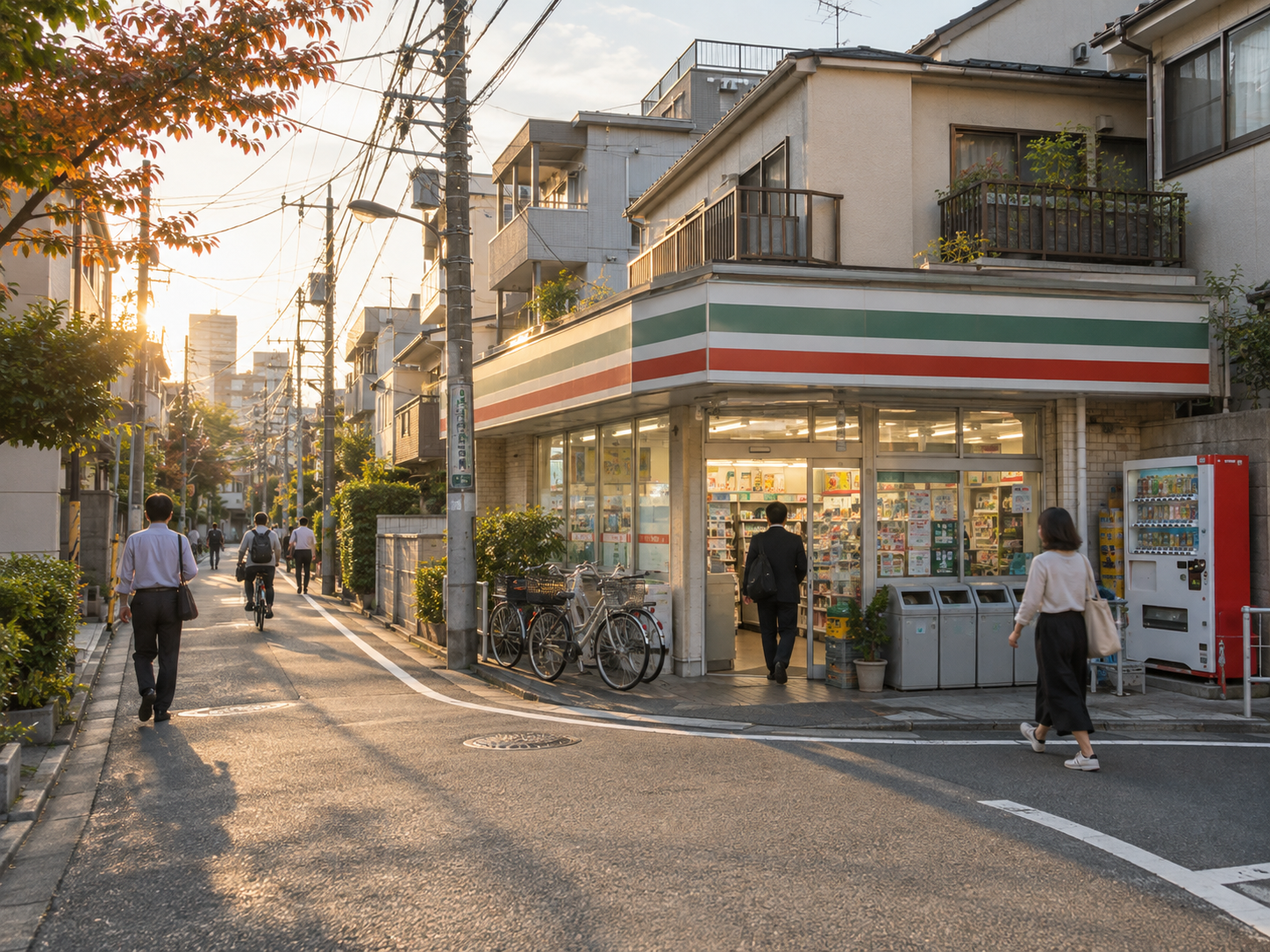
The first thing to understand is that the Japanese convenience store is a different species entirely from its American namesake, despite sharing some of the same signs. Japan has more than fifty-five thousand konbini, three big chains blanketing the country, 7-Eleven with over twenty-one thousand stores, FamilyMart with around sixteen thousand, and Lawson with around fourteen thousand, so thickly spread that in Tokyo you are rarely more than a short walk from one. And here is a detail that delights people: 7-Eleven, despite its American origins, has been owned by a Japanese company for decades, so in a real sense Japan is now the true home of the brand, and Japanese 7-Eleven bears almost no resemblance to the American version.
What makes them a different species is not just scale but purpose. A konbini is not a last-resort stop for junk; it is a clean, bright, around-the-clock mini-supermarket built around fresh, high-quality prepared food, restocked constantly throughout the day. The lighting is good, the floors are spotless, the shelves are full and faced, the staff are brisk and polite, and the whole place runs with the quiet, unshowy efficiency that characterizes so much of daily life in Japan. Stepping into one at three in the morning, you find it as clean and well-stocked as it was at noon.
Japanese food media treat konbini products as a legitimate food category worth reviewing seriously, not as fallback eating, which tells you everything about the standard. For a visitor, the first real konbini meal, bought for a few dollars and genuinely, surprisingly excellent, is a small revelation that tends to rearrange expectations on the spot, and from that moment the little stores stop being an afterthought and quietly become one of the highlights of the whole trip. People come home from Japan talking about the convenience stores, which sounds ridiculous until you have been.
The Food That Outclasses Restaurants

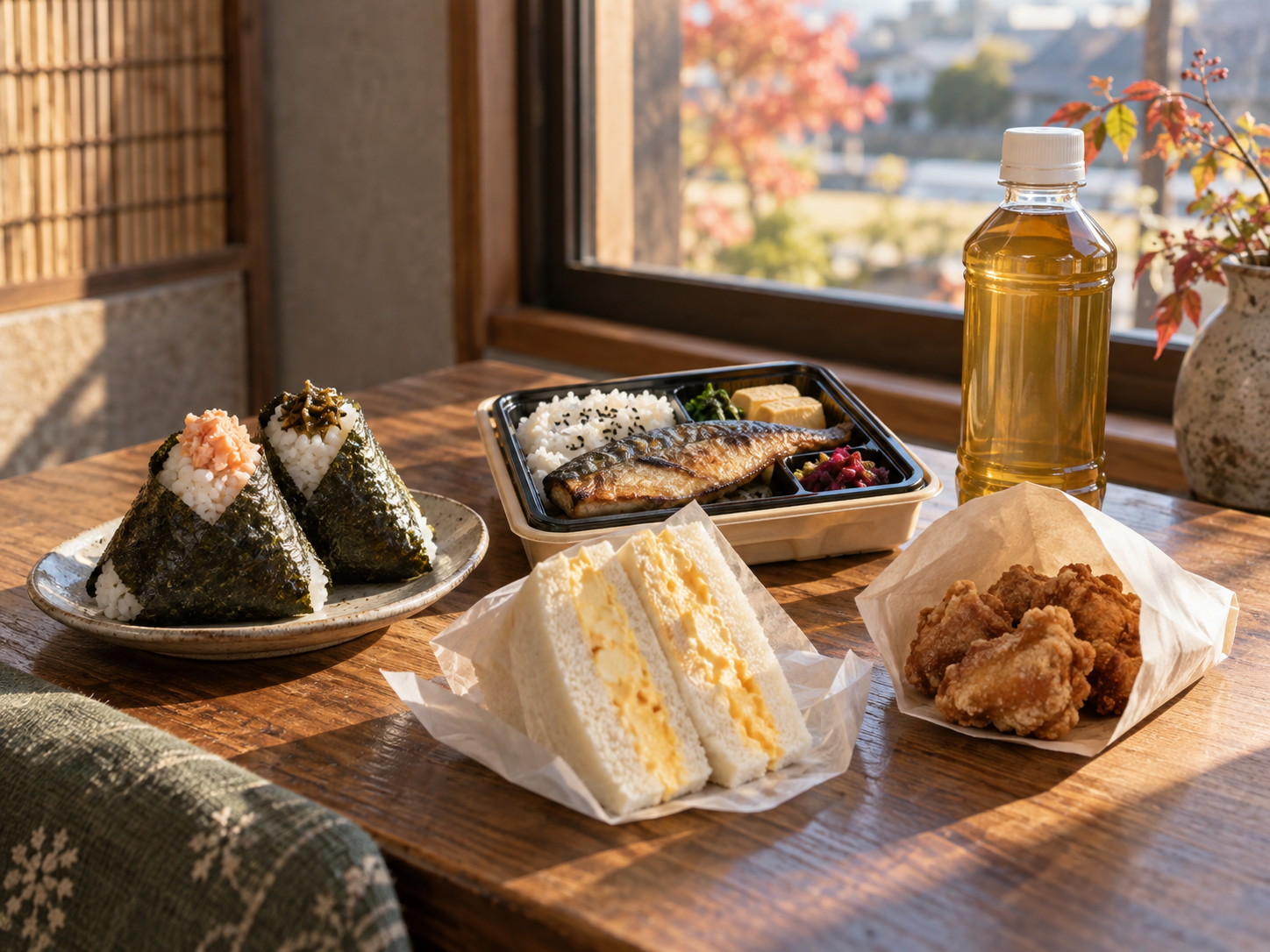
Start with the onigiri, the seaweed-wrapped rice ball that is the soul of the konbini. For around a dollar, you get a fresh, perfectly formed rice ball with a filling of tuna and mayonnaise, pickled plum, salmon, or kelp, wrapped in an ingenious bit of packaging that keeps the seaweed crisp and separate from the rice until you open it. It is cheap, portable, satisfying, and genuinely good, and locals and travelers alike cheerfully live on them, grabbing one or two for breakfast, lunch, or a snack between sights without a second thought. The packaging alone, which keeps the seaweed crisp until the moment you unwrap it, is a small marvel of design. Nearby you will find the bento boxes, full packaged meals of rice, a protein, and vegetables, which the cashier will heat up for you for free if you want, simply asking if you would like it warmed, so you walk out with a hot, balanced lunch for the price of a fast-food snack back home.
Then there are the legends. The tamago sando, the egg salad sandwich, is so beloved that the late Anthony Bourdain publicly raved about it, calling the Japanese convenience-store egg sandwich a thing of beauty, unnatural, inexplicable, and delicious, built on impossibly soft, crustless Japanese milk bread and a rich, creamy egg filling. It has become a genuine, half-joking pilgrimage item for food-loving visitors, who seek it out within hours of landing and then spend the rest of the trip quietly wondering why no sandwich back home has ever tasted like it. It is the gateway drug to the whole konbini obsession.
At the hot counter by the register sit cult favorites like FamilyMart’s FamiChiki and Lawson’s Karaage-kun, Japanese fried chicken so good it has devoted followings and ranking debates all its own. In winter the counters offer oden, a comforting hot pot of fish cakes, egg, and daikon simmered in dashi broth that makes the konbini feel like a neighborhood institution. And do not overlook the desserts, especially Lawson’s genuinely excellent Premium line of rolled cakes, fluffy puddings, and seasonal sweets that would not look out of place in a proper patisserie, or the coffee, freshly ground and brewed by the machine at the counter, which people routinely admit, with some embarrassment, is somehow better than the cafe across the street. Nothing about the konbini is supposed to be this good, and yet it is. Put it together and a few dollars at a konbini buys a meal that would embarrass many an American chain restaurant.
The Surprising Things You Can Also Do There
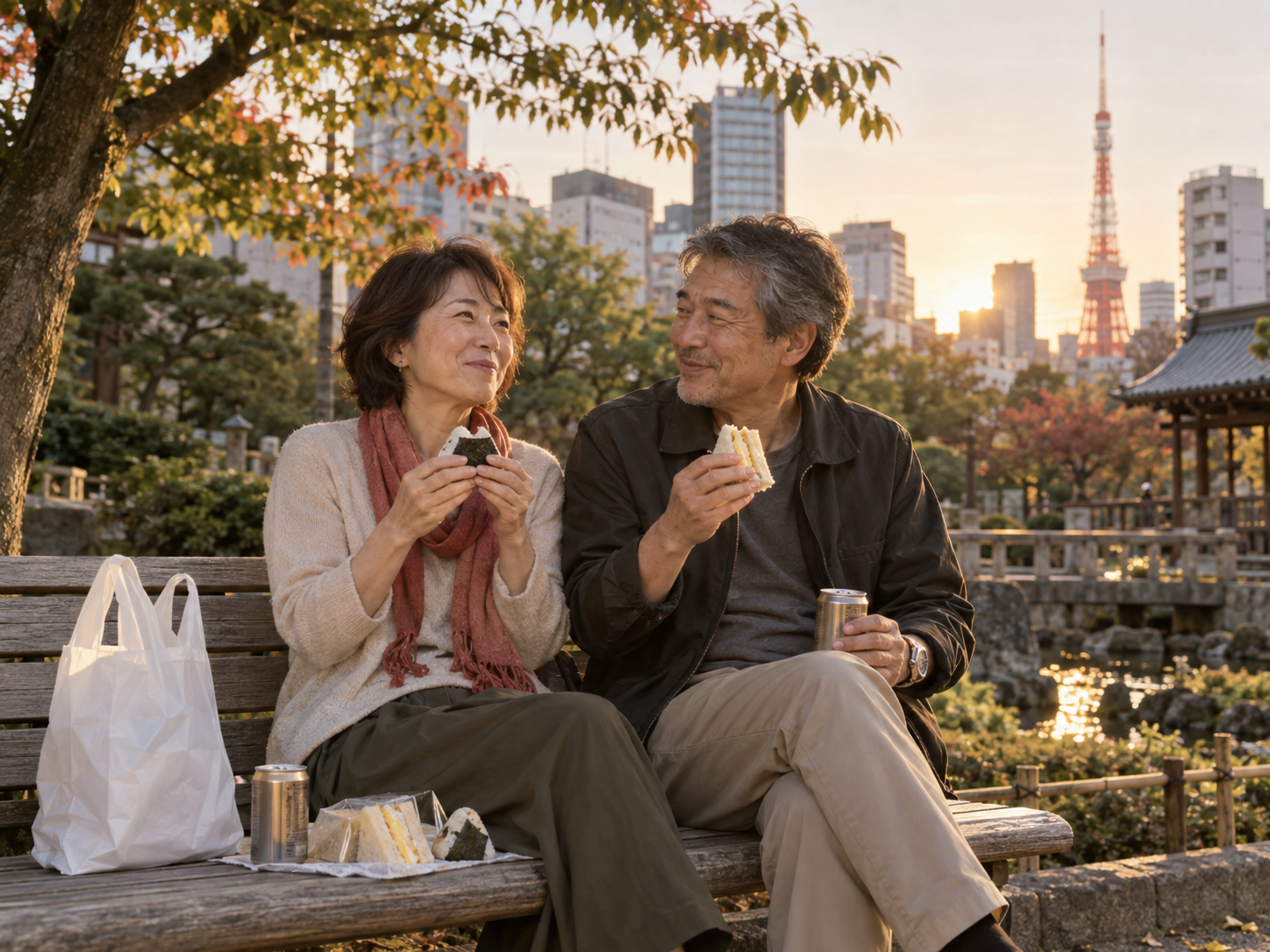
Here is the part that catches even food-savvy visitors off guard: the konbini is not only a place to eat, but a piece of civic infrastructure that quietly handles a dozen errands. The most useful for travelers is the ATM, and 7-Eleven’s in particular are famous for reliably accepting foreign debit and credit cards, Visa, Mastercard, and the rest, making the nearest 7-Eleven the single best place to withdraw cash in a country that still loves it. For a visitor fresh off a long-haul flight, the first stop in Japan is often a 7-Eleven to pull out yen from the reliable ATM and buy a rice ball and a bottle of tea, and with cash in pocket and food in hand, the trip is suddenly, properly underway. It is a surprisingly perfect first ten minutes in the country.
Beyond cash, the services keep coming. You can pay utility bills at the counter, buy tickets to concerts, events, and attractions from in-store machines, print, copy, scan, and even fax documents at the multifunction machines, send and receive parcels through the country’s delivery networks, buy stamps, and use free wifi. In a country where the konbini is open twenty-four hours and sits on nearly every corner, this turns the little store into a genuine community utility, the place you go not just when you are hungry but when you need cash, need to print a boarding pass, need to ship a suitcase ahead to your next hotel, or need to pay a bill at two in the morning. Understanding the konbini as infrastructure, not merely a shop, is part of understanding how smoothly and frictionlessly daily life runs in Japan, where a huge share of small necessities can be handled at any hour within a short walk of almost anywhere. It is one more reason the humble convenience store quietly amazes the people who stop treating it as beneath their notice and start actually using it.
Why Japan Pulled This Off
It is worth pausing on why the konbini is so good in Japan when the same brands, in the same business, produce mediocrity almost everywhere else, because the answer says something about the country. The first reason is ferocious competition. With over fifty-five thousand stores and three giant chains fighting for the same customers on nearly every corner, the pressure to be better, fresher, and cheaper is relentless, and that pressure gets poured into the food, with each chain constantly developing new items, refining its fried chicken, and chasing the perfect egg sandwich. Mediocrity simply does not survive in that environment.
The second reason is a logistics and supply system of almost absurd precision. Konbini are restocked with fresh prepared food multiple times a day, delivered on tight schedules, so the rice ball you buy was very likely made within the last several hours, not days ago, which is the difference between genuinely good food and sad convenience-store fare. Underpinning all of it is a national food culture with high standards and no tolerance for carelessness, in which even cheap, fast, everyday food is expected to be done properly. Put those together, savage competition, flawless logistics, and a culture that refuses to let quality slide even at the bottom of the price range, and you get a convenience store that can out-cook a restaurant. It is not magic; it is a system, and it is a quietly impressive one.
The Three Chains, Each With Its Own Character

Part of the fun, once you are hooked, is learning that the three big chains are not interchangeable but have genuinely distinct personalities, and locals have strong loyalties. 7-Eleven is the all-rounder and the usual champion, widely considered to have the best onigiri, the best bento, excellent coffee, the widest footprint, and the most reliable ATMs for foreign cards, with its Seven Premium private label setting the quality bar for the whole industry and its tamago sando the most famous of all. If you only visit one chain, this is the one.
But the others have their devoted fans and signature items. FamilyMart, brighter and more design-forward, is beloved for its FamiChiki fried chicken, a genuine cult item that some travelers rank as the single best thing in any konbini. Lawson dominates on desserts through its genuinely premium sweets line and competes hard on fried chicken with Karaage-kun, and it has its own loyal following for both. Half the pleasure of a longer trip is running your own informal taste test, buying the same item across all three chains, debating whose egg sandwich or fried chicken or coffee or pudding comes out on top, a low-stakes, delicious little research project that locals happily argue about too, often with surprising passion. Everyone, it turns out, has a chain they are loyal to and a hill they will die on. The rivalry is real, the differences are genuine, and discovering your own favorite chain is a small rite of passage for anyone who falls, as nearly everyone does, for konbini culture.
Make the Legend: Konbini-Style Tamago Sando
You do not have to fly to Tokyo to taste the most famous konbini item, because the egg salad sandwich is wonderfully easy to recreate at home, and getting close to the real thing is mostly about two secrets: the softest crustless white bread and a good Japanese-style mayonnaise. Here is a version that comes satisfyingly near the Lawson and 7-Eleven originals.
Makes 2 sandwiches. About 15 minutes, plus time to cool the eggs.
Ingredients:
- 4 eggs
- 3 tablespoons Japanese mayonnaise (Kewpie if you can find it; otherwise regular mayo with a tiny splash of rice vinegar and a pinch of sugar)
- 1 teaspoon Dijon or Japanese mustard, optional
- 1 teaspoon sugar
- Salt and white pepper to taste
- 4 slices of the softest white sandwich bread you can find (Japanese milk bread, shokupan, is ideal), crusts cut off
- Soft butter for the bread
Instructions
- Hard-boil the eggs: place them in a pot, cover with water, bring to a boil, then simmer for about 10 minutes. Cool them quickly in cold water and peel.
- For the signature texture, separate the treatment of the yolks and whites. Mash the yolks thoroughly with the mayonnaise, mustard, sugar, salt, and white pepper into a smooth, creamy paste. Then chop the whites into small pieces and fold them in, so you get a filling that is both creamy and has a little texture.
- Taste and adjust: it should be rich, faintly sweet, well salted, and glossy. Add a little more mayonnaise if it seems dry, since the filling should be soft and generous, not stiff.
- Butter the bread lightly all the way to the edges, which helps keep it from going soggy. Pile a generous layer of egg salad onto two slices, spreading it right to the edges so every bite has filling, and top with the other slices.
- Press gently, then cut each sandwich in half. For the true konbini look, cut on the diagonal and stand the halves up so the thick, creamy filling faces out. Serve soon after making.
A note on getting it right: the two keys are the bread and the mayo. Ordinary firm American sandwich bread will work but will not give you that cloud-soft konbini texture, so seek out the softest milk bread you can, and use Kewpie mayonnaise if at all possible, since its richer, slightly tangier flavor is a big part of what makes the original taste the way it does.

About the Author: Ruben, co-founder of Gamintraveler.com since 2014, is a seasoned traveler from Spain who has explored over 100 countries since 2009. Known for his extensive travel adventures across South America, Europe, the US, Australia, New Zealand, Asia, and Africa, Ruben combines his passion for adventurous yet sustainable living with his love for cycling, highlighted by his remarkable 5-month bicycle journey from Spain to Norway. He currently resides in Spain, where he continues sharing his travel experiences with his partner, Rachel, and their son, Han.