
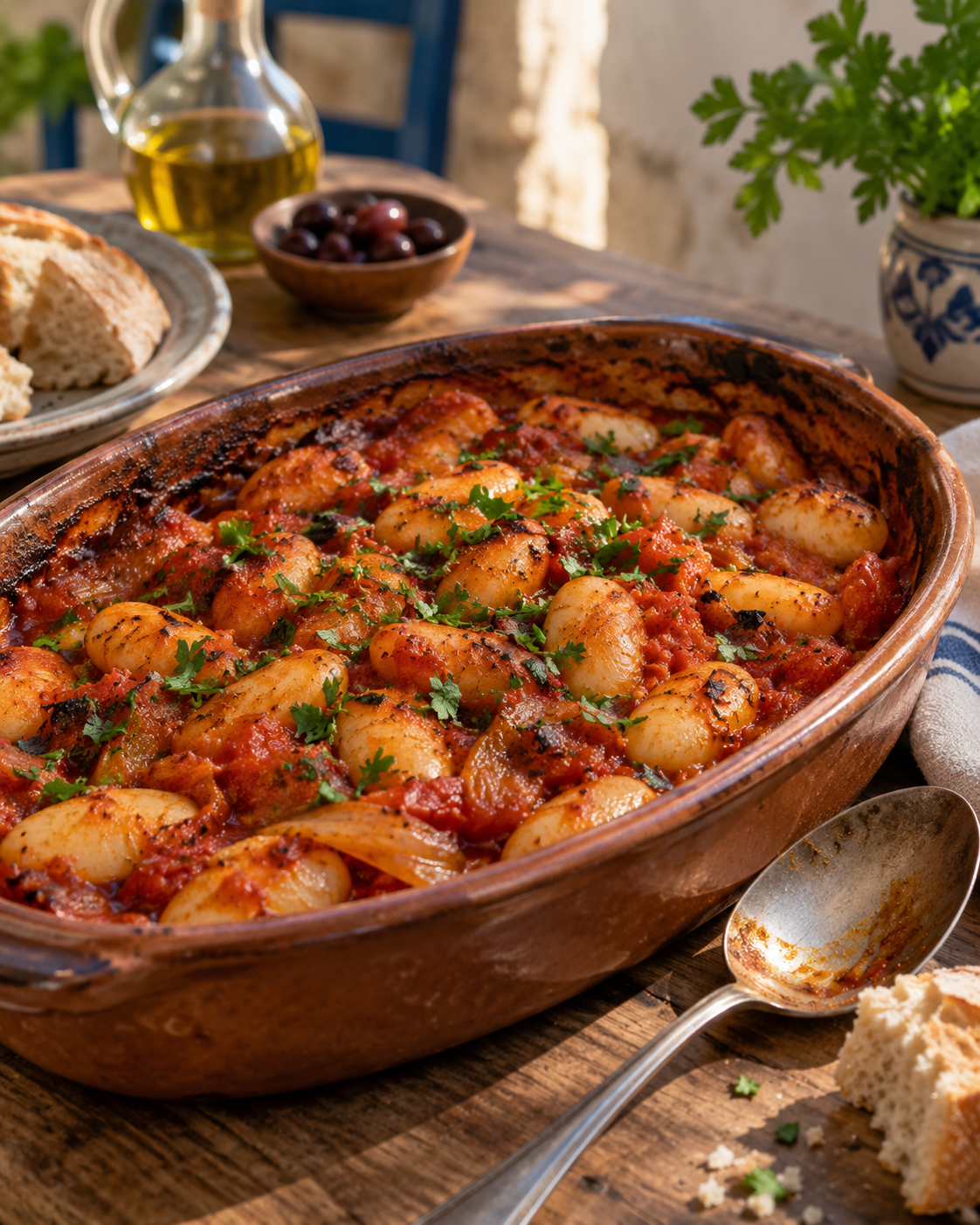
There is a whole category of Greek cooking built on the radical idea that a vegetable, cooked slowly and generously in olive oil, is not a side dish but the main event. The finest example may be gigantes plaki, which translates roughly as baked giants in the oven, a dish of enormous creamy white beans baked in a rich, sweet tomato sauce until they are meltingly tender and the top has caramelized. It is humble in the extreme, nothing but beans and tomato and oil and a few herbs, and yet it is so deeply satisfying that Greeks happily set it in the center of the table and call it dinner without a second thought. It is proof, if any were needed, that humble ingredients cooked with real care can outshine far grander and more expensive things. It is vegan almost by accident, cheap, make-ahead friendly, and genuinely delicious, the kind of dish that quietly converts people who thought a plate of beans could never be a proper meal. Serve it to a skeptic and watch them go back for a second helping, mopping the sauce with bread, and you will understand why it has been a fixture of the Greek table for so long.
What follows is why beans get to be the main course in Greece, the giant beans at the heart of it, the slow tomato sauce that makes it, how to serve it, and exactly how to bake it.
Beans as a Main Event
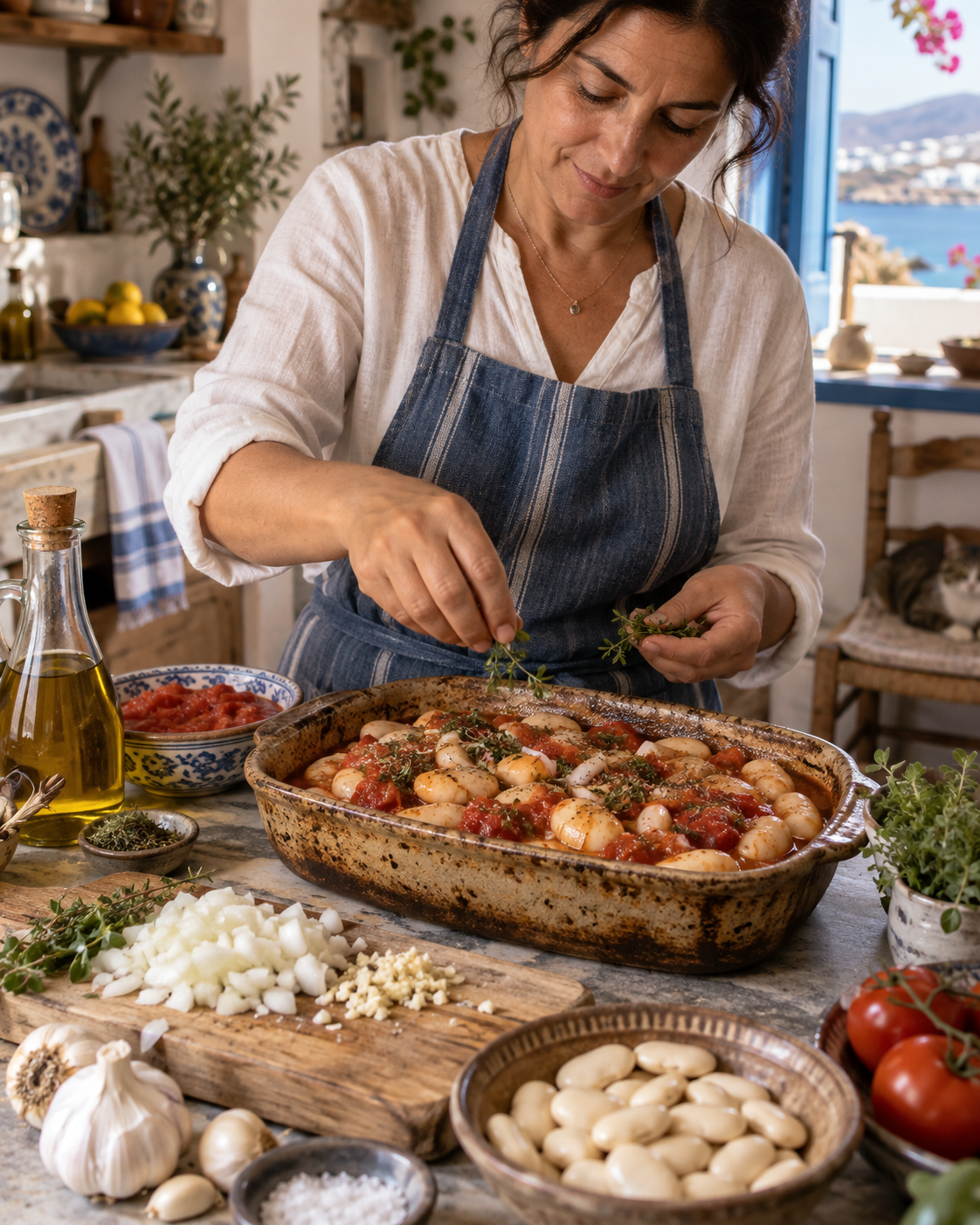
To understand gigantes plaki you have to understand the Greek tradition it belongs to, a family of dishes called ladera, meaning cooked in oil. These are vegetable dishes, beans and greens and summer vegetables, braised or baked slowly in a generous amount of good olive oil until they turn rich and silky and full of flavor, and in Greece they are eaten not as accompaniments but as meals in their own right. The oil is not a cooking medium to be drained away but a central ingredient, and it transforms the humblest of vegetables into something hearty, glossy, and complete.
This is a genuinely different way of thinking about a plate of food, and a very old and healthy one. In a culture shaped by long stretches of religious fasting from meat, and by the simple economics of feeding families from the garden and the pantry, cooks became masters at making beans and vegetables into food substantial enough to satisfy on their own. Gigantes plaki is that philosophy at its best, a dish that no one eats feeling deprived, that fills and comforts every bit as thoroughly as any meat stew.
The beans have a richness and heft that stands in for meat entirely, and the generous oil and long bake give the whole thing a depth that a quick pot of beans never achieves. When you set a dish of these beans down as the main course, you are not serving a sad vegetarian compromise but following one of the great traditions of Mediterranean home cooking, in which a bean can absolutely be dinner. It is food that has nourished ordinary families for generations, and it carries that quiet confidence with it to any table you serve it on.
The Giant Beans
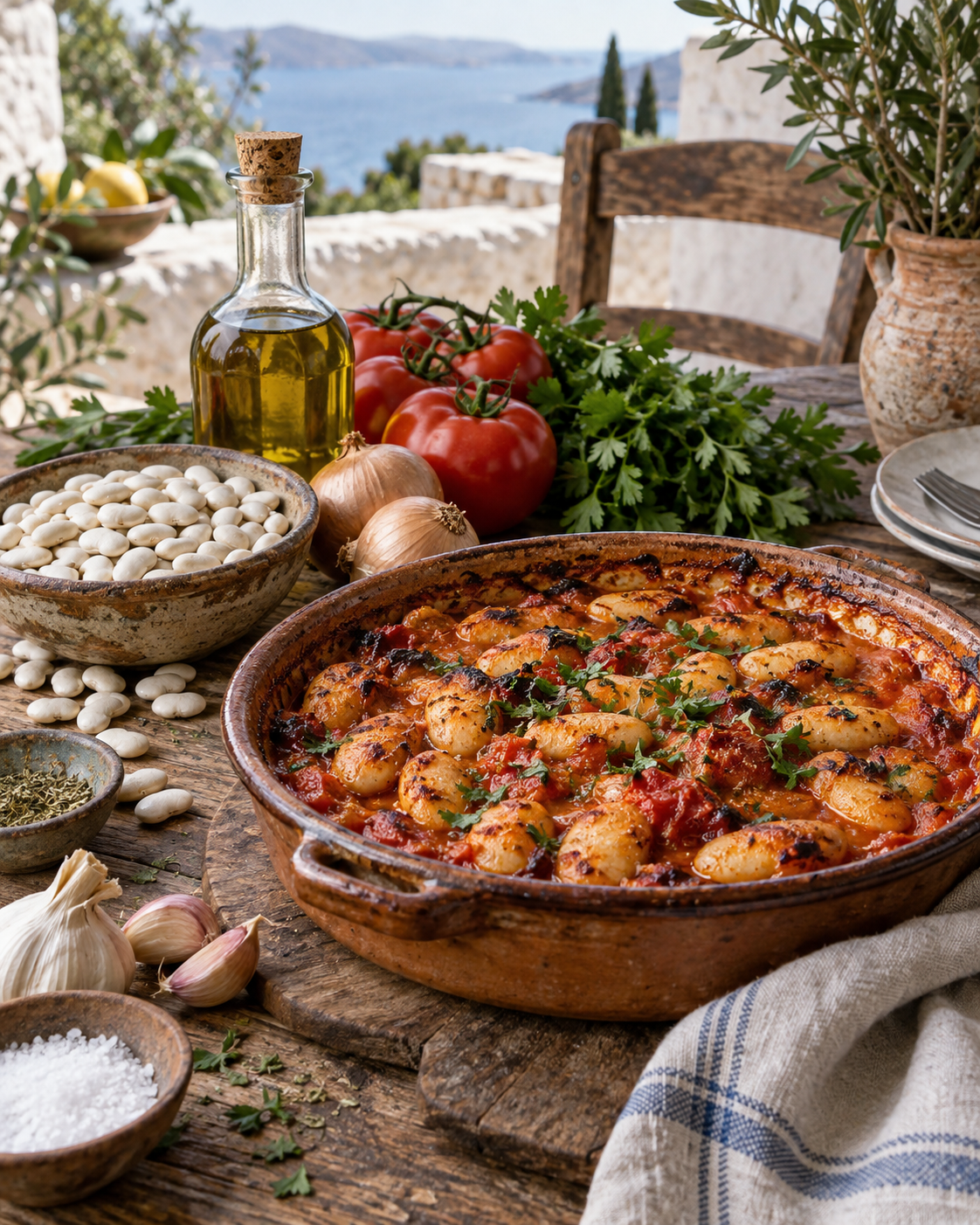
The stars of the dish are the beans themselves, and they are worth knowing about. Gigantes, the name simply means giants, are large white beans, plump and creamy and considerably bigger than an ordinary haricot bean, prized for the way they turn soft and buttery inside while somehow still holding their shape through a long, slow bake. In Greece they are a specific variety grown for the purpose, but the good news for the home cook is that you do not need to track down the exact bean to make a wonderful version. What matters is the size and the creamy texture, not the precise pedigree, so a large, tender white bean of almost any kind will carry the dish beautifully.
If you can find true Greek gigantes at a Mediterranean grocer, they are lovely, but the everyday substitute is the butter bean, also sold as the lima bean, which is large, creamy, and perfect for the job, and even large white beans or cannellini will do at a pinch.
The other choice is between dried and canned. The traditional route is dried beans, soaked overnight and then simmered until just tender before they go into the sauce, which gives the best texture and flavor and lets the beans absorb the tomato as they bake, but canned butter beans, drained and rinsed, turn this into a genuinely quick weeknight dish with very little lost. Whichever you use, the goal is the same, big tender beans with a creamy interior that soak up the tomato sauce around them, so do not fret about authenticity here and simply use the best large beans you can easily get. A dried bean cooked with care will always have the edge in texture, holding its shape while turning silky within, but a good canned butter bean is no shame at all and puts this dish comfortably within reach on a busy weeknight. The bean is the vehicle; the sauce and the bake are where the real character comes from.
A Sauce Built on Patience and Oil
If the beans are the body of the dish, the tomato sauce is its soul, and it rewards a little patience. It begins the way so much Mediterranean cooking does, with onion softened slowly and gently in a generous pour of olive oil, never rushed or browned hard, often joined by carrot and celery for extra sweetness and depth. Then in go garlic and tomato, whether good tinned tomatoes or passata, and the sauce is left to simmer and concentrate into something rich and jammy before the beans are folded through it. That simmering is not a step to rush, since it is where the raw, sharp edge of the tomato cooks away and the sweetness comes forward, and a sauce given its time tastes worlds apart from one hurried along.
The seasonings are simple but they matter. Oregano is the essential Greek herb here, parsley and sometimes dill bring freshness, a bay leaf adds background depth, and there is one traditional touch that surprises people and makes the dish, a small pinch of cinnamon, which lends a warm, subtle complexity you cannot quite place but would miss if it were gone. A little sugar balances the acidity of the tomatoes, and plenty of salt and pepper bring it into focus. Then the whole thing goes into the oven and bakes uncovered, which is where the magic really happens, the sauce thickening and deepening, the beans drinking it in, and the exposed beans on top catching and caramelizing into sweet, slightly crisp little bites. That slow bake, and the courage to use enough olive oil, are the two things that turn a pot of beans into gigantes plaki.
Skimp on either and you get something perfectly nice but ordinary; commit to both and you get the real thing, rich and glossy and worth every drop of oil.
Warm, Cold, or Anytime
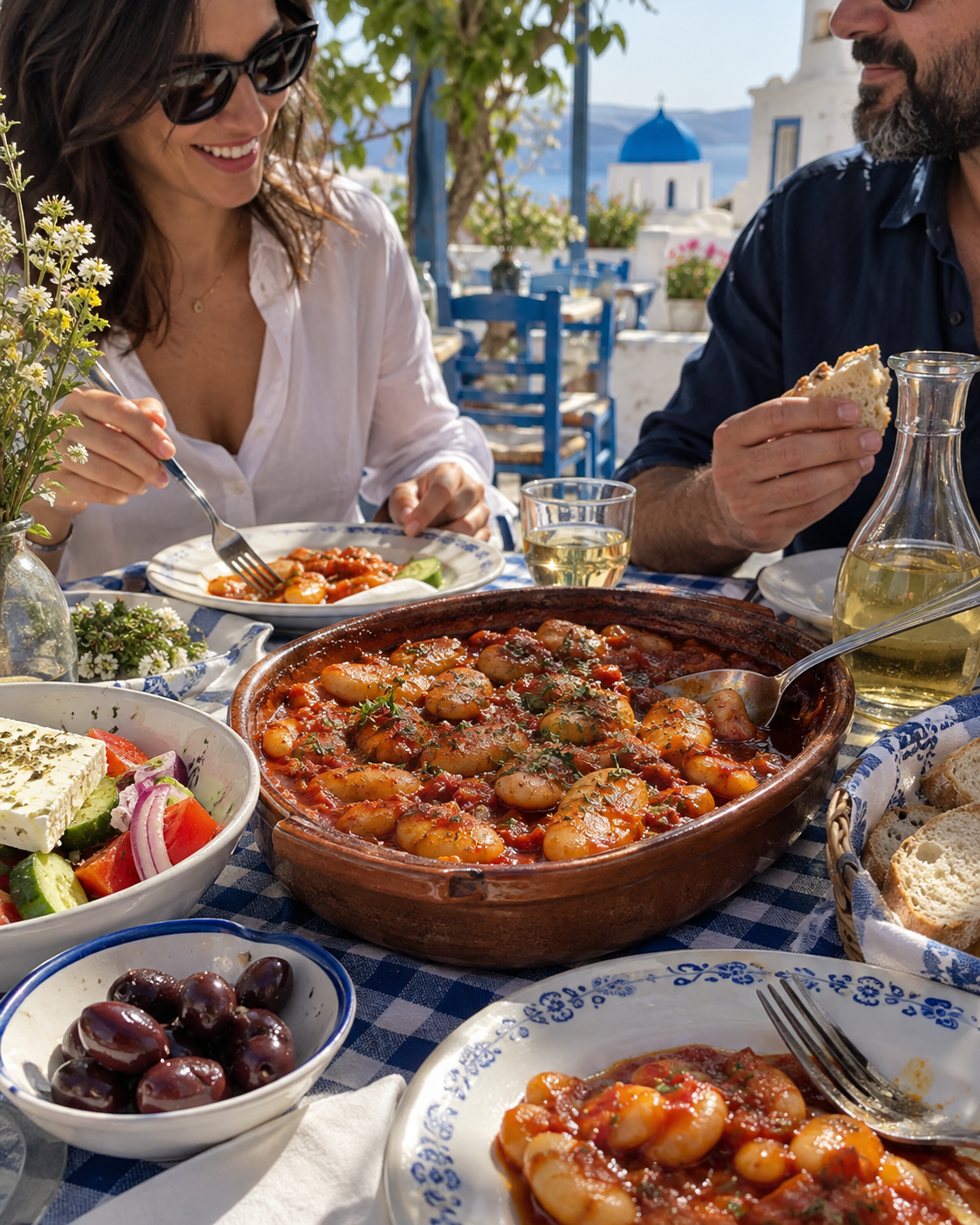
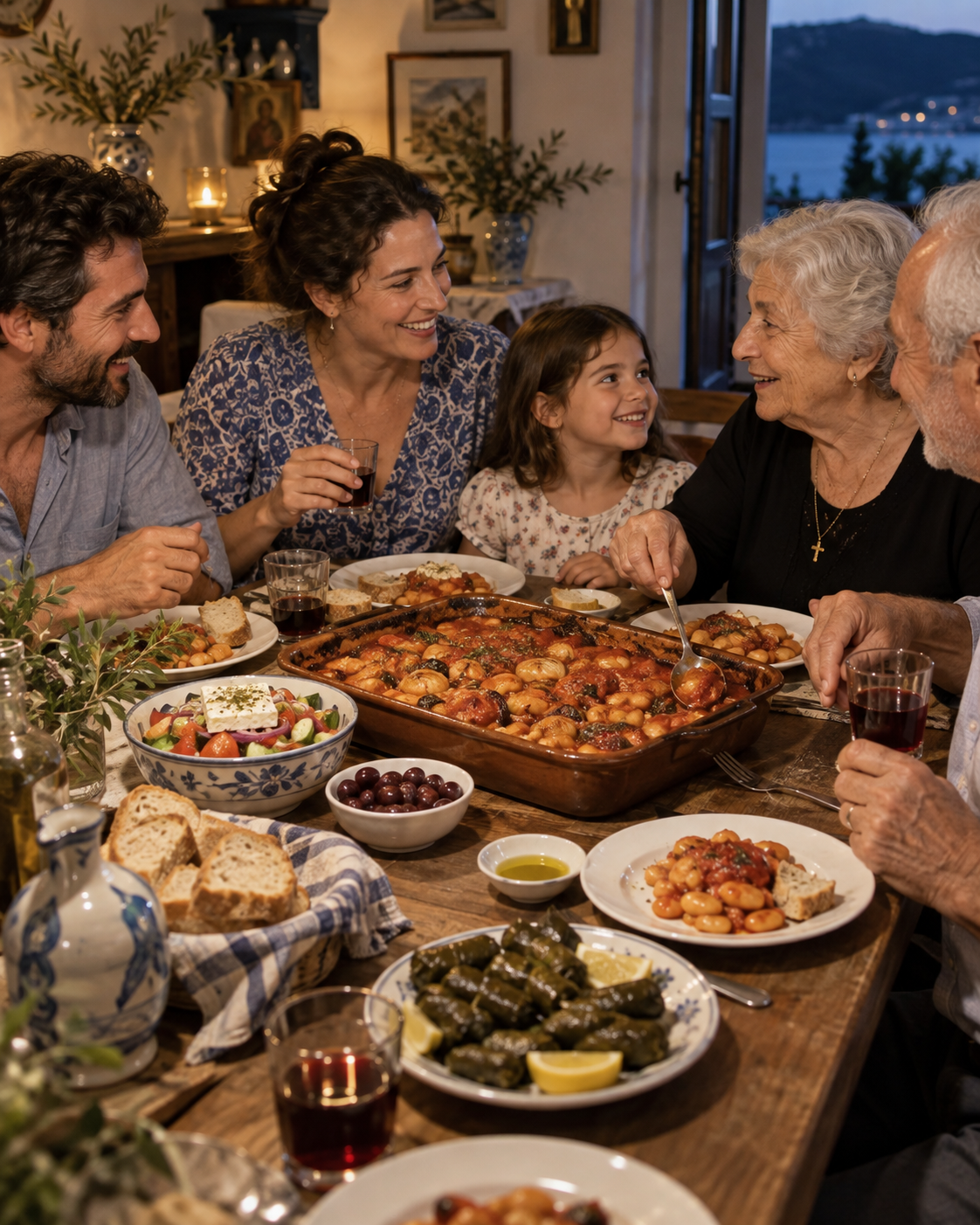
One of the quiet joys of this dish is how forgiving it is about when and how you eat it. Unlike so much food that must be rushed hot to the table, gigantes plaki is arguably even better warm or at room temperature than piping hot, which makes it wonderfully relaxed to serve. You can bake it ahead, let it sit, and bring it out whenever you are ready, and its flavors only deepen as it rests, so leftovers the next day are a genuine treat rather than a consolation. This makes it a gift to anyone hosting, since it is the rare centerpiece you can finish entirely before your guests arrive and serve without a moment’s fuss at the table.
That flexibility is why it plays so many roles on the Greek table. It appears as a meze, a small dish among many to share with drinks, spooned onto crusty bread, its rich beans and sweet sauce a perfect partner to a glass of something cold. It serves as a hearty vegetarian main, especially with a chunk of bread to mop the sauce and, for those who want it, some crumbled feta on top or on the side, its salty tang a perfect foil for the sweet beans.
It is equally at home as a substantial side alongside grilled meat or fish. However you serve it, a drizzle of good olive oil and a scatter of fresh parsley at the end lift it beautifully, and a little feta and a bowl of olives alongside turn it into a small feast. It is the sort of dish that stretches easily to feed unexpected guests, since a pot of beans goes a long way and only tastes more generous for being shared. It is, in the end, exactly as versatile as it is delicious.
Making Gigantes Plaki
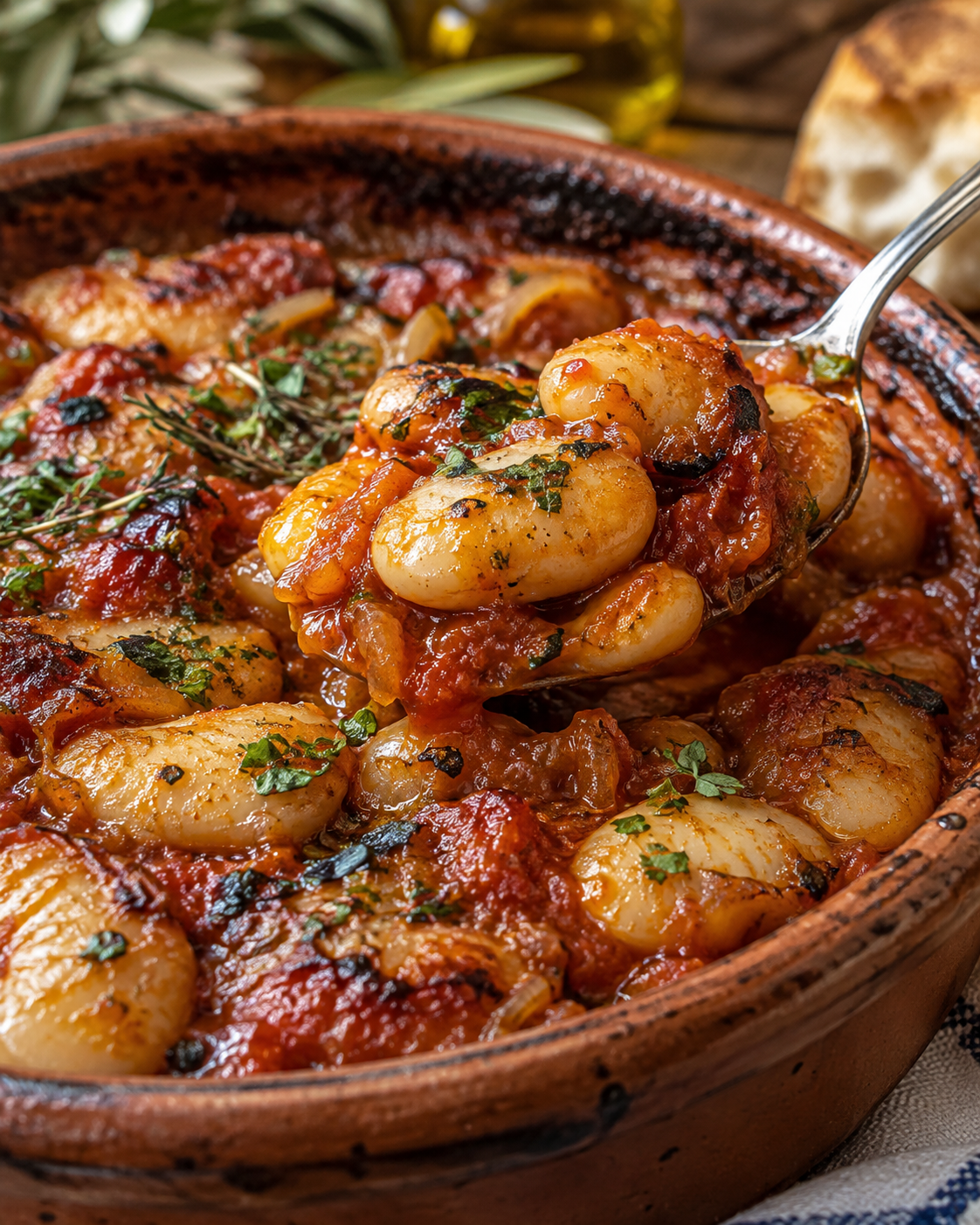
Here is a classic gigantes plaki, serving four to six. Canned butter beans make it quick; dried gigantes, soaked and pre-cooked, make it traditional.
Ingredients
- 2 cans butter beans, drained and rinsed, or 250 g dried gigantes, soaked overnight and pre-cooked until just tender
- 5 tablespoons olive oil, plus more to finish
- 1 large onion, finely chopped
- 1 carrot, finely diced, optional
- 3 cloves garlic, chopped
- 400 g tinned chopped tomatoes or passata
- 1 tablespoon tomato paste
- 1 teaspoon dried oregano
- A small pinch of ground cinnamon
- 1 teaspoon sugar
- Salt and black pepper
- Chopped fresh parsley, and feta, to serve
Instructions
- Preheat the oven to 350 F, about 180 C. In a large oven-safe pan, heat the olive oil over medium-low heat and cook the onion, and carrot if using, gently until soft and sweet, about 10 minutes.
- Add the garlic and cook for a minute, then stir in the tomatoes, tomato paste, oregano, cinnamon, and sugar. Season with salt and pepper.
- Simmer the sauce gently for about 10 minutes, until it thickens and turns rich, adding a splash of water if it gets too dry.
- Stir in the beans, coating them well in the sauce. It should be loose enough to bubble around them; add a little hot water if needed.
- Transfer to the oven, uncovered, and bake for about 40 minutes, until the sauce is thick and the beans on top are golden and lightly caramelized.
- Let it rest for at least 10 minutes, since it is best warm rather than scalding.
- Finish with a generous drizzle of olive oil and plenty of fresh parsley, and serve with crusty bread and crumbled feta on the side.
And do make it a day ahead when you can, since gigantes plaki only improves overnight as the flavors settle, which makes it as good a dish for feeding a crowd as it is for a quiet dinner with leftovers to look forward to.

About the Author: Ruben, co-founder of Gamintraveler.com since 2014, is a seasoned traveler from Spain who has explored over 100 countries since 2009. Known for his extensive travel adventures across South America, Europe, the US, Australia, New Zealand, Asia, and Africa, Ruben combines his passion for adventurous yet sustainable living with his love for cycling, highlighted by his remarkable 5-month bicycle journey from Spain to Norway. He currently resides in Spain, where he continues sharing his travel experiences with his partner, Rachel, and their son, Han.