
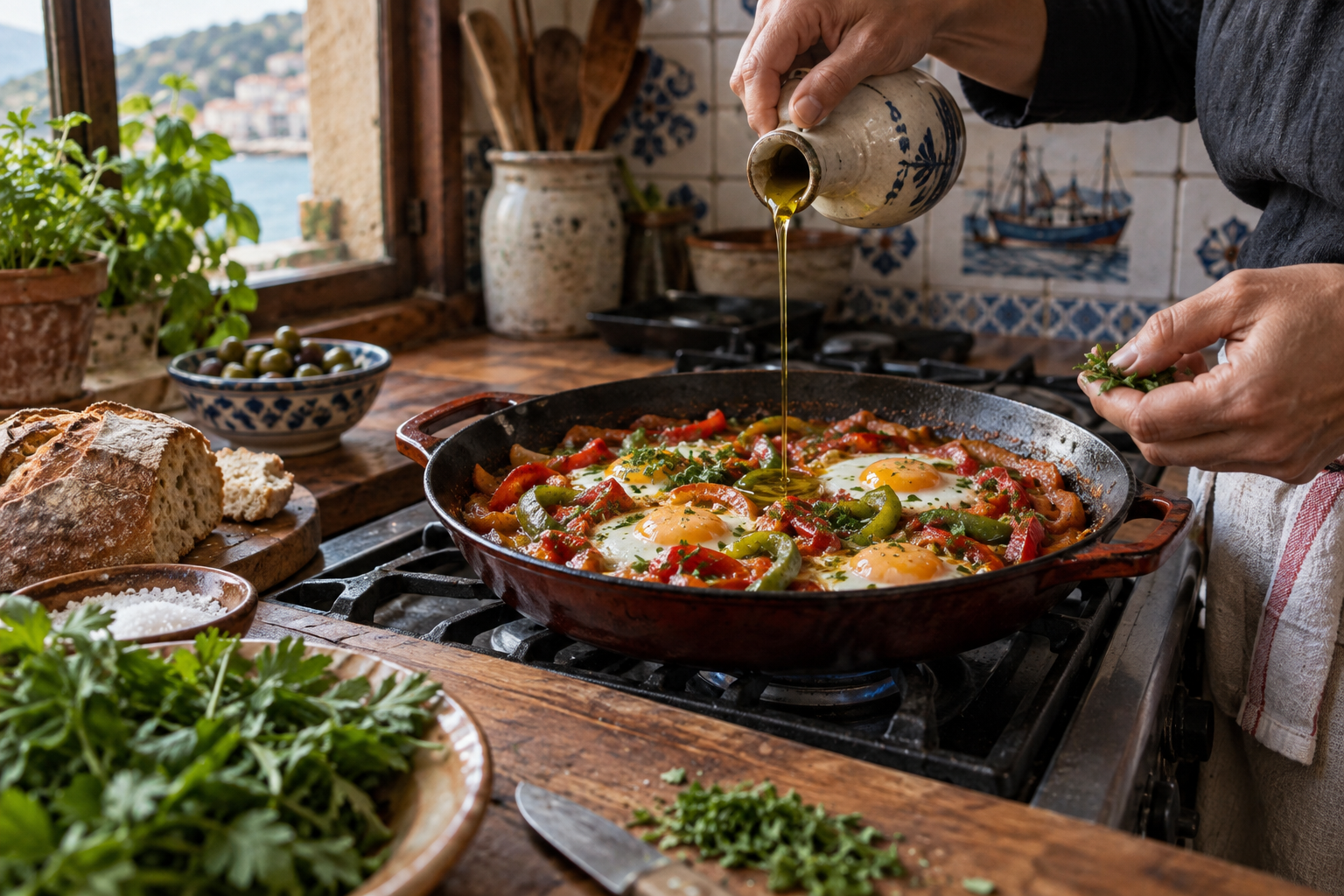
There is a dish from the Basque country, that green corner straddling the border of France and Spain, that solves the eternal question of what to make when you have peppers, eggs, and not much else. It is called piperade, and it is one of those perfect, humble, endlessly useful recipes that a whole region has leaned on for generations. At its simplest it is peppers, onions, and tomatoes slow-cooked into a soft, sweet, gently spiced stew in a single pan, with eggs folded through at the end, and the magic of it is that it works at literally any hour of the day. Have it for breakfast with a runny yolk, for a light lunch with some good bread, or for dinner alongside a piece of fish or chicken, and it is equally, effortlessly at home. Few dishes anywhere are this simple, this cheap, and this genuinely good at any time you happen to be hungry.
What follows is what piperade actually is, why it works at any hour, the one pepper that gives it its Basque soul, and exactly how to make it. It may become your new favorite answer to the question of what to cook.
What Piperade Is

At its heart, piperade is a Basque stew of peppers, onions, and tomatoes, cooked down slowly with garlic and a little spice until everything softens into a rich, jammy tangle of vegetables. The name itself comes from piper, an old word for pepper, which tells you exactly where the emphasis of the dish lies, and the classic version leans on sweet green and red peppers as its foundation. Traditionally the red, green, and white of the finished dish are said to echo the colors of the Basque flag, a lovely little detail that captures how deeply this dish belongs to its region.
It is rustic, forgiving food, the kind of thing born from a garden’s summer glut of peppers and tomatoes rather than from any fancy technique. There is nothing precise or difficult about it, you simply cook the vegetables patiently until they are soft and sweet, season them well, and let time do the work.
The only real skill it asks is patience, the willingness to let the peppers and onions cook down slowly rather than rushing them, and that patience is repaid with a depth of sweetness you cannot get any faster. The result is somewhere between a stew, a sauce, and a vegetable side, deeply savory and just a touch spicy, and it is exactly the kind of unpretentious, deeply satisfying cooking that defines the Basque table. There is a generosity to it, too, since a few cheap peppers stretch to feed a whole family, which is part of why it has stayed a beloved everyday dish rather than a special-occasion one. Once you have the base, the eggs are what turn it into a meal. And because that base keeps beautifully, a single afternoon of gentle cooking can quietly feed you across several days and several different meals, which is a large part of its enduring appeal in Basque homes.
Why It Works at Any Hour
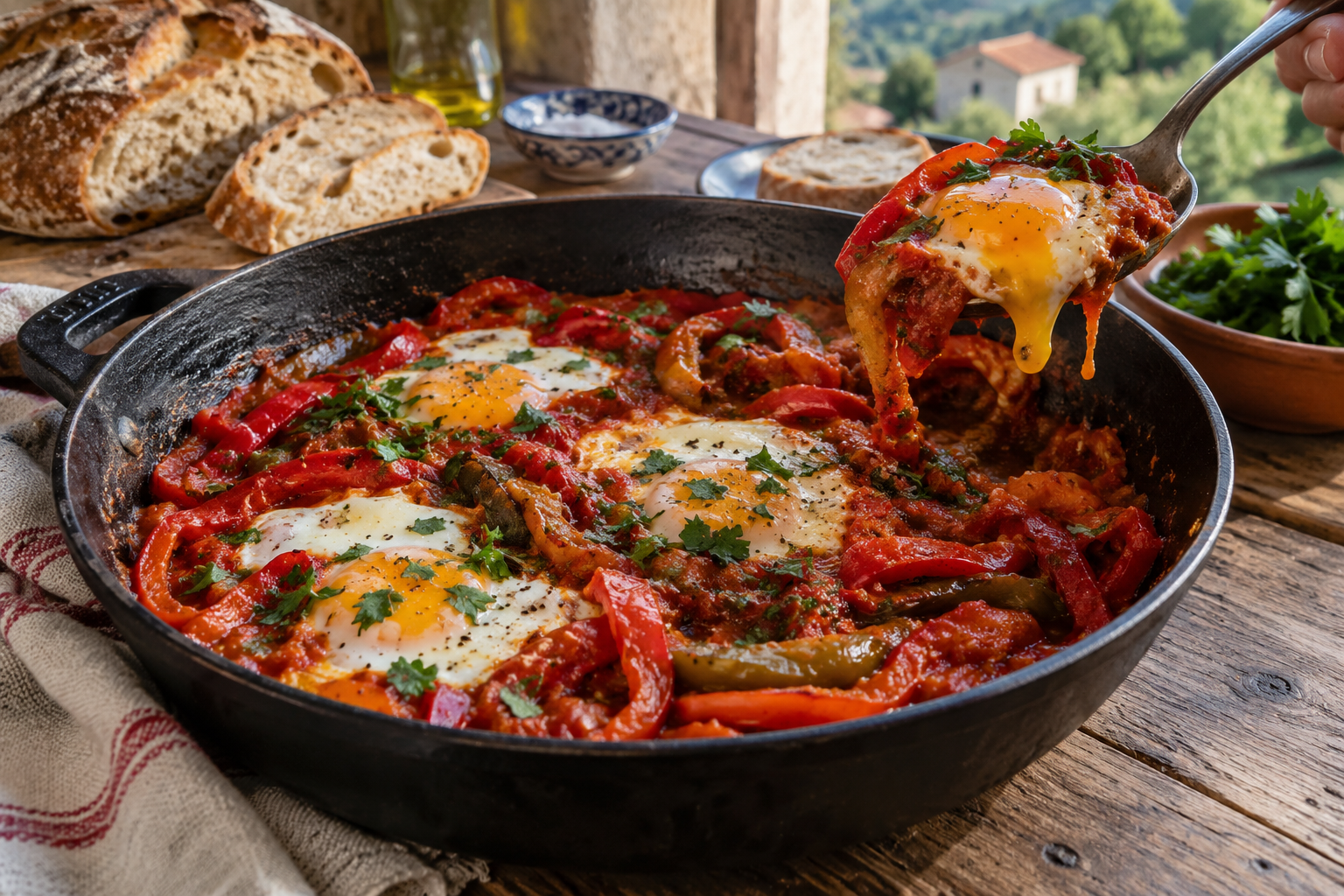
The genius of piperade, and the reason it has earned its place as a true kitchen staple, is its remarkable versatility across the whole day. Fold or nestle eggs into the warm pepper stew and you have a glorious breakfast or brunch, the runny yolk mingling with the sweet, spiced vegetables in a way that feels both hearty and light. It is the Basque cousin of dishes like shakshuka, a one-pan bed of vegetables cradling eggs, and just as perfect first thing in the morning.
But the same pan of piperade shifts effortlessly into lunch or dinner. Without the eggs, it becomes a wonderful sauce or side, spooned over grilled fish or chicken, tossed through pasta, or piled onto toast, and it pairs beautifully with the cured ham the Basque region is famous for. It is also brilliant to make ahead, since like most stews it only improves after a day in the fridge as the flavors deepen and meld. A pan of piperade in the refrigerator is a small insurance policy against hunger at any hour, ready to become breakfast, lunch, or dinner depending on what the moment calls for.
The Pepper That Makes It Basque
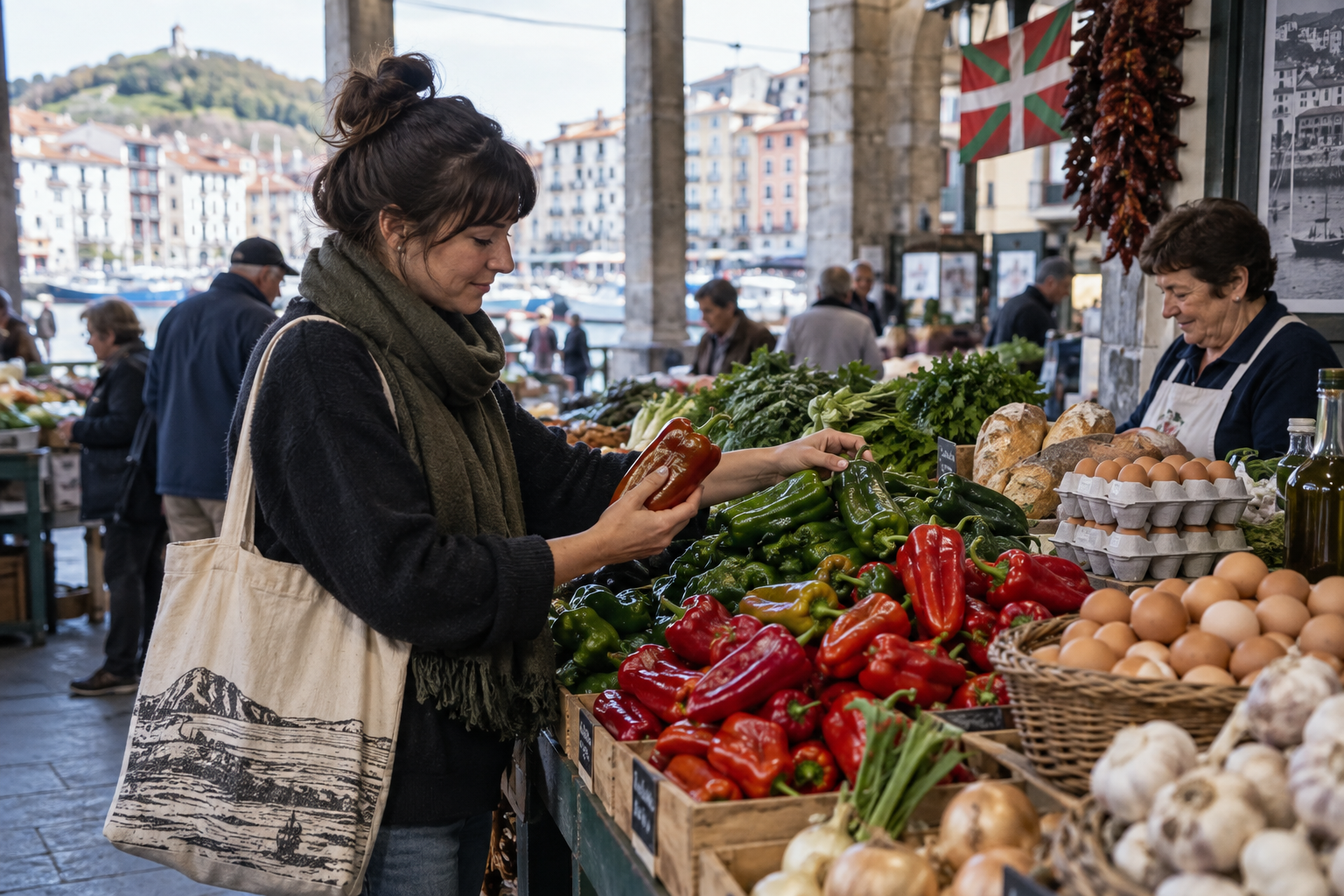
The ingredient that gives piperade its distinctive character, and that marks it as truly Basque rather than just any pepper stew, is a spice called piment d’Espelette. This is a mild chili powder made from a particular pepper grown around the town of Espelette in the French Basque country, so beloved and so tied to its place that the town holds a festival in its honor each autumn, hanging strings of the drying red peppers from the houses. It is one of only a handful of spices in the world with its own protected regional status, a mark of just how seriously the Basques take this small, fragrant pepper. It brings a gentle, fruity, subtly smoky warmth to the dish rather than any fierce heat, since it is really quite mild as chilies go, more about flavor than fire.
If you can find piment d’Espelette, at a good spice shop or online, it is worth having, because it lends piperade a flavor that is hard to replicate exactly. But do not let its absence stop you, because a good sweet or mildly hot paprika makes a perfectly fine substitute, bringing a similar warm, red, gently smoky note. The whole point is a soft, fruity warmth rather than searing spice, so use whichever pepper you can get your hands on and adjust the amount to your own taste. With the right pepper, whatever you can lay hands on, the dish takes on that characteristic Basque glow. That warm, russet color and that gentle fruity heat are as much a part of piperade as the peppers and eggs themselves, and getting even a rough approximation of it is what lifts the dish from a plain pepper stew into something with real character.
The Peasant Roots of a Perfect Dish
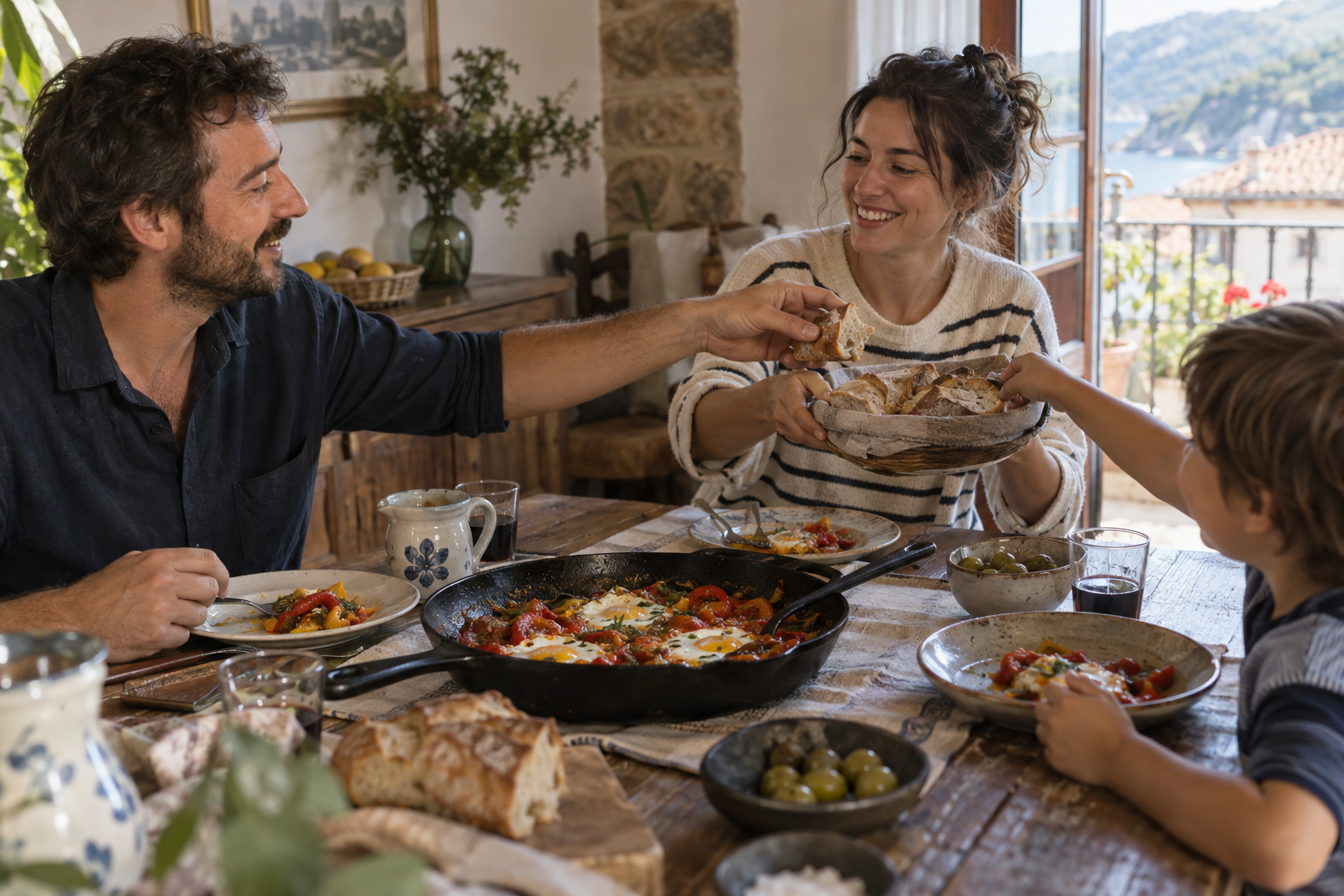
Like so many of the best things to come out of European kitchens, piperade is fundamentally peasant food, born of thrift and the rhythm of the seasons rather than any grand culinary ambition. When the late-summer garden overflows with peppers and tomatoes, all ripening at once and threatening to spoil, a dish that cooks great quantities of them down slowly into something delicious is not a luxury at all but a sensible, thrifty answer to abundance. That humble origin is exactly why it remains so cheap, so forgiving, and so reliably good.
There is real wisdom in this kind of cooking, the kind that takes a few inexpensive vegetables, a little fat, some patience, and a good seasoning, and produces something far greater than the sum of its parts. Piperade needs no expensive cut of meat, no hard-to-find ingredient beyond its one signature pepper, and and no special skill at all, which is precisely what has kept it so alive and cherished on Basque tables for generations. It is a lovely reminder that some of the most satisfying food in the world was invented not by chefs but by ordinary home cooks making the most of what they had, and that a garden’s worth of peppers, treated with a little care, can become a dish you return to again and again.
Ways to Serve It
Part of what makes piperade worth learning is how many different meals it can quietly become, so it helps to know its range. In its most classic form, folded together with eggs, it is a complete dish in itself, wonderful for breakfast, brunch, or a light supper with nothing more than bread alongside. This is piperade at its most iconic and best-loved, the sweet peppers and soft eggs together in one warm, comforting pan.
But the pepper base on its own, before any eggs, is arguably even more useful, functioning as a superb all-purpose sauce and side. Spoon it over a piece of pan-fried white fish or a simple chicken breast and it becomes an instant, deeply flavorful dinner. Toss it through pasta and it is a quick, rustic sauce. Pile it on toast, serve it beside grilled meat, or, in the truest Basque style, drape it with a few slices of good cured ham, the salty richness of which is a natural partner to the sweet peppers. Each of these takes minutes once the piperade is made, which is exactly why a batch of it feels like money in the bank. A batch of piperade in the fridge is one of those quiet kitchen luxuries that turns a scramble for dinner into an easy decision, night after night, in whatever form the moment wants. Make a big pan on a Sunday and you have breakfasts, lunches, and dinners half-solved for days, which is exactly the kind of practical, generous cooking worth building a repertoire around.
Making Piperade
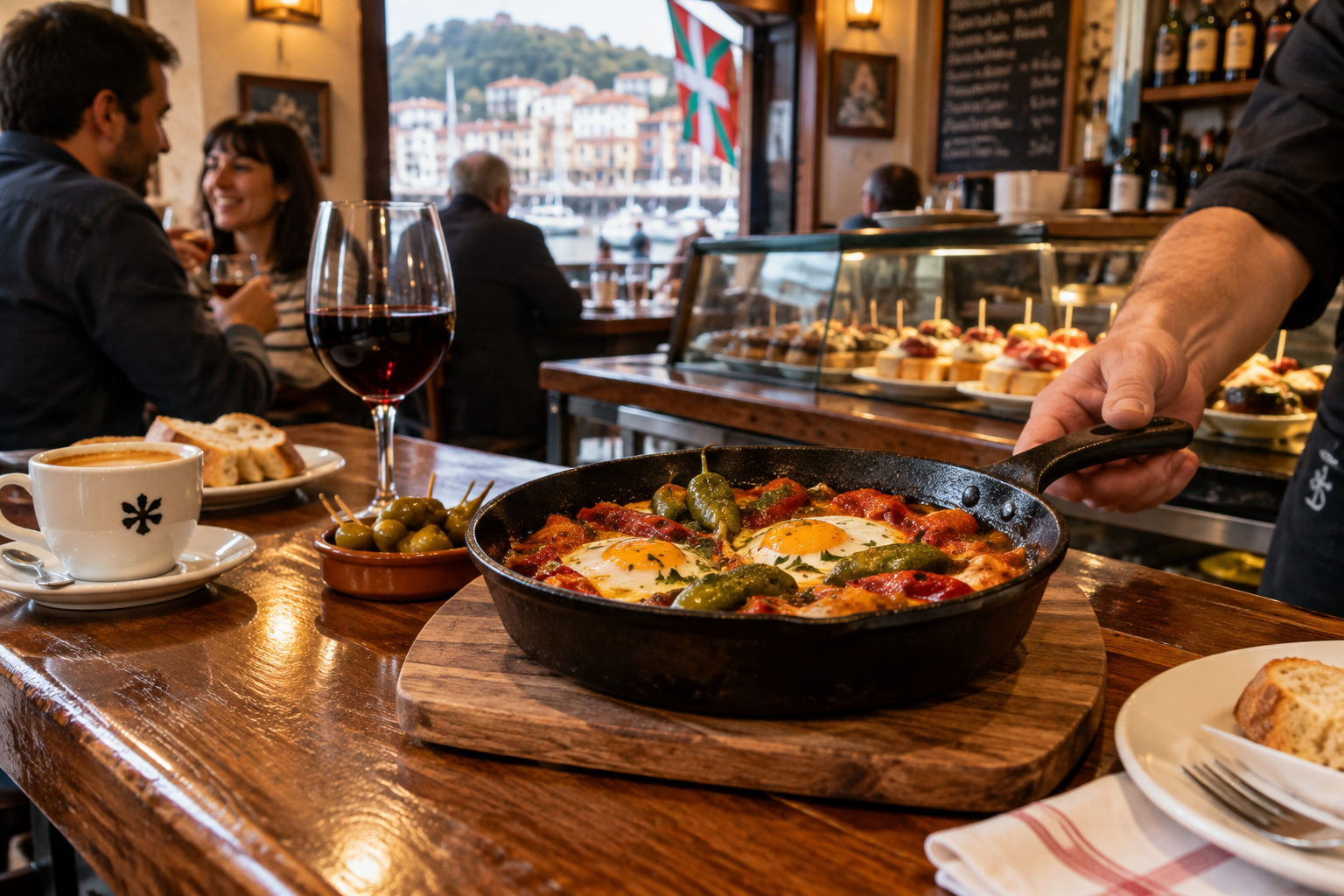
Here is a classic piperade with eggs, in one pan, serving four. It is forgiving, so adjust the peppers and spice to what you have and what you like.
Ingredients
- 3 tablespoons olive oil
- 1 large onion, thinly sliced
- 3 bell peppers, red and green, cut into thin strips
- 3 cloves garlic, minced
- 4 ripe tomatoes, chopped, or 1 can chopped tomatoes
- 1 to 2 teaspoons piment d’Espelette, or sweet paprika
- 1 teaspoon fresh thyme, or 1/2 teaspoon dried
- 1 bay leaf
- Salt and black pepper, to taste
- A pinch of sugar, optional
- 4 to 6 eggs
Instructions
- Heat the olive oil in a large, wide skillet over medium heat. Add the sliced onion and cook, stirring, until soft and translucent, about 5 to 7 minutes.
- Add the pepper strips and cook, stirring occasionally, until they soften and begin to lighten in color, about 10 minutes. Do not rush this, since soft, sweet peppers are the whole point.
- Stir in the garlic and cook for a minute until fragrant, then add the tomatoes, piment d’Espelette, thyme, bay leaf, salt, pepper, and a pinch of sugar if using.
- Reduce the heat to low, cover, and simmer gently for about 20 minutes, stirring now and then, until the vegetables are very soft and the mixture has thickened into a rich stew. Remove the bay leaf and taste for seasoning.
- For scrambled-style eggs, whisk the eggs and pour them into the pan, stirring gently through the warm stew over low heat until just set and creamy.
- For nested eggs, instead make small wells in the stew with a spoon, crack an egg into each, cover, and cook gently until the whites are set and the yolks still soft, about 5 to 8 minutes.
- Serve hot, straight from the pan, with crusty bread to mop up the sauce, at whatever hour you happen to be eating.
And do treat it as a template, since a little cured ham added with the onions makes it richer, a splash of white wine vinegar at the end brightens it, and a handful of fresh herbs lifts the whole thing, so once you have the soft, spiced pepper base, you can steer piperade toward breakfast, lunch, or supper however the day demands.

About the Author: Ruben, co-founder of Gamintraveler.com since 2014, is a seasoned traveler from Spain who has explored over 100 countries since 2009. Known for his extensive travel adventures across South America, Europe, the US, Australia, New Zealand, Asia, and Africa, Ruben combines his passion for adventurous yet sustainable living with his love for cycling, highlighted by his remarkable 5-month bicycle journey from Spain to Norway. He currently resides in Spain, where he continues sharing his travel experiences with his partner, Rachel, and their son, Han.