
There is a way of eating well that fits on the back of a napkin and asks you to count exactly nothing, and it is one of the most quietly powerful things I have ever tested. The rule is simple: fill half your plate with vegetables, a quarter with protein, and a quarter with whole grains, and then eat. No calories, no weighing, no app, no tracking, just a glance at the proportions on the plate in front of you. I followed this Mediterranean-style plate rule for forty-five days to see whether something so simple could actually do anything, and the honest answer is that it did more than most complicated diets I have ever tried, precisely because there was almost nothing to it. What changed most was not a number but my relationship with the whole idea of eating well.
What follows is the rule itself, why proportion beats counting, what forty-five days genuinely looked like, and the real numbers, honestly reported. The short version is that the simplest rule I tried was also the only one I wanted to keep.
The Rule, in One Look
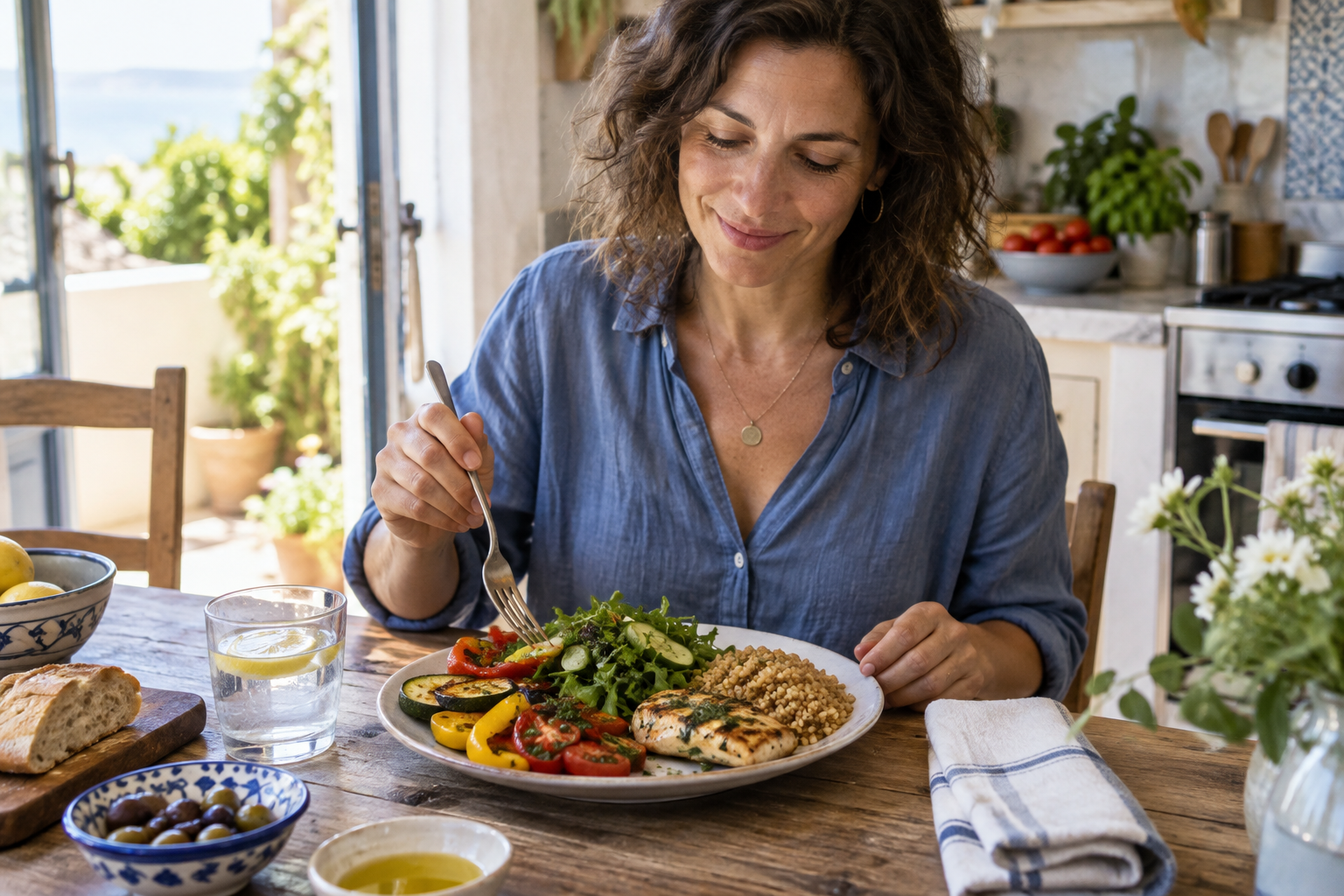
The plate rule comes from mainstream nutrition science, most famously the Harvard Healthy Eating Plate developed by the Harvard T.H. Chan School of Public Health, and it could not be simpler. You picture your dinner plate divided into sections, and you fill half of it with vegetables and fruit, favoring the vegetables, a quarter with a healthy protein like fish, poultry, beans, or nuts, and the remaining quarter with a whole grain such as brown rice, quinoa, or whole wheat. A little healthy fat, olive oil above all, and water as your drink complete it.
That is genuinely the entire method. There is no counting because the plate does the work of portioning for you, and the proportions, not the precise amounts, are what matter, so a bigger person with a bigger plate and a smaller person with a smaller one both eat well by the same rule. It maps almost exactly onto the Mediterranean way of eating, vegetable-forward, with fish and legumes for protein, whole grains, olive oil, and fruit, which is why following the plate consistently produces a Mediterranean-style diet without anyone having to call it that. You are not on a program, you are just building a plate.
Why Proportion Beats Counting
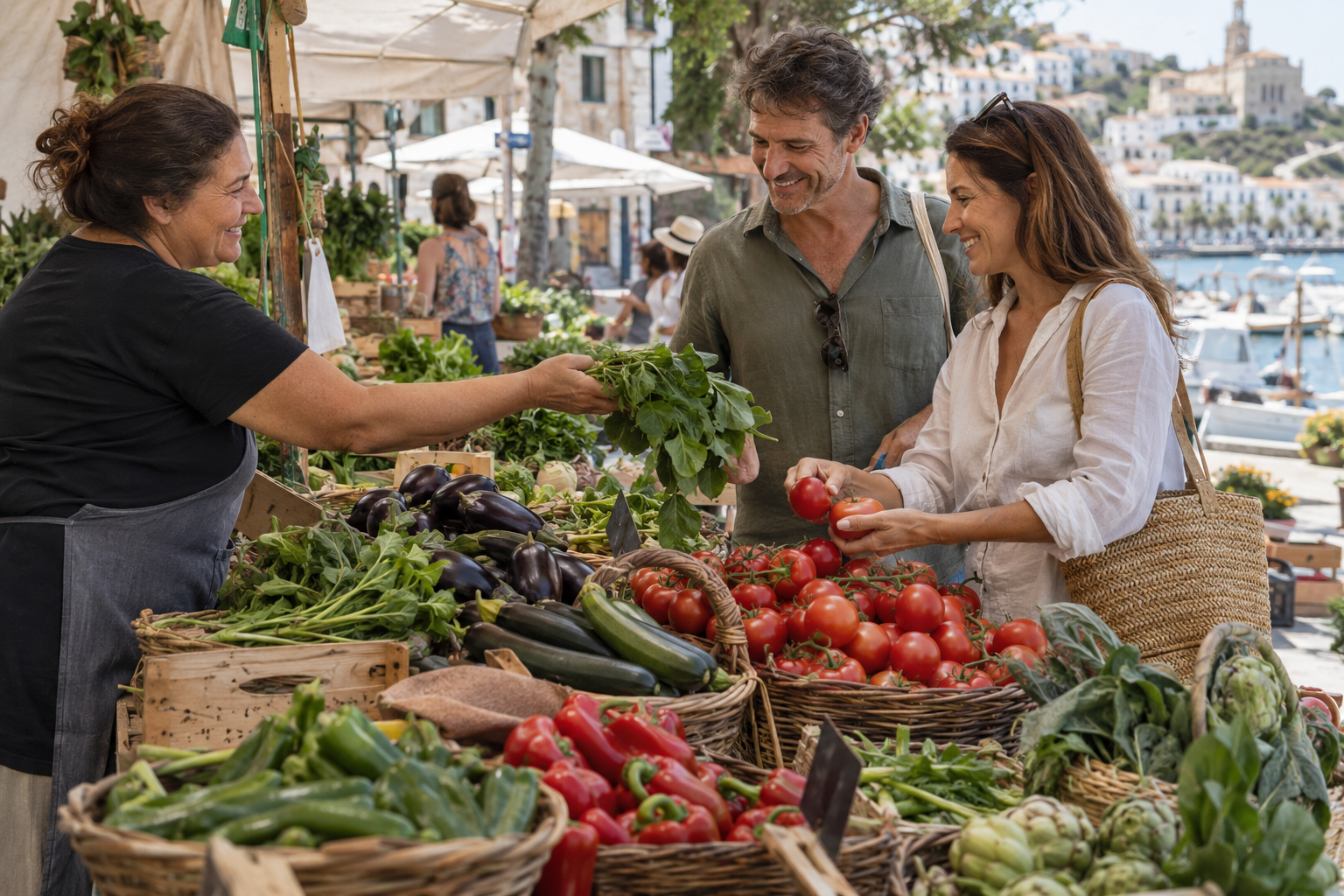
The reason this works where so much diet advice fails comes down to a single, liberating fact, which is that it replaces calculation with a picture. Counting calories, tracking macros, weighing food, and logging every bite all demand constant mental effort, and that effort is exactly why most people abandon those methods within weeks, because no one can sustain a lifetime of arithmetic at every meal. The plate rule asks for none of it, since you only ever have to glance at proportions, which the eye learns to judge in seconds and which becomes automatic fast.
This is not just easier, it is more durable, and durability is the whole game in eating well. Research consistently finds that composition-based approaches, focusing on what and in what proportion you eat rather than how many calories, produce far better long-term adherence than calorie restriction, precisely because they do not require sustained cognitive effort or trigger the sense of deprivation that makes diets collapse.
You are building a pattern you can keep for life rather than managing a budget you will eventually blow. The plate rule is not a diet you go on and off, it is simply a way of assembling a meal, which is why it can last. That distinction is easy to underrate but it is everything, because the great failure of dieting is not that diets do not work in the short term, most do, but that almost nobody can stay on them, and a plate you build the same way for the rest of your life has no end date to fall off of.
Why Half Vegetables Changes Everything
If the rule has a secret engine, it is that first instruction to fill half the plate with vegetables, because that one move quietly reshapes the entire meal. When half of every plate has to be vegetables, several good things happen automatically and without any willpower, since you eat far more fiber, vitamins, and minerals than most people manage, and the vegetables take up room that would otherwise be filled with more calorie-dense food. The half-plate of vegetables is not something you have to force yourself to eat instead of something nice, it simply changes the shape of the plate so the richer foods arrive in sensible portions.
This is the gentle genius of the approach, that it works by addition rather than subtraction. You are not told to eat less of anything or to give up the foods you love, you are told to add vegetables until they fill half the plate, and the portioning of everything else follows naturally from that. A plate that is half vegetables leaves exactly the right amount of room for a reasonable serving of protein and grain, so moderation happens on its own, as a consequence of the vegetables rather than as a rule you have to enforce. Get the vegetables right and the rest of the plate takes care of itself. It is worth pausing on how neatly this sidesteps the usual battle, because the standard advice to simply eat less runs headlong into hunger and loses, whereas filling half the plate with genuinely satisfying, high-volume, low-calorie vegetables lets you eat a big, full plate and still end up with sensible portions of everything else. You are not fighting your appetite, you are feeding it the right things first.
The Mediterranean Version
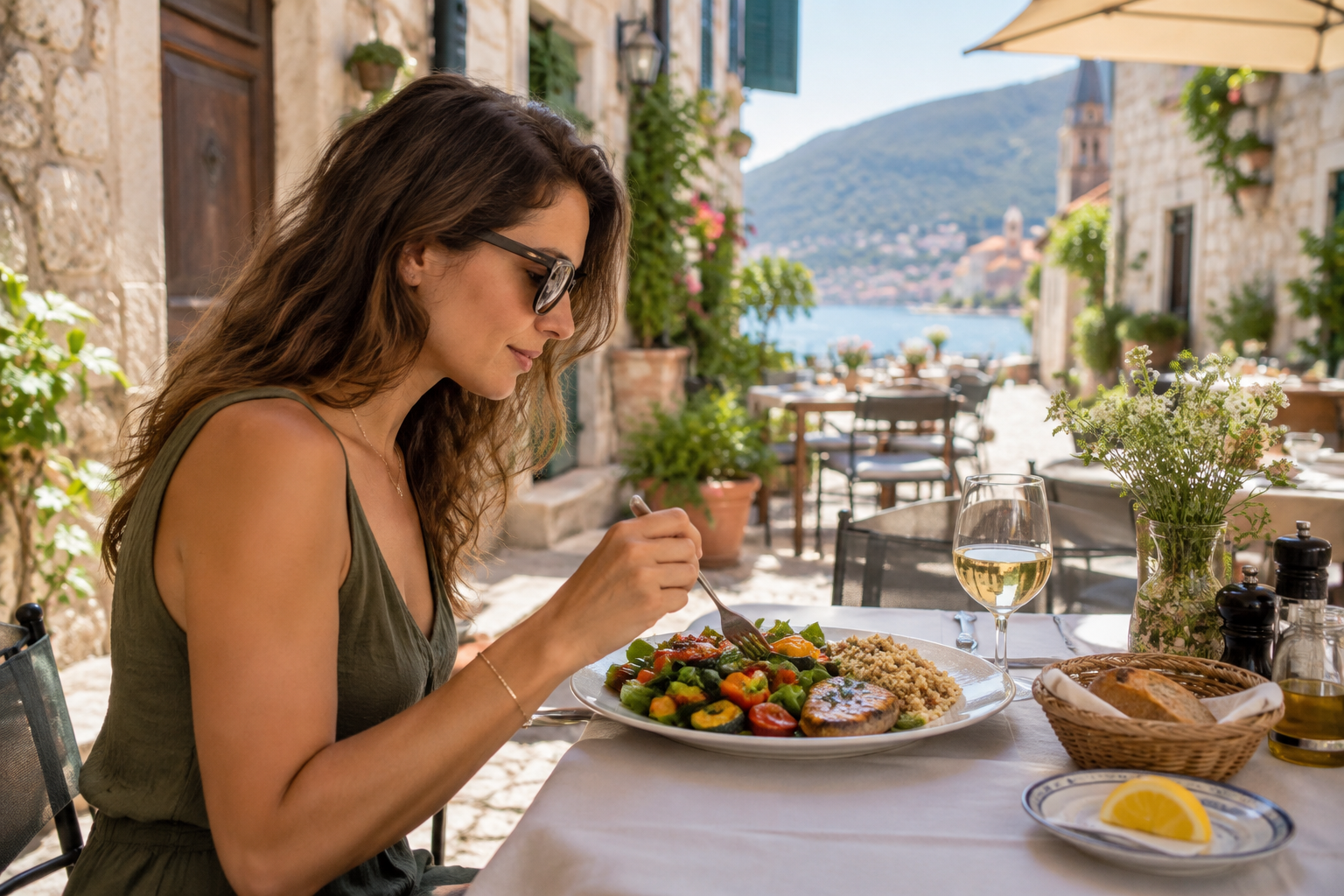
What makes this specifically Mediterranean rather than just generically healthy is the character of the food that fills each section, and it is worth getting right because it is where the pleasure lives. The protein quarter leans on fish, legumes, and poultry rather than red or processed meat, the grain quarter is whole rather than refined, and crucially the whole plate is finished with olive oil, the healthy fat that defines Mediterranean cooking and makes the vegetables genuinely delicious rather than a duty. Fruit takes the place of processed dessert, and water or a little wine takes the place of sugary drinks.
Done this way, the plate rule stops feeling like a health regimen and starts feeling like the food of the Mediterranean coast, because that is essentially what it is. The vegetables are roasted in oil or dressed with lemon, the fish is simple and good, the legumes come as a warm stew, and the whole plate is the kind of thing people in Spain, Italy, and Greece have eaten happily for generations without ever thinking of it as a diet. That is the point worth holding onto, that the healthiest plate is also, done properly, one of the most pleasurable, and the plate rule is really just a map back to that way of eating. It is a useful corrective to the grim, punitive image so much diet culture attaches to healthy eating, because there is nothing grim about a plate of roasted vegetables glossy with olive oil, a piece of good fish, and a scoop of warm lentils, and the fact that it happens to be exactly what the nutritionists recommend is almost beside the point.
What Forty-Five Days Actually Looked Like

The lived experience of forty-five days on the plate rule was pleasant and unremarkable, which is exactly what you want from something meant to last. The single biggest change was that I ate vastly more vegetables than before, not because I was trying to but because the rule required half a plate of them at every meal, and that alone transformed the nutritional quality of my days. I felt more satisfied after meals rather than less, because a big half-plate of vegetables is genuinely filling, and I never once felt the gnawing deprivation that a counting diet brings.
Now the real numbers, honestly, since the title promises them. My weight drifted gently downward over the six weeks, the kind of slow, small change you notice more in how clothes sit than in any dramatic figure, and it happened without a single calorie counted or a single food forbidden.
I want to be plain that this was gradual and modest, not a transformation, and that a month and a half is a short window, but the direction was real and, more importantly, it arrived effortlessly, as a side effect of eating more vegetables rather than as the result of any struggle. The number that mattered most was not on the scale but the count of decisions and calculations the rule spared me, which was all of them. For the first time in any attempt to eat better, I was not doing mental math, not feeling guilty, not tracking anything, and that absence of effort was the real result, worth far more than the modest movement of any number, because it was the thing that made me want to keep going.
The Plate at Every Meal
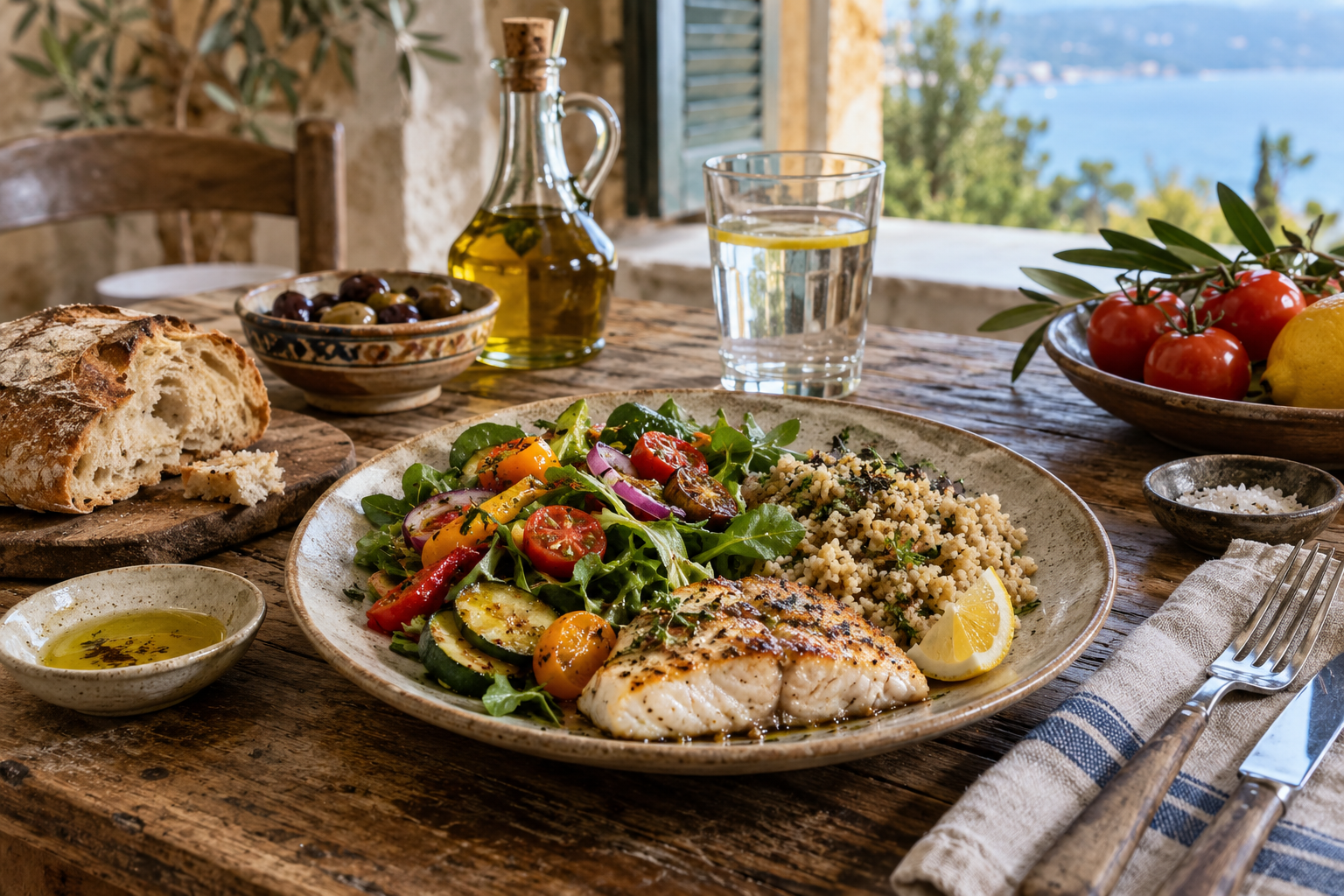
One of the quiet pleasures of the rule is how well it travels across the whole day, since the same simple proportions work at breakfast and lunch as neatly as at dinner. Breakfast can be a bowl of oats topped with fruit and nuts, which puts the produce and the whole grain and a little protein in roughly the right balance, or eggs with sauteed vegetables and a slice of whole-grain bread. It takes only a small shift from the usual carbohydrate-heavy morning to bring even the first meal of the day into line.
Lunch is where the rule shines most easily, because a big salad or a grain bowl is practically the plate rule by default, a base of vegetables with some protein and a grain folded through it and a good olive-oil dressing on top. And dinner is the classic version, a piece of fish or a bean stew with a whole grain and, filling half the plate, a generous spread of roasted or steamed vegetables. Because the rule is about proportion rather than any specific food, it bends to whatever you like to eat and whatever is in season, which is a large part of why it never grows tiresome the way a fixed meal plan does. You are not eating the same things, you are simply arranging them the same way. That flexibility is what keeps the rule alive across months and seasons, because there is always a new vegetable to roast, a different grain to try, another way to cook the fish, all inside the same reliable frame.
It Is About Adding, Not Subtracting
This is the part worth dwelling on, because it is what makes the plate rule not just effective but genuinely healthy in the fullest sense. The rule works by telling you what to add, vegetables, until they fill half the plate, rather than by telling you what to take away, and that difference matters enormously for how a way of eating feels and whether it lasts. There is no forbidden list, no food cast as the enemy, no shrinking of portions by force, only the positive instruction to build a plate that is mostly vegetables, and the moderation that follows is a gentle consequence rather than a painful rule.
That additive, unanxious quality is why the plate rule is a healthier relationship with food and not just a healthier diet. It asks you to eat more of the good things rather than less of everything, it never demands the fraught self-denial that disordered eating feeds on, and it leaves you satisfied rather than hungry and virtuous. If a way of eating ever started to feel like restriction or a source of guilt, that would be the moment to loosen it, but the beauty of this one is that it points the opposite way, toward abundance, color, and enough, which is where a good relationship with food actually lives. That reframing, from a diet that takes away to a rule that adds, is the single most valuable thing the forty-five days gave me, more than any change in the mirror, because it is the difference between eating well as a punishment and eating well as a pleasure.
How to Actually Do It
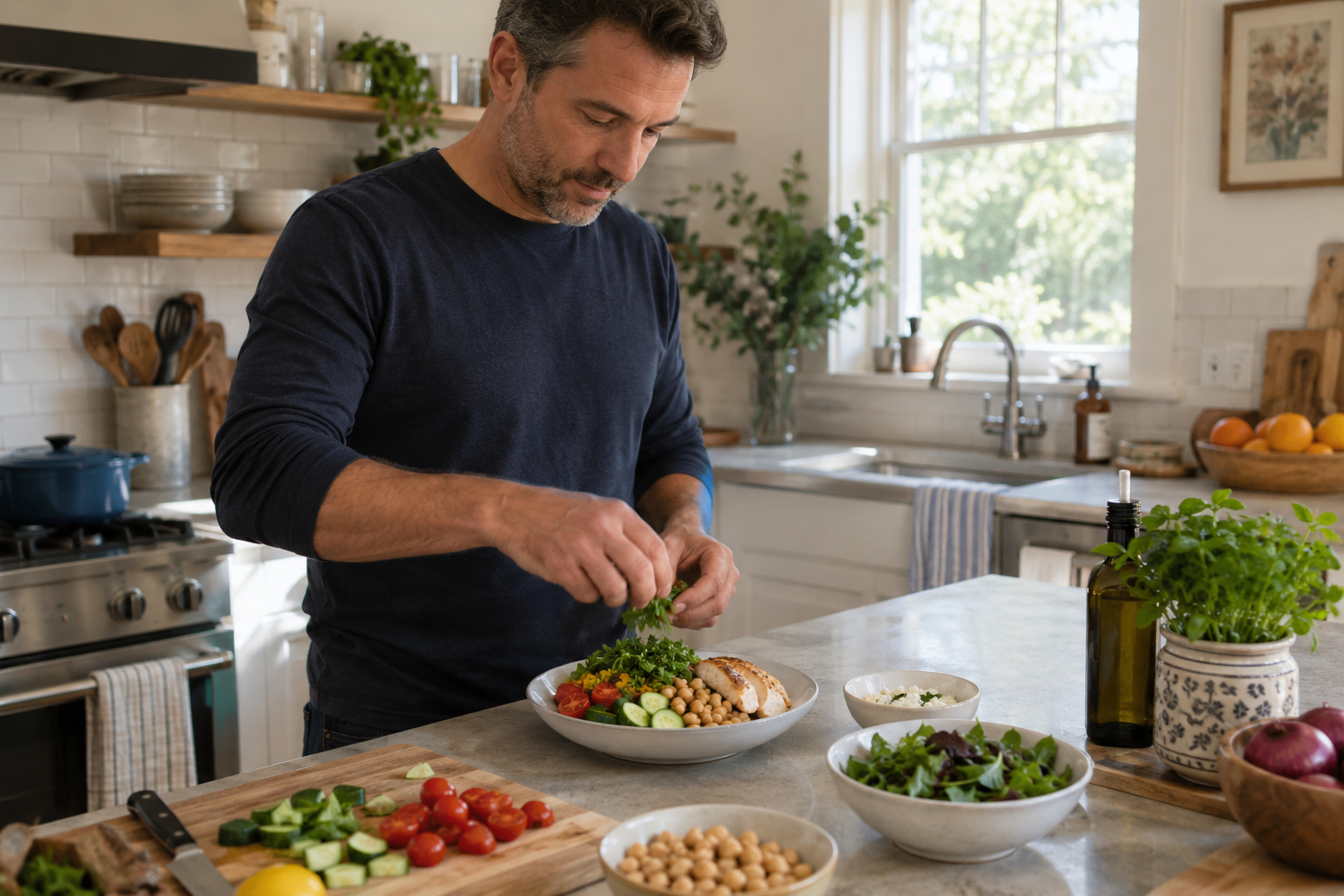
Putting the rule into practice is as simple as it sounds, and the mental picture is all the equipment you need. Take a standard dinner plate, fill one whole half with vegetables of any kind and color, cooked or raw, then fill one of the remaining quarters with a protein and the other with a whole grain or starch, add a drizzle of olive oil and a glass of water, and that is a complete, balanced, Mediterranean meal with nothing to measure. It adapts to any cuisine and any meal, since a stir-fry, a grain bowl, a stew, or a plate of fish and roasted vegetables can all be built to the same proportions.
If you want a little more precision without any counting, your own hand is a decent guide, since a protein portion is roughly your palm and a grain portion roughly a cupped hand, but honestly the plate picture alone is enough for most meals. The one rule to remember, if you forget everything else, is half the plate vegetables, because that single habit does most of the work all by itself. Build that plate a few times and it becomes automatic, the way you assemble a meal without thinking, which is exactly when a healthy way of eating stops being a project and starts being simply how you eat.
Do treat the plate as a flexible guide rather than a strict law, since close enough is the whole point and no single meal has to be perfect, and hold any change on the scale gently, because the real win of this rule is that you eat more vegetables and stop counting rather than any particular number, so if food or weight is ever a fraught subject for you, lean toward the parts about eating well and being kind to yourself rather than toward any outcome.

About the Author: Ruben, co-founder of Gamintraveler.com since 2014, is a seasoned traveler from Spain who has explored over 100 countries since 2009. Known for his extensive travel adventures across South America, Europe, the US, Australia, New Zealand, Asia, and Africa, Ruben combines his passion for adventurous yet sustainable living with his love for cycling, highlighted by his remarkable 5-month bicycle journey from Spain to Norway. He currently resides in Spain, where he continues sharing his travel experiences with his partner, Rachel, and their son, Han.