
The first time an American hears the words fried milk, the reaction is usually a puzzled frown. Milk is a liquid. You cannot fry a liquid. But leche frita, Spain’s beloved fried milk, is one of those dishes whose strange name hides something that, once you understand it, makes complete and delicious sense. It is not liquid milk thrown into a pan, but a thick, creamy custard, set firm, cut into squares, breaded and fried until golden on the outside while staying soft and molten within. Put that way, it stops sounding bizarre and starts sounding wonderful, which is exactly what it is, a crisp-shelled, creamy-centered custard fritter dusted in cinnamon sugar.
Leche frita is a treasured traditional dessert in Spain, especially in the north, and a particular fixture of Holy Week, though these days people enjoy it all year round. It belongs to that lovely family of Spanish sweets that turn humble ingredients, in this case little more than milk, sugar and a thickener, into something that tastes far more special than its simple parts suggest. And despite its slightly mysterious name and its impressive results, it is truly easy to make at home, requiring no special skill and no unusual equipment, just a little patience while the custard sets.
Here is what leche frita really is, why the name makes perfect sense once you understand it, exactly how to make it step by step, and how to serve it the Spanish way. There is a real recipe below, the traditional method, so you can make this Spanish classic in your own kitchen. Once you taste that contrast between the crisp, cinnamon-dusted shell and the warm, creamy center, you will understand why Spaniards have cherished this odd-sounding dessert for generations.
Why Fried Milk Makes Sense
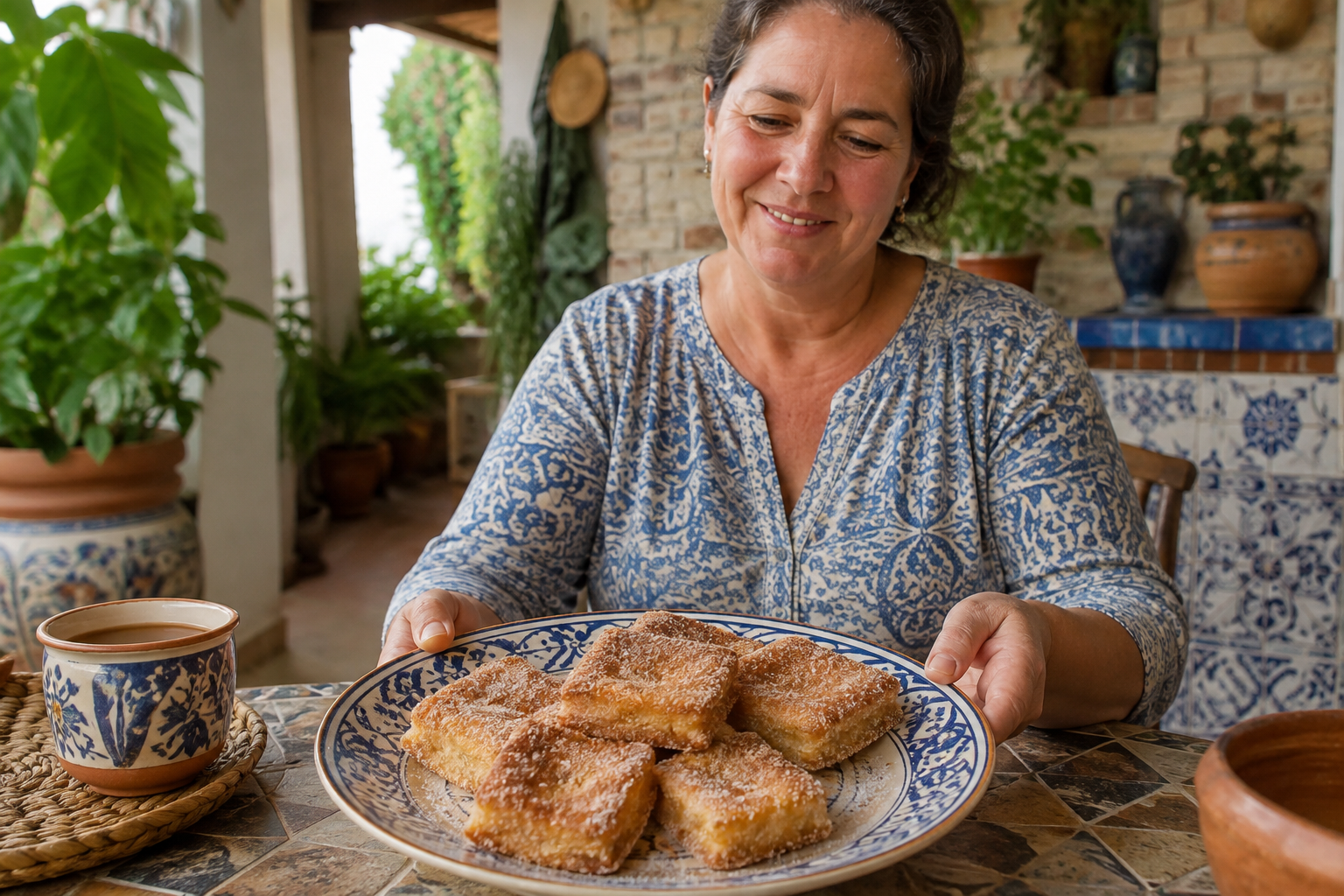
The key to understanding leche frita is to realize that the milk is not fried as a liquid but transformed first into a solid, sliceable custard, and only then fried. This is the whole trick of the dish, and once you grasp it, the name goes from baffling to perfectly logical, because what you are frying is essentially a firm block of sweet, thickened milk.
The transformation happens through a simple bit of kitchen chemistry. Milk is thickened with cornstarch, and sometimes a little flour, cooked until it becomes a very thick custard, then poured into a dish and chilled until it sets firm enough to cut into neat squares, so the once-liquid milk becomes a solid you can pick up and handle. It is the same principle behind any custard or pudding that sets, taken to the point where the result is sturdy enough to slice and fry. The amount of thickener is really the only variable that matters much here, because it determines whether you end up with a soft pudding or a block firm enough to hold together in hot oil. Traditional recipes lean toward the firmer end deliberately, since a leche frita that collapses in the pan is a sad thing, and a slightly denser custard that fries cleanly and then softens in the heat gives the best of both worlds. That balance, firm enough to fry and soft enough to melt, is the whole art of the dish.
Seen this way, leche frita is a close cousin of desserts you already know. It is essentially a fried custard, related in spirit to the creamy fillings and puddings found in kitchens everywhere, just set firmer and given a crisp fried coating, so it is far less exotic than its name implies. Anyone who has enjoyed a custard, a flan, or a cream-filled pastry already understands the flavor at the heart of leche frita, only here it comes wrapped in a golden, crunchy shell. In fact, the closest comparison many people land on is a warm, creamy version of a fried pastry, or the inside of a really good custard slice given a crisp coating and served hot. The strangeness dissolves entirely once you place it beside things you already love, and what remains is simply a clever, satisfying way of turning a soft custard into something you can pick up, fry, and eat with your fingers. The Spanish did not invent something alien, only something ingenious.
A Dessert With Deep Roots
Leche frita is no modern novelty but a deeply traditional Spanish dessert with deep roots, particularly in the northern regions of the country. It is especially associated with Castile and León, where it has long been a beloved part of the local sweet tradition, made in homes and served in bars and cafes across the region.
Its strongest association is with a particular time of year. Like several classic Spanish sweets, leche frita is traditionally linked to Holy Week, the Easter season, when it appears alongside other seasonal treats such as torrijas as part of the celebrations, so for many Spaniards it carries the flavor of springtime and family gatherings. This seasonal heritage is part of its charm, tying it to memory and tradition as much as to taste. For many Spaniards, the smell of cinnamon and frying custard is inseparable from childhood Easters, from grandmothers’ kitchens and the particular sweetness of a religious holiday marked in food. That emotional weight is part of why a dish this simple endures, because it carries far more than sugar and milk, it carries a whole season of memory. Foods tied so closely to a time of year tend to be loved with a loyalty that has little to do with the recipe itself.
That said, its appeal has long since burst its seasonal bounds. While it remains a Holy Week classic, leche frita is now enjoyed throughout the year, turning up in restaurants, bars and homes as a dessert or an afternoon treat whenever the craving strikes, so you need not wait for Easter to make it. It has become simply one of Spain’s cherished everyday sweets, loved for its comforting contrast of textures no matter the season.
What You Need
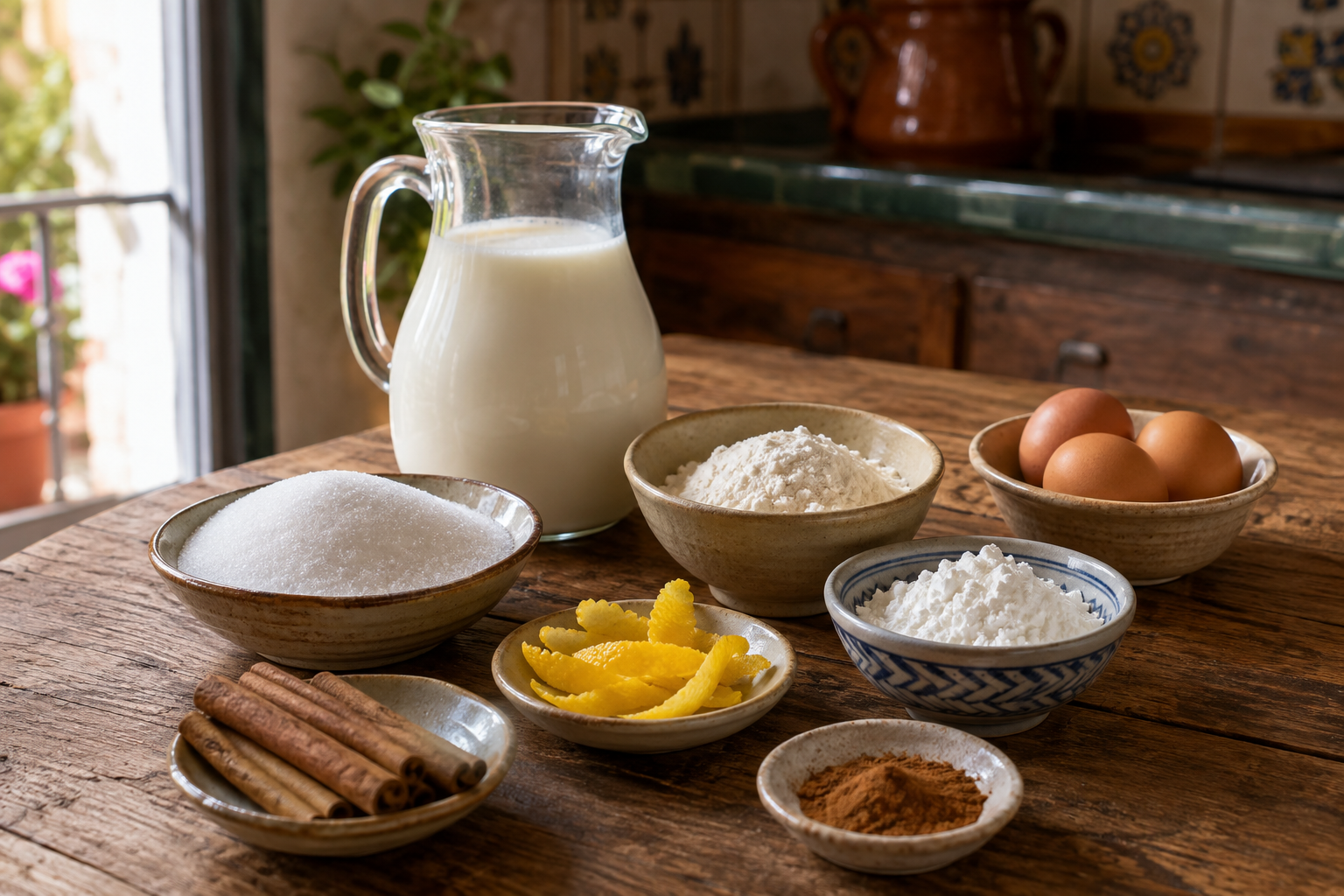
One of the pleasures of leche frita is how few and how humble its ingredients are, most of which you likely already have. The custard itself is built from just milk, sugar, a thickener, and some gentle flavorings, while the coating and finish need only egg, flour, oil and cinnamon sugar, so there is nothing exotic to hunt down.
The choices within those basics do matter, though. Whole milk is strongly preferred, because its richness gives the custard the creamy, velvety texture that makes the dish, and skim or low-fat milk tends to produce a thinner, less satisfying result, so this is not the place to economize on the milk. Cornstarch is the main thickener, sometimes helped by a little flour, and together they set the custard firm enough to slice and fry.
The flavorings are what give leche frita its distinctive taste. The milk is infused before thickening with classic Spanish aromatics, above all cinnamon and lemon peel, and often a little vanilla or orange peel as well, which perfume the custard with warm, citrusy depth, and then the finished squares are coated in cinnamon sugar, which echoes those flavors in the crisp shell. It is a simple but beautifully balanced set of flavors, unmistakably Spanish.
The Recipe
Here is the traditional method for leche frita. The one thing to plan for is the chilling time, since the custard needs several hours in the refrigerator to set firm before you can fry it, so it is wise to make the custard well ahead, ideally the day before.
Leche Frita (Spanish Fried Milk) makes about sixteen pieces, plus chilling time
For the custard:
- Whole milk, four cups
- Sugar, three quarters cup
- Cornstarch, half cup
- Flour, three tablespoons
- Cinnamon stick, one
- Lemon peel, from one lemon, in strips
- Vanilla, one teaspoon
For frying and coating:
- Flour, for dredging
- Eggs, two, beaten
- Olive oil, for frying
- Sugar and ground cinnamon, mixed, for coating
Method:
- In a bowl, whisk the cornstarch, flour, and sugar with one cup of the milk until smooth and lump-free, and set aside.
- Heat the remaining three cups of milk in a saucepan with the cinnamon stick and lemon peel until it begins to steam, then remove from the heat and let it infuse for about ten minutes.
- Remove the cinnamon stick and lemon peel, stir in the vanilla, then gradually whisk in the cornstarch mixture.
- Return the pan to medium-low heat and cook, stirring constantly, until the mixture becomes very thick, about ten to fifteen minutes.
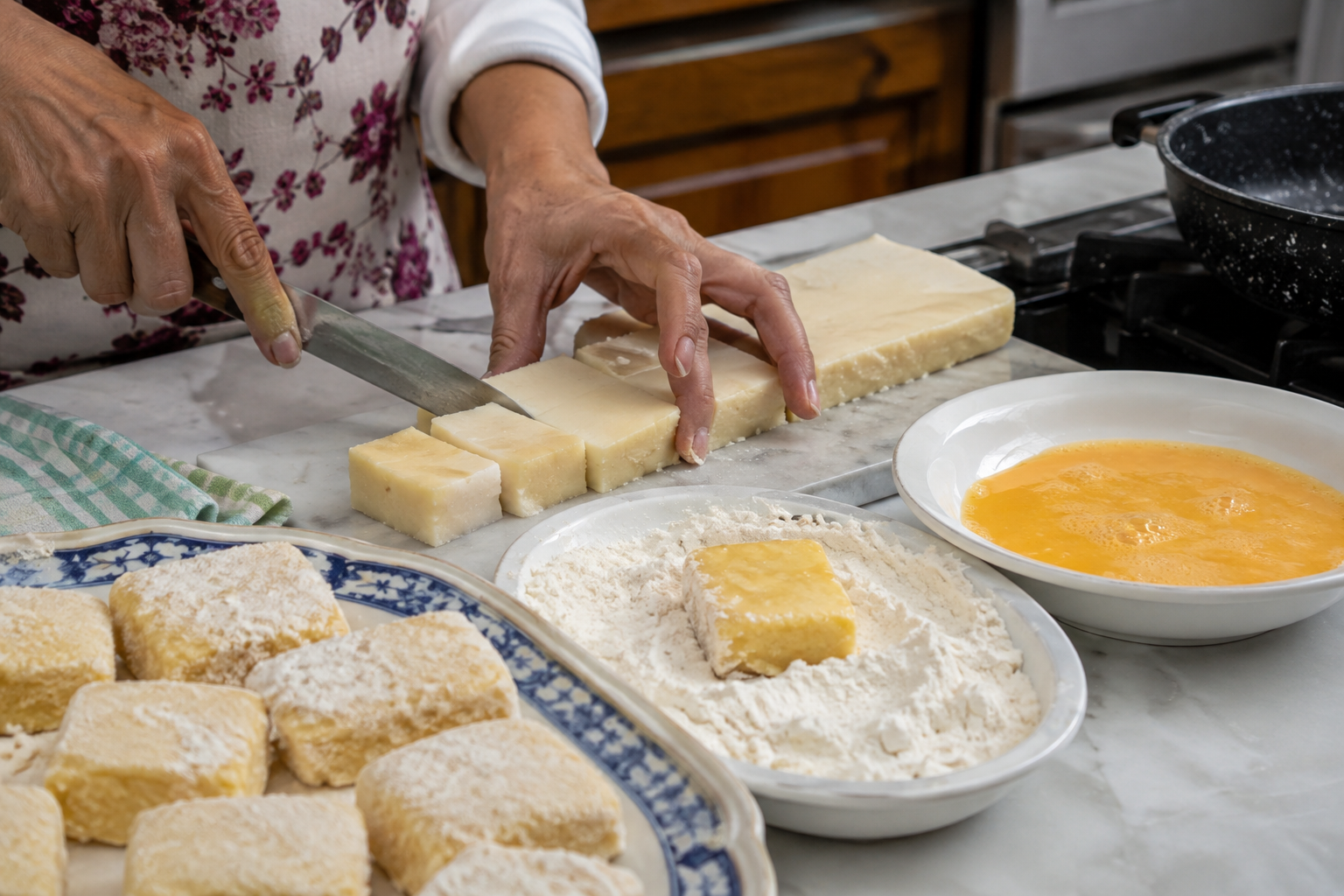
- Pour the thick custard into an oiled dish so it is about three quarters of an inch deep, smooth the top, press plastic wrap onto the surface, and refrigerate for at least four hours or overnight until firm.
- Cut the set custard into squares, dredge each in flour and then beaten egg, and fry in hot olive oil until golden on both sides.
- Drain briefly, then roll the warm pieces in cinnamon sugar and serve.
That is the whole process, and while it takes a little patience for the chilling, the actual work is simple and the reward is considerable.
Getting It Right
A few small points make the difference between a good leche frita and a great one, and they are all easy to honor. The most important is to cook the custard until it is properly thick, because a custard that is too loose will not set firm enough to slice and will fall apart when you try to fry it, so keep cooking and stirring until it is very thick and pulls away from the pan.
Chilling properly matters just as much. The custard must be thoroughly chilled and set before frying, which means giving it enough time in the refrigerator, several hours at least, since a warm or under-set custard will not hold its shape in the hot oil, so patience here is essential and making it the day before is the safest approach. A well-set custard cuts cleanly and fries beautifully. It helps to think of the chilled custard almost like a soft cheese or a firm jelly at the point where it is ready, holding its shape when cut yet still tender to the touch. If it wobbles like loose pudding, it needs more time, or the next batch needs more thickener and a longer cook. This is the single step where impatience causes the most trouble, and the single step where a little extra waiting is most reliably repaid at the frying pan.
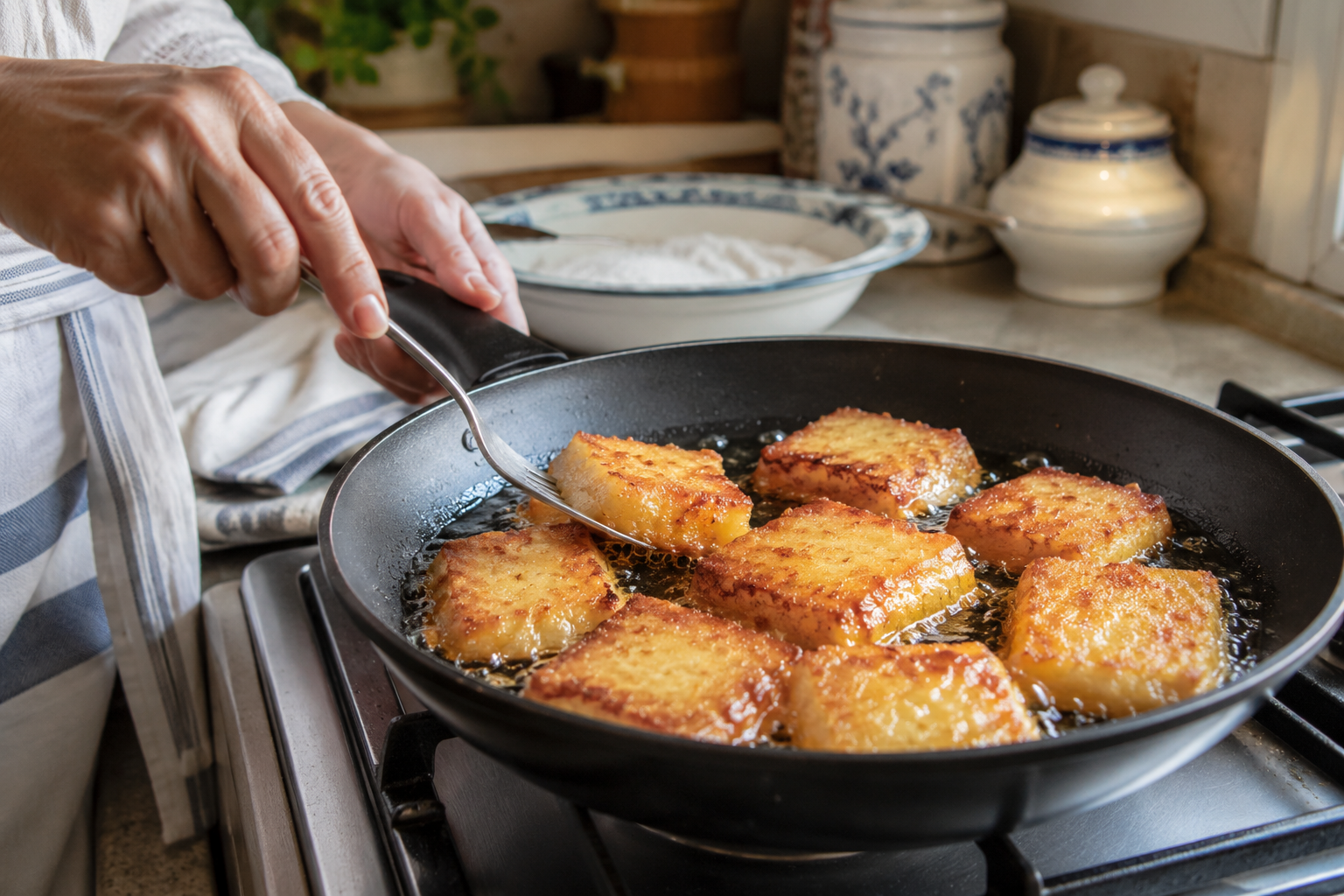
The frying itself rewards a little care. Use oil that is properly hot so the coating crisps quickly and the pieces do not absorb grease or have time to soften, handle the squares gently since the interior stays soft, and fry them just until golden so the inside warms and turns molten while the shell crisps. Coat them in cinnamon sugar while still warm so it clings, and you will have leche frita exactly as it should be.
How to Serve It
Leche frita is wonderfully flexible in how it is served, which is part of its appeal. It can be enjoyed warm, when the contrast between the crisp shell and the soft, almost molten center is at its most dramatic and delicious, and eating it fresh from the pan, still warm inside, is arguably the finest way to experience it.
But it is lovely at other temperatures too. Leche frita is also very good at room temperature or even cold from the refrigerator, where the custard is firmer and the whole thing more sliceable and neat, so you can make it ahead and serve it whenever suits you, which makes it convenient for entertaining. However you serve it, the cinnamon sugar coating is essential to the experience.
Traditionally it is enjoyed as a dessert or a merienda, the Spanish afternoon snack, often with coffee. A couple of warm squares of leche frita with a cup of coffee is a deeply Spanish pleasure, and it also makes a fine end to a meal, perhaps with a scoop of ice cream alongside for a little extra indulgence, so it suits both a casual treat and a proper dessert course. It is as at home on a weekday afternoon as at a celebration. This versatility is part of why it has survived so comfortably into modern Spanish life, long after its origins as a strictly seasonal, celebratory sweet. A dish that is equally welcome as a humble merienda and as the finale of a special dinner has many more occasions to be made, and so many more chances to be passed from one cook to the next. Foods that refuse to be pinned to a single moment tend to be the ones that endure, and leche frita has quietly earned its place among them.
A Sweet Worth the Strange Name
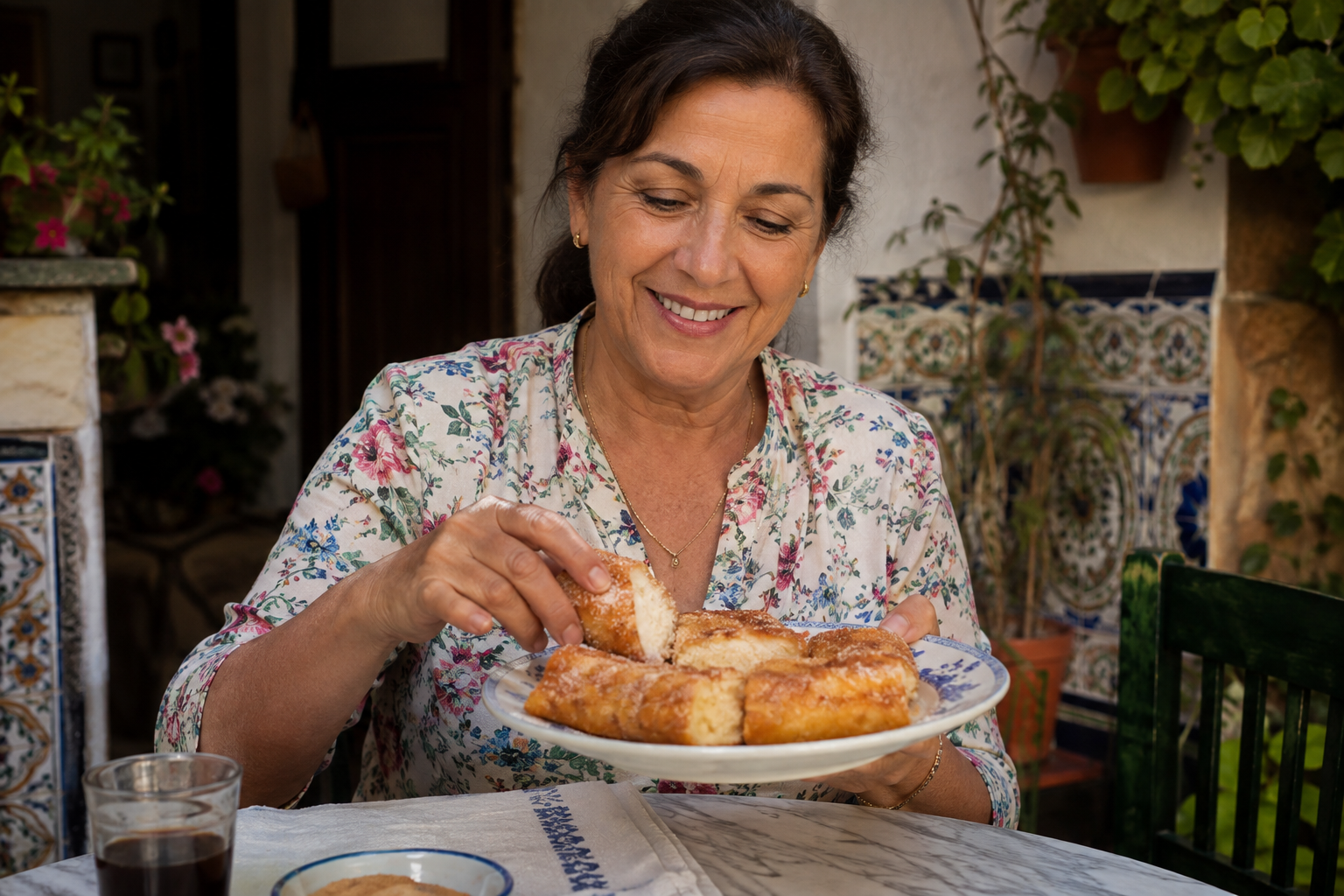
The lasting charm of leche frita is how completely it rewards anyone willing to look past its odd name, revealing not some bizarre novelty but one of the most comforting Spanish desserts. Fried milk sounds strange only until you understand that it is a crisp-shelled, creamy custard fritter, at which point it sounds like exactly the sort of thing anyone would want to eat.
What makes it worth making is the extraordinary contrast at its heart, the crackle of the golden shell giving way to the warm, silky custard within, all from a handful of humble ingredients and a little patience. Few desserts deliver so much pleasure from so little, which is precisely the genius of traditional Spanish home cooking, turning simple milk into something memorable.
So the next time you want to make something a little different that will delight everyone who tries it, do not be put off by the words fried milk. Make the custard a day ahead, let it set, then cut, coat and fry it into golden squares and roll them in cinnamon sugar, and taste for yourself how much sense fried milk makes. Leche frita has been winning over the skeptical for generations, and one warm, creamy, crisp-shelled bite is all it takes to understand exactly why. The strange name was never a warning, only a small joke the Spanish let you in on the moment you take your first bite.

About the Author: Ruben, co-founder of Gamintraveler.com since 2014, is a seasoned traveler from Spain who has explored over 100 countries since 2009. Known for his extensive travel adventures across South America, Europe, the US, Australia, New Zealand, Asia, and Africa, Ruben combines his passion for adventurous yet sustainable living with his love for cycling, highlighted by his remarkable 5-month bicycle journey from Spain to Norway. He currently resides in Spain, where he continues sharing his travel experiences with his partner, Rachel, and their son, Han.