
Anyone who has held a bank account on both sides of the Atlantic soon discovers a strange truth: Spanish and American banks both charge fees, plenty of them, but they charge for entirely different things. The American who moves to Spain is startled to be billed simply for keeping an account open, while the Spaniard who moves to the United States is baffled to be charged thirty-odd dollars for slipping a few dollars into the negative. Neither system is straightforwardly cheaper than the other. Instead, each has drawn its fee map differently, hiding costs in places the other leaves free, so understanding where each system charges is the key to not being caught out, and to keeping more of your own money.
This is more than a curiosity, because the differences are large and very avoidable once you know where to look. A person used to American banking will walk into Spanish fees they never expected, and a person used to Spanish banking will hit American charges that seem absurd, simply because each was trained by a different system to watch for different things. Mapping the two side by side, seeing clearly what each country charges that the other does not, turns a source of nasty surprises into a set of manageable, dodgeable costs.
Here is the fee map: what Spanish banks charge that American banks generally do not, what American banks charge that Spanish banks generally do not, and how the whole picture fits together, along with the ways people on both sides avoid these fees entirely. This is a look at how banking costs are structured rather than financial advice, and I am not a financial advisor, so nothing here is a recommendation, but understanding the two fee maps is truly useful for anyone living between the two worlds.
The Fee Spain Charges Just for Existing

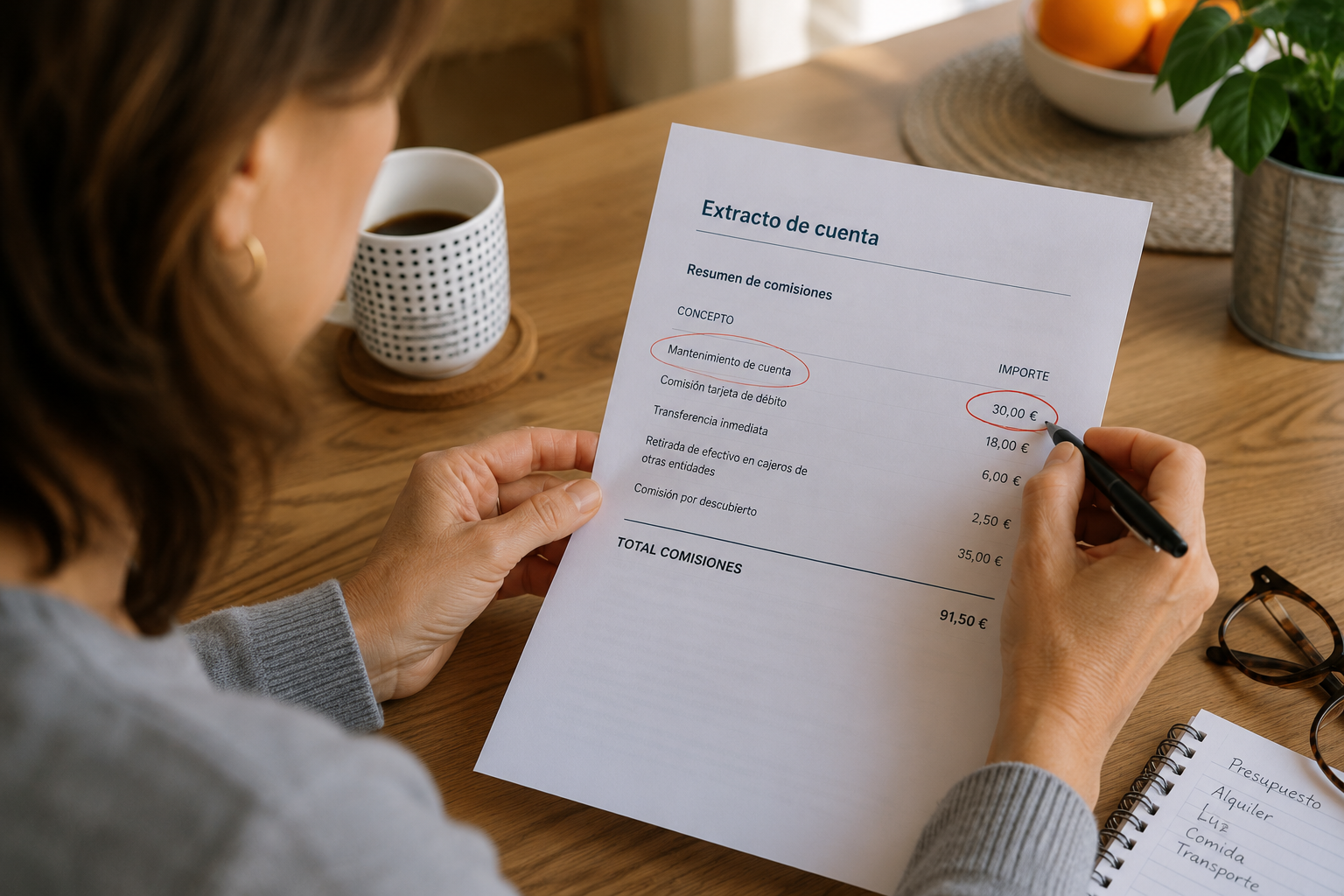
The single biggest shock for an American in Spain is the account maintenance fee, a charge simply for having an account, which many Americans have never encountered in this form. Known in Spanish as the comisión de mantenimiento, this is a recurring fee that traditional Spanish banks levy on ordinary accounts, and it can run to a meaningful sum over a year.
The numbers are real and worth knowing. At the big traditional Spanish banks, this maintenance fee can run somewhere in the range of sixty to a hundred and sixty euros a year if you do not meet the bank’s conditions for waiving it, so an ordinary account you simply hold can quietly cost you over a hundred euros annually just to exist. This is money paid not for any service or mistake, but purely for the privilege of keeping an account. To an American accustomed to free checking, this can feel almost offensive, since the whole idea that a bank would charge you simply to store your money runs against the grain of what many US banks now offer. Yet in Spain it is entirely normal, a longstanding feature of traditional banking that reappeared in force in recent years, and one that every newcomer eventually collides with. The trick is to know it is coming and to bank in a way that sidesteps it, rather than discovering it on a statement months later.
Crucially, the fee is usually tied to conditions. Spanish banks typically waive the maintenance fee if you meet certain requirements, most commonly having a regular salary or pension paid into the account, along with things like using electronic statements, so the fee functions as a penalty for not being sufficiently linked to the bank. For someone whose income does not arrive as a Spanish salary, meeting these conditions can be tricky, which is exactly how the fee catches out newcomers and the self-employed.
The Card and Currency Fees
Beyond maintenance, Spanish banks tend to charge for things around cards and foreign currency that Americans often expect to be free. Where a debit card in the United States is almost always issued and maintained at no cost, some Spanish banks charge for card issuance or an annual card maintenance fee, and credit cards in particular can carry yearly costs after an initial free period.
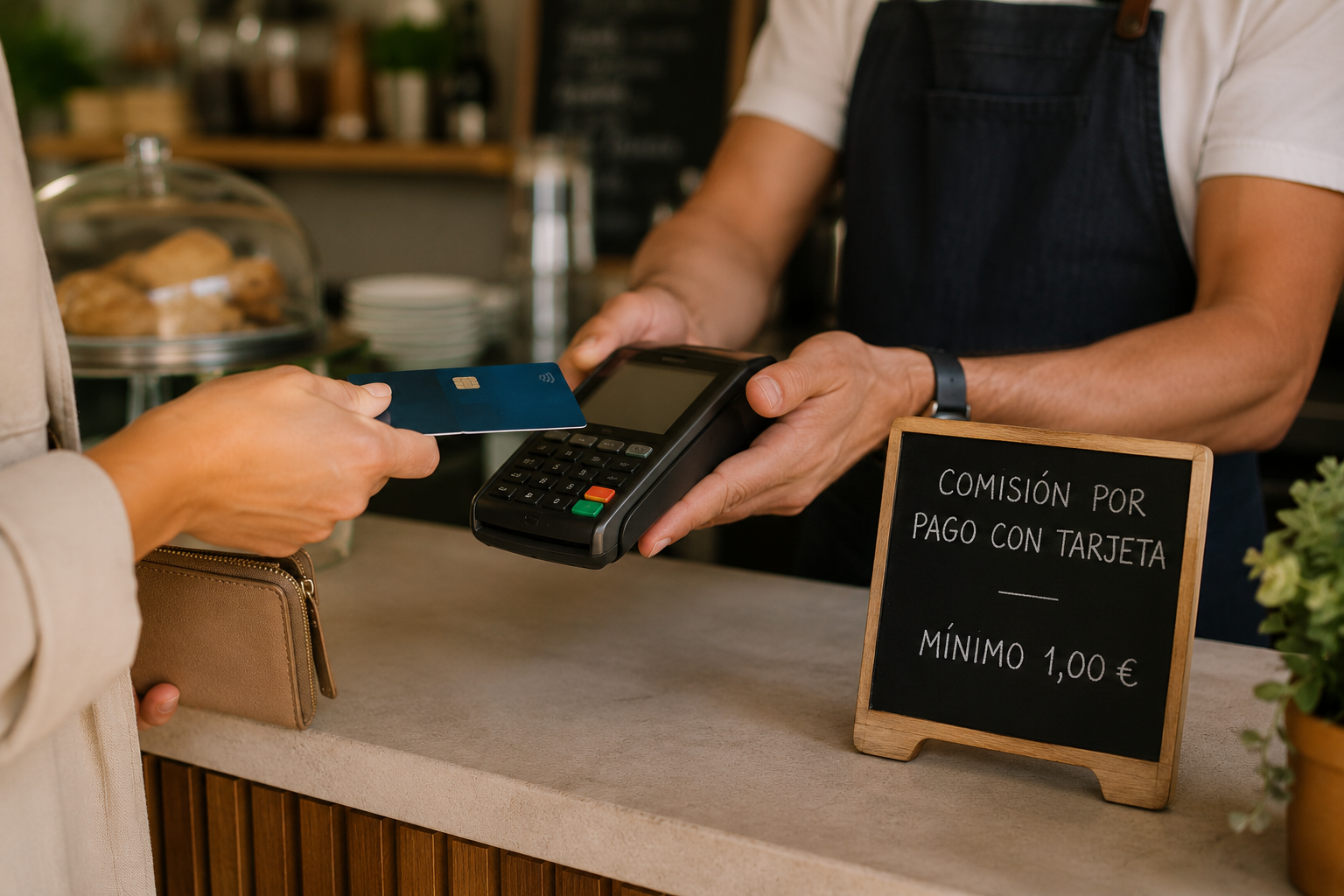
The foreign currency charges are especially steep. Spanish big banks are known for charging high fees on transactions in currencies other than the euro, with a foreign exchange margin that can reach around three percent on non-euro purchases, plus a separate fee for withdrawing cash abroad, so using a traditional Spanish bank card outside the eurozone can be surprisingly expensive. For anyone who travels beyond Europe, these charges add up quickly and quietly. This is a particular trap for the very expats and travelers most likely to hold a Spanish account, since they are exactly the people who spend abroad. A holiday outside the eurozone or a trip home to a dollar country, paid for on a traditional Spanish debit card, can quietly attract a three percent surcharge on everything plus a fee for each cash withdrawal, none of it obvious at the point of sale. It is the kind of cost that hides in the exchange rate and the fine print rather than announcing itself.
There is also the matter of cross-selling. Spanish banks are notorious for pushing insurance and other products, often bundling them with accounts or loans, so a customer can find themselves paying for insurance policies or extra products attached to their banking, sometimes as a condition of a mortgage or to help waive other fees. This tangle of linked products is part of the Spanish banking culture, and it pays to read carefully before agreeing to anything.
The Fee America Charges for a Single Slip
Now flip the map, because American banking has its own fees that astonish Spaniards, and the most notorious is the overdraft fee. In the United States, spending a little more than you have in your account, even by a small amount, can trigger a flat fee of around thirty to thirty-six dollars per occurrence, a charge that has no real equivalent in the Spanish system.
The scale and mechanics of this fee are striking. American overdraft fees average around thirty-odd dollars each and can be charged multiple times in a day as transactions cascade, so a brief, small dip into the negative can rack up a shocking sum in flat penalties, quite apart from any interest. To someone used to European banking, being charged thirty-five dollars for going a few dollars short feels almost punitive, because the fee bears no relation to the size of the overdraft.
This is one of the clearest cases where the two maps diverge. In Spain and much of Europe, going overdrawn typically incurs interest and perhaps a modest commission, not a large flat per-item fee, so the American model of a hefty fixed charge for each overdraft is a distinctly American feature, and one that costs American consumers enormous sums in aggregate. It is the mirror image of the Spanish maintenance fee, a charge for a moment’s shortfall rather than for simply holding an account. What unites the two, despite their different triggers, is that both are essentially penalties dressed as fees, charges that fall hardest on people who are stretched or inattentive rather than on any particular service rendered. The Spanish system punishes not being linked to the bank, and the American system punishes a momentary miscalculation, but in each case the bank profits from an ordinary human circumstance. Recognizing that shared logic makes both fees easier to see coming and to avoid.
The Cost of Moving Your Own Money
Perhaps the most telling difference of all lies in what it costs to move money, because here Europe has a genuine structural advantage that Americans often do not realize they are missing. In much of the United States, sending money by bank wire is expensive, commonly costing around twenty to thirty-five dollars for a domestic wire transfer, a fee simply to move your own money from one account to another.
In Europe, the same thing is essentially free. The European payment system, SEPA, allows euro transfers across the continent at little or no cost, and increasingly these transfers arrive instantly, so moving money between banks and to other people is something Europeans do routinely without paying for it. What an American might pay twenty-five dollars and wait a day for, a European simply does for free in seconds, which is a profound everyday difference.
Spain also has its own free instant payment habits. Spaniards use a widely adopted instant transfer system called Bizum to send money to each other directly from their bank accounts at no cost, the kind of quick person-to-person payment that in the United States often runs through separate apps, so the everyday movement of small sums between people is frictionless and free in Spain. This ease of moving money is one area where the Spanish and broader European system is simply ahead. It is worth pausing on how large this difference really is, because it touches almost every transaction of daily life. Splitting a restaurant bill, paying a friend back, sending rent to a landlord, moving savings between your own accounts, all of these are free and near-instant in Spain and cost nothing to do properly, whereas the American doing the same things navigates a patchwork of wire fees, transfer delays, and third-party apps. Over a lifetime of ordinary money movements, that structural head start quietly saves Europeans a great deal of friction and cost.
The Fees Both Systems Share
To keep the map honest, it is worth noting that some fees exist on both sides, even if they take different forms. Monthly or annual maintenance-style charges appear in both countries, for instance, with many American banks levying a monthly account fee, often around ten to fifteen dollars, that is waived if you meet conditions like a direct deposit or a minimum balance, much as Spanish banks waive their maintenance fee under similar conditions.
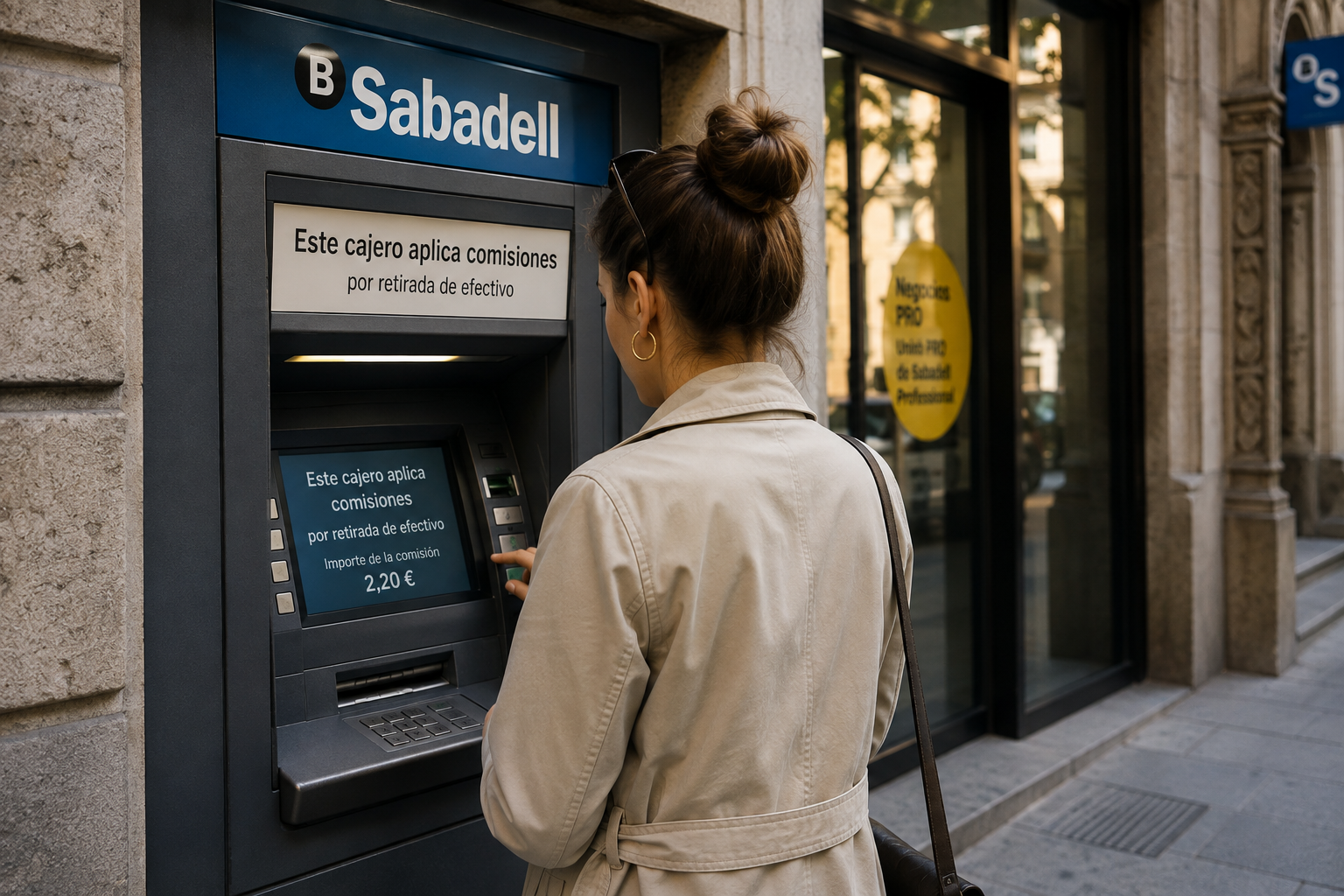
Out-of-network cash withdrawals can cost on both sides too. In the United States, using an out-of-network ATM typically triggers a fee from your bank plus one from the machine’s owner, which combined can reach several dollars per withdrawal, while in Spain and Europe using another bank’s ATM can also carry charges, so the humble cash withdrawal is a potential fee in both places, structured a little differently in each.
The shared lesson is that no system is free by default. Both Spanish and American banks earn substantial revenue from fees, and in each country the fees are real and add up, so the goal on either side is not to find a magically free bank but to understand where the charges lurk and structure your banking to avoid them. That the fees differ in form does not mean one country’s customers escape them without attention.
How People Avoid Them on Both Sides
The good news running through this whole map is that most of these fees are avoidable once you know they exist, and on both sides of the Atlantic the same broad strategies work. The most powerful is simply choosing the right account, since in both countries there are banks and account types that charge few or no fees, particularly online and digital banks built to compete on cost.
In each country, the digital option is the classic escape route. In Spain, digital and online banks along with certain fee-free accounts skip the maintenance charges entirely, while in the United States, online banks and certain checking accounts charge no monthly fees and no overdraft fees at all, so in both places moving to a fee-conscious bank eliminates most of the charges in one step. The traditional big banks are where the fees concentrate, and the newer digital players are where they largely vanish.
Beyond choosing well, meeting conditions and paying attention does the rest. Setting up the direct deposit or minimum balance that waives a maintenance fee, opting out of overdraft coverage so a shortfall is simply declined rather than charged, using in-network ATMs, and avoiding costly wires in favor of free transfer systems all keep the fees at bay, and these habits work in both countries. The fees reward the inattentive and spare the informed, which is the whole reason a fee map is worth having.
Reading the Map
The lasting insight of comparing Spanish and American bank fees is that neither system is cheaper in some simple sense, but that each has arranged its charges differently, so the fees you must watch for depend entirely on which country you are banking in. Spain charges you to hold an account and use your card abroad, while America charges you to slip into the negative and move money by wire, and knowing which map you are on is what protects you.
What makes this so useful is that the surprises come precisely from assuming the other country’s map applies. The American in Spain gets caught by maintenance fees they never had at home, and the Spaniard in America gets caught by overdraft and wire fees that would be unthinkable in Europe, each blindsided by charges their own system does not have, so learning the new map is essential when you cross over. The costs are avoidable, but only if you know they are there to avoid.
So whether you are an American settling into Spanish banking or a European navigating American accounts, the practical wisdom is the same: learn where this particular system hides its fees, choose an account built to avoid them, and set up your banking to meet the conditions that keep them waived. Do that, and the fee map becomes not a minefield but a solved puzzle, and you keep more of your own money on whichever side of the Atlantic you happen to be banking. The banks are counting on your not bothering to learn the map, which is precisely why learning it pays.

About the Author: Ruben, co-founder of Gamintraveler.com since 2014, is a seasoned traveler from Spain who has explored over 100 countries since 2009. Known for his extensive travel adventures across South America, Europe, the US, Australia, New Zealand, Asia, and Africa, Ruben combines his passion for adventurous yet sustainable living with his love for cycling, highlighted by his remarkable 5-month bicycle journey from Spain to Norway. He currently resides in Spain, where he continues sharing his travel experiences with his partner, Rachel, and their son, Han.