
Somewhere along the Italian coast this summer, in a trattoria with plastic chairs and a view of the water, someone is eating the best pasta of their life. It is a plate of spaghetti tangled with clams still in their shells, glossy with olive oil and a little wine and nothing else, tasting so purely of the sea that it seems impossible so few ingredients could do so much. That dish is spaghetti alle vongole, and its greatness depends on a rule that Italians treat as close to sacred, which is that you do not put cream in it. Ever.
The no-cream rule sounds like fussiness until you understand what it protects. Spaghetti alle vongole is a dish in which the clams make their own sauce, releasing their briny juices into hot oil and wine to sauce the pasta, and the entire point is the clean, direct taste of that broth. Cream does not enhance it. Cream buries it, muffling the delicate flavor of the sea under a heavy blanket, which is why in Italy adding it is considered something close to sacrilege.
Here is what spaghetti alle vongole really is, where it comes from, why the no-cream rule and its companions exist, and how to make a proper version at home. This is a true coastal Italian classic, and the rules around it are not snobbery but the accumulated wisdom of a place that has been perfecting this exact plate for a very long time.
The Pasta of the Italian Summer
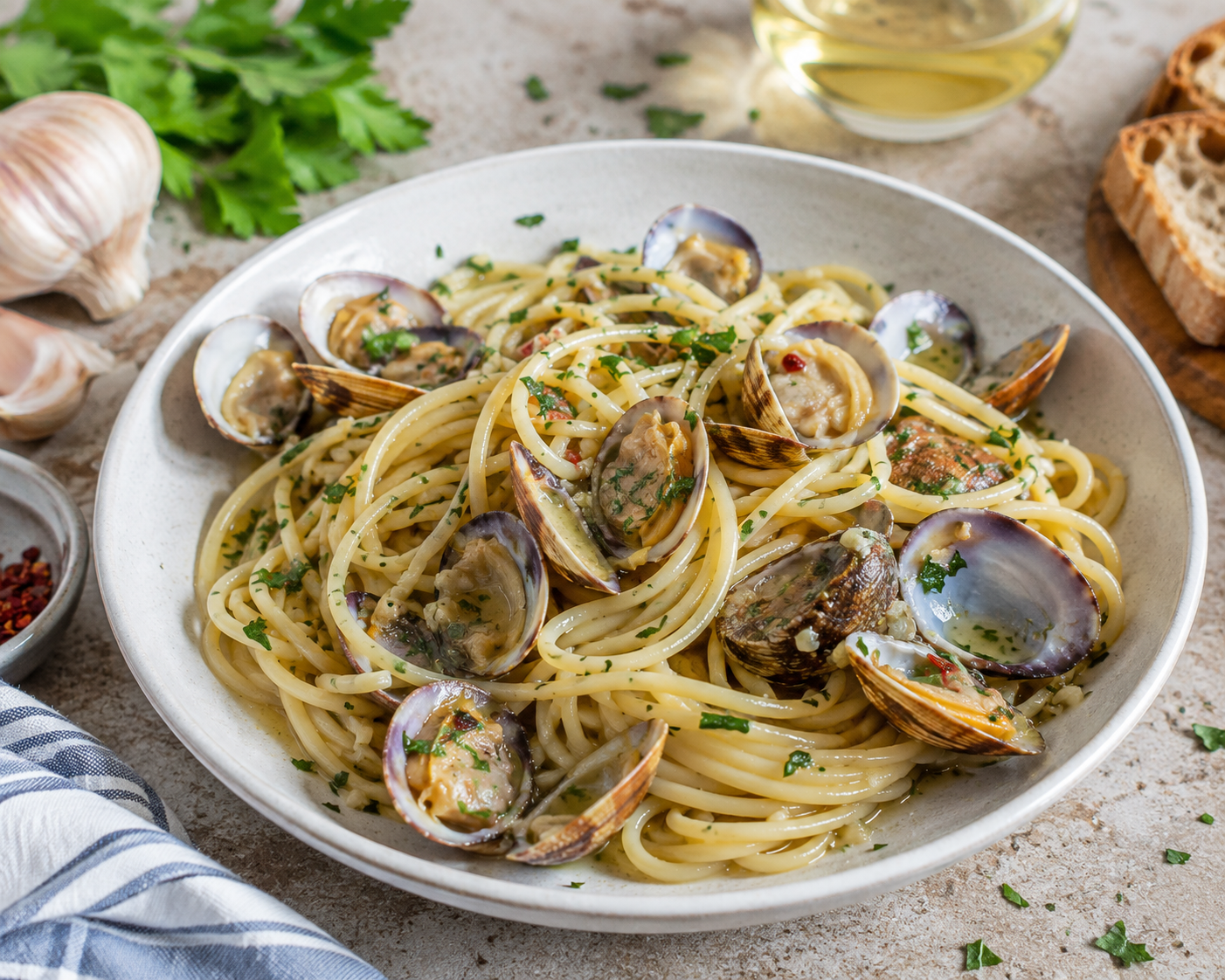
Spaghetti alle vongole belongs to the Italian coast in the warm months, and it carries the whole feeling of a seaside summer in a single plate. It is light where a winter ragù is heavy, quick where a braise is slow, and built entirely around fresh shellfish, which makes it the natural food of hot weather by the water. To eat it is to taste the season.
The dish is deeply associated with the south, above all with Naples and the region of Campania, where seafood pasta is not a special-occasion treat but a way of life. This is coastal cooking in its purest form, born in a place where the clams are pulled from the water that morning and the cook’s only job is to get out of their way. The southern coast made this dish, and the southern coast still makes it best.
Part of its magic is how fast it comes together. This is what Italians call an al minuto sauce, one that is made in the space of a few minutes rather than simmered for hours, coming together in the time it takes the clams to open and the pasta to finish. A dish this quick and this good is the reward of technique and great ingredients rather than long labor, which is exactly why it suits a summer evening when nobody wants to stand over a hot stove.
The Clams Make the Sauce
To understand the no-cream rule you have to understand what the sauce actually is, because it is unlike almost any other pasta sauce. There is no separate sauce-making step here in the way there is with a tomato sauce or a ragù. Instead, the sauce is the liquid the clams themselves release when they open in the hot pan, a briny, savory broth of pure clam juice, olive oil and a little white wine.
This is the whole trick and the whole beauty of the dish. As the clams heat in the oil and wine, they pop open and pour out their flavorful liquor, which mingles with the oil and the starchy pasta water into a light, glossy sauce that clings to every strand. The cook is not building a sauce so much as capturing one, coaxing it out of the shellfish and binding it to the pasta at exactly the right moment.
Because the sauce is the clams, everything depends on the clams being good and their flavor being allowed to speak. The briny sweetness of fresh shellfish is a delicate thing, easily lost, and the entire architecture of the dish exists to showcase it rather than smother it. Once you grasp that the clam broth is the point rather than a component, every one of the traditional rules stops being arbitrary and starts being obvious.
Why Cream Ruins It
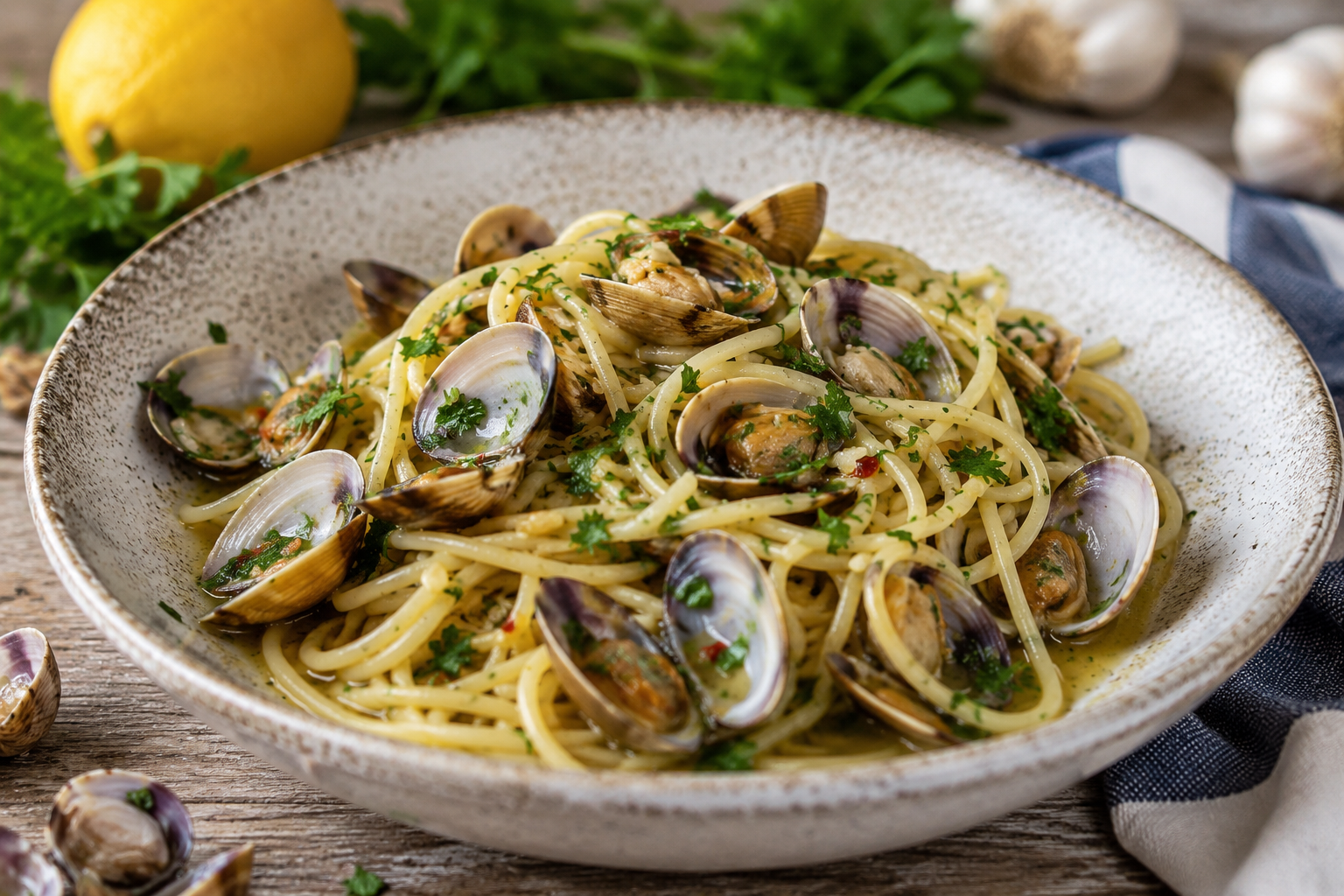
Now the rule makes sense. Cream is a heavy, rich, coating substance that flattens and dominates whatever it touches, and poured into spaghetti alle vongole it does precisely the wrong thing, drowning the light clam broth under a thick dairy blanket that the dish was built to avoid. The clean taste of the sea vanishes, replaced by richness, and what is left is a creamy pasta that happens to contain clams rather than a dish that tastes of them.
This is why Italian cooks react to the idea with something between horror and pity. The whole genius of vongole is its restraint, its refusal to gild the shellfish with anything that would compete, and cream is the loudest possible competitor. Adding it does not make the dish more luxurious. It makes it less itself, trading the specific, irreplaceable taste of fresh clams for the generic comfort of cream, which you could get from a hundred other pastas.
The instinct to add cream is an understandable one, especially for cooks trained to think that richer means better and that a sauce should be thick and clingy. Vongole rejects that logic entirely. Its silkiness comes from emulsified oil, clam juice and starchy pasta water, not from dairy, and the result is glossy without being heavy, rich in flavor while staying light on the plate. The dish proves that you do not need cream to make pasta feel indulgent, only good clams and good technique. It is worth noting where the cream habit comes from, because it is not random. Outside Italy, and in some Italian-American kitchens in particular, cream, oregano and even roux-based sauces do appear in clam pasta, and they make a perfectly pleasant dish. It simply is not this one. What they produce is a rich, comforting cream pasta with clams in it, which is a different food from the bright, briny, sea-forward plate that the Italian tradition is guarding.
The Other Rules That Travel With It
The no-cream rule does not stand alone, because it is one expression of a larger principle, which is that nothing should be allowed to obscure the clams. That same logic bans a short list of other additions that Italian tradition treats as equally misguided, and they all follow from the same idea. Keep the clams in the spotlight, and refuse anything that pulls focus.
The most important companion rule is no cheese. Grating parmesan or pecorino over seafood pasta is one of the classic mistakes in Italian eyes, because the sharp, salty, fatty punch of aged cheese overwhelms the delicate brine of the clams and throws the whole balance off. The dish is complete without it, and the absence of cheese, like the absence of cream, makes the classic version naturally dairy free.
The tradition frowns on a few more things for the same reason. Lemon squeezed over the top is usually considered too aggressive, its acidity cutting across the clam flavor rather than supporting it. Onion is generally left out, since garlic alone provides the aromatic base without adding sweetness that would muddy the broth. And flour or roux to thicken the sauce is rejected outright, because the sauce is meant to stay light and briny rather than thick and gluey. Each ban protects the same thing. Seen together, the rules are less a list of prohibitions than a single philosophy stated five times over. Do nothing that competes with the clams. Every forbidden ingredient, the cream and the cheese and the lemon and the onion and the flour, is banned for the identical reason, that it would pull attention away from the shellfish the whole dish exists to celebrate. The tradition is not fussy so much as focused.
In Bianco or In Rosso
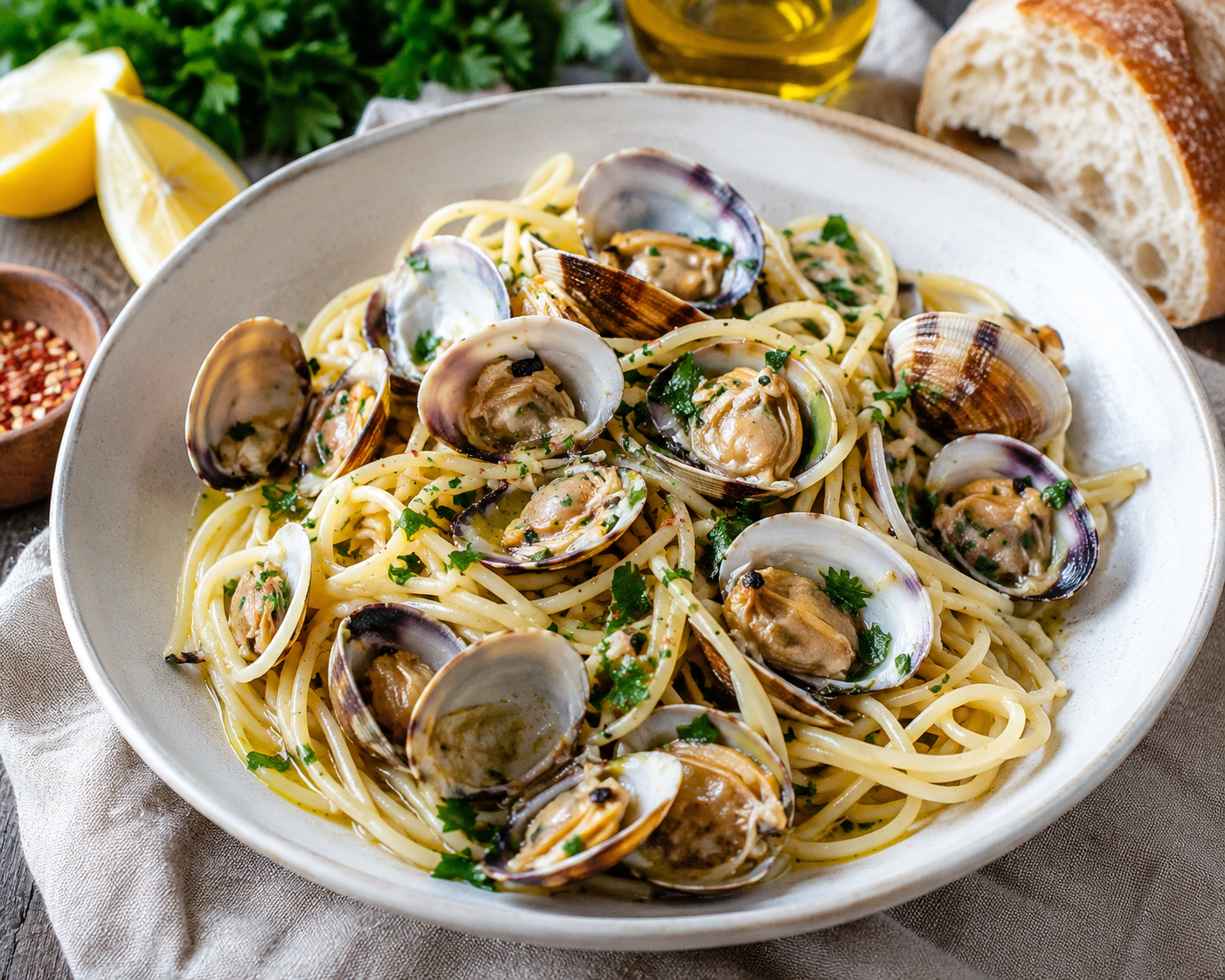
Within the tradition there is real room to move, and the dish comes in two legitimate forms that Italians happily argue about. The version described so far is in bianco, or white, made with no tomatoes at all, which is considered the purest and most traditional preparation and the one that lets the clam flavor shine at its absolute brightest. For many purists this is the only true vongole.
The other classic is in rosso, or red, made by adding tomatoes to the clams, and it is entirely authentic rather than a corruption. A handful of cherry tomatoes or a little crushed tomato added after the clams open creates a beautiful contrast between the sweet fruit and the briny shellfish, and this version is especially loved around Naples. Choosing between white and red is a matter of taste and mood, not of right and wrong.
There is even regional character beyond the two main branches. In Sicily you might find a version with cherry tomatoes, olives and capers, reflecting the island’s love of bold, contrasting flavors, while along the Adriatic the dish leans clean and simple. What unites all the legitimate versions is what none of them contain, because whether white or red, Neapolitan or Sicilian, real spaghetti alle vongole never sees cream, and that shared refusal is what keeps them all true to themselves.
The Wine, the Clams, the Timing
If the rules tell you what to leave out, three positive choices decide whether the dish sings. The first is the clams themselves, which have to be fresh, alive and in the shell, because everything downstream depends on the quality of the broth they release. Manila clams and the prized Italian vongole veraci are the classics, and a good fishmonger who can vouch for their freshness is worth more to this dish than any technique.
The second is the wine. A dry white, poured in the moment the clams hit the pan, does two jobs at once, helping the shells to open and lending the broth a bright acidity that lifts the whole plate. It should be something clean and unoaked, and the old kitchen rule applies with force here, that you should cook only with a wine you would happily drink. A harsh wine leaves a harsh sauce.
The third and least forgiving choice is timing. Vongole is a dish of a single decisive minute, when the clams have just opened, the pasta is a touch shy of done, and the two must meet in the pan with a little starchy water to bind them. Cook the clams too long and they turn to rubber, drain the pasta too early or too late and the sauce will not cling. Get that minute right and everything else forgives itself.
There is one more small discipline that separates the careful cook from the casual one, which is straining. Even well-purged clams can hide a little grit, and passing their released liquid through a fine sieve before it goes back to the pasta is the difference between a silky sauce and a gritty one. It is a thirty-second step, and skipping it can undo everything the good clams gave you.
How to Make an Honest Version
Making a real vongole at home is well within reach, and it rewards attention to a few key steps. It begins the day you buy the clams, which must be fresh, alive and still in the shell, never canned, since the whole dish depends on them. Manila clams or the small Italian vongole veraci are ideal, and the first job is to purge them, soaking them in cold salted water so they release their grit, then discarding any that stay open when tapped.
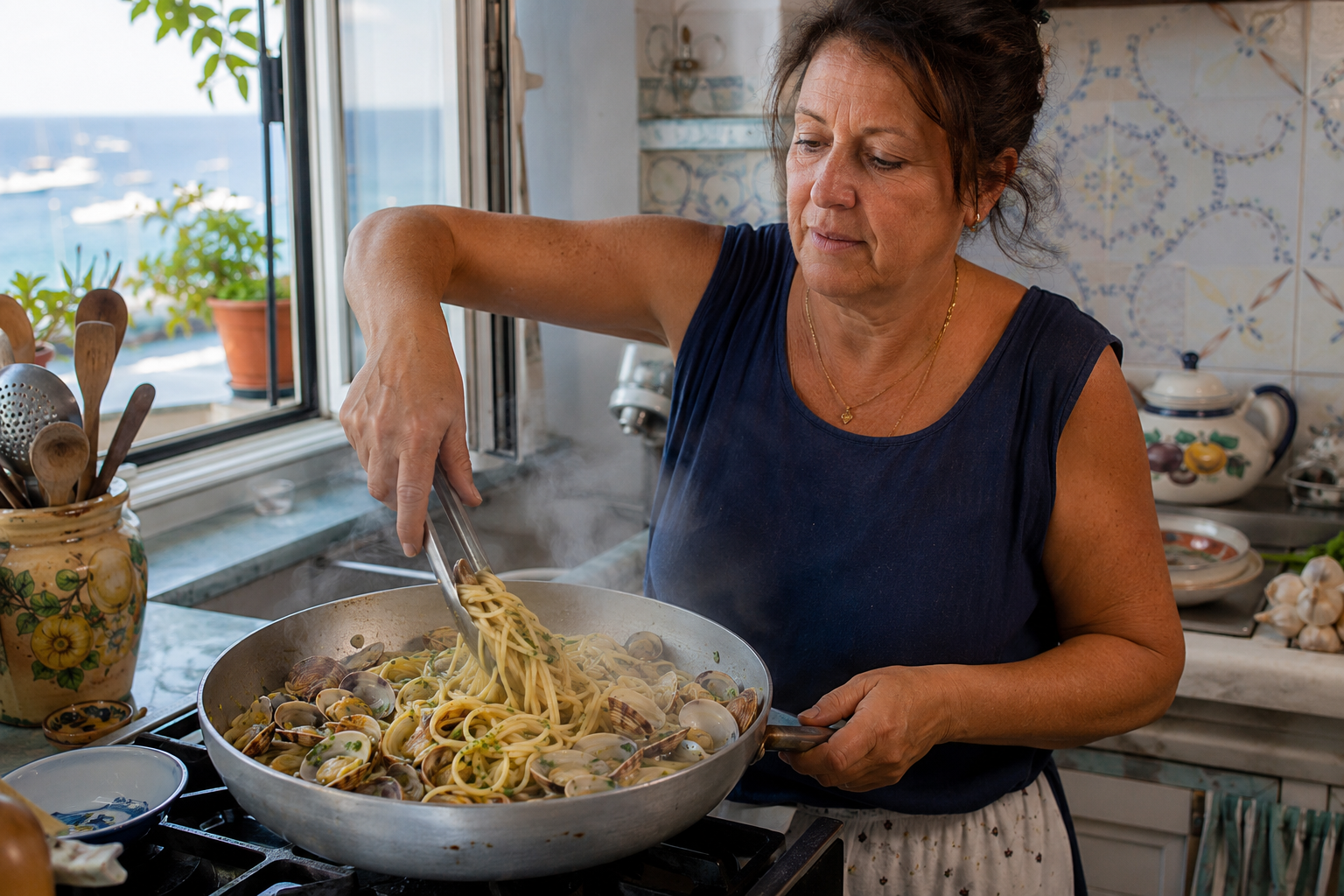
The cooking itself is fast and unforgiving of distraction, so everything should be ready before you start. The garlic must be cooked gently in good olive oil without browning, the clams added and immediately hit with dry white wine, the pan covered until they open, and the whole thing timed so the pasta arrives al dente at exactly that moment. A splash of reserved pasta water helps the sauce emulsify into something glossy that coats every strand, and a shower of parsley finishes it. The clam liquid should be strained if there is any doubt about sand.
Below is a version that respects the tradition, white and clean, with the clams doing the work they were meant to do. Treat it as a template rather than a straitjacket, since you can add cherry tomatoes for a red version or a pinch of chili for heat, but hold the line on the one rule that matters. No cream, no cheese, and let the sea speak for itself.
Spaghetti alle Vongole serves 4
Ingredients:
- 400g spaghetti
- 1kg fresh clams in the shell, such as Manila or vongole veraci
- 4 tablespoons extra virgin olive oil
- 3 cloves garlic, lightly crushed
- 120ml dry white wine
- half a teaspoon red chili flakes
- a large handful of flat-leaf parsley, chopped
- salt for the pasta water
Method:
- Soak the clams in cold salted water for 30 minutes to an hour to purge them of sand, then rinse and discard any that stay open when tapped.
- Bring a large pot of water to a rolling boil and salt it generously until it tastes of the sea.
- Add the spaghetti and cook until just short of al dente, reserving half a cup of pasta water before draining.
- While the pasta cooks, heat the olive oil in a wide pan over medium heat, add the crushed garlic and chili flakes, and cook gently for under a minute until fragrant without browning the garlic.
- Add the clams and pour in the white wine at once, then cover the pan and cook for three to five minutes, shaking occasionally, until the clams open. Discard any that stay shut.
- Add the drained spaghetti to the pan with a splash of the reserved pasta water, and toss over medium heat for a minute or two so the sauce emulsifies and coats the strands.
- Stir through the parsley and serve at once, with no cheese and no cream.
Spaghetti alle vongole endures because it is honest, a plate that promises the taste of the sea and delivers exactly that, with nothing in the way. The no-cream rule is not a piece of culinary snobbery but the guardian of that honesty, the line that separates a dish tasting of fresh clams from one tasting of dairy, and Italians defend it because they know what is lost when it falls. Make it their way, with good clams and a light hand and faith in restraint, and you will understand why a country that could dress this pasta in anything chooses to dress it in almost nothing. The sea does not need improving. It only needs to be let through.

About the Author: Ruben, co-founder of Gamintraveler.com since 2014, is a seasoned traveler from Spain who has explored over 100 countries since 2009. Known for his extensive travel adventures across South America, Europe, the US, Australia, New Zealand, Asia, and Africa, Ruben combines his passion for adventurous yet sustainable living with his love for cycling, highlighted by his remarkable 5-month bicycle journey from Spain to Norway. He currently resides in Spain, where he continues sharing his travel experiences with his partner, Rachel, and their son, Han.