
Buy a loaf of sandwich bread in an American supermarket and it will still be soft on the counter two weeks later, possibly three. Buy a baguette in France and it is stale by tomorrow morning, hard enough to hurt someone by the day after. Both are bread. Only one of them is behaving the way bread has behaved for the whole of human history, and the gap between them is one of the clearest illustrations of how differently the two continents regulate food.
The usual telling of this story is a little too satisfying to be entirely accurate. Americans are eating chemicals, Europeans are eating pure ancestral loaves, and everything in the US aisle is banned across the Atlantic. The reality is more specific and more interesting. A good deal of what keeps American bread soft is perfectly legal in Europe and sits in European loaves too. A short, particular list of other things is not, and that list is where the real difference lives.
Here is why American bread lasts three weeks, which additives Europe has really refused, and what the two rulebooks reveal about the philosophies behind them. This is general information rather than medical or nutritional advice, and it is worth saying plainly that no one here is claiming a supermarket loaf will hurt you. The regulators on both sides of the Atlantic consider the bread on their shelves safe to eat, and the argument between them is about where to set the bar rather than about whether anyone is being poisoned.
The Three-Week Loaf
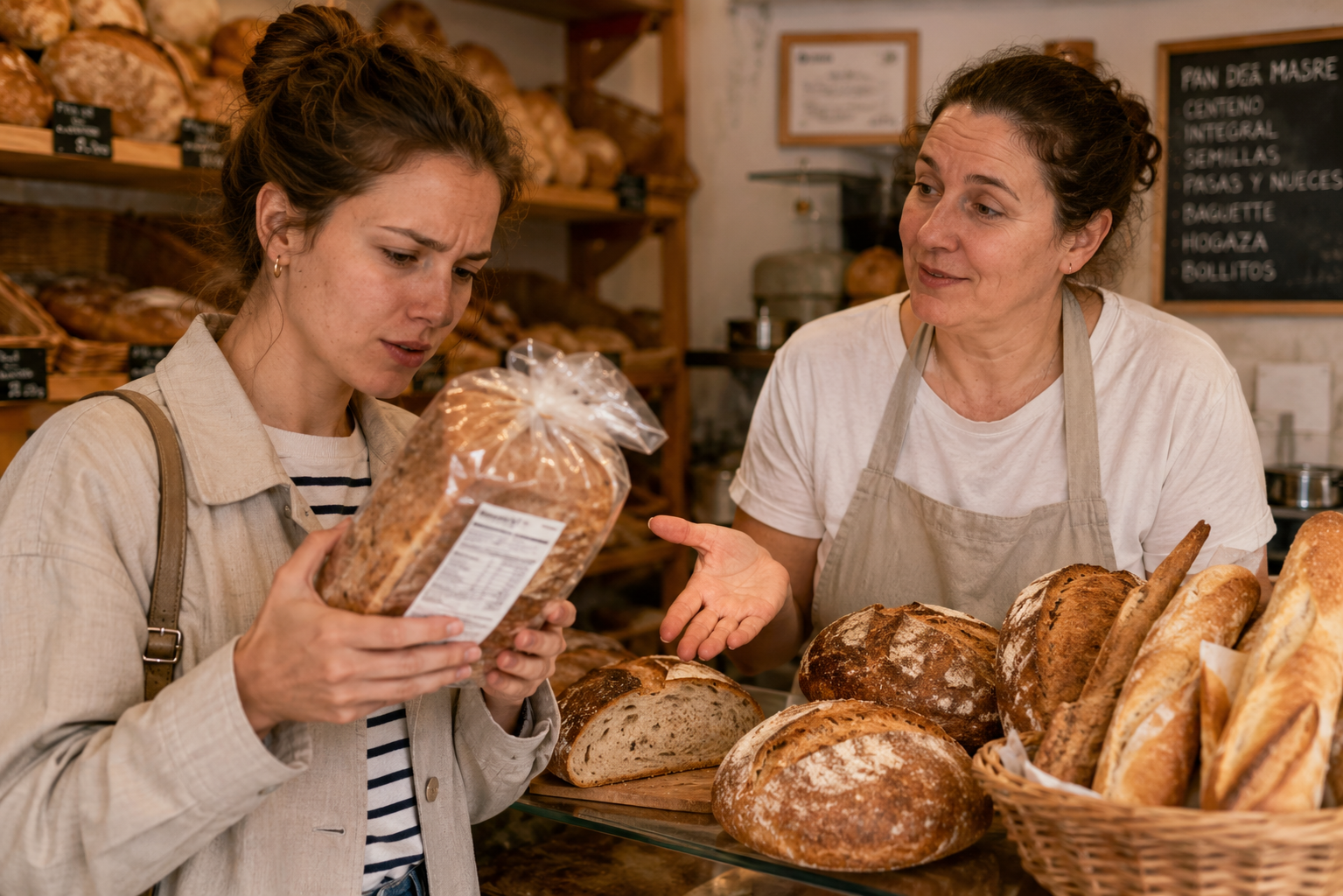
Start with the engineering problem, because industrial bread is solving one. A loaf baked this morning in a plant may need to survive a truck, a warehouse, a distribution center, a shelf and then a customer’s counter, and the whole system is built around a product that does not fail for weeks. Freshness on day nineteen is not an accident but the specification, written into the product before a single loaf was baked.
Several things get you there at once. Preservatives hold off the mold that would otherwise bloom within days. Emulsifiers and enzymes keep the crumb soft by slowing staling, which is a physical process of starch retrogradation rather than a microbial one. Extra sugar and fat hold moisture. Sealed plastic packaging keeps the loaf from drying. Dough conditioners make the whole thing behave predictably at industrial speed.
That combination produces a genuinely impressive object. American sandwich bread is soft, uniform, cheap, safe, sliced and durable in a way no traditional loaf has ever been, and it feeds an enormous country efficiently. Everything people dislike about it and everything they rely on come from the same place. It was designed to last, and it does exactly that, which is the point rather than the scandal. It is worth holding onto that before the additive list arrives, because the industrial loaf is not a conspiracy against the American palate but the solution to a real logistical problem in a country where the nearest bakery may be twenty miles away and the nearest wheat field a thousand. Every ingredient on the label is doing a job that the geography created.
The Preservative Europe Uses Too
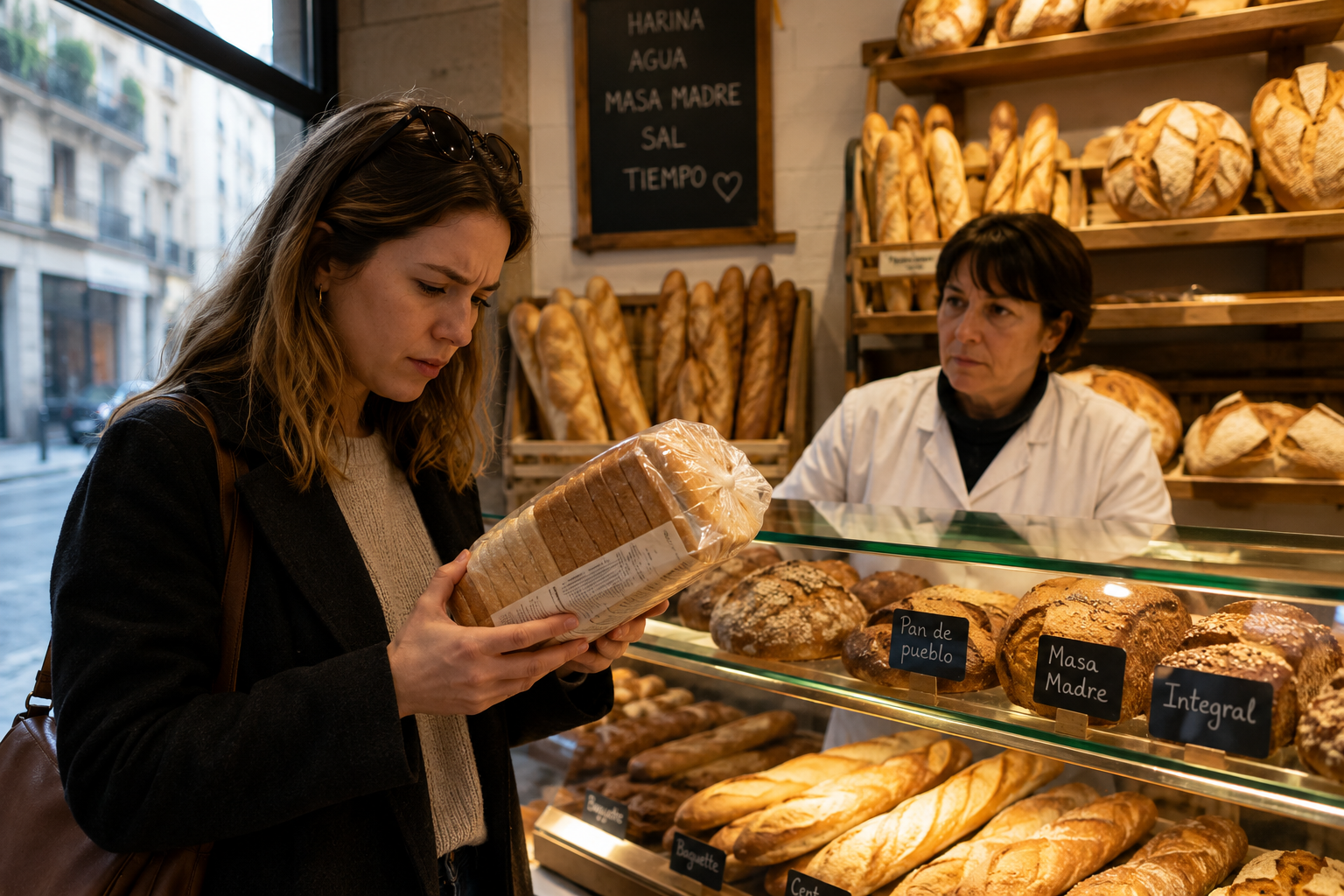
Here is where the popular version of the story falls down. The workhorse preservative in American bread is calcium propionate, a mold inhibitor found in loaves, buns, tortillas and packaged baked goods across the United States, and it is the single ingredient most often waved around as evidence of American chemical excess.
It is authorized in the European Union. Calcium propionate carries the E number E282, it is a permitted food additive in European bread products, and you will find it on labels in European supermarkets. The additive most associated with the three-week American loaf is not one Europe has rejected at all, which is inconvenient for the version of this story where the Atlantic divides the pure from the poisoned.
This matters because the real question is not whether Europe bans preservatives, since it does not. Europe permits a long list of them and regulates each one, and industrial European bread uses them. The real difference is narrower and sharper, sitting in a specific cluster of flour treatments and dough conditioners that the EU has declined to authorize, and in a cultural refusal at the artisan end that has nothing to do with regulation at all. The distinction is worth getting right, because the sloppy version of this claim does real damage to the argument. Anyone who tells an American that the preservative in their bread is banned in Europe is simply wrong about the main preservative, and being wrong about the easy part makes it harder to be heard on the parts that are true. The genuine list is short, and it is stronger for being accurate.
The List That Stops at the Atlantic
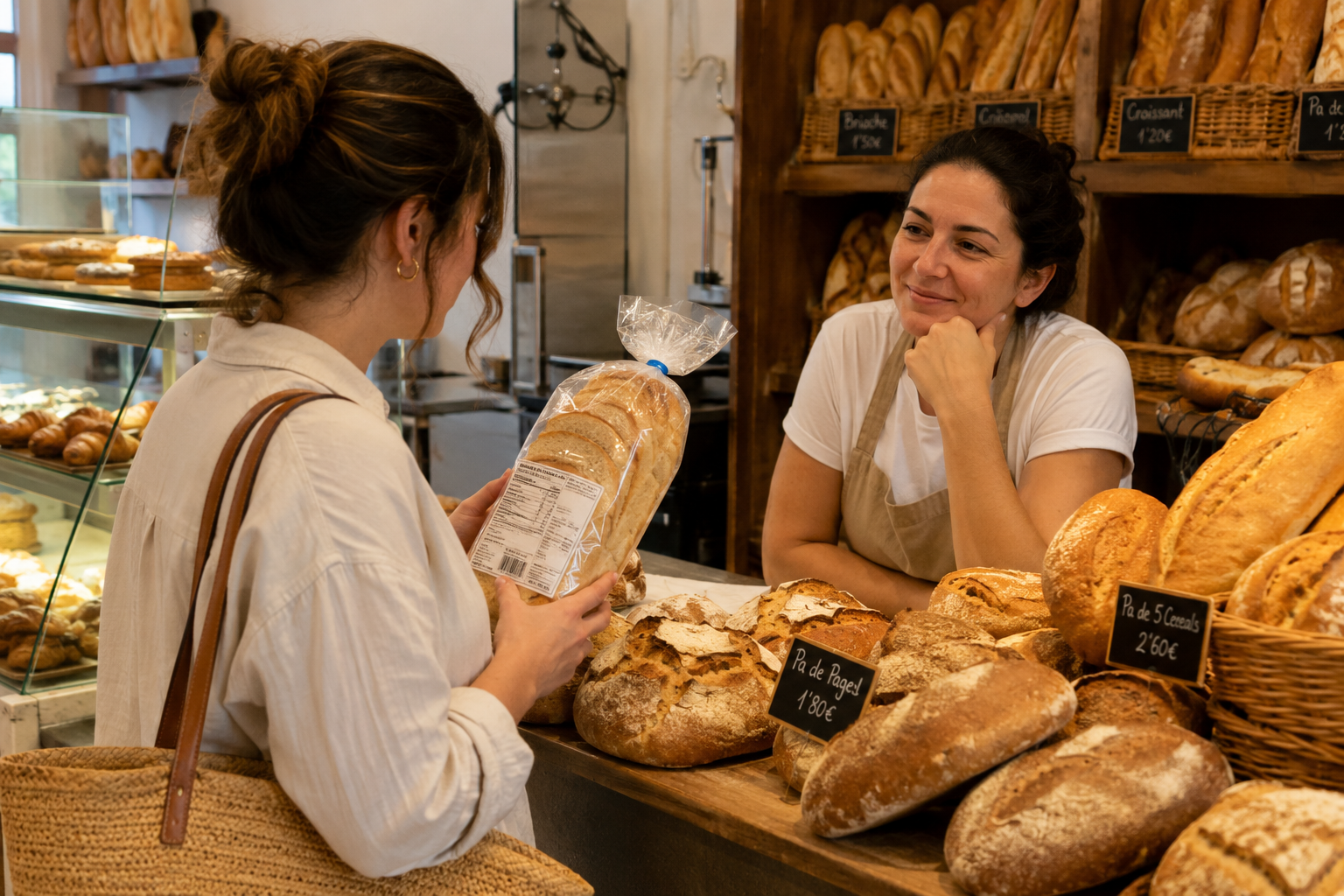
Now the genuine divergence, which is real and short. Potassium bromate, a flour improver that strengthens dough and gives a bigger, higher loaf, has been banned in the EU since around 1990 and rejected across the UK, Canada, China and Brazil. It is classified by the International Agency for Research on Cancer as a possible human carcinogen, and the concern is residual bromate left in the finished bread.
Azodicarbonamide, the compound the internet loves to call the yoga mat chemical because it also foams plastics, is the other headline. It is a flour treatment and dough conditioner that bleaches flour and improves handling, and it is not authorized as a food additive in the EU, with European authorities having treated its use as a dough improver as illegal. American rules still permit it in cereal flour and bread baking up to 45 parts per million.
Two more belong on the list. Potassium iodate, another dough oxidizer, sits in the same category of flour treatments Europe has not embraced, and chemically bleached flour, whitened with agents like benzoyl peroxide or chlorine, is a routine American product that European rules do not accommodate. So the list European bakeries truly do not recognize is roughly four items long, and every one of them is a flour treatment rather than a preservative. None of the four is there to keep your bread from spoiling. The thing that makes American bread last is mostly legal in Europe. The things that make American flour behave are not. That is a tidier summary than the debate usually manages. Preservation is a shared problem with shared solutions, and Europe solves it with many of the same compounds. Flour treatment is where the paths split, because these four are not about keeping bread edible but about making dough faster, whiter, stronger and more forgiving on a production line, which is a benefit Europe decided it could live without.
Two Rulebooks, Two Philosophies
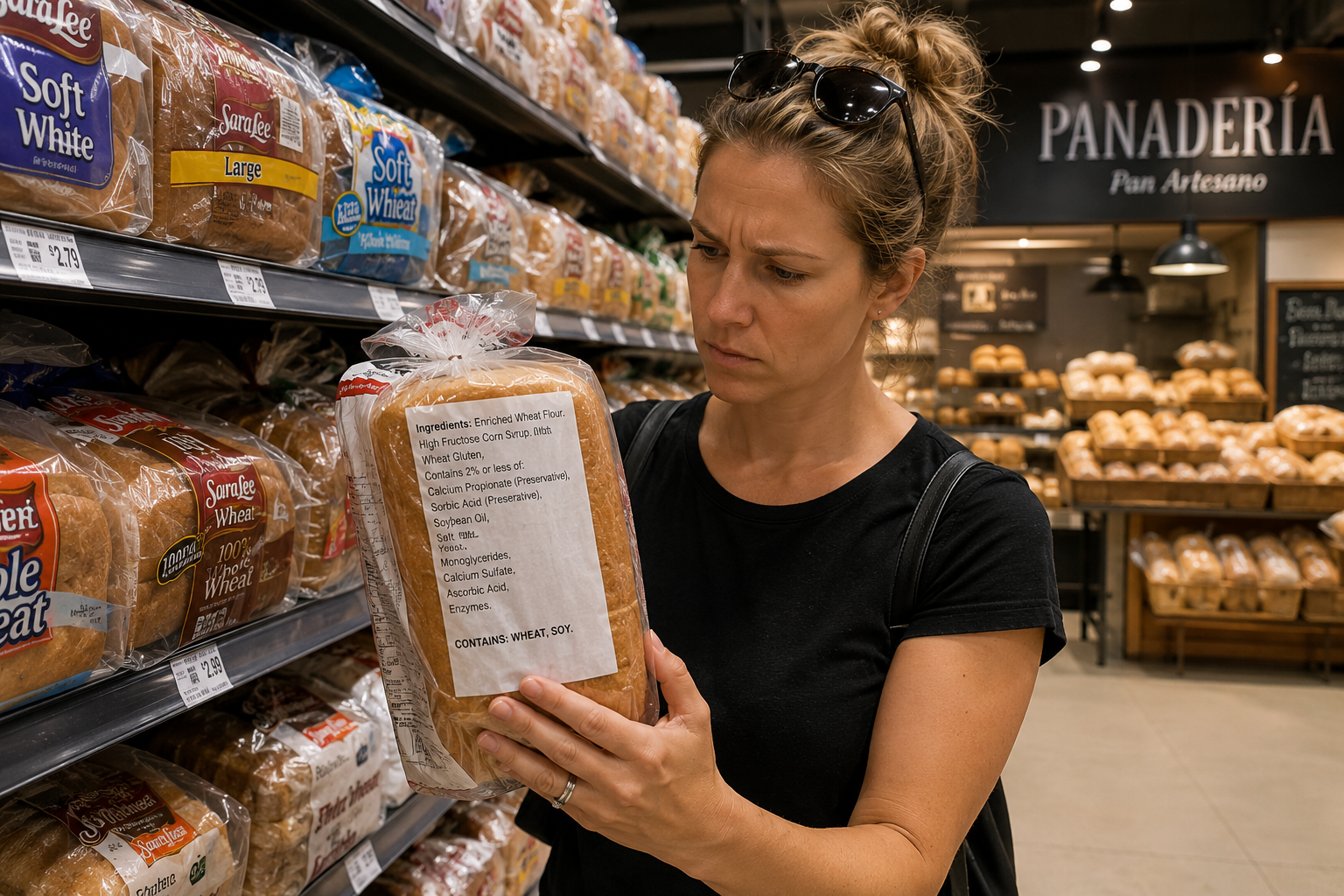
The reason for the split is structural rather than moral, and it explains far more than any individual additive. The European Union runs a positive list. An additive is illegal until it has been assessed and explicitly authorized for a specific use at a specific level, so anything not on the list is simply not permitted, and the burden sits with whoever wants to use it.
The United States runs a different system, anchored in the concept of generally recognized as safe, under which substances with an established history or adequate evidence can enter the food supply without the same case-by-case pre-authorization, and the burden tends to fall on regulators to demonstrate a problem afterward. European authorities lean on the precautionary principle, restricting where meaningful scientific doubt exists. American practice tends toward permitting until harm is shown.
Neither system is obviously stupid, and each buys something. The European approach is slower, more conservative and keeps a shorter list of permitted substances. The American approach is faster, friendlier to innovation and has produced a food supply of remarkable cheapness and abundance. But when a compound sits in the gray zone, where some evidence troubles some scientists and nothing is conclusive, the two systems reliably reach opposite conclusions, and that gray zone is exactly where bromate and azodicarbonamide live. It also explains why the phrase banned in Europe travels so badly. Under a positive list, most substances are not banned so much as never authorized, which is a quieter and more bureaucratic status than the word ban implies. Azodicarbonamide was never dragged before a European tribunal, it simply never made the list, and in Europe that is enough.
The French Answer
The other half of the story is not regulation of additives but a refusal of them, and France wrote it into law. In September 1993 the French government passed decree number 93-1074, universally known as the Décret Pain, the bread decree, and it defines what may legally be called a baguette de tradition française.
The definition is famously short. Wheat flour, water, salt and yeast or leaven. That is the entire permitted ingredient list. The dough may not be frozen at any stage, no additives or preservatives are allowed, and the bread must be made on the premises where it is sold. A shop that bakes elsewhere and sells here cannot legally call itself a boulangerie at all, and genuine bakers display a sign declaring themselves authentic artisans.
The consequence is the whole point. A traditional baguette goes stale within about twenty-four hours, and that is not a defect but the proof of what it is. The decree exists because French bread had drifted toward industrial production, with pre-made dough and additives producing a whiter, softer, blander loaf, while national bread consumption collapsed from roughly 600 grams a day per person in the early 1900s to about 170 grams by 1986. France decided the fix was to define real bread and protect the definition by law. The decree is not a health regulation and it is important to say so. Nothing in it suggests additives are dangerous, and France permits plenty of them in other breads sold in the same shops. The Décret Pain is a cultural protection, a legal definition of authenticity, and its target was industrial mediocrity rather than chemical risk. France was not protecting its arteries but its baguette.
What the Three Weeks Costs
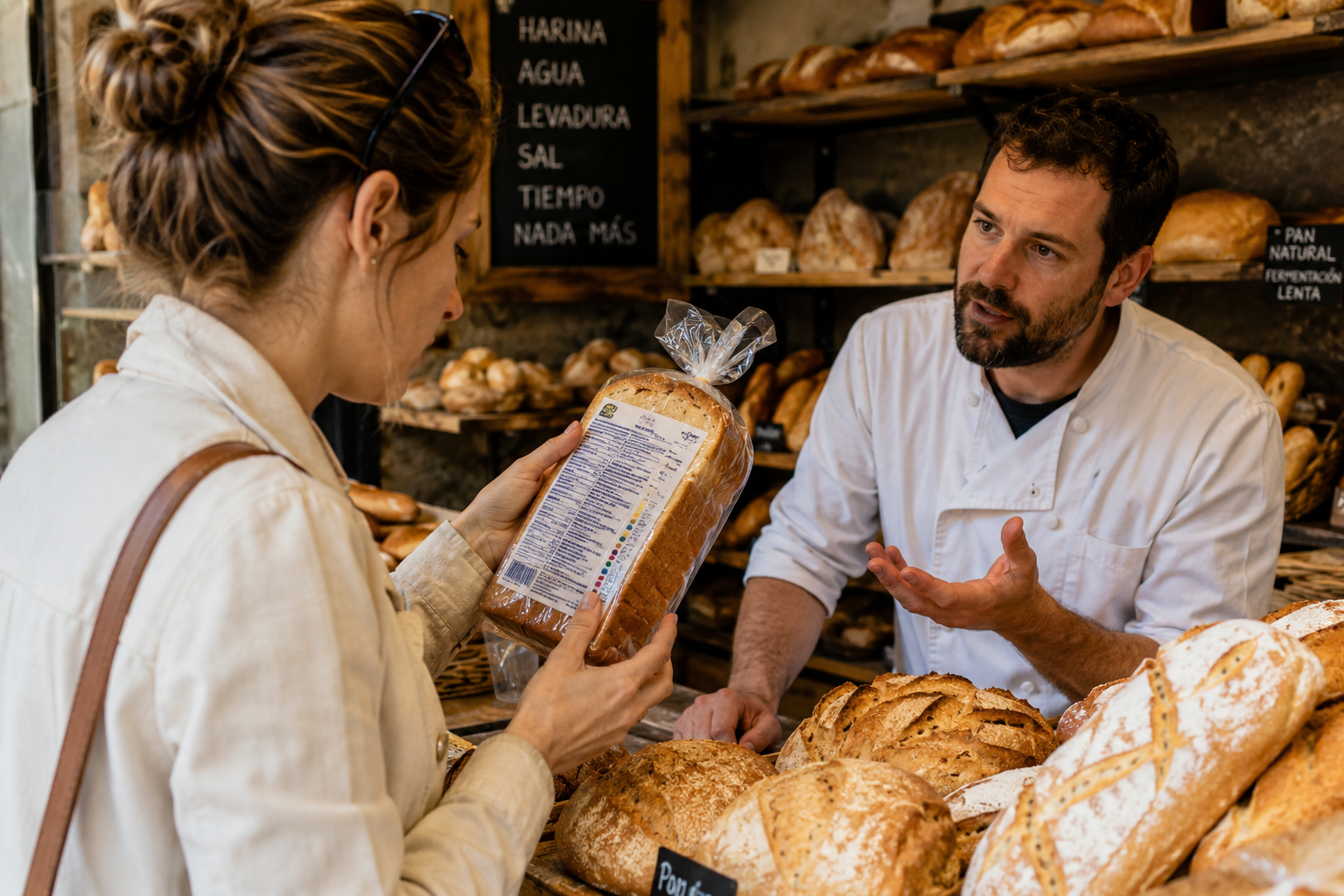
So what is the difference truly made of, once the mythology is stripped out? Partly it is the four flour treatments Europe never authorized, which is a genuine regulatory gap. But mostly it is a choice about what bread is for, and the American loaf is optimized for distance, shelf life and consistency while the French loaf is optimized for the four hours after it leaves the oven.
You cannot have both, and that is the honest trade. A bread with no preservatives, no dough conditioners and no packaging engineering will mold in days and stale in one, which is fine if your bakery is downstairs and you buy bread daily, and impossible if your loaf must survive a continental supply chain to a suburb an hour from anywhere. Density is the hidden variable in the entire comparison. European bread culture assumes a bakery within walking distance and a shopper who passes it every day, and every rule and habit downstream of that assumption depends on it holding. The Décret Pain works in a country where every village must have access to bread and where people shop for it every morning. It would collapse in most of America for reasons of geography rather than virtue.
The American shift is under way regardless. California has moved to ban potassium bromate along with several other additives under a food safety law taking effect in 2027, other states have banned or proposed banning bromate and azodicarbonamide, and federal regulators have placed both on lists under review. Plenty of American bakers already produce excellent bread without any of it. The four-item list is shrinking from the inside, which suggests the gap was never really about what was possible. What that shift does not do is shorten the shelf life. Removing bromate and azodicarbonamide changes how the dough is treated rather than how long the loaf survives, so the reformulated American bread of 2027 will still be soft in week three, because the preservatives and the packaging doing that work were never the ones in question. The list and the three weeks are two different stories that got told as one.
Reading Your Own Loaf
The practical upshot is unusually simple, because these ingredients must be declared. If you want to avoid the four things Europe declined, you can read for them by name, looking for potassium bromate or the phrase bromated flour, for azodicarbonamide, for potassium iodate, and for the word bleached on flour. Plenty of American loaves carry none of them, and the choice is right there on the package. Unbromated and unbleached are two separate claims, and a label can make one, both or neither, so reading for both is worth the extra second in the aisle.
If your objection is to the three weeks itself, that is a different shopping trip. Real bread, the kind with a short ingredient list and a short life, exists in America in good bakeries and increasingly in supermarket bake-off sections, and it behaves exactly like a baguette because it is made like one. It costs more, it demands you buy it more often, and it is stale by tomorrow, which is the deal. Freshness and shelf life are opposites, and every loaf ever baked has had to choose between them.
The clarifying thing about the whole comparison is that it is not really a story about chemicals. It is a story about two answers to the question of what bread should be, one that decided bread is a product that must survive a supply chain and one that decided bread is something you walk out and buy this morning because yesterday’s is finished. America chose durability and got a loaf that lasts three weeks. France wrote a law to make sure its bread would keep failing by lunchtime tomorrow, and considers that a national achievement. Both countries got exactly the bread they asked for. The four-item list is worth knowing and worth reading for. But the three weeks on your counter is not a scandal hiding in the fine print. It is the answer to a question America asked out loud and answered on purpose.

About the Author: Ruben, co-founder of Gamintraveler.com since 2014, is a seasoned traveler from Spain who has explored over 100 countries since 2009. Known for his extensive travel adventures across South America, Europe, the US, Australia, New Zealand, Asia, and Africa, Ruben combines his passion for adventurous yet sustainable living with his love for cycling, highlighted by his remarkable 5-month bicycle journey from Spain to Norway. He currently resides in Spain, where he continues sharing his travel experiences with his partner, Rachel, and their son, Han.