
Massaman is the curry that surprises people. Those who think they know Thai food as a blast of chili heat and bright lime taste their first proper massaman and find something else entirely, a deep, dark, gently spiced braise, rich with coconut and warm with cinnamon and cardamom and clove, the meat falling apart, the potatoes soaking up the sauce, the whole thing closer to a fragrant stew than to the fiery curries of the Thai reputation. It is one of the great dishes of the world, and it tells a story in its flavors, of the spice routes and the Muslim traders who brought those warm spices to the south of Thailand, where they met the coconut and the chili and became something new.
It is also, despite its complexity of flavor, genuinely makeable at home, and a homemade massaman from a paste you have made yourself is a different and far better thing than the version from a jar. The paste takes some work, but it is the kind of work that pays off many times over, and the braise itself is mostly patience. Here is how massaman curry works, what gives it that distinctive warm depth, and how to make a proper one from scratch, paste and all, in your own kitchen.
What Makes Massaman Different
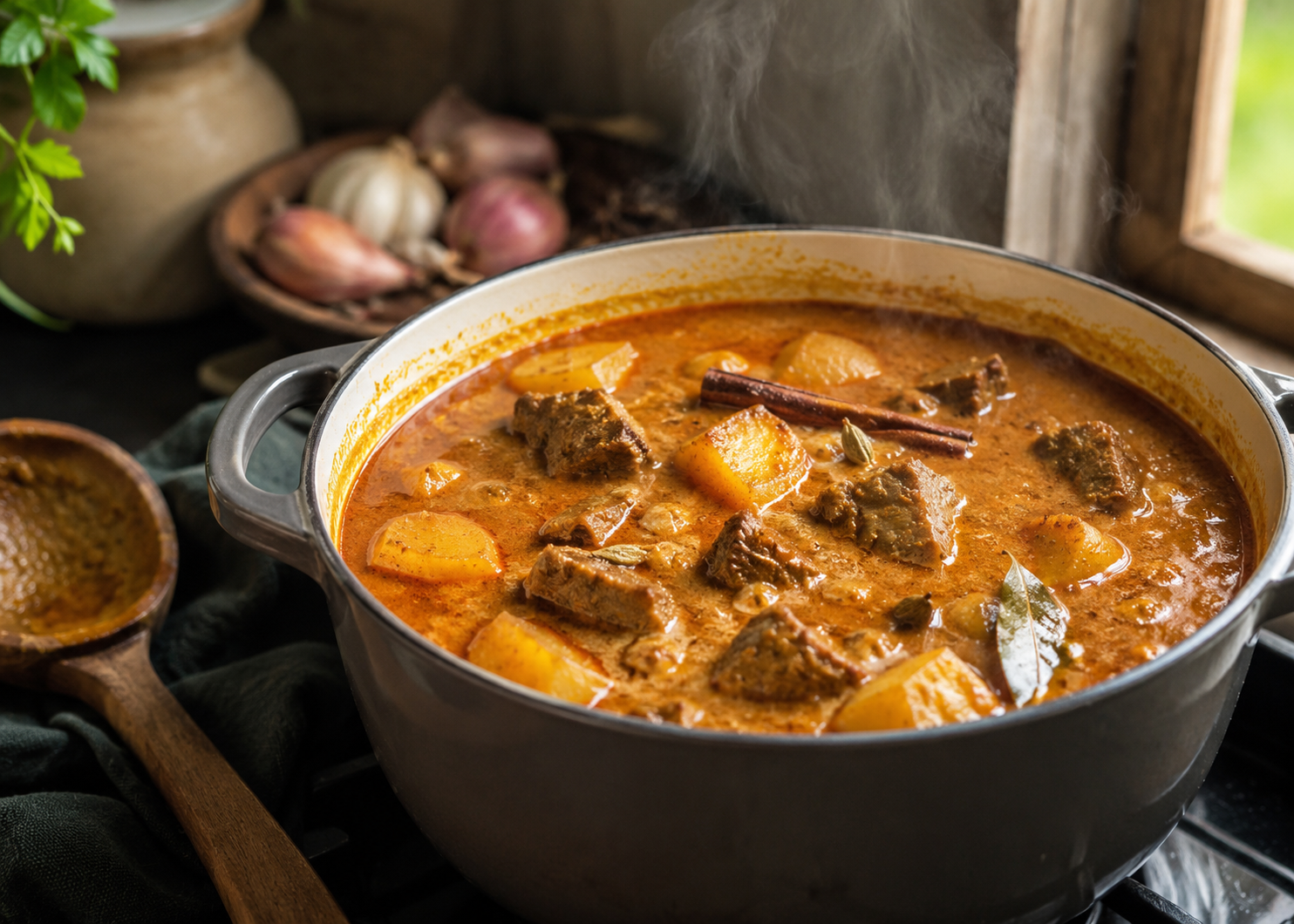
Before the cooking, it helps to understand what sets massaman apart from the other Thai curries, since its character is distinctive and its history explains it.
Massaman is the warm-spiced, mild, rich Thai curry, distinguished from the green and red and yellow curries by its inclusion of the warm dried spices more associated with Indian and Middle Eastern cooking, the cinnamon, cardamom, clove, cumin, and nutmeg that give it its deep aromatic warmth, layered over the Thai base of chili, lemongrass, galangal, and shrimp paste. This combination, the Thai aromatics meeting the warm trade-route spices, is what makes massaman unique, a curry that tastes both Thai and somehow further-traveled, the fusion reflecting its origins in the cultural meeting of Thai cooking and the Muslim traders and settlers who brought the warm spices to southern Thailand centuries ago. The name itself is thought to relate to Muslim, marking the dish’s origins in that cultural exchange, and you can taste the history in every spoonful, the spice routes alive in the bowl.
The other distinguishing features follow from this character, massaman being typically milder than the other Thai curries, the warm spices and the richness taking precedence over chili heat, making it the gentle, approachable, deeply comforting member of the Thai curry family, beloved even by those who find other Thai curries too fierce. It is also traditionally a slow-braised curry, usually made with beef or chicken and including potatoes and often peanuts and onions, the meat cooked long and slow until tender, the potatoes absorbing the sauce, the whole thing rich and substantial and stew-like rather than quick and bright. This makes massaman a curry of patience and depth rather than speed and brightness, a slow rich warming braise, the comfort food of the Thai repertoire, and understanding this character, warm, mild, rich, slow, is the key to making it well.
The Paste Is The Heart
As with all Thai curries, everything depends on the paste, and the massaman paste is the most complex and aromatic of them all.
The curry paste is the foundation of any Thai curry, the aromatic base that carries all the flavor, and the massaman paste is particularly complex, combining the fresh Thai aromatics, the lemongrass, galangal, garlic, shallots, chili, and shrimp paste, with the warm dried spices, the cinnamon, cardamom, clove, cumin, coriander seed, and others, toasted and ground, the two families of flavor pounded together into the paste that defines the dish. This is more elaborate than the green or red curry pastes, with the addition of the toasted warm spices making it deeper and more aromatic, and it is the making of this paste, the toasting and grinding of the spices and the pounding of the aromatics, that is the real work and the real reward of a homemade massaman. The paste is where the dish lives, and a good homemade paste makes a massaman that no jar can approach.
Making the paste traditionally means toasting the whole dried spices to release their aroma, then grinding them, and pounding the fresh aromatics in a mortar and pestle into a smooth paste, combining everything into the deep aromatic base, a process that takes effort but fills the kitchen with extraordinary smells and produces a paste of real depth and freshness. A food processor or blender can stand in for the mortar and pestle, making the work much easier, though the traditional pounding produces the smoothest paste, and either way the key is to toast the spices for depth and to grind and blend everything into a proper smooth aromatic paste. The paste can be made ahead and keeps, so the effort can be done in advance, and making a larger batch means future curries are quick, the hard work banked for later. The paste is the heart of the dish, and making it well, from toasted spices and fresh aromatics, is most of what makes a great massaman.
The Braise And The Coconut
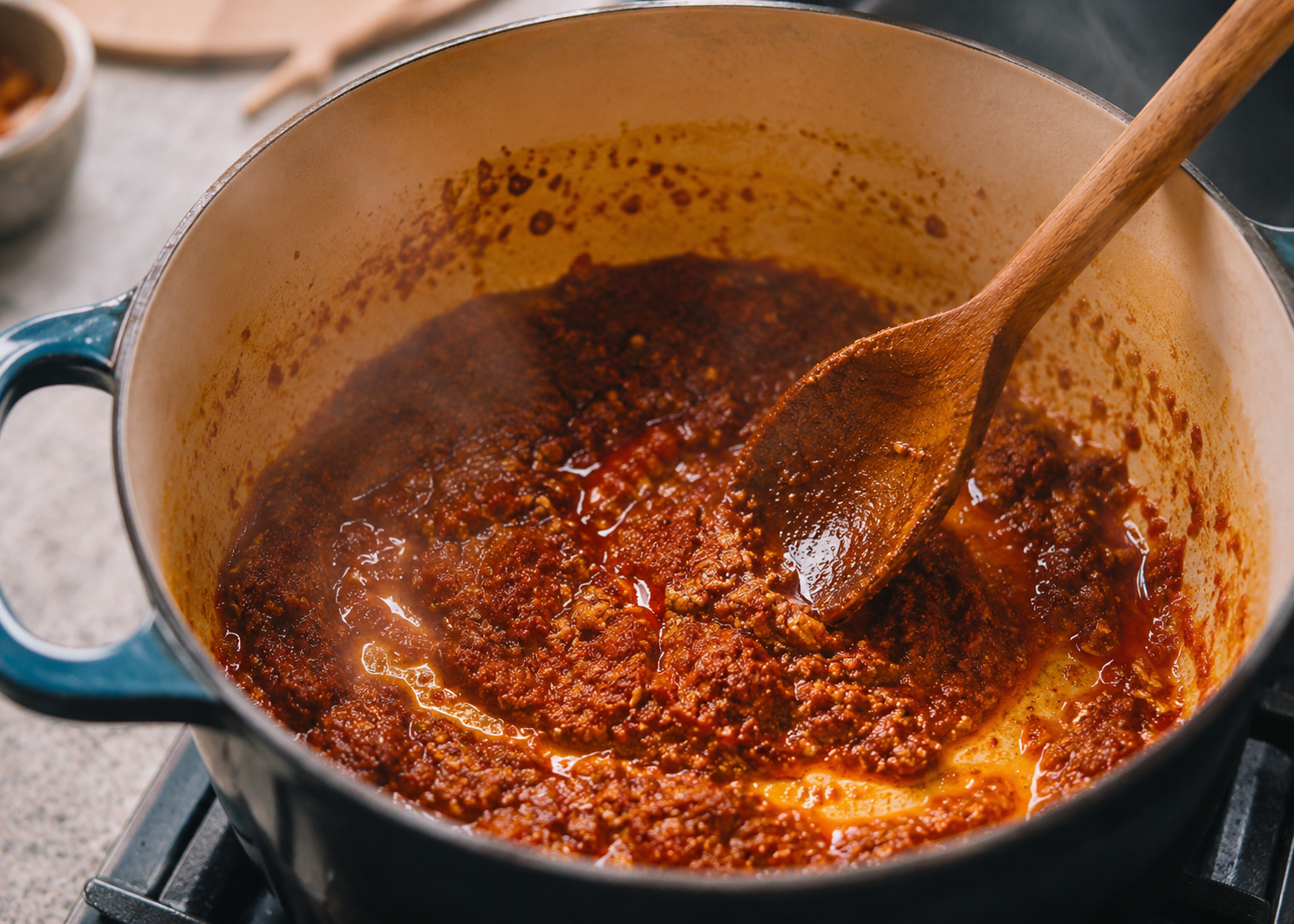
With the paste made, the curry itself is a matter of building the braise, and the technique with the coconut milk is worth understanding.
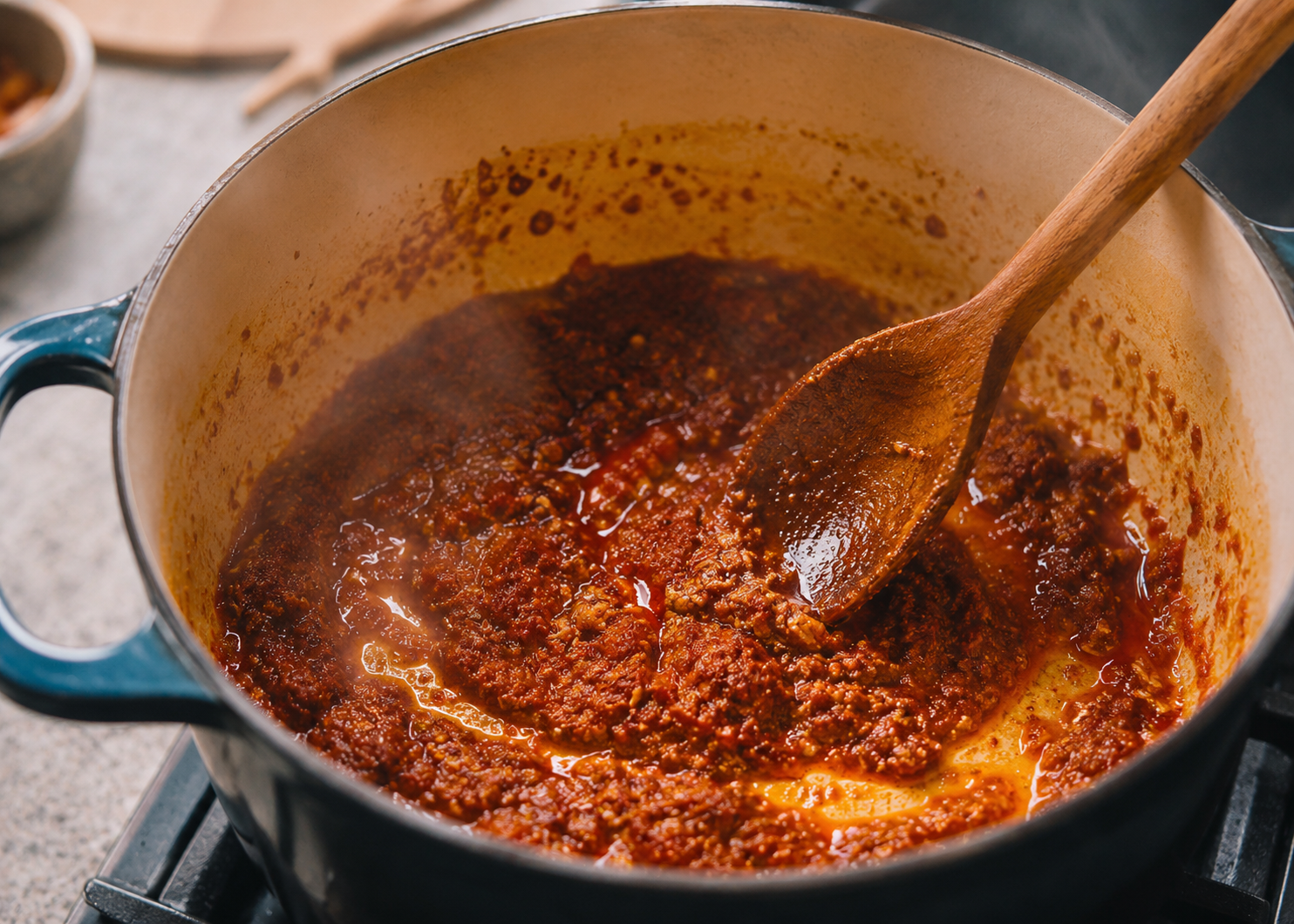
The massaman is built by first frying the paste in the thick part of the coconut milk, the coconut cream, until it separates and becomes fragrant and the oil rises, a key Thai technique that cooks the paste and releases its full aroma, the fried paste being the flavored base into which everything else goes. This frying of the paste in coconut cream is the step that develops the flavor, the paste blooming in the hot fat, and it should not be rushed, the paste cooked until it is deeply fragrant and the coconut cream has split, which is the sign that the base is ready. Then the rest of the coconut milk, the meat, and the braising liquid go in, and the long slow cooking begins, the curry simmering gently until the meat is tender and the flavors have melded into the rich deep sauce.
The braise itself is mostly patience, the beef or chicken simmering gently in the spiced coconut sauce until meltingly tender, the potatoes added partway so they cook through and absorb the sauce without falling apart, the onions and peanuts joining the rich mixture, the whole thing seasoned with the characteristic massaman balance of salty, sweet, sour, from fish sauce, palm sugar, and tamarind. This balance is essential and distinctive, the massaman being not just rich and warm but balanced with the sweetness of palm sugar, the sourness of tamarind, and the savory salt of fish sauce, the interplay of these making the sauce complex and rounded rather than flat. Build the base by frying the paste in coconut cream, braise the meat slow and gentle, add the potatoes and peanuts, balance with fish sauce and palm sugar and tamarind, and the curry comes together into the rich warm deep dish it should be.
Choosing The Meat And The Extras
A few choices shape the character of the finished curry, and understanding them lets you make the massaman you want.
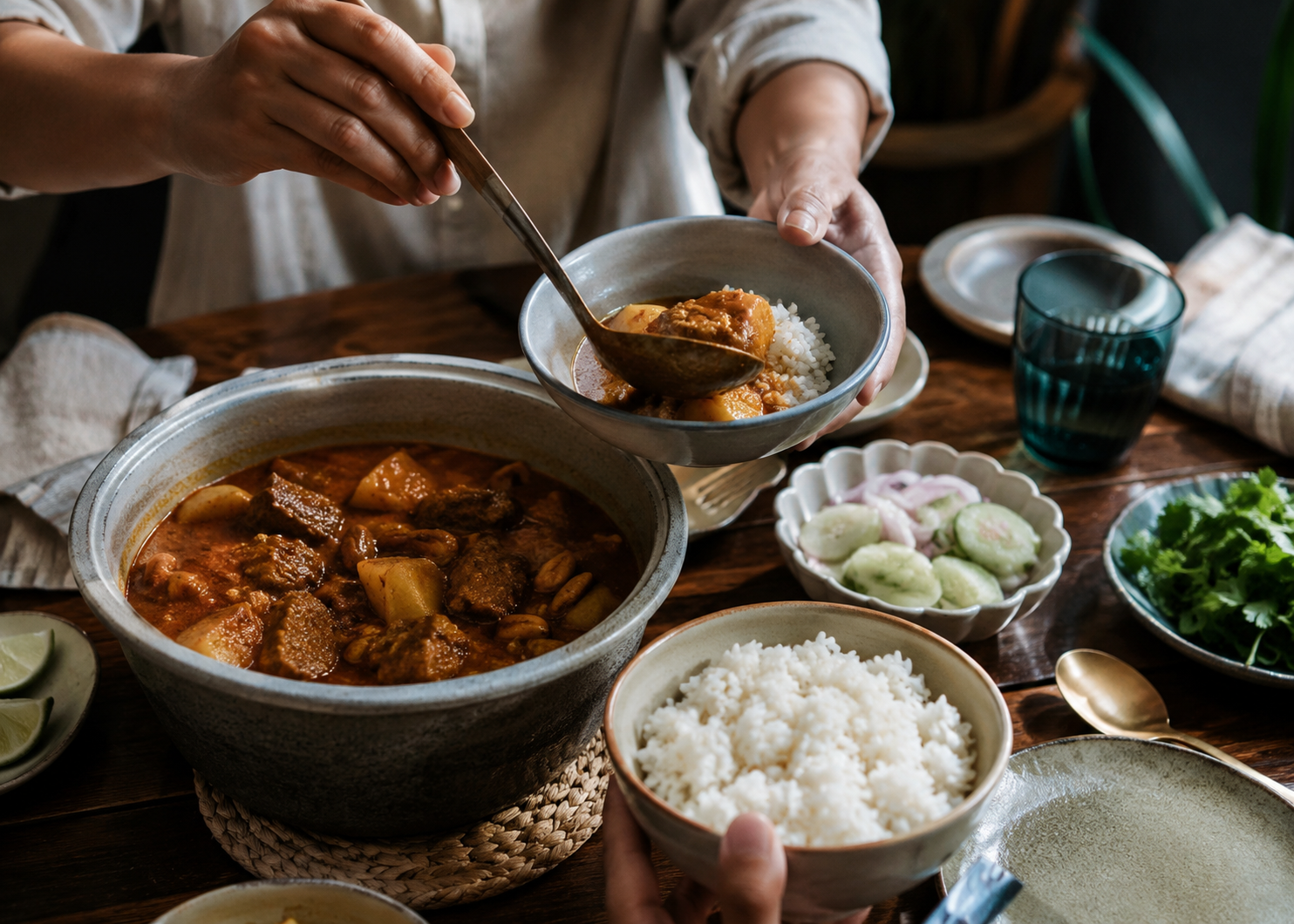
Beef is the most traditional and arguably the best meat for massaman, a tough flavorful braising cut like chuck or shin cooked long and slow until it falls apart, the beef standing up to the rich spiced sauce and the long braise, the classic and most satisfying version of the dish. Chicken is the common alternative, usually thighs rather than breast for their richer flavor and resistance to drying out, making a lighter and quicker massaman that is still delicious, while lamb works beautifully too, its richness suiting the warm spices, and even a vegetable or tofu version can be made for those avoiding meat, the rich spiced sauce carrying whatever it braises. The choice of meat shapes the cooking time and the character, beef the slowest and richest, chicken the quickest and lightest, and the cook should choose according to taste and time, all of them working in the forgiving rich sauce.
The traditional extras are part of what makes massaman distinctive, the potatoes that soak up the sauce and make the dish substantial, the onions that sweeten and soften into it, and the peanuts that add texture and a nutty richness deeply characteristic of the dish, all of them cooked into the braise to absorb its flavor. Some versions add other elements, but the potato, onion, and peanut trio is the classic combination, and getting it right, the potatoes tender and saturated with sauce, the onions melting, the peanuts adding their crunch and richness, is part of the proper massaman. These extras are not optional add-ons but integral to the dish, the potatoes and peanuts in particular being signatures of massaman that distinguish it from other Thai curries, so include them and let them cook into the rich sauce, and the curry has its proper character and substance.
Serving And The Rewards Of The Effort
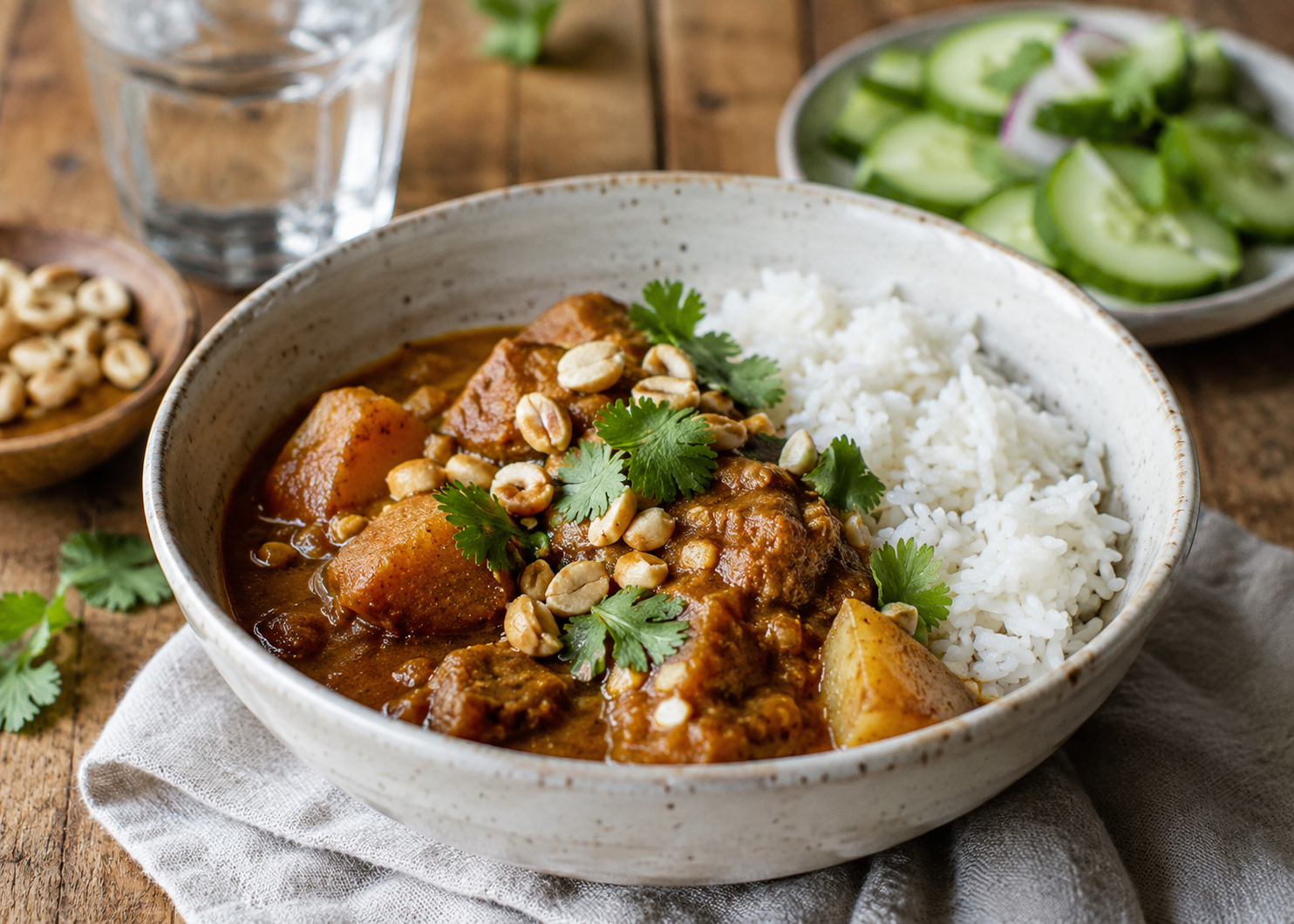
How the curry is served completes it, and it is worth reflecting on why the considerable effort of a homemade massaman pays off.
Massaman is served with rice, plain steamed jasmine rice being the perfect partner, the fragrant rice balancing and carrying the rich intense curry, the two eaten together so the rice soaks up the sauce, a simple and perfect combination. The curry is rich and substantial, a little going a long way over plenty of rice, and it is the kind of dish that improves the next day as the flavors deepen and meld, making it excellent for cooking ahead, the leftovers arguably better than the first serving. Served over rice, perhaps with a scattering of extra peanuts and some fresh herbs, the homemade massaman is a feast, a deep warming aromatic dish that rewards the effort that went into it many times over.
The effort, particularly of making the paste from scratch, is real, but the reward is a curry that bears no resemblance to the jarred or takeaway version, the homemade paste giving a freshness and depth and aromatic complexity that transforms the dish, the slow braise producing meltingly tender meat in a sauce of real richness and balance. This is the payoff of cooking massaman properly from scratch, a dish far better than any shortcut version, and the satisfaction of having made something so complex and delicious with your own hands, the kitchen filled with the smell of the toasting spices and the simmering curry. Learning to make a proper massaman is learning to make one of the world’s great dishes, and the effort, once made, can be repeated easily with a batch of paste made ahead, so the hard work of mastering it pays off again and again in deep warm aromatic bowls for years to come.
A Note On The Spices
Since the warm spices are what define massaman, a few words on them will help you get the heart of the dish right.
The warm spices that distinguish massaman, the cinnamon, cardamom, clove, cumin, coriander seed, nutmeg, and sometimes star anise or bay, are best bought whole and toasted and ground fresh for the paste, since the toasting awakens their aromatic oils and the fresh grinding captures them at their peak, giving a depth and fragrance that pre-ground spices, stale on the shelf, cannot match. Toasting is simple, the whole spices warmed in a dry pan over medium heat until fragrant and just darkening, a minute or two, watched carefully so they do not burn, then cooled and ground, and this small step makes a real difference to the finished curry, the freshly toasted and ground spices giving the massaman its characteristic deep warm aroma. If you must use pre-ground spices, the curry will still be good, but the toasting and grinding of whole spices is one of the things that lifts a homemade massaman toward greatness.
The balance of the spices is a matter of taste and tradition, with cinnamon and cardamom often leading, the clove assertive and used carefully, the cumin and coriander grounding, and the cook can adjust the blend to their preference once they understand the character each brings, building the warm aromatic profile that suits them. This is part of the pleasure of making the paste from scratch, the control over the spice blend, the ability to make the massaman exactly as warm and aromatic as you like, the dish becoming your own through the balance you strike. Toast and grind the whole spices fresh, balance them to your taste, and the heart of the massaman, its distinctive warm aromatic depth, is yours, the spice routes alive in your own kitchen in a curry made entirely by your own hands.
Massaman Curry Paste
Makes enough for the curry below, with a little extra to freeze. A food processor works fine in place of a mortar and pestle.
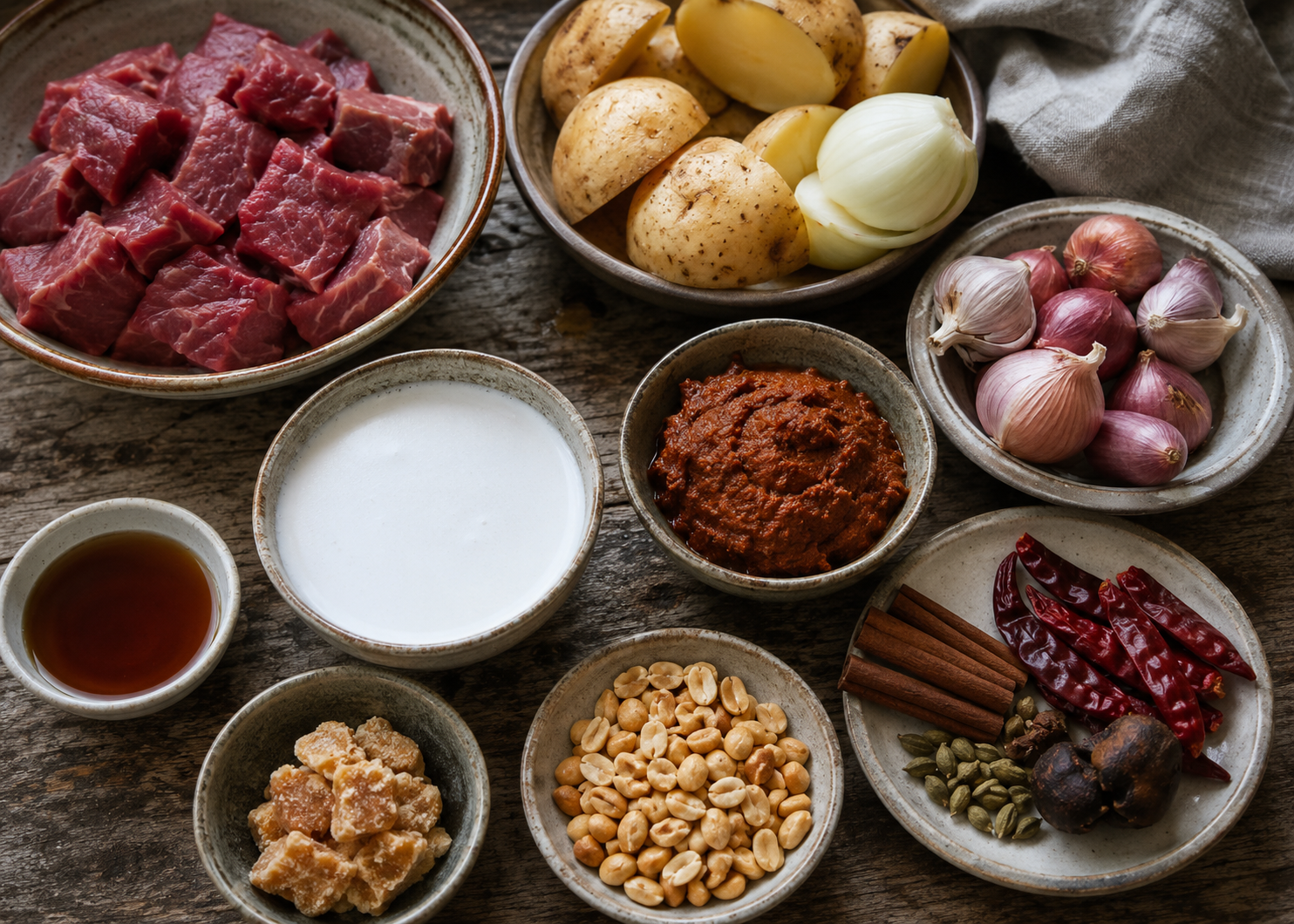
Ingredients
Whole spices to toast
- 1 tbsp coriander seeds
- 1 tsp cumin seeds
- 5 cardamom pods, seeds only
- 5 cloves
- 1 cinnamon stick, broken
- ¼ tsp grated nutmeg
Aromatics
- 6 dried red chilies, soaked and deseeded
- 3 lemongrass stalks, sliced
- 4 shallots, chopped
- 6 garlic cloves
- 1 thumb galangal, chopped
- 1 tsp shrimp paste
- 1 tsp salt
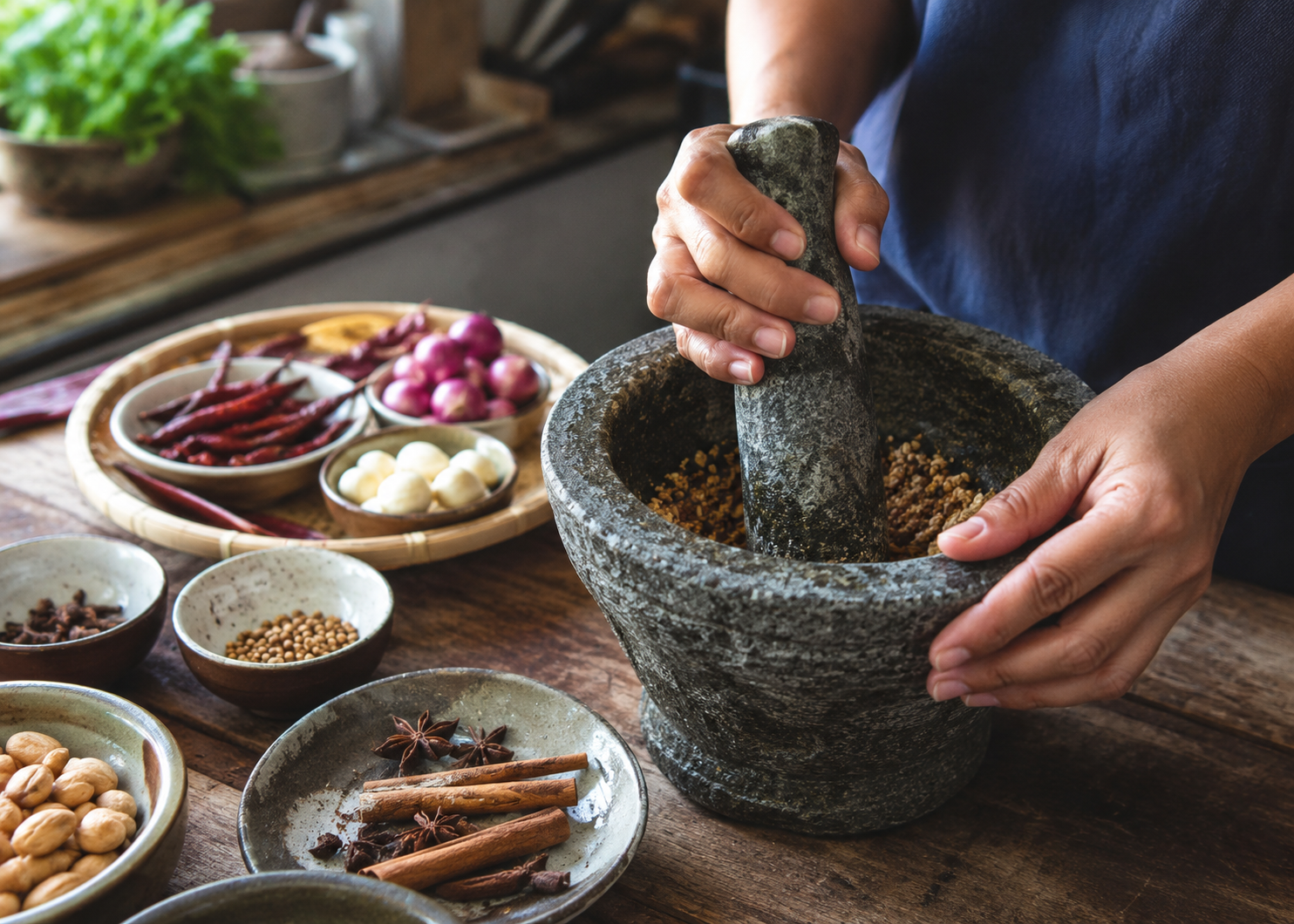
Method
- Toast the whole spices in a dry pan over medium heat until fragrant, 1 to 2 minutes. Cool and grind to a powder.
- Pound or blend the soaked chilies, lemongrass, shallots, garlic, galangal, shrimp paste, and salt into a smooth paste.
- Add the ground toasted spices and pound or blend again until fully combined into a smooth, deep paste.
Beef Massaman Curry
Serves 4 to 6, with rice. Plan for about 2½ hours, mostly hands-off braising.
Ingredients
- 1kg (2¼ lb) beef chuck or shin, cut into large chunks
- 2 cans (800ml total) coconut milk
- 1 batch massaman curry paste (above)
- 3 tbsp fish sauce
- 2 tbsp palm sugar (or brown sugar)
- 2 tbsp tamarind paste
- 4 medium potatoes, peeled and cut into chunks
- 2 onions, cut into wedges
- ½ cup roasted unsalted peanuts
- 2 bay leaves
- 1 cinnamon stick
- Steamed jasmine rice, to serve
Method
- Spoon the thick cream from the top of the coconut milk into a heavy pot and heat over medium until it bubbles and the oil begins to separate.
- Add the curry paste and fry, stirring, for 3 to 5 minutes until deeply fragrant and the cream has split.
- Add the beef and stir to coat in the paste. Pour in the rest of the coconut milk and enough water to almost cover, then add the bay leaves and cinnamon stick.
- Bring to a gentle simmer, cover, and braise for about 1½ hours until the beef is becoming tender, topping up with water if needed.
- Stir in the fish sauce, palm sugar, and tamarind. Taste and adjust the salty-sweet-sour balance.
- Add the potatoes, onions, and peanuts, and simmer uncovered for another 30 to 40 minutes until the beef is meltingly tender and the potatoes are cooked and saturated with sauce.
- Rest a few minutes, then serve over jasmine rice. It is even better the next day.

About the Author: Ruben, co-founder of Gamintraveler.com since 2014, is a seasoned traveler from Spain who has explored over 100 countries since 2009. Known for his extensive travel adventures across South America, Europe, the US, Australia, New Zealand, Asia, and Africa, Ruben combines his passion for adventurous yet sustainable living with his love for cycling, highlighted by his remarkable 5-month bicycle journey from Spain to Norway. He currently resides in Spain, where he continues sharing his travel experiences with his partner, Rachel, and their son, Han.