
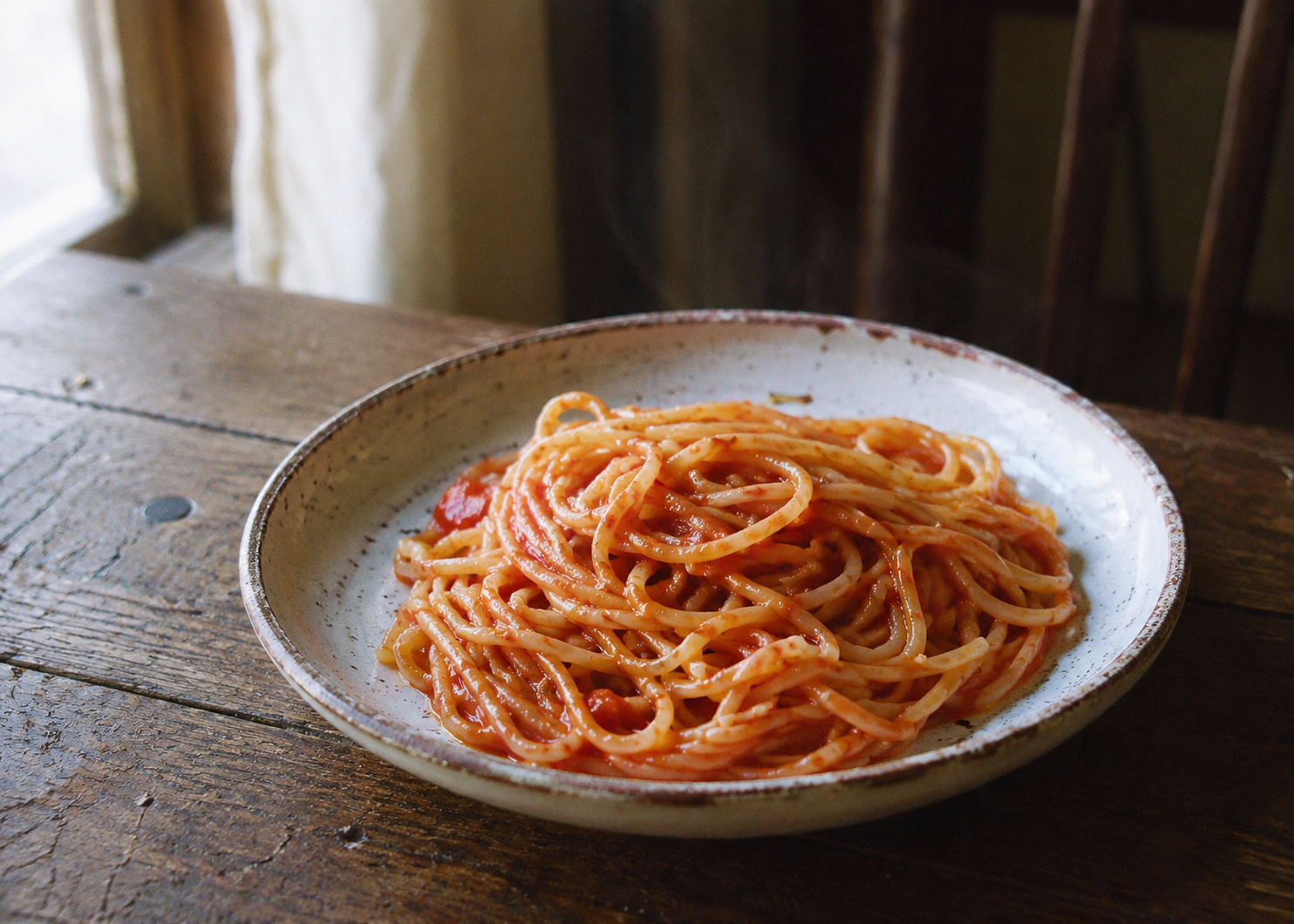
Walk into an American kitchen making tomato sauce and you will find olive oil, garlic, maybe a glug of red wine, a long list of dried herbs. Walk into the kitchen of an Italian nonna making the same sauce and you will often find, at the end, something an American recipe would never dare suggest. A knob of butter, dropped into the red sauce and stirred until it vanishes. It sounds wrong to an American ear trained to think of Italian cooking as a religion of olive oil. It is one of the oldest secrets in the Italian north, and it is the difference between a sauce that is good and a sauce that makes people go quiet at the table.
The butter is not a substitute for olive oil and it is not an American shortcut. It is a finishing technique, a northern Italian tradition centuries deep, and it does something to a tomato sauce that no amount of simmering or seasoning can replicate. Americans forbid it because they misunderstand what it is for. The nonnas add it because they understand exactly what it is for, and once you taste the difference, you will never make a tomato sauce the old way again. Here is what the butter actually does, why the north of Italy swears by it, and how to do it right.
Why Tomato Sauce Wants Butter
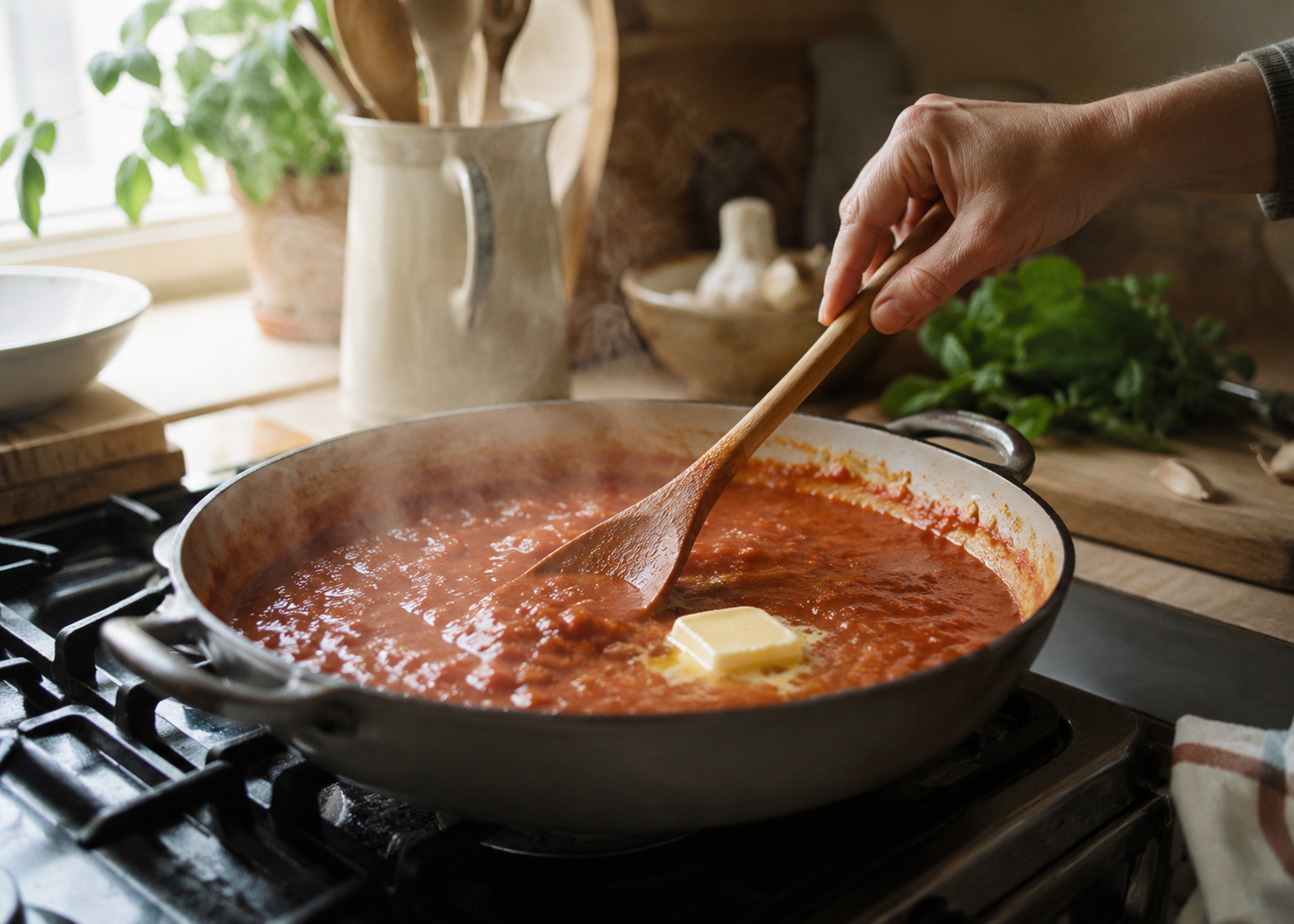
The thing Americans get wrong is thinking butter makes the sauce richer, when what it really does is make the sauce rounder.
A tomato is an acidic fruit, brightly, sometimes harshly so, and a tomato sauce carries that acidity at its core, the sharp edge that can make a long-simmered sauce taste thin or aggressive no matter how long it cooks. Fat is what tames acid, and while olive oil contributes its own fruity character, butter does something olive oil cannot, it rounds the acidity into something soft and complete, taking the sharp edge off the tomato and leaving a sauce that tastes finished rather than merely cooked. The butter emulsifies into the sauce, binding the water and the fat and the tomato into a single glossy whole, giving it a body and a sheen and a velvet texture that an oil-only sauce never achieves. This is the secret behind why restaurant pasta so often tastes better than home pasta, the finishing fat that pulls everything together.
The most famous proof of this is the legendary tomato sauce of Marcella Hazan, the cookbook author who taught America to cook Italian, whose three-ingredient sauce is nothing but tomatoes, an onion cut in half, and a frankly large amount of butter, simmered slowly and adored by everyone who makes it. There is no garlic, no herbs, no olive oil, just tomatoes and butter and onion, and it is one of the most beloved tomato sauces in the world precisely because the butter does all the work, transforming plain canned tomatoes into something silky and profound. That sauce is the whole argument in three ingredients, the demonstration that butter is not an addition to a tomato sauce but, for many of the best ones, the engine of it.
The North-South Divide
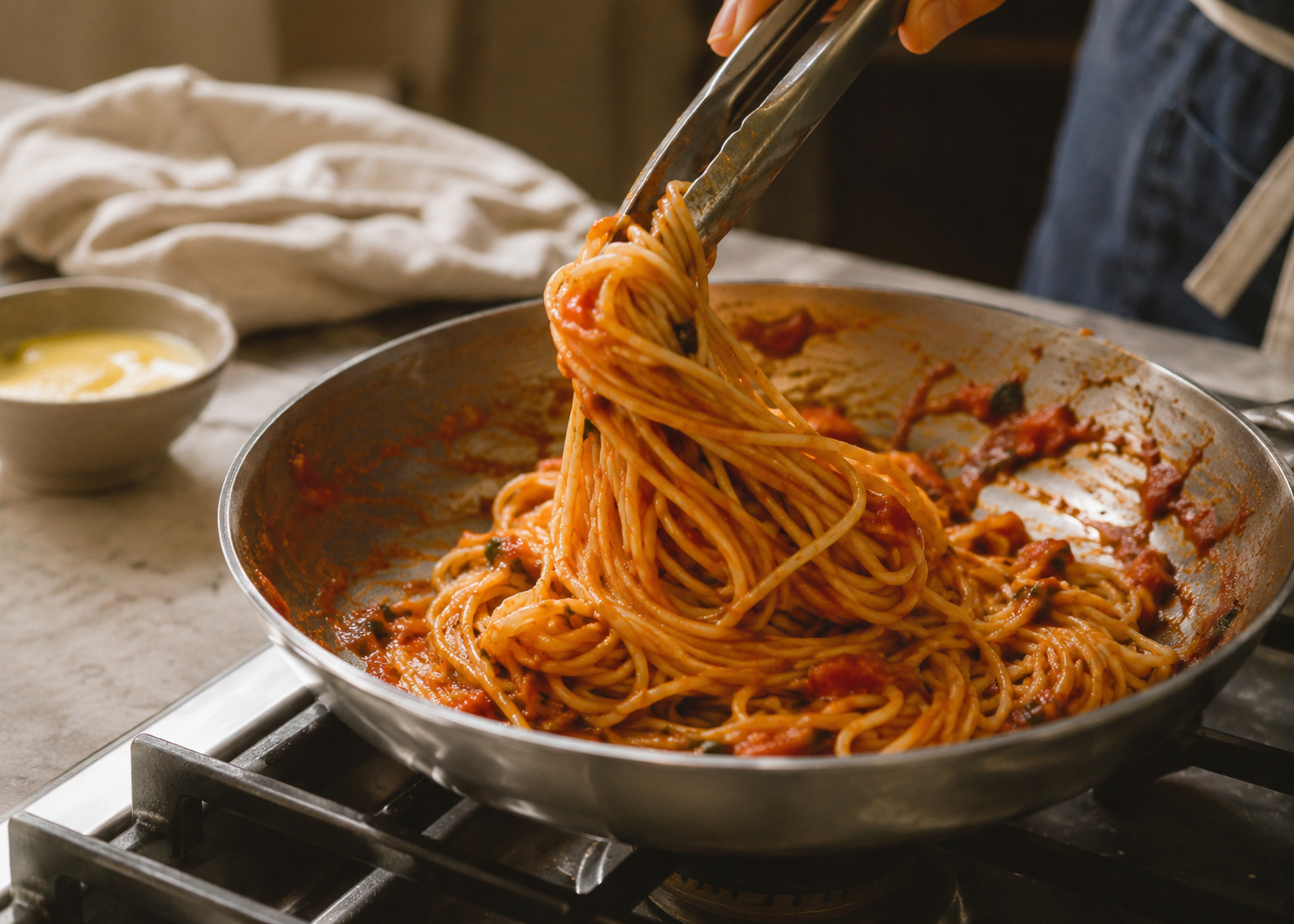
The butter is not pan-Italian, and understanding why it belongs to the north explains the whole technique.
Italy divides, in cooking as in much else, between the olive-oil south and the butter north, a split rooted in geography and agriculture, the south with its olive groves and its oil-based cuisine, the north with its dairy country, its cattle, its butter and cream and the famous cheeses of Parma and Lombardy. Northern Italian cooking, the food of Emilia-Romagna, Lombardy, the Veneto, is a butter cuisine, the region that gave the world butter-and-sage sauces, risotto finished with butter and parmesan, the rich dairy-based dishes that feel worlds away from the oil and garlic of Naples and Sicily. So when a northern nonna finishes her tomato sauce with butter, she is not breaking a rule, she is cooking in the deepest tradition of her region, applying the northern logic of butter to the universal Italian tomato.
This matters because the American idea of Italian food is largely a southern idea, the food of the southern Italians who emigrated to America, all olive oil and garlic and oregano, which is why butter in a tomato sauce strikes Americans as heretical, it violates the only Italy they know. But Italy is two culinary countries, and the northern one has been putting butter in things, tomato sauce included, for as long as anyone can remember, with no sense of transgression at all. The American forbids the butter because the American knows only half of Italy. The northern nonna adds it because she comes from the half of Italy that always has, and her sauce is the better for the inheritance.
What Butter Does That Oil Cannot
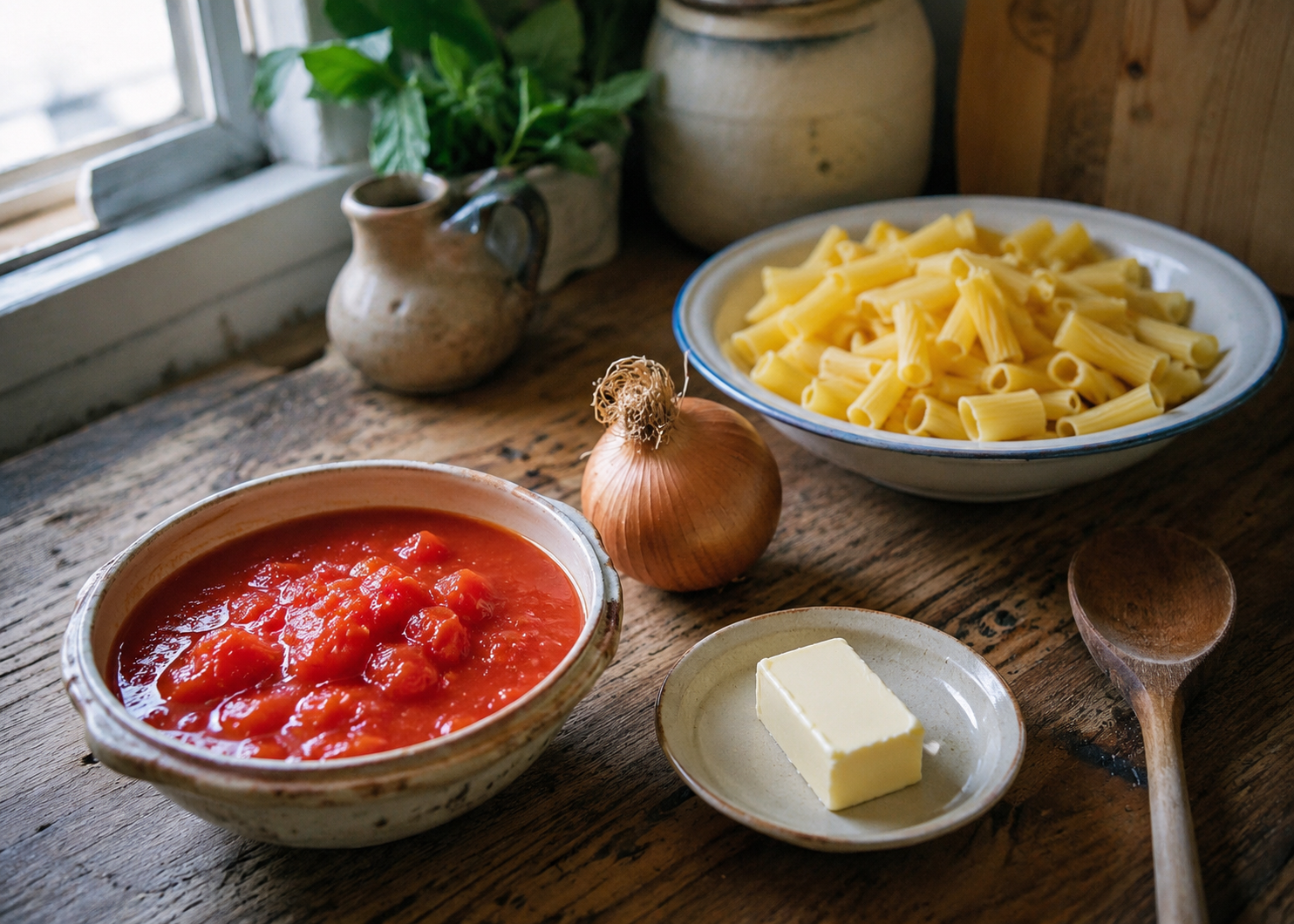
To be precise about the technique, it helps to understand exactly what butter contributes that olive oil, for all its virtues, simply cannot.
Olive oil and butter are different fats with different powers, and the northern technique often uses both, oil at the start for the soffritto, butter at the end for the finish, each doing its own job. Olive oil brings its fruity, peppery, savory character, wonderful for the base of a sauce, the sauteing of the onion and garlic, the foundation flavors, but it stays somewhat separate, a flavor layered into the sauce rather than fully merged with it. Butter, added at the end and stirred until it melts and emulsifies, does the opposite, it disappears into the sauce, binding everything into one glossy emulsified body, contributing not a distinct flavor so much as a transformation of texture and a rounding of the whole. The two fats are not rivals but partners, and the best northern tomato sauces use each for what it does best.
The specific magic of the finishing butter is the emulsion, the way the fat and the water in the sauce, which naturally want to separate, are bound together by the butter into a single creamy whole, the same principle behind the silky pan sauces of French cooking. This is why a sauce finished with butter clings to the pasta the way an oil-only sauce does not, coating each strand in a glossy emulsified layer rather than sliding off into a watery pool at the bottom of the bowl. The butter is what makes the sauce marry the pasta, the technical heart of why restaurant pasta has that luxurious quality, and it is a thing butter does and oil, on its own, cannot. Add the butter, and the sauce stops being a topping and becomes a coating, which is the whole point of a pasta sauce in the first place.
The Mistakes That Ruin It
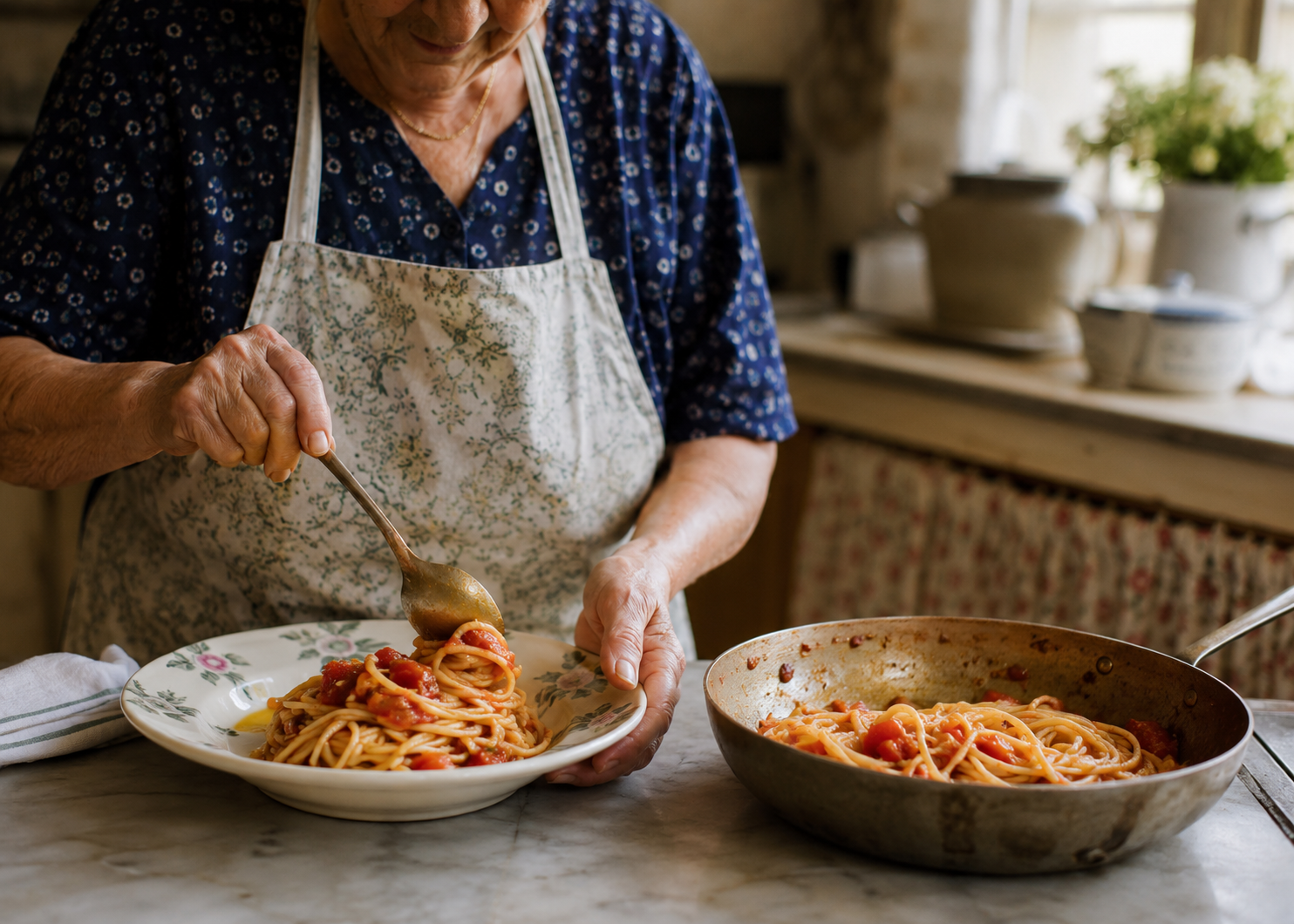
Like any simple technique, finishing with butter has a few ways to go wrong, and knowing them is most of doing it right.
The first mistake is adding the butter too early, since the magic is in the finish, the butter stirred in at the very end off or near the heat to emulsify into the completed sauce, not dumped in at the start where it would simply cook off and lose its finishing power. The second is using too little, since the butter needs to be enough to actually round the sauce and create the emulsion, a timid pat in a big pot of sauce does nothing, and the famous sauces use what looks to an American like an alarming amount, several tablespoons, a healthy knob, enough to do the work. The third is boiling the sauce hard after the butter goes in, which can break the emulsion and split the fat back out, so the butter is stirred in gently at the end and the sauce is kept just below a hard boil, coaxed into the silky emulsion rather than blasted apart.
The fourth mistake is thinking the butter replaces good technique elsewhere, since the butter finishes a good sauce, it does not rescue a bad one, and a sauce of poor tomatoes, underseasoned and undercooked, will not be saved by butter at the end. The butter is the finishing touch on a sauce already built properly, good tomatoes, a proper soffritto, enough cooking time, the right salt, and then the butter to round and bind it all at the close. Get the sauce right and finish it with butter and you have something extraordinary. Skip the work and rely on the butter alone and you have buttery mediocre sauce. The technique rewards the cook who has already done everything else correctly, which is exactly why the nonnas, who do everything else correctly, swear by it.
How To Use It On Any Tomato Sauce
The technique is universal, applicable to almost any tomato sauce you already make, which is the best news in this whole piece.
You do not need a special recipe to use the butter trick, you need only to take whatever tomato sauce you already make, your marinara, your sunday gravy, your simple weeknight pomodoro, and finish it with butter at the end, off the heat, stirred in until it melts and the sauce turns glossy. A good starting amount is two to three tablespoons of butter for a sauce serving four, added in the last minute of cooking, stirred through until emulsified, and you will taste the difference immediately, the acidity rounded, the texture silkier, the whole sauce pulled together. This single change, costing nothing but a knob of butter and a minute of stirring, will improve almost any tomato sauce you make, which is why it is the most useful secret the Italian north has to offer.
For the full experience, try the Marcella Hazan sauce itself at least once, the tomatoes and onion and butter simmered slowly into something miraculous, to taste what butter alone can do to a tomato, and then carry the lesson into your everyday sauces forever after. The nonnas have known this for centuries, and you now know better than the recipe that told you olive oil was the only Italian fat. Finish your tomato sauce with butter. The north of Italy has been right about this all along, and your table will go quiet in exactly the way the nonnas intended, which is the highest compliment an Italian kitchen can earn.
The Other Butter Sauces Worth Knowing
Once you accept butter into your tomato sauce, a whole northern Italian world of butter-finished pasta opens up, and it is worth knowing where the technique leads.
The most famous is the simplest, burro e salvia, butter and sage, nothing more than butter melted with fresh sage leaves until it turns golden and nutty, then tossed with filled pasta like ravioli or tortellini, a sauce of two ingredients that the north considers among its finest. There is the butter-and-parmesan finish that turns plain pasta into the dish Italians make for sick children and call pasta in bianco, comforting and pure, and there is the way risotto is finished, the mantecatura, the vigorous beating-in of cold butter and parmesan at the very end that gives risotto its famous creaminess without a drop of cream. All of these rest on the same principle as the tomato-sauce trick, butter added at the finish, emulsified into the dish, transforming texture and rounding flavor, the deep northern logic of dairy applied to pasta and rice.
Learning the tomato-sauce butter finish is really learning this whole northern grammar, the understanding that butter at the end of cooking is one of the great Italian techniques, as legitimate and traditional as anything involving olive oil. The American who masters it has not learned a trick but joined a tradition, the dairy-rich cooking of the Italian north that produced some of the country’s most beloved dishes. So finish the tomato sauce with butter, then go further, the sage butter, the parmesan finish, the proper risotto, and discover that half of Italy has been cooking with butter all along, brilliantly, while the American recipes insisted it was forbidden. It was never forbidden. It was just northern, and now it can be yours.
Marcella Hazan’s Tomato, Onion, and Butter Sauce

The sauce that proves the whole argument. Three ingredients, almost no effort, extraordinary results. Serves 4 over about a pound of pasta.
Ingredients
- 1 can (800g / 28oz) whole peeled tomatoes, preferably San Marzano
- 5 tablespoons (75g) unsalted butter
- 1 medium onion, peeled and cut in half
- Salt, to taste
- Pasta of choice, about 1 pound (450g), to serve
- Grated parmesan, to serve
Method
- Put the tomatoes and their juices into a saucepan. Crush the whole tomatoes roughly with your hands or a spoon.
- Add the butter and the two onion halves to the pan. Add a good pinch of salt.
- Bring to a simmer over medium heat, then lower the heat to keep it at a gentle, steady simmer.
- Cook uncovered for about 45 minutes, stirring occasionally and crushing the tomatoes against the side of the pan as they soften, until the sauce is reduced, glossy, and the fat separates slightly from the tomato.
- Remove and discard the onion halves (or save them, spread on toast, as a cook’s reward). Taste and adjust the salt.
- Toss with hot drained pasta and serve with grated parmesan.
The Butter Finish For Any Tomato Sauce
Not a recipe so much as a technique to add to the sauce you already make.
Ingredients
- Your tomato sauce of choice, enough for 4
- 2 to 3 tablespoons (30 to 45g) cold unsalted butter, cut into cubes
Method
- Make your tomato sauce as you normally would, finishing the simmer and adjusting the seasoning.
- Lower the heat so the sauce is no longer at a hard boil, just barely bubbling.
- Add the cold butter cubes and stir continuously until the butter melts completely and the sauce turns glossy and slightly thickened, about 1 minute.
- Take off the heat and toss immediately with hot pasta. Serve at once, while the emulsion is silky.

About the Author: Ruben, co-founder of Gamintraveler.com since 2014, is a seasoned traveler from Spain who has explored over 100 countries since 2009. Known for his extensive travel adventures across South America, Europe, the US, Australia, New Zealand, Asia, and Africa, Ruben combines his passion for adventurous yet sustainable living with his love for cycling, highlighted by his remarkable 5-month bicycle journey from Spain to Norway. He currently resides in Spain, where he continues sharing his travel experiences with his partner, Rachel, and their son, Han.