
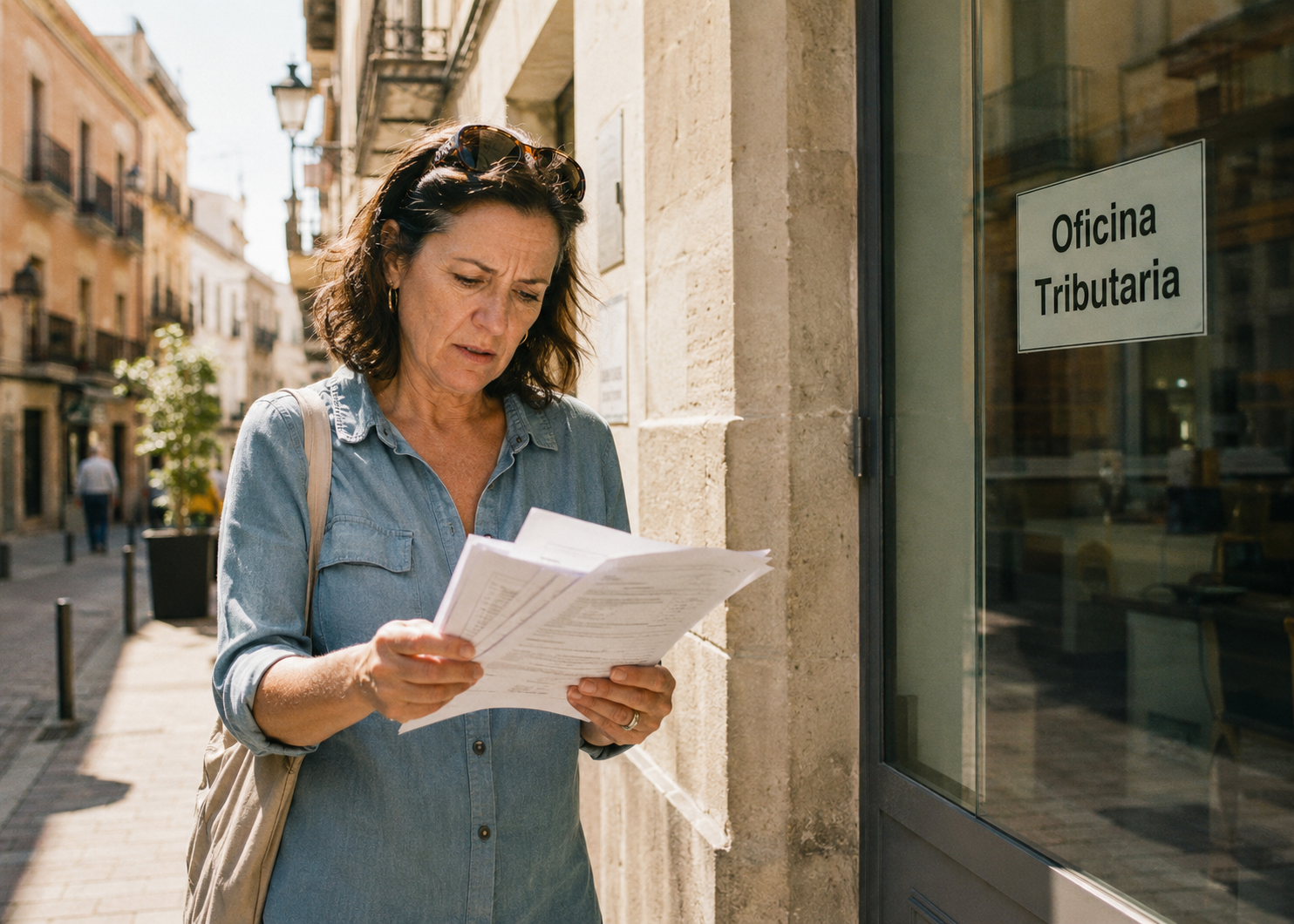
There is a particular American expat who arrives in Spain, falls in love with the life, and then, a year or two later, gets a tax bill that lands like a punch. They did everything they thought they were supposed to do, moved over, rented or bought a home, settled in, and somewhere in the process they made one decision, or failed to make one, that has now cost them many thousands of euros they never saw coming. The decision was about timing, and specifically about the moment they became a Spanish tax resident, and it is among the most expensive mistakes an American can make in their first Spanish year.
From Madrid, watching Americans navigate this, the painful part is how avoidable it is. The mistake is not exotic or obscure, it is a straightforward consequence of how Spanish tax residency works, and it catches people simply because they do not understand the rule until after they have already triggered it. The single most costly version involves selling assets, often a home back in the United States, in the same year they become a Spanish tax resident, and the cost can run well into five figures. Here is how the trap works and how to avoid it.
How Spanish Tax Residency Actually Works

The whole problem begins with how Spain decides whether you are a tax resident, because the answer is more aggressive and more retroactive than Americans expect.
Spain considers you a tax resident if you spend more than 183 days in the country in a calendar year, or if your center of vital or economic interests is located in Spain. That part is familiar enough. The trap is in the timing, because Spanish tax residency, once triggered, applies to the entire calendar year, retroactive to the first of January, not from the day you arrived or the day you crossed the 183-day threshold. If you move to Spain in, say, June, and end up spending more than 183 days there that year, you are treated as a Spanish tax resident for the whole year, including the months before you ever set foot in the country.
This retroactivity is the heart of the matter, and it is the thing Americans consistently fail to grasp until it is too late. A Spanish tax resident is taxed on worldwide income and worldwide capital gains, not just Spanish-source income, which means that once you become a resident for a given year, Spain can tax things that happened anywhere in the world during that entire year. The American instinct is to think the Spanish tax clock starts when you arrive, so that anything you did before moving is safely outside the Spanish system. That instinct is wrong, and the gap between the instinct and the reality is exactly where the expensive mistake lives, because actions taken early in the year, before the move, fall inside the Spanish tax year if residency is triggered later.
The Costly Mistake, Selling In The Wrong Year

The most damaging version of this trap involves selling a major asset, and it is worth walking through carefully because the numbers can be enormous.
The classic case is the American who sells their home in the United States in the same calendar year they move to Spain and become a Spanish tax resident. They sell the US house, perhaps in the spring, then move to Spain in the summer, cross the 183-day threshold, and become a Spanish tax resident for the entire year, retroactive to January. Because a Spanish tax resident is taxed on worldwide capital gains, Spain can now claim capital gains tax on the sale of that US home, even though the sale happened before the move and in another country, because it occurred within the calendar year in which the person became a Spanish resident. Many Americans do not realize this until they file their first Spanish tax return and discover the liability.
The cost can be substantial because capital gains on a long-held home can be large, and Spanish capital gains tax rates are meaningful. A gain of a few hundred thousand dollars on a long-owned American home, entirely or largely exempt under American rules for a primary residence, can generate a Spanish capital gains tax bill running well into the tens of thousands of euros, since Spain may not recognize the American primary-residence exemption the same way. As an illustration, an American who sold a home with a two-hundred-thousand-dollar gain and became a Spanish resident that same year could face a Spanish capital gains bill in the rough vicinity of forty thousand euros or more depending on the figures and the regional rates, a sum that would have been entirely avoided by timing the move differently. The exact number varies enormously with the gain, the rates, and the treaty treatment, but the point is that the bill is real, large, and avoidable.
Why The Tax Treaty Does Not Fully Save You
Americans often assume the US-Spain tax treaty will protect them from being taxed twice, and while it helps, it does not make the problem disappear, which is the second misunderstanding.
The tax treaty between the United States and Spain exists precisely to prevent double taxation, and it does provide mechanisms, principally the foreign tax credit, that let taxes paid in one country offset taxes owed in the other. But the treaty allocates taxing rights and provides credits, it does not simply exempt a Spanish resident from Spanish tax on worldwide gains, and the result is often that the higher of the two countries’ tax burdens ends up applying. If Spain taxes a gain that the United States would have exempted, the American can owe Spanish tax that no American credit offsets, because there was no American tax to credit against it in the first place. The treaty prevents being taxed twice on the same income, but it does not prevent being taxed once by Spain on something the US would not have taxed at all.
This is the subtle trap within the trap. The American reasons that since their primary-residence sale is tax-free under US rules, and since the treaty prevents double taxation, they are safe. But the treaty only credits taxes actually paid, and if the US tax on the exempt home sale is zero, there is nothing to credit, while Spain may tax the gain in full. The American ends up paying Spanish capital gains tax on a sale they correctly believed was tax-free at home, with the treaty offering no relief because the relief mechanism has nothing to work with. Understanding that the treaty prevents double taxation but not single Spanish taxation of US-exempt gains is essential, and it is precisely the nuance that the do-it-yourself expat misses.
How To Avoid It Entirely

The good news is that this entire expensive problem is avoidable with timing and planning, and the avoidance is not complicated once the rule is understood.
The cleanest solution is to sell major appreciated assets, especially a home, before the calendar year in which you become a Spanish tax resident, so that the sale falls in a year when you are not yet a Spanish resident and Spain has no claim on the worldwide gain. If you plan to move to Spain and become a resident in a given year, completing the sale of your US home in the prior calendar year removes it cleanly from the Spanish tax net. Alternatively, timing the move so that you do not cross the 183-day threshold in the year of the sale, arriving late enough in the year that residency is not triggered until the following year, can achieve the same protection, though this requires careful counting and is riskier than simply selling early.
The essential move, though, is to get professional cross-border tax advice before the move, not after, because the planning has to happen before the triggering events occur. A cross-border tax advisor who understands both the US and Spanish systems can map out the sequence of sales and the timing of the move so that the expensive overlaps are avoided, and the cost of that advice, a few hundred euros, is trivial against the tens of thousands it can save. The single biggest error is not the bad timing itself but the failure to seek advice in time to get the timing right, the assumption that taxes can be sorted out after arrival, when in fact the most consequential decisions have to be made before the year of the move even begins. Plan first, move second, and the trap simply never closes on you.
The Other First-Year Tax Traps

The home-sale capital gains issue is the most expensive single mistake, but it sits among a cluster of first-year Spanish tax traps worth knowing about, since they share the same root.
The same residency retroactivity affects other worldwide income and gains, not just a home sale. Selling stocks or other investments at a large gain, realizing income from a business sale, taking a large distribution from certain accounts, any major financial event in the year of the move can fall into the Spanish tax net the same way, and each deserves the same timing analysis. There is also the wealth tax, a Spanish tax on net worth above certain thresholds that varies dramatically by region, fully subsidized in some regions like Andalusia and significant in others, which can surprise wealthier newcomers who did not factor it into their choice of where to settle. And there is the obligation to report worldwide assets to the Spanish tax authorities once resident, a disclosure regime with real penalties for getting it wrong.
The common thread is that becoming a Spanish tax resident is a much bigger event than becoming a resident in the everyday sense, pulling your entire worldwide financial life into the Spanish tax system from the first of January of the year it triggers, and the newcomer who treats it casually can be badly surprised. None of this should deter anyone from moving to Spain, where the lifestyle benefits are real and the ongoing tax burden for most retirees is manageable, but all of it argues for understanding the tax consequences and getting proper advice before the move rather than after. The first Spanish tax year is the dangerous one, the year when the retroactivity and the worldwide reach combine to catch the unprepared, and it is precisely the year to plan for most carefully.
The Beckham Law And Who It Helps
One feature of the Spanish system deserves mention because it can change the calculus entirely for some newcomers, even though it does not apply to the typical retiree.
Spain operates a special tax regime, commonly called the Beckham Law after the footballer whose move prompted attention to it, that allows certain people moving to Spain for work to be taxed as non-residents for a period of years, meaning they are taxed only on Spanish-source income rather than worldwide income. For someone who qualifies, this regime sidesteps much of the worldwide-taxation trap, since the worldwide capital gains and income that catch the ordinary new resident are largely outside the Spanish net under the special regime. It is one of the genuine tax advantages Spain offers to attract certain workers, and for those eligible it can be very valuable.
The catch is that the regime is aimed at people moving to Spain to take up employment, and it generally does not cover the retirees and passive-income expats who make up much of the American move-to-Spain population, nor those who become self-employed in certain ways. The typical retiree on a non-lucrative visa, living on pensions and investments, does not qualify and is taxed on worldwide income and gains in the ordinary way, which is exactly why the home-sale trap bites them. The lesson is not that everyone can escape through the Beckham Law, but that the Spanish tax system has different regimes for different kinds of newcomer, and that determining which one applies to your situation is part of the essential pre-move planning. Someone moving for work may have options a retiree does not, and only proper advice reveals which regime fits a given case.
A Simple Rule To Carry Away

If all the detail reduces to one practical principle, it is this, and it is worth holding onto even if everything else fades.
Treat the calendar year of your move to Spain as a tax minefield, and clear it before you step into it. Any major financial event, the sale of a home, the sale of investments, a large gain or a large income realization, should be examined for its timing relative to your Spanish residency, and where possible completed in a year when you are not yet a Spanish tax resident. The default assumption should be that Spain will reach back to the first of January and tax your worldwide financial life for the entire year in which you become resident, and that anything you would prefer to keep outside the Spanish system should happen in a prior year. This single mental rule, that the year of the move is retroactive and worldwide, prevents the great majority of the expensive surprises.
The deeper principle is that the tax planning has to come first, before the move and before the sales, because the most consequential decisions are timing decisions that cannot be undone once the year turns. The American who sees a tax advisor a year before moving, maps out the sequence of sales and the timing of residency, and acts on that plan, sails through the first Spanish tax year without incident. The one who moves first and asks questions later discovers the trap after it has already closed, when nothing can be done but pay. The difference between the two is not wealth or sophistication but simply timing and advice, and both are entirely within reach of anyone willing to plan the move as carefully as they planned the dream.
None of this is tax or legal advice, and Spanish tax rules, rates, regional variations, and treaty treatment are complex and change over time. Anyone planning a move to Spain should consult a qualified cross-border tax advisor who understands both the US and Spanish systems before making decisions about selling assets or timing a move, because the specific details that determine the tax outcome depend entirely on individual circumstances and are exactly the kind of thing that varies by case, by region, and by year, and that a general article cannot resolve.

About the Author: Ruben, co-founder of Gamintraveler.com since 2014, is a seasoned traveler from Spain who has explored over 100 countries since 2009. Known for his extensive travel adventures across South America, Europe, the US, Australia, New Zealand, Asia, and Africa, Ruben combines his passion for adventurous yet sustainable living with his love for cycling, highlighted by his remarkable 5-month bicycle journey from Spain to Norway. He currently resides in Spain, where he continues sharing his travel experiences with his partner, Rachel, and their son, Han.