
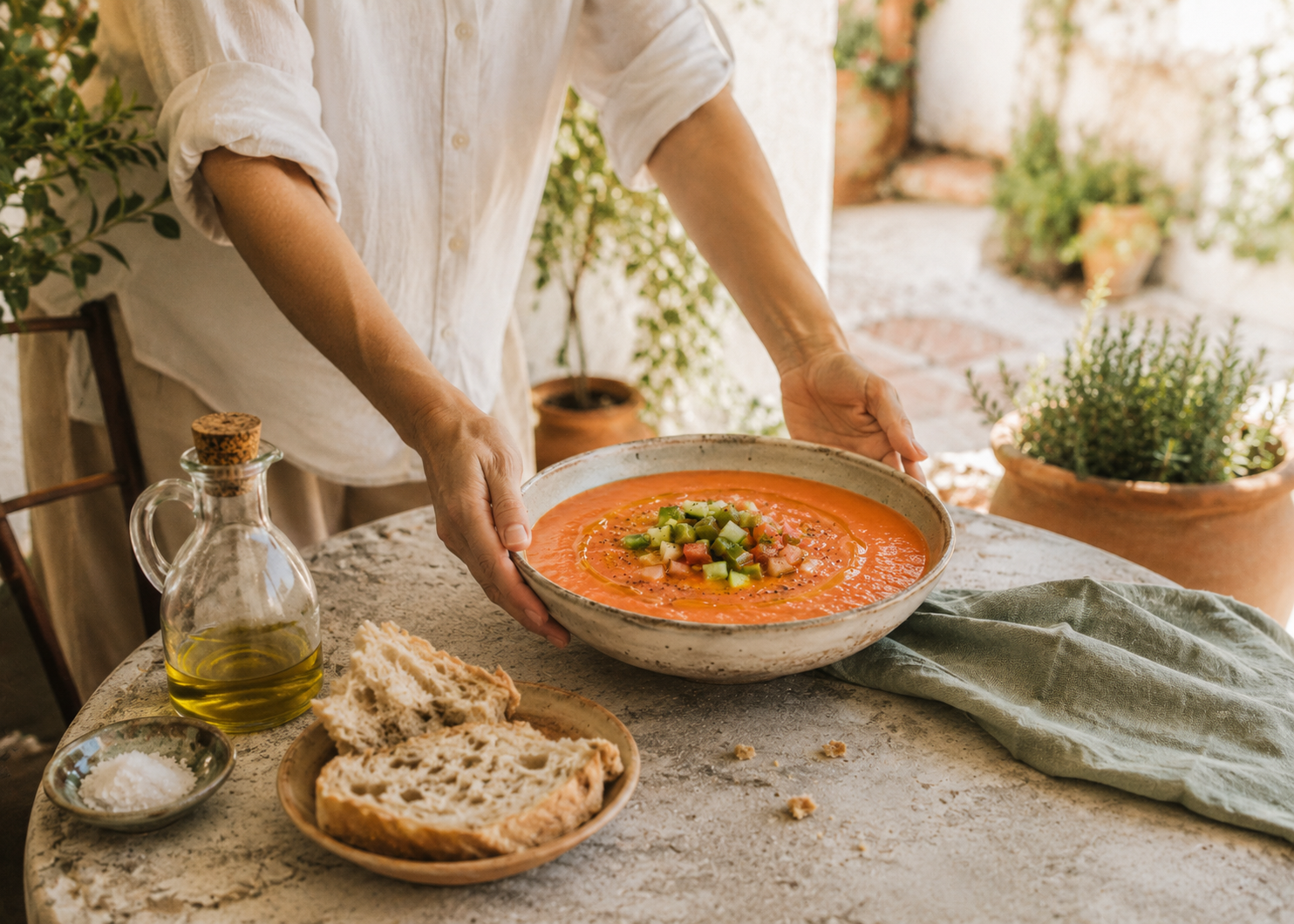
On a hot day in Andalusia, the cold soup comes to the table in a glass as often as a bowl, and people drink it the way an American might drink iced tea. Gazpacho is not a starter course in the south of Spain so much as a way of surviving the summer, a cold, savory, deeply refreshing thing that families keep in a jug in the refrigerator and pour throughout the day. It is one of the great achievements of Spanish cooking, and the American versions almost always get it wrong in the same specific way.
From a kitchen in Madrid, where gazpacho appears the moment the weather turns and does not leave the fridge until autumn, the American mistake is easy to name. The typical American gazpacho is a chunky, salsa-like cold vegetable soup, a bowl of diced tomatoes and peppers and cucumber in a thin tomato liquid, pleasant enough but bearing little resemblance to the real thing. The authentic Andalusian version is something else entirely, smooth, creamy, emulsified, almost silky, and the ingredient that makes that texture possible is the one American recipes leave out: bread.
The Bread Is The Secret
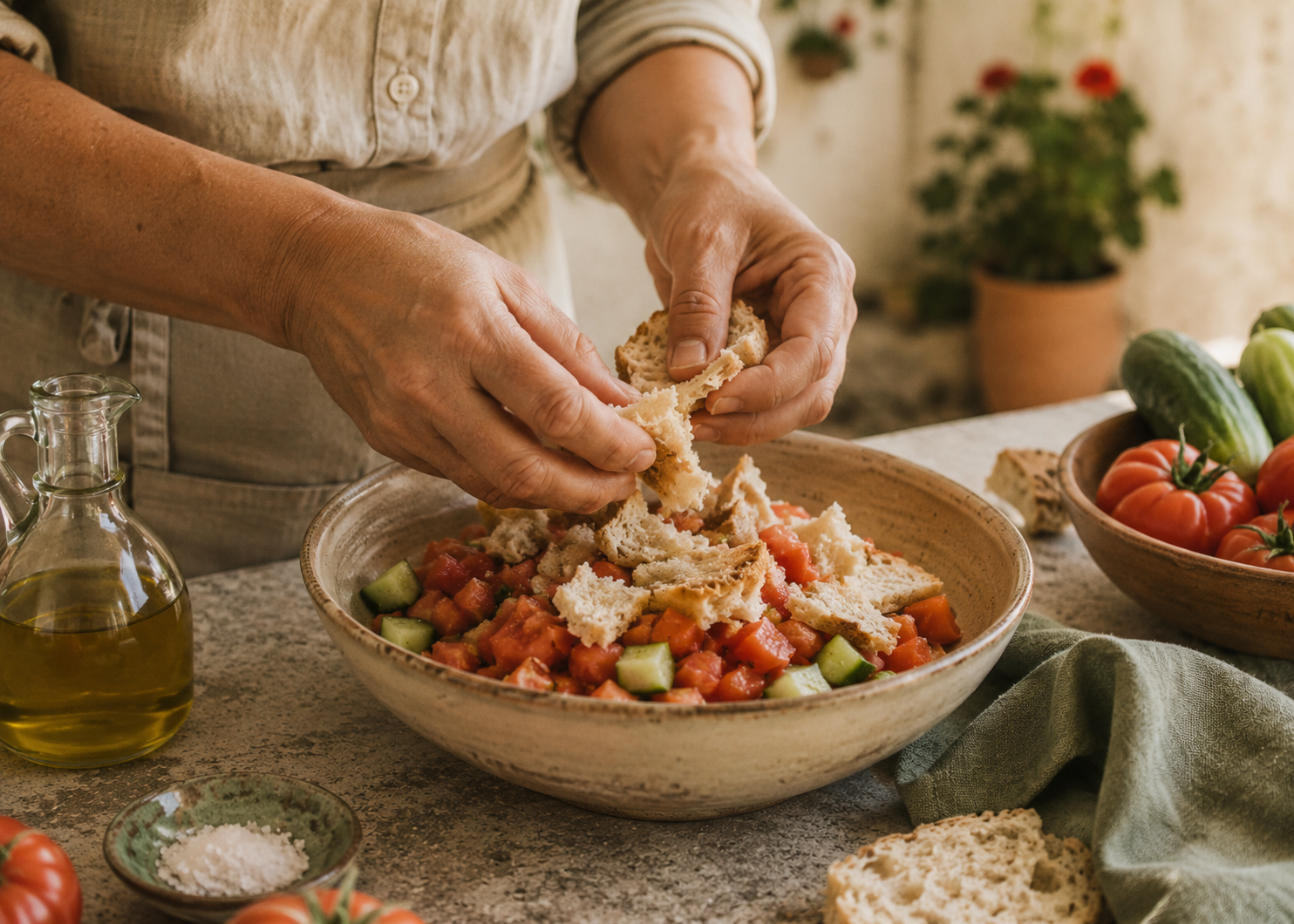
Here is the step that changes everything, and it is the step American recipes skip. Real gazpacho andaluz contains bread, stale bread soaked and blended into the soup, and that bread is what gives the authentic version its signature smooth, creamy, emulsified texture.
The mechanism is simple and clever. Stale bread, soaked in water and then blended with the vegetables and olive oil, breaks down and acts as an emulsifier and a thickener at once, binding the oil and the water and the vegetable juices into a single smooth, slightly creamy liquid rather than letting them separate into a watery juice with vegetable bits floating in it. The bread is why a proper gazpacho has body, why it coats the glass, why it tastes rich despite containing nothing but vegetables, oil, and bread. Without it, you have vegetable juice. With it, you have gazpacho.
This is the dish’s peasant genius, the same instinct that runs through all the great cuisines of the Mediterranean, using stale bread rather than throwing it away, turning yesterday’s loaf into today’s texture. Gazpacho was born as a way for laborers in the hot south to make a cooling, sustaining meal from bread, oil, water, and whatever vegetables were to hand, and the bread was not an optional thickener but the very heart of the dish, the thing that turned a few cheap ingredients into something substantial. The American version, by dropping the bread to make the dish lighter or gluten-free or simply because the recipe writer did not know, drops the soul of it.
What Actually Goes In
Beyond the bread, the authentic ingredient list is short and specific, and getting it right matters as much as the technique.
Real gazpacho andaluz is built on ripe tomatoes, and the quality of the tomatoes is the single biggest factor in the result, since the dish is essentially raw tomato in concentrated form and cannot taste better than the tomatoes that go into it. To the tomatoes go cucumber, green pepper, garlic, good extra virgin olive oil, sherry vinegar, salt, the soaked stale bread, and water to thin it to the right consistency. That is the whole dish. There is no cooking, no stock, no cream despite the creamy texture, just raw vegetables, bread, oil, and vinegar blended smooth and chilled.
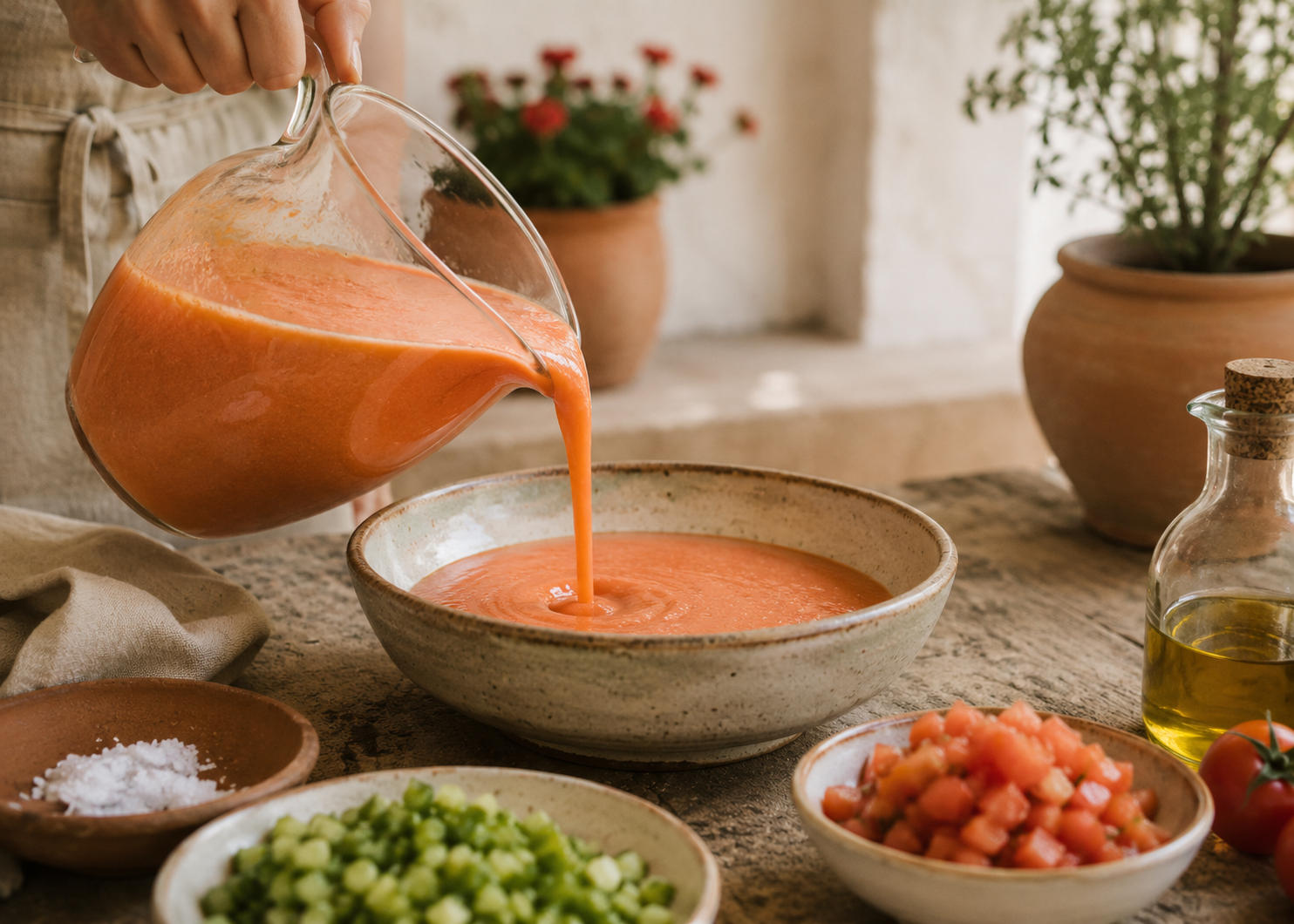
The proportions and the details carry the character. The olive oil should be good, because its flavor comes through clearly, and it is what emulsifies with the bread into that silky body. The vinegar should be sherry vinegar, the Andalusian vinegar, which gives the dish its particular bright tang, and it matters more than people expect. The garlic should be used with restraint, present but not overwhelming. And the whole thing is blended until completely smooth, then traditionally passed through a sieve or fine strainer to remove the skins and seeds and leave only the silky liquid, which is the final step that separates a rustic blend from a refined gazpacho.
Here is how it comes together. This makes a generous jug, enough to keep in the fridge and drink across a couple of hot days the way an Andalusian family would.
Ingredients
- 1 kg ripe tomatoes, the best you can find, roughly chopped
- 100 g stale rustic bread, crusts removed, soaked in water
- 1 small cucumber, peeled and roughly chopped
- 1 small green Italian pepper, roughly chopped
- 1 garlic clove, small
- 80 ml extra virgin olive oil, plus more to finish
- 2 tbsp sherry vinegar, plus more to taste
- 1 tsp salt, plus more to taste
- cold water, to thin as needed
Method
- Soak the bread. Tear the stale bread into pieces, remove the crusts, and soak it in a little cold water for about 10 minutes until soft. This is the step the American versions skip, and it is what gives the soup its body. Squeeze out the excess water before using.
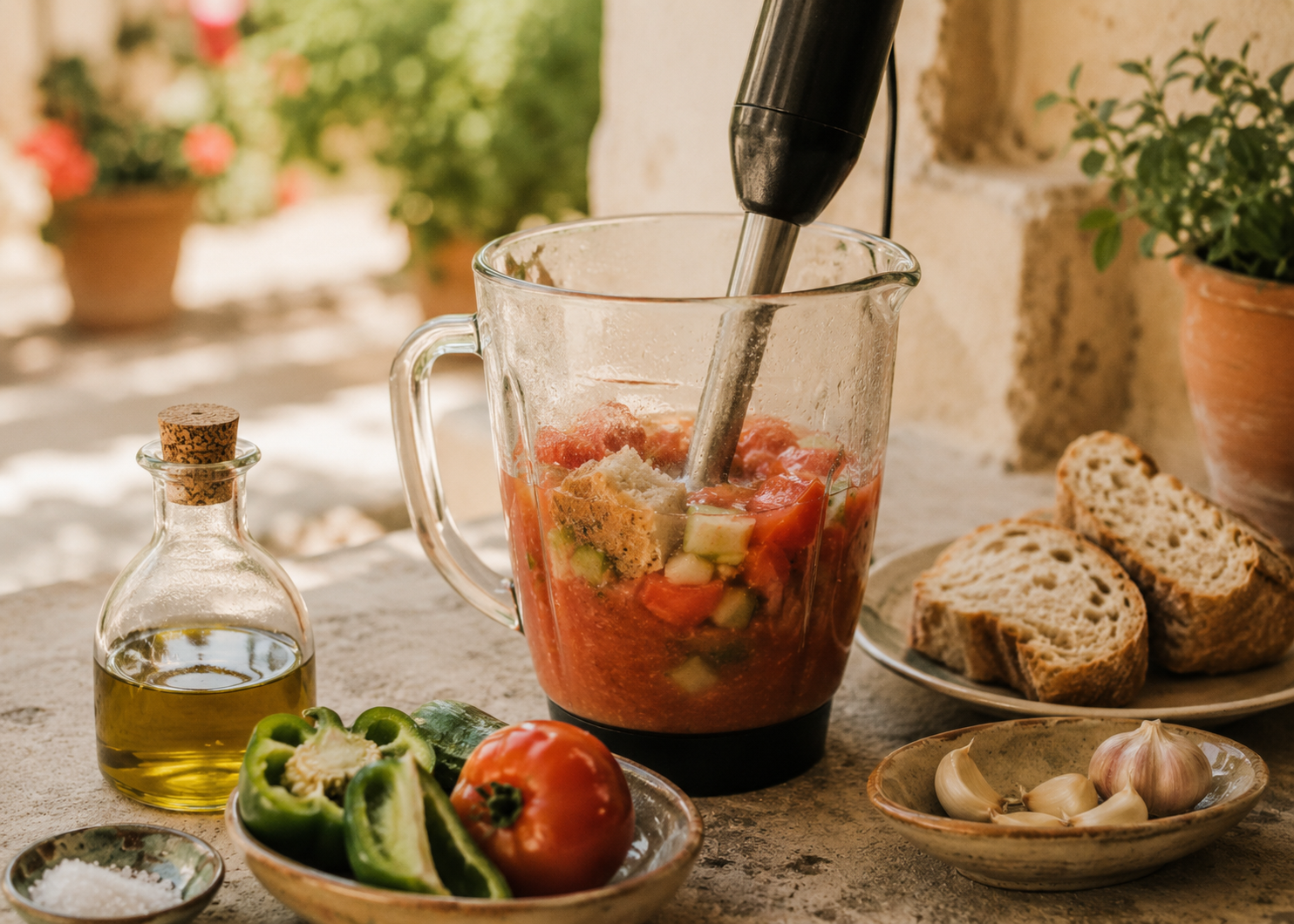
- Blend the vegetables. Put the tomatoes, cucumber, green pepper, garlic, and the soaked bread into a blender. Blend until completely smooth, which takes longer than you expect, a couple of minutes in most blenders.
- Emulsify with the oil. With the blender running, pour in the olive oil in a steady stream so it emulsifies into the soup, then add the sherry vinegar and salt. The soup should turn slightly creamy and pale as the oil and bread emulsify. Blend in a little cold water if it is too thick.
- Strain for silk. Pass the blended soup through a sieve or fine strainer, pressing it through with a spoon, to remove the skins and seeds and leave a perfectly smooth liquid. This step is what separates a rustic blend from a proper gazpacho.
- Chill thoroughly. Refrigerate for at least two to three hours, and ideally longer, until genuinely cold. The flavors meld and sharpen with the cold rest, and gazpacho served warm is flat. It is better made several hours ahead, or the day before.
- Taste and serve. Before serving, taste and adjust the salt and vinegar, since cold dulls seasoning. Serve very cold in bowls or glasses, with a drizzle of good olive oil on top, and small dishes of diced cucumber, pepper, and tomato on the side for those who want them.
A note on the tomatoes. The dish lives or dies on them, so use the ripest, most flavorful tomatoes you can find, even letting them ripen further on the counter first. A small pinch of sugar can correct tomatoes that are a little too acidic.
Why The American Version Drifted
It is worth understanding how the American gazpacho became so different from the Spanish one, because the drift was not random but followed a few predictable pressures.
The first was the loss of the bread, which happened for several reasons at once. Some recipe writers simply did not know it belonged, having only ever encountered the bread-free versions. Others dropped it deliberately, to make the dish lighter, lower in carbohydrates, or gluten-free, treating the bread as filler rather than the structural ingredient it actually is. The result was a thinner, more watery soup that needed something to give it interest, which led to the second drift, the move toward chunkiness. Without the bread to create a smooth emulsified body, the American version compensated by leaving the vegetables in visible pieces, turning gazpacho into something closer to a cold chopped salad in tomato juice, a different dish wearing the same name.
The third pressure was the American taste for the chunky and the substantial, the sense that a smooth soup is somehow less hearty or less interesting than one full of recognizable pieces. This runs exactly opposite to the Spanish instinct, which prizes the smooth emulsified texture precisely because it is harder to achieve and more refined, the mark of a gazpacho made properly. So the American version drifted toward chunky vegetable soup while the Spanish original remained a silky drinkable liquid, and the two dishes grew apart until they shared little but a name and a few ingredients. The chunky cold vegetable soup is perfectly fine to eat. It is simply not gazpacho andaluz, which is a smooth, bread-thickened, drinkable thing.
How To Serve It The Spanish Way
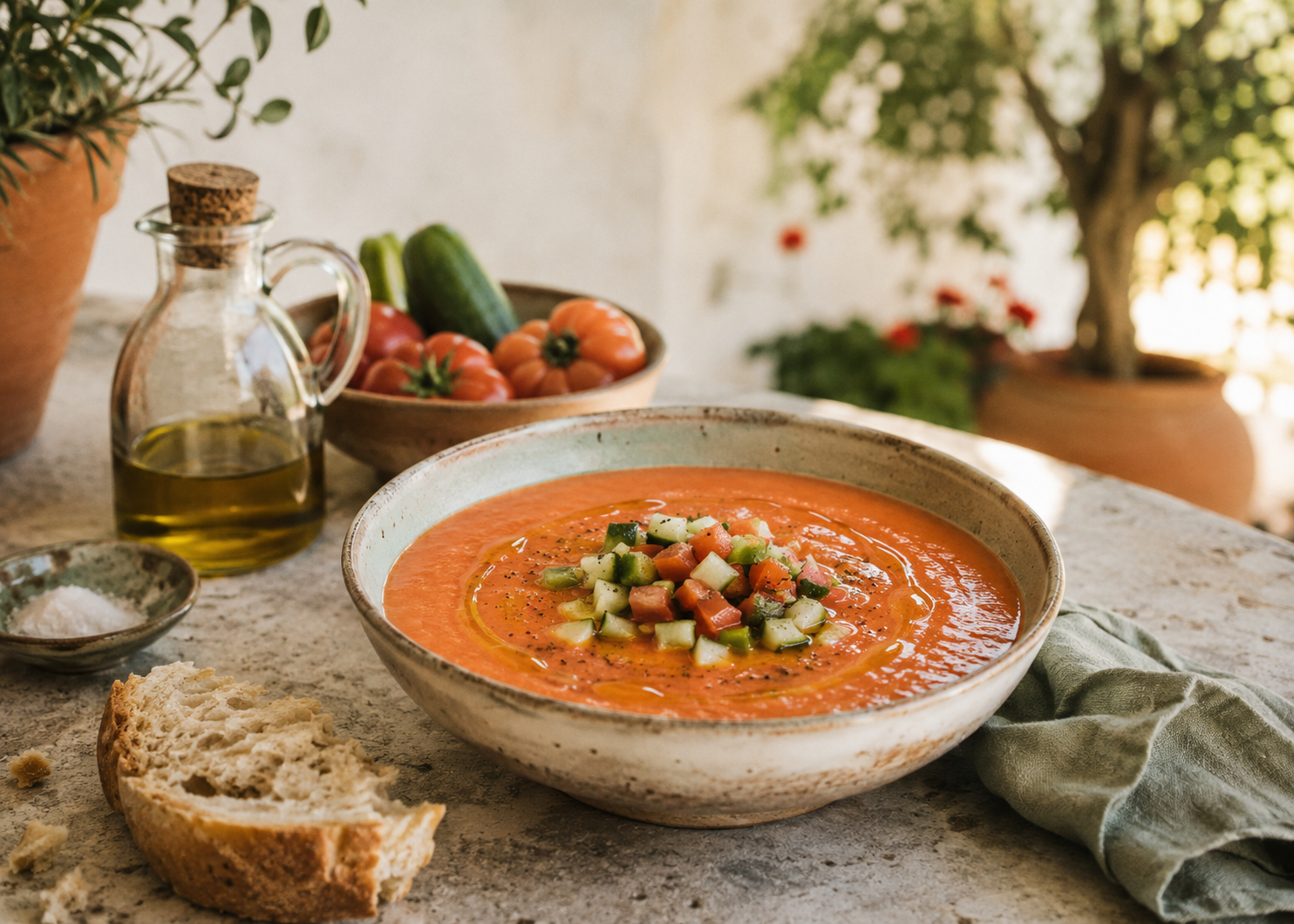
The serving of gazpacho is its own piece of Andalusian culture, and doing it right completes the dish.
In Andalusia gazpacho is served very cold, poured from a jug kept in the refrigerator, and it is as often drunk from a glass as eaten from a bowl, particularly in the heat of the day when it functions as a cooling drink as much as a meal. A family will keep a jug of it going through the hot months, pouring a glass in the afternoon the way others might reach for a cold drink, and this is the natural home of the dish, not the formal starter course but the everyday refresher. Served in a bowl, it often comes with small dishes of finely diced garnish on the side, chopped cucumber, pepper, tomato, hard-boiled egg, croutons, for people to add as they like, which is the one place the chunky elements belong, as a topping rather than the substance.
The temperature matters more than people expect, since gazpacho served insufficiently cold loses much of its appeal, and the best versions are served genuinely cold, sometimes with the bowl or glass itself chilled. A drizzle of good olive oil over the top before serving adds a final note of richness and looks beautiful, the green oil against the orange-red soup. This is summer food at its most practical and most pleasurable, a dish that cools you from the inside, keeps for days, asks for no cooking on a hot day, and delivers real nourishment from the cheapest seasonal vegetables. The Andalusians solved the problem of eating well in brutal heat centuries ago, and gazpacho is one of their best answers.
A Note On Its Cousin, Salmorejo
Anyone exploring gazpacho should know about its richer Cordoban cousin, because the comparison illuminates what the bread does.
Salmorejo, from the city of Córdoba, is essentially gazpacho taken further in the direction the bread points, made with more bread and no water, so that it comes out much thicker and creamier, almost a cold sauce rather than a soup, traditionally topped with chopped hard-boiled egg and jamón. Where gazpacho is drinkable, salmorejo is spoonable, a denser and richer thing, and the only real difference is the proportion of bread and the absence of the thinning water and the cucumber and pepper. Tasting the two side by side teaches the lesson better than any explanation, since salmorejo is what gazpacho becomes when you trust the bread completely.
The existence of salmorejo is the final proof that the bread is no accident or afterthought in this family of dishes but their defining structural element, the thing that distinguishes Andalusian cold soups from a mere blend of vegetables. Both dishes are built on the same insight, that stale bread blended with oil and tomato creates a texture impossible to achieve any other way, and both are masterpieces of making much from little. The American cook who learns to put the bread back into gazpacho has not just corrected a recipe but rejoined a whole tradition, and the reward is a dish that finally tastes the way it does in a bar in Seville on a blazing afternoon, silky and cold and alive.
The Tomato Question
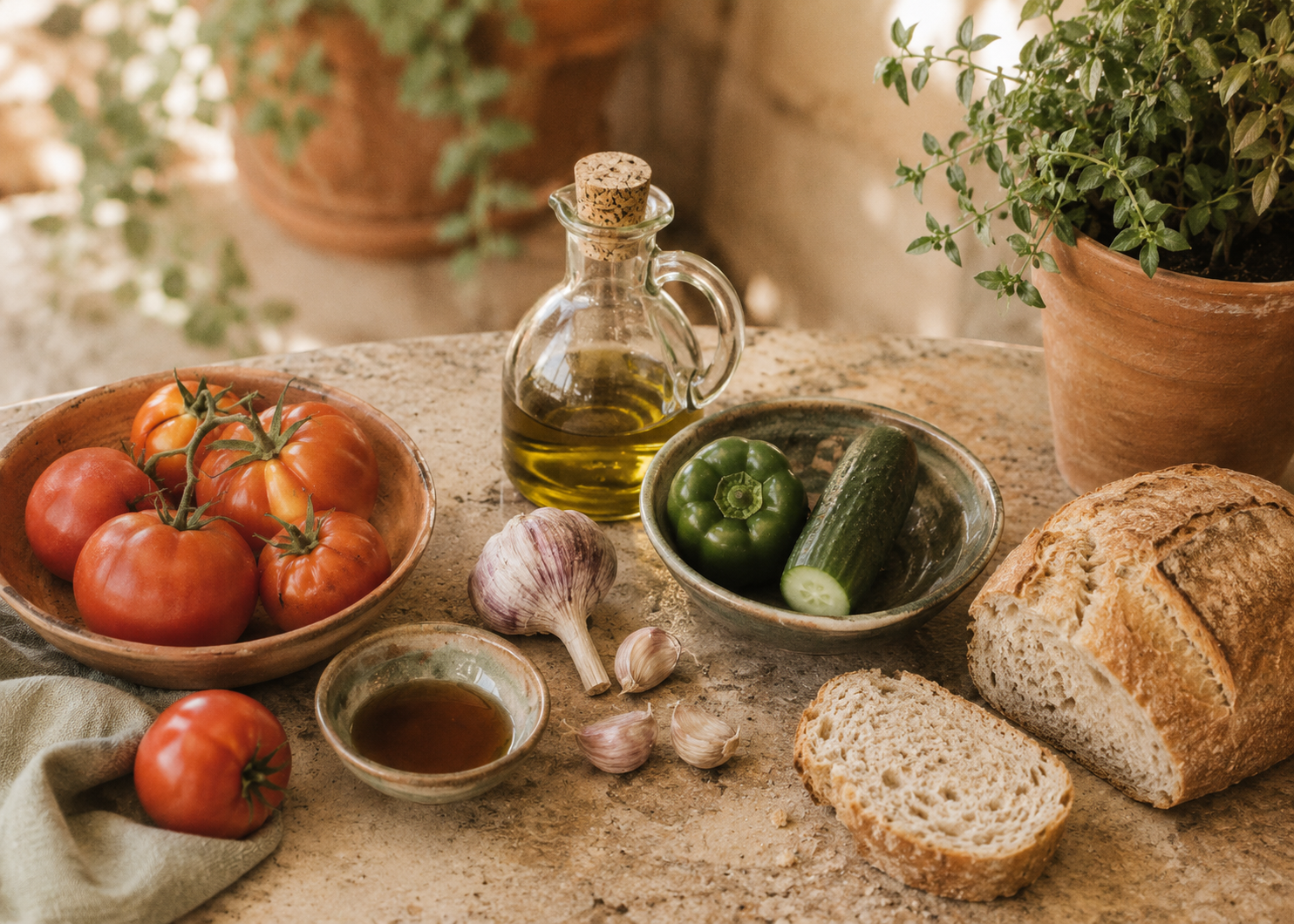
Because gazpacho is essentially concentrated raw tomato, the choice of tomato deserves more attention than any other ingredient, and it is where a home cook most often falls short.
The dish cannot taste better than its tomatoes, and this is the hard truth that no technique can get around. A gazpacho made from pale, underripe, out-of-season supermarket tomatoes will taste thin and sour no matter how perfectly it is blended and strained, while one made from ripe summer tomatoes bursting with flavor will taste extraordinary even from a rough blend. This is why gazpacho is a summer dish in Spain and not a year-round one, because it depends entirely on the tomatoes being at their peak, and the Andalusian cook simply would not make it in February when the tomatoes are no good. The seasonality is not a limitation but the whole point, the dish existing precisely to capture the glut of perfect summer tomatoes in liquid form.
For a cook outside Spain, the practical implication is to wait for good tomatoes and to choose the ripest, most flavorful ones available, even letting them sit on the counter a few extra days to ripen fully before blending. Tomatoes that are very ripe, soft, fragrant, and deeply colored make the best gazpacho, and slightly overripe tomatoes that might be past their best for slicing are ideal here, since they are going into the blender anyway. A pinch of sugar can help correct tomatoes that are a little too acidic, a small cheat the Spanish themselves use when the tomatoes are not quite perfect. But there is no substitute for starting with good fruit, and the single most useful piece of advice for making real gazpacho is to make it only when the tomatoes are worth it.
Common Mistakes To Avoid
A few errors beyond the missing bread regularly spoil a homemade gazpacho, and knowing them in advance saves a batch.
The first is under-chilling, serving the soup before it has spent real time in the refrigerator, which leaves it not just warm but flat, since the flavors meld and sharpen with a few hours of cold rest and the dish is genuinely better made ahead. The second is over-garlicking, since raw garlic is powerful and grows stronger as the soup sits, so that a gazpacho that tasted balanced when blended can become harsh and garlic-dominated by the next day. Restraint with the garlic, less than instinct suggests, is the safer path. The third is the wrong vinegar or too much of it, since the sherry vinegar should brighten the soup rather than dominate it, and using a harsh distilled vinegar or too heavy a hand throws the balance off.
The fourth and most consequential, after the bread, is failing to blend and strain thoroughly enough, leaving the soup grainy with skins and seeds rather than passing it through a sieve to the silky smoothness that defines the dish. A high-powered blender helps, but even a modest one followed by a pass through a fine strainer produces the proper texture, and skipping the straining is what leaves many homemade versions rougher than the bar gazpacho they are trying to match. Get the bread in, the tomatoes ripe, the garlic restrained, the chilling long, and the straining thorough, and the result is a gazpacho that would not embarrass a kitchen in Seville, which is a genuinely achievable thing for any home cook willing to respect the few rules that matter.

About the Author: Ruben, co-founder of Gamintraveler.com since 2014, is a seasoned traveler from Spain who has explored over 100 countries since 2009. Known for his extensive travel adventures across South America, Europe, the US, Australia, New Zealand, Asia, and Africa, Ruben combines his passion for adventurous yet sustainable living with his love for cycling, highlighted by his remarkable 5-month bicycle journey from Spain to Norway. He currently resides in Spain, where he continues sharing his travel experiences with his partner, Rachel, and their son, Han.