
An American who needs an MRI at home learns to brace before asking the price. The answer might be four hundred dollars or it might be several thousand, depending on the hospital, the insurance, and a pricing system almost nobody can decode in advance. In Spain, the same scan has a number, the number is small, and you can usually learn it with a phone call.
The gap is large enough to change how people think about medical care abroad. A private MRI in Spain runs roughly two to three hundred euros, paid directly, no insurance required. The American national average sits well above thirteen hundred dollars, and that is an average hiding a range that climbs into five figures. For Americans weighing a move to Spain, or even just a long stay, the arithmetic of a single scan opens a much larger question about what healthcare actually costs here.
What The Numbers Actually Are
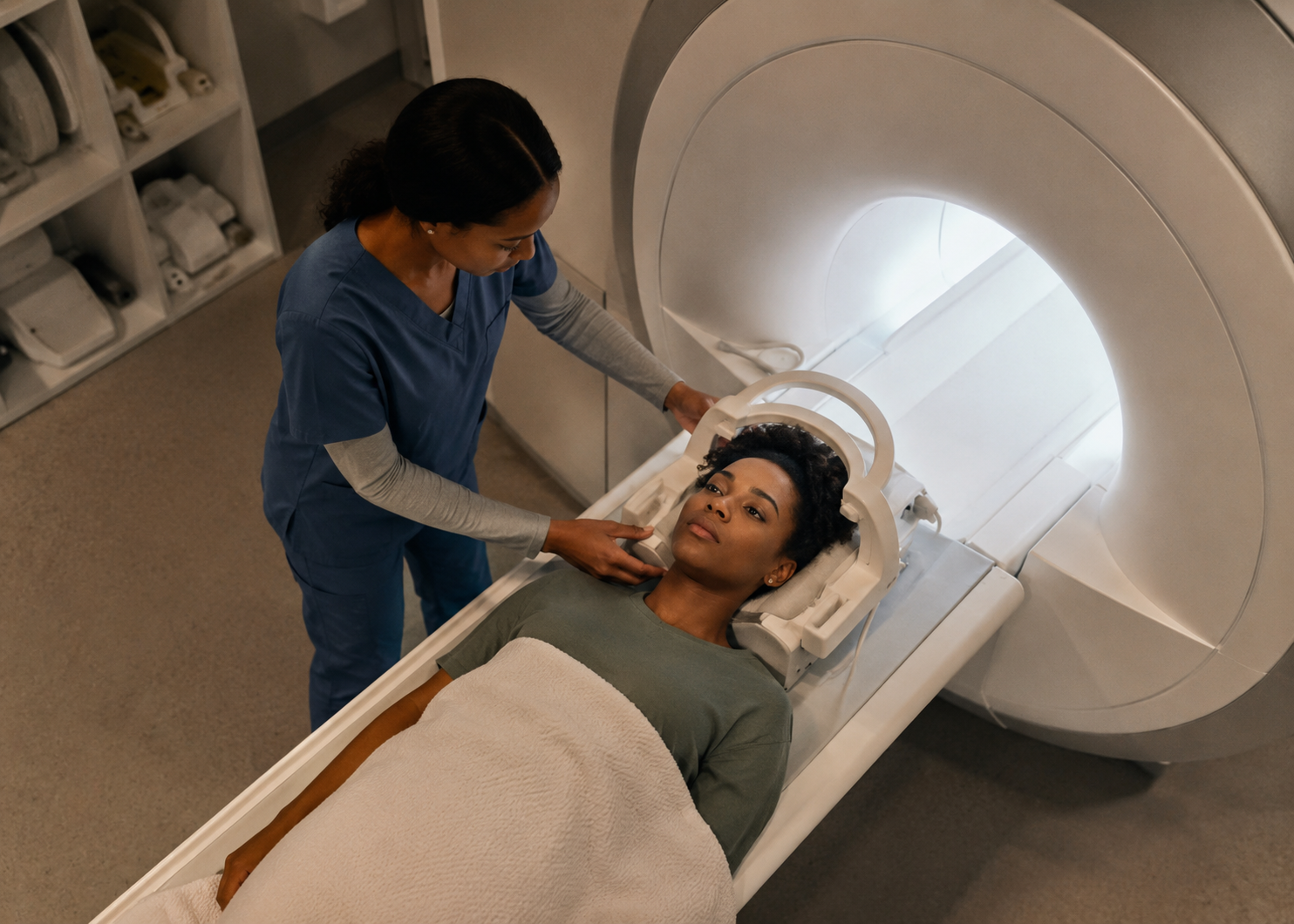
The Spanish figure is consistent across private clinics and easy to verify. A standard MRI of one body region in a private Spanish center runs from a little over two hundred euros to around three hundred and fifty, with roughly three hundred a fair middle estimate. A brain scan, a knee, a spine, these sit in that band. Add contrast dye and the price rises modestly, into the mid two hundreds and up, not into another category entirely. You can ring a clinic in Madrid or Barcelona, name the scan you need, and get a firm quote on the spot, the same way you would price a haircut.
The American figure is harder to pin down precisely, and that difficulty is itself the story. The national average runs above thirteen hundred dollars, with various sources placing the typical cost somewhere between roughly eleven hundred and fourteen hundred. But the honest range without insurance stretches from about four hundred dollars at a cheap freestanding center to twelve thousand at an expensive hospital. The same scan, in the same country, can cost thirty times more depending on where you have it done, and the price is rarely visible before the bill arrives.
That unpredictability is what Spain quietly eliminates. The price in Spain is a price, not a negotiation. A private clinic quotes you a number, you pay the number, and the number is the same whether you are insured, uninsured, Spanish, or a visitor. For an American accustomed to the fiction of a “list price” that bears no relation to what anyone actually pays, to surprise bills weeks after the fact, and to charges that depend on insurer-by-insurer negotiation, the simple directness of a single published figure takes some adjustment.
Why It Costs So Much Less
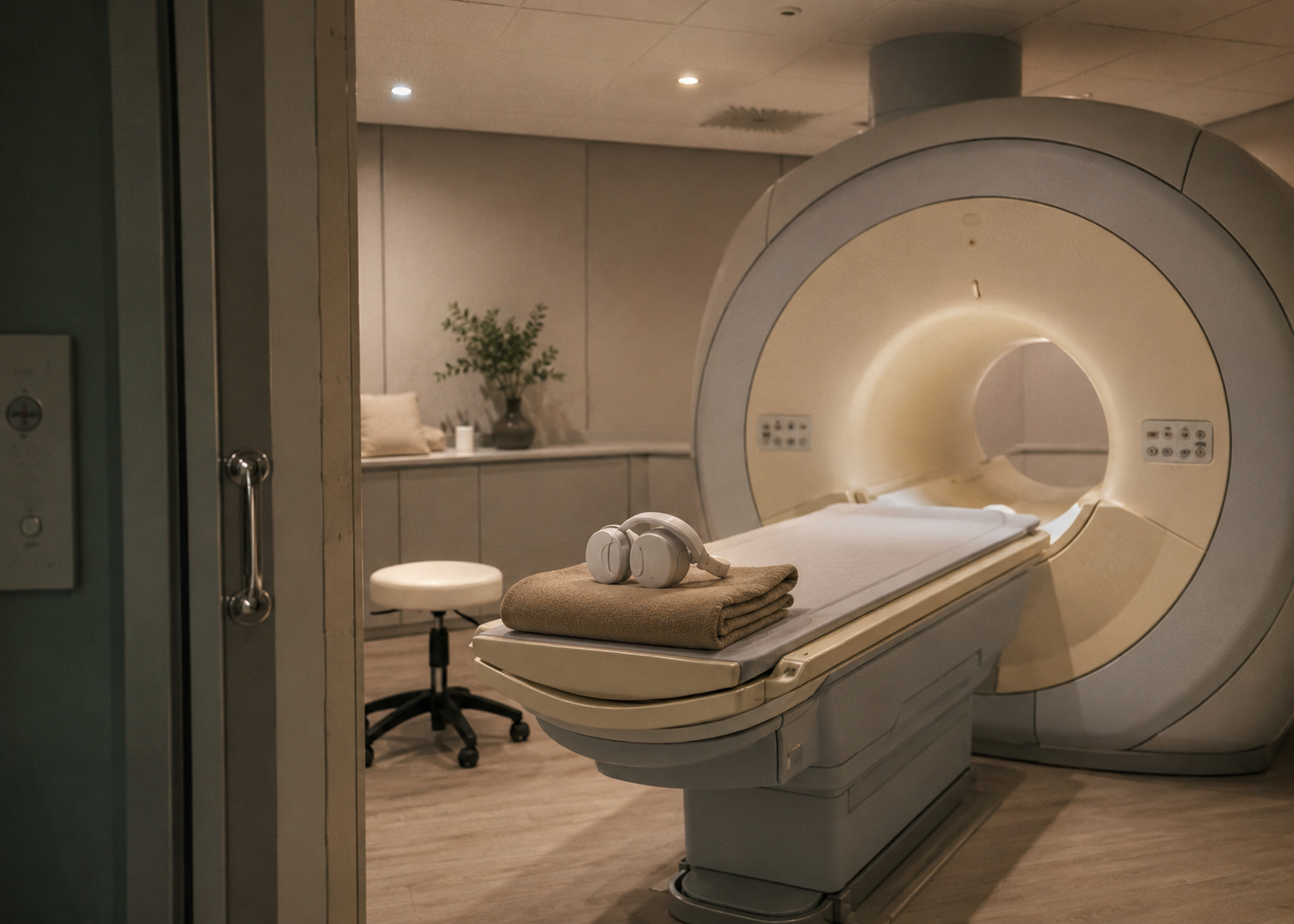
The instinct is to assume cheaper means worse, so it is worth understanding why the Spanish price is low, because the reasons have nothing to do with the quality of the scan.
The machine itself costs roughly the same everywhere. An MRI scanner runs into the hundreds of thousands of euros or dollars to buy, and that cost is comparable across Spain, the United Kingdom, and the United States. The hardware is not where the price difference lives. The same is true of the technicians who run it and the radiologists who read the images, who train to comparable standards across the developed world. What differs is everything built on top of the hardware, the administrative layers, the billing apparatus, the insurer negotiations, and the simple question of what the market will bear.
Spain’s price reflects a system where most people get diagnostic imaging through the public health service, paid for by their social security contributions, and where the private sector competes on transparent, published prices for those who want to skip the public waiting list. That competition holds prices down, because a clinic that quotes triple its neighbor simply loses the patient. The American price reflects a system where a thicket of insurers, hospitals, and billing intermediaries each take a layer, and where the absence of a public baseline means there is no anchor pulling prices toward what the scan actually costs to perform. Each layer adds cost, and the patient paying cash inherits all of them at once.
The result is that the same fifteen-to-forty-minute procedure, using comparable machines operated by qualified technicians, carries a price in Spain that looks to an American like a rounding error. You are not buying a worse scan. You are buying the same scan inside a cheaper system, and the difference in the bill is a difference in how the two countries organize medicine, not in the medicine itself.
The Public Route Versus The Private Route

For anyone living in Spain, there are two ways to get an MRI, and understanding the difference matters more than the price does.
If you are in the public health system, contributing through work or residency, an MRI ordered by your doctor costs you nothing at the point of care. The catch is time. For a non-urgent scan, the public waiting list can run weeks or months, because the system prioritizes by medical need and a sore knee waits behind a suspected tumor. For genuinely urgent cases, the public system moves fast and moves well, and the quality of care is high. For the merely uncomfortable, it asks for patience, and that patience is the real price of the free scan.
The private route is where the two-to-three-hundred-euro price comes in. You can walk into a private clinic, pay directly, and often be scanned within days rather than months, no referral strictly required at many centers, though having one helps the radiologist know what to look for. This is the route many residents use precisely to skip the public wait for non-urgent scans, paying a modest sum out of pocket to get an answer this week instead of next quarter. It is also the route open to visitors, who have no access to the public system but can use the private one as easily as a local.
Plenty of people in Spain use both, leaning on the public system for serious care and paying privately for speed when a scan is more about peace of mind than emergency. The private price is low enough to make that a reasonable choice rather than a luxury, which is the part that genuinely surprises Americans, for whom paying out of pocket for any scan implies a four-figure bill and a hard financial decision. In Spain the same decision costs about what a nice dinner does, which changes the whole psychology of seeking care.
How To Actually Book One As A Visitor Or New Arrival

The process is simpler than the American equivalent, and a newcomer can navigate it without much Spanish.
Start by choosing a private clinic or imaging center, of which the larger Spanish cities have many, with Madrid and Barcelona especially well supplied and used to international patients. Many publish their prices online, and a phone call or email confirms the cost for your specific scan. You do not need to be a resident, you do not need Spanish insurance, and you do not need to have lived here for any length of time. A visitor can book and pay as easily as a local, and many clinics have English-speaking staff accustomed to foreign patients.
Bring whatever documentation you have, a referral or prior imaging if a doctor abroad recommended the scan, though many private centers will perform a self-requested scan for straightforward cases. You book an appointment, you arrive, the scan takes the usual fifteen to forty-five minutes depending on the body part, and you pay the quoted price. There is no insurance pre-authorization, no surprise billing weeks later, no separate facility fee arriving by mail. The transaction is closed when you walk out the door.
The results come back quickly. You typically receive a radiologist’s report within a few days, often along with the images on a disc or via a digital link, in a form you can carry to any doctor you choose. For an American used to results disappearing into a hospital portal accessible only through that one hospital system, the simple act of being handed your own images to take wherever you like feels almost old-fashioned, a small reminder that the record belongs to the patient.
The Real Catches Worth Knowing
The price gap is genuine, but an honest account names the limits, because a cheap scan in the wrong context is not a bargain.
A scan is only as useful as the doctor reading the rest of the picture. An MRI report tells you what the image shows, but interpreting it in the context of your full health, deciding what it means and what to do, requires a physician who knows your history. Buying a cheap scan on your own and then trying to interpret it yourself, or carrying it to a doctor who has never seen you, can lead to misreading a finding in either direction, false alarm or false comfort. The scan is a tool, not a diagnosis, and the tool means little without the hand that knows how to use it.
There is also a real risk in self-ordering scans you do not medically need. The low price makes it tempting to scan first and ask questions later, but imaging frequently turns up incidental findings, harmless quirks that look alarming and trigger a cascade of follow-up tests and anxiety. A doctor orders a scan when there is a reason to. Ordering one because it is cheap is a different and worse logic, and it can cost far more in worry, follow-up appointments, and even unnecessary procedures than the scan itself ever saved.
Language and continuity matter too. A scan obtained on a quick trip does not come with the ongoing care that makes it meaningful, and a report written in Spanish may need translating for a doctor at home. For a visitor that is fine for a specific, doctor-recommended question. As a substitute for an actual relationship with a physician who follows your health over time, it is not, and treating medical tourism as a replacement for primary care is a mistake the low prices can encourage.
What This Means For Americans Eyeing Spain
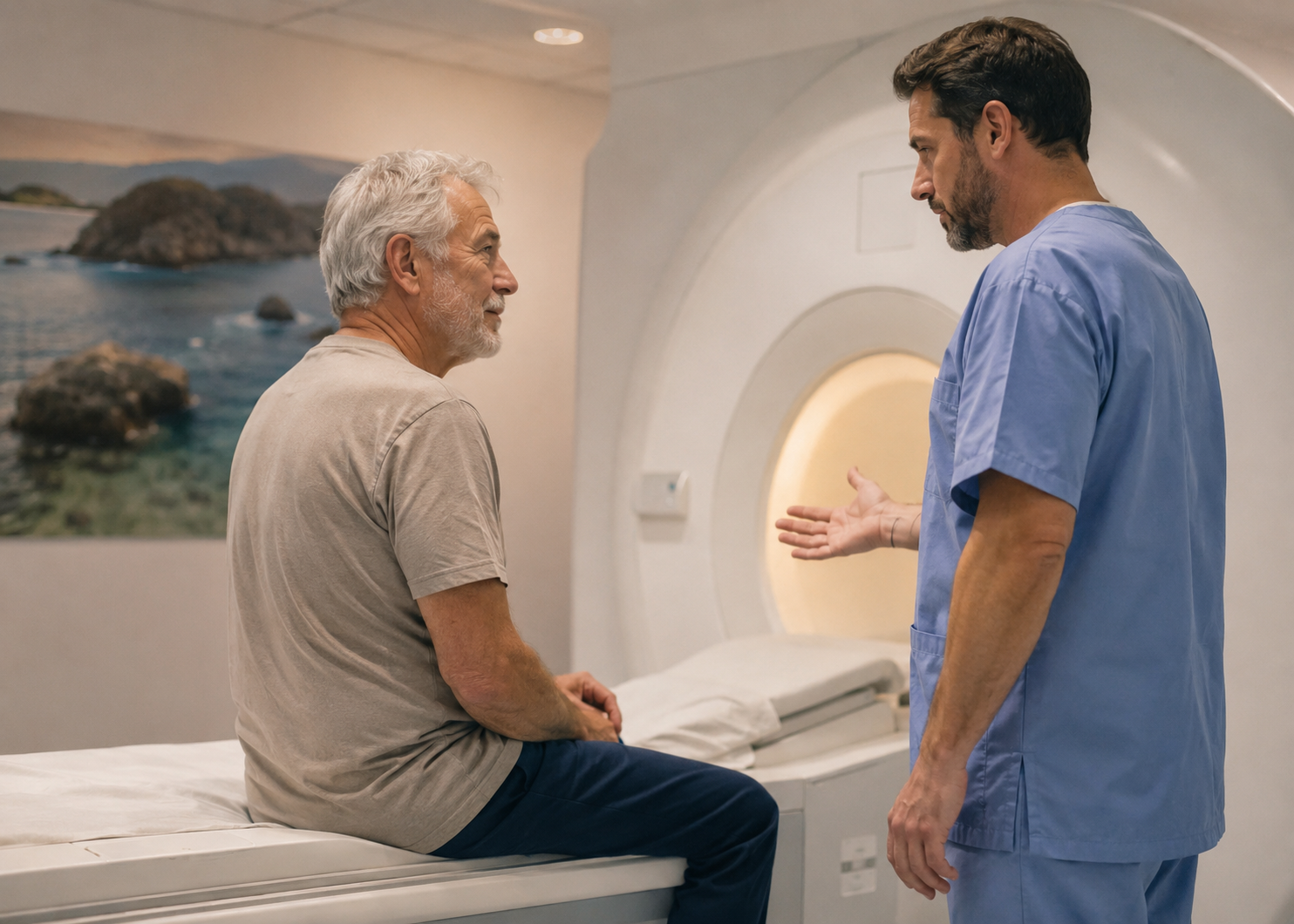
For the audience actually weighing a move, the MRI price is best understood as a single visible data point in a much larger pattern.
The scan is a window onto how Spanish healthcare prices everything, from a doctor’s visit to a prescription to a specialist consultation, all of which carry the same character, modest, transparent, and a fraction of the American equivalent. The two-hundred-euro MRI is not an outlier to hunt down. It is representative of a system where medical care does not carry the financial dread that shapes so many American decisions about when to see a doctor, whether to fill a prescription, whether a symptom is worth the cost of checking.
For a retiree in particular, this changes the calculus of aging abroad. The fear of a medical event bankrupting a retirement is a distinctly American anxiety, and it eases considerably in a country where a major scan costs less than a nice dinner for four. That is not the whole picture, residency and insurance arrangements carry their own rules and costs, and new arrivals typically need private health insurance before they qualify for the public system, but the underlying price of care is genuinely, verifiably lower, and that lower baseline reshapes how a fixed retirement income stretches.
The MRI is just the easiest number to check, which is why it makes such a useful starting point. Call a private clinic in Madrid, ask the price of the scan you are imagining, and compare it to the quote you would get at home. The gap in that one phone call tells you something real about what your money buys in each country, and for many Americans it is the moment the abstract idea of European healthcare becomes a concrete number they can hold onto, the moment the move stops being a fantasy and starts being a budget.
How Spain Compares To Its Neighbors
It is worth placing Spain next to the other countries Americans consider for a European move, because the MRI price is not uniquely Spanish, it is broadly European, with national variations that matter at the margins.
Across the systems that combine a public health service with a competitive private sector, the pattern repeats. A private scan in Spain, Portugal, Italy, or Greece sits in roughly the same low-hundreds band, far below the American figure, because all of them share the same underlying structure, a public baseline that anchors prices and a private tier that competes openly on cost and speed. Spain tends to sit at the more affordable end of that European range, partly because it has a dense network of private clinics competing hard for self-pay patients, especially in the big cities and the coastal areas where foreign residents cluster.
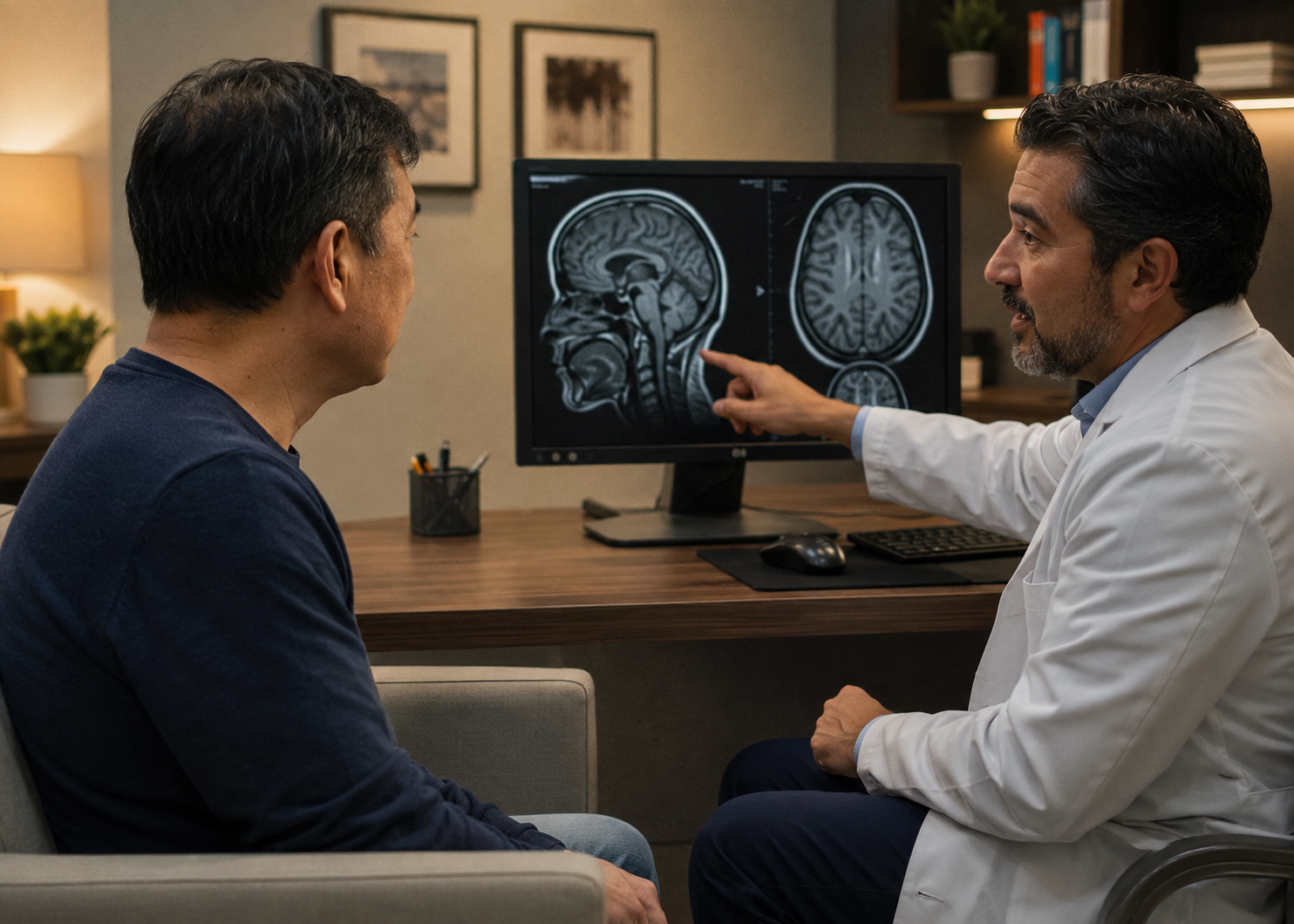
The United Kingdom is the instructive contrast, because it shows that a public system alone does not guarantee a cheap private scan. Private imaging in Britain runs noticeably higher than in Spain, closer to four figures in pounds for some scans, which tells you the Spanish price is not simply a function of having public healthcare. It is a function of having public healthcare plus a genuinely competitive, price-transparent private market alongside it. Spain happens to have both, and the combination is what produces the number that startles Americans.
For someone choosing among European destinations, the lesson is that the dramatic savings on something like an MRI are a regional feature rather than a Spanish secret, but the exact figure rewards checking country by country and even city by city. The phone call that prices your scan in Madrid is worth repeating in Lisbon or Valencia before you assume the numbers are identical, because while all of them beat the American price comfortably, the gaps between them can still shape where a budget-conscious retiree decides to land.
A scan is a medical decision, not a shopping one. Anyone considering imaging, in Spain or anywhere, should make that decision with a physician who knows their history rather than on price alone, and nothing here is a substitute for that conversation or for individual medical advice from a qualified doctor.

About the Author: Ruben, co-founder of Gamintraveler.com since 2014, is a seasoned traveler from Spain who has explored over 100 countries since 2009. Known for his extensive travel adventures across South America, Europe, the US, Australia, New Zealand, Asia, and Africa, Ruben combines his passion for adventurous yet sustainable living with his love for cycling, highlighted by his remarkable 5-month bicycle journey from Spain to Norway. He currently resides in Spain, where he continues sharing his travel experiences with his partner, Rachel, and their son, Han.