
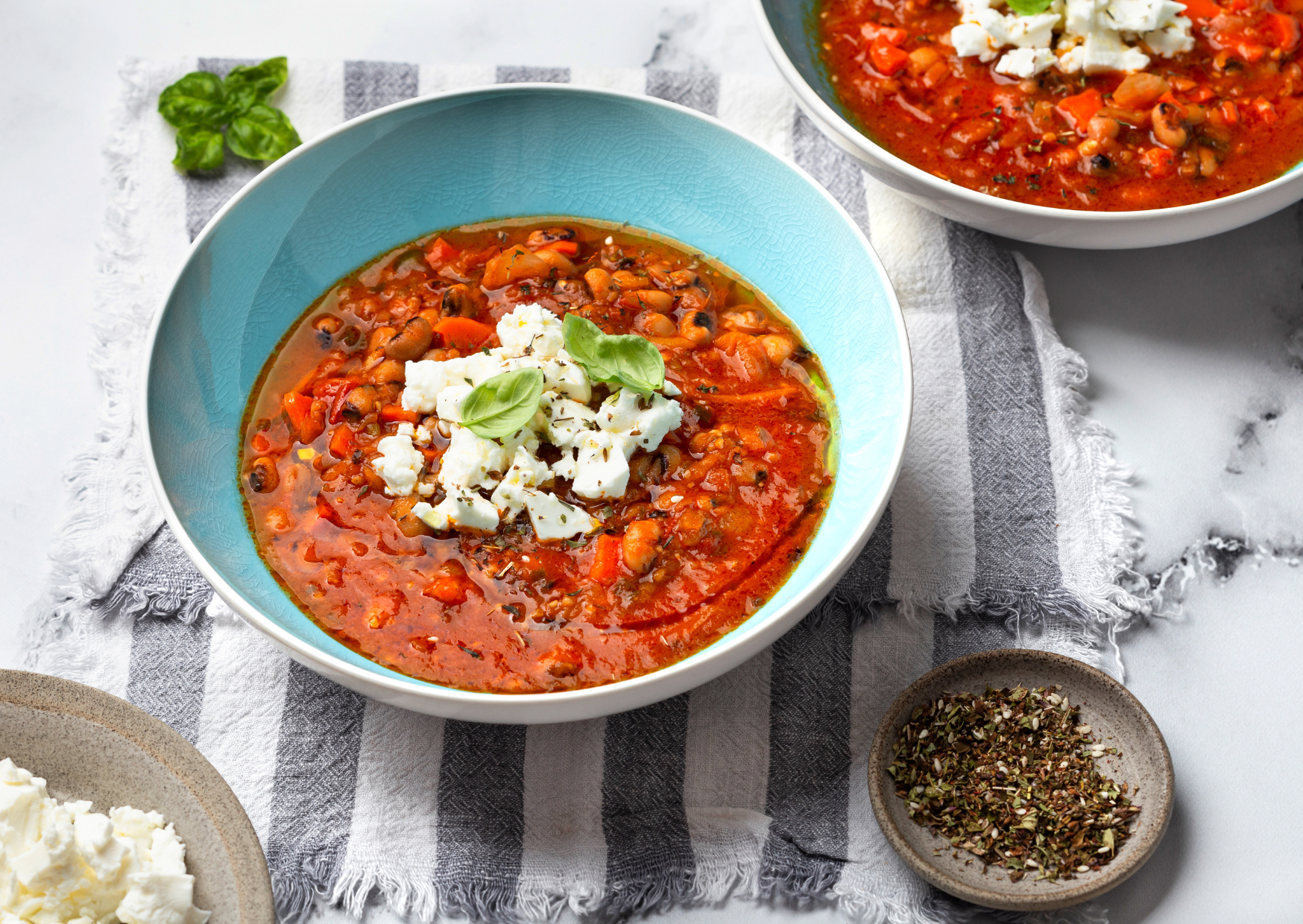
There is a soup in Greece so ordinary and so beloved that many Greeks will tell you it is the national dish, ahead of anything with meat or any restaurant showpiece. It is a white bean soup called fasolada, and it has fed Greek families for so long that its roots reach back into antiquity, to a bean dish offered at an ancient festival honoring Apollo. It is peasant food in the truest sense, and it is wonderful.
From a Mediterranean vantage point in Spain, where the family eats its own bean stews on cold weeks, the Greek version is instantly recognizable as a cousin and instantly different in one crucial way. The American versions of fasolada, the ones written for a health-conscious audience, tend to treat it as a virtuous low-fat bean soup. That misses the entire point, because the thing that makes fasolada fasolada is a generous, almost startling amount of olive oil, and the American instinct to cut it is exactly what turns the dish from silky and rich into thin and dull.
The Olive Oil Is The Dish
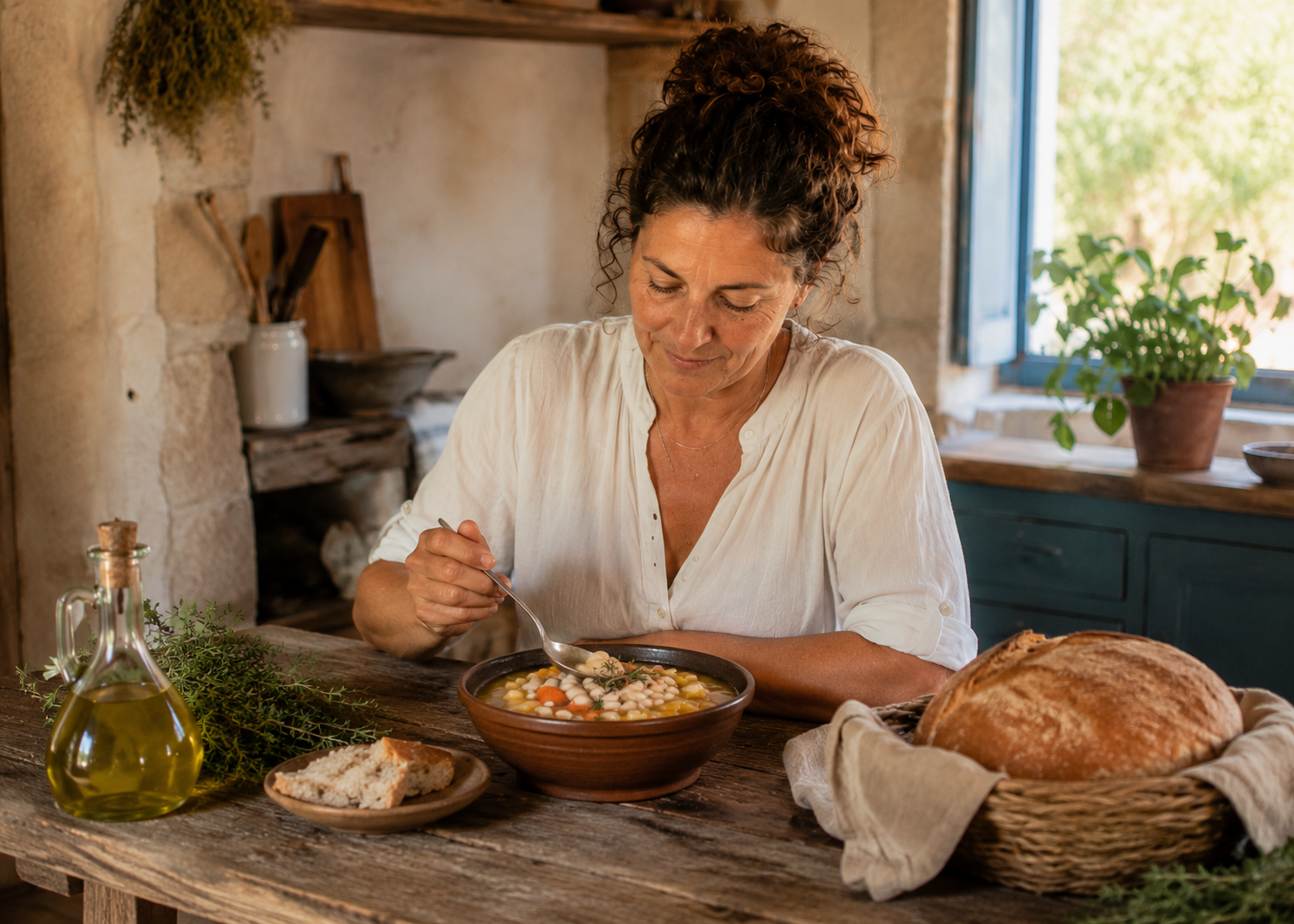
Here is the step the health-conscious versions skip, and it is not a minor garnish. Real fasolada uses a generous amount of extra virgin olive oil, far more than an American recipe comfortable with the word “soup” would dare, and that oil is the source of the dish’s signature texture.
The magic is in how the oil behaves. Cooked slowly with the beans and vegetables, then finished with a final drizzle of raw olive oil stirred in off the heat, it emulsifies with the starch the beans release into a broth that turns creamy and velvety without a drop of dairy or a spoonful of flour. This is the trick that makes a humble bean soup taste rich. The creaminess people assume comes from cream or blending actually comes from good olive oil meeting bean starch, and skimp on the oil and the whole effect collapses.
This is why fasolada is a poor candidate for the low-fat treatment. The oil is not an indulgence added to a healthy dish. It is the mechanism that makes the dish work. Greeks understood centuries ago that olive oil was both their great flavor and their great source of richness in a cuisine that often went without meat, and fasolada is a monument to that understanding. The American version that uses a tablespoon of oil and calls it healthy is making a different, thinner soup and borrowing the Greek name.
Where It Comes From, And Why It Matters
To understand why the oil matters, it helps to understand what fasolada actually is in Greek life, because this is not a dish invented to be healthy. It is a dish invented to feed people.
Fasolada belongs to the deep tradition of Greek plant-based cooking that predates the everyday availability of meat. For most of Greek history, ordinary families ate meat rarely, and beans cooked with vegetables and olive oil were the substantial, nourishing center of the diet. The soup carried real protein and real calories at a time when both were precious, and it did so cheaply, from ingredients that kept through the winter. That it happens to align perfectly with what nutritionists now praise about the Mediterranean diet is a happy accident of history, not the goal.
The dish is also woven into the Greek calendar in a way that explains its endurance. Fasolada is especially common during Lent and Orthodox fasting periods, when meat and dairy are avoided and a hearty bean soup becomes the natural centerpiece of a fasting table. It is a cold-weather staple, the thing that warms a Greek kitchen through fall and winter, and it appears at religious occasions and ordinary Tuesdays alike. This is food tied to the rhythms of the year and the faith, which is part of why Greeks feel about it the way they do.
That cultural weight is the reason the low-fat American rewrite grates. Stripping the oil out of fasolada is not making it healthier. It is making it something else and keeping the name. The dish was never meant to be ascetic. It was meant to be the richest, most satisfying thing you could build from beans, vegetables, and the oil pressed from your own trees.
The Beans And The Base
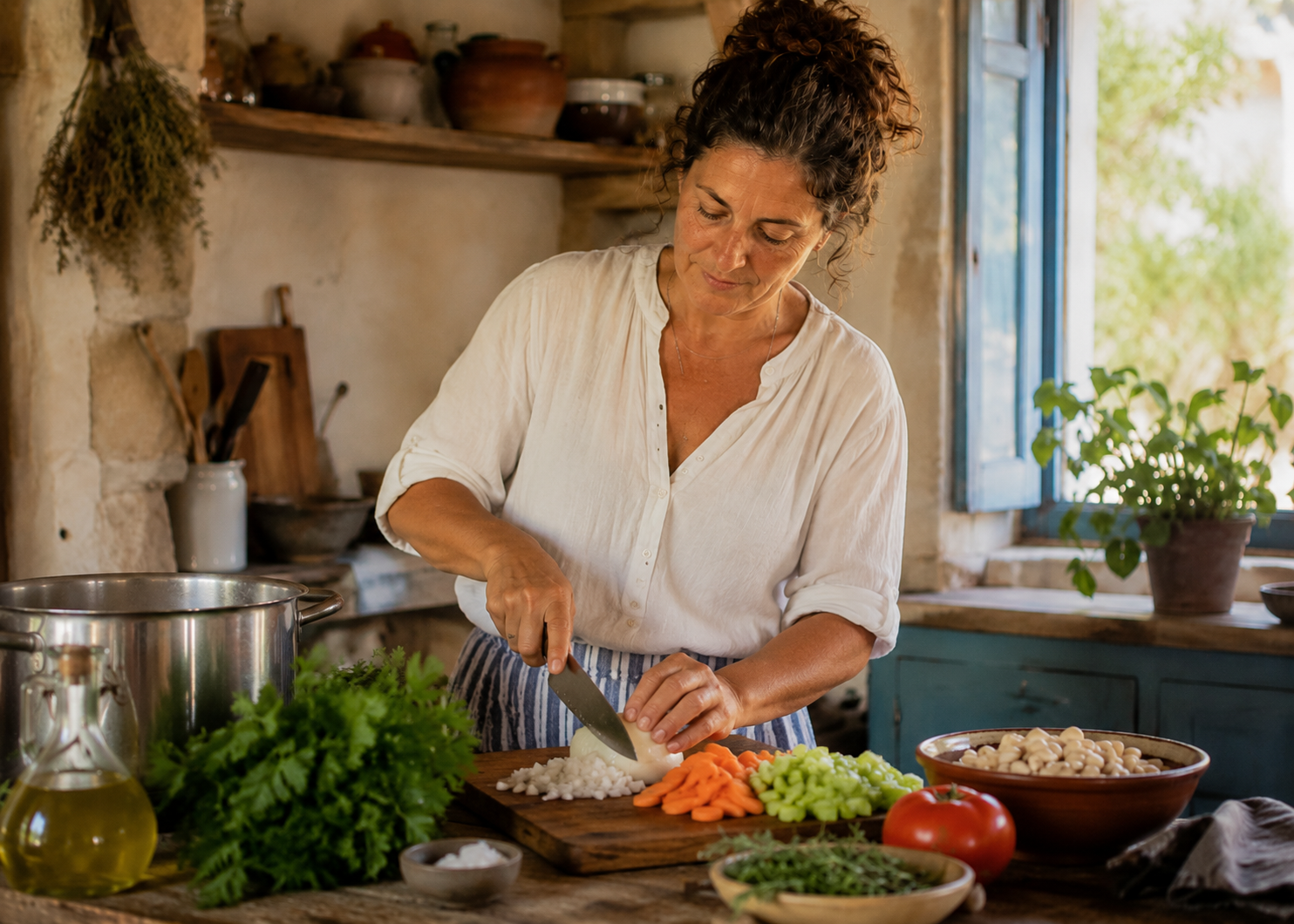
With the oil principle understood, the rest of the dish is genuinely simple, built on a short list of pantry staples and a patient simmer.
The beans are dried white beans, typically the medium variety, soaked overnight so they cook evenly and turn creamy rather than staying firm. Cannellini or great northern beans work well if you cannot find the Greek variety. Canned beans can stand in when time is short, cutting the cooking down considerably, but dried beans soaked and simmered slowly give the starchy, creamy result the dish depends on, since it is precisely that released starch that the olive oil needs to work with.
The flavor base is the Mediterranean trinity that will look familiar to anyone who cooks Spanish or Italian food: onion, carrot, and celery, finely chopped and softened slowly in olive oil until fragrant. Tomato, usually as paste or chopped tomatoes, goes in to give the soup its gentle tang and color, and the whole thing simmers with the beans until everything is tender and the broth has thickened. Herbs are simple, a bay leaf, sometimes oregano or thyme, and the soup is brightened at the end with acidity, a squeeze of lemon or a splash of red wine vinegar that cuts through the richness of all that oil.
Here is how it comes together. This makes a generous pot for six, the way Greek families make it, with leftovers in mind.
Ingredients
- 500 g dried white beans, soaked overnight
- 120 ml extra virgin olive oil, divided, plus more to finish
- 1 large onion, finely chopped
- 2 carrots, chopped
- 2 celery stalks, chopped, with leaves if you have them
- 3 garlic cloves, minced
- 2 tbsp tomato paste, or 400 g chopped tomatoes
- 1 bay leaf
- 1 tsp dried oregano
- 1.5 litres water, plus more as needed
- 1 tsp salt, plus more to taste
- black pepper, to taste
- juice of half a lemon, or a splash of red wine vinegar, to finish
Method
- Parboil the soaked beans. Drain the soaked beans, put them in a pot with plenty of fresh cold water, bring to a boil, and cook for about 30 minutes until slightly tender. Drain and set aside. This step softens them before they meet the acidic tomato, which can otherwise keep beans tough.
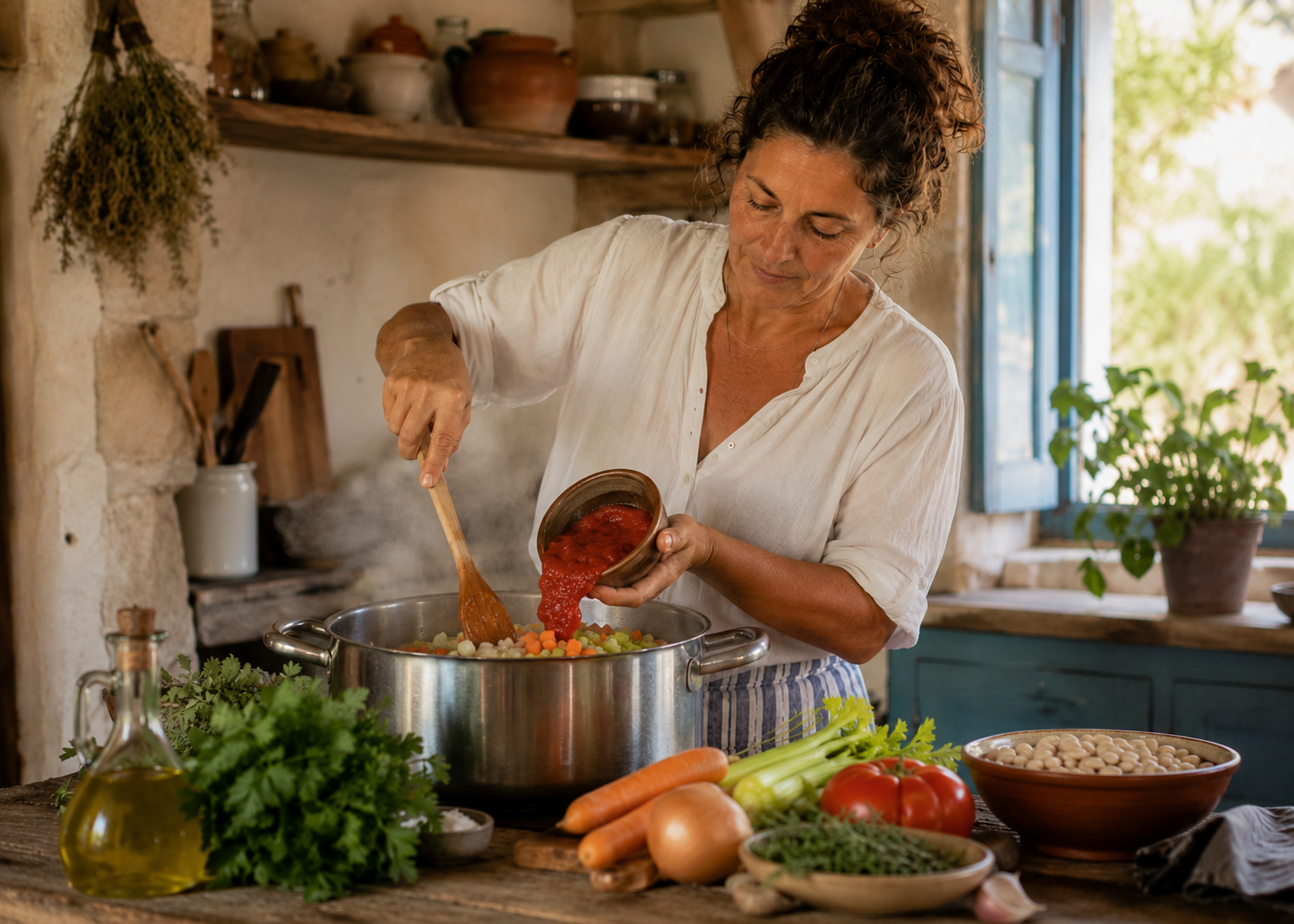
- Build the vegetable base. In a large pot, warm half the olive oil, about 60 ml, over medium heat. Add the onion, carrot, and celery and cook slowly, stirring, until soft and fragrant, about 10 to 15 minutes. Do not rush this, since the sweetness of the softened vegetables underpins the whole soup. Add the garlic for the last minute.
- Add the tomato. Stir in the tomato paste or chopped tomatoes and cook for a minute or two, until the raw smell fades and the color deepens.
- Simmer everything together. Add the parboiled beans, bay leaf, oregano, and the water, enough to cover generously. Bring to a boil, then drop to a gentle simmer. Cook until the beans are fully tender and the broth has thickened, about an hour, adding a little more water if it gets too dry.
- The olive oil step, the authentic one. When the beans are tender, season with salt and pepper and stir in the remaining olive oil, about 60 ml, off or near the end of the heat. This generous finish of good raw oil emulsifies with the bean starch into the creamy, velvety broth that defines fasolada. This is the step the low-fat versions skip, and it is the one that makes the dish.
- Brighten and rest. Stir in the lemon juice or vinegar to cut the richness. Taste and adjust the salt. Let the pot rest a few minutes, then serve hot with an extra drizzle of olive oil over each bowl, the Greek way.
A note on thickening the traditional way. Some Greek grandmothers drop a whole apple into the pot as it simmers, then remove it before serving. The pectin in the apple gently thickens the soup and adds a faint sweetness that balances the acidity. Quince works the same way. It is an old trick, entirely optional, and a lovely piece of the dish’s history if you want to try it.
What To Serve It With
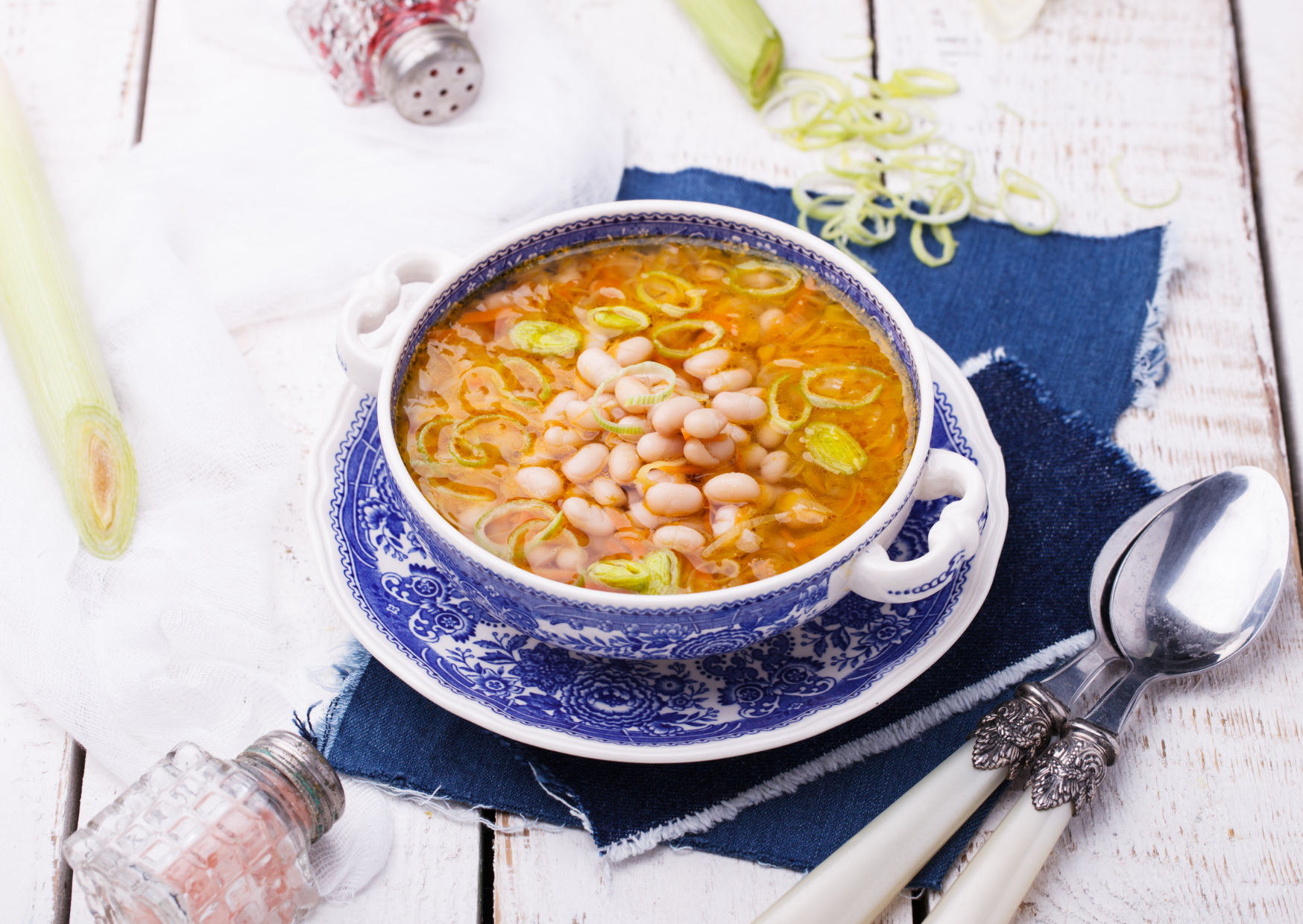
Fasolada is a complete meal in a bowl, but the Greek table dresses it simply, and getting the accompaniments right rounds out the experience.
The essential partners are crusty bread and good olives, often with a few slices of feta on the side. The bread is for the rich broth, the olives and feta add salt and sharpness against the soup’s earthy creaminess, and together they turn a bowl of bean soup into a proper meal in the way Greek home cooking does, by surrounding a humble center with simple, flavorful extras. A handful of raw onion or a few pickled peppers sometimes appears alongside too, for bite.
To drink, the dish calls for nothing fancy. A crisp Greek white suits it well, an Assyrtiko from Santorini in particular, whose sharp minerality cuts cleanly through the olive oil’s richness. A simple red works just as happily on a cold night. As with the Spanish bean stews it resembles, fasolada is honest food that pairs with honest wine, and spending a fortune on the bottle would slightly miss the spirit of the thing. The leftovers, predictably, are even better the next day, once the flavors have settled and the broth has thickened further, which is why the pot is always made large.
Why It Is Worth Making Properly
Strip the dish to its lesson and you find the same truth that runs through all the great peasant cuisines of the Mediterranean, the one the low-fat rewrite forgets.
The lesson is that richness does not require meat or dairy, only good olive oil and patience. Fasolada takes the cheapest possible ingredients, dried beans, three common vegetables, a little tomato, and turns them into something genuinely luxurious through technique alone, the slow softening of the base and the generous finish of oil. The luxury costs almost nothing. It lives entirely in using enough olive oil and giving the pot the time to turn starch and oil into a creamy broth.
Make it the Greek way, with the oil the recipe actually calls for rather than the timid tablespoon a health blog suggests, and you understand why Greeks claim this plain bean soup as their national dish. It is not despite its simplicity. It is because of it, because fasolada is proof that the humblest food, made correctly and without flinching at the olive oil, can be one of the most satisfying things on the table. The version that cuts the oil to be virtuous ends up neither rich nor Greek. The real one is both.

About the Author: Ruben, co-founder of Gamintraveler.com since 2014, is a seasoned traveler from Spain who has explored over 100 countries since 2009. Known for his extensive travel adventures across South America, Europe, the US, Australia, New Zealand, Asia, and Africa, Ruben combines his passion for adventurous yet sustainable living with his love for cycling, highlighted by his remarkable 5-month bicycle journey from Spain to Norway. He currently resides in Spain, where he continues sharing his travel experiences with his partner, Rachel, and their son, Han.