
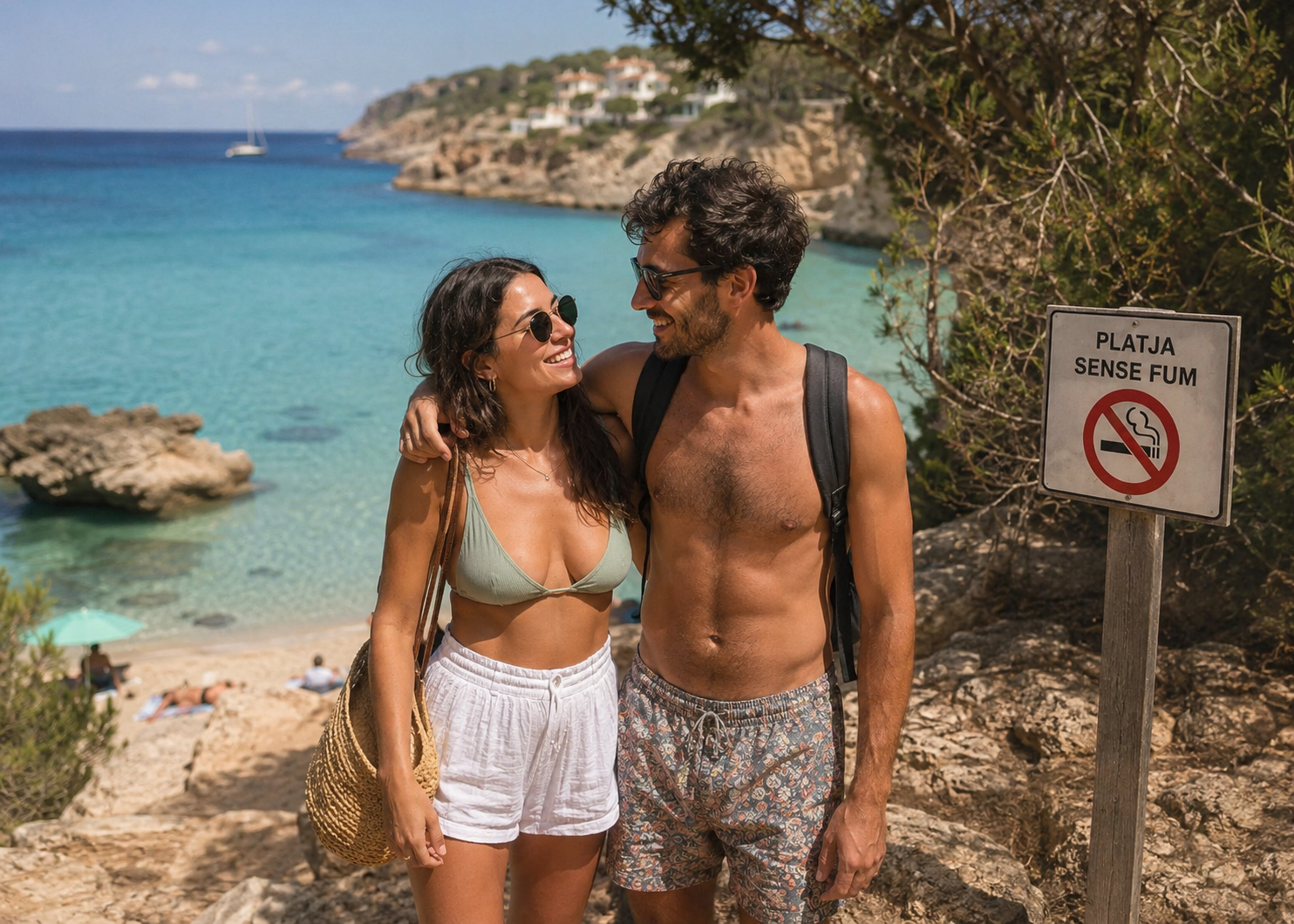
The headline traveled faster than the facts. In early 2026 the news that the Balearic Islands might cap tourist numbers at 17.8 million a year ricocheted around travel media, and Americans planning a Mallorca trip started to worry they might be locked out. The cap never happened. The Balearic parliament voted it down in February 2026.
What did not make the same headlines is everything that is real. The rejected cap was an opposition proposal, but alongside it sits a growing stack of restrictions that have actually taken effect or are arriving for the summer 2026 season, and those are the ones that will shape a trip. The story is not a wall at the airport. It is a quieter set of changes to how you get around, where you can stay, and how the islands manage the crush.
The Cap That Failed, And Why The Confusion Spread
The proposal that caused the alarm was specific and short-lived. The opposition Socialist party, the PSOE, put forward a plan to cap annual visitors at 17.8 million, the number the islands recorded in 2023, arguing that the 19 million who came in 2025 had pushed the islands past what they could sustainably hold. The proposal went to the Balearic parliament on 17 February 2026.
It was rejected. The governing People’s Party and Vox voted it down, with the regional government having already called the cap unworkable. Tourism is the backbone of the Balearic economy, accounting for a huge share of the islands’ income and employment, and the governing parties were not willing to put a hard ceiling on it. A separate motion about reallocating tourist-tax funds passed, but the headline cap, the one that made the international news, did not.
So why did travelers come away thinking a cap was coming? Because the proposal was reported widely as a plan rather than as a proposal that might fail, and because it landed amid a genuine wave of other Balearic restrictions that are real. The cap became a symbol for a larger truth, that the islands are tightening, even though that particular measure died in parliament. The confusion is understandable, since the story arrived wrapped in real local anger about overtourism, the protests that filled the streets of Palma through 2024 and 2025, and a steady drumbeat of smaller rules that genuinely were taking effect. The correction matters, because planning around a cap that does not exist leads to the wrong decisions, while ignoring the rules that do exist leads to worse ones.
The Vehicle Restrictions That Are Genuinely Happening
The real action is on the roads, not at the airport, and this is the change most likely to affect an actual visitor.
Ibiza has capped tourist vehicles during the high season, a response to a road network that simply cannot hold the cars that arrive each summer. The number of cars on Ibiza quadrupled over two decades, and the island now restricts how many tourist vehicles, including rental cars and visitors’ own cars brought over by ferry, can be on its roads during the peak months. Motorbikes have been exempt from the seasonal limits in the way cars are not, a detail worth knowing for anyone set on two wheels. The cap is enforced through a registration system, and the practical effect is that simply turning up with a car in August is no longer something you can take for granted.
Mallorca is preparing to follow for summer 2026. The Council of Mallorca has signaled it will introduce similar vehicle restrictions, with a draft framework setting a maximum number of vehicles and giving preference to electric and non-polluting ones. The exact mechanics were still being finalized as the season approached, which is itself the key point for a traveler, because a rule still being written is a rule worth checking directly before you book a rental car. Anyone planning to drive on Mallorca in the summer of 2026 should confirm the current rules rather than assuming a rental will be as straightforward as it was a few years ago.
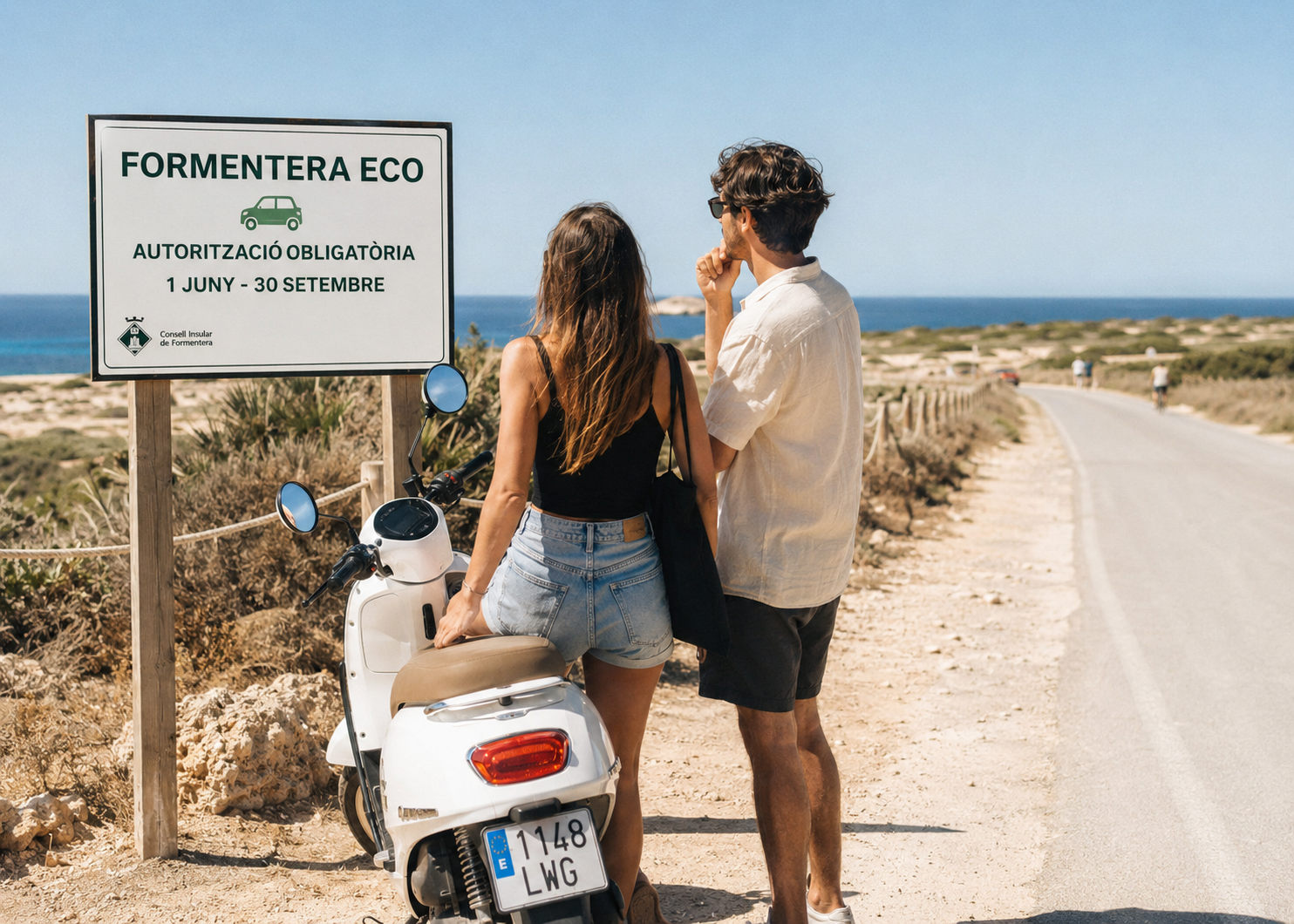
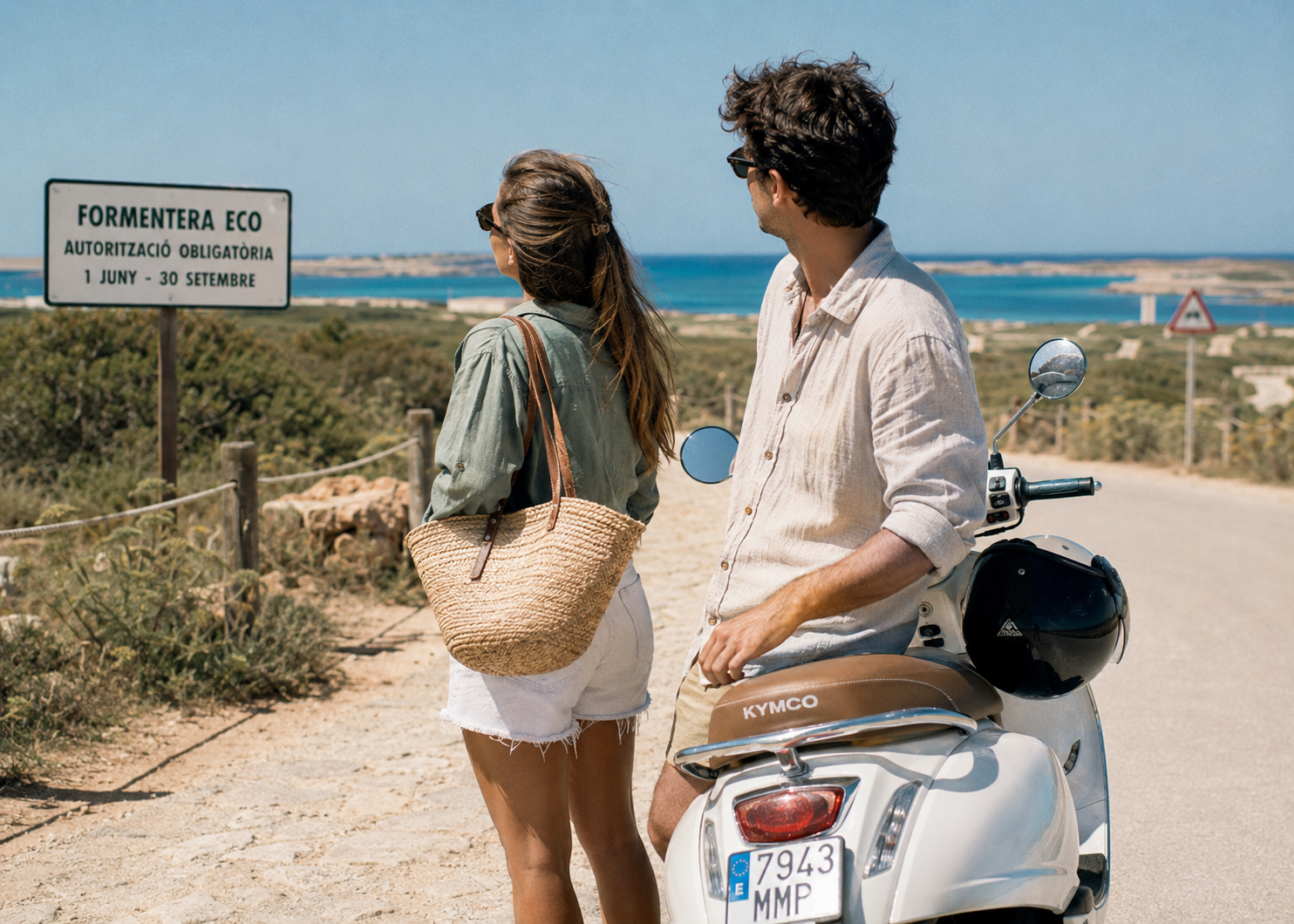
Formentera, the small island south of Ibiza, already runs the strictest version, and it shows where the others are heading. From 1 June to 30 September, anyone bringing a vehicle, rental or personal, needs a permit through the island’s official system. The fee runs around six euros a day for a car with a thirty-euro minimum, less for motorbikes, with hybrids discounted by half and fully electric vehicles exempt. It is the template the larger islands are studying, and it tells you what “vehicle restriction” actually looks like in practice, a permit, a daily fee, and a clear preference for cleaner cars. Read Formentera as the preview, and the direction of travel across the whole archipelago becomes obvious.
The Cruise Limits Reshaping The Ports
If you are arriving by ship rather than plane, a different set of rules applies, and these are further along than the road restrictions.
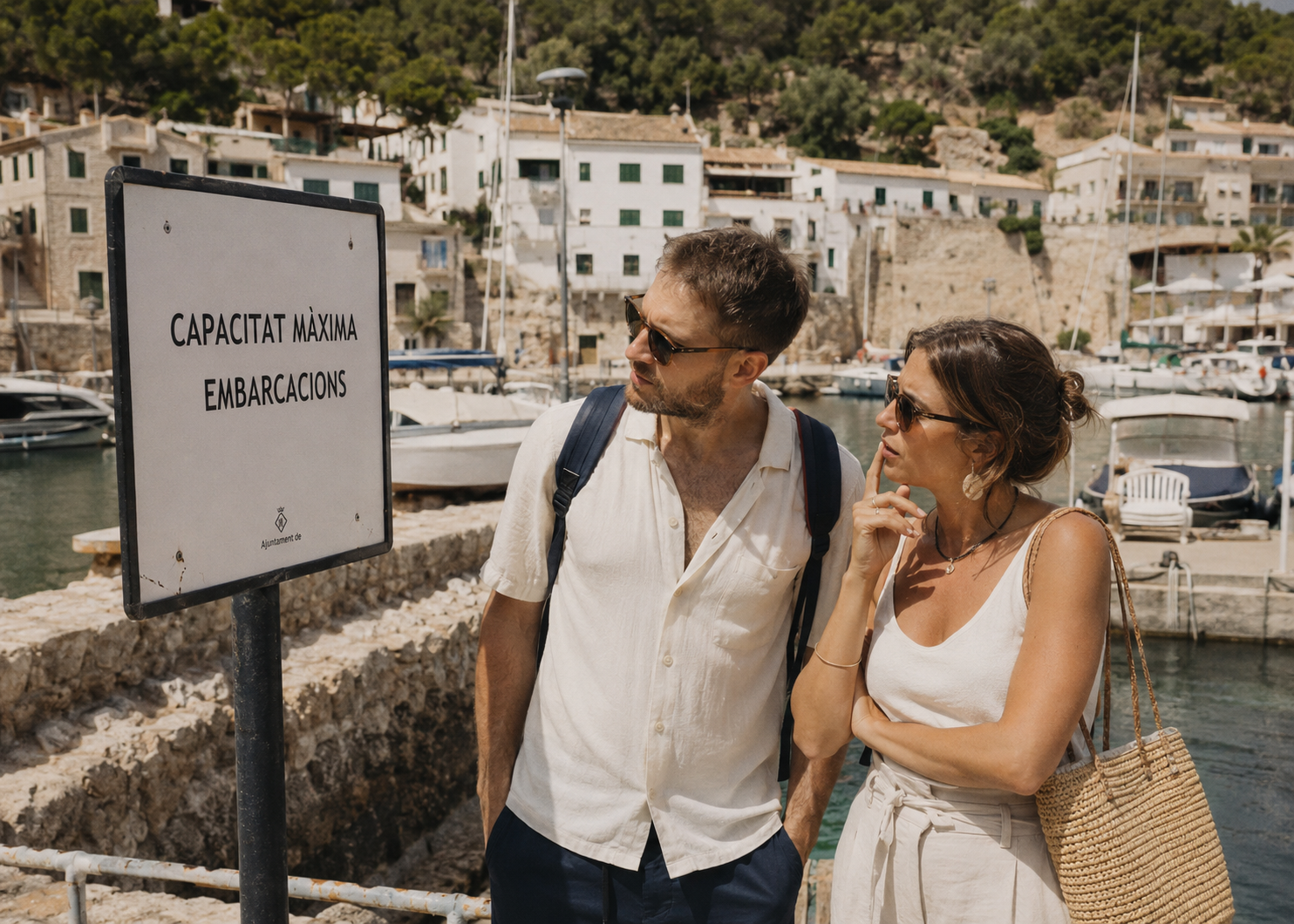
Palma de Mallorca has moved to cap daily cruise arrivals, with the restriction limiting the number of cruise passengers who can disembark on a given day and allowing only one very large ship at a time. The numbers under discussion put a ceiling on daily cruise visitors and restrict how many of the largest mega-ships can dock together, a direct response to the days when several enormous vessels emptied tens of thousands of passengers into the old town at once, overwhelming the cathedral district and the narrow streets around it within a single morning.
For a cruise passenger this can change an itinerary. A Balearic port call that was routine two years ago may now be renegotiated, rescheduled, or shifted to a smaller vessel, and the cruise lines have been adjusting their Balearic stops accordingly. Anyone who has booked a 2026 or 2027 cruise with a Mallorca stop should confirm with the line that the port call still stands as planned, because the docking schedules have genuinely been in flux as the caps take hold. A stop you assumed was guaranteed may have quietly moved.
The logic mirrors Venice and the other Mediterranean ports cracking down on cruise traffic. The day-tripper who arrives by ship, spends little, and crowds the center is the visitor these islands are least eager to attract, and the cruise caps are aimed squarely at that pattern rather than at the overnight traveler who stays, eats in the restaurants, and fills the hotels. The islands are not trying to repel visitors so much as to change the kind of visit they get, away from the brief mass-disembarkation and toward the longer, higher-value stay.
The Holiday Rental Crackdown
The accommodation rules are the part of the Balearic tightening that most resembles what is happening across Spain and Italy, and they affect where you can stay.
The Balearic government has ramped up enforcement against unlicensed holiday rentals, with higher fines for non-compliant owners and stricter licensing in the most pressured areas. Palma and the popular coastal zones have led the way, introducing tougher requirements and limiting new tourist-rental permits, which has tightened the supply of legal short-term rentals and pushed up their price. Inspectors have gone after listings operating without the required license, and the platforms have come under pressure to delist properties that cannot show one.
Palma de Mallorca has effectively frozen new tourist-rental licenses, a measure that puts it alongside Barcelona in the group of Spanish destinations that have decided holiday rentals are pulling too much housing away from residents. For a traveler, the practical effect is the same as in the Italian cities tightening their own rules, the existing licensed rentals are fine to book, but new supply is not appearing, and the squeeze shows up as higher prices and lower availability in the central areas. The cheap, plentiful holiday apartment in the heart of Palma is becoming a harder thing to find, and a more expensive one when you do.
The signal to read is the direction. These rules tighten, they do not loosen, because the housing pressure that drives them is not going away and the local politics run firmly in favor of residents over visitors. A licensed rental booked well ahead is the safe play. Hunting for a cheap last-minute holiday apartment in central Palma in peak August is increasingly the losing one, and the gap between the prepared booker and the last-minute one widens every season.
What This Actually Means For Booking A 2026 Trip
Strip away the cap that failed and the picture for a traveler becomes manageable, even reassuring, as long as you plan around the real rules.
You are not going to be turned away because the islands hit a visitor ceiling. That cap does not exist. What you will encounter, if you are not prepared, is a harder time bringing or renting a car during the summer peak, a cruise itinerary that may have shifted, and a tighter, pricier market for central holiday rentals. None of these closes the islands to you. All of them reward planning ahead, and all of them punish the traveler who assumes summer 2026 works the way summer 2019 did.
The concrete moves are straightforward. Check the current vehicle rules for your specific island before assuming a rental car is simple, especially for Mallorca and Ibiza in the high season, and consider whether you even need a car given the restrictions and the islands’ decent bus networks. Book licensed accommodation early, confirming it holds a valid tourist license number, rather than chasing last-minute central rentals that may not legally exist. And if you are arriving by cruise, confirm the port call directly with the line rather than trusting the original itinerary.
The timing lever is the most useful one. The restrictions cluster around the July and August peak, which is precisely when the islands are most crowded and most expensive anyway. A trip in late May, June, or September sidesteps the worst of both the rules and the crush, with the vehicle caps lighter or not yet in force and the islands far more pleasant to actually experience. The shoulder season has quietly become the smart traveler’s answer to every one of these restrictions at once.
Where To Look If You Want The Crowds To Thin
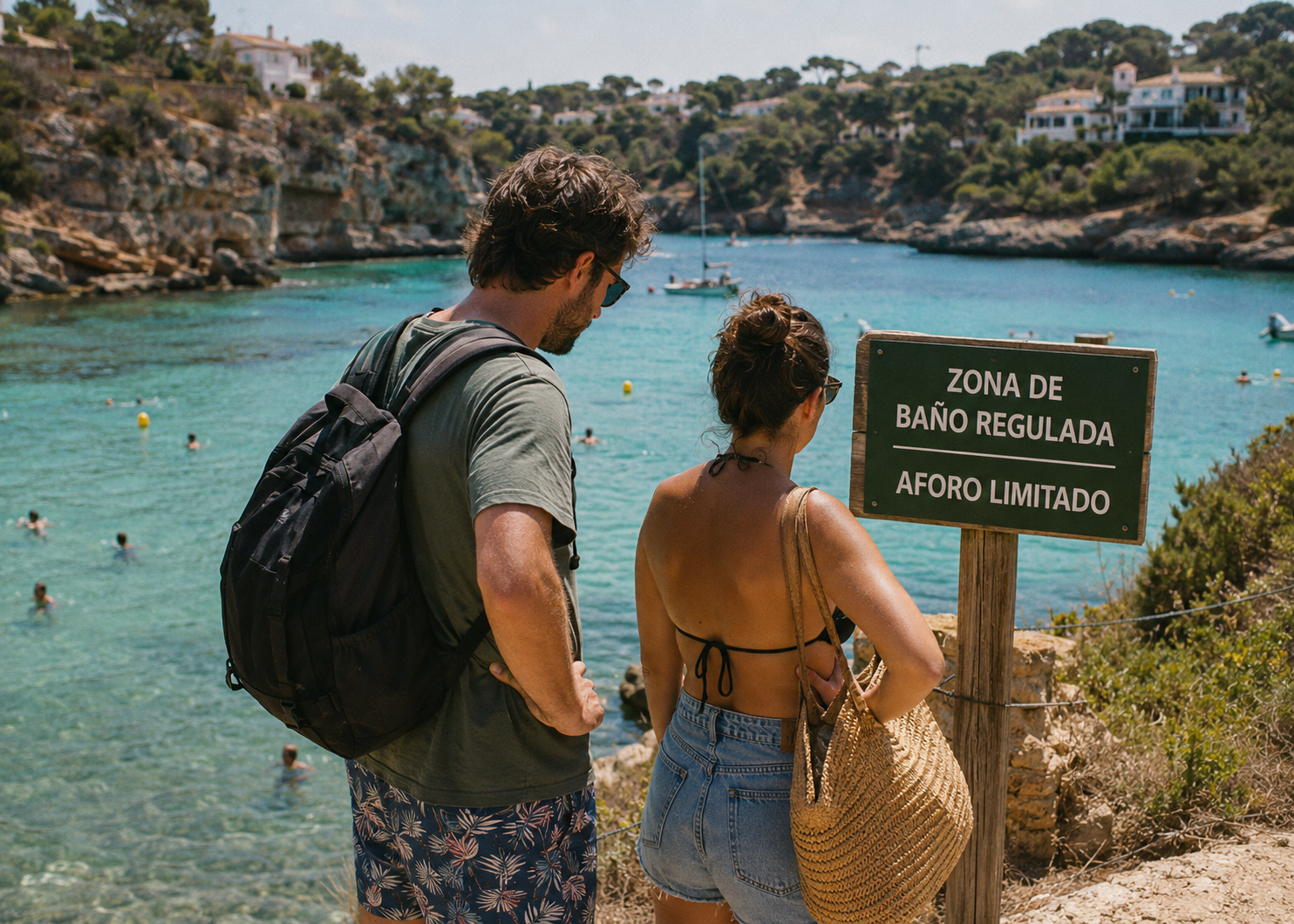
For the traveler willing to adjust, the Balearic tightening points toward better choices rather than worse ones.
Menorca remains the quiet alternative, drawing a fraction of Mallorca’s visitors and offering the same Mediterranean beauty with far less of the pressure. It is the obvious move for anyone whose mental image of the Balearics is the crowded Mallorca beach club, because it delivers the landscape, the coves, and the calm without the crush, and the restrictions bite far less where the crowds are thinner to begin with. A UNESCO Biosphere Reserve, Menorca has leaned into a slower, lower-impact kind of tourism, and the result is an island that feels like the Balearics did a generation ago.
The shoulder-season versions of the famous islands are the other answer. Mallorca in June or late September is a different and better place than Mallorca in August, with the same coastline and old towns minus the peak-season vehicle limits, cruise crowds, and rental scramble. The islands are not trying to keep you away. They are trying to spread you out across the calendar and the map, and a traveler who cooperates with that gets the better trip, cheaper, calmer, and easier in every practical respect.
The honest summary is that the Balearics in 2026 are tightening, steadily and in the same direction as the rest of the Mediterranean, but the dramatic cap that frightened people never arrived. Plan around the vehicle rules, book licensed rooms early, travel outside the August peak, and the islands remain entirely open to you, arguably more pleasant than they were when nobody was managing the crowds at all. The restrictions, read correctly, are less a barrier than a map to the better version of the same trip.
The Tourist Tax And What It Pays For
One Balearic charge that is firmly real, and often confused with the failed cap, is the tourist tax, the sustainable tourism levy that has applied to visitors for years and continues into 2026.
The tax is modest and charged per night, on a sliding scale according to the type of accommodation, with luxury hotels at the top of the range and campsites and hostels at the bottom. It typically adds a few euros a night to a stay, more in high season and less in the low months, and children under a certain age are exempt. For a one-week trip it amounts to a small line on the hotel bill rather than a trip-altering expense, but it is real, it is collected, and a visitor should expect to see it.
What makes the tax relevant to the wider story is where the money goes and what the islands signal by raising it. The revenue is earmarked for environmental protection, heritage restoration, and projects meant to repair the strain that mass tourism puts on the islands, which is why one of the motions that actually passed in that February parliamentary session concerned redirecting these funds. The tax is the islands’ way of making tourism pay for some of its own footprint, and the political conversation increasingly leans toward raising it in the peak months as a softer alternative to the hard cap that failed. A traveler should read any future increase not as a penalty but as the islands choosing the price lever over the ceiling lever, nudging the summer peak rather than blocking it.
The bigger pattern worth holding in mind is that the Balearics are not an isolated case but the leading edge of a Mediterranean-wide shift. Barcelona, Venice, the Italian regions adopting the Tuscany model, the Greek islands experimenting with their own cruise limits, all of them are reaching for the same tools at the same time, because they face the same problem of small, beautiful, finite places absorbing ever larger crowds. The Balearic story is simply one of the clearest versions of it, far enough along that a traveler can read the future of the whole region in what the islands do next.

About the Author: Ruben, co-founder of Gamintraveler.com since 2014, is a seasoned traveler from Spain who has explored over 100 countries since 2009. Known for his extensive travel adventures across South America, Europe, the US, Australia, New Zealand, Asia, and Africa, Ruben combines his passion for adventurous yet sustainable living with his love for cycling, highlighted by his remarkable 5-month bicycle journey from Spain to Norway. He currently resides in Spain, where he continues sharing his travel experiences with his partner, Rachel, and their son, Han.