
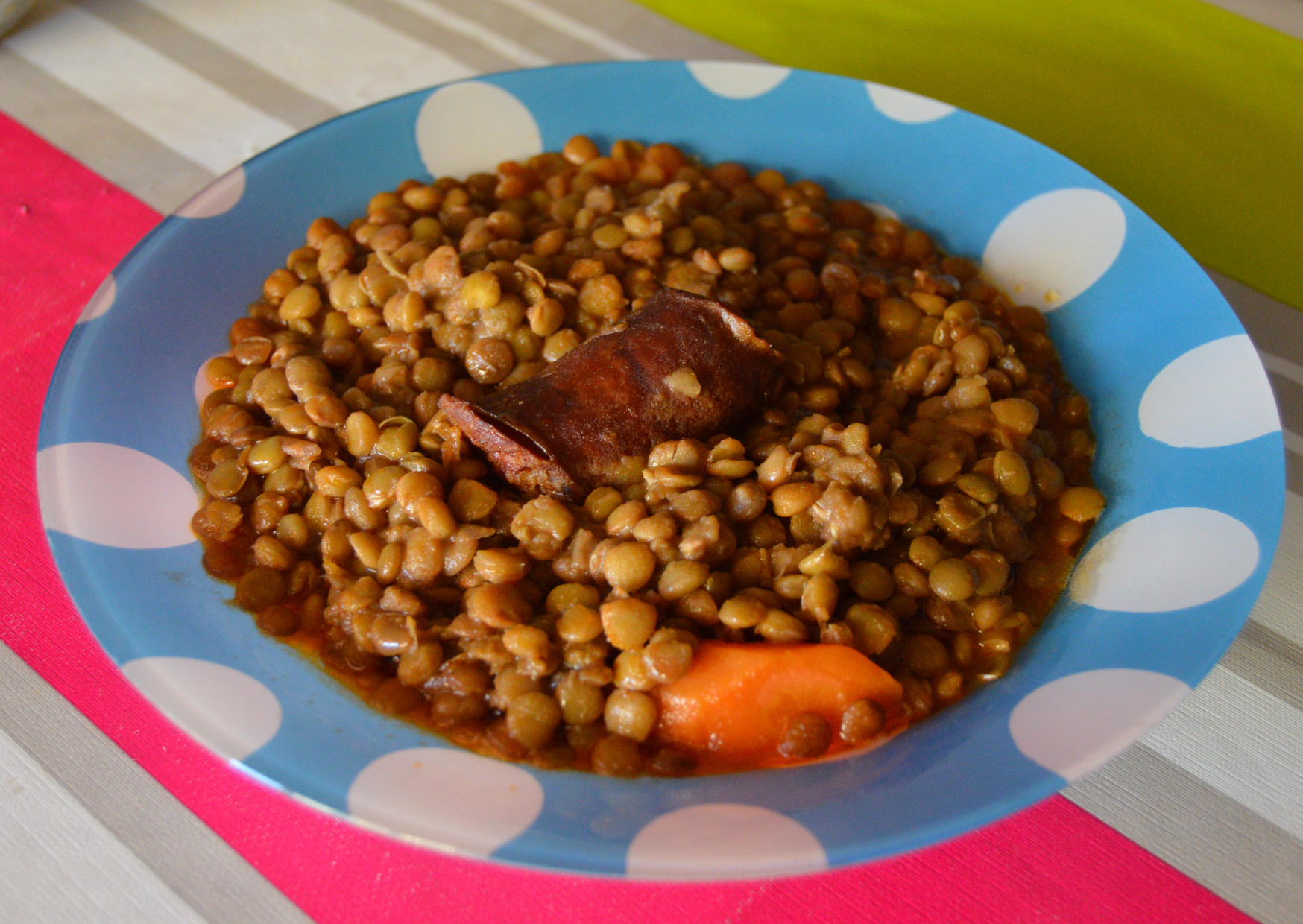
In Spain, lentejas are a Tuesday. Not a special occasion, not a project, just the pot that sits on the stove on an ordinary cold week and feeds the family for two days running, better on the second than the first. Walk through any Madrid neighborhood around two in the afternoon in winter and you can smell them through the windows, the particular sweetness of onion and pepper that has been cooking down slowly in olive oil.
That smell is the whole point, and it is the thing the American versions miss. Search for a Spanish lentil recipe written for an American kitchen and you will usually find lentils tipped into a pot of canned broth with some sausage and a shake of cumin, simmered until soft, and called done. The result is edible. It is also a completely different dish, because it skips the step that makes lentejas taste like lentejas.
That step is the sofrito. Before a single lentil goes in the pot, you build a base of onion, green pepper, and garlic cooked slowly in good olive oil until they collapse into something jammy and sweet, then deepen it with grated tomato and a spoonful of smoked Spanish paprika. This is not seasoning added to a stew. It is the foundation the entire stew is built on, the source of nearly all its flavor, and it is what the can of broth is pretending to replace. Broth is a shortcut to liquid. Sofrito is the actual flavor, and there is no shortcut to it.
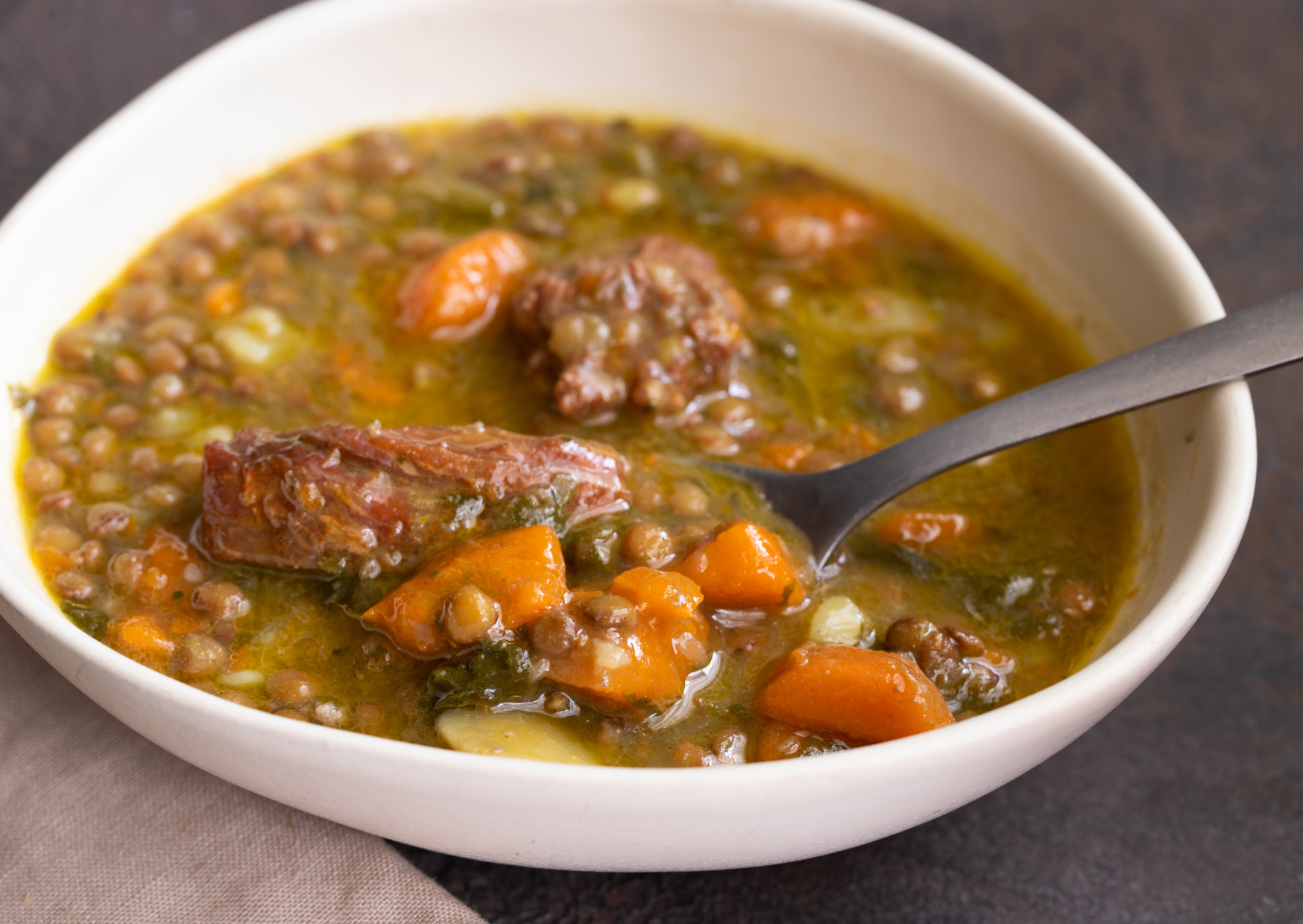
The other quiet truth is that real lentejas do not need broth at all. The lentils, the sofrito, the chorizo, and the vegetables make their own broth as they cook, a deep brick-red liquid that thickens on its own from the starch the lentils give off. You add water, not stock, and you let the pot build its own depth. A Spanish cook would find the idea of opening a carton of broth for lentejas slightly baffling, the way an Italian grandmother feels about jarred sauce. The pot makes its own.
Here is how it is actually done, with the sofrito given the time it deserves. This makes enough for six, or for a family of three across the two days it is meant to last.
Where The Dish Comes From
Lentejas are old in a way that is hard for a newer cuisine to match. Lentils have been eaten on the Iberian peninsula for thousands of years, one of the first crops humans ever domesticated, and the stewed-lentil dish in roughly its current form has been feeding Spanish families for centuries. It belongs to the deep tradition of the cocido and the puchero, the slow one-pot meals that built Spanish home cooking out of cheap, filling ingredients and long, patient cooking.
The dish earned its place for the most practical reason. Lentils were cheap, they kept well in a dry pantry through the winter, and they delivered real protein and substance to families who could not count on meat every day. A handful of lentils, whatever vegetables were on hand, and a small amount of sausage or a scrap of pork for flavor turned into a meal that fed a whole table and stretched across two days. This is peasant cooking in the best sense, food invented out of necessity that turned out to be genuinely delicious.
That history is why lentejas still carry a particular weight in Spanish life. They are comfort food, the thing a Spanish adult associates with a grandmother’s kitchen and a childhood winter, the meal that means home. A Spaniard far from Spain will often say that lentejas are the dish they miss, more than the famous restaurant plates, because this is the food of ordinary life rather than special occasions. There is even a well-worn Spanish saying about lentils, that you either eat them or you leave them, used to mean a situation you simply have to accept. The dish is woven that deep into the language.
Ingredients
- 400 g pardina or brown lentils
- 60 ml extra virgin olive oil
- 1 large onion, finely chopped
- 1 Spanish or Italian green pepper, finely chopped
- 4 garlic cloves, minced
- 1 ripe tomato, grated
- 1.5 tsp sweet smoked paprika, pimentón dulce
- 200 g cooking chorizo, in thick slices
- 100 g morcilla, Spanish blood sausage, optional
- 2 carrots, in thick rounds
- 1 medium potato, in rough chunks
- 2 bay leaves
- 1.5 litres water
- 1.5 tsp salt, plus more to taste
Method
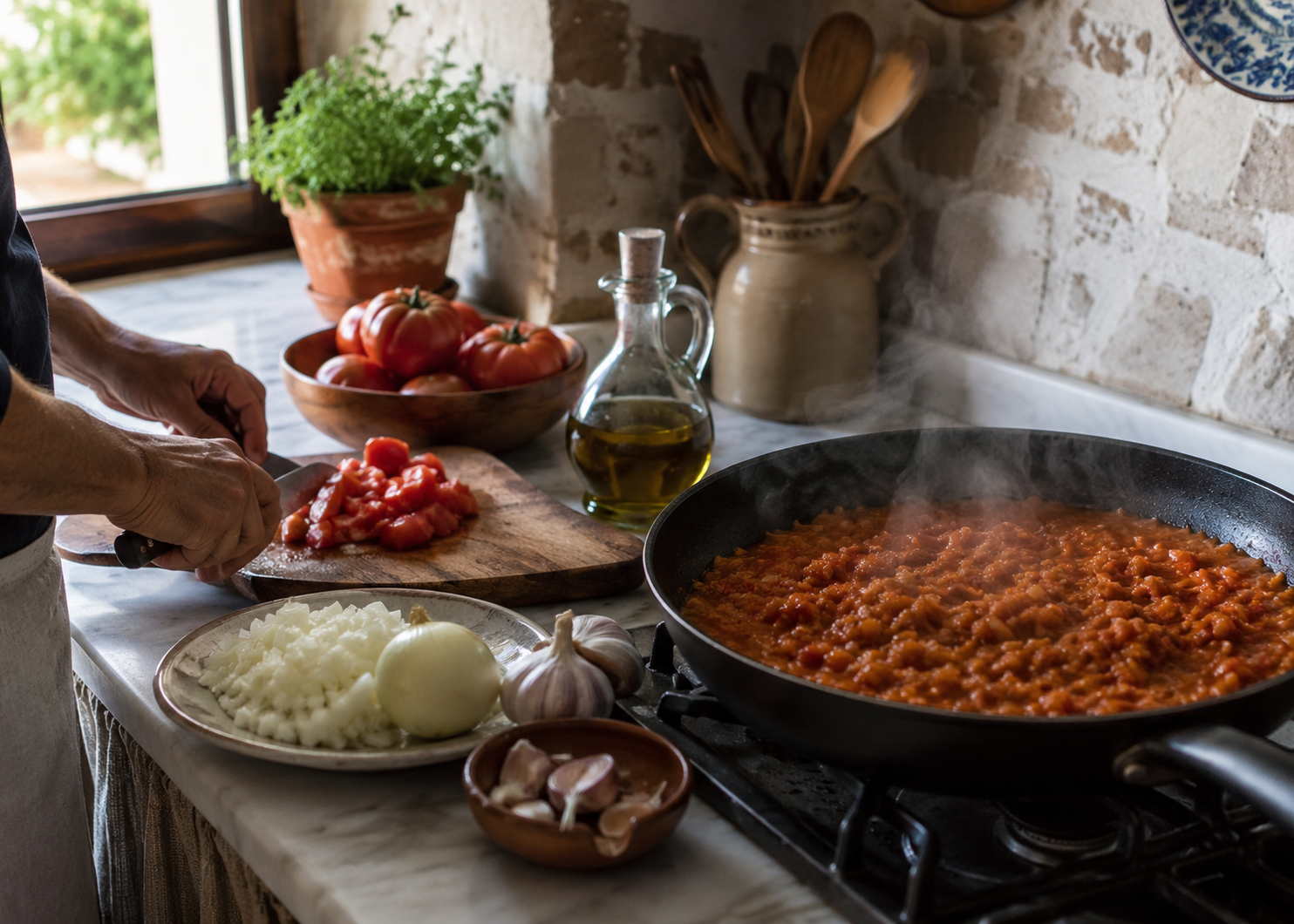
- Build the sofrito, the authentic step. Warm the olive oil in a wide heavy pot over medium-low heat. Add the onion and green pepper with a pinch of salt and cook them slowly, stirring now and then, until soft, golden, and sweet, about 12 minutes. Do not rush this. Those slow minutes are where the onion’s sharpness turns to sweetness and the flavor that carries the whole dish is built. Add the garlic for the last couple of minutes so it softens without browning.
- Deepen with tomato. Add the grated tomato and cook it down, stirring, until the mixture darkens, the raw smell is gone, and it looks jammy, about 5 minutes.
- Bloom the paprika off the heat. Take the pot off the heat for a moment and stir in the pimentón. Paprika scorches and turns bitter in seconds over direct heat, so add it off the flame and let the warmth of the sofrito carry it. Stir for about 30 seconds, until fragrant.
- Add everything else. Return the pot to the heat. Add the lentils, carrots, potato, chorizo, optional morcilla, and bay leaves. Pour in the water, enough to cover everything by a couple of fingers. Water is correct here, not broth. The lentils and sofrito make their own broth as they cook.
- Simmer gently. Bring to a boil, then drop to a low simmer with the lid ajar. Cook until the lentils are tender and the liquid has thickened into a deep brick-red broth, about 40 minutes. Add a splash more water only if it gets too dry. Taste and adjust the salt near the end, since the chorizo adds salt of its own.
- Rest before serving. Pull out the bay leaves and let the pot rest off the heat for about 10 minutes so the broth settles and thickens. Lentejas are always better after a short rest, and better still the next day.
A note on the lentils. Pardina lentils, the small brown Spanish variety, hold their shape and need no soaking. If you cannot find them, ordinary brown or green lentils work; avoid red ones, which turn to mush. For a lighter pot, leave out the morcilla and use a leaner chorizo, but keep the sofrito exactly as written, because that is where the flavor lives.
Why The Sofrito Is Not Optional
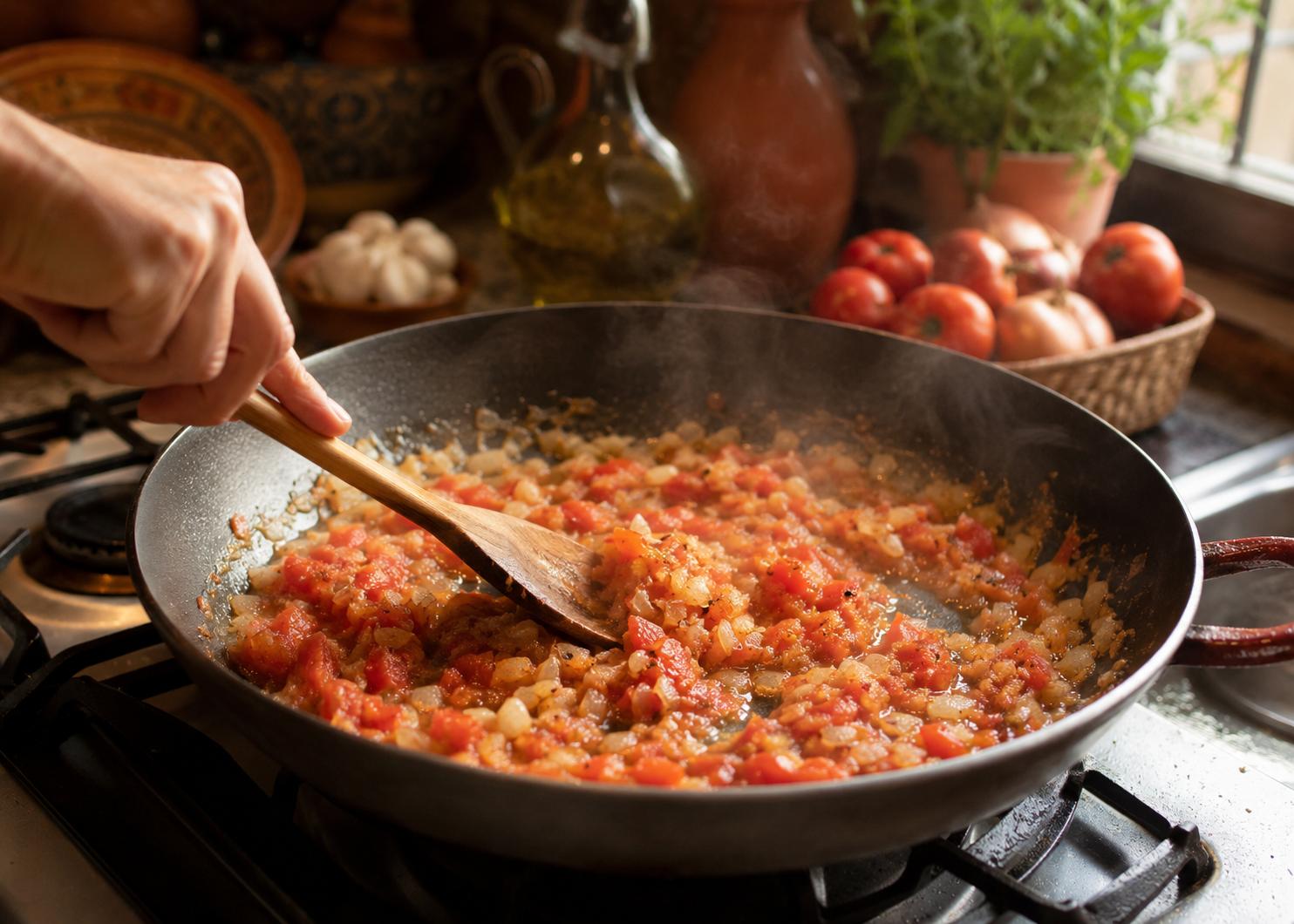
The temptation, for a cook used to American weeknight shortcuts, is to read the sofrito step as the part you can speed up. Soften the onion for three minutes, move on. That misreads what the step is for. Those twelve slow minutes are where the onion’s sharpness turns to sweetness and the pepper gives up its flavor into the oil, and no amount of broth added later replaces what happens in that pan. A rushed sofrito makes a thin stew. A patient one makes the dish.
The paprika is the other place the American versions go wrong, usually by reaching for cumin instead, which sends the whole pot toward a Tex-Mex flavor that has nothing to do with Spain. Pimentón is the Spanish signature, smoky and sweet, and it belongs added off the heat so it blooms in the warm oil without scorching. That single spoonful, handled right, is the difference between lentils that taste Spanish and lentils that taste like a generic lentil soup.
What you end up with is a pot that has cost almost nothing and asks for almost nothing but time. A bag of lentils, a couple of sausages, the vegetables already in your kitchen, and water from the tap. The economy of it is part of why it became a Spanish staple in the first place, a dish that stretches cheap ingredients into two days of real meals. The luxury is entirely in the technique, not the shopping list.
Serve it the way it is served here, in deep bowls with good bread for the broth and nothing fancy alongside. It is better the next day, when the flavors have settled and the broth has thickened, which is the real reason Spanish families make a big pot and never seem to mind eating it twice. The version built on a can of broth cannot do that, because there was never much flavor in it to deepen. The version built on a sofrito only gets better, and that is the whole difference between a recipe that copies lentejas and one that actually makes them.
How It Changes Across Spain
Like every great peasant dish, lentejas are not one fixed recipe but a family of regional versions, and knowing the variations helps you understand the dish rather than just follow one set of instructions.
The version most familiar across central Spain and Madrid is the one built here, lentejas with chorizo and vegetables, sometimes enriched with morcilla or a piece of pork. In some homes a ham bone goes into the pot, lending a deeper savory backbone the way a parmesan rind does in an Italian kitchen. In others the meat is dropped almost entirely, leaving a lighter vegetable version that leans harder on the sofrito and the pimentón for its depth, a genuinely good dish in its own right and proof that the technique, not the sausage, is what carries it.
Regional touches change the character. Some cooks add a splash of vinegar or a bay-scented note at the end for brightness, cutting the richness. Others thicken the pot further by mashing a few of the cooked lentils or the potato against the side of the pan, releasing more starch into the broth. In the north, where the cooking runs richer, you find more pork and a denser pot. The common thread across all of it is the sofrito base and the water-not-broth principle. Everything else is a household preference, which is exactly how a dish becomes part of a culture, by being made slightly differently in every kitchen while staying recognizably itself.
What To Serve It With
Lentejas are a one-pot meal, which is part of their genius, but how they are served around the table is its own small piece of Spanish food culture worth getting right.
The essential accompaniment is bread, good crusty bread, for the broth. The deep red liquid at the bottom of the bowl is not a sauce to leave behind, it is half the reward, and a Spanish table will always have bread on hand to mop it up. This is not optional in the way a side dish is optional. It is built into how the dish is eaten, the bread completing the meal that the pot started.
Beyond that, lentejas ask for very little. They are often a first course in a traditional Spanish comida, the large midday meal, followed by something simple and light, a piece of grilled fish or meat, or just fruit. Served as the main event, which is increasingly common, they need nothing more than a green salad alongside to cut the richness. As for what to drink, a young, unfussy Spanish red, a simple Rioja or a Ribera, suits the dish far better than anything expensive. This is honest food, and it pairs with honest wine.
The leftovers deserve their own mention, because they are arguably the point. Lentejas reheat beautifully and deepen overnight as the flavors settle and the broth thickens, which is why Spanish families make a big pot without a second thought about eating it twice. The second day is the better day. A version built on a can of broth cannot do that, because there was never much flavor in it to deepen. The version built on a sofrito only improves.
The Bigger Lesson In One Pot
Strip the recipe down and what is left is a way of thinking about cooking that runs through all of Spanish home food, and it is the real thing worth carrying away from a pot of lentejas.
The lesson is that flavor comes from technique and time, not from expensive ingredients or shortcuts in a can. A bag of lentils, two sausages, the vegetables already in the kitchen, and water from the tap, that is the entire shopping list, and it costs almost nothing. The luxury is entirely in the twelve patient minutes of the sofrito and the careful spoonful of pimentón, neither of which costs a cent. Spanish home cooking is full of dishes like this, built on the understanding that doing the simple thing properly beats doing the elaborate thing carelessly.
Serve it the way it is served here, in deep bowls with good bread, made a day ahead if you can manage it, and you will understand why this unglamorous brown stew is the dish so many Spaniards say they miss most. It is not trying to impress anyone. It is just made correctly, with the one step the American versions skip, and that single difference is the whole distance between a recipe that copies lentejas and one that actually makes them.

About the Author: Ruben, co-founder of Gamintraveler.com since 2014, is a seasoned traveler from Spain who has explored over 100 countries since 2009. Known for his extensive travel adventures across South America, Europe, the US, Australia, New Zealand, Asia, and Africa, Ruben combines his passion for adventurous yet sustainable living with his love for cycling, highlighted by his remarkable 5-month bicycle journey from Spain to Norway. He currently resides in Spain, where he continues sharing his travel experiences with his partner, Rachel, and their son, Han.