
So here is the scene you are not expecting. No countdown clock on a stage. No ball drop. No ten, nine, eight. Spain goes silent for a few heavy seconds while a 19th-century clock in Madrid clears its throat, and then a country tries to eat twelve grapes in twelve bells without laughing or choking. New Year’s here is dinner, family, and a very specific rhythm, not a firework show with confetti cannons. If you learn the rhythm, you fit in. If you fight it, you watch a room of grandparents and kids pass you like cyclists on a hill.
Where were we. Right. What actually happens at 23:59, where the grapes came from, how to do it the way Spaniards do, the cheap list to buy, why your party timing needs to flip, the regional twists nobody tells you, and a quiet plan you can run in your kitchen this year that will feel more Spanish than any plaza selfie.
The Spanish holiday clock you have to respect

December 24 is Nochebuena, long dinner and early bed. December 25 is calm. December 31 is Nochevieja, a late family dinner first, the grapes at midnight, then friends. If you show up at 20:30 with a bottle shouting about the countdown, you are early and loud. Spain saves the noise for after the grapes.
A normal family timeline in any city:
- 21:30 to 22:00 sit down to dinner
- 23:40 clear plates and place grapes, cava, and glasses
- 23:55 TV on to La 1 for Puerta del Sol
- 00:00 twelve bells, twelve grapes, one wish each if you are sentimental
- 00:01 hugs, cava, “Feliz Año” said twenty times
- 00:30 coffee or a tiny sweet, clean the table
- 01:00 change shoes and go out if you have the energy
Remember: the party starts after the ritual. It is the opposite of the American order.
What really happens at 23:59, second by second
If you are in a living room, everyone watches the same broadcast from Madrid’s Puerta del Sol. The Casa de Correos clock face fills the screen. There are four soft warning chimes called cuartos that tell you to stand up and pick up your grapes. Do not eat yet. After the cuartos, the bell strikes twelve deep campanadas, one every couple of seconds. You eat one grape per bell. No rushing, no counting down out loud, just the bell and people trying not to laugh with full cheeks.
Key line: the cuartos are not the start, they are the breath in. If you eat during the cuartos you will be done before the year begins and your aunt will shake her head at you until March.
When the twelfth bell rings, you finish swallowing. Someone pops cava. People hug from oldest to youngest or nearest to farthest. You say “Feliz Año” until you have said it to everyone in the room. Then you breathe. Spain has crossed.
Why grapes, and why exactly twelve
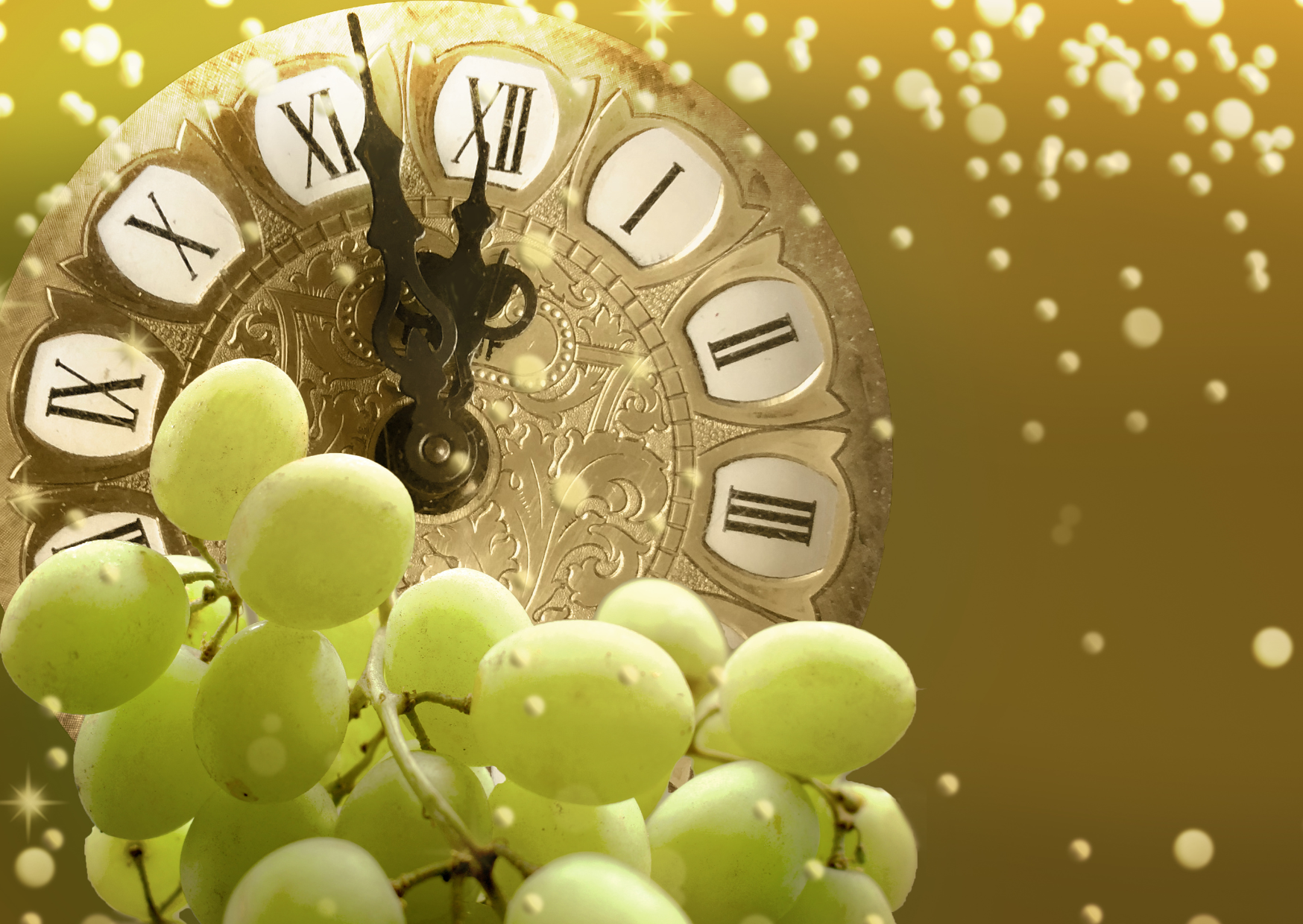
There are two origin stories people tell at the same table. One says Madrid’s smart set copied French champagne customs in the late 1800s and swapped flutes for grapes on the bells. The other says growers in Alicante had a bumper harvest in 1909 and marketed “lucky grapes” to clear stock. Both fit the Spanish sense of humor. Either way, twelve months, twelve bells, twelve grapes. It is simple, a little silly, and strangely moving when the house goes quiet before the first ring.
Bottom line: this is a country that turns a harvest into a ritual and keeps it for a century.
How not to choke and still feel Spanish
Americans try to prove something and end up red-faced. Spaniards prepare. The grapes sold in every supermarket on December 31 are uvas de la suerte, seedless and small, often peeled and packed in sets of twelve. If you are buying loose, choose small, seedless, and chill them so they are crisp and easy. For children and grandparents, halve them. It is normal, not cheating.
Technique that works:
- Hold the plate in your left hand, stem side down so you cannot see the cut if you halved them
- With your right hand, raise one grape per bell and chew twice, swallow, next bell
- Do not talk until the last bell fades
- Do not chase with cava until you are done
Remember: be calm and precise. The bell sets your pace, not your pride.
What it costs to do it right for a family of four
You can do the whole thing for what a round of bar cocktails costs in the States.
- Twelve-grape packs, seedless: €1.50 to €3 per person
- Tinned peeled grapes in light syrup: €2 to €4 per tin, 12 to 24 grapes inside
- Cava brut nature from a supermarket shelf: €4 to €9 for a solid bottle
- Nice cava such as Codorníu or Freixenet Reserva: €10 to €14
- Party bag with hats and confetti, a cotillón: €2 to €5 per person
If you are hosting eight people, €25 to €45 buys grapes for all and two bottles of cava that will make everyone smile.
Key point: this is a ritual with a small price and a big memory.
If you want to stand in Puerta del Sol

You can, and lots of people do, but understand the trade. It is cold, crowded, and you will need to arrive early. There are security checks and a capacity cap. People bring their own grapes and packets of confetti. The view of the clock is worth it once in your life if you love crowds. The rest of us do it in a living room with heat and hot coffee and watch the same clock in better shoes.
Real tip: if you want public energy without crush, pick a neighborhood plaza. Many districts put the broadcast on a screen or people gather around bar TVs a few minutes before midnight. You still get the chorus of bells and strangers saying “Feliz Año” into your shoulder.
Remember: the living room is the front row.
The dinner that comes before the grapes
This is not canapés and cheese boards. It is a real dinner. Most families cook or split dishes. What you will actually see on tables:
- Seafood: prawn platters, clams, sometimes a simple grilled fish
- Meat: roast lamb, roast pork, or a stuffed bird
- Sides: roasted peppers, potatoes, a green salad with good vinegar
- Bread: always, often warm
- Sweets: turrón, polvorones, a plate with oranges and dates so someone can pretend this is health
Dinner finishes around 23:30. Everything gets cleared so the grapes have a stage. Spain puts food away to make room for the ritual. That small pause is what Americans miss.
Little superstitions that make the room smile
They are optional and fun.
- Red underwear for luck in love. Shops sell it in December for this exact night.
- A gold ring in the cava when you toast, then a sip for money luck. Keep the ring large enough not to swallow.
- Right foot first when you step across the threshold after midnight.
- Lentils on January 1 for prosperity. A simple lentil stew for lunch is how many families reset after going to bed at three.
Key line: Spain treats luck like seasoning. A pinch on a good base.
Regional twists you should know
Spain is not one room. In Catalonia people often eat twelve grapes and wear red underwear, then pull out cava from Sant Sadurní with pride. In the Basque Country, dinners get serious with fish and cider and you might see talo before midnight. In the Canary Islands, beaches do their own version and you can end up eating grapes in bare feet under a warm sky while your friend in Burgos is scraping ice off a windshield.
The ritual is the same, the accent changes. Everyone listens for the bells.
What Americans usually get wrong
Two things.
First, trying to make this a countdown party with music under the bells. Spaniards want to hear the clock, and they want the house to hold its breath. The silence is part of the flavor.
Second, thinking the plaza is the point. It is not. The point is everyone in the country watching the same clock and doing the same strange little task together. You do not need a ticket for that. You need twelve grapes and a friend’s sofa.
Remember: ritual beats spectacle on this night.
A home kit that feels exactly right
If you are in the States or in Europe but away from Spain, you can still do this properly. You need:
- Twelve small, seedless grapes per person, preferably chilled
- A bottle of cava brut or brut nature
- Four short glasses if you are a small family, or a dozen if you invited your building
- A plate of something simple after, even if it is just turrón or a tray of sliced oranges
- A screen showing Puerta del Sol at 23:55 your time if you want to sync to Spain, or a clock you trust if you are doing it local
Put the plates out at 23:40. Turn the volume up. When the cuartos ring, stand still. When the first bell hits, begin. One grape per bell. At the twelfth, you pop the cork and hug someone. That is it. You are now doing New Year’s the way an entire country does it.
If you are bringing small kids or older relatives
Cut grapes in half. It is normal. Sit them near the screen so they can see the clock. Give them water instead of cava and let them clink their glass. They will remember what the room felt like. That is what we are keeping.
If someone is nervous about the pace, use the tinned peeled grapes in light syrup and drain them well. They slide, which is the point.
Key point: inclusion beats purity. No one is handing out medals for unpeeled grapes.
Going out after the grapes without wasting money
Spain’s cotillón parties are tickets with open bar and a bag of silly hats. Some are great, many are not. The local way is friends’ houses first, then a familiar bar where the staff knows your name and the floor is clean. You will pay a holiday price for drinks. You will not pay American holiday prices unless you walk into a hotel party at 01:30 and accept everything they offer.
If you prefer daylight and less chaos, sleep and meet friends for chocolate and churros around 11:00 on January 1. Half the city does this and it costs less than last night’s hat.
Where I changed my mind
The first year I lived here, I thought the grape thing was cute and that the real action was outside. Then one year I stayed with older neighbors who asked me to bring cava and small plates. We stood in a tight kitchen with everyone concentrating on the clock like a team in a locker room. The quiet before the bells, the rhythm, the single laugh when someone fumbled number nine, the hugs after. I stopped thinking about fireworks. Now I only go out after the ritual is clean.
A simple shopping list for December 31
- Seedless grapes, 12 per person, plus an extra dozen for fumbles
- Optional tinned peeled grapes for kids and grandparents
- Cava brut or brut nature, one bottle per five or six adults
- Two small sweets for the table after midnight
- A bag of cotillón if you feel like paper crowns
- Lentils for the January 1 lunch
Remember: Spain spends on people and ritual, not on tickets.
To conclude

Skip the countdown chants. Put the plates out. Turn the TV to Puerta del Sol at 23:55. Let the cuartos ring. Eat one grape per bell. Hug everyone. Have a small glass of cava and a slow sweet. If you still have energy, go find your friends outside. If you do not, put lentils to soak for tomorrow and go to bed smiling. December 31 in Spain is smaller, funnier, and more human than the American version, and you can do it wherever you are as long as you listen for the bells.

About the Author: Ruben, co-founder of Gamintraveler.com since 2014, is a seasoned traveler from Spain who has explored over 100 countries since 2009. Known for his extensive travel adventures across South America, Europe, the US, Australia, New Zealand, Asia, and Africa, Ruben combines his passion for adventurous yet sustainable living with his love for cycling, highlighted by his remarkable 5-month bicycle journey from Spain to Norway. He currently resides in Spain, where he continues sharing his travel experiences with his partner, Rachel, and their son, Han.