
You step into a Madrid rental, open the bathroom door, and there is no billowing plastic. Just a sheet of glass, a slim tray, and a floor that somehow never floods.
The first shower in Spain surprises a lot of Americans. No curtain to yank across. No tub with a high ledge. A clean panel, a shallow tray or a seamless floor, a handheld sprayer that parks on a rail, and a drain that actually keeps up.
What looks minimalist is really practical. Spanish bathrooms are built to control water at the source, not mop it later. The glass screen catches splash. The tray or tiled floor tips gently to a drain. The showerhead angle keeps spray inside the footprint. After you turn off the water, you towel off in the stall, squeegee once, and step out. Done.
This is not a design flex. It is a set of choices that make small rooms work better. Once you see how the pieces fit, you stop missing curtains and start appreciating why everything feels drier and cleaner.
Want More Deep Dives into Other Cultures?
– 9 Italian Style Rules That Instantly Outshine American Fashion
– Why Europeans Walk Everywhere (And Americans Should Too)
– How Europeans Actually Afford Living in Cities Without Six-Figure Salaries
– 9 ‘Luxury’ Items in America That Europeans Consider Basic Necessities
What You Are Looking At When You See “No Curtain”
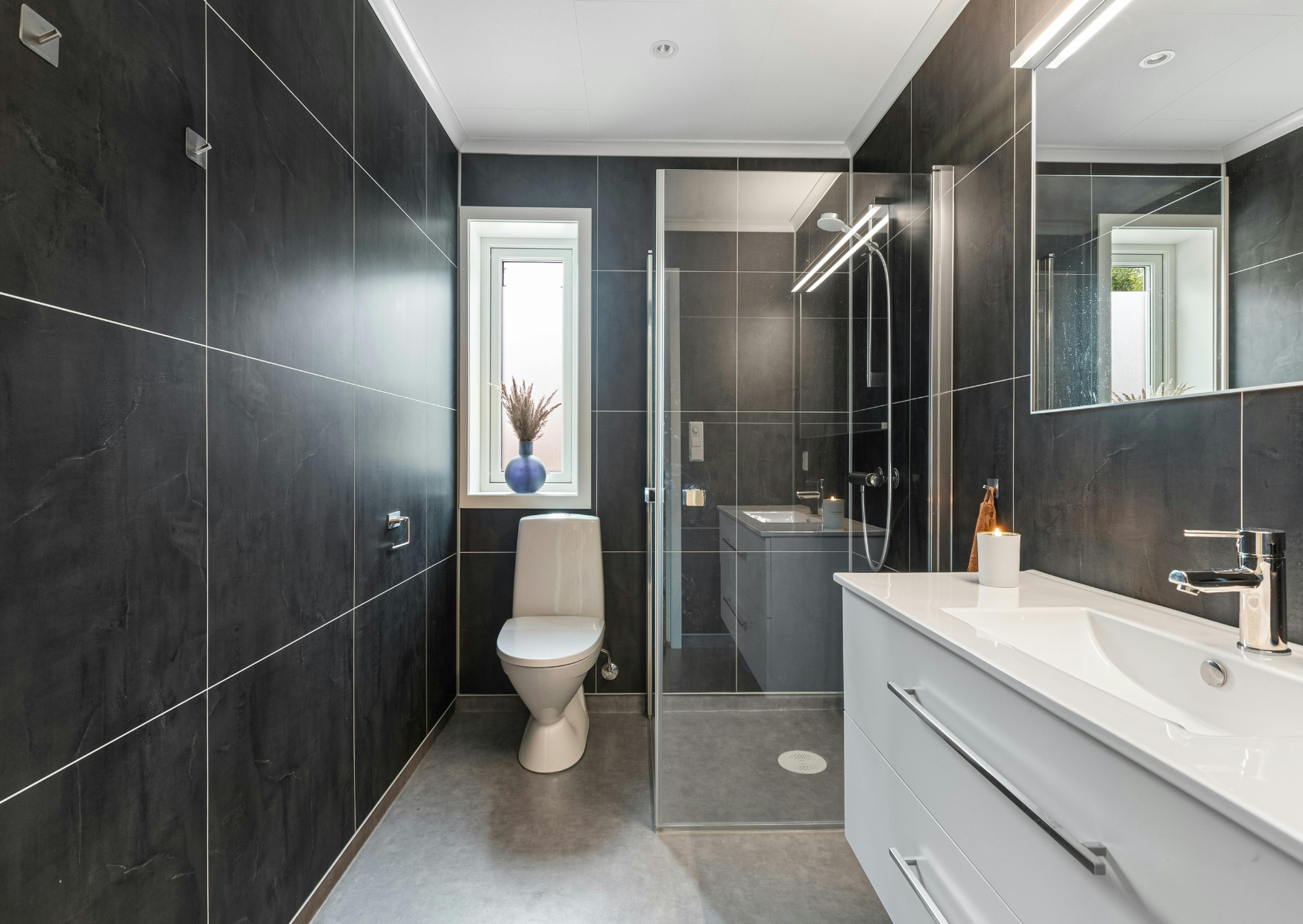
Most Spanish homes and newer hotels use a mampara, a rigid shower screen in tempered glass. Sometimes it is a sliding enclosure over a square tray. Sometimes it is a single fixed panel for a walk-in. Either way, the job is the same, keep splash where it belongs, inside the shower zone. Brands sell these by the millions, and they are not decorative extras. They are the default.
Under the glass sits either a plato de ducha, a prefabricated shower tray with a subtle rim, or a ducha a ras de suelo, a level entry floor with a linear or point drain. Trays in Spain are often low, two to four centimeters at the edge, which keeps water in without creating a barrier for your foot. Walk-ins hide their slopes under tile. Both approaches send water toward the drain without asking you to build dams with towels.
Hardware is part of the picture. The showerhead is almost always handheld on a slide bar, so you can aim it down within the footprint rather than blasting the room. Mixers are thermostatic more often than not, so you set a temperature and stop fiddling, which means fewer wild arcs while you hunt for a sweet spot.
Put these pieces together and you get a system that manages water with shape and angle first, not with fabric.
Why Curtains Are Rare And Glass Wins

The reason you do not see many curtains in Spain is boring and persuasive. Glass screens are more watertight, easier to keep clean, and last longer. A curtain flicks and gaps when you move, then it holds moisture, grows spots, and needs replacing. A screen seals to a tray edge with gaskets or profiles, closes with magnets or overlapping edges, and wipes clean in ten seconds.
Spanish builders and big bathroom brands talk about screens in that language, estanqueidad and hygiene, not just looks. The manufacturing standard for European shower enclosures even spells out water-tightness and durability requirements for domestic use, which means a correctly installed screen must pass basic leak and stability tests. Add a factory anti-limescale coating, common on mid-range panels, and you can keep glass clear with a quick pass of a squeegee.
There is also a local maintenance reality. A lot of Spanish bathrooms are small. A curtain that moves with air or clings to skin throws drops onto the only dry floor you have. Landlords who manage short-term rentals do not want daily mopping, and families do not want to replace mildewed fabric twice a year. Screens solve both problems. They do not mold, they do not flap, and they make a tiny room feel larger because the sightline is clear.
Trends reinforce the habit. Over the last decade, Spain has shifted from bathtubs to trays and walk-ins in renovations. That shift favors glass because it seals better on a tray edge or pairs cleanly with a fixed panel. You will still find curtains in older flats and budget hostels. In most new installs, the question is not curtain versus screen. It is which screen and what size.
How Spanish Bathrooms Keep The Floor Dry

The trick is not one magic product. It is a stack of small decisions.
1) Containment by design.
A screen is tall, usually around one meter ninety to two meters, and it comes with a bottom seal and a profile that sits tight to the tray or tile. Sliding units overlap. Hinged doors close against vertical seals. Fixed walk-in panels are placed far enough from the spray that the water falls before it reaches the opening. All of this keeps splash inside.
2) Edge or invisible slope.
A tray carries a shallow rim plus a built-in slope to its drain. A walk-in hides a slope in the tile, often around two percent towards a linear channel. In both cases, gravity is working for you from the second the water hits the surface. You do not need a raised threshold because the surface itself is doing the directing.
3) Drain capacity that matches the head.
Modern drains for showers are specified to a minimum flow. In plain terms, a standard shower channel or point drain is sized so it can evacuate the water a typical household head produces without pooling. Spanish retailers and drainage manufacturers quote those minimums and test values because the part has to keep up.
4) Spray control by habit.
The handheld head aims down and in. That sounds obvious until you watch how many Americans shower with a fixed head aimed outward. In Spain, the head starts at shoulder or chest height and points into the corner or wall. You pull it off the rail only when needed. Less lateral spray, drier room.
5) A quick squeegee, then out.
Nearly every screen ships with a little raclette. Give the glass two passes, nudge any stray drops on the tray toward the drain with the same tool, then hang it back on the hook. It takes fifteen seconds and it leaves no mist to dribble after you close the door.
6) Towel off inside the footprint.
Most Spaniards dry off inside the stall or on the tray. You step out when you are already not dripping. That single habit is why a white bathmat by the sink can stay dry all morning.
None of this is exotic. It is a kit of small moves and parts that together mean you never need to throw your body weight into a curtain and pray.
How To Use One Like A Local

Your first glass-and-tray shower in Spain will feel easy once you do it the local way.
Open the screen all the way, and place the bathmat outside the shower line, not under the opening. Make sure the bottom gasket or profile sits on the tray edge. Check that the drain cover sits flat and hair is not blocking the slots.
Set the handheld head on the rail at about chest height, angled down toward the wall that has the mixer. Turn the water on and stand inside the spray cone. If there is a delay to get hot water, leave the head aimed down on the tray, not across the room. Once warm, fine tune the height and angle so the spray never points at the opening. If you are using a walk-in with only one fixed panel, stand a little deeper inside the footprint and keep the head inside that invisible frame.
Shampoo or shave with the sprayer still on the rail or in your hand pointed down. Rinse the walls lightly when you are done, then shut the mixer. Before you step out, towel off in the stall. Quickly squeegee the panel, giving extra care to the lower twenty centimeters and any frame rails. If it is a walk-in, pull the water you see on the tile toward the channel and give the panel one pass. Hang the squeegee. Step onto your bathmat. Nothing dramatic happens.
Two tiny extras help. Leave the bathroom door open or the fan running for a few minutes to vent steam. If the screen swings, make sure it is fully closed during the shower. A half-latched magnet is how you get that one cold stream that lands exactly on your socks.
When Floors Get Wet Anyway, And What To Check

If you still end up with water outside the shower, the culprit is usually simple.
The screen was not actually closed. A magnet strip or latch did not catch, or a slider sat two millimeters from shut. Close it firmly until you feel the seal.
The bottom seal is worn or missing. Look at the clear gasket that brushes the tray. If it is split or gone, a drip line will form under the door. Landlords keep spares. Ask for a burlete de mampara or bottom gasket by name.
The drain is slow. Hair clogs the grate in days, not months, when a place turns over often. Lift the cover and clear it. If water still pools, the trap below may be clogged. A quick clean or bio-enzyme dose will help. If not, it is a building maintenance job.
The head is aimed out. Walk-ins only work if the spray cone stays inside the panel’s shadow. Raise the rail and tilt the head toward the back wall.
The tray does not slope or the seal failed against the wall. This is a renovation issue, not your fault. If you see water wicking out at a corner, take a photo and send it to the host. They will send a plumber or slip a temporary barrier in place until they can reseal the joint.
Curtain in an older place. If you do wind up in a flat with a rod and curtain, pull it inside the tub or tray edge, use two magnets or clips on the corners, and point the head down. A towel on the floor outside becomes a sacrificial mat. It is not the Spanish norm in new installs, but it exists in older buildings.
None of these problems require a lecture. They need a two-minute fix or a polite message.
The Building Choices Behind The Dry Floor

Spain’s building rulebook pays attention to moisture. Bathrooms are designed and tested so water does not migrate where it should not. The national technical code’s health chapter is written around preventing damp and leaks. That is why trays are pitched, why walk-ins have shaped screeds under the tile, and why screens are anchored and sealed instead of hung on tension rods.
Drainage components are sized to handle the flow rate of a household shower, and manufacturers publish the math. A point drain or channel with a trap is rated to evacuate a minimum volume under shallow ponding so that you do not stand in a puddle. A lot of Spanish bathrooms also still have a small floor drain outside the shower area, a sumidero, for the room itself. You will not always see one in newer apartments, but it is common enough that mopping is easy when it is needed.
Accessibility norms push the same design in another way. When a tray lip must be very low for a wheelchair or when a floor must be level, the slope to a linear drain becomes essential. That is one reason walk-ins spread so quickly. They look sleek, they are safer for older users, and they keep water where it belongs when done correctly.
Even the showerhead trend helps. Water-saving heads that still feel comfortable run lower flow than the fire-hose specials some Americans grew up with. Less excess flow means less stray spray, and most modern mixers let you keep a steady temperature without wrestling the handle back and forth, which keeps the head pointing where it should.
All of this is unglamorous engineering in the service of a small daily win. You shower, the floor stays dry, the neighbor downstairs never meets your water through their ceiling.
Regional And Hotel Variations You Will Actually Meet
A Barcelona boutique hotel will hand you a flawless walk-in with a floor channel and a single glass fin. A rural rental in Asturias might still have a tub with a half-panel hinged screen. A Valencia new-build is likely to have an extra-flat rectangular tray with a two-panel slider. An old student piso in Madrid might have a rod and a curtain in a tub because the landlord never renovated.
In coastal areas heavy with summer rentals, owners lean hard into glass and low trays because turnover is high and maintenance must be predictable. In the north, where older stone buildings are common, you will still see walk-ins and trays because renovations over the last decade favored those when baths were converted to showers for space and safety.
Hotels usually split the difference. Business hotels install full enclosures because they read as premium and contain splash from quick showers. Design hotels lean to walk-ins with one fixed panel because the room looks generous and the photo sells. Either way, you will rarely see a curtain in a new Spanish hotel bathroom unless the room kept a tub for soaking.
What This Means For You
Spain did not forget to furnish the shower. It chose a different way to keep water in its lane. A glass screen, a pitched surface, a drain that can keep up, and a few habits are all it takes. If you work with the design instead of fighting it, you get a faster shower, less laundry, and no midnight mop.
On your next trip, treat the panel as a door, not décor. Aim the spray down. Towel off inside the footprint. Give the glass one swipe before you step out. If something drips where it should not, it is probably a five-euro gasket or a hairball, not a mystery. The floor will stay dry because the bathroom was built to make that the normal outcome, not the lucky one.

About the Author: Ruben, co-founder of Gamintraveler.com since 2014, is a seasoned traveler from Spain who has explored over 100 countries since 2009. Known for his extensive travel adventures across South America, Europe, the US, Australia, New Zealand, Asia, and Africa, Ruben combines his passion for adventurous yet sustainable living with his love for cycling, highlighted by his remarkable 5-month bicycle journey from Spain to Norway. He currently resides in Spain, where he continues sharing his travel experiences with his partner, Rachel, and their son, Han.