
You reach for your card, someone has already opened a payment link, and within sixty seconds every glass and bite is reconciled to the exact cent.
In the Netherlands, splitting the bill is not a debate at the table. It is a workflow. People decide what each person had, settle the precise amounts, and send or tap. Nobody gets stuck paying for other people’s cocktails, nobody writes speeches about generosity, and nobody argues about tax or tip. The default is accuracy.
To an American, this can feel cold or fussy, especially if you are used to “I’ve got this one, you get the next” or “let’s just divide by four.” In a Dutch room, even friends who love each other will itemize by habit. Not because they are cheap, but because precise sharing is the fairest way to leave everyone even. The tools make it easy, the culture rewards clarity, and the math lands quietly in the background.
This guide translates that habit so you stop guessing. First, what “going Dutch” actually means in the Netherlands. Then, how the bill gets split in practice, including the phrases you will hear and the apps that make the whole thing fast. After that, why the math is exact down to the cent, what to do about tips, when the Dutch absolutely do not split, and how to fit in without overthinking it.
Want More Deep Dives into Other Cultures?
– 9 Italian Style Rules That Instantly Outshine American Fashion
– Why Europeans Walk Everywhere (And Americans Should Too)
– How Europeans Actually Afford Living in Cities Without Six-Figure Salaries
– 9 ‘Luxury’ Items in America That Europeans Consider Basic Necessities
What “Going Dutch” Actually Means Here
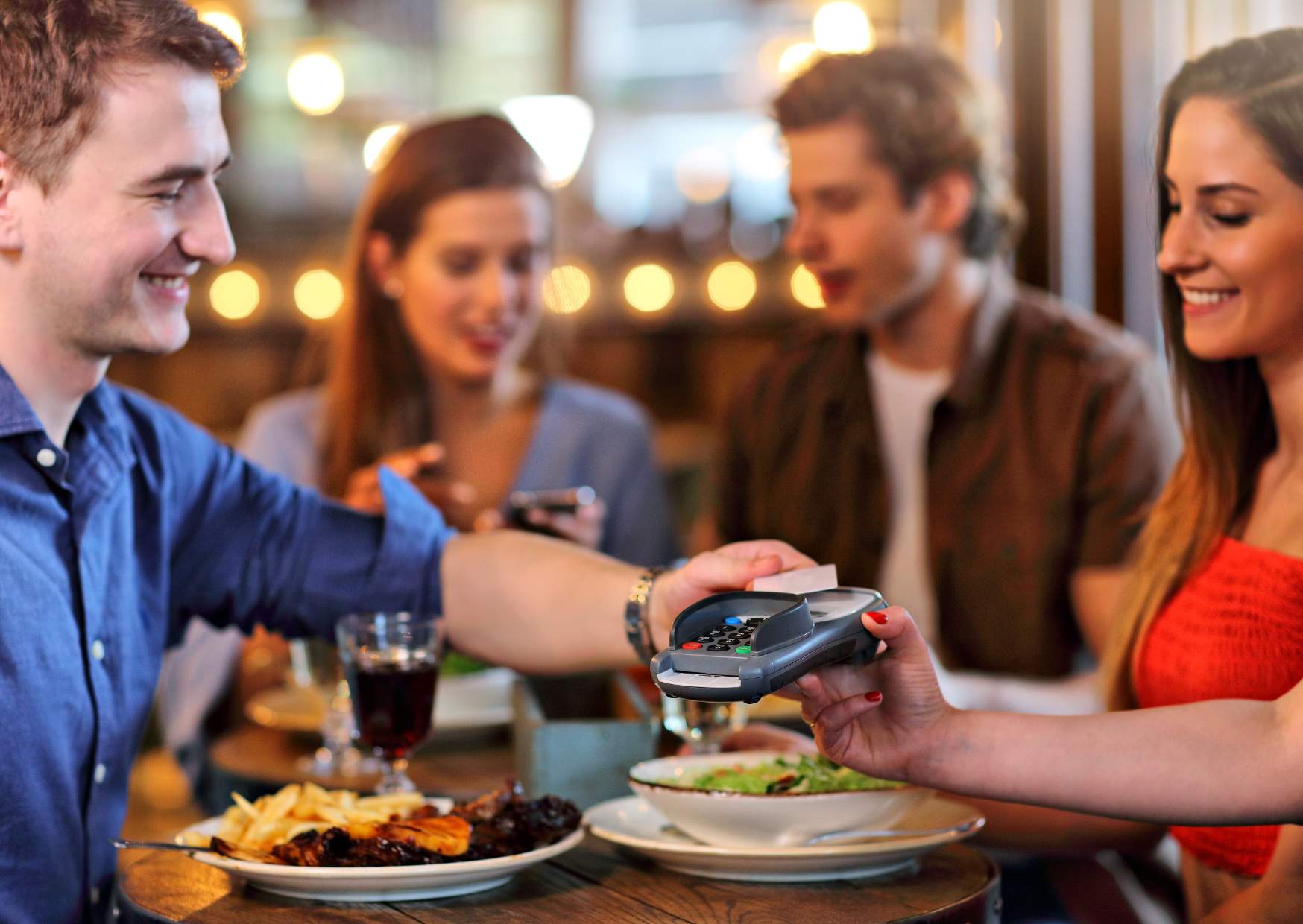
In English, “going Dutch” can mean a few things. Some people use it for equal halves, others for each person paying only what they ordered. In the Netherlands, people almost always mean the second one. Each person covers their items, their share of tax, and whatever tip they agree to add. It is a fairness reflex more than a money stance, and it applies just as easily to a picnic as it does to dinner.
That reflex has low drama because the infrastructure is built for it. Friends treat “we split it” like a basic setting. If a group bill lands, you will hear quick questions about who had what, a number or two repeated aloud, and then phones come out. One person might pay the restaurant in full, then send a payment request to each friend for their exact share. Or the server will simply take multiple cards, one amount at a time. Nobody minds running three or four transactions. The point is to leave the table even, not to test who is generous.
Two concepts help you see the logic. Dutch communication leans direct, so clarity about money does not read as rude. And everyday payments are almost entirely electronic, so there is no friction in settling a few euro amounts with accuracy and speed. That combination turns bill splitting from a social question into a tiny admin task you barely notice.
How The Bill Actually Gets Split

There are three common flows, and you will see all of them in one week of eating out.
Multiple payments at the table.
The server brings the total and someone says, “We betalen apart?” If the answer is yes, the server will either ask what amount to charge each card or take the items by person. Modern terminals in Dutch restaurants are used to this. People state an amount for their card and tap. Then the next person taps. It is quick because card and phone payments dominate and the amounts are entered in seconds. You do not need a separate printed bill for each person to do it this way.
One payer, then payment requests.
Sometimes one person pays the full bill with their card and immediately says, “Ik stuur wel een Tikkie.” A Tikkie is a payment request link you receive by text or in a chat. Tap the link, approve the exact amount through your own bank with iDEAL, and you are done. In 2024 the app processed 157 million requests worth 7.4 billion euro, which tells you how normal this is. It exists to make precision easy among friends without anyone chasing cash.
A group kitty for rounds.
If you are at a bar and plan to order rounds, someone may suggest a “potje” and drop a fixed amount in at the start. When the pot runs out, you refill it or go precise again with a payment request. The kitty is still governed by the same norm: everyone puts in the same amount or settles the difference to the cent at the end.
The phrases you will hear are short. “Apart betalen?” means “pay separately?” “We splitten” is exactly what it sounds like. “Ik stuur een Tikkie” promises that a link is coming. None of this is awkward. It is normal, and it keeps the friendship clean.
Why The Math Goes Down To The Cent

The Dutch system makes exactness painless.
Cards and phones rule.
By the end of 2024, 94 percent of in-person card payments in the Netherlands were contactless, and over two in five were made with a phone or watch. People expect to tap for tiny amounts as casually as for big ones. Cash is still around, yet only about one in five in-person purchases in the Netherlands is paid in notes and coins. That electronic majority makes it trivial to settle exact prices without rounding up for lack of change.
Cash has its own rounding rule.
On the rare occasions you pay cash, shops are allowed to round the total of the bill to the nearest 5 cents at the register. Totals ending in 1, 2, 6, or 7 cents round down, and 3, 4, 8, or 9 round up. Prices are still printed to the cent, but the cash total rounds at the end. Electronic payments are not rounded, so the card amount remains exact to the cent. The existence of that rule actually reinforces the culture of exactness, because phones and cards keep totals precise while cash only sometimes nudges them.
Payment requests are part of daily life.
The Tikkie link is a cultural shorthand. It lets you request 4.17 euro for that one person’s sparkling water and fries without anyone thinking you are petty. People pay these within minutes. The scale alone shows it is not niche. In 2024, Tikkie handled 157 million requests and 7.4 billion euro in total. That volume is why “I’ll send a Tikkie” feels like “I’ll text you the address.” It is just how things move.
Put these together and the Dutch “to the cent” habit has nothing to do with being tight-fisted. It is a side effect of a system where exact numbers are easy, fast, and expected.
The American Math Clash
Americans who bristle at precise splits are usually reacting to two familiar habits from home.
First, many U.S. groups default to splitting equally for speed, even if half the table ordered drinks and the other half did not. In the Netherlands, equality means each person pays exactly their share. The teetotaler does not subsidize the Negroni. The person who only had soup does not pay for a three-course meal. Precision reads as fairness, not fussiness.
Second, U.S. tipping culture makes “rounding up” feel generous and respectful to staff. In the Netherlands, service is not built on tips. People do tip, but the baseline is to round the total modestly or add a small percentage for great service. There is no 20 percent rule, and no server assumes you will pay for your friends’ choices. When a Dutch table agrees on a tip, they add it as a small extra on top of each person’s exact share or they tell the server a round, clean number to charge each card. That is enough, and it fits the local norm.
If you want a number to hold in your head, treat 5 to 10 percent as generous for very good service, with plenty of people simply rounding up on small checks. If someone insists on more, you will hear it, and the group will input that figure before splitting. What you will not see is a silent 20 percent tacked on to every share as an obligation.
How To Split Like A Local

You do not need an app lesson to fit in. You need a few simple moves.
Say you want to pay your part.
“Apart betalen?” does the job if you are at the terminal stage. If you are the one who will pay the whole bill and settle later, say “Ik stuur wel een Tikkie.” People will nod and wait for the link.
Match the group’s tool.
If they use Tikkie, follow the link and approve through your bank. If the server offers to take multiple cards, respond with your amount when asked. If friends are trading small amounts over several nights, keep a running list and settle every few days with one payment request. Exactness does not require immediate settlement every time, only accurate settlement when it happens.
State the tip once.
Ask, “Wat doen we met fooi?” Someone will suggest a round number or a small percentage. Agree and add it to the inputs. If the server is keying in card amounts one by one, tell them the new total for your share, not the untipped figure.
Do not debate micro-items.
If you shared three bites of a friend’s dessert, most people will ignore it or add fifty cents to their own share with a smile. The spirit is precise but friendly. The important lines are the big ones, like a round of cocktails versus a glass of tap water.
Use the language that softens the edges.
“Zal ik vast betalen en stuur ik jullie een Tikkie?”
“Zetten we de fooi op tien procent?”
“Doen we ieder z’n eigen?”
These phrases are clear and calm. Nobody hears them as a test.
When The Dutch Do Not Split

Accuracy is default, not dogma. There are familiar exceptions.
Birthday rule.
On your birthday you treat. At work, at home, and often out with friends, the birthday person picks up the bill or brings the cake. The verb is trakteren, and it is one of the most consistent bits of Dutch culture you will bump into. If someone says “ik trakteer,” put your card away. They mean it.
Hosting something you initiated.
If you invite people to a specific plan as host, especially at home, you cover the costs or make it clear up front that you will split later. A spontaneous “let’s grab drinks” among peers will usually end in a split. A deliberate dinner you arranged can lean host-pays without anyone blinking. If you plan to split a hosted meal, say so at the invite stage.
Dating and power dynamics.
Plenty of Dutch couples go exact on early dates. Plenty also trade rounds or one person pays and the other gets the next thing. The pattern is more fluid than in countries with strict “who pays” rules, and the easiest way to avoid awkwardness is to propose your habit out loud. “Zal ik deze doen, doe jij de volgende” is normal. If the other person prefers to split exactly, they will say so and nobody will read it as cold.
Company events.
Business dinners and team events are not split among employees. The company pays. If someone reaches for a card at a work function, it is usually the manager’s or the corporate card.
The point is to read the setting. When the event feels like a gift, you accept. When it feels like peers doing something together, you split.
Exactness Without Being Weird: Small Etiquette
Three quiet habits will keep you from feeling like the bean counter at the table.
Offer the simplest path.
When the server arrives with the terminal, say, “Zullen we per persoon betalen?” and volunteer to go first with your number. You make the method feel normal by acting like it is normal.
Be quick with your part.
If someone pays in full and sends a payment request, approve it right away. The speed is part of the courtesy. It communicates trust and keeps your friend from playing accountant.
Mind the edge cases gracefully.
If someone’s main meal was comped because of a kitchen mistake, the group folds that into the math without drama. If a student or a guest is clearly on a tight budget, people adjust their own shares in silence or pick up a round later. Exact does not mean inflexible.
Why This System Feels Good Once You Try It

Two things happen when you live inside the Dutch split for a while.
First, small resentments die off. The person who does not drink does not end the night annoyed about paying for the table’s wine. The friend who always orders the extra side stops feeling like a burden. When money is settled fairly and predictably, the friendship gets more room.
Second, the group gets faster. After a few meals, nobody explains anything. You put numbers in, you pay, you move. The server smiles because your table is efficient. You smile because you are not doing mental math about other people’s choices.
None of this means you must abandon your own generosity. It means you adjust the channel you use to express it. Buy a bottle for the table. Bring dessert to a friend’s place. Offer to treat a round. Those gestures land better than quietly overpaying on every group bill.
A Short Playbook For Americans In Dutch Rooms
Bring your card and your phone. Expect to tap for your own amount or to receive a payment request. If you want to treat, say so early and clearly. If you want to split, ask simply. Do not assume anyone will be offended by exactness.
When the tip conversation happens, suggest a number and move on. Five to ten percent for notably good service is generous here. For small tabs, rounding up is common. There is no need to argue for the 20 percent norm from home. People will hear it as imported and unnecessary.
If you genuinely prefer the “I get this, you get next” rhythm with close friends, you can build that. It exists in Dutch life too, just on top of a foundation of precision that keeps the ledger clear. Start precise, then drift toward turns once you know each other.
And if someone says “Tikkie terug,” smile. You are about to receive a link, pay your fair share to the cent, and keep the friendship neat. It is not petty. It is just how the country keeps evenings simple

About the Author: Ruben, co-founder of Gamintraveler.com since 2014, is a seasoned traveler from Spain who has explored over 100 countries since 2009. Known for his extensive travel adventures across South America, Europe, the US, Australia, New Zealand, Asia, and Africa, Ruben combines his passion for adventurous yet sustainable living with his love for cycling, highlighted by his remarkable 5-month bicycle journey from Spain to Norway. He currently resides in Spain, where he continues sharing his travel experiences with his partner, Rachel, and their son, Han.