
In the west of England there is a question that can divide a room, strain a friendship, and provoke genuine, if good-humored, outrage, and it is this: when you build a scone with jam and clotted cream, which goes on first? Two neighboring counties, Devon and Cornwall, have taken opposite and immovable positions, and the disagreement has the flavor of a centuries-old border war fought with teaspoons.
In Devon, you spread the clotted cream first, then spoon the jam on top. In Cornwall, you spread the jam first, then add the cream on top. That is the entire war, the order of two ingredients on a split scone, and the English take it seriously enough that it is a running national debate, complete with royal partisans and fierce local pride.
The beauty of this rivalry is that it is the most trivial-sounding feud imaginable and yet genuinely felt, a perfect example of the English love of a small, firmly-held, utterly harmless allegiance. It also sits atop one of the loveliest traditions in English food, the cream tea, the afternoon ritual of warm scones, clotted cream, jam, and a pot of tea, which is worth knowing and making whichever side you take. Here is what a cream tea is, the story of the two-county war, how the sides line up, which to pick, and a recipe for scones and the whole cream tea so you can stage the battle on your own table. This is a bit of culinary tradition and a recipe, offered in good fun.
What a Cream Tea Is
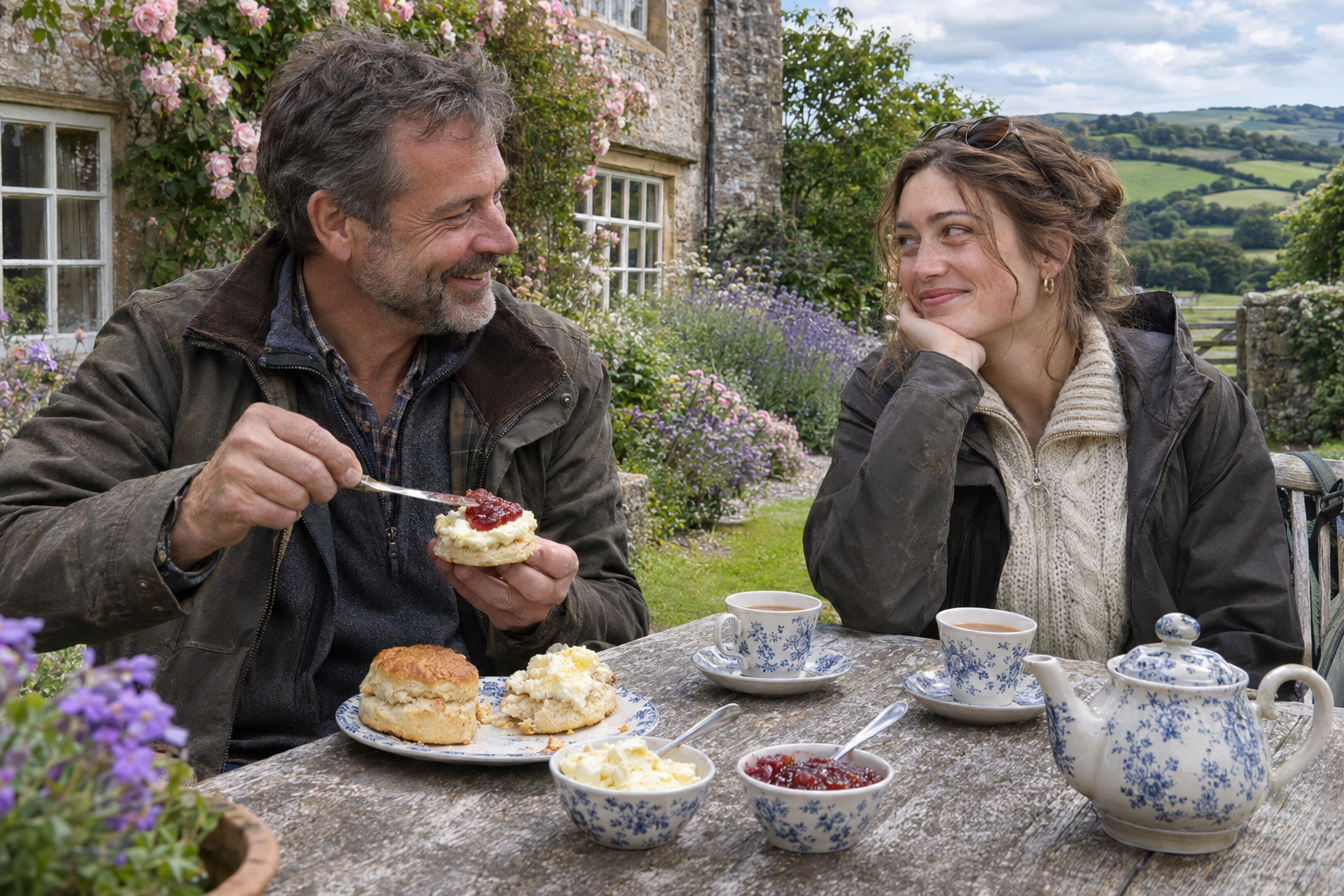
Before the war, the thing being fought over: the cream tea is a simple and glorious English afternoon ritual, built from a few humble parts that together make something far greater than their sum. At its center are warm scones, the soft, slightly sweet little baked rounds, somewhere between a biscuit and a cake, split in half to be topped. Alongside come two essential spreads, clotted cream, the thick, rich, almost buttery cream of the West Country, and jam, classically strawberry, their richness and fruit the perfect partners for the plain scone. And of course a pot of tea, strong and milky, to drink alongside.
The whole thing is a specialty of the West Country, the southwest of England, and above all of Devon and Cornwall, the two counties famous for their dairy and their clotted cream, where the cream tea is a point of regional pride and a staple of tea rooms, gardens, and seaside cafes. To sit in a Cornish garden or a Devon tea room on a summer afternoon with a plate of scones, a dish of clotted cream, a pot of jam, and a steaming cup of tea is one of the quintessential pleasures of English life, unhurried and deeply comforting. The cream tea is the setting in which the great jam-or-cream war is waged.
The key ingredient that makes a cream tea special, and that visitors often do not know, is the clotted cream itself, which is unlike anything in the American kitchen. Made by gently heating rich cream until it thickens and forms a crust, clotted cream is extraordinarily thick, almost solid, with a nutty, cooked richness far beyond whipped or heavy cream, and it is the soul of the cream tea. Spread thickly on a warm scone, it is the thing that elevates the ritual from a snack to a treasured tradition, and it is the ingredient both Devon and Cornwall are so proud of that they went to war over how to apply it.
The Two-County War
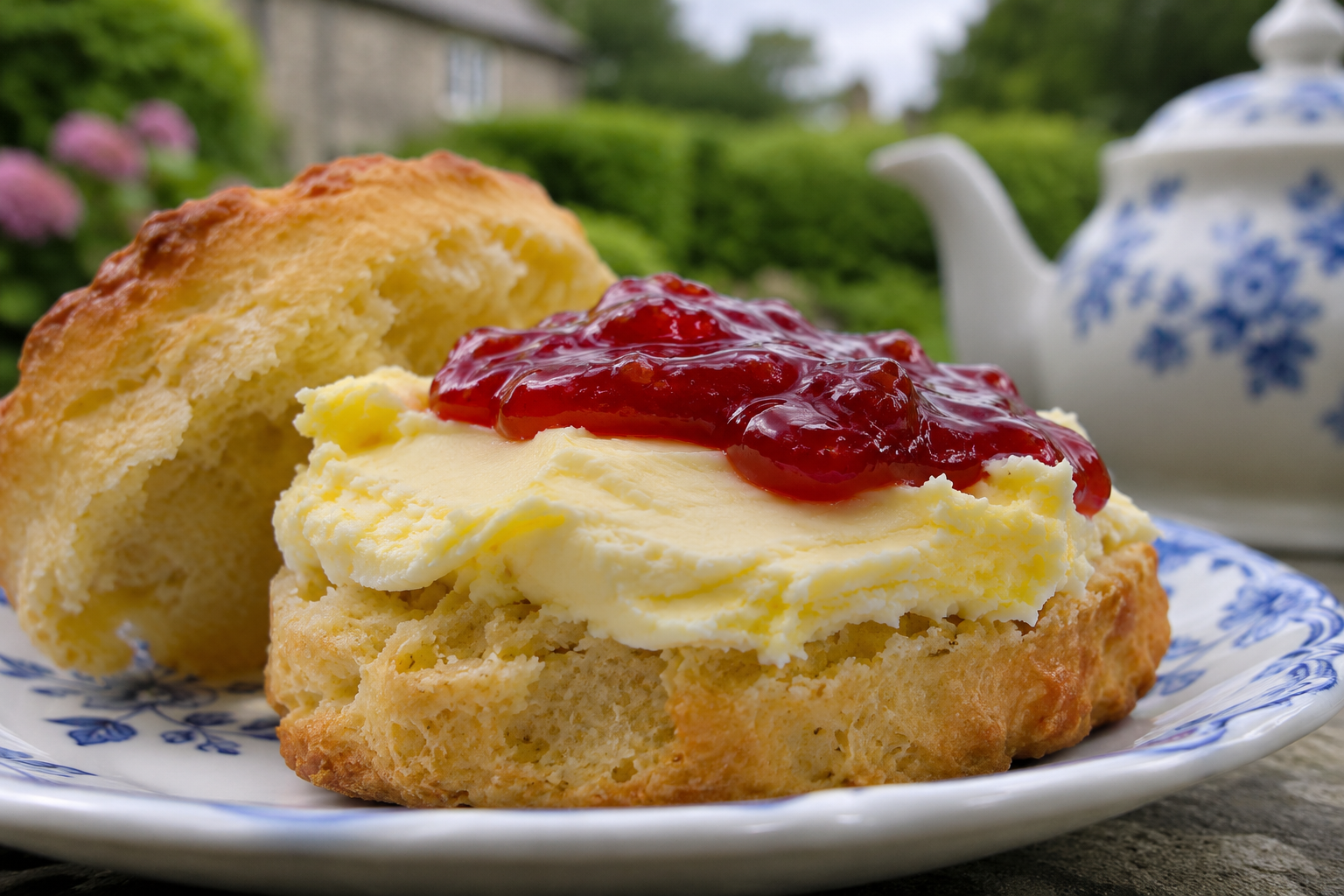
The war itself is beautifully simple and beautifully entrenched. In Devon, the correct method, as every Devonian knows beyond question, is to split the scone, spread it thickly with clotted cream first, as you would butter, and then spoon the jam on top of the cream. In Cornwall, the correct method, as every Cornishman knows with equal certainty, is to spread the jam first, directly onto the scone, and then add the clotted cream on top of the jam. Each county regards its own order as obviously right and the other’s as faintly absurd, and the disagreement has the settled, hereditary quality of a feud passed down through generations.
The rivalry is a genuine expression of the old regional pride and friendly antagonism between the two neighboring counties, which share a border, a landscape of dairy farms and dramatic coastline, and a tradition of clotted cream, and which have long enjoyed competing over who does it best. The cream tea, as the shared regional specialty, became the natural battleground, and the order of jam and cream the flag each county planted. It is the kind of local rivalry that gives English regional identity its texture, a small, proud, affectionate quarrel that both sides enjoy keeping alive precisely because it is so delightfully unserious and yet so firmly held.
The debate gets national attention and even reaches the highest places, with the question of jam-first or cream-first a perennial topic of light English argument, and with public figures and even royalty occasionally revealing their allegiance, to the delight or outrage of the two counties. It flares up reliably in the press every summer, treated with exactly the mock-seriousness it deserves, a bit of national theater over the correct assembly of a scone. That a country can sustain a cheerful, enduring argument over so tiny a matter is part of the charm of the whole thing, and part of why the cream tea is as much fun to talk about as it is to eat.
How the Sides Line Up
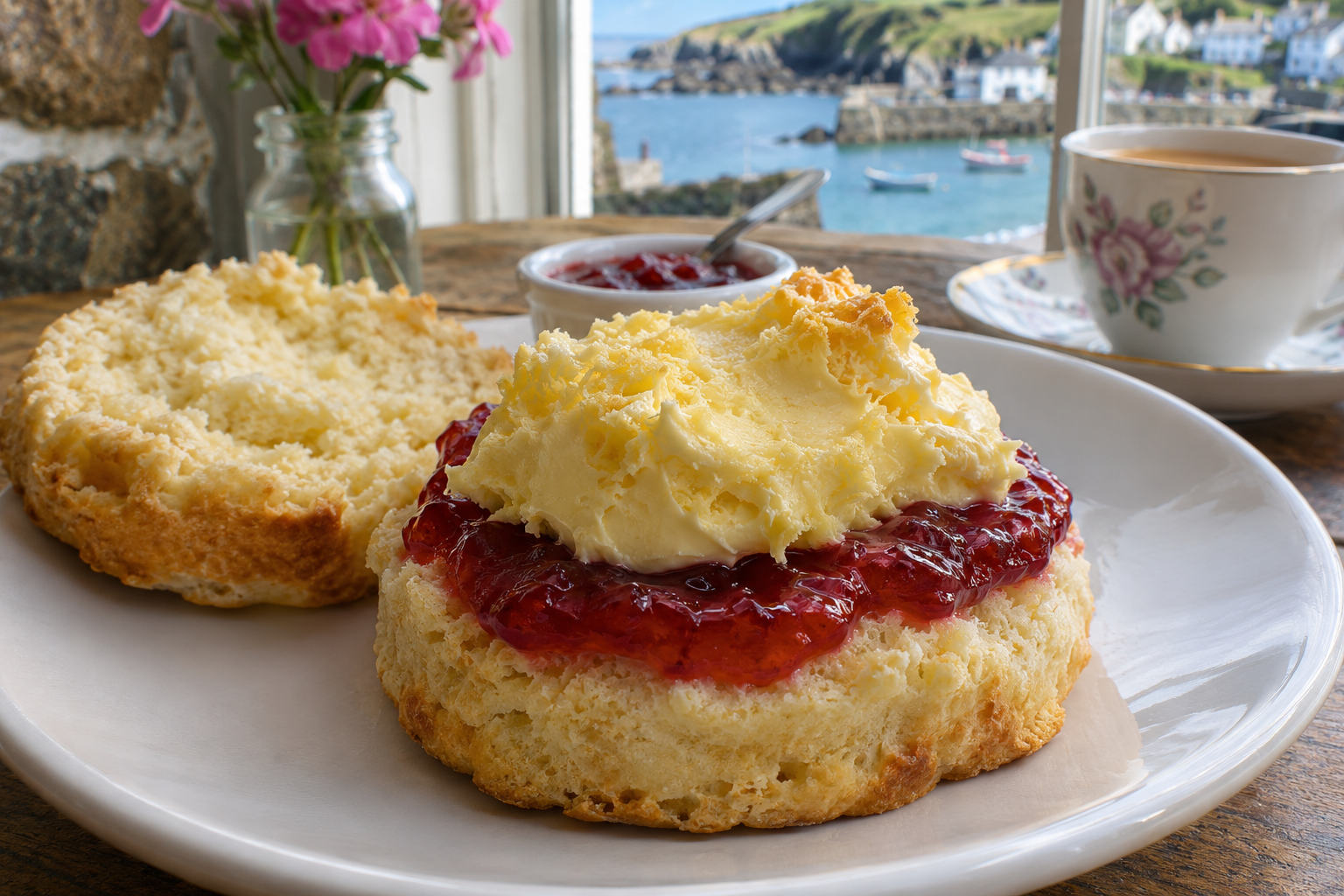
Beyond mere tradition, each side actually has an argument, which makes picking a side more fun. The Cornish case for jam first is partly practical: spreading the jam directly onto the scone, then crowning it with a generous dollop of clotted cream, means the cream sits on top where you can see and admire its thickness, and some argue the jam spreads more easily onto the bare scone while the cream is too thick to spread neatly over jam. It also, Cornish partisans say, lets the cream be the glorious finishing flourish, piled proudly on top. If you like the cream showcased on top and the jam as the base layer, you are Team Cornwall.
The Devon case for cream first is that the clotted cream, spread onto the scone like butter, forms a rich base that the jam then tops, so that each bite leads with fruit and the cream acts as the luxurious foundation beneath. Devonians argue this is the more natural order, cream as the spread and jam as the topping, mirroring how you might butter bread and then add preserve, and that it keeps the cream in closer contact with the warm scone. If you like the cream as the base and the jam as the bright finishing layer, you are Team Devon.
In truth the difference in taste is minimal, since the same scone, cream, and jam end up in your mouth either way, which is exactly why the fierceness of the war is so delightfully out of proportion to the stakes. Picking a side is therefore a matter of pure allegiance and fun rather than any real culinary consequence, an excuse to plant a flag and defend it with mock passion. You genuinely cannot go wrong, which frees you to pick the side that amuses you, to declare for Devon or Cornwall on a whim and then defend your choice to the death over the teapot. That is the whole spirit of the thing.
Woven Into West Country Life
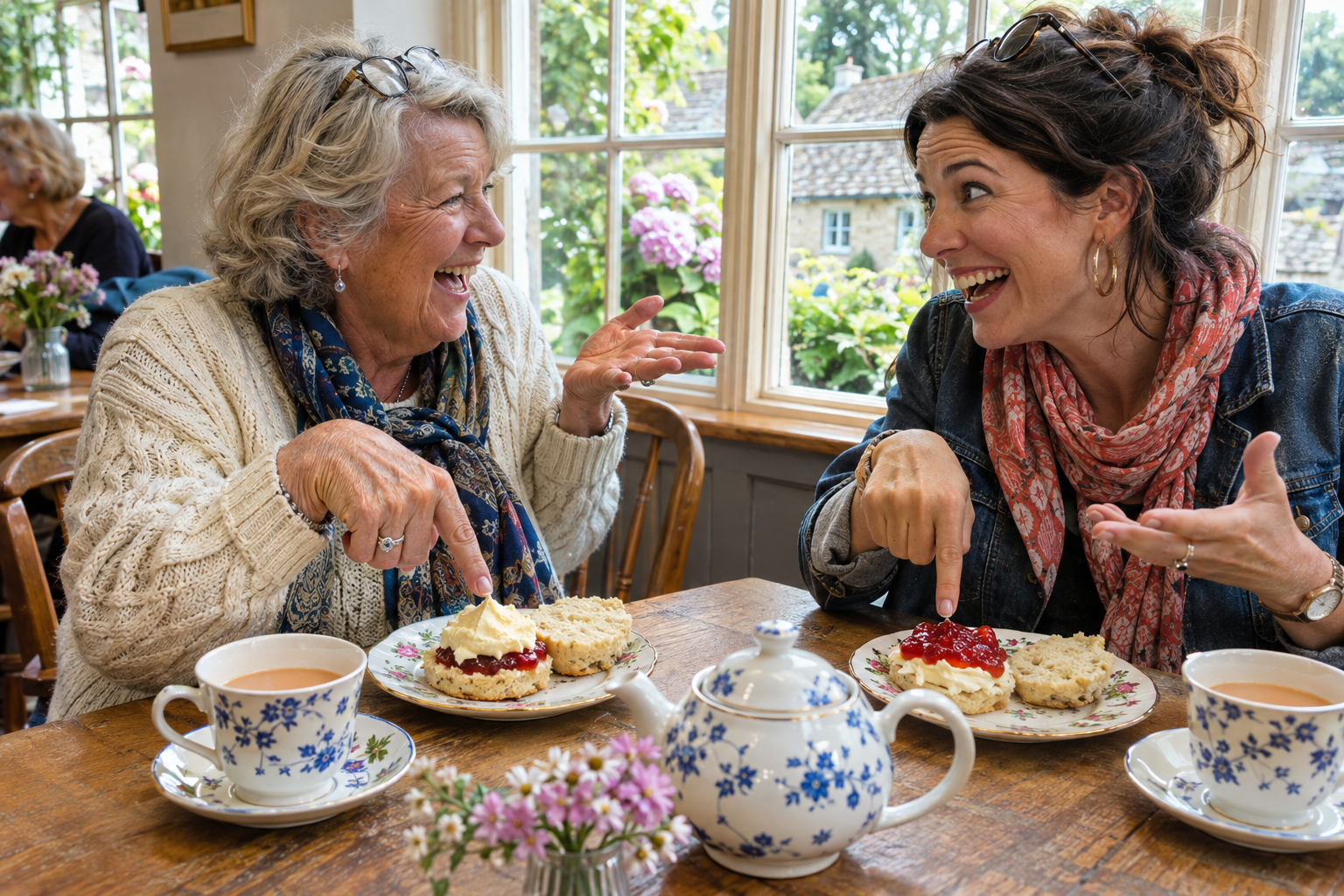
The cream tea and its war are woven into the life of the West Country and into English leisure more broadly, far beyond a mere menu item. Cream teas are a mainstay of the region’s tea rooms, farm cafes, and historic gardens, and a cornerstone of the visitor experience in Devon and Cornwall, where stopping for a cream tea is as much a part of a day out as the coast path or the beach. The ritual is tied to the gentle English pleasures of an afternoon, a pause in the day for something sweet and civilized, and it carries all the warmth of the seaside holiday and the country garden.
The tradition is also bound up with English institutions and the culture of the afternoon, from the tea rooms of National Trust properties, where a cream tea after a walk round a historic house is almost obligatory, to the broader ceremony of afternoon tea of which the cream tea is a simpler, more rustic cousin. It is comfort food with a sense of occasion, humble in its ingredients but rich in association, evoking summers and gardens and slow afternoons. That depth of association is part of why the two counties guard their versions so jealously, because the cream tea is not just food but a piece of regional and national identity.
For the visitor to England, a cream tea in Devon or Cornwall is one of the essential experiences, and taking note of which order the local tea room assembles its scones, cream-first or jam-first, is a small way of reading which county you are in. And for the home cook anywhere, the cream tea is wonderfully easy to recreate, needing only scones, cream, jam, and tea, which means you can bring this most English of rituals, war and all, to your own table on any afternoon. The recipe below gives you the scones and the whole assembly, and leaves the great question, jam first or cream first, entirely and gloriously up to you.
Make It: Scones and a Proper Cream Tea
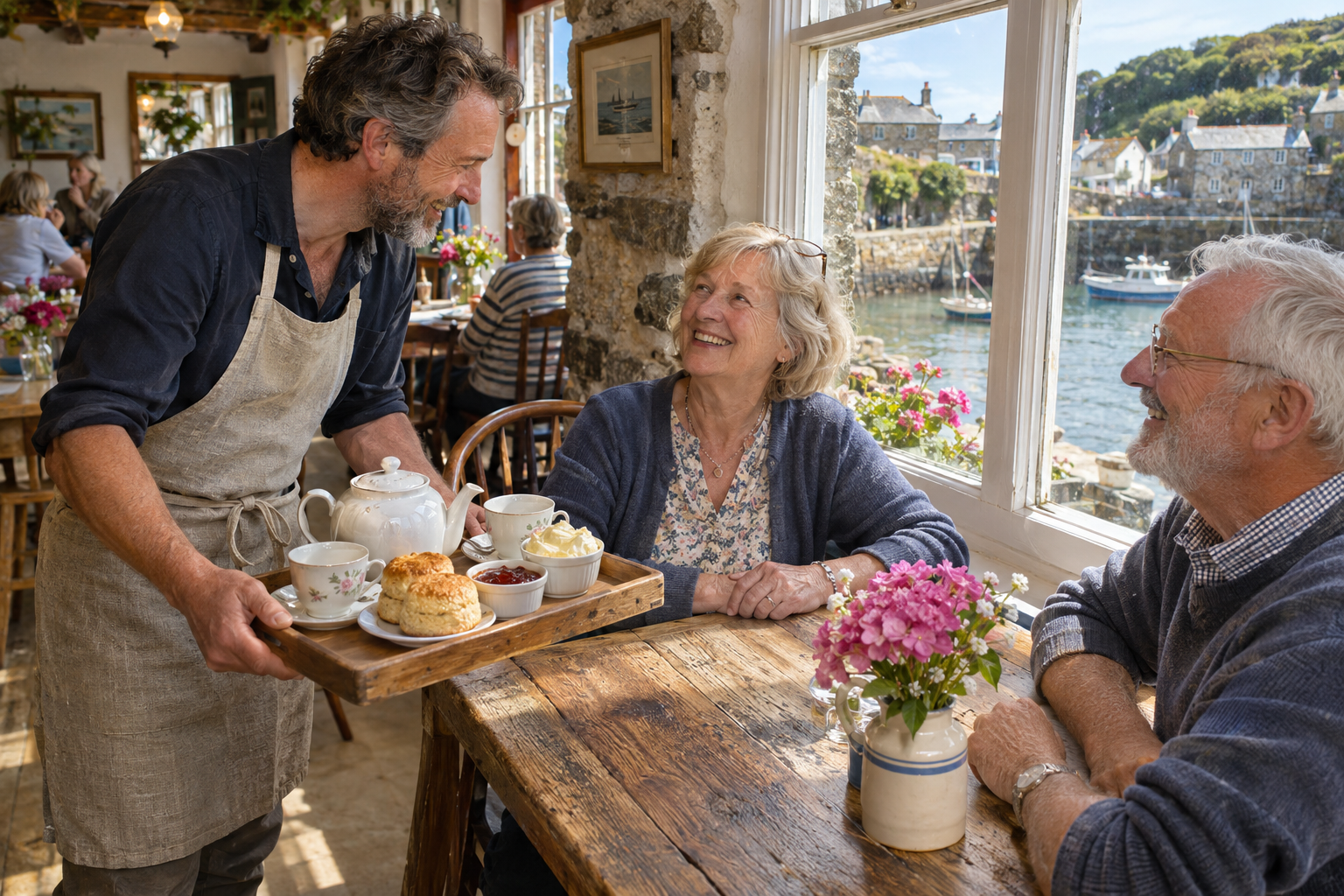
This makes a batch of classic English scones, enough for a cream tea for several people. Serve warm with clotted cream, strawberry jam, and a pot of tea, and assemble them your way, Devon or Cornwall, jam and cream in whichever order you have chosen to defend. A note on clotted cream follows the recipe for those who cannot buy it.
Ingredients
For the scones:
- 350g self-raising flour (or plain flour with 4 teaspoons baking powder)
- 1 teaspoon baking powder
- a pinch of salt
- 85g cold butter, cubed
- 3 tablespoons sugar
- 175ml milk
- 1 egg, beaten, for glazing
To serve:
- clotted cream
- strawberry jam
- a pot of tea
Instructions
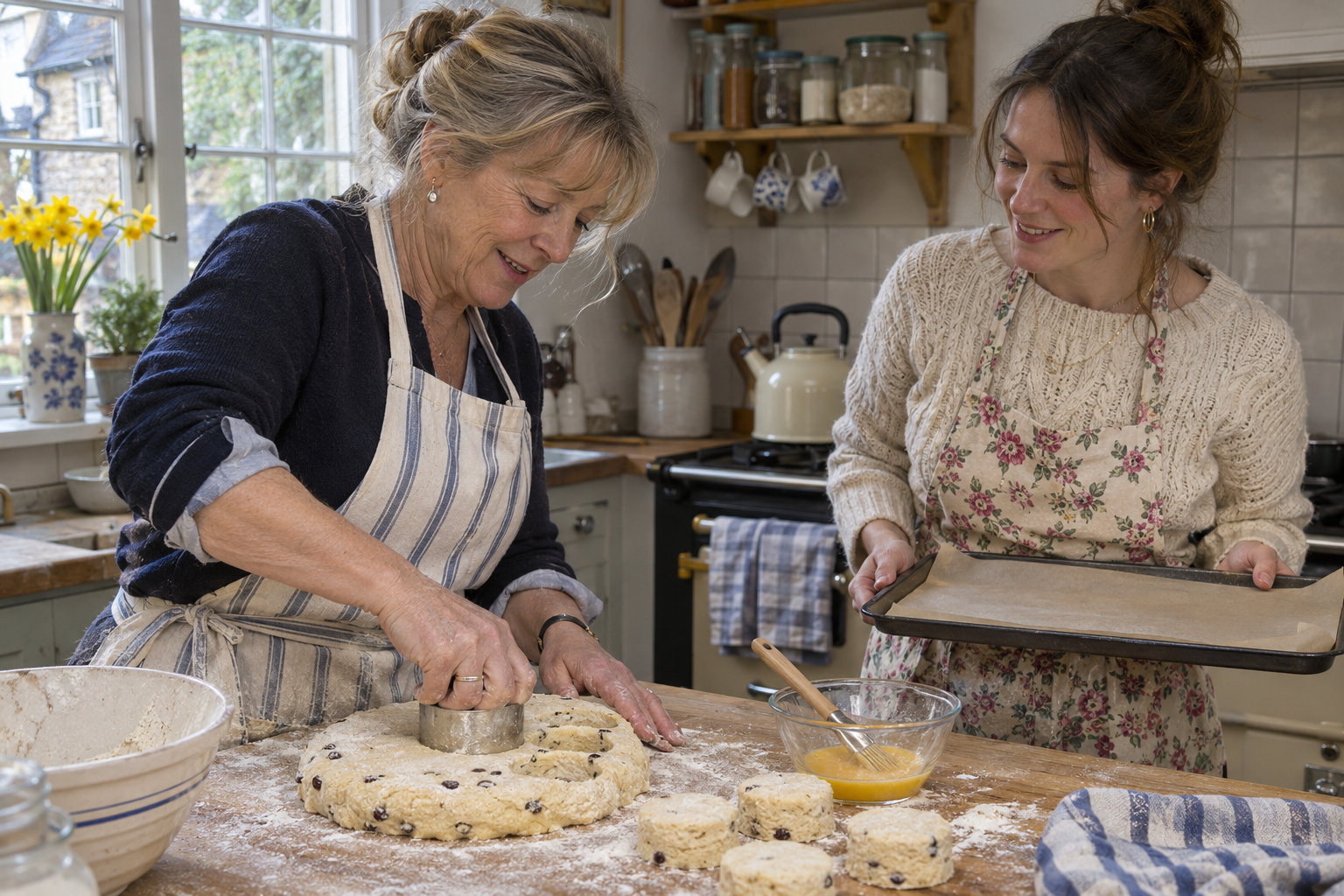
Heat the oven to 220C and line a baking tray. Put the flour, baking powder, and salt in a bowl and rub in the cold butter with your fingertips until the mixture looks like fine breadcrumbs, then stir in the sugar.
Warm the milk slightly, then make a well in the flour and pour most of it in, mixing quickly with a knife to a soft, slightly sticky dough, adding the last of the milk if needed. Do not overwork it, because a light hand is what keeps scones tender, so mix only until it just comes together.
Tip the dough onto a floured surface and gently pat it out to about an inch and a half thick, handling it as little as possible. Cut out rounds with a cutter, pushing straight down without twisting so they rise evenly, and gather and pat out the scraps to cut more.
Place the scones on the tray, brush the tops with the beaten egg for a golden finish, and bake for about 10 to 12 minutes until risen and golden brown. Let them cool a little on a rack, as they are best served warm rather than hot.
To serve, split each warm scone in half. Now pick your side.
For the Cornish method, spread jam onto the scone first, then top with a generous dollop of clotted cream. For the Devon method, spread the clotted cream on first, then spoon the jam on top. Serve at once with a pot of strong tea, and defend your chosen order against all comers.
A Note on Clotted Cream
Clotted cream is hard to find outside Britain, and it is the one ingredient that truly makes a cream tea, so it is worth seeking out at a specialty or British import shop if you can. If you genuinely cannot find it, a very thick whipped cream, or mascarpone loosened slightly, makes an imperfect but acceptable stand-in, though it lacks the nutty richness of the real thing. You can also make clotted cream at home by baking heavy cream (not ultra-pasteurized) in a low oven for many hours until it thickens and forms a crust, then chilling it, which is slow but gives you the authentic feel for your scones.

About the Author: Ruben, co-founder of Gamintraveler.com since 2014, is a seasoned traveler from Spain who has explored over 100 countries since 2009. Known for his extensive travel adventures across South America, Europe, the US, Australia, New Zealand, Asia, and Africa, Ruben combines his passion for adventurous yet sustainable living with his love for cycling, highlighted by his remarkable 5-month bicycle journey from Spain to Norway. He currently resides in Spain, where he continues sharing his travel experiences with his partner, Rachel, and their son, Han.