
There is an old folk idea, scattered across the Mediterranean and beyond and attached to more than a few grandmothers, that a little vinegar taken with a meal does something good for you, steadies you, helps the heavy food go down. It sits in the same family as the splash of vinegar on the salad eaten before the main course, the sharp note that the old cooking always seemed to want alongside the rich. The modern version of the claim is more specific, that vinegar blunts the rise in blood sugar after a carb-heavy meal, and since I happened to be able to wear a continuous glucose monitor, the kind of sensor that reads your blood sugar all day, I decided to put the folk idea and the modern claim to a simple test. For thirty days I took a spoon of vinegar, diluted in water, before dinner, and I watched what the monitor said.
This is a report on what one person’s glucose monitor actually showed over a month, which makes it an honest anecdote rather than a study, and I want to be straight about the size of what I found, because the effect was real but modest, not magic. I went in having read that vinegar has a genuine, repeatable, small effect on post-meal blood sugar, and my month was consistent with exactly that, a small, real, somewhat inconsistent flattening of the dinner spike. Here is the setup, what the readout showed, what it felt like in practice, what the science supports, and the cautions that genuinely matter, including for anyone with diabetes. This is a personal experiment and general information, not medical advice.
The Idea and the Rules

The specific claim I was testing is that acetic acid, the active component of vinegar, slows down how quickly a meal’s carbohydrates are digested and absorbed, so that the blood sugar rises more gently after eating instead of spiking sharply. A gentler rise and a lower peak are generally considered a good thing, since big repeated spikes are part of what strains the body’s blood-sugar handling over time, and a cheap kitchen ingredient that could soften them would be a nice thing to have. The continuous glucose monitor was the perfect tool to see whether it actually happened in me, because it would show the shape of the curve after every dinner.
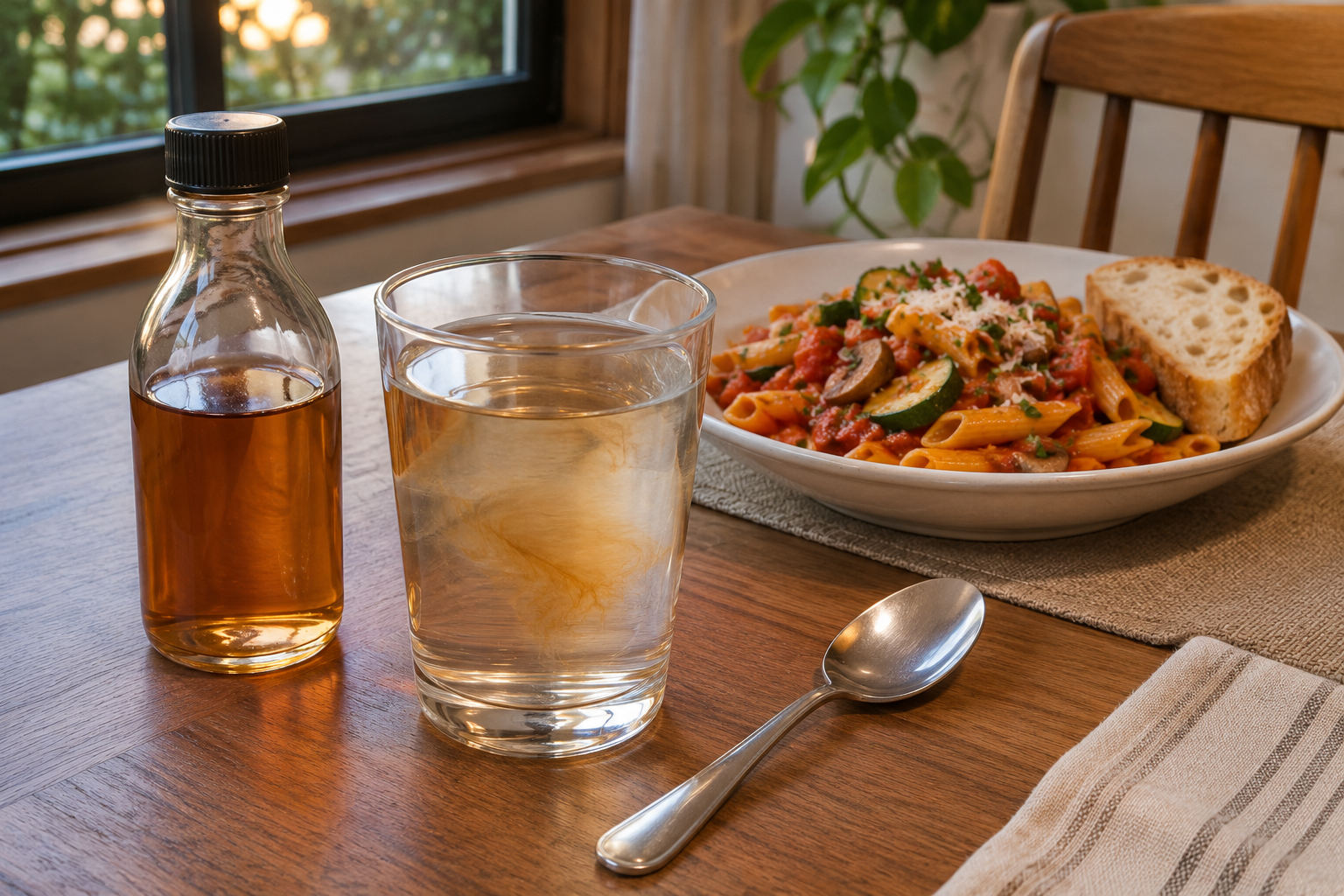
My rules were simple and consistent. Before dinner each night for thirty days I took one tablespoon of vinegar diluted in a glass of water, drunk a few minutes before I started eating, never straight, because undiluted vinegar is harsh on the mouth and throat and bad for the teeth. I used ordinary vinegar, and I did not otherwise change how I ate, keeping my dinners roughly as varied and as carb-containing as usual so that the vinegar was the only thing I was adding. The monitor ran the whole time, and I paid particular attention to the two hours after dinner, when the post-meal spike shows up.
To make the comparison meaningful I also had a baseline, because I had worn the monitor before without the vinegar and knew roughly what my ordinary post-dinner curves looked like. That let me compare vinegar nights against my own typical nights rather than guessing, which is the only way an experiment like this means anything. I was not testing vinegar against nothing in theory, I was testing my own dinner spikes with and without the spoon, in the same body eating broadly the same food, which is about as fair a personal test as I could manage.
What the Readout Showed
The headline result, reported honestly, is that on most vinegar nights the post-dinner curve was flatter than my typical baseline, with a lower peak and a gentler rise, and that the effect was real enough to see repeatedly across the month. Where a carb-heavy dinner would normally push my glucose up into a sharp peak before coming back down, the vinegar nights tended to show a more rounded, lower hump, the spike shaved down by a modest but visible amount. It was not a dramatic flattening, but across many nights the pattern was consistent enough that I stopped doubting it was there.
Putting a rough number on it, the reduction in my post-dinner peak on vinegar nights looked like it was on the order of ten to twenty points on the monitor’s scale compared with similar non-vinegar dinners, which is meaningful in the sense of being visible and repeatable, but small in the sense of not transforming the curve. It took the edge off the spike rather than erasing it, turned a sharp peak into a softer one, and that was about the extent of it. Anyone expecting the vinegar to abolish the post-meal rise would be disappointed, but anyone looking for a gentle, real nudge in the right direction would find it.
The effect was also clearest after my more carb-heavy dinners, the ones with pasta, bread, rice, or potatoes that produce the biggest spikes in the first place, and much less noticeable after lighter, lower-carb meals where there was little spike to blunt. That makes sense given what vinegar is thought to do, slowing carb absorption, so it has the most to work with when there are the most carbs. In practice it meant the vinegar earned its keep on exactly the nights I would most want it, the heavy-dinner nights, and did little on the nights it was not needed anyway.
The Nights It Did Nothing
Honesty requires reporting the inconsistency too, because the vinegar did not work every night, and the month was not a tidy string of flattened curves. On a fair number of nights the difference was negligible or lost in the ordinary noise of how glucose behaves, which is affected by sleep, stress, activity, exactly what and how much I ate, and plenty of things I could not control. Blood sugar is a moving target with many inputs, and a single tablespoon of vinegar is a small lever against all of them, so some nights its effect simply vanished into the variability.
This variability is important because it is easy, in a self-experiment, to see the pattern you went looking for and ignore the nights that do not fit, and I tried hard not to do that. The truthful picture is not that every vinegar dinner was flatter, but that on average, across the month, the vinegar nights tended to be flatter, with plenty of individual exceptions. That is exactly what a small, real effect looks like in a noisy system, a lean in the data rather than a clean on-off switch, and pretending otherwise would misrepresent what I saw.
So the honest summary of the readout is a modest, real, inconsistent benefit, which happens to match what the research would predict almost exactly. The vinegar reliably did something small and sometimes did nothing visible, it worked best on the heaviest meals, and over thirty nights it added up to a gently flatter average post-dinner curve. That is a genuine result, and it is also a small one, and both halves of that sentence are true and worth keeping together rather than letting the interesting half crowd out the sobering one.
What It Was Like in Practice
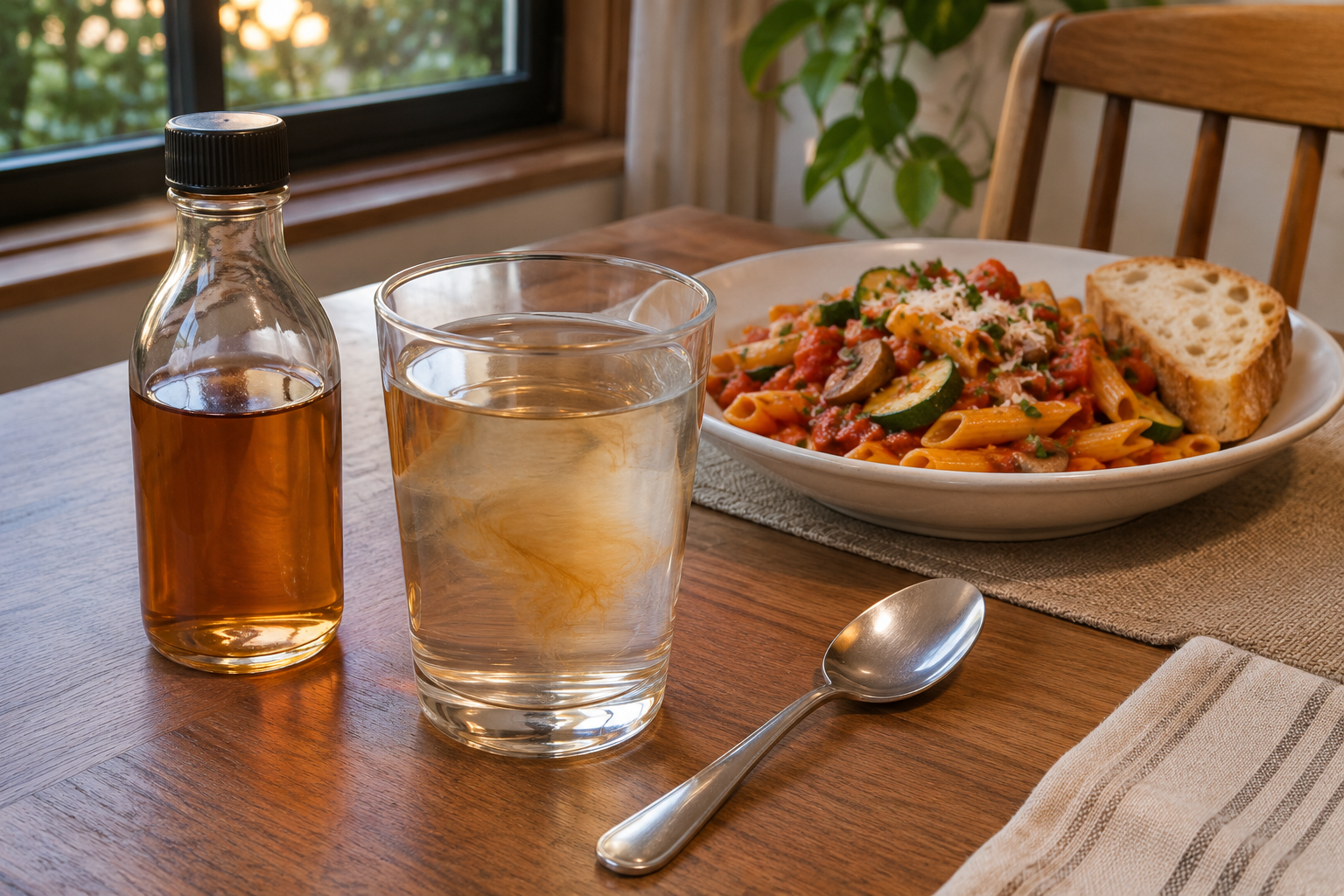
Beyond the numbers, there is the simple question of whether taking a spoon of vinegar before dinner every night is a pleasant thing to do, and the honest answer is that it is fine but not delightful. Diluted in a glass of water, a tablespoon of vinegar is tart and a little harsh but perfectly drinkable, more like a sour drink than a punishment, and I got used to it quickly. It became a small ritual before dinner, a sharp sip that I stopped minding within the first week, though I would not call it something I looked forward to.
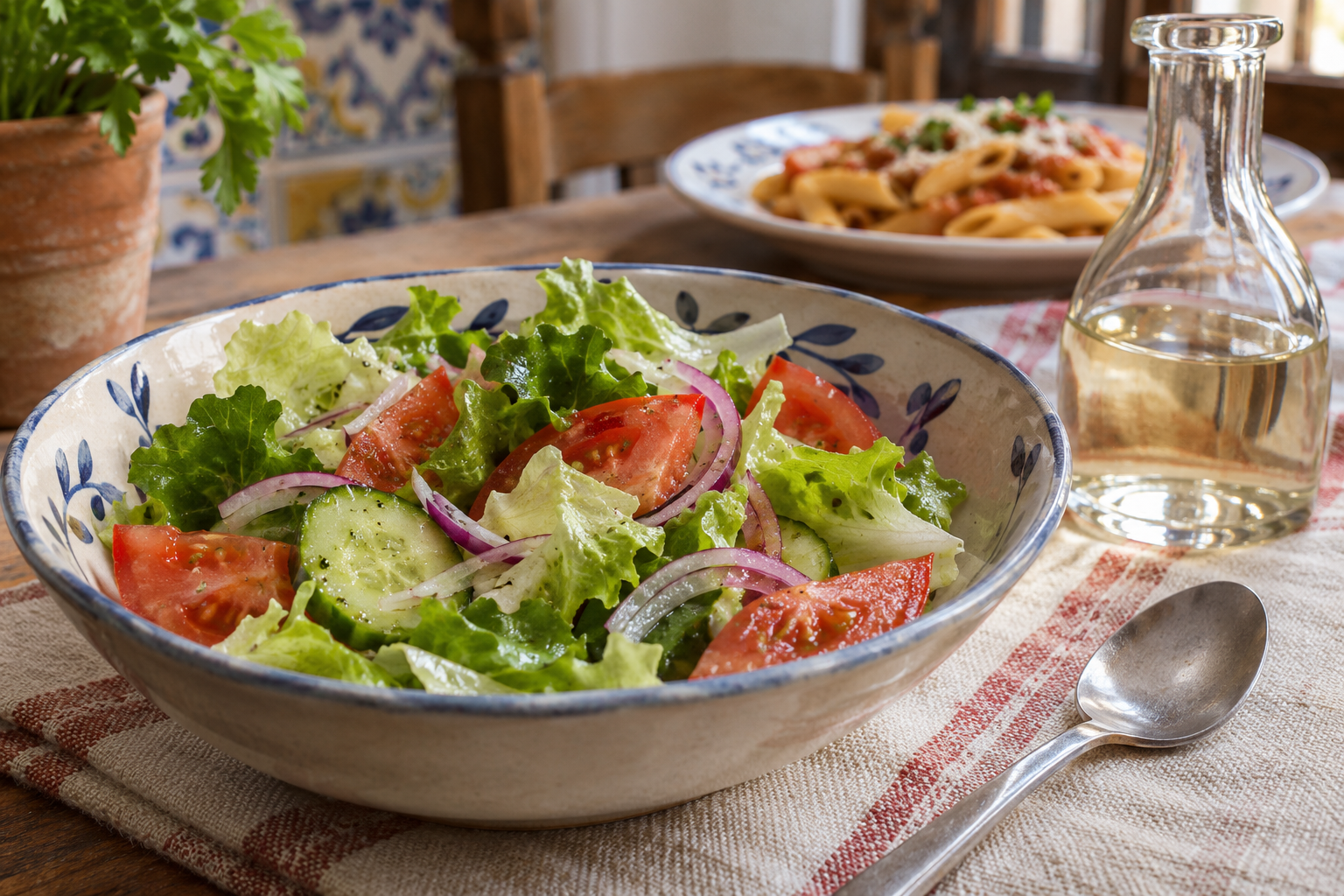
I also found, partway through, that the whole thing could be folded into the meal more pleasantly by just eating a vinegary salad before or with dinner, the way the old Mediterranean habit actually does it, rather than drinking vinegar from a glass. A sharp vinaigrette on a starter salad delivers the vinegar in a form that is a genuine pleasure rather than a medicinal sip, and it felt like a more sustainable and more traditional way to get the same acetic acid alongside the meal. If I were to keep this up long term, that is the form I would choose, the salad rather than the shot glass.
The practical verdict is that the habit is easy to live with in either form, the diluted drink or the vinegary salad, and asks very little of you beyond remembering to do it. That low cost matters, because a modest benefit is only worth having if the habit behind it is easy enough to sustain, and this one is. A spoon of vinegar in water, or a sharp salad before the main course, is about as low-effort as a dietary habit gets, which is part of why, despite the modest size of the effect, it is not an unreasonable thing to keep.
What the Science Actually Supports
My month lines up well with the actual research, which is more developed on this than on many folk remedies and which supports a real but modest effect. Studies have found that vinegar taken with or before a carbohydrate meal can reduce the post-meal rise in blood glucose, an effect attributed to acetic acid slowing gastric emptying and carbohydrate digestion, and this has been shown repeatedly enough to be considered a genuine phenomenon rather than folklore. The effect is most pronounced with higher-carb meals, exactly as I found, and is generally described in the research as modest.
The research also lines up with my experience in its limits, because the studies describe a small blunting of the spike, not a large or transformative effect, and vinegar is not presented anywhere credible as a treatment for diabetes or a replacement for medical management. Interestingly, the research also suggests the effect comes from liquid vinegar rather than, say, vinegar tablets, which did not show the same benefit in at least one study, so the humble bottle in the cupboard is the form that works. The overall scientific picture is of a cheap, mildly helpful habit with a real mechanism and a small payoff.
So I hold my results and the science together comfortably, because they say the same thing: vinegar with a meal gently softens the blood-sugar spike, especially after carb-heavy food, by a small and somewhat variable amount, through a real mechanism, with no claim to anything more. That is a genuinely useful little fact about a kitchen staple, and it is also not a cure for anything, and the value lies in keeping it exactly that size. A modest, real, well-supported nudge is worth having, as long as nobody mistakes it for medicine.
The Cautions That Matter

There are real cautions here, and they matter more than with most food experiments, so I want to be clear about them. First, undiluted vinegar is harsh and acidic, bad for tooth enamel and irritating to the mouth, throat, and stomach, which is why it should always be well diluted in water and never sipped straight, and why rinsing with plain water afterward is sensible to protect the teeth. Taking vinegar regularly without diluting it is a way to damage your enamel over time, which is not a trade worth making for a modest glucose benefit.
Second, vinegar can aggravate acid reflux or digestive irritation in people prone to them, so if you have reflux, ulcers, or a sensitive stomach, the acid may cause more trouble than the glucose effect is worth, and you should be cautious or skip it. And third, and most importantly, anyone with diabetes or who takes any medication that affects blood sugar must treat this as a conversation for their doctor, not a self-directed experiment, because vinegar is not a treatment, it can potentially interact with how glucose-lowering medications work, and blood-sugar management in diabetes is a medical matter that a kitchen remedy does not belong in on its own.
The sensible frame is that this is a minor, optional habit for a generally healthy person curious about smoothing their post-meal spikes, done with diluted vinegar and realistic expectations, and nothing more. It is not a strategy for managing a diagnosed condition, not a reason to lean away from medical care, and not something to do in a form or quantity that harms your teeth or your stomach. Kept small, diluted, and in its place, it is harmless and mildly useful, and that is exactly how I would recommend anyone approach it, if at all.
The Verdict
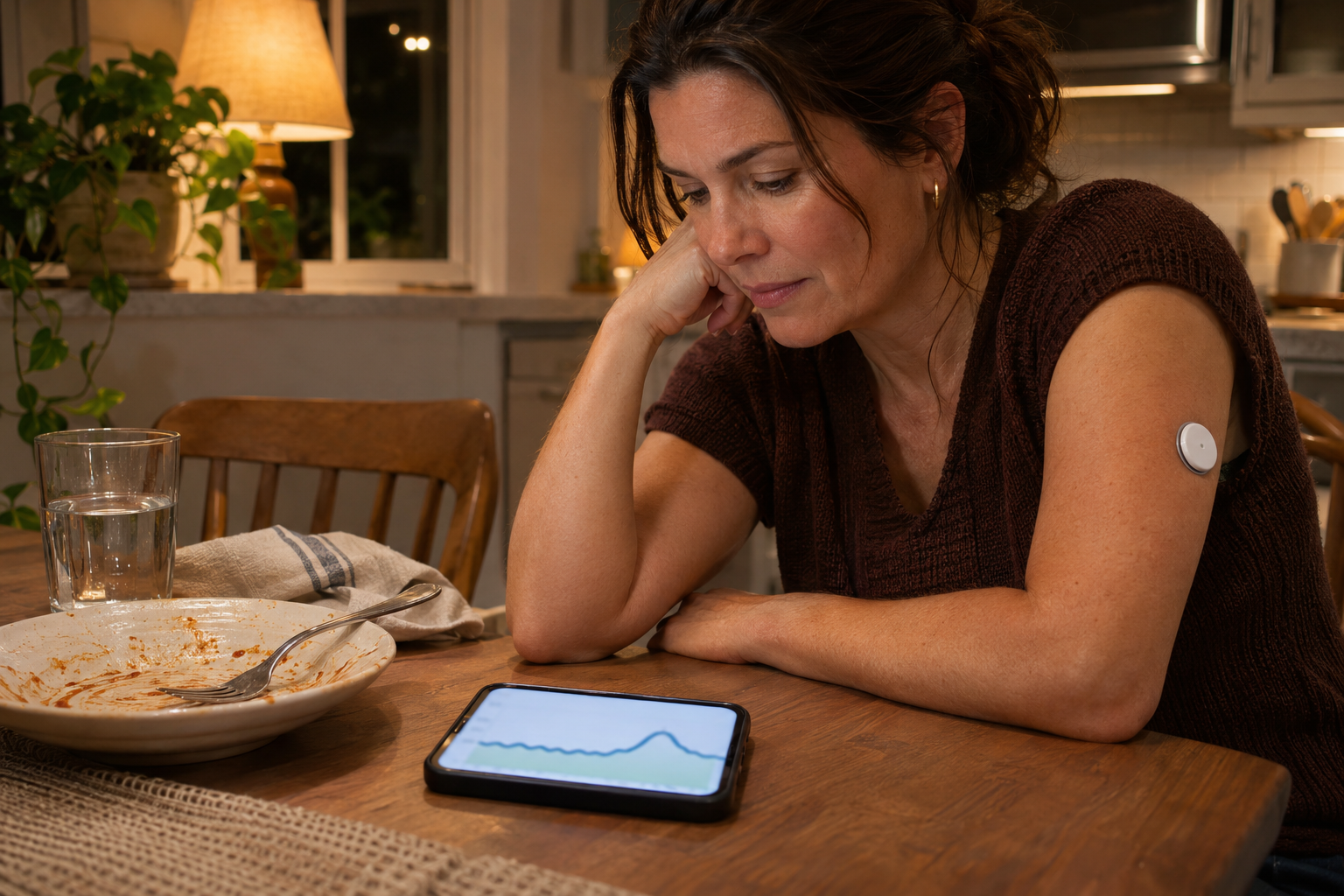
After thirty days and a monitor full of curves, my verdict is a measured yes, with the emphasis on measured. The vinegar did what the research said it would, taking a small, real, inconsistent bite out of my post-dinner spikes, best on the heavy-carb nights, at essentially no cost beyond a sour sip or a sharp salad. It is a cheap, easy, well-supported little habit with a modest payoff, and that is a perfectly respectable thing for a kitchen staple to be.
What it is not is a transformation, and I would be doing you a disservice to pretend my flattened curves amounted to more than they did. The effect was the gentle softening the science describes, not a dramatic change, and it disappeared entirely on plenty of nights, and it does nothing to earn the breathless claims that sometimes get attached to vinegar online. If you keep the expectation at the level of a small, real nudge, you will not be disappointed, and if you expect a miracle, the monitor will quietly correct you, as it did me.

I have kept a version of the habit, mostly in the pleasant form of a vinegary salad before dinner rather than a glass of diluted vinegar, because that way the small glucose benefit rides along with something I enjoy anyway. That, in the end, is the honest shape of the thing: an old folk habit with a real modern mechanism, a modest and well-documented effect, and a best form that happens to be the traditional one, a sharp salad before the meal. The grandmothers, with their vinegar and their salads, were not wrong, exactly. They were just working with a smaller and more honest truth than the internet tends to allow.

About the Author: Ruben, co-founder of Gamintraveler.com since 2014, is a seasoned traveler from Spain who has explored over 100 countries since 2009. Known for his extensive travel adventures across South America, Europe, the US, Australia, New Zealand, Asia, and Africa, Ruben combines his passion for adventurous yet sustainable living with his love for cycling, highlighted by his remarkable 5-month bicycle journey from Spain to Norway. He currently resides in Spain, where he continues sharing his travel experiences with his partner, Rachel, and their son, Han.