
There is a particular moment of Thanksgiving panic that strikes Americans in Spain, and it arrives in the supermarket when they go looking for cranberries. Fresh ones, frozen ones, a can of cranberry sauce, anything. And there is nothing, because cranberries, that quintessential American Thanksgiving fruit, simply do not exist in Spanish shops. The tart red berry that cuts the richness of the turkey is nowhere to be found.
But Spain has its own tart autumn fruit, one that has been grown around the Mediterranean since ancient times, and it turns out to make a sauce that does the cranberry’s job beautifully, and arguably better. The quince, membrillo in Spanish, cooked down into a tart-sweet amber sauce, is what expats across Spain serve alongside their turkey instead, and once they have tasted it, many of them think it wins.
Here is why there are no cranberries in Spain, what a quince actually is, how a quince sauce differs from the famous firm quince paste, why it beats cranberry sauce on the plate, and a recipe for the tart-sweet amber sauce that may become your new Thanksgiving tradition. It is one of the happiest substitutions the expat table forces on you.
No Cranberries in Sight
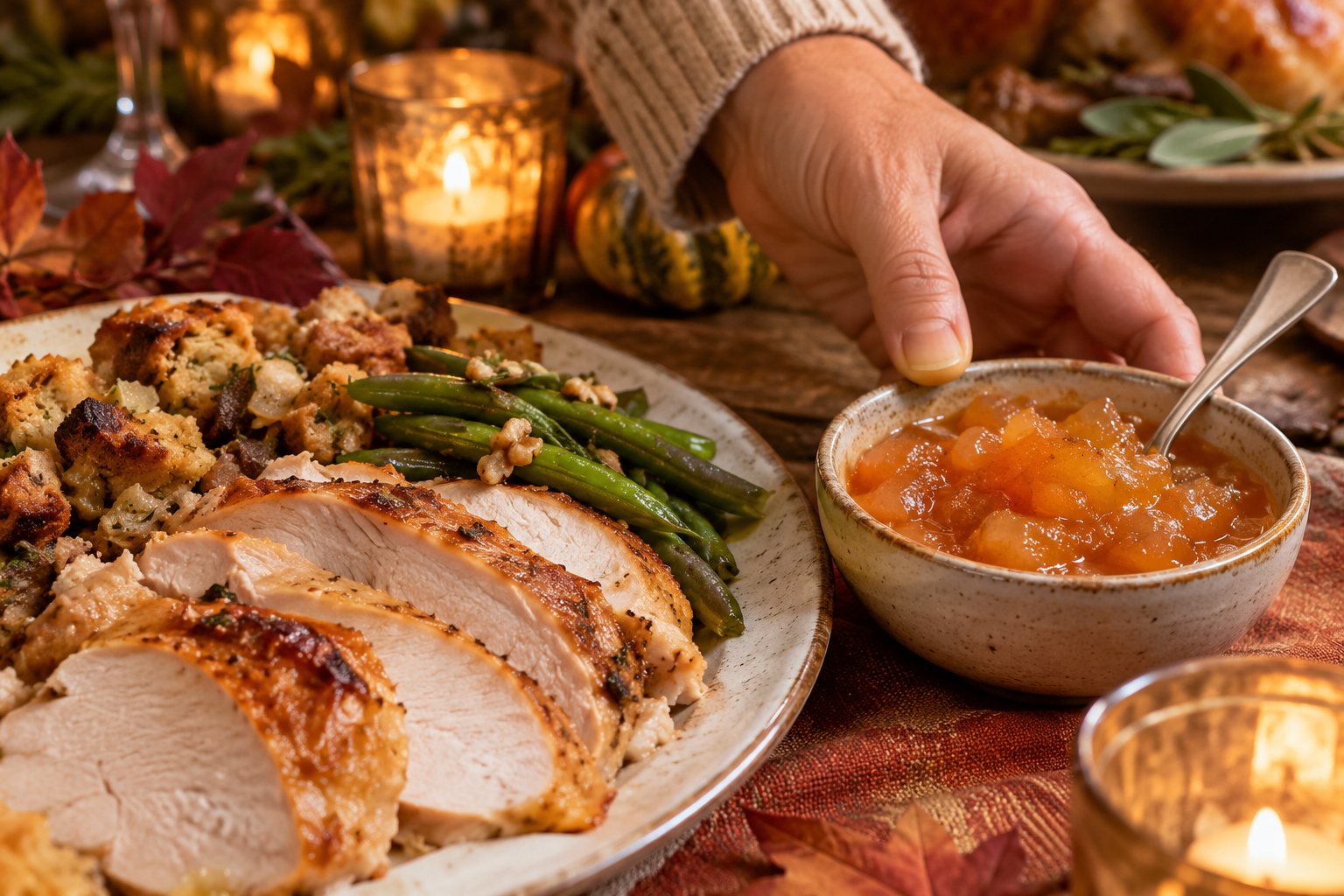
The first thing to accept is that the cranberry hunt is hopeless, so there is no point spending Thanksgiving week searching. Cranberries are a North American fruit, deeply tied to American food traditions, and they are essentially absent from Spanish supermarkets, where you will find neither the fresh berries, nor frozen ones, nor the familiar can of jellied sauce.
This is simply not part of the food culture here. Cranberries grow in cool North American bogs and never became a Mediterranean crop, so Spanish shoppers have no tradition of using them and Spanish shops have no reason to stock them. The occasional specialty or international store in a big city might carry imported dried cranberries at a premium, but for the ordinary expat doing their Thanksgiving shopping at a normal Spanish supermarket, the cranberry sauce that anchors the American holiday plate is simply off the menu. You are going to need another way to provide that bright, tart counterpoint to the turkey.
Happily, the solution is not only available but abundant, and it is sitting right there in the autumn produce section. Spain has a tart, fragrant, seasonal fruit that comes into its own in exactly these weeks, and that makes a sauce built for precisely the role cranberry plays. The absence of cranberries, like so many gaps in the expat Thanksgiving, turns out to be a door into something arguably better, and that something is the quince.
Meet the Quince
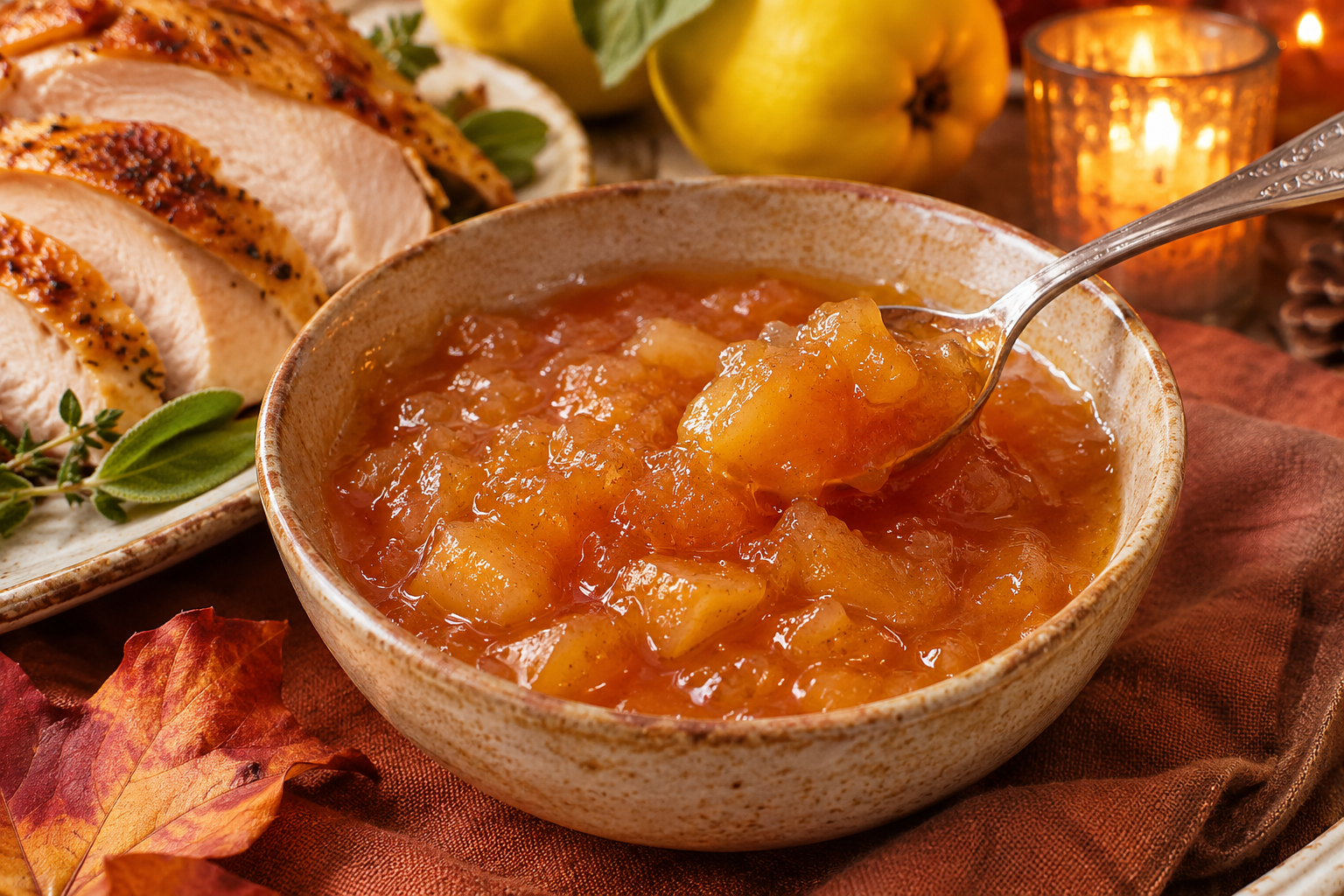
The quince is one of those ancient fruits that modern shoppers often walk right past without knowing what it is, so it is worth a proper introduction. Membrillo, as it is known in Spanish, is a hard, knobbly, intensely fragrant autumn fruit, a close cousin of the apple and the pear, and it has been cultivated around the Mediterranean since antiquity, older than most of the cooking we think of as traditional.
Its defining quirk is that you cannot eat it raw. A fresh quince is rock-hard, astringent, and unpleasant straight from the tree, which is why people who do not know it tend to ignore it, but cooking transforms it utterly.
As a quince simmers, its pale, hard flesh softens and turns a beautiful deep amber or rose, its harsh astringency gives way to a honeyed, floral sweetness shot through with bright tartness, and the kitchen fills with an extraordinary perfume unlike any other fruit. It is a genuinely magical transformation, and it is why a fruit that is inedible raw has been prized by cooks for thousands of years.
In Spain, quinces are everywhere in autumn, piled in markets and hanging heavy on trees, cheap and abundant in exactly the weeks when an American is hunting fruitlessly for cranberries. This happy coincidence of timing, a tart autumn fruit coming into season just as you need one, is part of what makes the quince such a natural cranberry substitute. It is seasonal, local, inexpensive, and, once cooked, it delivers precisely the tart-sweet brightness the Thanksgiving plate is missing. The fruit the Americans cannot find has a perfect stand-in waiting in plain sight.
Sauce, Not Paste

There is one important clarification to make, because quince in Spain is most famous in a different form, and confusing the two will send you in the wrong direction. Spain’s celebrated membrillo is usually the firm quince paste, dulce de membrillo, a dense, sliceable, jelly-like block that Spaniards serve in thin slices alongside Manchego cheese, a classic pairing worth a piece all its own.
For Thanksgiving, though, you do not want the firm paste; you want a softer quince sauce. The difference is mostly one of how far you cook and set it. The famous paste is cooked long with plenty of sugar and set firm enough to slice, made for the cheese board, whereas a quince sauce is cooked to a looser, softer, spoonable consistency, more like a thick compote or a chunky-smooth sauce, made for spooning alongside meat. Same wonderful fruit, same tart-sweet amber flavor, but a different texture suited to a different job: the paste sits on a cracker with cheese, the sauce sits on the plate beside the turkey.
So when you make your Thanksgiving quince, you are aiming for the sauce, not the block. You cook the quince down with sugar and a little water and acidity until it is soft and richly flavored, but you stop well before it sets firm, leaving it loose enough to spoon over or alongside your turkey like cranberry sauce. If you also want to make the firm paste for a cheese course, that is a lovely separate project with its own method; here, the goal is the softer sauce that plays the cranberry role. Keep that distinction clear and you will get exactly the accompaniment the meal wants.
Why It Wins Over Cranberry

Now to the claim in the title, which is a real one and not just expat consolation: a quince sauce arguably beats cranberry sauce on the Thanksgiving plate, on flavor. Both fruits share the essential quality that makes them perfect turkey companions, a bright tartness that cuts through rich, savory meat, but the quince brings more to the table besides.
Where cranberry sauce is primarily sharp and sweet, a fairly one-note tart-sweet, quince sauce is tart and sweet and something more: floral, honeyed, aromatic, with a complex perfumed depth that cranberry simply does not have. It performs the same crucial role on the plate, providing the acidic, fruity brightness that balances the heavy savory turkey and gravy, but it does so with greater elegance and complexity, an amber, fragrant sweetness against the sharp red simplicity of cranberry. Fruit served with roast fowl is one of the oldest and most natural of culinary pairings, and quince, with its honeyed tartness, may be the finer partner.
This is why so many expats, having turned to quince out of necessity, come to prefer it. What starts as a desperate cranberry substitute reveals itself as a genuine upgrade, a more interesting, more sophisticated, more delicious accompaniment that happens also to be seasonal and local. The forced switch becomes a preference, and many an expat Thanksgiving table now carries quince sauce not because cranberries are unavailable but because the hosts have decided quince is simply better. That is the quiet verdict of the title: on its merits, quince wins.
It Fits the Turkey Perfectly

Beyond the flavor comparison, quince sauce fits the Thanksgiving turkey with an almost suspicious perfection, which seals its place on the expat table. Everything the cranberry was doing for the meal, the quince does, and the pairing feels entirely natural rather than like a compromise.
The logic is the same ancient one that put cranberry beside turkey in the first place: a rich, savory roast bird is wonderfully set off by a bright, tart, sweet fruit accompaniment, which refreshes the palate and balances the heaviness of the meat and gravy. Quince sauce delivers exactly that brightness and that balance, its tart-sweet amber spoonful cutting cleanly through a mouthful of turkey and stuffing just as cranberry would, only with that extra floral complexity. Served in a little dish alongside the bird, it looks beautiful too, a glowing amber against the golden turkey, and guests who have never tasted it are almost always delighted.
So the quince sauce is not a sad substitute to apologize for but a genuine pleasure to put on the table, and introducing American guests to it is one of the small joys of hosting Thanksgiving abroad.
It pairs with the butter-roasted turkey as naturally as cranberry ever did, it comes from the same autumn-fruit-with-fowl tradition, and it tends to win converts at first taste. Make it once alongside your bird and you may find, as many expats have, that you are not missing the cranberries at all. Here is how to make it. This piece is general cooking guidance; adjust the sugar and acidity to taste and to your quinces.
Make It: Quince Sauce
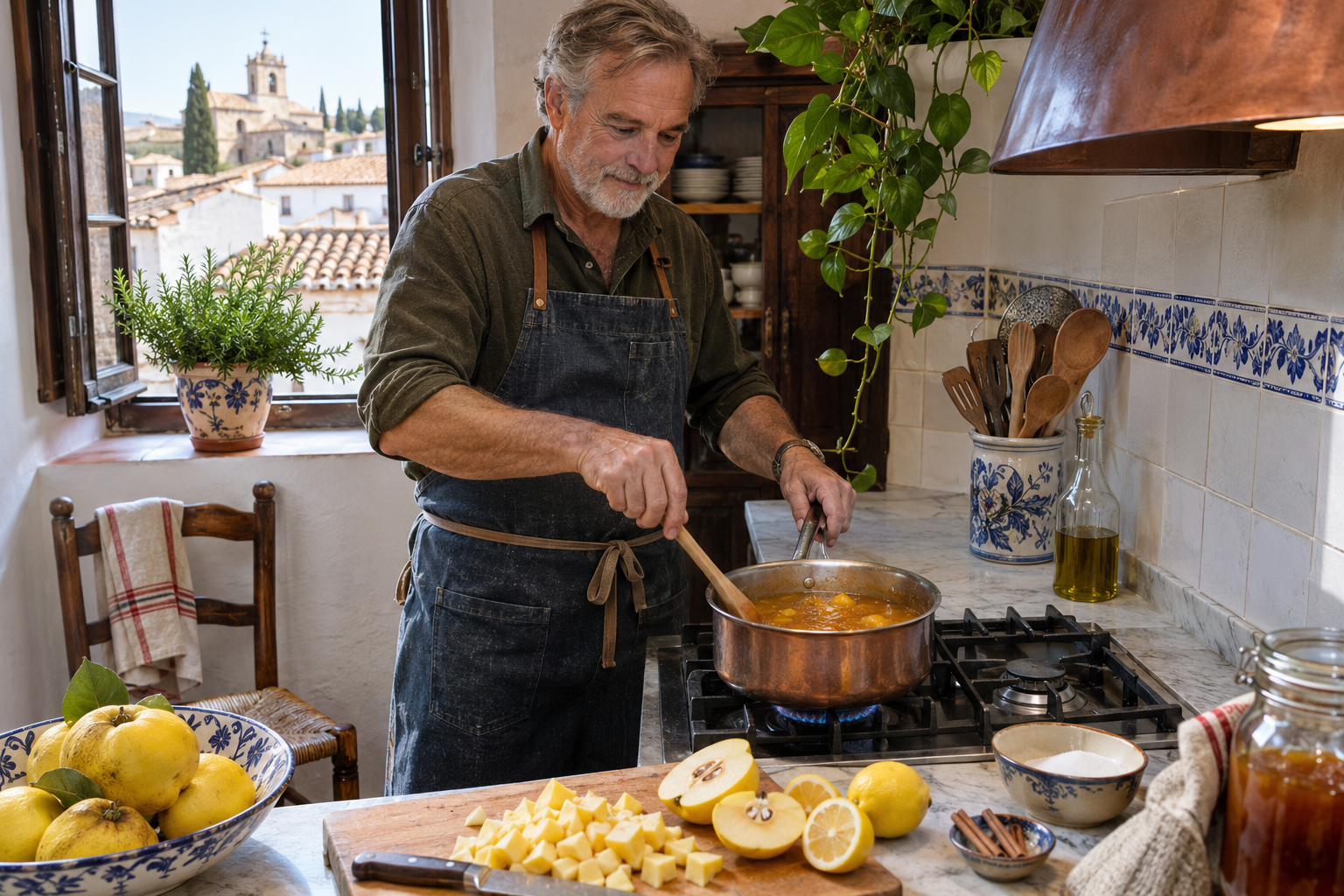
Here is a tart-sweet quince sauce for the Thanksgiving table, enough for a crowd, made soft and spoonable rather than firm like the paste. It keeps well in the fridge, so you can make it a few days ahead.
Ingredients
- 4 quinces (about 1kg), peeled, cored, and chopped
- 200g sugar, plus more to taste
- 400ml water
- juice of 1 lemon
- 1 cinnamon stick, optional
- a strip of orange or lemon peel, optional
Instructions
- Put the peeled, cored, and chopped quince into a saucepan with the water, sugar, lemon juice, and the cinnamon stick and citrus peel if using.
- Bring to a gentle simmer, then cook, partly covered, over low heat for about 40 to 50 minutes, stirring now and then, until the quince is very soft and has turned a deep amber or rose color. Add a splash more water if it dries out.
- Remove the cinnamon stick and citrus peel. Taste, and add a little more sugar if you want it sweeter or a little more lemon if you want it tarter, remembering it should keep a bright tartness to balance the turkey.
- Mash the softened quince with a fork or potato masher for a chunky sauce, or blend it briefly for a smoother one, to your preferred texture. Keep it loose and spoonable, like a thick sauce or compote, not firm like a paste; stir in a little more water if needed.
- Let the sauce cool. Serve it at room temperature or lightly chilled, in a small dish alongside the turkey, exactly where cranberry sauce would go. It keeps in the fridge for up to a week.

About the Author: Ruben, co-founder of Gamintraveler.com since 2014, is a seasoned traveler from Spain who has explored over 100 countries since 2009. Known for his extensive travel adventures across South America, Europe, the US, Australia, New Zealand, Asia, and Africa, Ruben combines his passion for adventurous yet sustainable living with his love for cycling, highlighted by his remarkable 5-month bicycle journey from Spain to Norway. He currently resides in Spain, where he continues sharing his travel experiences with his partner, Rachel, and their son, Han.