
You arrive in Venice for the day, full of anticipation, step off the train at Santa Lucia station, and walk out toward the Grand Canal. And somewhere in the first few minutes, you learn something nobody told you: you were supposed to pay a fee just to be here, and you can be fined for not having done so.
Venice now charges day-trippers an access fee simply to enter its historic center, the first city in the world to do such a thing. It is a small amount of money, but the rule is real, the enforcement is real, and the fine for skipping it is many times the fee itself. And because there are no turnstiles or obvious checkpoints, plenty of visitors discover the whole thing only when a steward stops them near the station and asks to see a QR code they do not have.
It sounds absurd, paying to walk into a city, and it is certainly unusual. But it comes from a genuine and desperate problem, and it is easy to comply with once you understand it. Here is exactly how the Venice access fee works in 2026, who has to pay, who does not, why Venice resorted to it, and how to make sure you are never the one caught at the station without a ticket.
The Fee to Walk In

The rule has an official name, the Contributo di Accesso, the access contribution, and it does exactly what it sounds like: it charges day visitors a fee to enter the historic island of Venice. The city introduced it in 2024 as a limited trial and has expanded it since, so that by 2026 it is a settled, if still limited, part of visiting the city.
The fee itself is modest, five or ten euros depending on how you book, which we will come to. But the principle is the striking thing: Venice has become the first city anywhere to charge ordinary day-trippers an entry fee simply to come in for the day, treating access to its historic center like admission to a site. For a living city, famous the world over, to put a price on walking its streets is genuinely novel, and it tells you how serious the pressure on Venice has become.
It is important to be precise about what the fee covers, because it is narrower than people assume. It applies only to the historic island of Venice, the famous one of canals and bridges, and not to the mainland districts like Mestre, nor to the other lagoon islands like Murano and Burano, nor to the cruise and bus arrival zones. It is a charge for entering the fragile historic heart specifically, on certain days, during certain hours, and knowing those boundaries is the key to the whole thing.
When You Pay, and When You Don’t
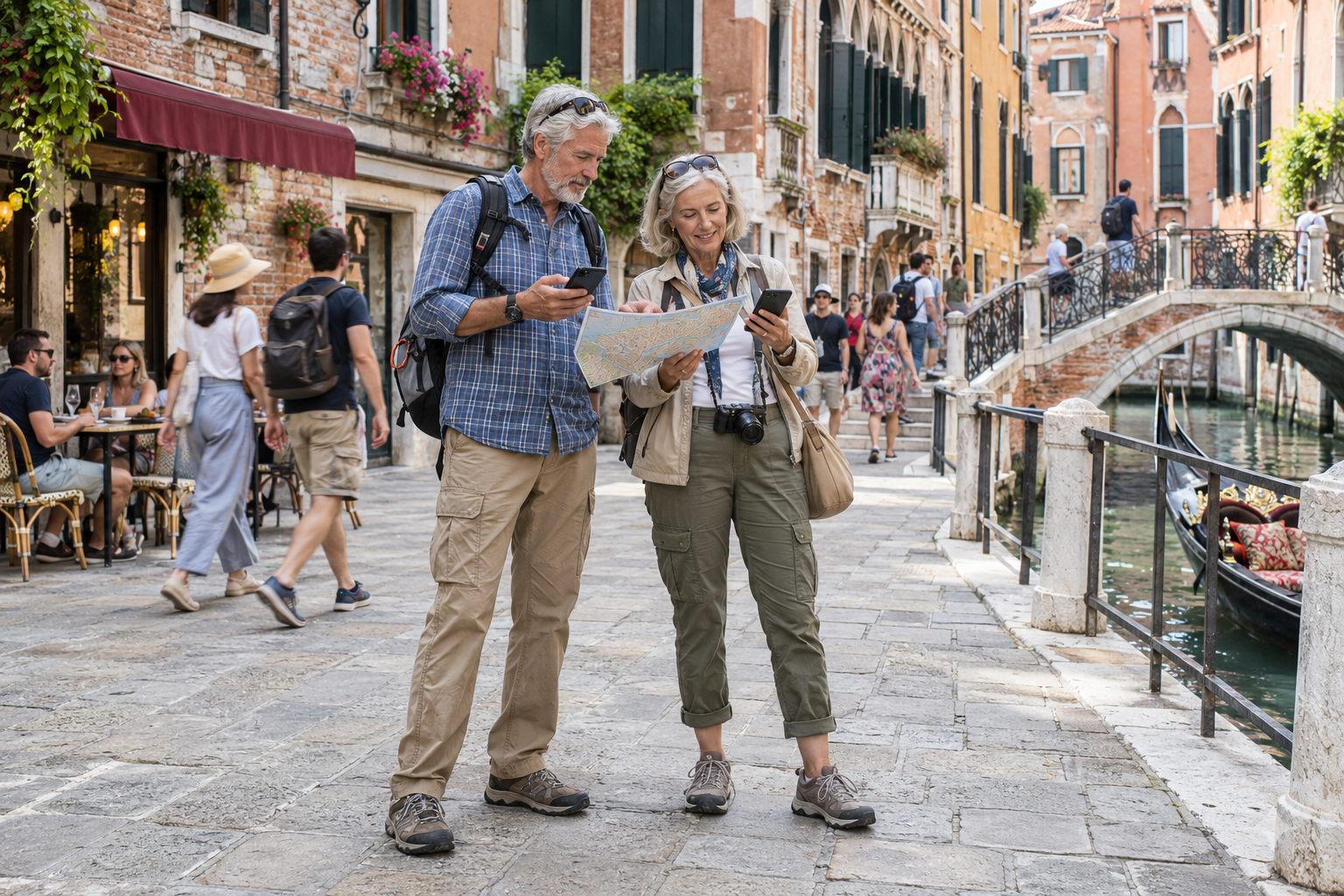
The fee does not apply every day, and this is the single most important thing to get right, because most of the confusion comes from not knowing whether your particular visit is affected. The access fee is in force only on designated peak days, not year-round.
For 2026, the fee applies on roughly sixty peak days, concentrated in the busy spring and early summer window between early April and late July, and falling mainly on Fridays, Saturdays, and Sundays, plus certain full weeks around holidays and other high-demand periods. On those days, the fee applies during the daytime hours, roughly half past eight in the morning until four in the afternoon, the window when the day-tripper crowds are heaviest. Outside those specific dates, and outside those hours, there is no fee and no requirement at all; you simply walk in as visitors always have.
This means the first thing any Venice day-tripper should do is check whether their planned date is a fee day, using the city’s official calendar, which lists exactly which days are affected. If your day falls outside the listed dates, you can forget the whole thing. If it falls on a fee day, you need to deal with it in advance. The dates and the exact rules are reset each year, so it is essential to check the current official calendar rather than relying on last year’s, since the specifics genuinely change from one year to the next.
Five Euros or Ten: Reward the Planner
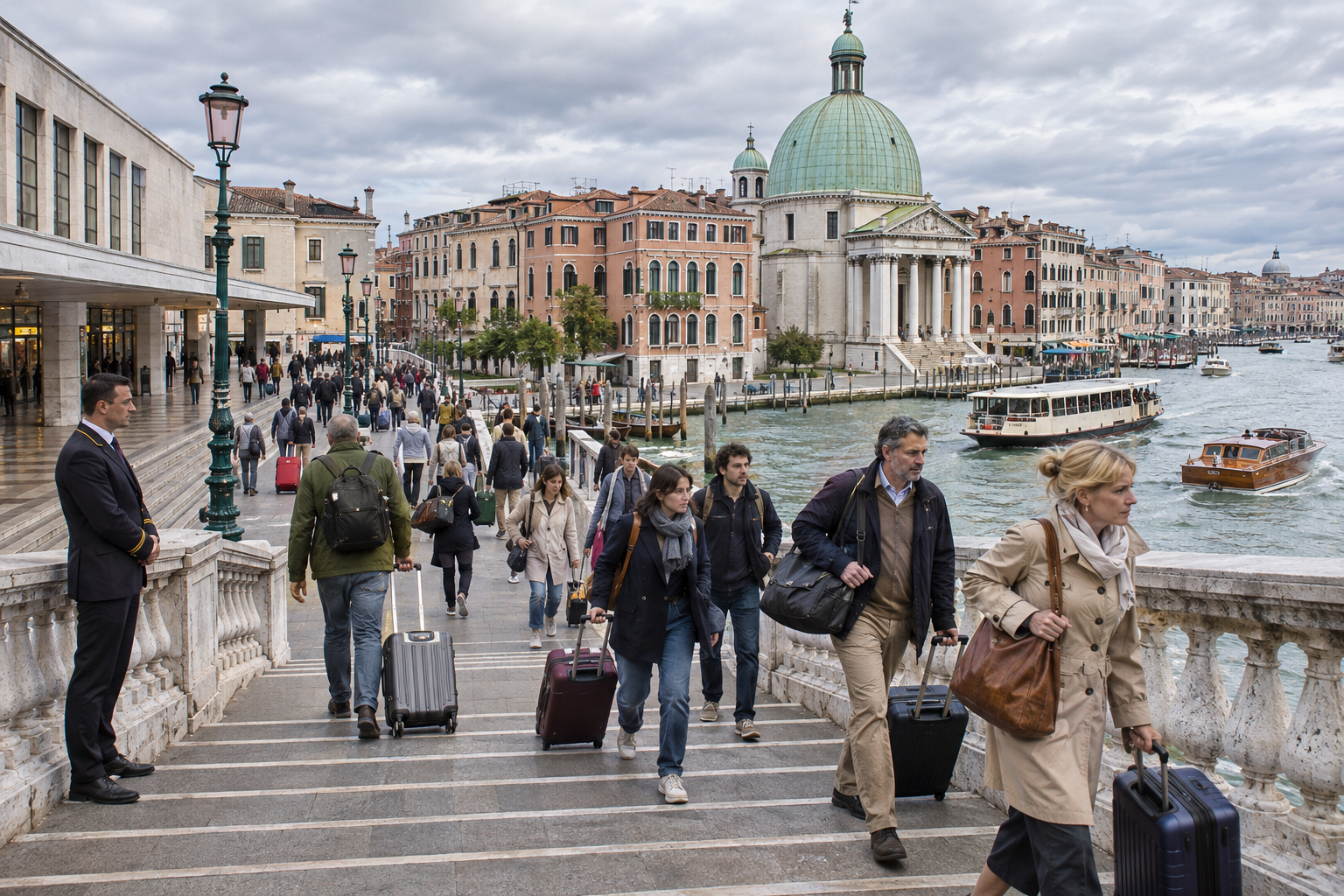
When you do have to pay, the amount depends on one thing: how far ahead you book. The system is deliberately designed to reward people who plan, and to penalize those who leave it to the last minute, which is worth knowing because the difference is double.
The rule is simple. If you book your access ticket at least four days before your visit, the fee is five euros per person, and if you book within the last three days or on the day itself, it rises to ten euros.
The city built this gap in on purpose, nudging visitors to plan their day trips in advance rather than turning up on a whim. The planner pays half what the last-minute arrival pays, which is a small but real incentive to sort it out early.
Paying is straightforward once you know to do it. You register and pay on the City of Venice’s official online portal, which issues you a QR code to keep on your phone as proof, and it can also be paid in cash at certain tobacco shops, including near the train station. One warning worth heeding: various third-party websites offer to handle your Venice booking for an inflated fee, charging you far more than the five euros the official site costs, so always use the city’s own official portal and ignore the middlemen trying to profit from the confusion.
Who Doesn’t Pay
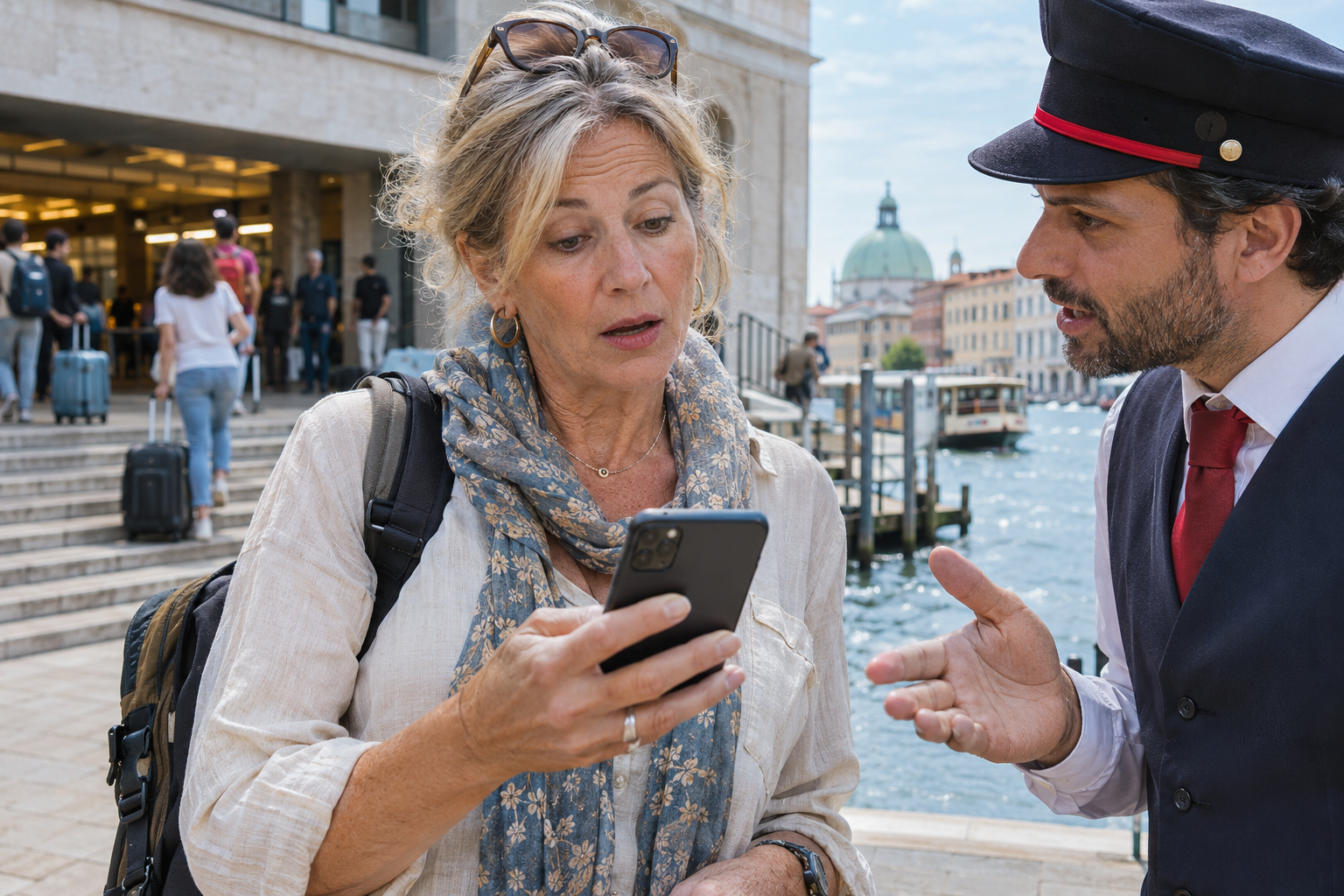
The fee is aimed squarely at the day-tripper, and a whole range of other visitors are exempt, so it is worth checking whether you even fall into the paying category before worrying about any of this. Many people who think they owe the fee actually do not.
The biggest exemption is for overnight guests. If you are staying the night in Venice, in a hotel or other accommodation in the municipality, you do not pay the access fee at all, because you are already contributing to the city through your stay and the separate overnight tourist tax. Crucially, though, overnight guests must still register on the portal to obtain a free QR code as proof of their exemption, so even they are not entirely off the hook for the paperwork. Beyond overnight guests, exemptions cover residents, people born in Venice, residents of the wider Veneto region, those entering for work, study, or medical care, and children under fourteen.
So the fee is genuinely targeted. It is designed to fall on the specific visitor Venice most wants to discourage: the adult day-tripper who arrives in the morning, floods the city during its busiest hours, and leaves in the evening without staying, eating little and contributing little while adding to the crush. If you are staying overnight, or you fall into one of the exempt categories, the fee itself does not apply to you, though you may still need to register for the free code. Knowing which category you are in is the first step, and for many visitors it means the fee is simply not their problem.
Discovered at the Station
Here is where the title’s warning comes in, because the enforcement, while not constant, is real, and it tends to catch people exactly where they arrive. There are no turnstiles or fixed gates into Venice, no barrier you physically cannot pass without a ticket, which lulls some visitors into thinking the fee is optional. It is not.
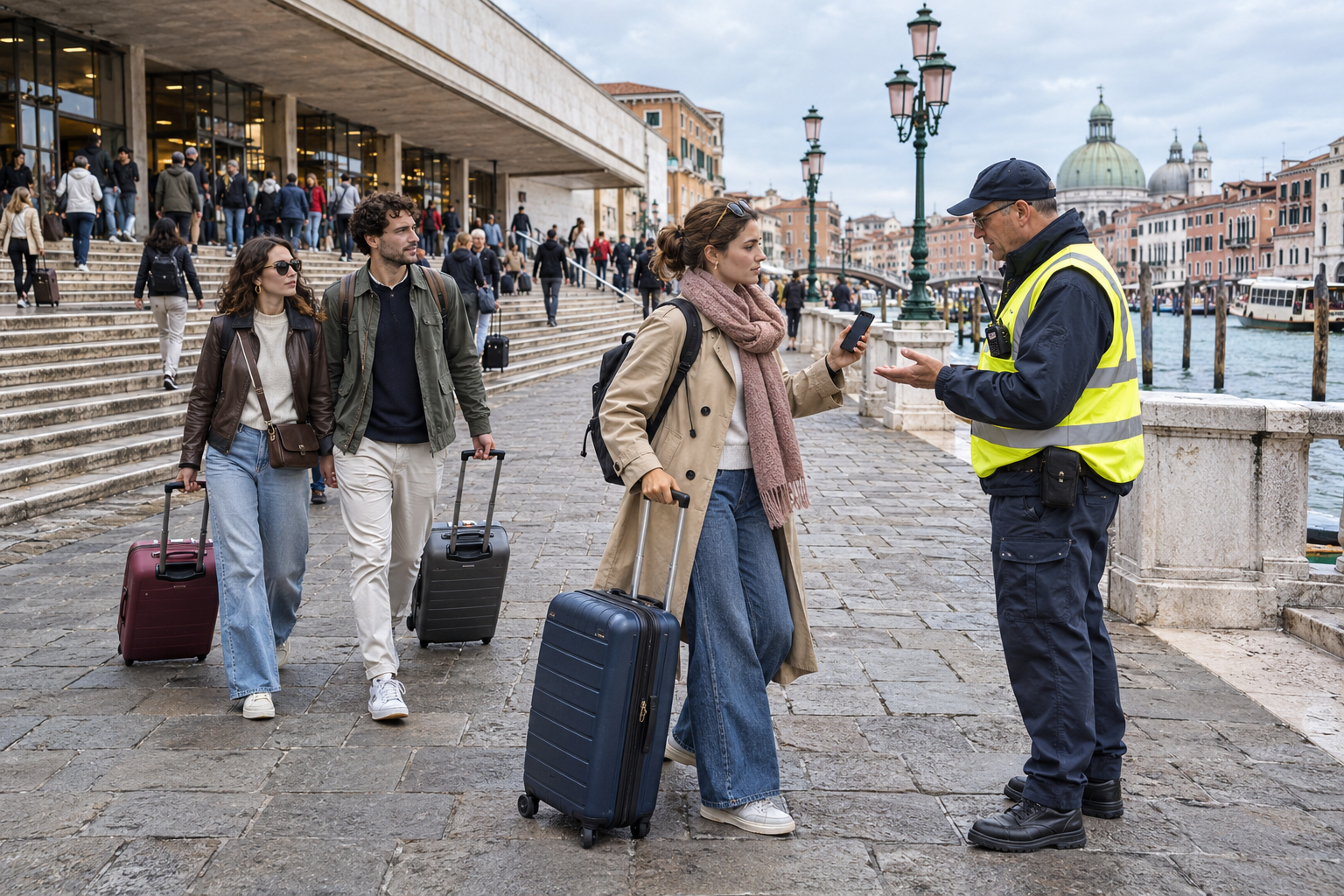
Instead, the city uses stewards who carry out spot checks at the main entry points, above all at the Santa Lucia train station, where most day-trippers arrive, and at Piazzale Roma, the bus and car terminal. On a fee day, these stewards may stop visitors and ask to see the QR code proving they have paid or registered, and anyone who cannot show one is in trouble. This is why so many unprepared visitors discover the rule precisely at the station, within minutes of stepping off the train, when a steward asks for a code they did not know they needed.
And the penalty is not trivial. Being caught on a fee day without a valid QR code brings a fine ranging from fifty to three hundred euros, plus the maximum fee on top, which is to say many times what the five-euro ticket would have cost. The fine is deliberately steep relative to the fee, precisely so that skipping the small charge is a genuinely bad bet. The lesson is simple: the lack of a visible barrier does not mean the lack of enforcement, and the day-tripper who gambles on not paying can end up paying sixty times over.
Why Venice Did This
To understand why a city would do something so drastic as charging for entry, you have to grasp the scale of what Venice is up against, because this is a genuine act of self-defense by a place in real danger. Venice is a small, fragile, sinking historic city that receives a crushing flood of visitors, a very large share of them day-trippers and cruise passengers.
The day-tripper is the specific problem the fee targets. These are the visitors who pour into Venice in enormous numbers for just a few hours, concentrated in the busiest part of the day, contributing to the worst of the congestion while spending little, no hotel stay, often little more than a quick lunch, before leaving again. Locals and the city authorities see this short-stay, high-volume, low-contribution visitor as doing real damage to the city’s infrastructure and livability while supporting it least, and the access fee is a direct attempt to discourage exactly that pattern, to thin the worst day-tripper peaks and to nudge people toward staying overnight, which spreads them out and makes them contribute more.
There is also real international pressure behind it. Venice has lived for years under the threat of being placed on UNESCO’s list of endangered World Heritage sites, a serious blow it has repeatedly worked to avoid, and visible measures to manage the tourist flood, the access fee among them, are part of how it has shown it is taking the problem seriously. The fee, in other words, is not a cash grab, whatever it may feel like at the station; the sums are too small for that. It is a fragile, overwhelmed city trying, with a blunt and imperfect tool, to defend itself from being loved to death.
How Not to Get Caught
For the visitor, the practical upshot is simple and painless, because complying costs little and avoids a lot. The whole thing comes down to a few minutes of preparation before your trip.
Start by checking whether your planned date is a fee day on the City of Venice’s official calendar, which is the only reliable source and is updated each year. If your date is not a fee day, you are done; relax and visit as normal.
If it is a fee day and you are day-tripping, book the access ticket on the official portal at least four days ahead to pay the lower five-euro rate, and save the QR code to your phone so you can show it if a steward asks. If you are staying overnight, register for your free exemption code anyway. And if you want to sidestep the fee entirely, you can simply stay the night, which exempts you and makes for a better trip in any case, or visit outside the fee dates or hours.
None of this is hard, and the honest reality is that the fee is a minor footnote to the cost and the wonder of a Venice day, five euros against one of the most extraordinary cities on earth.
The only real mistake is ignorance, arriving unprepared on a fee day and getting stopped at the station with no code and a three-hundred-euro fine where a five-euro ticket should have been. A few minutes with the official calendar before you go removes the entire risk. Because the rules and dates change every year, confirm the current details on the official site rather than trusting any older guide, including this one, and you will walk into Venice with nothing to worry about but which bridge to cross first.

About the Author: Ruben, co-founder of Gamintraveler.com since 2014, is a seasoned traveler from Spain who has explored over 100 countries since 2009. Known for his extensive travel adventures across South America, Europe, the US, Australia, New Zealand, Asia, and Africa, Ruben combines his passion for adventurous yet sustainable living with his love for cycling, highlighted by his remarkable 5-month bicycle journey from Spain to Norway. He currently resides in Spain, where he continues sharing his travel experiences with his partner, Rachel, and their son, Han.