
Every year on the eleventh of November, the air in Portugal fills with two smells: roasting chestnuts and bonfire smoke. Across the country, from the villages of the Minho in the north to backyards and city squares everywhere, families and friends gather around a fire to roast chestnuts, share them hot from the coals, and drink the first wine of the year. They call it the magusto, and it is one of Portugal’s most beloved autumn traditions.
The day is Sao Martinho, Saint Martin’s Day, and it is far more than a chestnut roast. It comes wrapped in a gentle legend about a saint and his cloak, a cherished belief about a spell of warm November weather, and its own special drinks that appear nowhere else on the calendar. It is the day the new wine is first tasted, and the day the whole country seems to step outside, light a fire, and welcome the autumn together.
Here is what Sao Martinho actually is, the story of the saint behind it, the warm-weather legend tied to his name, and the jeropiga rule, the particular drinks that make the magusto what it is. The chestnuts themselves, and how to roast them, are a story told elsewhere; this is the festival they belong to.
The Saint and His Cloak
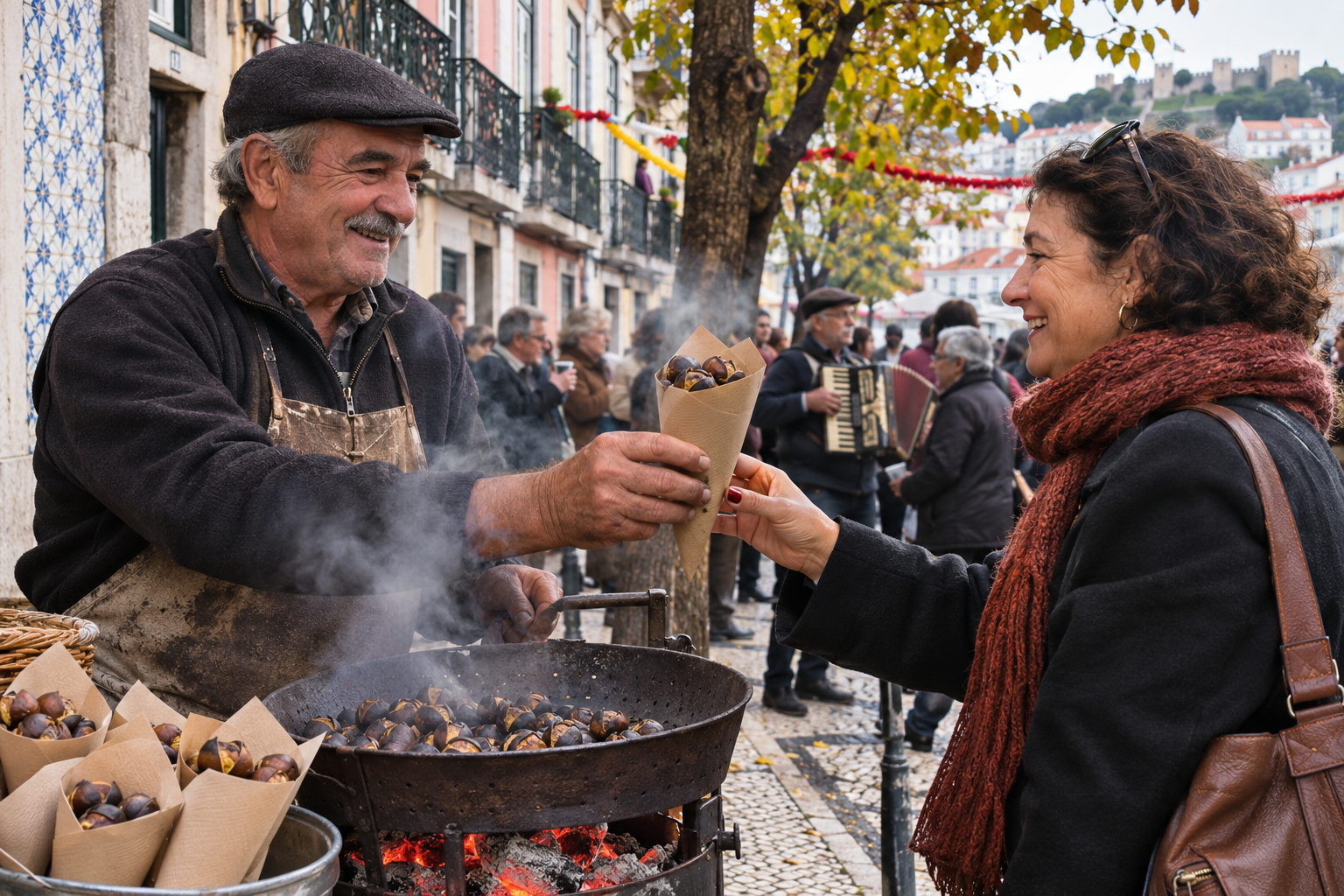
At the heart of the day is a saint and a single, famous act of kindness. Saint Martin, Martinho de Tours, was a Roman soldier, and the legend that made him beloved tells of a bitterly cold day when he came upon a beggar freezing by the roadside, with nothing to protect him from the weather.
Moved by pity, Martin drew his sword and cut his own cloak in two, giving half to the beggar to keep him from freezing to death. And at that moment, the story goes, the weather suddenly warmed and the sun broke through the clouds, a reward from heaven for his compassion. In the telling, the beggar was revealed to be Christ himself in disguise, and Martin, for his kindness, became a saint, honored ever after as a patron of soldiers, beggars, and winemakers alike.
The Portuguese have made the legend their own in one charming way. Because snow is rare in most of Portugal while November rain is common, the Portuguese version of the story usually replaces the snowstorm with rain, and has the saint’s kindness bring not a thaw but a break in the downpour, the clouds parting and the sun returning. It is a small adaptation, but it ties the saint directly to the thing Portugal most hopes for in November: a few last days of good weather before winter, granted, the story suggests, as a gift from above.
St Martin’s Summer
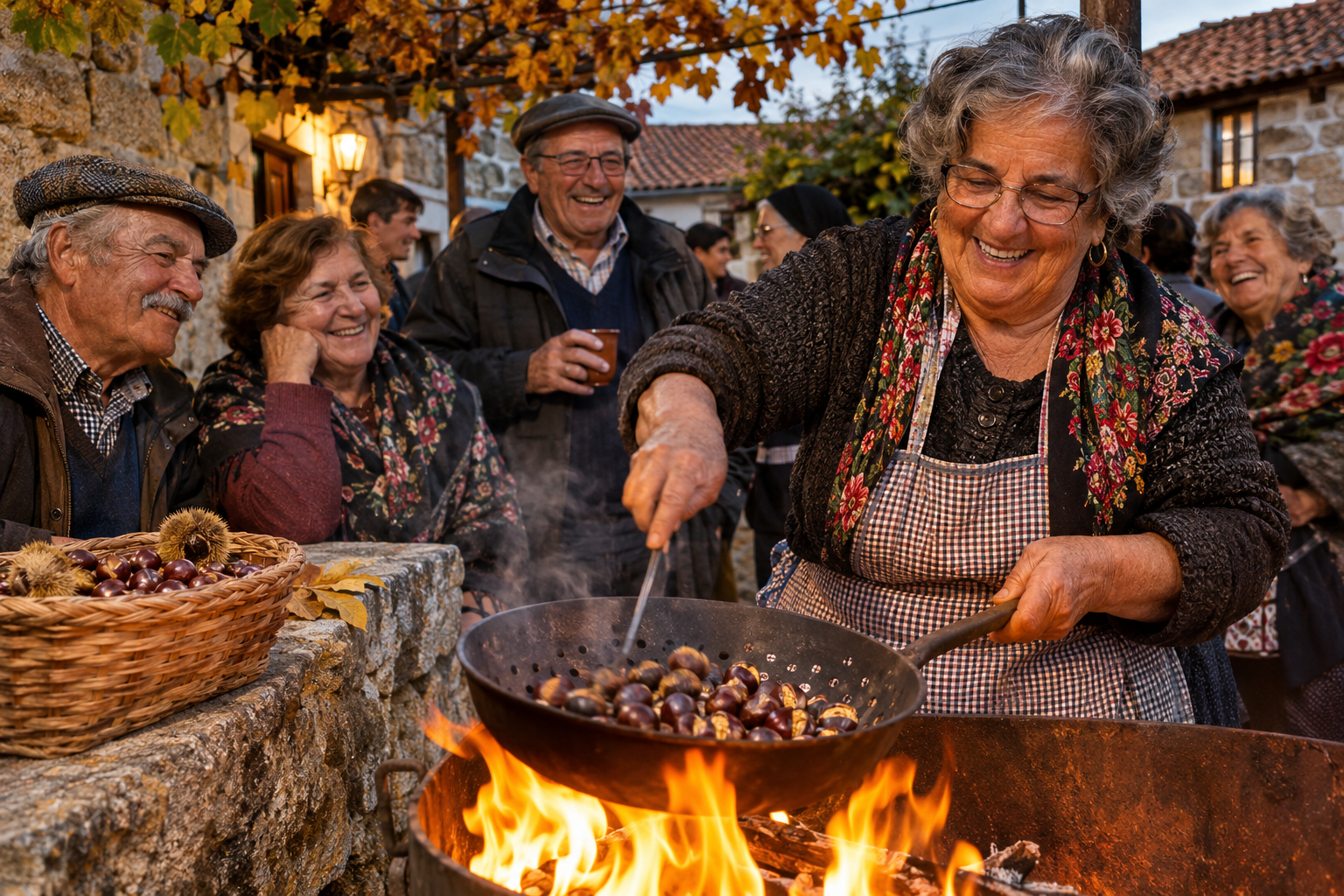
That gift has a name, and it is one of the loveliest expressions in the Portuguese language: the Verao de Sao Martinho, Saint Martin’s Summer. It refers to the spell of unexpectedly mild, sunny weather that often arrives in Portugal around the eleventh of November, a brief return of warmth in the heart of autumn.
The name ties the weather straight to the saint and his legend. Just as the sun came out when Martin shared his cloak, so, the tradition holds, a little summer returns each year around his feast day, a last warm breath before the cold sets in. It is Portugal’s version of what Americans call an Indian summer, but with a saint’s story attached, which gives it a warmth of its own quite apart from the temperature.
Everyone knows, of course, that it is no guarantee. Saint Martin’s Summer is a hope and a happy expression as much as a reliable forecast, and plenty of November elevenths arrive grey and wet despite it. But the phrase is beloved precisely because of what it represents, the idea that kindness is rewarded, that warmth returns, and that even as winter approaches there is one more gift of sunshine to look forward to. When the weather does oblige, and the magusto is held under a mild blue sky, the whole thing feels like the legend coming true.
The Magusto Bonfire
The celebration itself is called the magusto, and the word tells you what it is about. It is thought to come from the Latin for great fire, and the fire is the center of everything: a communal bonfire, around which family, friends, and neighbors gather to roast chestnuts, share food, and drink together as the autumn evening draws in.
The magusto is a warm, social, slightly smoky affair. Chestnuts are roasted over the coals until their shells blacken and split, then peeled with slightly burnt fingers and eaten hot, passed around the circle as the new wine is poured. In some regions the fire takes on a playful life of its own, with children leaping over the embers and revelers smudging each other’s faces with ash and charcoal, emerging from the evening blackened and laughing. It is not a formal or solemn occasion but a joyful, communal one, a gathering of people around warmth and food at the turning of the year.
This is the essence of Sao Martinho: not a thing you watch but a thing you do, outside, with other people, around a fire. The roasted chestnut, the smoke, the shared wine, the gathered faces lit by the flames, all of it makes the magusto one of those rare festivals that is really just an excuse for a community to come together and be warm against the coming cold. The full ritual of roasting the chestnuts, the pans and the fire and the peeling, is its own small art, worth knowing in detail, but the spirit of it is simply people around a fire, welcoming autumn as one.
The New Wine Comes Out
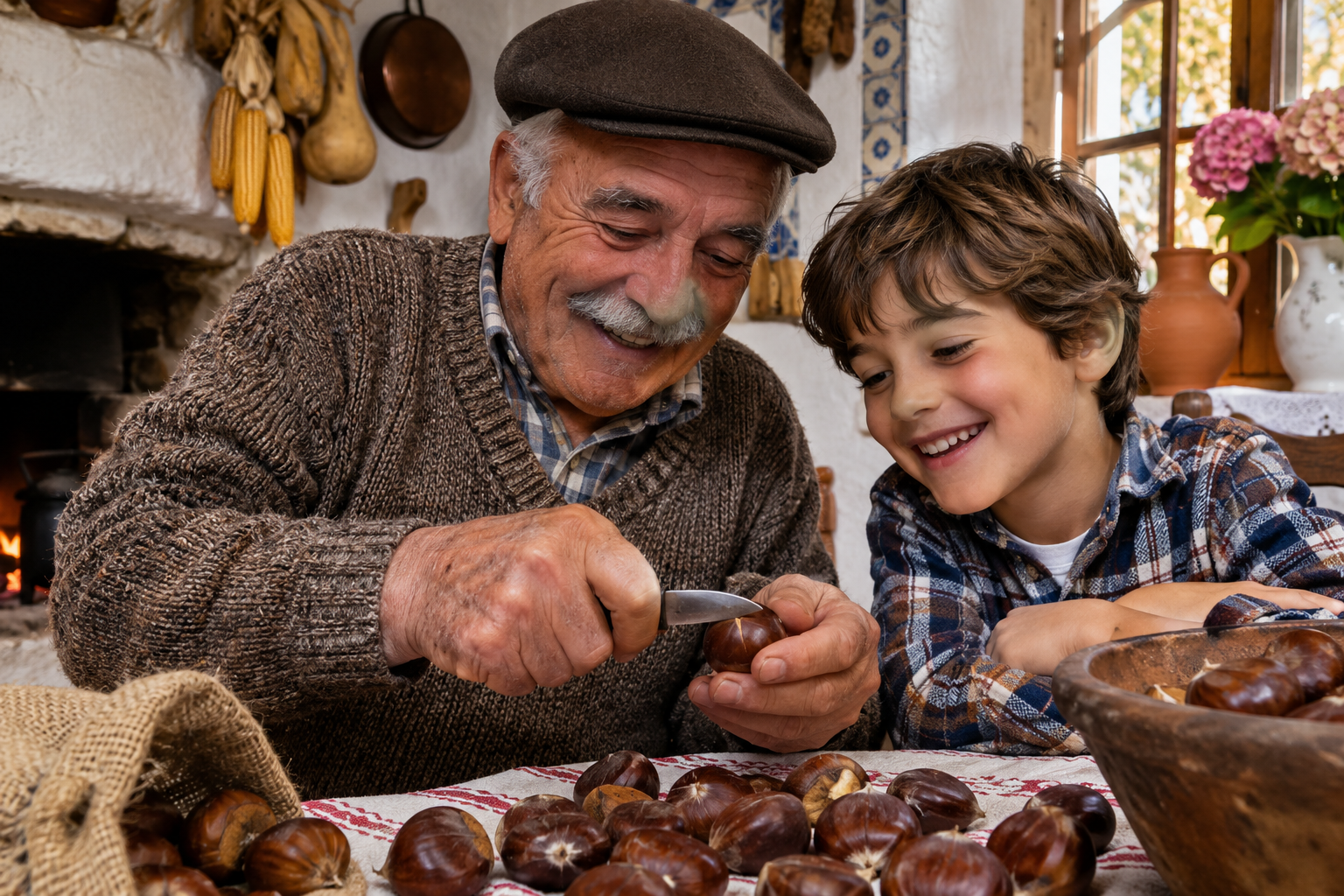
There is a second star alongside the chestnut, and it is just as important to the day: the wine. Saint Martin’s Day is traditionally the moment when the year’s new wine, made from the grapes of the recent harvest, is first ready to be tasted, and the festival doubles as a celebration of that new vintage coming of age.
This gives rise to one of the most quoted Portuguese sayings of the season, which runs, more or less, that on Saint Martin’s Day you eat chestnuts and taste the wine. The two go together inseparably: the roasted chestnuts and the young wine, the harvest’s nuts and the harvest’s drink, enjoyed side by side around the fire. The day is as much a harvest festival as a saint’s feast, marking the point at which the labor of the vineyard turns, at last, into something to drink.
So the opening of the new wine is woven right into Sao Martinho, and it is a genuinely festive moment, the cellar opened, the first glass of the year’s vintage poured and tasted among friends. But the ordinary new wine is not the only thing in the cup on Saint Martin’s Day, because the magusto comes with two special drinks of its own, and they are what give the festival its particular flavor.
Jeropiga and Agua-pe
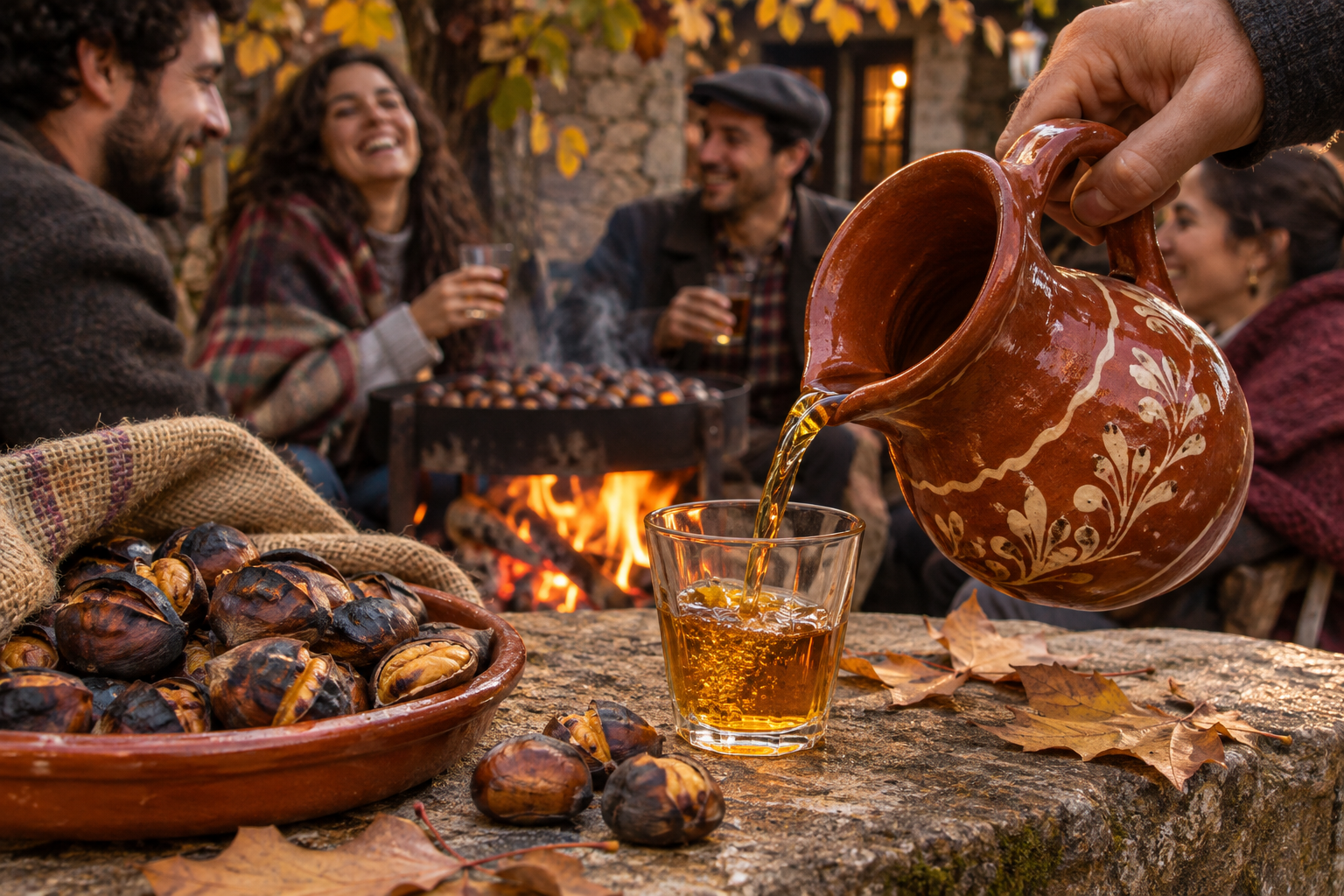
These two drinks, agua-pe and jeropiga, are the stars of the magusto cup, traditional Portuguese drinks made specifically for this season and closely tied to the celebration. Knowing them is knowing the real taste of Sao Martinho.
Agua-pe is the lighter of the two, and its name, roughly foot water, hints at its humble origins. It is a light, low-alcohol drink made from the leftovers of winemaking, the pressed grape skins, stems, and pulp, to which water is added and the mixture left to ferment briefly, producing a gentle, mildly alcoholic, refreshing drink. It is the thrifty, everyday magusto drink, made from what the winemaking left behind, and all the more charming for it.
Jeropiga is the richer, stronger, sweeter cousin, and it is the one that gives the title its rule. It is made by adding aguardente, the Portuguese grape brandy whose name means firewater, to fresh grape must, the unfermented new juice of the grapes complete with its skins and seeds. The brandy halts the fermentation before the grape sugar has turned to alcohol, so the result is a sweet, fortified, potent drink, luscious and warming, often made at home and poured generously at the magusto. Between the gentle agua-pe and the sweet, strong jeropiga, the magusto cup has its own unmistakable character, and the recipe below will let you make a version of the famous jeropiga yourself.
A Festival of the Harvest and the Saint
Step back, and Sao Martinho reveals itself as two traditions braided into one, which is part of what gives it such depth. On one hand it is an ancient autumn harvest festival, tied to the chestnut harvest and the new wine, a celebration of the land’s bounty and the turning of the agricultural year. On the other it is the religious feast of a Christian saint, Martin of Tours, with his legend of charity and his promise of returning warmth.
The two layers sit together comfortably, as they so often do in these old European festivals, the harvest fire and the saint’s feast become a single joyful day. The chestnuts and the new wine reach back to the rhythms of the farming year, the saint and his cloak reach back to a story of kindness rewarded, and the magusto fire gathers both into one warm circle. It is a festival that means several things at once, which is a large part of why it has endured and why it feels so rich.
Underneath it all runs the same thread that ties together so many of Europe’s November traditions: the gathering of a community around fire and food and drink to meet the coming winter with warmth rather than dread. Sao Martinho takes the shortening days and the first real cold, and answers them with a bonfire, a bag of chestnuts, a glass of new wine, and the company of everyone you know. It is, in the end, a festival about facing the dark together, warmed by the fire, the wine, and a saint’s old promise that a little more sunshine is still to come.
Bringing Sao Martinho Home
You do not have to be in Portugal to hold your own small magusto, and it is one of the easier European traditions to borrow, needing only a fire, some chestnuts, and something good to drink. On a cold November evening, roast a batch of chestnuts, gather a few people, and pour something warming, and you have the heart of Sao Martinho wherever you are.
The chestnuts are the one piece worth getting right, and roasting them well, scoring the shells, getting the heat right, and peeling them hot, is a small craft in itself, covered in full in its own place. Beyond that, the magic is simply in the gathering: the warmth, the company, the shared food and drink against the autumn chill, which is the whole point of the festival and the easiest part to recreate anywhere.
And to drink, there is the jeropiga. While the authentic version depends on fresh grape must from the harvest, which is hard to come by outside wine country in autumn, you can make a very respectable approximation at home with ingredients you can actually buy, and it will bring a genuine taste of the magusto to your table. Here is how. This piece is general information; traditions and recipes vary by region, so treat it as a warm introduction rather than the last word.
Make It: Jeropiga
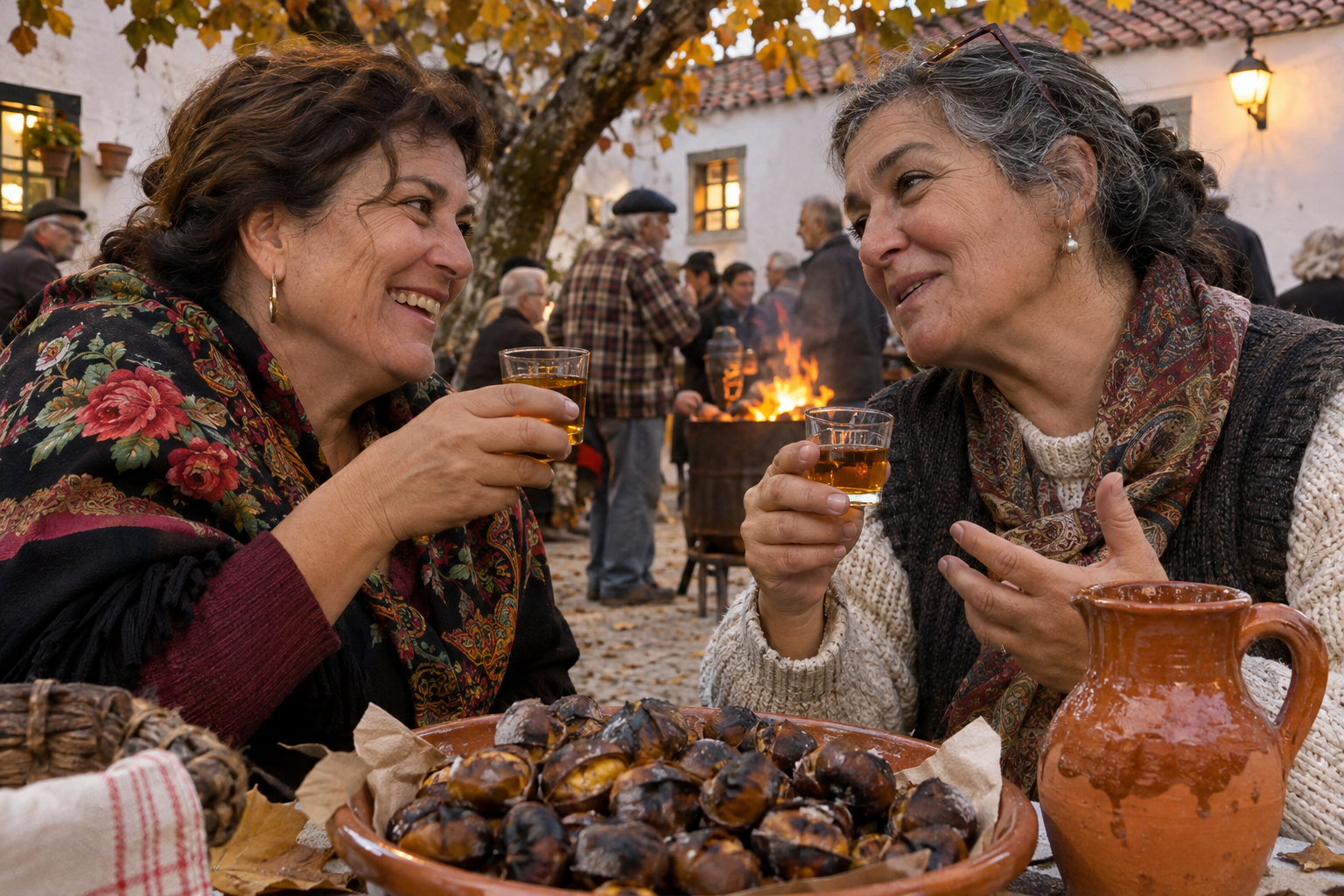
Here is a simple, approachable home version of jeropiga, the sweet fortified drink of Sao Martinho. Authentic jeropiga uses fresh grape must from the harvest; this version uses good grape juice in its place, so it is an approximation, but a delicious and warming one. It makes roughly one bottle.
Ingredients
- 500ml good-quality red grape juice (as unsweetened and pure as you can find), ideally with some body
- 250ml aguardente, or a decent grape brandy or other neutral-ish brandy
- 100g to 150g sugar, to taste
- 1 small cinnamon stick, optional
- a strip of lemon or orange peel, optional
Instructions
- Gently warm the grape juice in a saucepan, not to a boil, and stir in the sugar until it dissolves completely. Start with the smaller amount and add more to taste, remembering that jeropiga is meant to be sweet.
- If using, add the cinnamon stick and the citrus peel to the warm juice and let them infuse off the heat for a few minutes, then remove them, or leave them in for a stronger flavor.
- Let the sweetened juice cool to room temperature. This matters, because adding the brandy to hot juice will cook off some of the alcohol.
- Once cool, stir in the aguardente or brandy. Taste, and adjust the sweetness or the strength to your liking by adding a little more sugar syrup or a splash more brandy.
- Pour the jeropiga into a clean bottle, seal it, and let it rest for at least a few days, and ideally a week or two, so the flavors marry and mellow.
- Serve in small glasses, at room temperature or lightly chilled, alongside a plate of hot roasted chestnuts, which is exactly how Sao Martinho is meant to be enjoyed.

About the Author: Ruben, co-founder of Gamintraveler.com since 2014, is a seasoned traveler from Spain who has explored over 100 countries since 2009. Known for his extensive travel adventures across South America, Europe, the US, Australia, New Zealand, Asia, and Africa, Ruben combines his passion for adventurous yet sustainable living with his love for cycling, highlighted by his remarkable 5-month bicycle journey from Spain to Norway. He currently resides in Spain, where he continues sharing his travel experiences with his partner, Rachel, and their son, Han.