
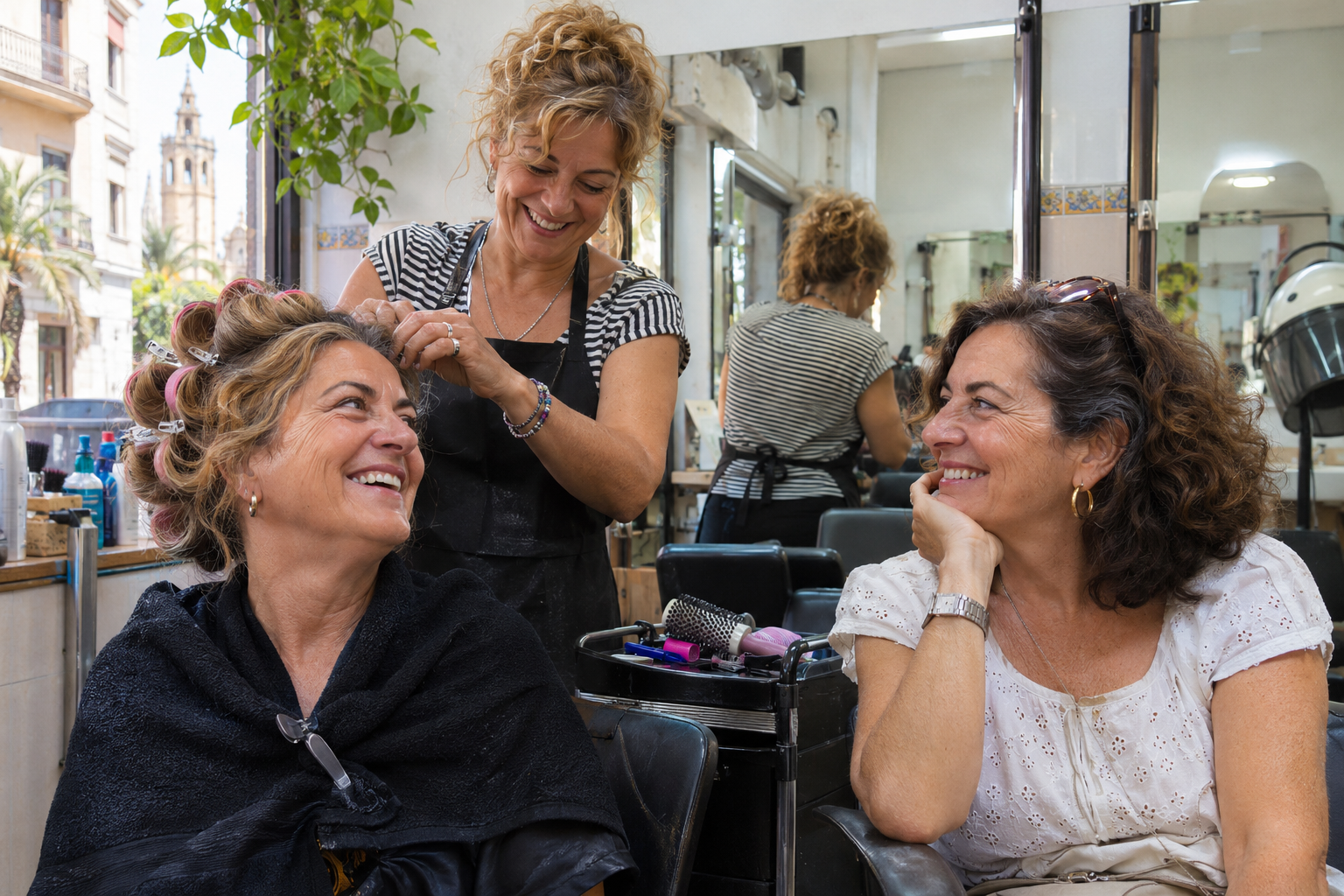
In Spain, Italy, and France, you see them everywhere, settled into the chairs of the neighborhood salon on an ordinary weekday morning: women in their fifties, sixties, seventies, and beyond, in for their weekly appointment. Not for a dramatic change, not for a special event, but for a wash and set, a blow-dry, a trim. Routine upkeep, as regular as the grocery run.
The standing weekly salon visit is a quiet institution for older women across much of Europe, and especially in the south. It is not framed as an indulgence or a treat; it is simply maintenance, a normal part of the week, as unremarkable as any other errand. And it is a ritual that American women, by and large, have let go of.
It is a small thing, a weekly trip to the hairdresser, but it sits at the intersection of several lovely ideas: self-care, consistency, community, and the particular grace of older women who always look done. Here is the peluqueria ritual, what it actually involves, why Europeans keep it up, what American women lost when they dropped it, and how to borrow its spirit whatever your own routine. The best of it turns out to have surprisingly little to do with hair.
The Standing Appointment
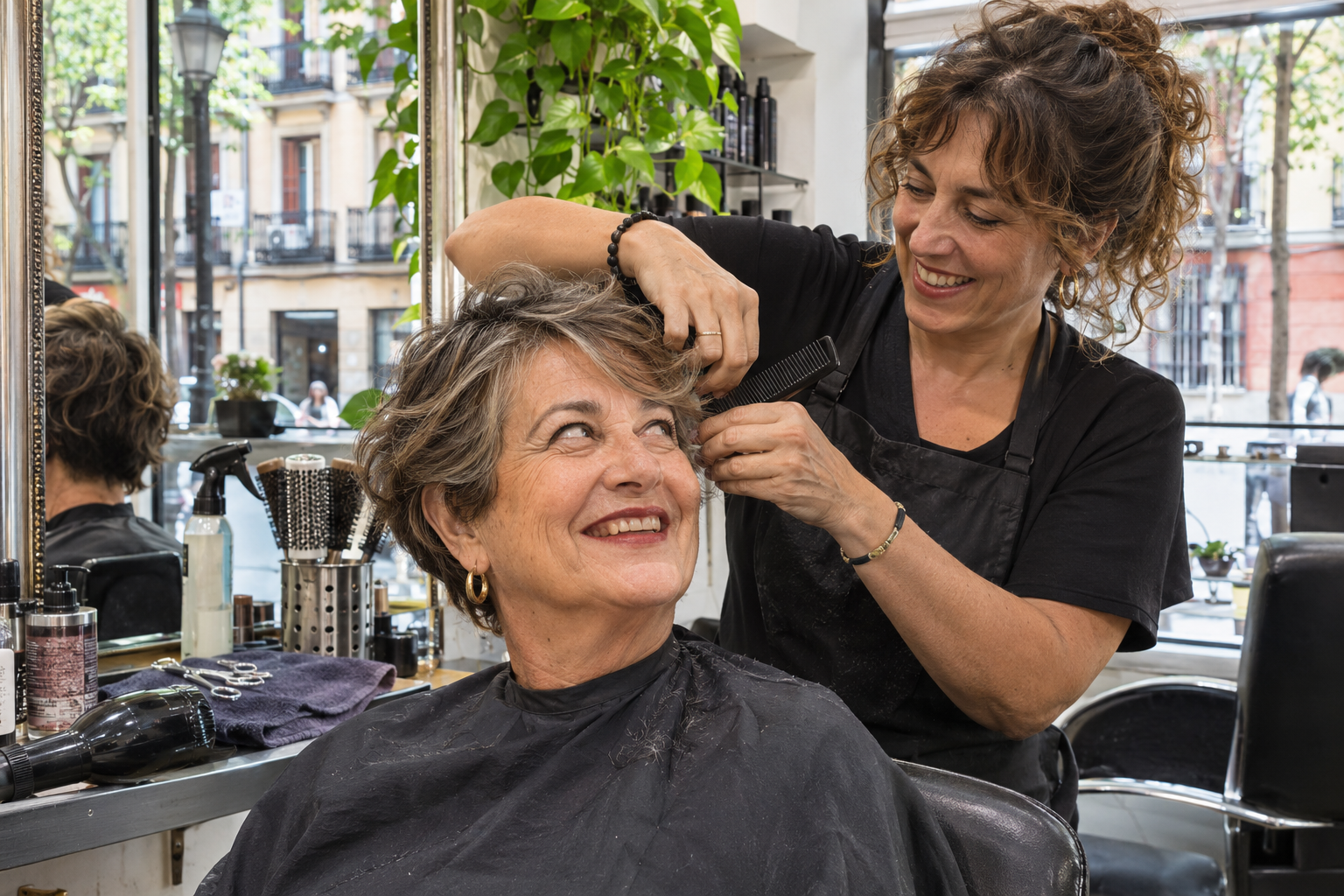
The heart of it is the regularity. For a great many older European women, a visit to the hairdresser is not an occasional thing arranged when needed, but a fixed, recurring appointment, often weekly, woven permanently into the rhythm of the week. The same day, the same salon, the same chair, week after week, year after year.
What happens there is usually modest rather than transformative. It is most often a wash and set, the hair washed, set, and styled into shape; or a blow-dry; or a regular trim to keep everything neat. The goal is not change but upkeep, keeping the hair consistently clean, shaped, and done, rather than reinventing it. The salon itself tends to be the local neighborhood one, the peluqueria in Spain, the parrucchiere in Italy, the coiffeur in France, an accessible, familiar, everyday place rather than a special destination.
This is a different model of the salon from the one many Americans hold, in which a hair appointment is a periodic, bigger event, a cut and color every few months, something planned and anticipated. The European weekly visit is lower-key and more frequent, less a production and more a routine, the hair simply tended to regularly the way one might water plants. It is the consistency, more than anything that happens in any single visit, that defines the whole ritual.
That regularity also changes the relationship with the hairdresser entirely. When you see the same person every week for years, they become something between a trusted professional and a friend, someone who knows your hair, your preferences, and your life, and who you can simply hand yourself over to without explanation. There is a real ease in that long familiarity, a comfort in being known, that an occasional visit to a rotating cast of stylists can never provide.
Maintenance, Not a Treat
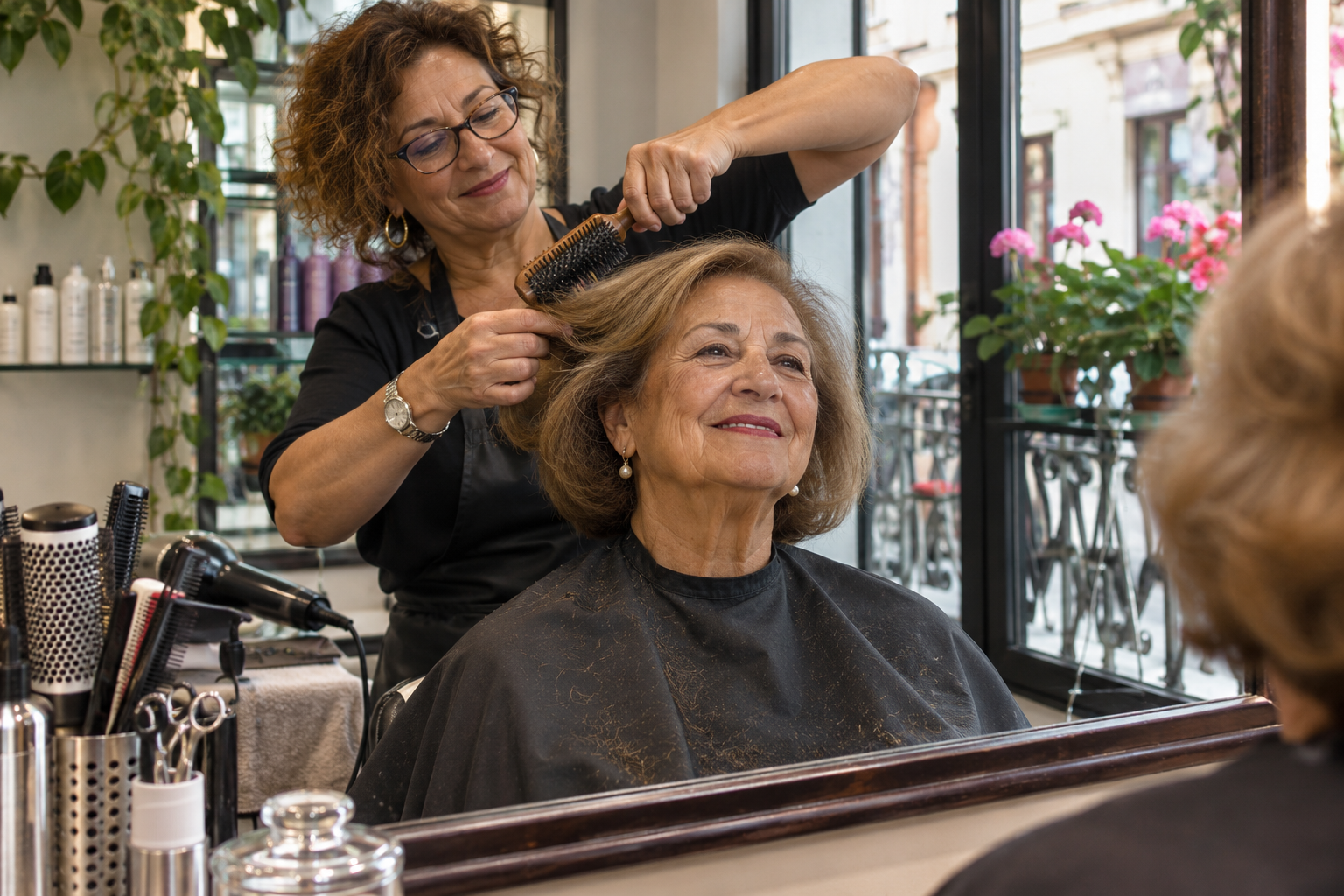
The language matters here, because of how the two cultures frame the same act. In much of Europe, the weekly salon visit is understood as maintenance, plain upkeep, in the same category as other ordinary forms of keeping oneself and one’s life in order. It is not a splurge or a reward; it is simply part of the routine of being a put-together person.
This framing is quietly significant. When something is maintenance, you do it regularly and without agonizing over whether you deserve it, the way you service a car or clean a house. There is no guilt attached, no sense of indulging oneself, no need to justify it as a special treat; it is just a thing that gets done, on schedule, because keeping up one’s appearance is treated as a normal and reasonable part of life. The European woman at her weekly appointment is not pampering herself; she is maintaining herself, and the distinction shapes the whole attitude.
The American framing tends to run the other way, casting the salon as an indulgence, a treat-yourself luxury to be enjoyed occasionally and perhaps felt a little guilty about. When hair care is a treat rather than maintenance, it becomes occasional, reserved for when it feels affordable or deserved, rather than a steady routine. The European insistence that it is simply upkeep, neither luxury nor indulgence, is part of what makes the weekly ritual sustainable and ordinary rather than exceptional. It is maintenance, so it simply happens, and that framing is half the secret.
There is a freedom in treating it this way that is easy to miss. When caring for yourself is reframed from indulgence to upkeep, the guilt that so often surrounds self-care simply evaporates, and you are left free to tend to yourself as a matter of course. Many American women would benefit as much from adopting that framing as from adopting the ritual itself, because the guilt attached to looking after oneself is often the real obstacle, not the time or even the money.
Affordable, Which Makes It Possible
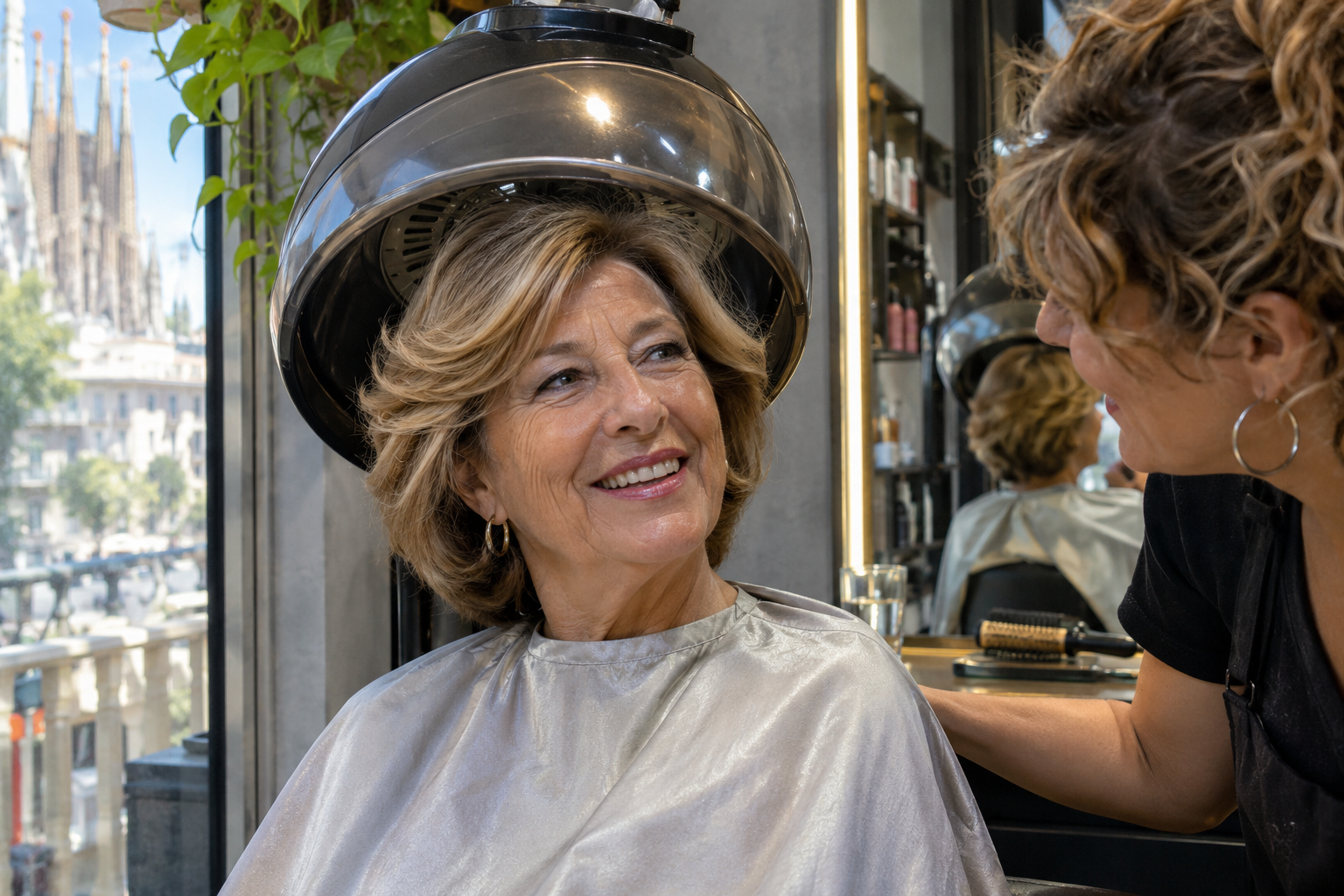
None of this would be possible if it cost a fortune, and a large part of what sustains the ritual is that, in much of Europe, it is genuinely affordable. The weekly wash and set is not an expensive proposition, which is exactly what allows it to be weekly.
In the neighborhood salons of southern Europe especially, a wash and set or a blow-dry is modestly priced, cheap enough to fit into an ordinary budget as a regular expense rather than a splurge. This is a world away from the high cost of a salon visit in much of the United States, where prices can make even an occasional appointment feel like a real expenditure, let alone a weekly one. The affordability is what turns the salon from a luxury into a routine; when the weekly visit costs little, keeping it up as maintenance becomes entirely reasonable.
This economic reality underpins the whole cultural difference. It is easy to admire the European habit and harder to replicate it where the same service costs several times as much, and it would be unfair to pretend the difference is purely about values rather than prices. Part of why American women dropped the weekly ritual is simply that it became expensive, and an affordable neighborhood institution is a precondition for a weekly habit that an occasional-luxury pricing model cannot support. The accessible local salon is the quiet infrastructure that makes the whole thing work.
It Is Also Social
There is another dimension to the weekly salon visit that is easy to miss if you focus only on the hair, and it may be the most valuable part of all: it is deeply social. The salon is not just a place where hair is done; it is a community hub, especially for older women, and the appointment is as much a social ritual as a grooming one.
Picture what the weekly visit actually provides beyond the blow-dry. The same familiar faces, week after week; the hairdresser who knows your life and your family; the other regulars; the easy, warm chatter and gossip and companionship of an hour spent among people you see every week. For an older woman, this is a standing social appointment woven into the fabric of the week, a reliable dose of human contact and belonging, which is no small thing at a stage of life when social circles can otherwise narrow. The salon is company as much as coiffure.
This connects to one of the most important things we know about aging well, which is the protective power of regular social connection. A weekly ritual that reliably brings an older woman into warm, familiar company, that gives her a reason to go out and people who expect her, delivers exactly the kind of steady, low-effort social contact that supports wellbeing in later life. Much of the value of the peluqueria ritual, in other words, has nothing to do with hair at all; it is the connection, the belonging, and the gentle structure of a standing weekly appointment among people who know you.
What American Women Dropped
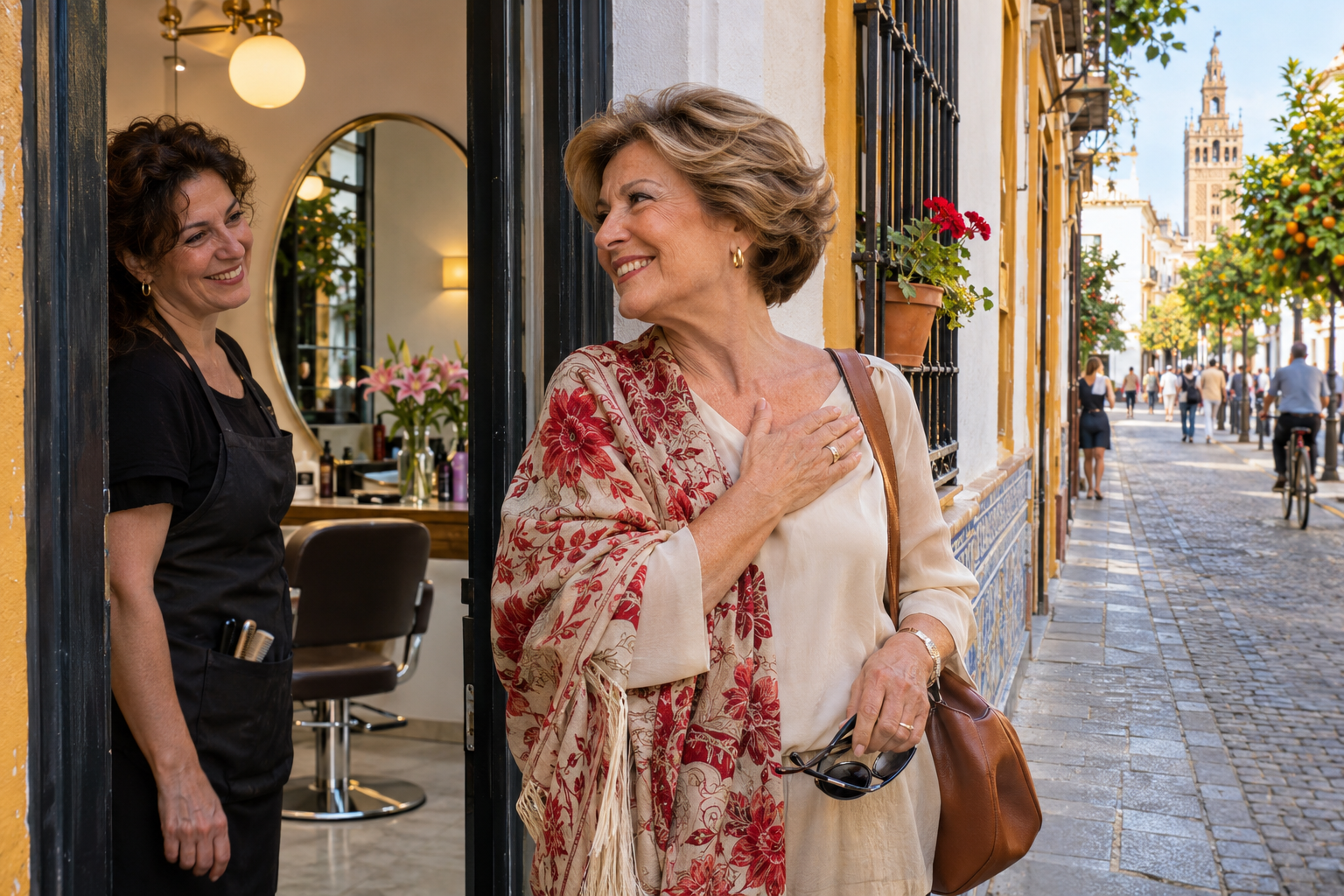
Against all this, it is worth looking honestly at what happened in America, where the weekly ritual largely faded, because the reasons are understandable and the loss is real. The standing weekly set, once more common among American women too, quietly disappeared over the decades.
Several things drove it. Cost was a big one, as salon prices climbed and the weekly visit became a luxury few could justify, and styles changed too, moving toward lower-maintenance cuts that did not require regular setting.
The whole culture shifted toward doing one’s own hair at home, with better products and tools making the professional weekly set feel unnecessary, and the neighborhood salon as a cheap, social, everyday institution declined, taking the ritual that depended on it along with it. None of this was a mistake, exactly; it was a reasonable response to changing prices, styles, and conveniences.
But something was lost in the shift, even if no single step was wrong. What faded was not just consistently done hair but a reliable weekly ritual of self-care and social connection, an hour each week that was dependably about being tended to and being among familiar people. The American model, more occasional and more transactional, delivers the haircut but not the rhythm, the service but not the standing social appointment. In trading the weekly ritual for convenience and savings, American women gained real things but gave up something quieter and genuinely valuable, which is worth naming even if the trade was reasonable.
Always Done
The most visible result of the European ritual is a particular quality you notice in older European women, especially in the south, and once you see it you cannot unsee it: their hair is always done. Not elaborately styled, not fussy, but consistently neat, set, and intentional, never flat, limp, or left to chance.
This consistent done-ness is a large part of why these women read as so put-together at every age. Hair that is always tended, always shaped, always deliberate, anchors a whole look and lends an air of composure even on the most casual day and even into advanced age. It is not about having dramatic or fashionable hair; it is about having cared-for hair, reliably, which quietly signals a woman who keeps herself up and takes herself seriously. The always-done hair is of a piece with the good scarf and the everyday gold, another small, consistent element of looking pulled-together as a matter of routine.
And there is a dignity in it that is worth noting, particularly as women age. The European habit treats keeping up one’s appearance not as vanity to be abandoned with youth but as a form of ordinary self-respect that continues for life.
The older woman with her weekly set is making a quiet statement that she is still worth the upkeep, still a person who presents herself with care, and that aging is no reason to let that go. The always-done hair is, in part, a refusal to disappear, and there is something genuinely lovely in that. In a world that can be quick to render older women invisible, the weekly set is a small, steady insistence on being seen and on seeing oneself as still worth the care.
Bringing the Ritual Back
So what can be taken from all this, for a woman who cannot or would not want to sit in a salon every week? The good news is that the spirit of the ritual matters far more than the specific weekly set, and the spirit travels, whatever your budget, your hair, or your schedule.
The deeper things the ritual provides are a regular rhythm of self-care, the discipline of keeping oneself tended, and ideally a thread of social connection, and all of these can be captured in forms that suit your own life.
It might be a standing monthly cut rather than a weekly set, a regular blow-out when you can, a home routine you keep up faithfully, or simply the decision to tend to yourself consistently rather than only on special occasions. If you can find a version that also brings you into regular warm company, so much the better, because that social thread is quietly the most valuable part. The point is the consistency and the care, not the particular service. A woman who tends to herself faithfully in her own way, on her own terms, has captured the real heart of the ritual, whether or not she ever sets foot in a salon.
And it should go without saying, but is worth saying anyway: wear your hair however makes you happy, at any length, any style, any level of fuss or none.
This is not a lecture that older women must spend their time and money at the salon. There is no one right way to keep one’s hair, and plenty of women look and feel wonderful with wash-and-go simplicity, which is entirely valid.
The lesson worth borrowing is gentler than that. It is that regular self-care is a kindness to yourself, that consistency is its own quiet elegance, and that tending to yourself, in whatever way you choose, is a lovely thing to keep doing all your life. Take from the peluqueria ritual the parts that serve you, the rhythm, the care, the company, and leave the rest.

About the Author: Ruben, co-founder of Gamintraveler.com since 2014, is a seasoned traveler from Spain who has explored over 100 countries since 2009. Known for his extensive travel adventures across South America, Europe, the US, Australia, New Zealand, Asia, and Africa, Ruben combines his passion for adventurous yet sustainable living with his love for cycling, highlighted by his remarkable 5-month bicycle journey from Spain to Norway. He currently resides in Spain, where he continues sharing his travel experiences with his partner, Rachel, and their son, Han.