
When the rains come to the Philippines, when the sky goes gray and the air turns cool and damp, something happens in kitchens all over the country: the ginger comes out, the chicken goes in the pot, and the house fills with a warm, fragrant steam that means everything is going to be all right. The soup is tinola, and for Filipino families it is far more than a meal. It is the automatic answer to bad weather, to a cold coming on, to a child who is off their food, to a day that simply needs comforting.
A clear, golden, ginger-scented broth with tender chicken, soft chunks of green papaya, and a handful of dark leafy greens, tinola is the Filipino soup that somehow fixes everything, and growing up Filipino means growing up with the smell of it on rainy afternoons. Here is what tinola is, why ginger is its soul, the vegetables and leaves that complete it, why it works as both weeknight dinner and family medicine, and how to make a pot of your own. It is one of the warmest, simplest, most comforting bowls in all of Filipino cooking.
What follows is the soup for when the weather turns, the ginger at its heart, the green papaya and the leaves, why it heals body and spirit, and how to make it yourself.
The Soup for When the Weather Turns
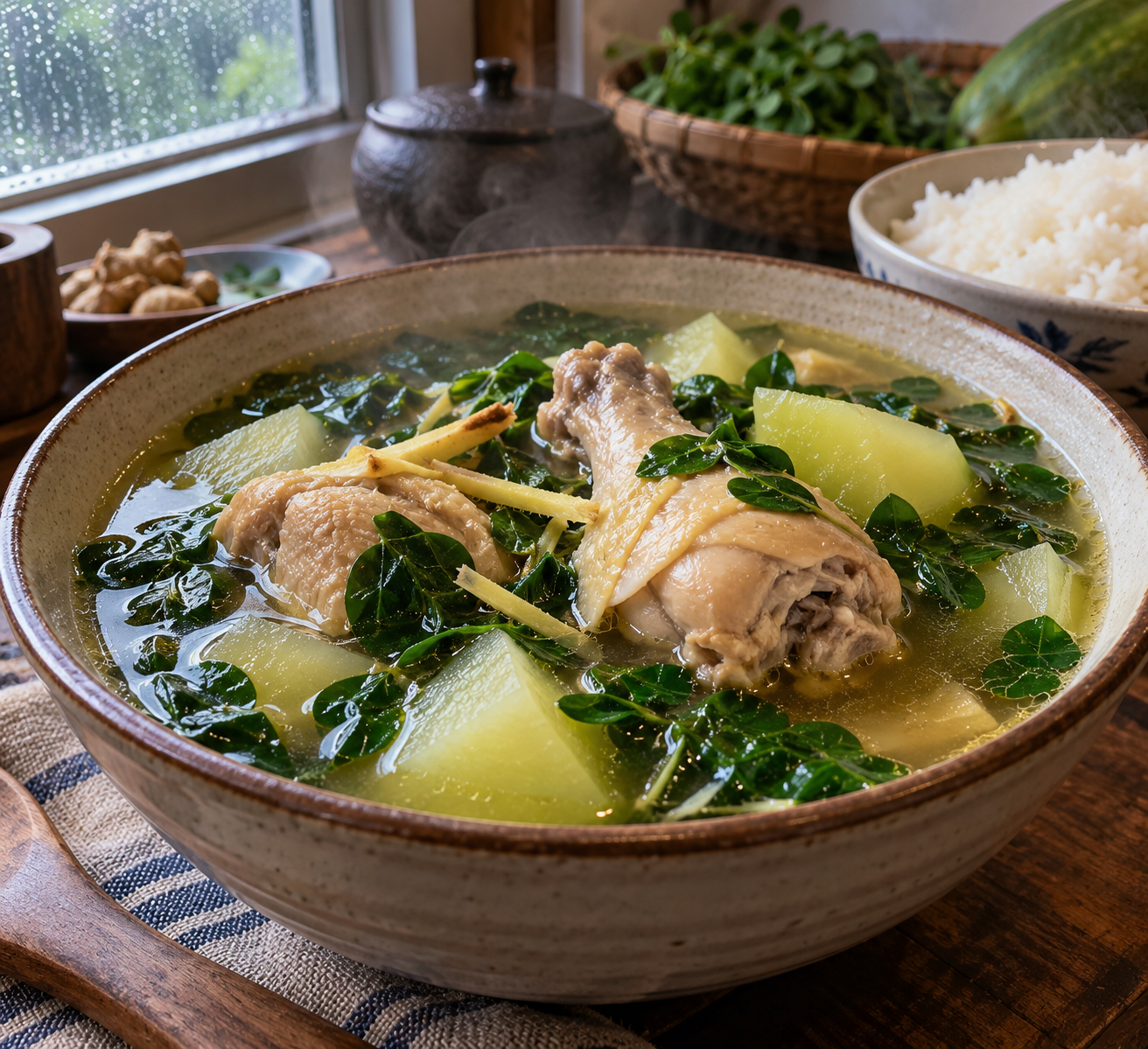
In the Philippines, the rainy season, or just a cold, wet, miserable stretch, is practically a summons to make tinola. There is a deep cultural instinct that connects this particular soup to cold and damp and feeling low, the same way other cultures reach for a specific dish when the weather sours. A gray, drizzly day in a Filipino home very often smells of ginger and simmering chicken, because when it is cold and wet outside and everyone has come in damp and grumbling, tinola is simply what you make to warm the whole household from the inside out. The weather turns, and the pot comes out; it is almost reflexive, passed down without anyone ever deciding it. The Filipino word for this warming quality is pampainit, and tinola is pampainit in a bowl.
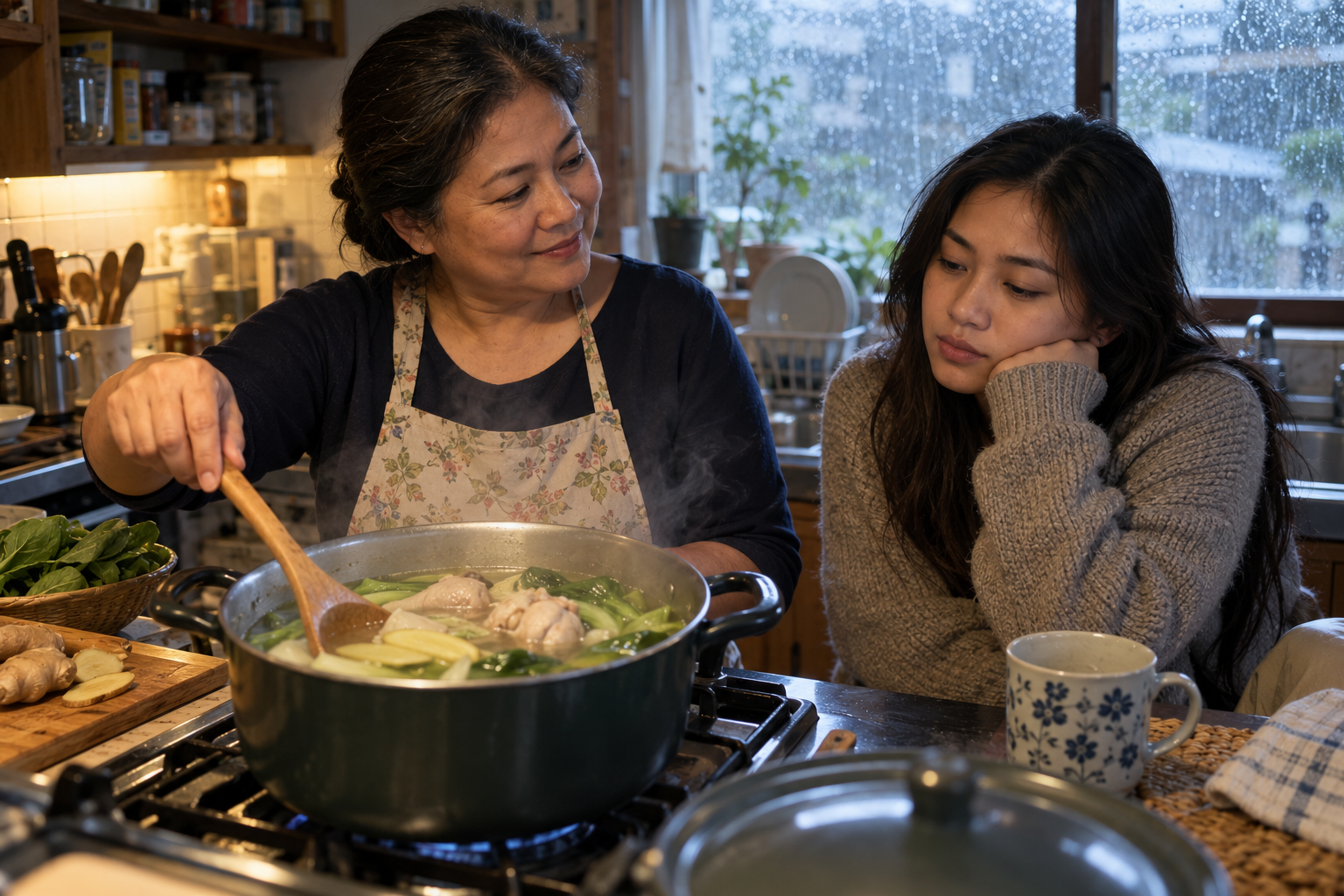
It is not only about the weather, though. Tinola is also the soup Filipino mothers make when someone is coming down with something, when a family member is run down, or when a child has lost their appetite and needs something gentle and nourishing they can actually face. It is light enough for a weak and uninterested stomach, warm enough to soothe and settle, and nourishing enough to help a tired body rally, which makes it the Filipino equivalent of the healing chicken soups found in culture after culture all over the world.
Humanity keeps independently inventing chicken soup as medicine, and the Philippines simply made its version glow with ginger. But tinola has its own unmistakable character, built on ginger, and in a Filipino household the sight of your mother reaching for the ginger and the chicken is a small, wordless act of care, a sign that she has noticed you need looking after and is quietly about to do something about it, in the oldest language of care there is, which is food made with your name in mind. No words are needed; the smell of the ginger says everything.
Ginger Is the Soul of It
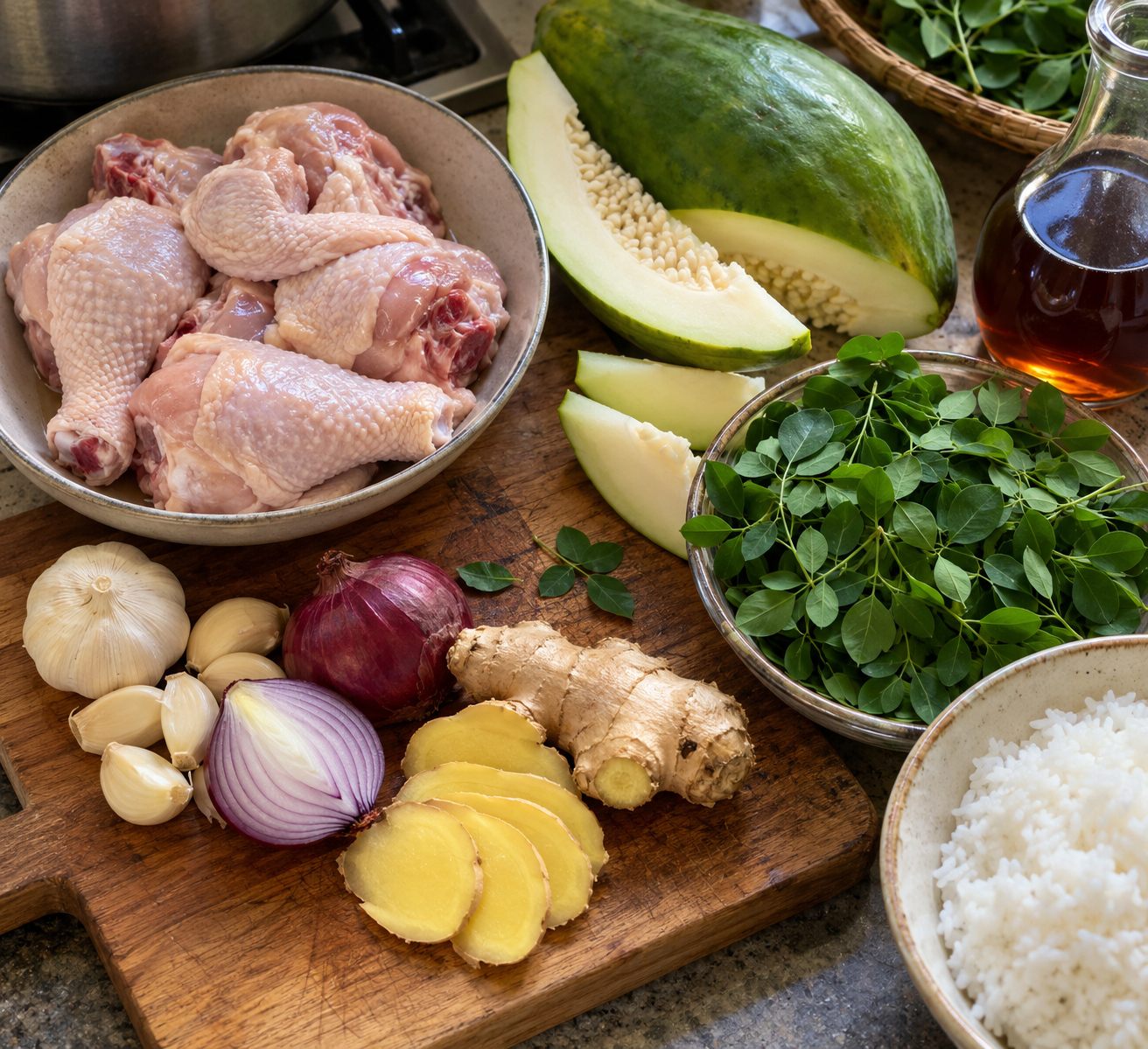
If you take one thing away about tinola, let it be this: ginger is not a background note in this soup, it is the whole soul of it. The dish begins with ginger, lots of it, sliced or julienned and sauteed at the very start with garlic and onion until the kitchen fills with its sharp, warming fragrance, and that bloomed ginger flavors every drop of the broth that follows. Without the ginger there is no tinola; it is the ingredient that defines the soup’s taste, its aroma, and its reputation as a warming, healing food.
The gentle heat and the clean, spicy fragrance of ginger are exactly what make a bowl of tinola feel medicinal in the very best sense of the word, seeming to clear a stuffed head and warm a cold chest from the inside the very moment the first curl of steam reaches your face across the bowl. You feel it working before you have even taken a spoonful, and that is not entirely your imagination.
The rest of the base is beautifully simple, which is part of the dish’s genius. After the ginger, garlic, and onion are sauteed, chicken pieces go in, bone-in for the best flavor, seasoned with patis, the Filipino fish sauce that provides the salty, savory depth that salt alone cannot. Then comes water, and the whole thing simmers gently until the chicken is tender and the broth has turned golden and fragrant. That is the entire foundation: ginger, garlic, onion, chicken, fish sauce, water.
There is nothing fancy, nothing expensive, nothing hard to find, just a handful of the humblest ingredients transformed, by that one generous hit of ginger and a little patient simmering, into something deeply and disproportionately comforting, which is exactly the kind of everyday magic that defines so much of Filipino home cooking. Filipinos are experts at coaxing enormous comfort out of very little, and tinola may be the purest proof of it.
Green Papaya, Chayote, and the Leaves
Once the broth is built, tinola gets its body and character from a vegetable and a handful of greens, and this is where family traditions and regional habits show themselves. The classic vegetable is green papaya, the unripe fruit, cut into chunks and simmered until tender, where it turns soft and mild and soaks up the gingery broth beautifully. In many kitchens, and in many parts of the world where green papaya is hard to find, the common substitute is sayote, which is chayote, the pale green squash that behaves much the same way, going tender and absorbing the flavor around it. Either one gives the soup its satisfying, spoonable chunks of tender vegetable, the soft, broth-soaked pieces that make tinola a proper meal rather than just a flavored broth. They are the part children often fish for first.
Then come the leaves, added right at the end so they wilt but stay fresh and green.
The two traditional choices tell you something about Filipino cooking. One is malunggay, the leaves of the moringa tree, little dark-green leaves that are famously, almost absurdly nutritious, packed with vitamins and minerals, which is a large part of why tinola is considered so healthy and restorative.
The other is dahon ng sili, the leaves of the chili pepper plant, which add a mild, slightly peppery green note without real heat. Which one a family uses often comes down to nothing more than what happens to be growing in the yard or what the market had that morning, and both are completely beloved and completely correct, with no Filipino grandmother willing to concede that the other version is the true one.
These small household differences are part of what makes the dish feel so personal, each family’s tinola tasting faintly of their own kitchen. Together, the papaya or sayote and the leafy greens turn what began as a simple gingery chicken broth into a complete, balanced, genuinely nourishing meal in a single bowl, protein and vegetable and warmth all at once, which is exactly what it is meant to be and exactly why it has never needed improving. The dish arrived at its final form a long time ago, and Filipino families have seen no reason to change it since.
A Whole Meal in One Pot
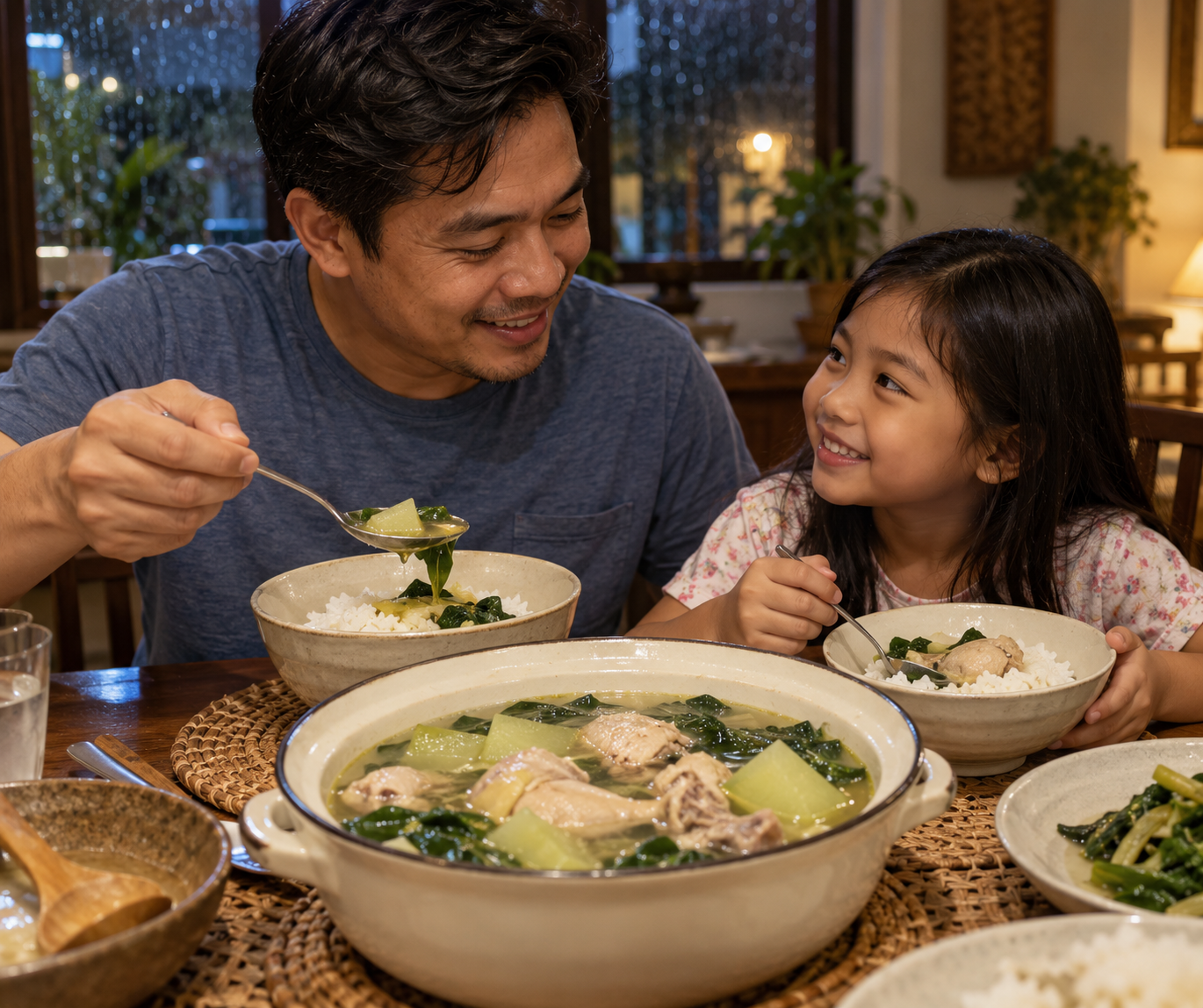
For all its reputation as medicine and bad-weather comfort, it is worth saying plainly that tinola is also, simply, dinner, and a very good one, eaten on perfectly ordinary days for no reason other than that it is delicious and easy. This is part of why it is so beloved: it is not a special-occasion dish you have to plan around, but an everyday, back-pocket meal that a Filipino parent can throw together from cheap, humble ingredients and turn into a satisfying dinner for the whole family. One pot, one chicken, a good knob of ginger, and whatever vegetable is on hand, and you have fed everyone at the table well and warmly for very little money. That kind of honest, affordable generosity is the quiet backbone of Filipino home cooking.
Served the only correct way, which is in a deep bowl with plenty of broth and a mound of steaming white rice alongside, tinola becomes a complete, balanced meal: protein from the chicken, vegetables from the papaya and greens, and the rice to make it filling, all brought together by that warming, savory broth you spoon generously over everything. It is cheap, it is nourishing, it is forgiving of the cook, and it uses ingredients that are always on hand in a Filipino kitchen, which is exactly the combination that turns a dish into a weeknight staple rather than a rare treat. The fact that this everyday workhorse of a dinner also happens to double as the family’s trusted remedy for cold weather and low spirits is simply a bonus, and a very Filipino kind of practicality: the medicine and the comfort food are the same delicious thing.
The Healing, and a Place in the National Novel
Tinola’s reputation as a fixer of everything is not just sentiment, because there are real reasons a bowl of it genuinely helps. The ginger that defines it has long been valued for settling the stomach and warming the body, the warm broth soothes and hydrates, the chicken provides easily digested protein for a run-down body, and the malunggay leaves bring a genuine dose of nutrition. Put all of that together in one bowl, and it is a soup that genuinely nourishes a depleted, run-down body in a gentle, warm, easily eaten form, which is precisely why Filipino mothers have trusted it for the sick and the weather-beaten for generations without ever needing a doctor to confirm what they already knew. The instinct turns out to be sound nutrition. It is comfort you can measure as well as feel.
But the deeper healing is the kind that cannot be measured, and any Filipino will tell you so. Tinola is woven so tightly into Filipino family life that the taste of it is inseparable from the feeling of being home and being cared for. It even holds a place in Filipino cultural identity: a scene featuring chicken tinola appears in Jose Rizal’s Noli Me Tangere, the great nineteenth-century novel at the heart of the Filipino national story, which tells you how long and how deeply this humble soup has been part of the fabric of the culture.
For a Filipino far from home, the smell of ginger and chicken simmering can bring on a wave of homesickness and comfort all at once, because it is the smell of their mother’s kitchen, of rainy afternoons, of being looked after. That is the real reason it fixes everything: it heals the body with ginger and broth, and it heals the spirit with memory and love.
Make It: Tinola
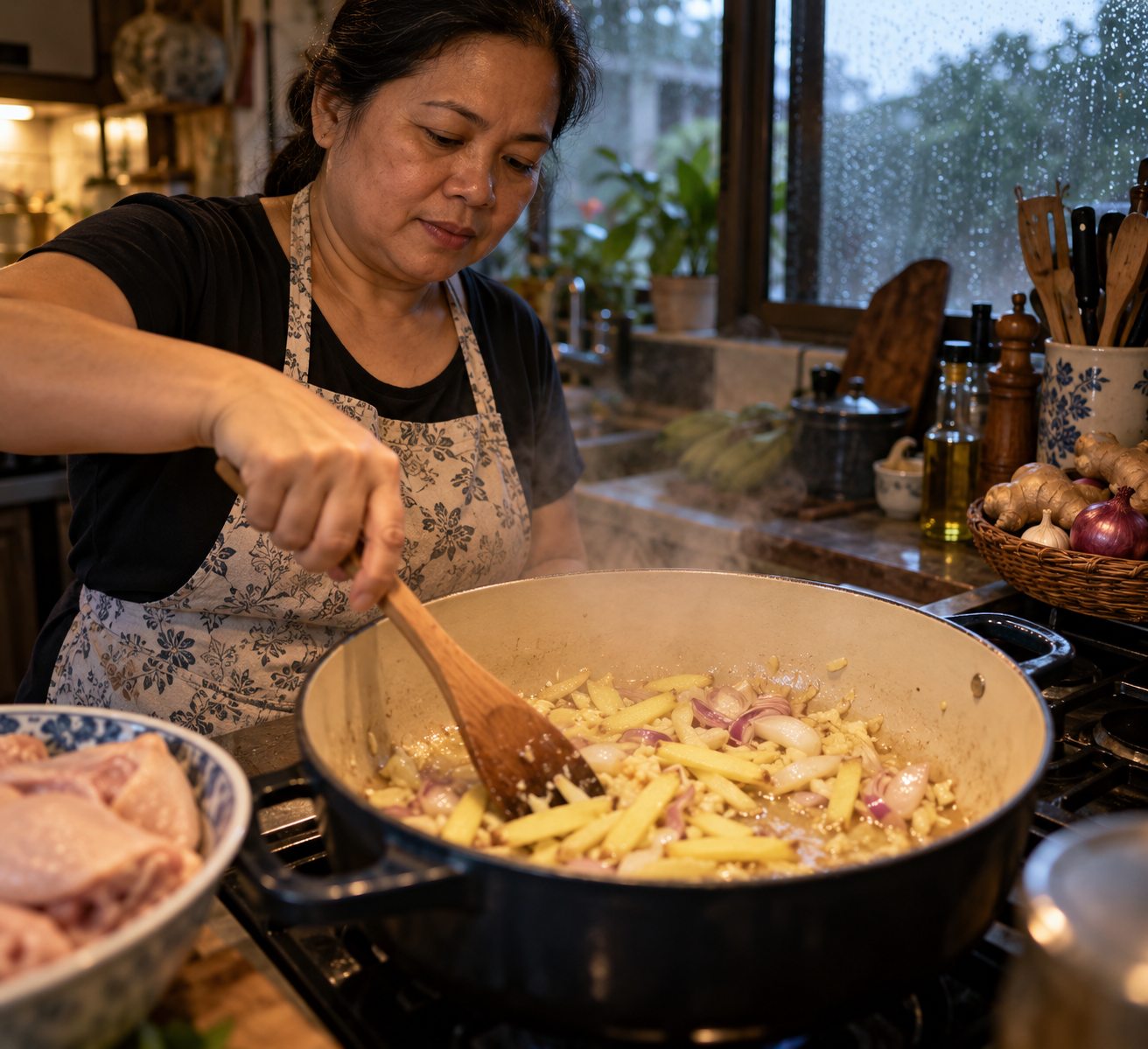
Here is a traditional home version that serves about four and delivers all the gingery comfort of the real thing. Use bone-in chicken for the best broth.
Ingredients
- 2 tablespoons cooking oil
- a large thumb of fresh ginger, peeled and sliced or julienned (be generous)
- 1 onion, sliced
- 4 garlic cloves, minced
- about 2 lbs bone-in chicken pieces, cut into serving portions
- 2 to 3 tablespoons patis (fish sauce), plus more to taste
- 6 cups water
- 1 small green papaya, or 2 sayote (chayote), peeled and cut into chunks
- 2 large handfuls malunggay leaves or chili leaves (or spinach as a substitute)
- salt and pepper
Instructions
- Heat the oil in a pot over medium heat and saute the ginger, onion, and garlic until soft and very fragrant, letting the ginger really bloom.
- Add the chicken pieces and cook, stirring, until they lose their raw color on the outside, then pour in the patis and let it sizzle for a moment to season the chicken.
- Add the water, bring to a boil, then lower the heat and simmer gently, skimming off any foam, for about 25 to 30 minutes, until the chicken is tender and the broth is golden and fragrant.
- Add the green papaya or sayote and continue to simmer until soft and cooked through, about 10 minutes more. Taste and adjust the seasoning with more patis, salt, or pepper.
- Turn off the heat and stir in the malunggay or chili leaves, letting them wilt in the residual heat for a minute or two so they stay green and fresh.
- Serve hot in deep bowls with plenty of broth, alongside steamed rice, which is non-negotiable, spooning some of the gingery soup over the rice as you eat.

About the Author: Ruben, co-founder of Gamintraveler.com since 2014, is a seasoned traveler from Spain who has explored over 100 countries since 2009. Known for his extensive travel adventures across South America, Europe, the US, Australia, New Zealand, Asia, and Africa, Ruben combines his passion for adventurous yet sustainable living with his love for cycling, highlighted by his remarkable 5-month bicycle journey from Spain to Norway. He currently resides in Spain, where he continues sharing his travel experiences with his partner, Rachel, and their son, Han.