
The Spanish tortilla is one of the simplest great dishes in the world. It has three main ingredients, eggs, potatoes, and olive oil, plus a little salt, and that is genuinely all it takes to make the thick, golden, comforting potato omelette that Spaniards eat at every hour of the day, in every bar and every home across the country.
You would think a dish this simple would leave nothing to argue about. You would be wrong, because Spain has found exactly one thing to fight over, and it fights over it with a passion that borders on the absurd: onions. To put an onion in, or to leave it out, is a genuine national divide, a question that splits families, friends, and regions into two fiercely loyal camps, and it is, remarkably, essentially the only thing anyone argues about. Here is what the real Spanish tortilla is, why everything about it except one thing is settled, the great onion war at its heart, the one other quiet argument nobody quite admits to, why such a humble dish inspires such passion, and how to make it yourself. It is the most beloved and most hotly debated omelette on earth, over the smallest possible stakes.
What follows is the simplest great dish in Spain, the one great argument over onions, the quieter argument over doneness, why it stirs such passion, and how to make it.
The Simplest Great Dish in Spain
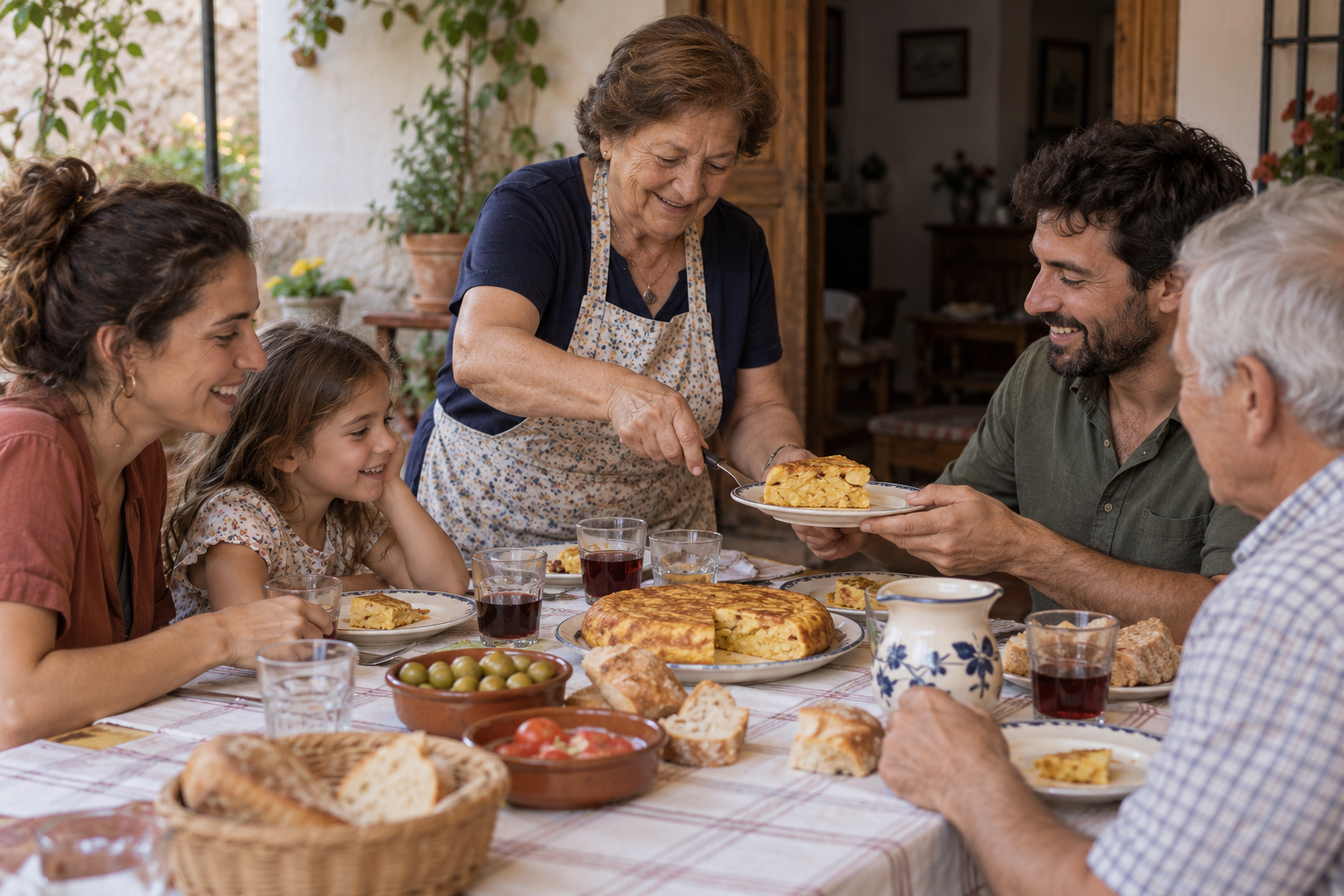
The tortilla espanola, also called the tortilla de patatas, is the Spanish potato omelette, and it is a cornerstone of everyday Spanish eating. At its most basic it is nothing more than potatoes cooked gently in plenty of olive oil until meltingly soft, then mixed with beaten eggs and cooked in a pan into a thick, round cake, golden on the outside and tender within, and flipped partway through so both sides set. It is eaten everywhere and at every time: as a tapa or a pintxo in bars, cut into wedges or squares; as a light supper at home; cold in a sandwich, the beloved bocadillo de tortilla; packed into lunchboxes; and served at family gatherings and picnics. Few foods anywhere are as deeply and completely woven into the daily texture of ordinary Spanish life as the tortilla; it is simply always there, at the bar at midday, in the fridge at home, in the backpack on a hike, a constant, reliable, comforting presence from one end of the country to the other. To be Spanish is, among many other things, to have eaten a great deal of tortilla.
Part of its genius is exactly how little it asks for. Potatoes, eggs, olive oil, and salt are humble, cheap, always-on-hand ingredients, and yet in the right hands they become something genuinely wonderful, rich and satisfying and deeply comforting. It is peasant food elevated by technique into a national treasure, the kind of dish that every Spanish person has eaten a thousand times and never tires of. A good tortilla is a small marvel of simplicity, proof that you do not need a long ingredient list to make something a whole country adores. And because it is so simple and so universal, so present in every home and every memory, it has become the perfect vehicle for the one great, endless, deeply felt argument that Spaniards cannot resist having about it.
The One Great Argument: Onions
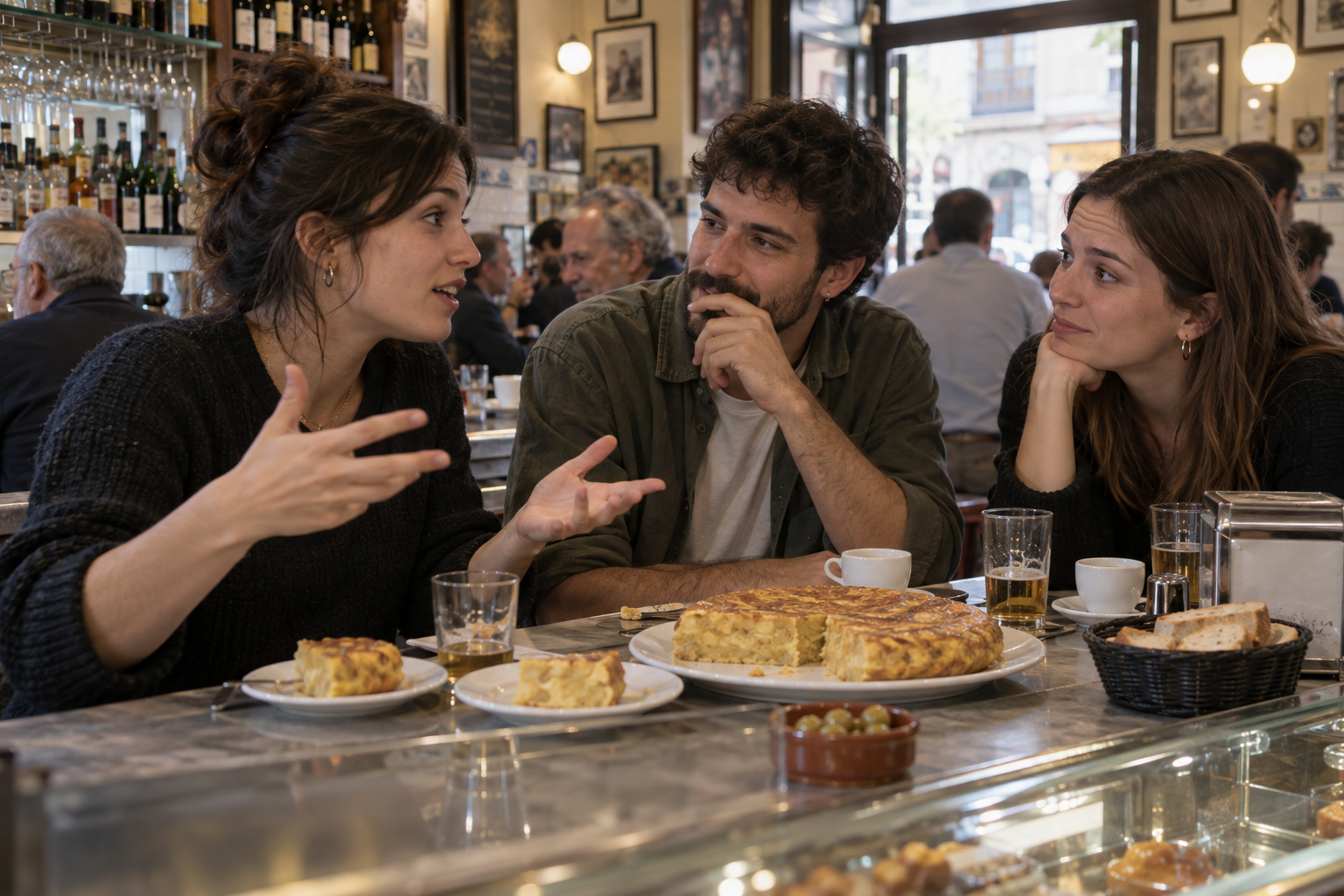
Here is the debate that divides Spain: con cebolla or sin cebolla, with onion or without. That is it. That is the whole war, and it is a real one. Spaniards fall, with genuine conviction, into one of two camps. On one side stand the cebollistas, who insist that onion is essential, that slowly cooking sweet onion along with the potatoes gives the tortilla moisture, sweetness, and depth, and that a tortilla without it is dry and incomplete. On the other stand the sincebollistas, the purists who hold that a true tortilla de patatas is potatoes and eggs alone, that onion is an adulteration that masks the clean flavor of the egg and potato, and that adding it is, frankly, cheating.
The intensity of this disagreement is, to an outsider, wonderfully disproportionate to the stakes. Families are divided along the onion line; couples negotiate it; friends rib each other mercilessly over it; and asking a Spaniard whether they are team onion or team no-onion is a reliable way to start a lively and only half-joking argument anywhere in the country.
What is remarkable is how completely this single question dominates the discourse around tortilla. Spaniards do not really argue about whether to use olive oil, or about the basic method, or about most of the dish at all, because those things are settled and agreed. They argue about the onion, and essentially only about the onion. It is the one true, enduring tortilla controversy, a kind of national parlor game of culinary allegiance that can be deployed at any dinner table or bar in the country to instantly divide the room into two cheerfully warring factions, and everyone, absolutely everyone, from the youngest child to the oldest abuela, has a firm and well-defended side. There are no undecideds in the onion war.
Why Everything Else Is Settled
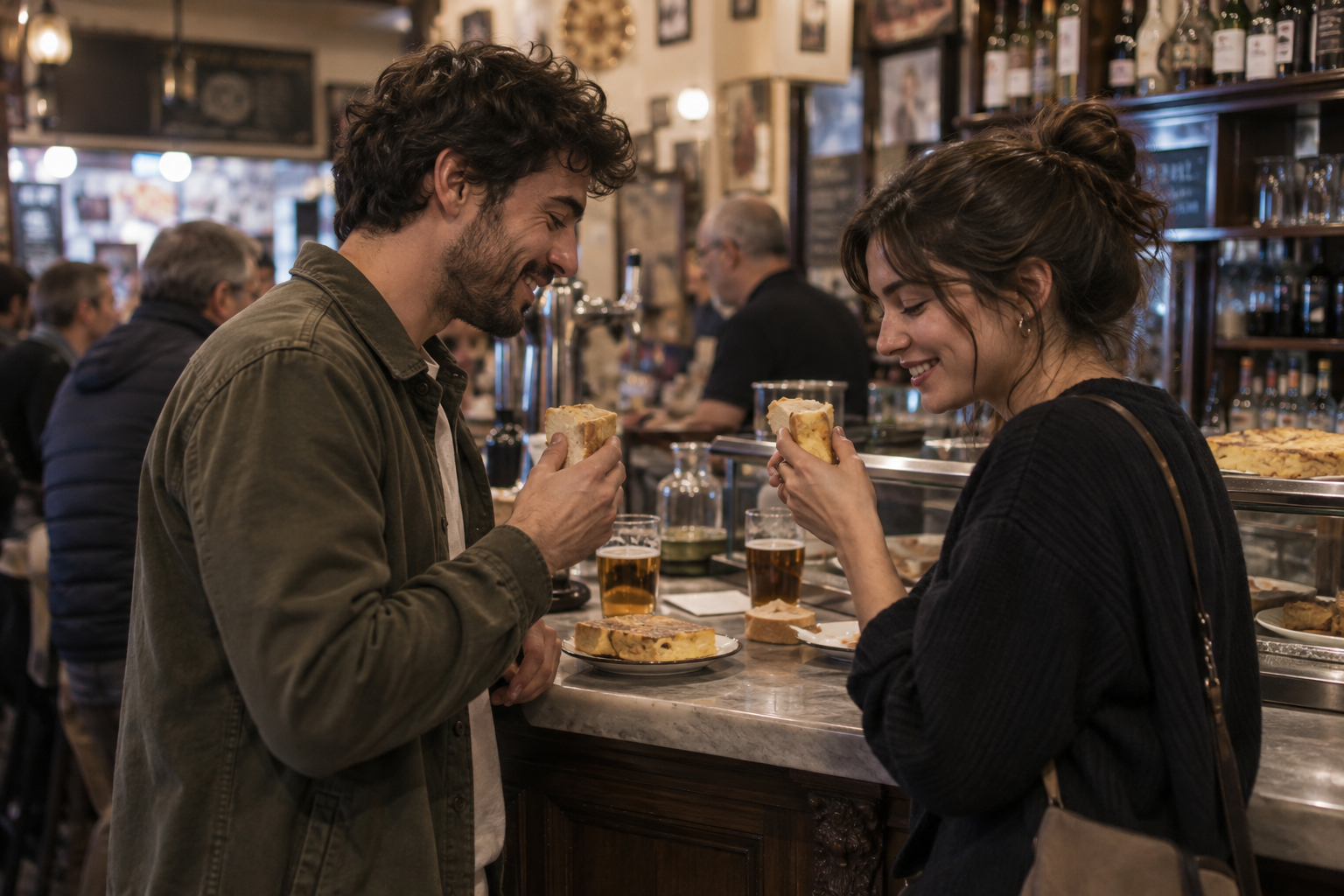
It is worth pausing on why the onion is the only real battleground, because the reason is rather elegant and it is the key to the whole dish. Everything else about the tortilla de patatas is simply agreed upon, settled by generations of consensus. That it is cooked in olive oil, never butter; that the potatoes are poached slowly and softly in that oil rather than fried crisp; that it is bound with beaten egg, flipped halfway, and served as a thick round cake, all of this is beyond dispute. There is no faction arguing for a thin, flat tortilla, or for frying the potatoes hard, or for using a different fat. The method is a matter of settled national agreement, which leaves the onion, alone, as the single open question.
There is a clever reason the argument stays so narrow, too, which is that most other changes to the recipe do not create a contested version of the tortilla but simply a different, separately named dish. Add chorizo, and you have not made a controversial tortilla; you have made a tortilla de chorizo, understood to be its own thing. The same goes for versions with peppers, with spinach, with cheese, with ham: each is accepted as its own named variant, not as a disputed take on the sacred base. The pure tortilla de patatas, the one that matters, is therefore protected, its identity fixed, with exactly one variable left for the nation to fight about. That is why the onion carries the entire weight of tortilla controversy: it is the one change you can make while still, arguably, making the real thing, which is precisely what makes it worth arguing over.
The Quieter Argument Over Doneness
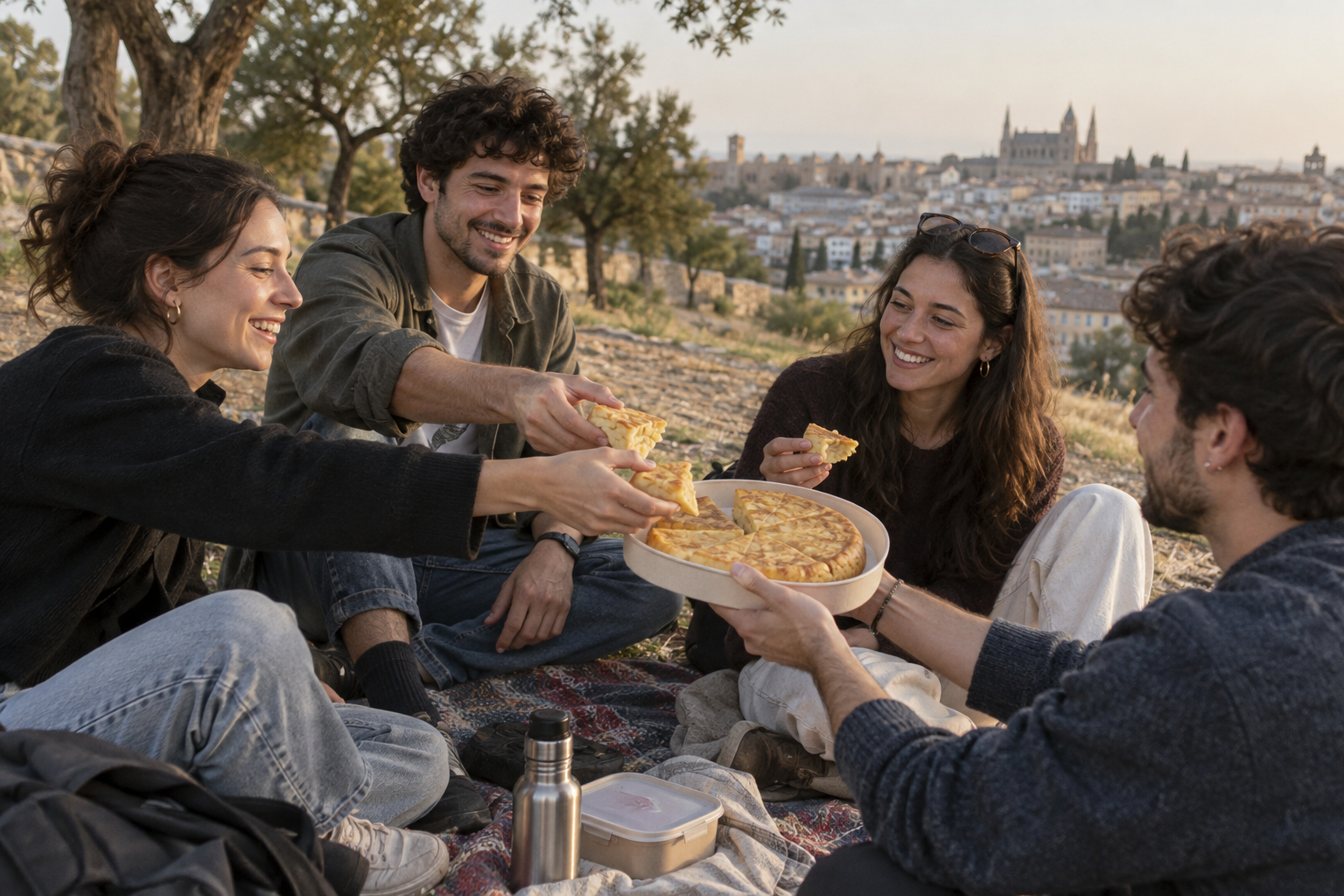
If there is a second argument, and there is, it is how runny the inside should be. This is the question of doneness, and it splits people nearly as reliably as the onion. On one side are those who like it poco hecha or jugosa, barely set and oozing, with a soft, almost liquid, oozing custardy center where the egg is only just cooked; cut into one of these and the middle slowly spills out, rich and loose. On the other side are those who want it bien cuajada, fully set, firm and sliceable all the way to the center, with no runniness at all.
This divide has a geographic and generational flavor to it, with the gloriously runny style associated especially with certain regions and much in fashion among modern cooks and acclaimed bars, while the firmer, fully-cooked version remains the traditional and reassuring standard in many homes. A famously runny tortilla from a celebrated spot, its center barely holding together, is a thing of wonder to its devotees and a slightly alarming undercooked mess to its detractors. Like the onion question, the doneness question comes down to genuine, heartfelt preference rather than right and wrong, and like the onion question, people hold their position with real feeling. Between the two debates, onion and doneness, you have essentially mapped the entire landscape of tortilla disagreement, which is a small landscape indeed for a dish so beloved, precisely because everything else about it is a matter of settled, happy consensus.
Why Such a Simple Dish Inspires Such Passion
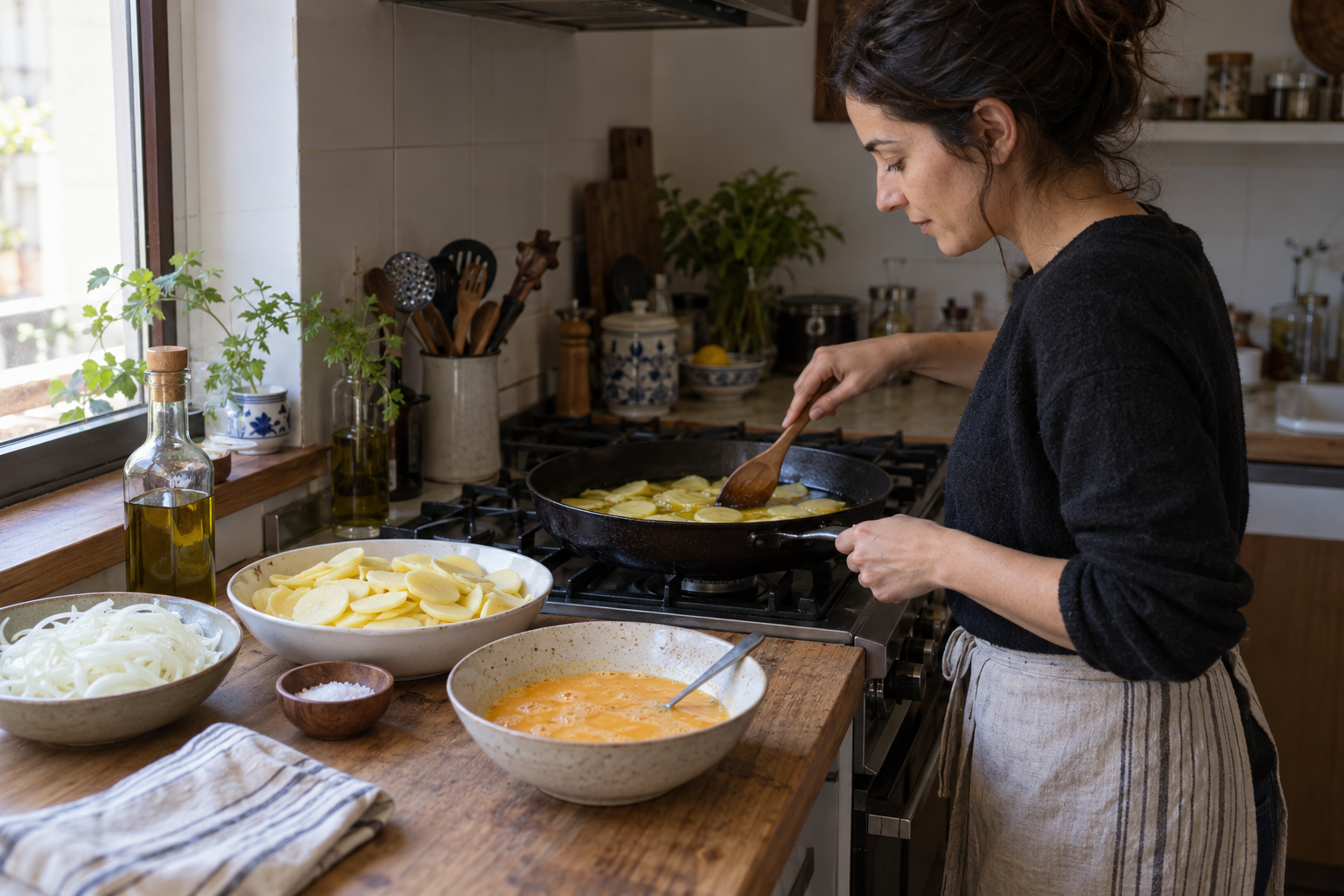
It is worth asking why a humble potato omelette should generate such strong feelings, and the answer says something lovely about the dish and about Spain. The tortilla is so universal, so present in every Spanish life from earliest childhood, that virtually everyone grew up eating a particular version of it, almost always their own mother’s or grandmother’s, made a particular way, with or without onion, runny or set. That version is the tortilla to them, the standard against which all others are measured, bound up with home and family and memory. So when people argue about onion or doneness, they are not really arguing about food science; they are defending the tortilla of their childhood, the taste of their own home.
That is why the debates are so passionate and so personal, and also why they are so good-natured underneath the fervor. To prefer onion is, in a sense, to be loyal to the kitchen you grew up in, and the same for preferring none, which is why no one is ever really convinced to switch sides. The tortilla, being so simple and so universal, becomes a kind of edible identity, a small daily emblem of where you come from and who made you your food. A country that argues this fiercely and this affectionately over whether to put an onion in an omelette is a country that takes its home cooking, and its memories, seriously. The passion is not silly at all once you properly understand it; it is love, plain and simple, love for a dish and, through it, for the people who first made it for you in a warm kitchen long ago, expressed in the gloriously, lovably ridiculous form of a fierce and endless national argument about whether or not to put an onion in an omelette. There are worse things for a country to be passionate about, and few more endearing.
Make It: Tortilla Espanola
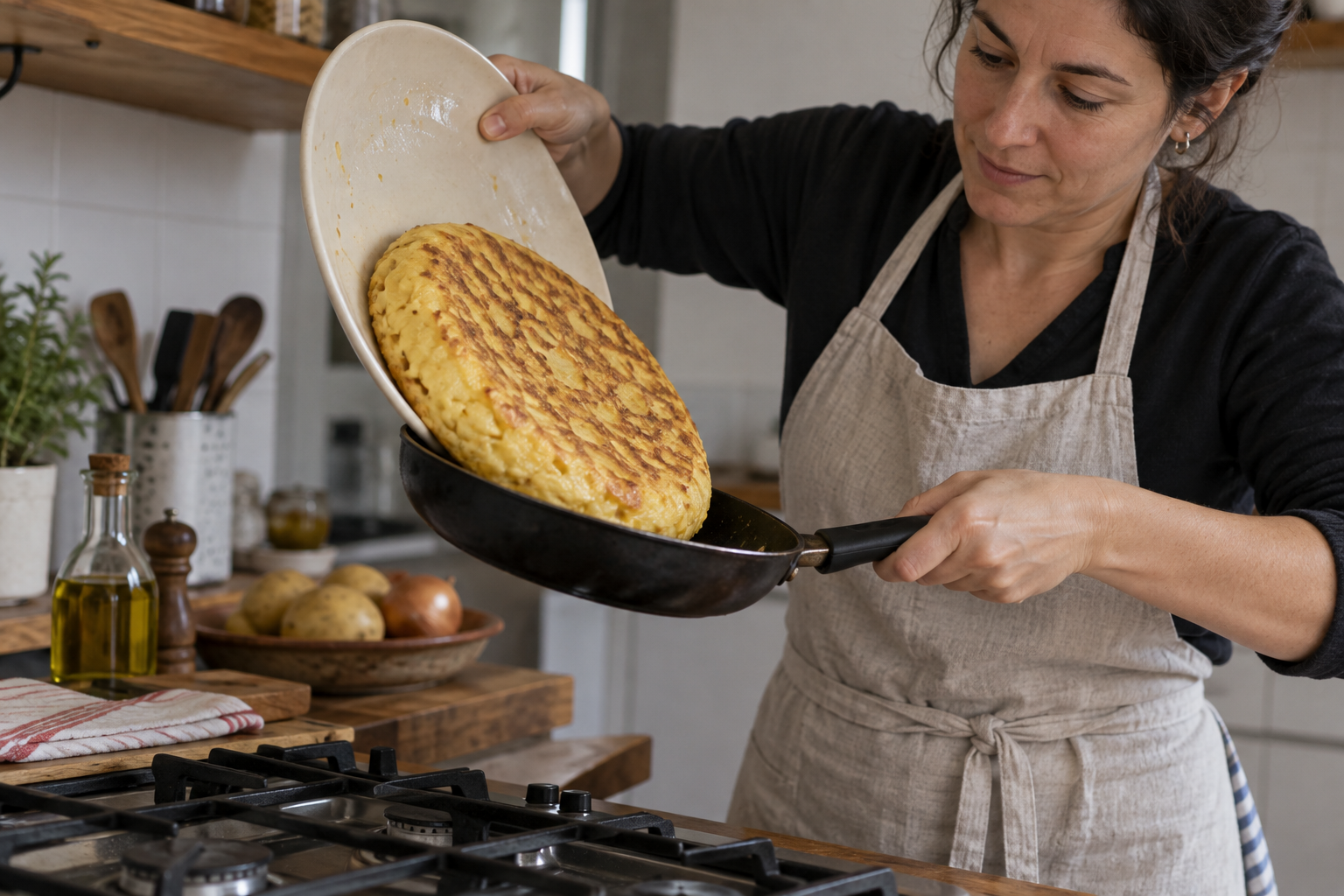
Here is the method for a classic tortilla, serving about four to six. The onion is entirely up to you, so the recipe is written for the cebollistas with a clear note for the purists, and you can cook it to whatever degree of runniness your heart desires.
Ingredients
- 1 1/2 pounds potatoes, peeled and thinly sliced
- 1 medium onion, thinly sliced (only if you are team onion)
- about 1 cup olive oil, for cooking the potatoes
- 6 large eggs
- salt
Instructions
Cook the second side to your preferred doneness, just a minute or two for a runny, jugosa center, or longer for a firmer, fully set tortilla. Slide it onto a plate, let it rest for a few minutes, and serve warm or at room temperature, cut into wedges. Whether you made it con cebolla or sin cebolla, runny or set, you are now, inevitably, on a side.
Heat the olive oil in a non-stick pan over medium-low heat and add the sliced potatoes, and the onion if using, with a good pinch of salt. Cook them gently, not frying crisp but poaching soft, stirring occasionally, until the potatoes are completely tender but not browned, around 20 minutes. The low, slow cooking in plenty of oil is the real secret to a good tortilla, so do not rush it.
When they are soft, drain the potatoes and onion well, reserving the flavorful oil for another use, and let them cool slightly.
Beat the eggs well in a large bowl with a little salt, then add the warm drained potatoes and onion and stir gently to combine, pressing down so the egg coats everything. Let the mixture sit for a few minutes so the potatoes soak up some egg.
Heat a tablespoon or two of the reserved oil in the pan over medium heat, pour in the egg and potato mixture, and spread it evenly. Cook until the bottom is set and golden and the top is still a little loose, a few minutes, shaking the pan now and then so it does not stick.
Now the famous flip: place a large plate over the pan and, with one confident motion, invert the pan so the tortilla drops onto the plate, then slide it back into the pan to cook the other side.

About the Author: Ruben, co-founder of Gamintraveler.com since 2014, is a seasoned traveler from Spain who has explored over 100 countries since 2009. Known for his extensive travel adventures across South America, Europe, the US, Australia, New Zealand, Asia, and Africa, Ruben combines his passion for adventurous yet sustainable living with his love for cycling, highlighted by his remarkable 5-month bicycle journey from Spain to Norway. He currently resides in Spain, where he continues sharing his travel experiences with his partner, Rachel, and their son, Han.