
There is a soup an Italian grandmother can put on the table in the time it takes to boil the kettle, made from almost nothing: a pot of good broth, a couple of eggs, a handful of grated parmesan. She beats the egg and the cheese together, pours the mixture into the gently simmering broth, stirs once or twice, and in moments it transforms into something delicate and comforting, the egg setting into soft, ragged little shreds suspended in the clear, golden soup. That is stracciatella, Rome’s beloved egg drop soup, and its name tells you exactly what it is, because stracciatella means little rags, and little rags of tender egg are precisely what float in the bowl. It is one of the fastest, humblest, and most soothing soups in all of Italian cooking, the kind of thing made on a cold evening, for someone under the weather, or whenever a quick and nourishing bowl is wanted with no fuss at all. Here is what stracciatella is, why ten minutes is really all it takes, its surprisingly ancient lineage, its place at the Roman table, the simple trick that makes it work, and how to make your own. It may be the single best return on effort in all of Italian cooking.
What follows is the soup of little rags, how it comes together in ten minutes, its place at the Roman table, the trick of the whisk, and how to make it yourself.
The Soup of Little Rags
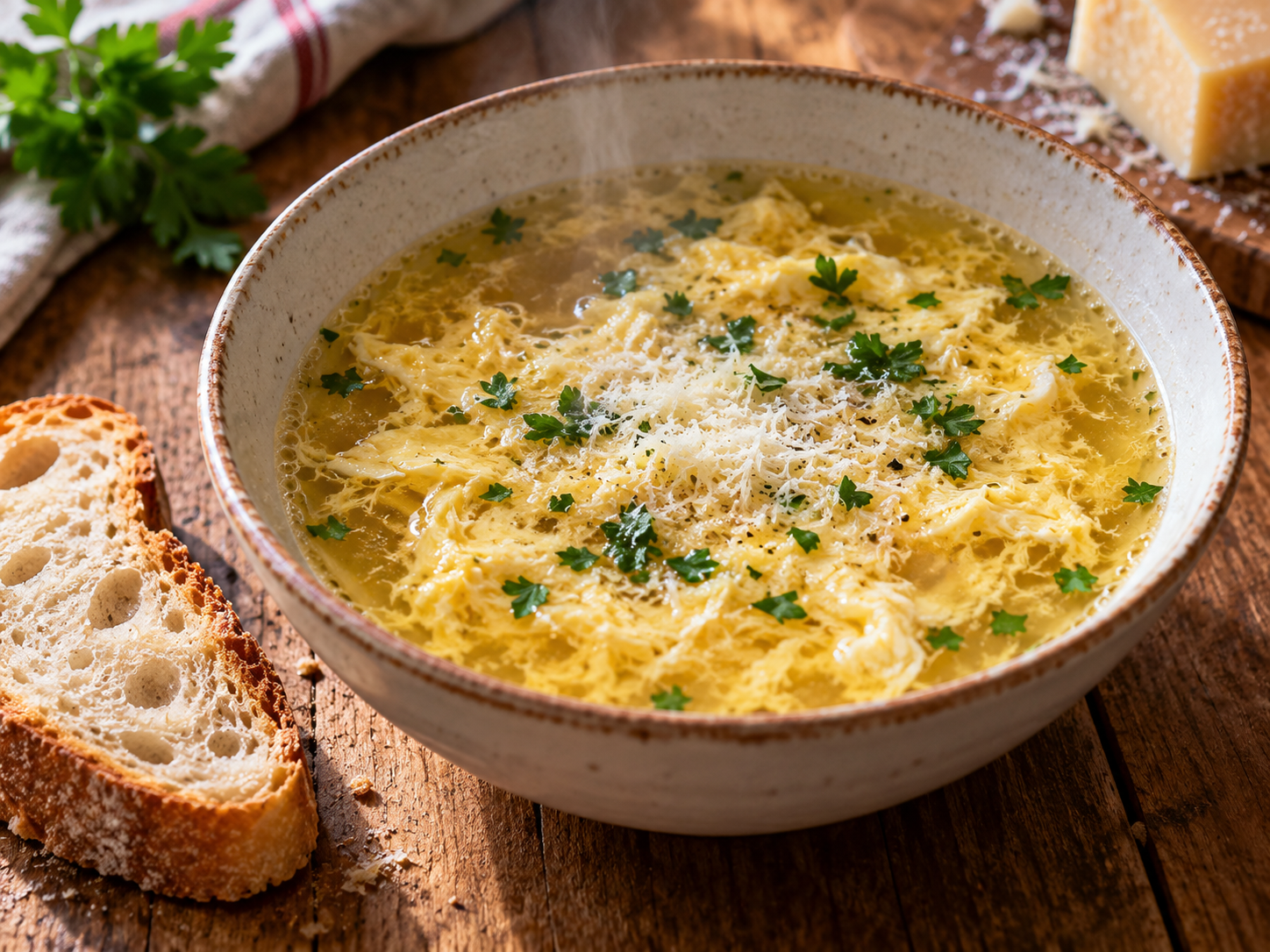
Stracciatella, in full stracciatella alla romana, is the Roman version of what English speakers would recognize as egg drop soup, though it is older and simpler than that comparison suggests. The dish consists of beaten eggs mixed with grated cheese, and often a little semolina or breadcrumb, which are stirred into hot broth where the egg cooks almost instantly into soft, feathery strands. Those strands, the ragged wisps of set egg are the whole character of the soup, and they are what give it its name: stracciatella comes from the Italian straccio, meaning a rag or a shred, so the soup is, charmingly and literally, little rags. It is a clear, light, savory broth made substantial and genuinely comforting by nothing more than those tender threads of egg and cheese drifting through it, a soup that somehow feels both delicate and nourishing at once. There is real elegance in how little it takes to make it satisfying.
A quick note to clear up a common confusion, because the word stracciatella does triple duty in Italian. It is the name of this soup, yes, but it is also the name of a creamy fresh cheese from Puglia, the soft, shredded interior of burrata, and of a popular gelato flavor, vanilla shot through with shards of chocolate. All three share the same root idea of something shredded or torn into little pieces, but they are entirely different foods, and the one we are talking about here is firmly the soup, the Roman first course, not the cheese or the ice cream. If you tell an Italian you love stracciatella, they may genuinely need a moment to work out whether you mean the soup, the cheese, or the gelato, which is part of the small, happy comedy of the name. All three are wonderful, which only adds to the confusion.
Ten Minutes From Almost Nothing
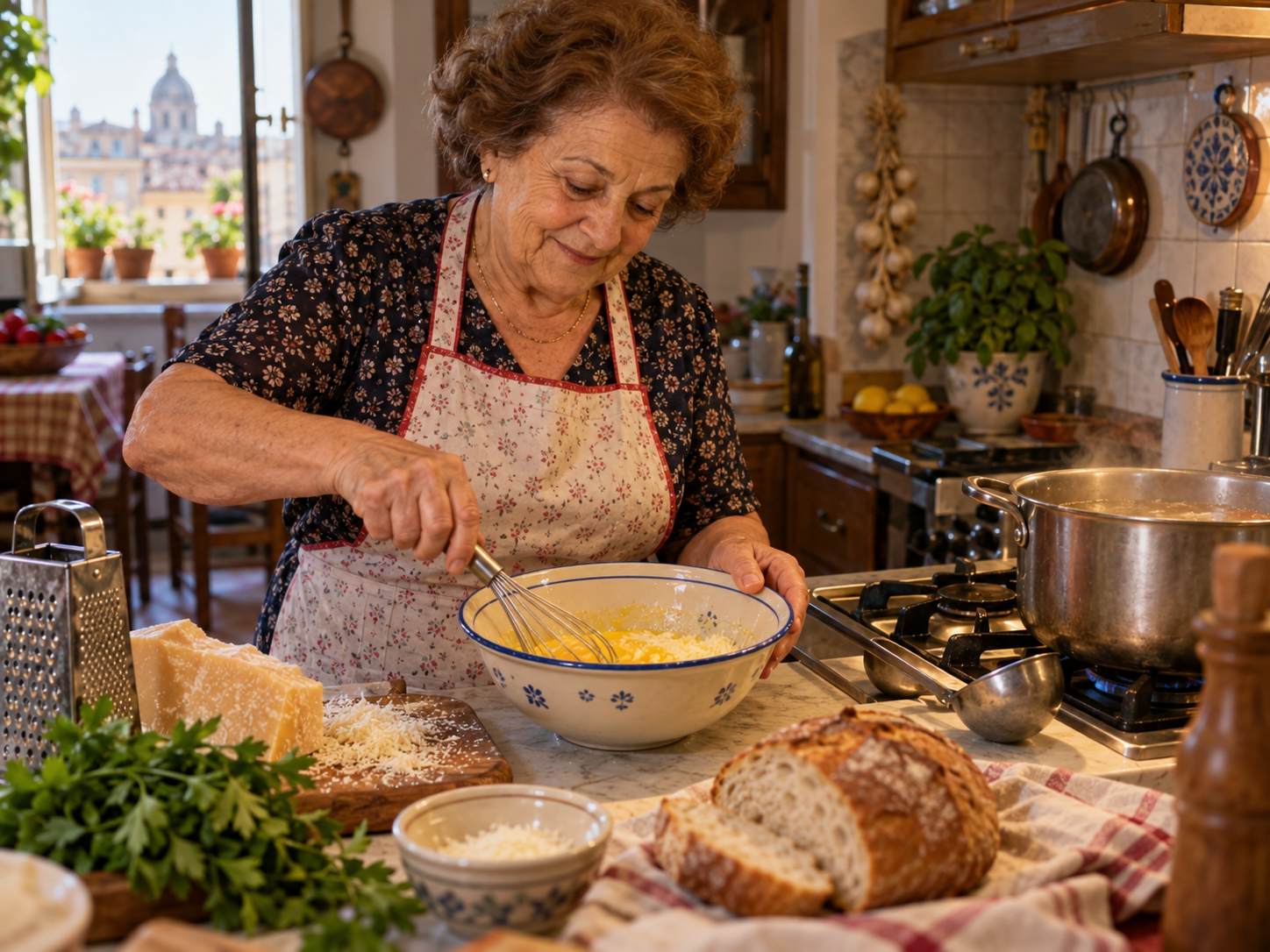
The genius of stracciatella, and the reason it has been a grandmother’s standby for generations, is that it comes together in about ten minutes, provided you start with one good thing: broth. If you have a pot of decent chicken or meat broth, everything else is a matter of minutes. You beat a couple of eggs with a generous handful of grated parmesan, perhaps a spoonful of semolina or fine breadcrumb to give the rags a little more body, and a hint of lemon zest and nutmeg for aroma, and that mixture is your entire recipe. Pour it into the simmering broth, stir gently, and the soup is essentially done.
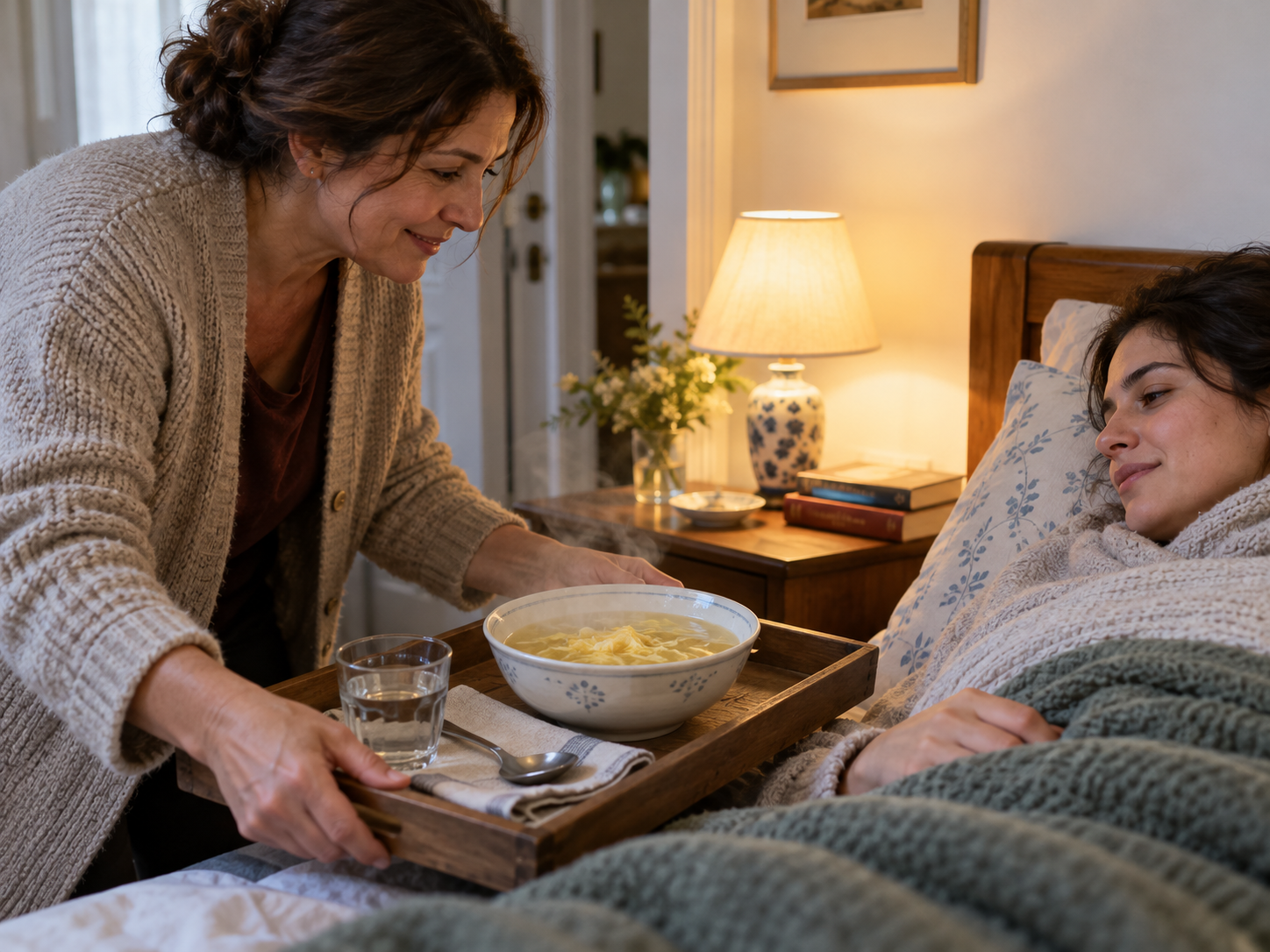
This speed is not incidental; it is the whole point and the whole charm. Stracciatella is the definition of cucina povera cleverness, the art of turning a few humble ingredients, eggs, cheese, stale bread, and a pot of broth, into a genuinely nourishing and delicious meal with almost no effort and almost no cost. It is the soup an Italian nonna reaches for, without hesitation and without a recipe, when someone needs feeding quickly and well: a hungry child home from school, a family member fighting off a cold, an elderly relative who needs something gentle, a simple supper on a night when no one has the energy for anything more elaborate. It is the culinary equivalent of a warm hand on the shoulder, produced in minutes from whatever is in the kitchen. The one thing that determines whether your stracciatella is merely fine or truly wonderful is the broth, since there is so little else to hide behind, so a rich, well-made broth is worth the effort, but even a humble one, enriched by the egg and cheese, makes a bowl that comforts far beyond what its ten minutes of work would suggest.
A Dish Older Than You Think
It is worth appreciating that stracciatella belongs to one of the oldest and most universal ideas in all of cooking, which is the trick of enriching a simple broth by swirling beaten egg into it. The moment you set egg into hot liquid, you turn a thin broth into something fuller, more nourishing, and more satisfying, and cooks across the world and across the centuries have arrived at versions of this independently. The Chinese have their egg drop soup, with its silky ribbons of egg in a savory broth; other Mediterranean and European traditions have their own egg-thickened soups; and Rome has stracciatella. They are cousins, all descended from the same humble, brilliant insight that an egg can transform a pot of broth.
In Italy itself, stracciatella has a long pedigree as part of the Roman culinary tradition, a dish that has been made in home kitchens for generations without needing anyone to write it down, passed from grandmother to mother to child as a matter of course. That is part of what gives it its timeless, grandmotherly character: it is not a cheffy invention or a modern fashion but a very old, very simple way of feeding people well from little, the kind of recipe that predates recipes. When you make a bowl of stracciatella, you are participating in something genuinely ancient, a technique so basic and so good that it has survived, essentially unchanged, for a very long time, because there was never any reason to improve on it. The best cucina povera dishes are often like this, so perfectly suited to their purpose that they simply endure.
The Roman Table
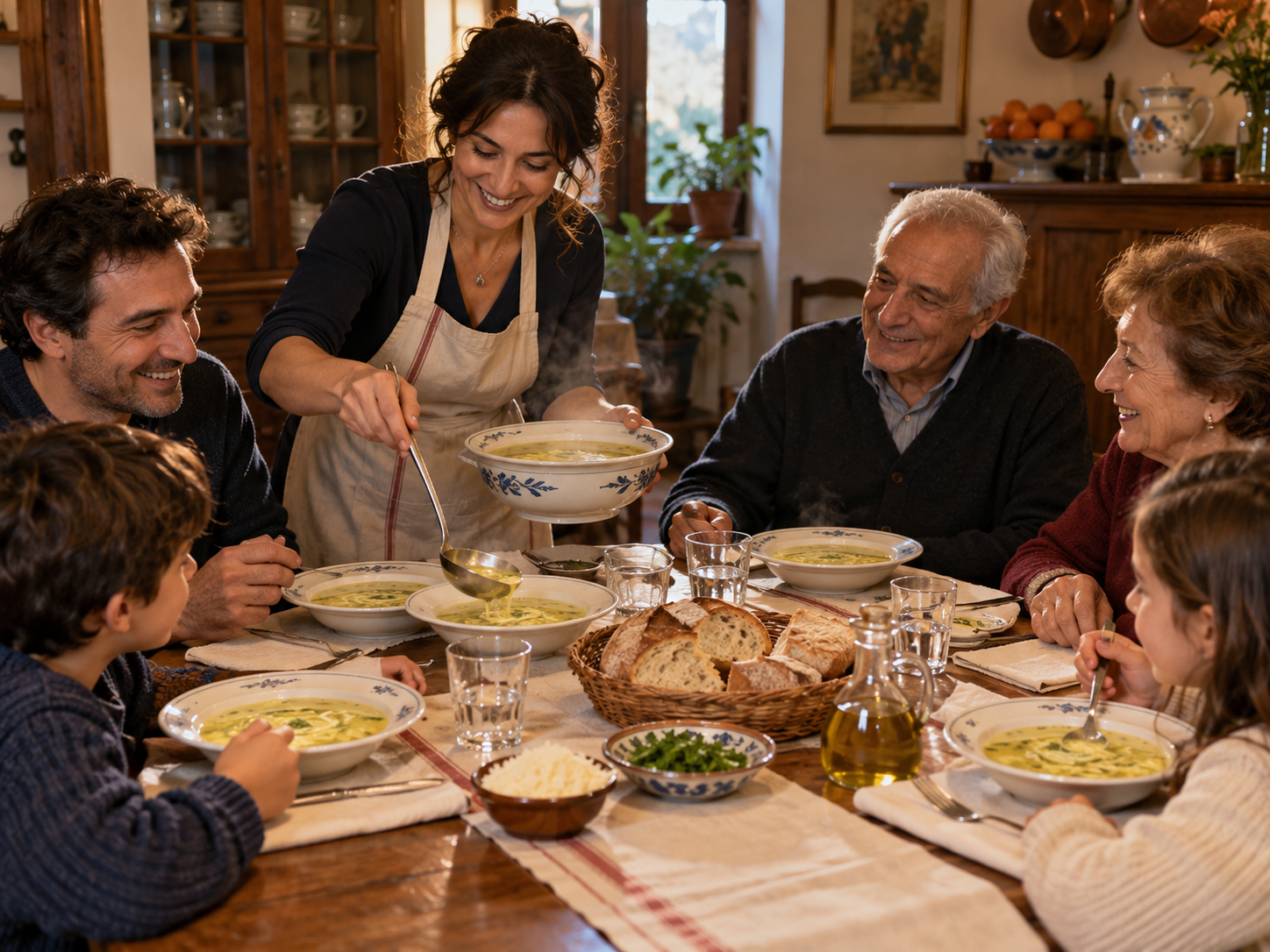
Stracciatella is, above all, a Roman dish, a classic of Rome and the surrounding Lazio region, where it holds a cherished place as a first course, a primo, often served to open a larger meal. It has a particular association with holidays and especially Easter, when it traditionally appears as a light, elegant starter before the richer courses to follow, its delicate egg threads a fitting dish for a springtime feast. But it is by no means only a holiday soup; it is also deeply and unpretentiously woven into everyday Roman home cooking, a quick and beloved supper or light lunch made year-round, in no particular season and for no particular occasion, whenever something warm, simple, and sustaining is called for. It moves easily between the Easter table and an ordinary Tuesday night, which is the mark of a dish that truly belongs to a people rather than just to a holiday.
Like chicken soup in so many cultures, stracciatella also carries a reputation as restorative, convalescent food, the Italian bowl you make for someone who is unwell or run down, gentle and easy to eat yet nourishing, warm and soothing in exactly the way a sick person wants. There is something quietly universal in this, the way cultures the world over instinctively reach for a bowl of warm broth with something soft floating in it, egg here, noodles or rice or dumplings elsewhere, whenever a body needs comfort and care and gentle feeding. Stracciatella is Italy’s answer to a need that every culture seems to feel, and it answers it with characteristic simplicity and grace. For Romans, stracciatella is that bowl, as much a gesture of love and tending as a recipe, which is why it is so often spoken of in the same breath as grandmothers: it is food made quickly, from little, for people you want to look after. That combination, humble ingredients and loving intent, is the heart of why such a simple soup is so treasured.
The Trick Is the Whisk
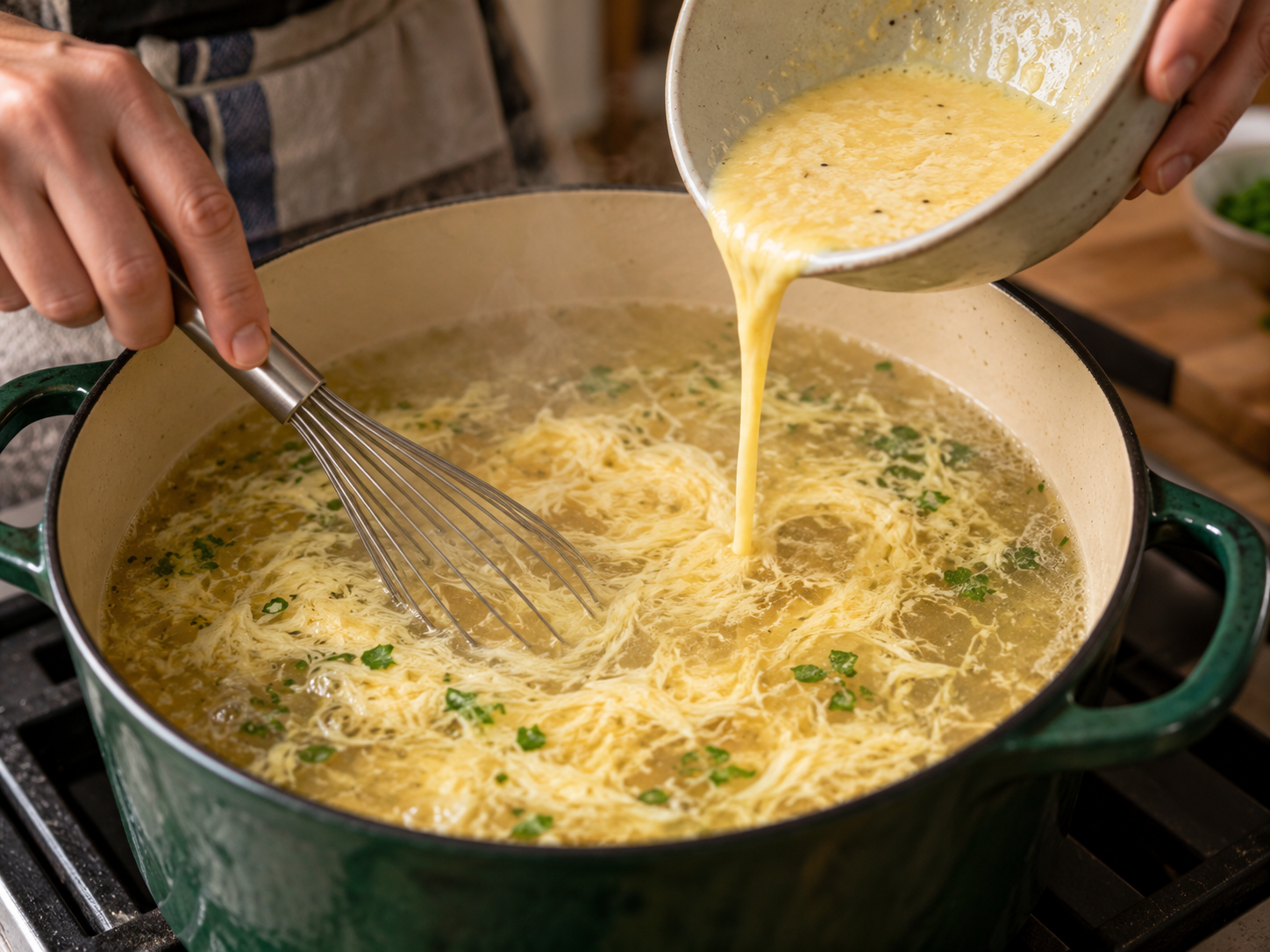
For something so simple, stracciatella does rest on one small piece of technique, and getting it right is the difference between delicate rags and a scrambled mess. The key is in how the egg meets the broth. You beat the eggs thoroughly with the grated parmesan, and this is where the optional additions go: a little semolina or fine breadcrumb gives the rags more substance and helps them hold together, while a grating of nutmeg and a little lemon zest lift the whole thing with fragrance. Then, crucially, you pour the mixture into broth that is gently simmering, not at a hard rolling boil, and you stir slowly as you pour.
The gentle heat and the slow stir are what allow the egg to set into those signature soft, feathery strands rather than seizing up into a single rubbery clump or dissolving into a cloudy broth. Pour too fast into boiling liquid and stir too hard, and you get scrambled egg soup, pleasant enough but not stracciatella; pour steadily into a gentle simmer and stir with a light hand, and the egg blooms into the tender rags that define the dish. Let it cook for just a minute or so, until the egg is set into tender rags and no longer, and then it is ready to serve, because stracciatella is emphatically not a soup that benefits from long cooking, which would only toughen the egg and cloud the broth. It is made and eaten quickly, at its best the moment the egg has set, which is yet another reason it suits the person in a hurry or the cook with little time. That single moment, the careful marriage of beaten egg and simmering broth, is the entire skill of the dish, and once you have the feel of it, and it takes only a batch or two to find, you will be able to make stracciatella as quickly and effortlessly as any Roman grandmother, reaching for it without a recipe whenever someone needs warming or feeding. That easy, unthinking competence is exactly what makes it such a treasured everyday dish.
Make It: Stracciatella alla Romana
Here is a traditional version that serves about four and takes, true to its reputation, roughly ten minutes once your broth is hot. The better your broth, the better your soup, so use the best you have.
You will need about six cups of good chicken or meat broth, three large eggs, about three quarters of a cup of finely grated parmesan (Parmigiano Reggiano), an optional two tablespoons of semolina or fine breadcrumb for body, a little freshly grated nutmeg, the finely grated zest of half a lemon, salt and black pepper, and a handful of chopped fresh parsley to finish if you like.
Bring the broth to a gentle simmer in a pot, not a hard boil, and taste it for seasoning, adding salt if the broth needs it. While it heats, crack the eggs into a bowl and beat them well, then whisk in the grated parmesan, the semolina or breadcrumb if using, the nutmeg, and the lemon zest, until you have a smooth, thick, pale mixture.
When the broth is simmering gently, pour the egg mixture into it in a slow, steady stream while stirring the broth slowly with a fork or whisk. As the egg hits the hot broth it will set almost immediately into soft, ragged little strands, the stracci that give the soup its name. Keep stirring gently for about a minute, until the egg is just cooked through and broken into delicate rags throughout the broth. Do not overcook it or stir too hard, or the texture will suffer. Taste, adjust the salt and pepper, and serve hot right away, in warm bowls, with extra grated parmesan and a scatter of parsley on top, and perhaps a piece of good bread alongside. From a pot of broth and three eggs, in ten unhurried minutes, you will have made one of the most comforting soups in Italy.

About the Author: Ruben, co-founder of Gamintraveler.com since 2014, is a seasoned traveler from Spain who has explored over 100 countries since 2009. Known for his extensive travel adventures across South America, Europe, the US, Australia, New Zealand, Asia, and Africa, Ruben combines his passion for adventurous yet sustainable living with his love for cycling, highlighted by his remarkable 5-month bicycle journey from Spain to Norway. He currently resides in Spain, where he continues sharing his travel experiences with his partner, Rachel, and their son, Han.