
Of all the foods that define a place, none is older or more fundamental than its bread. Every country in Europe has one, the loaf it bakes daily, eats with very nearly everything, and quietly believes is the finest on the whole continent, and the differences between them are enormous: the crackling golden baguette of France, the dense dark rye of Germany, the olive-oil-rich focaccia of Italy, the humble soda bread of Ireland. Bread in Europe is not the forgettable sliced sandwich loaf of the supermarket but a living, regional, fiercely local thing, bought fresh most days from a real bakery, argued over, and woven so deeply into the identity of each nation that bakes it that to insult a country’s bread is very nearly to insult the country. So here is the bread map of Europe, the loaf each country swears by and why, the great divide that runs across the continent, and, at the end, the recipe for the one European bread anyone can bake at home without yeast, skill, or a second thought. It is one of the most revealing maps on the whole table, because bread is the most honest food a place makes.
What follows is the great grain divide, France and its cult of the crust, Germany’s astonishing bread obsession, the breads of the south and the north, and how to bake Irish soda bread yourself.
The Great Divide: White South, Dark North
The single most useful way to read the bread map of Europe is to notice the great divide that runs across it, roughly between the wheat-growing south and west and the rye-growing north and east, because that agricultural fact shaped the bread of each region for centuries. In the warmer south and the west, where wheat flourished in the gentler climate, the breads tend to be pale, crusty, and wheaten, the airy baguettes and ciabattas and crusty white loaves that most people picture when they think of European bread, all open crumb and crackling crust and a short, glorious shelf life. This is the land of the light crumb and the shattering crust, of bread meant to be torn and eaten fresh the very day it is baked, and all but inedible a day later, which is exactly why it is bought daily.
In the colder north and east, where wheat struggled but rye thrived, the breads are dense, dark, and heavy, the serious rye and wholegrain loaves of Germany, Scandinavia, and Eastern Europe, built to last and to sustain through long winters. These are breads with real heft and deep, sour, earthy flavor, often studded with seeds and grains and built from wholegrain rye, meant to be sliced thin and topped with cheese or cold cuts rather than torn and dipped, and capable of keeping for days or even weeks, a quality that mattered enormously before refrigeration in a hard northern winter. The divide is not absolute, every country bakes across the spectrum, but as a map it holds: travel from the Mediterranean toward the Baltic and you watch the bread darken, densen, and sour, tracking the shift from wheat country to rye country. Understanding that one divide, pale wheat in the south and west, dark rye in the north and east, is the key that makes sense of the whole beautiful, varied bread map of the continent, and of why a loaf that is unthinkable in Naples is the daily staple in Helsinki.
France and the Cult of the Crust
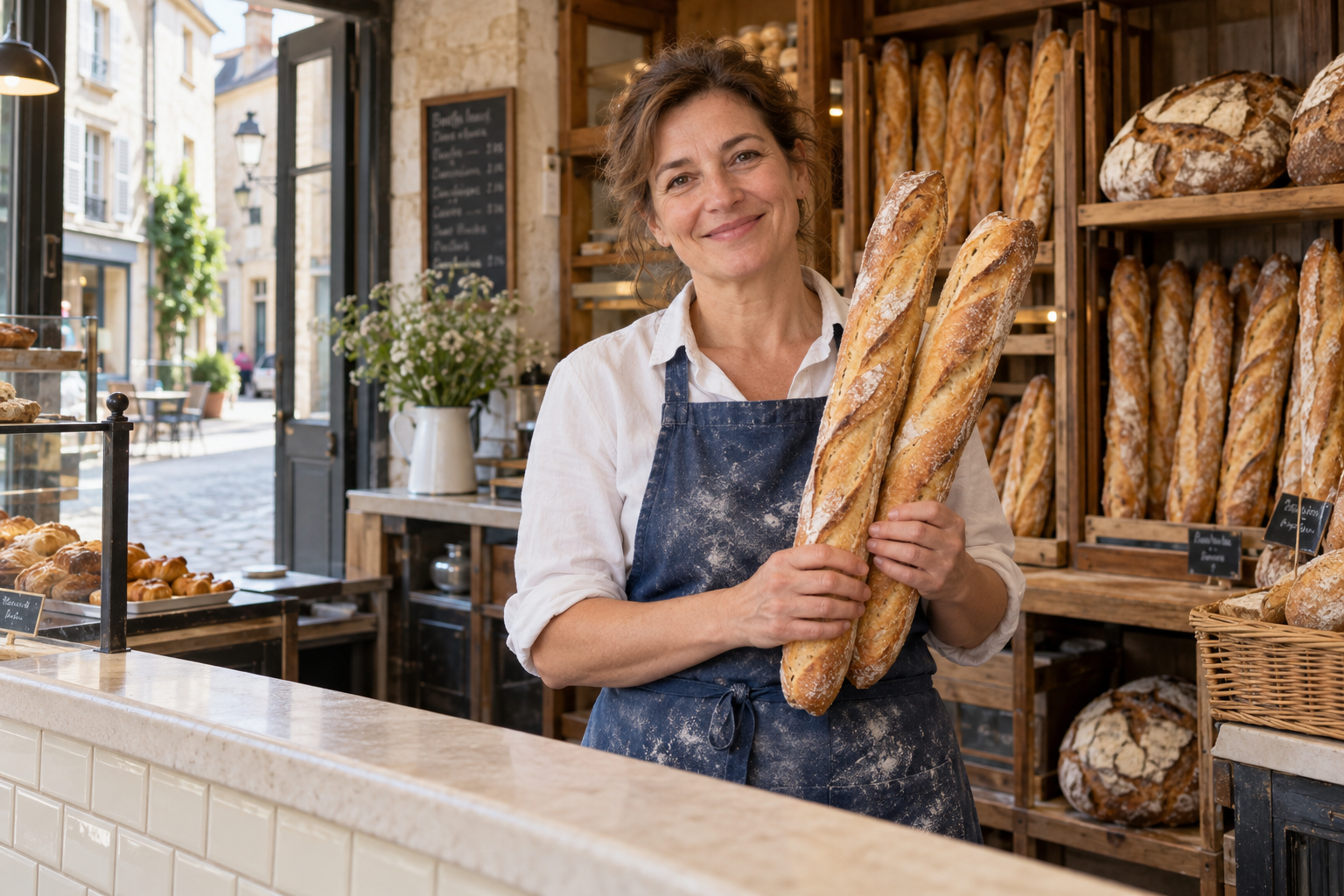
No country has elevated bread to quite the ritual status that France has, where the daily loaf is close to a sacred national object. The baguette is the icon, that long, slim, golden loaf with its crackling crust and airy interior, so central to French life that it is bought fresh, often twice a day, from the neighborhood boulangerie, and so culturally important that it was recognized as part of the intangible cultural heritage of humanity. A Frenchman will walk out of his way to the bakery that makes the baguette he prefers, will carry it home under his arm with the end already nibbled off, and will not tolerate a stale or supermarket loaf when a fresh one is a short walk away. The baguette is even subject to rules about what may be called one and how it must be made.
But France is far more than the baguette. The country bakes a whole world of bread, from the rustic pain de campagne, the round country loaf with its tangy sourdough depth, to the enriched, buttery doughs of the viennoiserie, the croissants and brioche that blur the line between bread and pastry. What unites French bread culture is an insistence on freshness, craft, and daily ritual, the conviction that bread is not a background staple to be bought once a week but a living thing to be made properly and eaten at its peak, within hours of leaving the oven. The French treat a great loaf the way other cultures treat a great wine. That cult of the crust, the national refusal to accept mediocre bread, is why France remains, in the popular imagination, the spiritual home of great bread, even as its neighbors would fiercely dispute the title. In France, the bread is not an accompaniment to the meal; it is a reason the meal is good, used to push, to mop, to build each bite, and never, ever wasted.
Germany’s Astonishing Bread Obsession
If France has the most famous bread, Germany may have the greatest bread culture of all, a claim Germans make with total confidence and considerable justification. Germany is home to an astonishing variety of bread, by far the most of any country in Europe, with hundreds upon hundreds of recognized types, a diversity so remarkable that German bread culture has been honored as a national intangible heritage. Where France perfected a few iconic loaves, Germany built an entire civilization of bread, a country where the bakery counter can resemble a library, and where regional loaves number in the many hundreds and locals can discuss them like wines.
The heart of German bread is the dark, dense, serious loaf, the heavy rye and wholegrain breads, the Vollkornbrot thick with whole grains, the almost black Pumpernickel steamed for hours, breads with a depth and density that make the airy baguette look frivolous by comparison. These are breads to be sliced thin and topped with cheese, cold cuts, or butter, the foundation of the German table morning and night, eaten at the substantial bread-based breakfast and again at the cold evening supper the Germans fittingly call the evening bread, Abendbrot. But the range runs enormously wide, from those dark loaves to the crusty Brotchen rolls of breakfast, to the great soft pretzels, the Brezel, that are a bread tradition all their own, especially in the south. To a German, bread is a point of deep national pride and daily seriousness, chosen carefully, discussed knowledgeably, and regarded as genuinely the best and most varied in the world, and standing in a German bakery before a wall of fifty different loaves, it is very hard to argue.
The Breads of the South and the North
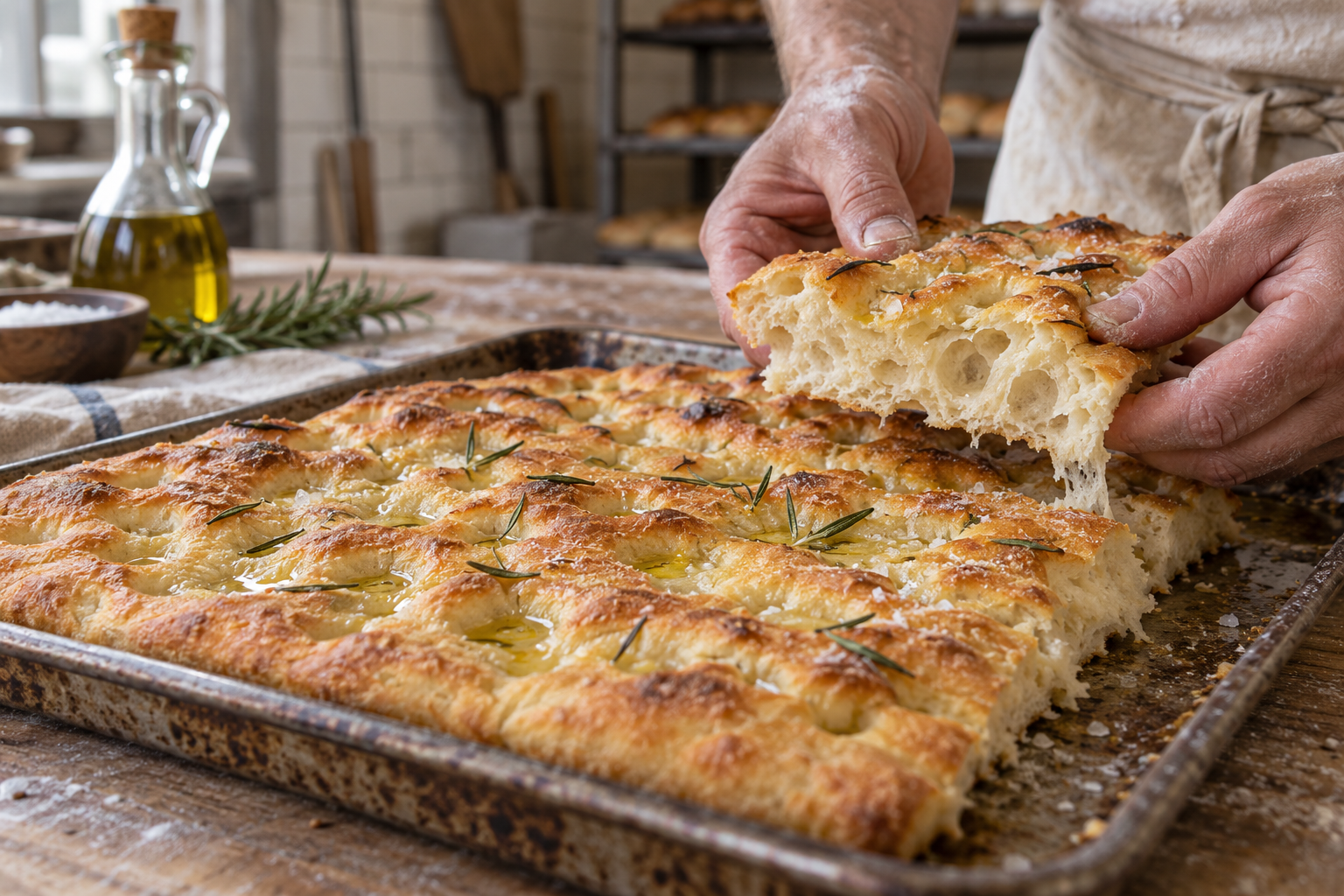
Beyond the two great bread powers lies the rest of the map, each country with its own beloved loaf. Italy bakes some of the most pleasurable bread in Europe, the holey, chewy ciabatta, the focaccia dimpled with salt and rosemary, the crisp grissini breadsticks, and, famously, the saltless bread of Tuscany, pane sciocco, baked without salt for historical reasons and designed to be eaten with the region’s salty, rich food. Spain and Portugal keep simpler, sturdier daily traditions, the plain crusty barra found in every Spanish bakery and the dense, long-keeping pan gallego of the northwest, the rustic cornbread broa of Portugal with its firm golden crumb, honest loaves built to mop up sauce and accompany a meal rather than to show off, and all the better for it.
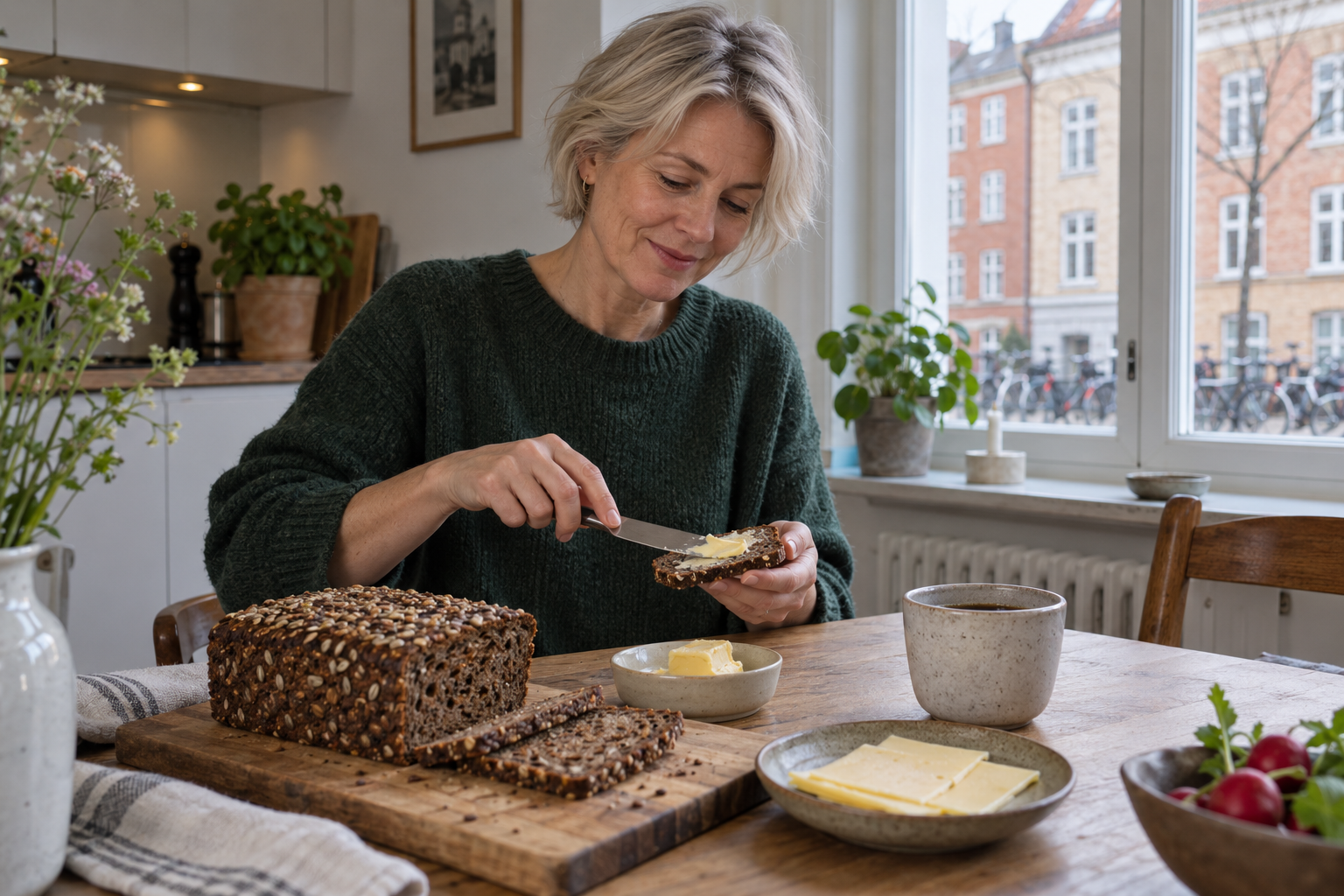
In the north, the bread turns dark, dense, and long-keeping, carrying the long-winter wisdom of preservation in every heavy slice. Scandinavia is the land of crispbread, the dry, crackly knackebrod that keeps indefinitely, alongside the dense, dark, often slightly sweet rye loaves like the Danish rugbrod that anchors the open-faced sandwiches of the region. Eastern Europe runs deep in rye too, the sour dark loaves of Poland and Russia, often leavened with a natural rye sourdough, that are the very soul of those tables. And on the Atlantic edge sits a bread apart: Ireland’s soda bread, which skips yeast entirely and rises instead with baking soda reacting against buttermilk, a quick, dense, tender loaf born of a place where the soft wheat and the climate suited exactly this kind of baking. From the saltless loaves of Tuscany to the crispbread of Sweden to the dark rye of Poland to the soda bread of Ireland, the map is a patchwork of a hundred local answers to the same basic need, each one shaped by the grain that grew there and the climate that baked it, and each one, to the people who grew up on it, simply what bread is and always has been.
Bread as a Daily Ritual
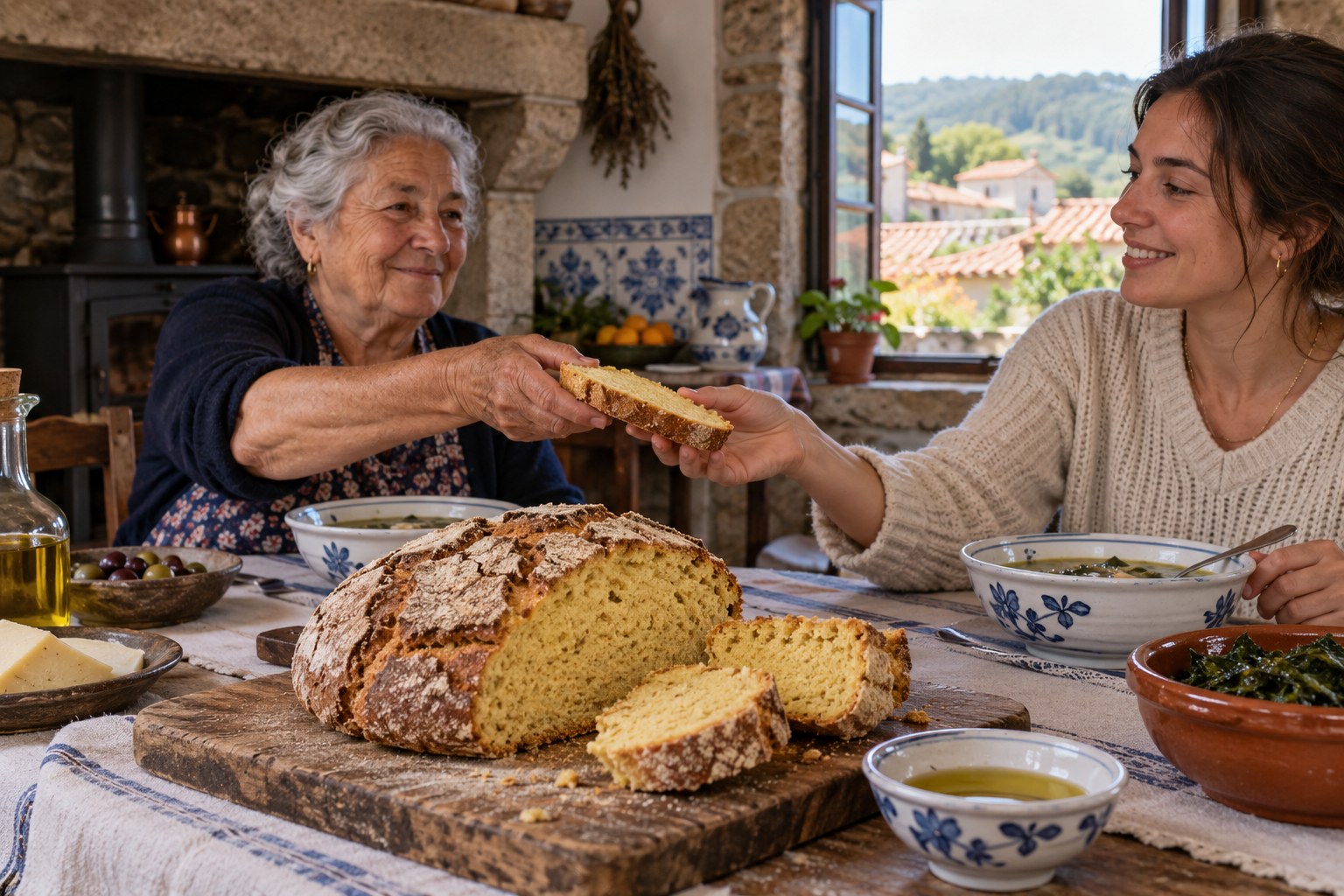
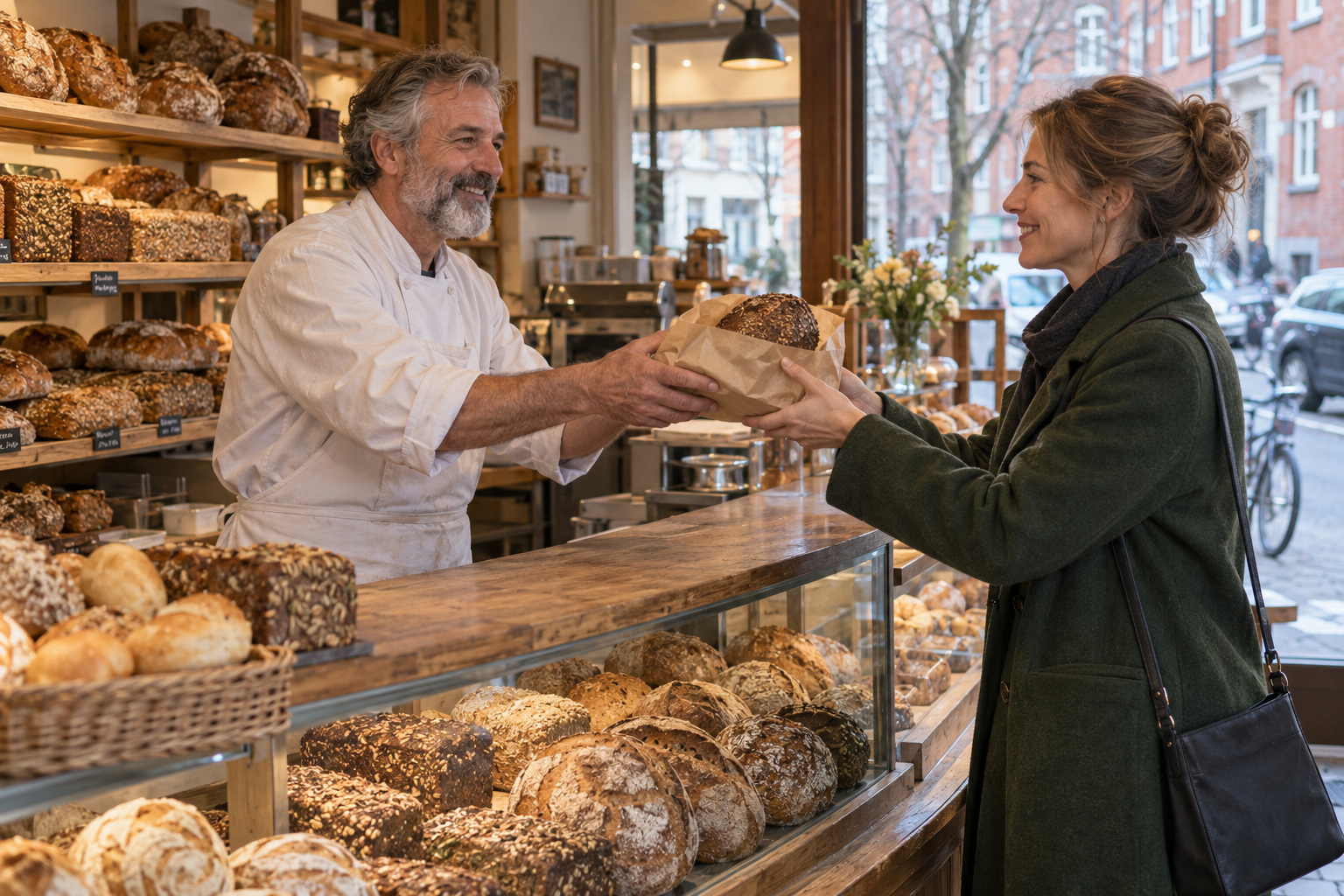
One thing nearly all these bread cultures share, and that most startles an American, is how often Europeans buy bread, which is to say almost every day, fresh, from a real bakery. The idea of buying a single sliced loaf at the supermarket on the weekly shop and working through it for a week would strike a Frenchman or a German as faintly sad, because good bread is understood to be at its best the day it is baked and to decline from there, so you buy only what you will eat that day and return tomorrow for more. The neighborhood bakery, the boulangerie, the Backerei, the panaderia, is a fixture of daily life, visited as routinely as the American visits the coffee machine.
This daily bread-buying is woven into the rhythm of European life, a small errand that structures the day and anchors the neighborhood, the walk to the bakery for the morning loaf or the afternoon baguette. It is one reason European bread stays so good, since a culture that buys fresh every day supports a dense network of real bakeries turning out real bread, rather than the few industrial loaves that serve a weekly-shop culture. And it reflects something larger about how Europe eats, the preference for the fresh, the local, and the frequent over the stockpiled and the convenient. For a newcomer, adopting the habit, finding your bakery, learning its hours, buying your bread fresh and daily, is one of the quickest ways to start living like a local, and one of the most quietly pleasurable, because there are few better small rituals than a short walk home with a warm loaf under your arm. The bread map is not only about what each country bakes but about how deeply the daily loaf is woven into the fabric of ordinary life.
Make It: Irish Soda Bread
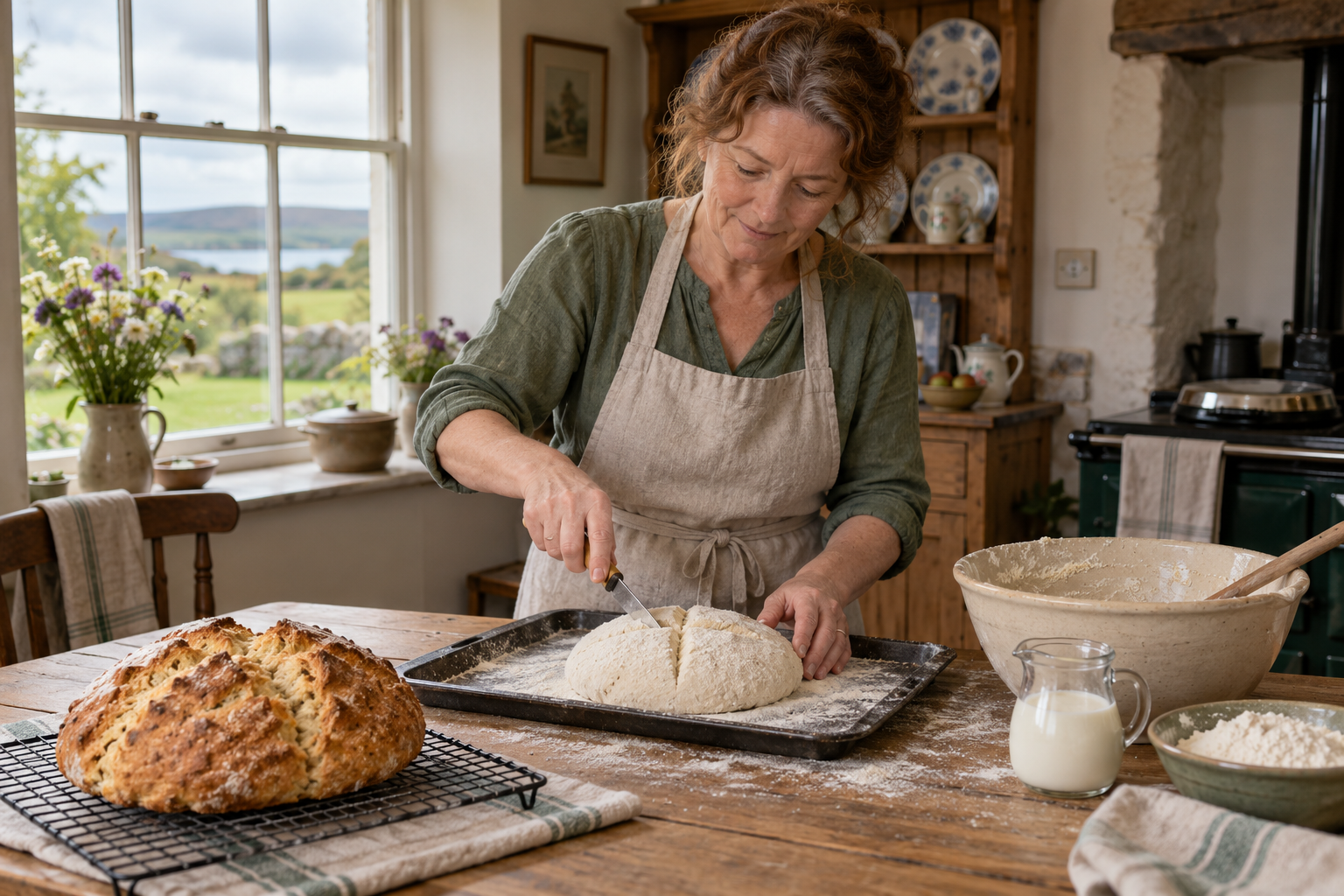
Of all the breads on the map, the one to bake at home is Ireland’s soda bread, because it is the great exception that needs no yeast, no kneading, no rising time, and no skill, and yet produces a genuinely wonderful loaf in under an hour. It is the perfect bread for anyone who has always found bread-baking intimidating, and it fills the kitchen with an aroma to rival any bakery.
Makes 1 loaf. About 10 minutes of mixing and 40 to 45 minutes of baking.
Ingredients:
- 450 g (about 3 and a half cups) plain or wholemeal flour, or a mix
- 1 teaspoon baking soda (bicarbonate of soda)
- 1 teaspoon salt
- About 400 ml (about 1 and two-thirds cups) buttermilk
Instructions
- Heat the oven to around 220 C (425 F) and lightly flour a baking tray. The high heat is important for a good rise and crust.
- In a large bowl, whisk together the flour, baking soda, and salt so the soda is evenly distributed, which matters because it is what makes the bread rise.
- Make a well in the center and pour in most of the buttermilk, then mix quickly with a wooden spoon or your hand just until it comes together into a soft, slightly sticky dough, adding the rest of the buttermilk if it is too dry. Do not knead it or work it hard; the secret of soda bread is a light, fast hand, because overworking makes it tough.
- Tip the dough onto the floured tray, shape it gently into a round, and cut a deep cross into the top with a floured knife, which helps it cook through and, tradition says, lets the fairies out.
- Bake for 40 to 45 minutes, until the loaf is golden and sounds hollow when you tap the bottom. Let it cool on a rack, and resist cutting it for at least a few minutes.
A note on the buttermilk: it is essential, because the acid reacts with the baking soda to make the bread rise, so do not substitute plain milk. If you cannot find buttermilk, you can make a passable version by stirring a tablespoon of lemon juice or vinegar into regular milk and letting it sit for ten minutes. Eat the bread the day it is baked, ideally still warm, with good salted butter and perhaps a little jam, and you will understand why a whole country fell in love with the easiest bread in Europe, and why no yeast was ever missed.

About the Author: Ruben, co-founder of Gamintraveler.com since 2014, is a seasoned traveler from Spain who has explored over 100 countries since 2009. Known for his extensive travel adventures across South America, Europe, the US, Australia, New Zealand, Asia, and Africa, Ruben combines his passion for adventurous yet sustainable living with his love for cycling, highlighted by his remarkable 5-month bicycle journey from Spain to Norway. He currently resides in Spain, where he continues sharing his travel experiences with his partner, Rachel, and their son, Han.