
Picture a German apartment on a freezing January morning, the temperature well below zero outside, and then picture the windows being thrown wide open, on purpose, deliberately, to let the frigid outside air come pouring in. To an American, watching good heat escape into a winter morning looks like madness, or at least like a very expensive mistake, the sort of thing you would scold a child for leaving undone. But in Germany it is a daily ritual, performed in homes, schools, and offices, winter and summer alike, and it has a name every German knows: luften. Far from being careless, it is one of the most deliberate and seriously-taken habits in German life, with real logic behind it, real rules for doing it right, and in many cases a real legal obligation attached. So here is what luften actually is, how Germans do it properly, why they bother even in the depths of winter, and why the ritual that looks so crazy to Americans is in fact rather clever. By the end you may find yourself eyeing your own stuffy, sealed-up winter home with new suspicion.
What follows is the ritual of the open window, the right way to do it, the real reason behind it, the surprising place it is written down, and what an American can take from the whole thing.
The Ritual of the Open Window
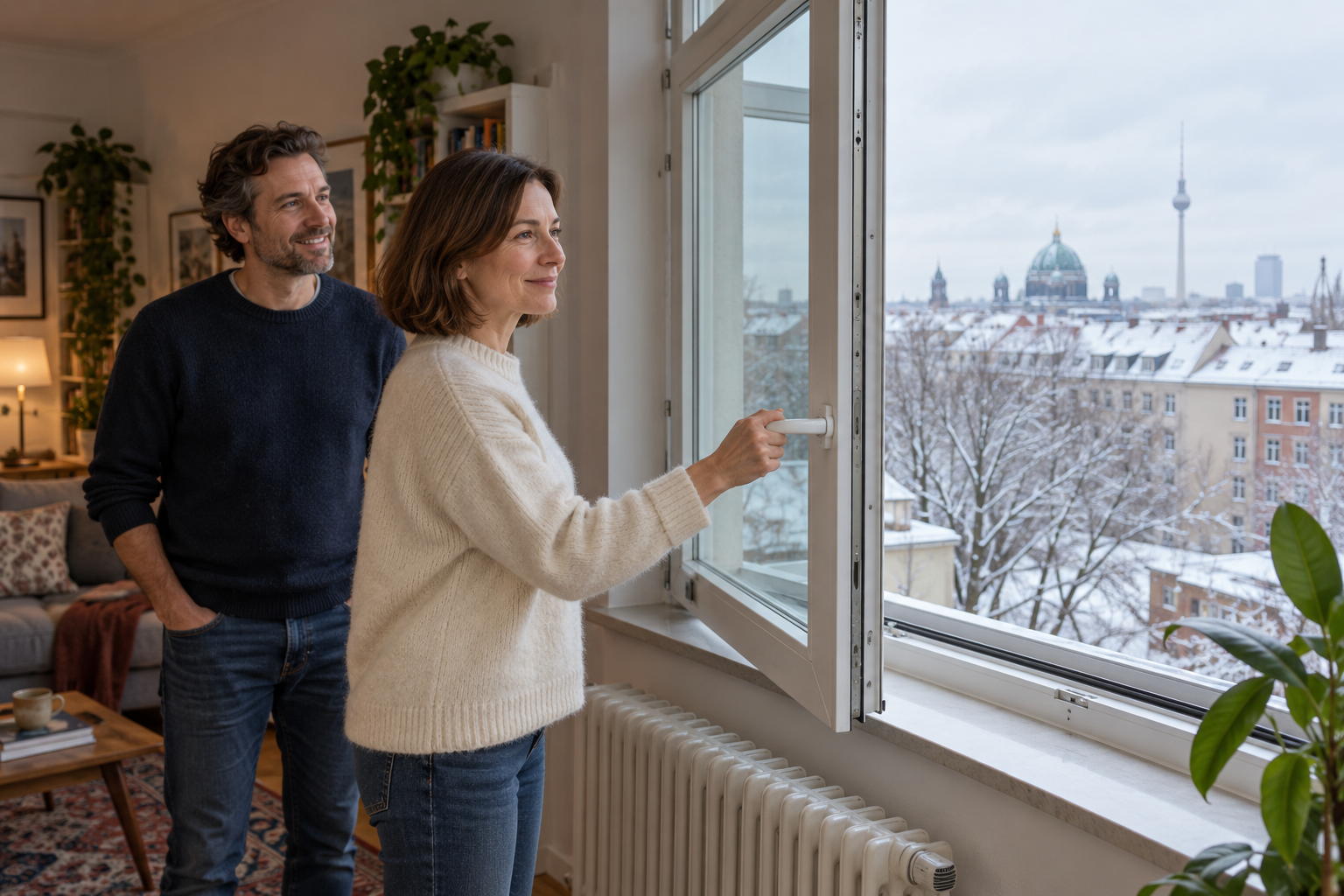
Luften simply means to air out, and it refers to the German practice of regularly opening the windows to exchange the stale indoor air of a home for fresh air from outside. What makes it striking to outsiders is that it is done daily and year-round, with no exception for winter, so that even on the coldest, snowiest days Germans will fling their windows wide to let the air change. It is not an occasional hot-weather indulgence or a response to a bad smell; it is a fixed, routine part of running a household, as ordinary and non-negotiable as making the bed or locking the door, and it is practiced not just at home but in schools, where classroom windows are opened in the middle of winter lessons, and in offices and public buildings too.
The seriousness of it surprises people as much as the cold does. Germans have worked out, with characteristic precision, roughly how long to air a room in each season, a longer airing in the mild months and a brief one in the depths of winter, and the ritual is woven so deeply into daily life that failing to do it can mark you out as someone who does not know how to keep a home properly. Visitors and newcomers to Germany routinely report their bafflement at the sight of everyone throwing open their windows in freezing weather, and just as routinely report being gently or firmly instructed in the practice by German friends, colleagues, and landlords. The correction, when it comes, carries the unmistakable tone of someone explaining a basic fact of civilized life to a person who somehow never learned it. It is, in short, not a quirk a few eccentrics indulge but a genuine national habit, taught, expected, and taken seriously, and understanding it is one of the small keys to understanding daily life in Germany. Live there for any length of time and you will either adopt it or be nagged until you do.
The Right Way to Do It

What Americans often miss is that there is a right way and a wrong way to air a room, and the Germans are emphatic about the difference. The wrong way, the intuitive one, is to leave a window cracked open for hours, letting a thin trickle of air seep in over hours. This, the Germans will tell you, is both ineffective and wasteful, because it cools the walls, the furniture, and the whole structure of the room without ever properly exchanging the air, so you lose heat steadily and gain little fresh air for it.
The right way has a name: Stossluften, or shock ventilation. The technique is to open the windows all the way, fully and wide, but only for a short time, around five minutes or so on a winter’s day, which flushes the stale, moist indoor air out and draws fresh air in quickly, before the walls and furnishings have had time to cool down. Because the thermal mass of the room stays warm, the space reheats rapidly once the windows are closed, so you get the full air exchange at a fraction of the heat loss of the long-cracked-window method. The walls and furniture, which hold most of a room’s warmth, barely have time to cool in five minutes, so the heat comes back almost as soon as you shut the windows. There is an even more powerful version, Querluften, or cross-ventilation, where you open windows on opposite sides of the home at once to create a through-draft that flushes the air even faster. The whole point, counterintuitive but sound, is that brief-and-wide beats long-and-narrow: a short, sharp, complete airing is both more effective at refreshing the air and gentler on your heating bill than leaving a window ajar, which is exactly the opposite of what most Americans would guess.
A Different Airing for Every Season
Because this is Germany, the practice does not stop at a vague sense that one should air the home; it comes with precise, widely-known guidance on exactly how long to do it depending on the time of year, and the schedule itself tells you a great deal about the national temperament. The rule of thumb, printed on charts and taught to newcomers, scales the length of each airing to the season. In the depths of winter, December through February, a Stossluften of about five minutes is enough, because the cold outside air is so dry and the contrast so sharp that the exchange happens fast. In the shoulder months of spring and autumn the airing lengthens to perhaps ten or twenty minutes, and in high summer, when there is little heat to lose, windows might be left wide for half an hour or more.
The logic is neat and thoroughly German. In winter you want the shortest effective burst, long enough to swap the air but short enough to spare the heat; as the seasons warm and the heating matters less, you can afford to air for longer. A household that follows this calendar airs two or three times a day, briefly in the cold months and more generously in the warm ones, keeping the indoor air fresh and the humidity down all year round without ever wasting much energy. The first airing of the day, right after waking, is the most sacred of all, clearing out the moisture a sleeping household breathed into the rooms overnight. To an American, the idea that there is a correct number of minutes to open your windows, varying by month, and that people actually know and follow it, is faintly astonishing, but it is of a piece with the whole approach: airing the home is not a vague good intention but a precise, scheduled, properly-done task, and the seasonal timings are simply how you do it right.
It Is All About the Mold

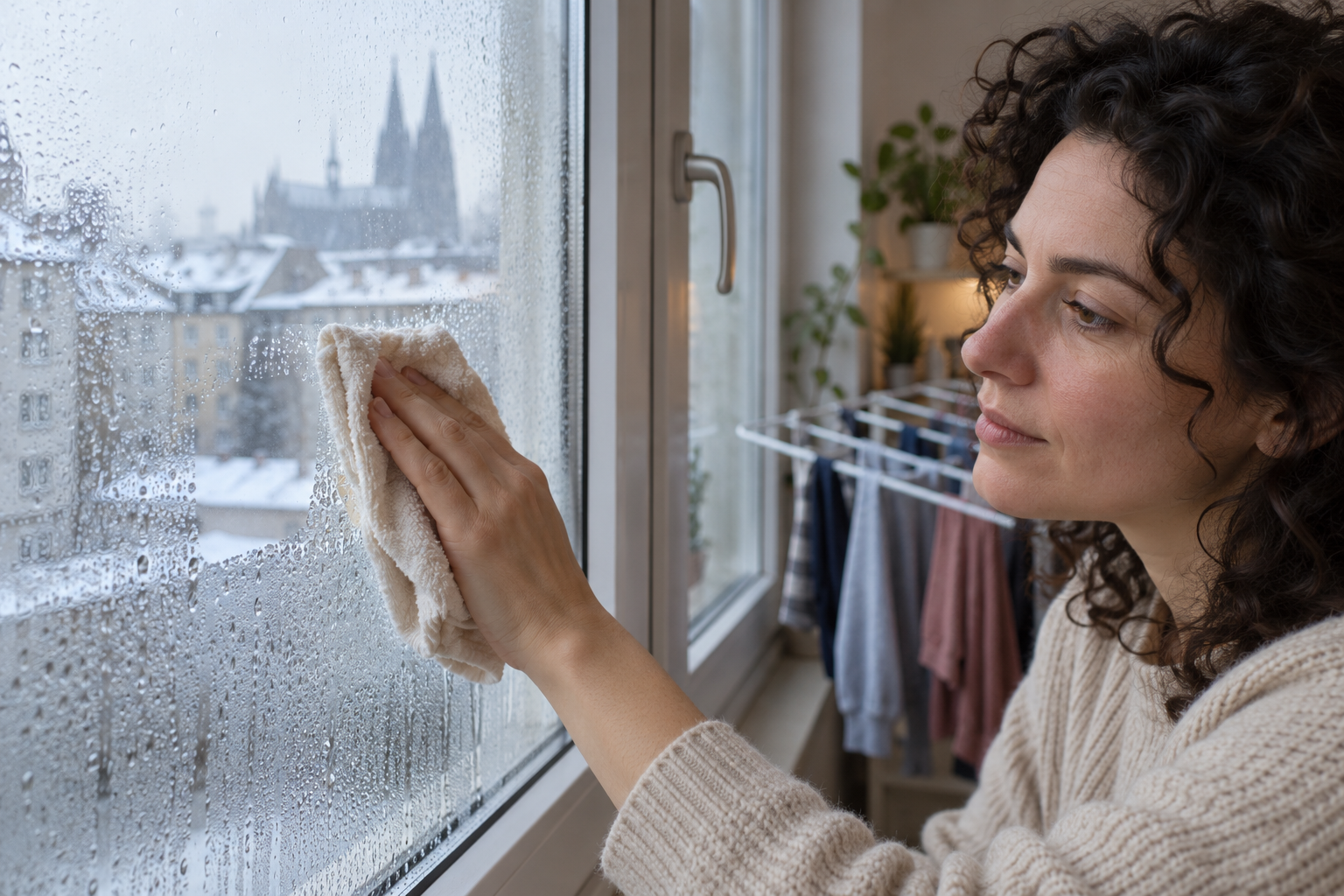
The question that nags at every American watching this is simply: why? Why endure the cold and the effort for a few minutes of fresh air, every single day, even in winter? The answer, more than anything else, is the single dreaded word Schimmel, mold. German homes are solidly built and well insulated, sealed tight against the cold, which is wonderful for keeping heat in but creates a serious problem, because the ordinary business of living in a home, cooking, showering, drying laundry, even just breathing, releases a surprising amount of moisture into the air, and in a sealed, insulated space that moisture has nowhere to go.
Trapped humid air meets cold surfaces, condenses, and turns to damp and then mold creeping across walls and ceilings, which is both a genuine health hazard and, once it gets into the fabric of a building, a serious and expensive problem to remove. Luften is the cure and the prevention: regularly flushing out the humid indoor air and replacing it with drier outside air keeps the humidity down and denies mold the damp conditions it needs to grow. There are secondary benefits too, since stale indoor air also builds up carbon dioxide that leaves people feeling tired and foggy, and fresh air genuinely helps with alertness and wellbeing, which is part of why classrooms are aired mid-lesson even in winter. A roomful of people steadily raises the carbon dioxide, and a quick airing resets it, which is why German teachers reach for the window rather than soldier on in the stuffiness. But the driving reason, the one that turns airing from a nicety into a non-negotiable duty, is the war against mold in airtight homes, and once you understand that, the freezing open windows stop looking like madness and start looking like sensible, if bracing, home maintenance. The German flinging the windows open in January is not being wasteful or eccentric; they are doing something closer to brushing their teeth, a small daily discipline that heads off a much bigger problem later.
Written Into the Lease
Just how seriously Germans take this becomes clear when you discover where the obligation to air out a home is sometimes written down: in the tenancy agreement itself. In Germany it is common, especially in older buildings, for a lease clause legally requiring the tenant to air the property, precisely in order to prevent mold, so that luften is, for many renters, a contractual duty. The German environmental authority officially recommends shock ventilation as the best way to keep indoor air healthy and mold at bay, which gives the whole practice an air of official sanction.
The reasoning behind the lease clause is pure landlord self-interest, and it is instructive about how seriously the mold problem is taken. Mold, once it takes hold in the structure of a building, is difficult and costly to eradicate, and a landlord who has rented out a sound apartment does not want it returned full of Schimmel. So the lease obliges the tenant to do their part in preventing it, by airing regularly, and a tenant who fails to land then develops a mold problem can in some cases be held responsible for the damage, on the grounds that proper airing would have prevented it. This is a genuinely startling idea to an American, that how often you open your windows could be a matter of legal and financial consequence, but it follows directly from the mold logic: if airing prevents mold, and mold damages the property, then airing becomes a duty the lease can enforce. It is the clearest possible sign that in Germany, luften is not a lifestyle preference but a serious, even legally weighty, part of keeping a home. Few things capture the German seriousness about doing domestic life correctly quite like the fact that the humble act of opening a window can appear in a contract.
The Draft Paradox, and What You Can Take From It

There is one delicious contradiction in all this that is worth savoring, because it reveals something about how the ritual actually works. Germans are famously terrified of the Durchzug, the sustained draft, the sustained draft, the current of moving air that they believe can make you ill. They will slam shut a train window someone has opened, resist air conditioning and fans, and wrap scarves around their necks against the moving air, all out of a conviction that a draft on the body causes sickness. How can the same people who fear the draft throw all their windows open in winter?
The resolution lies in the distinction between a brief, deliberate air exchange and a sustained draft on the body blowing on a person. Stossluften is over in a few minutes, with everyone usually out of the direct airflow, a quick flush of the room rather than a steady wind on the back of your neck; the feared Durchzug is the ongoing current you sit in, which is a different thing entirely in the German mind. One is a deliberate, time-limited act you perform on a room; the other is an accidental, lingering condition that acts on your body, and the German treats them as opposites rather than contradictions. Once you see that distinction, the paradox dissolves, and it also points to what an American can sensibly take from the whole business. American homes, increasingly sealed, insulated, and climate-controlled with the windows kept firmly shut all winter, have exactly the stale-air and trapped-humidity problems that luften exists to solve, and the mold, the stuffiness, and the foggy air that result are real, and most Americans simply live with them without ever connecting them to windows that never open.
You do not need to adopt the German zeal or fear the draft, but the core practice is genuinely worth stealing: a brief, wide-open airing once or twice a day, even in winter, done quickly so you lose little heat, really does freshen the air, lower the humidity, and keep mold at bay. The ritual that looks so crazy from the outside turns out to be one of those things that, once understood, you find yourself quietly adopting, throwing your own windows wide on a cold morning and feeling, a little smugly, like you are finally doing it right. It is a small, bracing, oddly satisfying habit, and like a surprising number of German customs, it turns out the Germans were onto something all along.

About the Author: Ruben, co-founder of Gamintraveler.com since 2014, is a seasoned traveler from Spain who has explored over 100 countries since 2009. Known for his extensive travel adventures across South America, Europe, the US, Australia, New Zealand, Asia, and Africa, Ruben combines his passion for adventurous yet sustainable living with his love for cycling, highlighted by his remarkable 5-month bicycle journey from Spain to Norway. He currently resides in Spain, where he continues sharing his travel experiences with his partner, Rachel, and their son, Han.