
There is a way the French serve pumpkin soup in October that turns a humble bowl of vegetables into the centerpiece of the whole table.
Instead of ladling it out of a pot, they hollow out a whole pumpkin, fill it with a silky, creamy soup made from its own flesh, and carry the entire thing to the table to serve straight from the shell. It is called soupe au potiron, and served this way it is pure autumn theater, the great orange globe steaming gently on the table, the lid lifted to reveal the soup within, everyone leaning in to look. It is the kind of dish that draws a small gasp from a table and makes an ordinary supper feel like an occasion, and the wonderful secret is that it is far simpler to pull off than it looks. There is no special skill involved and nothing that can really go wrong, only a pumpkin, a pot, and a little willingness to make a centerpiece of your dinner. This is comfort food and showpiece in a single pumpkin.
What follows is why this is the October dish to make, how the whole-pumpkin serving trick actually works, the silky soup that goes inside, and exactly how to do it.
Autumn on the Table
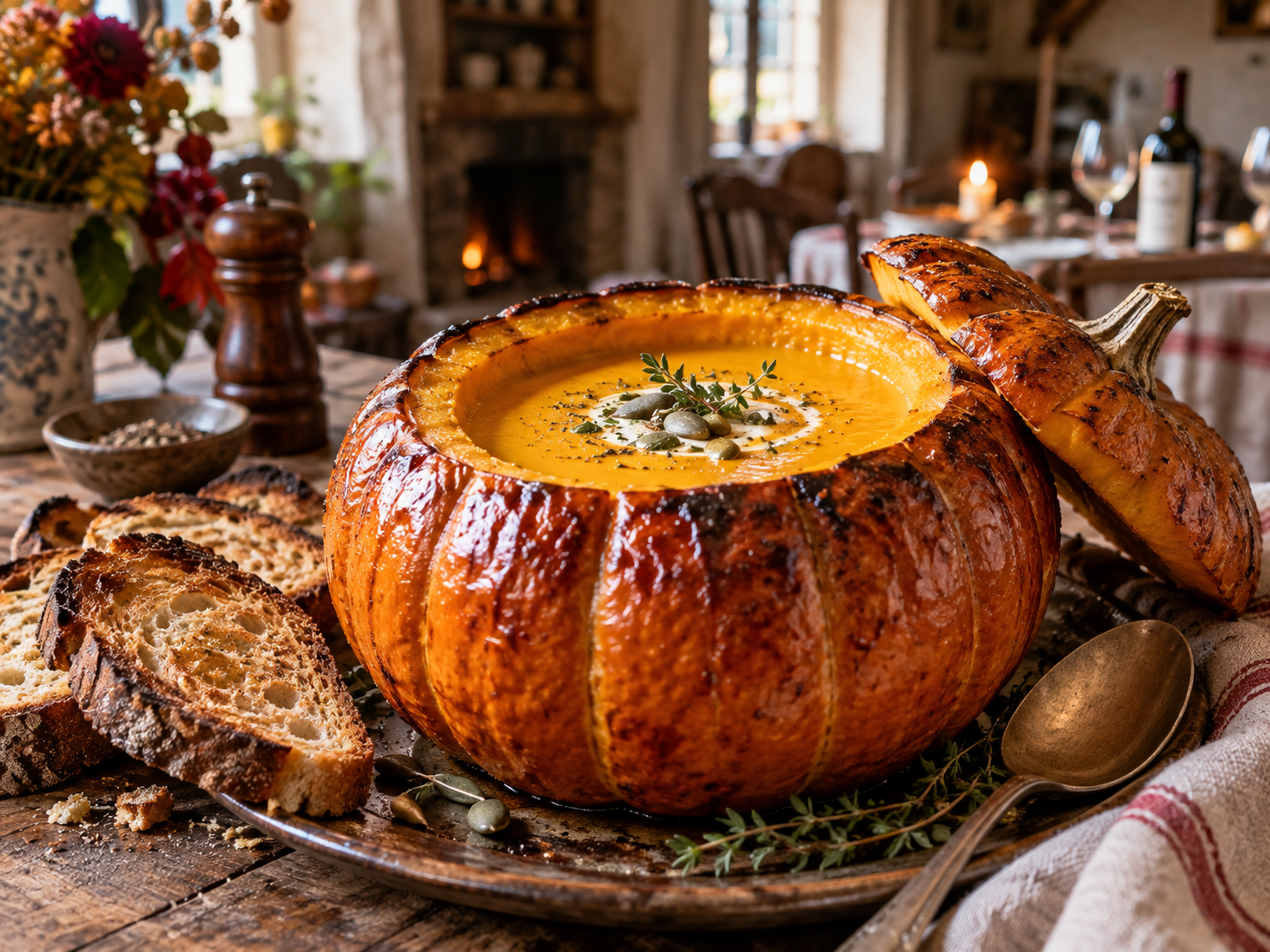
Pumpkin soup is one of the great traditional dishes of the French countryside, where potiron, the French pumpkin, appears in abundance every autumn. In the rural corners of France, come September and October, pumpkins pile up in the markets and are pressed on neighbors over the garden fence, and turning them into a warming, velvety soup is simply what one does with the season’s glut. It is thrift as much as tradition, a way of using a vegetable that arrives all at once and in quantity, and like much peasant cooking it turns necessity into something genuinely lovely. It is deeply seasonal food, tied to the shortening days and the first real chill, exactly the sort of thing you want in a bowl when the light goes golden and low.
It belongs to the same family of feelings as a fire lit early in the evening or the first sweater of the year, small comforts that make the turn toward winter feel welcome rather than bleak.
The dish has real history behind it, too, which adds to its charm. French cooks have been making pumpkin soup for centuries, with versions appearing in French cookbooks as far back as the sixteen hundreds, thickened with milk and seasoned simply, and the tradition of serving it in the hollowed pumpkin runs deep in regions like Alsace, where families remember grandmothers bringing the whole steaming gourd to the table each year. That sense of a small annual ritual is part of what makes it special, a dish that means the season has truly turned. To make it is to join a long line of French home cooks doing exactly the same thing with the same autumn abundance, which is a lovely thing to bring to your own October table. There is something quietly satisfying in cooking the way people have cooked for generations, especially with a vegetable so tied to this particular moment of the year.
The Trick of Serving It in the Shell
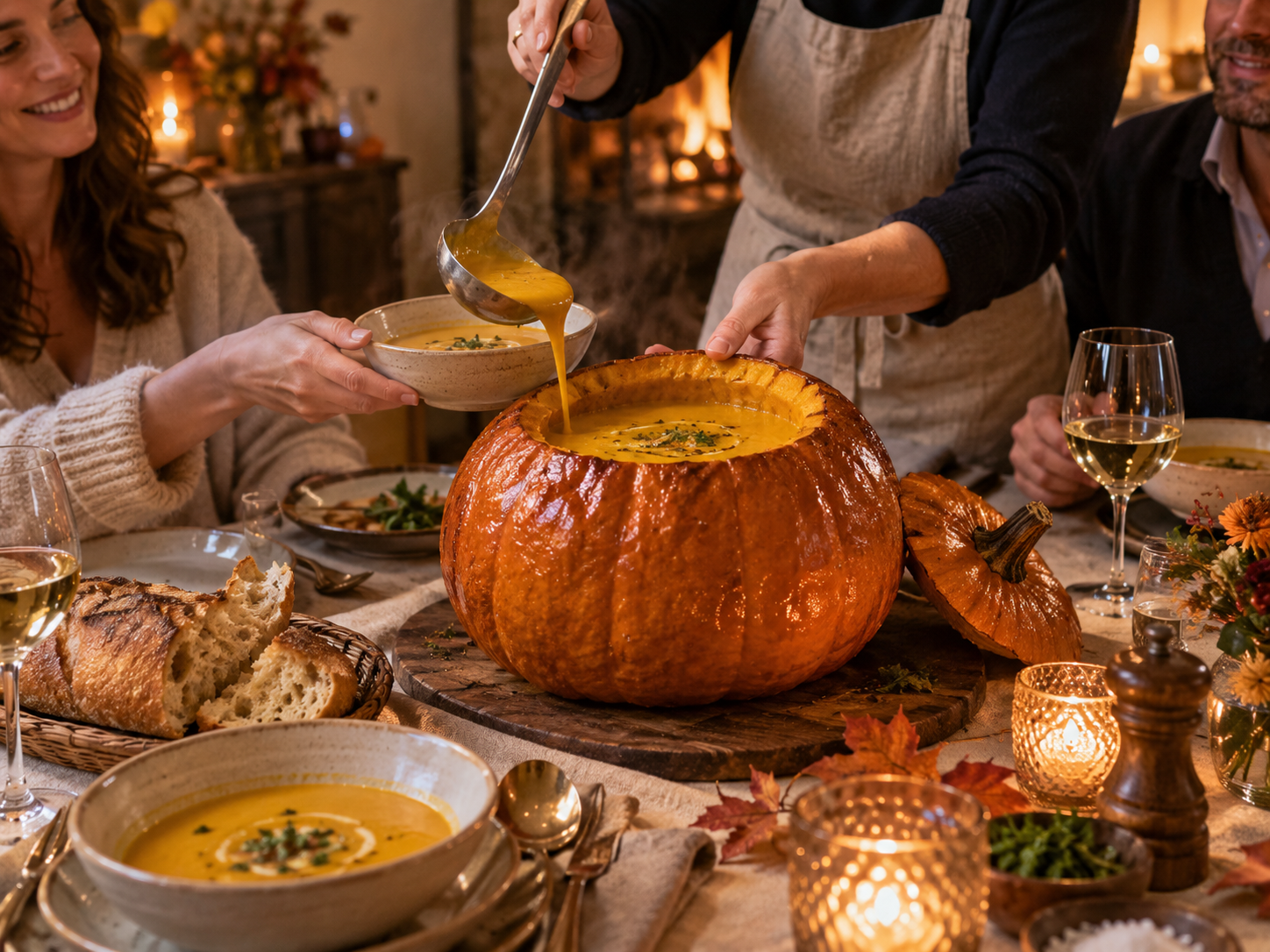
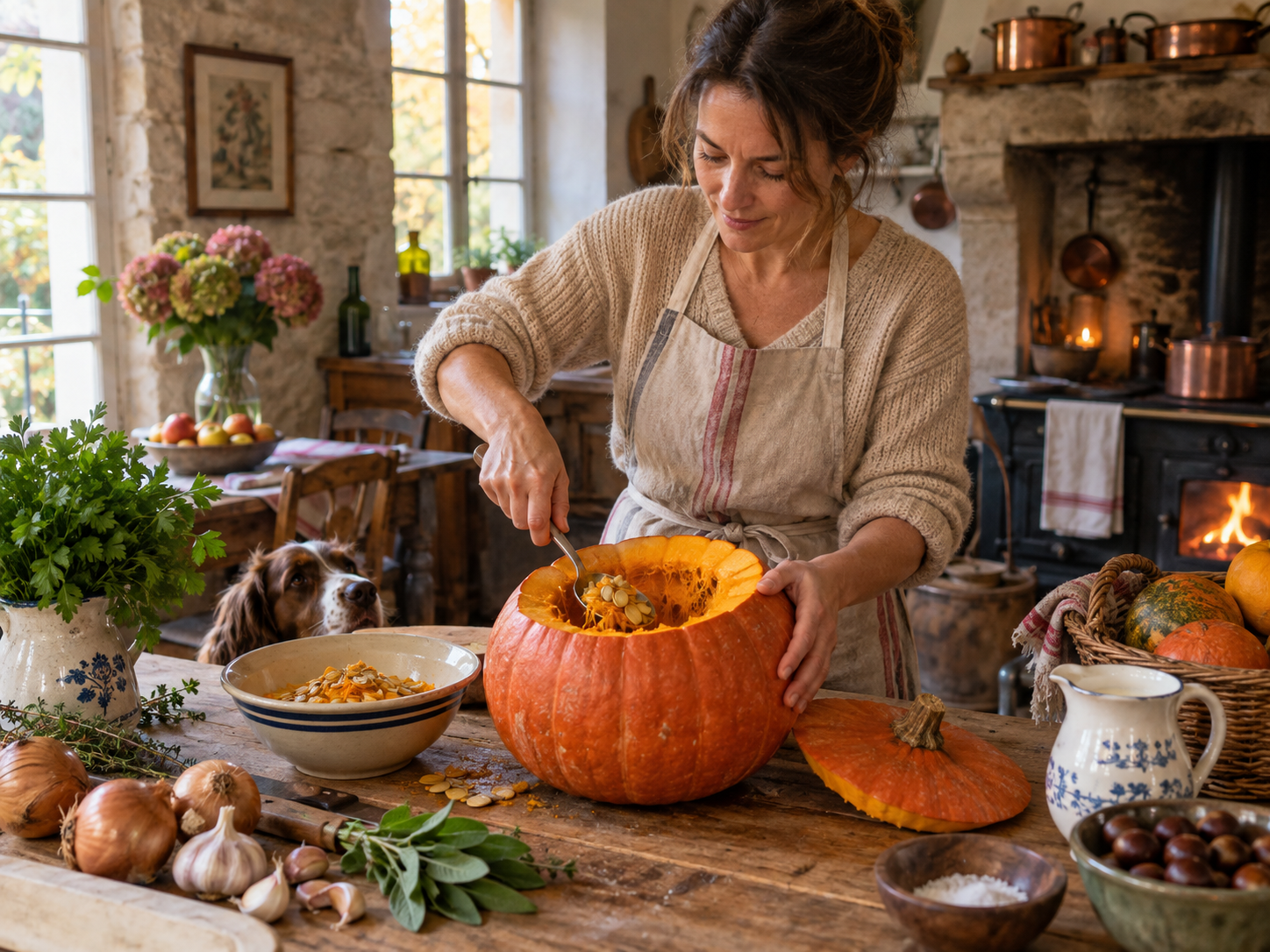
The showstopping part, serving the soup in the pumpkin itself, sounds elaborate and is genuinely easy, which is the best kind of kitchen trick. The idea is simply to turn the pumpkin into its own soup tureen. You take a good round pumpkin, cut a wide lid off the top around the stem, and pull it off, then scoop out all the seeds and stringy bits from inside the shell and the lid, leaving a clean, hollow vessel with its own matching cap. It is the same motion as carving a Halloween pumpkin, familiar to anyone who has ever made a jack-o-lantern, only here the goal is a tidy bowl rather than a face. Take a little care to keep the walls reasonably thick, so the shell stays sturdy enough to hold a pool of hot soup, and reserve all that scooped flesh, because it is the soup itself.
From there you have a choice of approaches, and neither is difficult. The simplest is to make the soup separately, using the flesh you have scraped out, and then ladle the finished hot soup into the cleaned shell to bring to the table, where the pumpkin acts purely as a dramatic serving bowl and its snug lid even helps keep the soup warm. This is the foolproof route, since the shell does no cooking and cannot fail, and it is the one to choose if you want the spectacle with none of the risk.
For a bit more flavor and drama, you can warm the empty shell briefly in the oven first, so it is hot and its inner walls have softened slightly, adding a little of their roasted flavor as you serve. Either way, the effect at the table is the same and it is wonderful, a whole glowing pumpkin set down as the centerpiece, the lid lifted to release a curl of steam, and the soup ladled out from inside. Guests always react, and no one needs to know how little effort it took to produce. It is one of those rare dishes that looks like the work of a serious cook and asks almost nothing of you in return, which is exactly the sort of trick worth having up your sleeve when you want to impress without a fuss.
The Silky Soup Inside
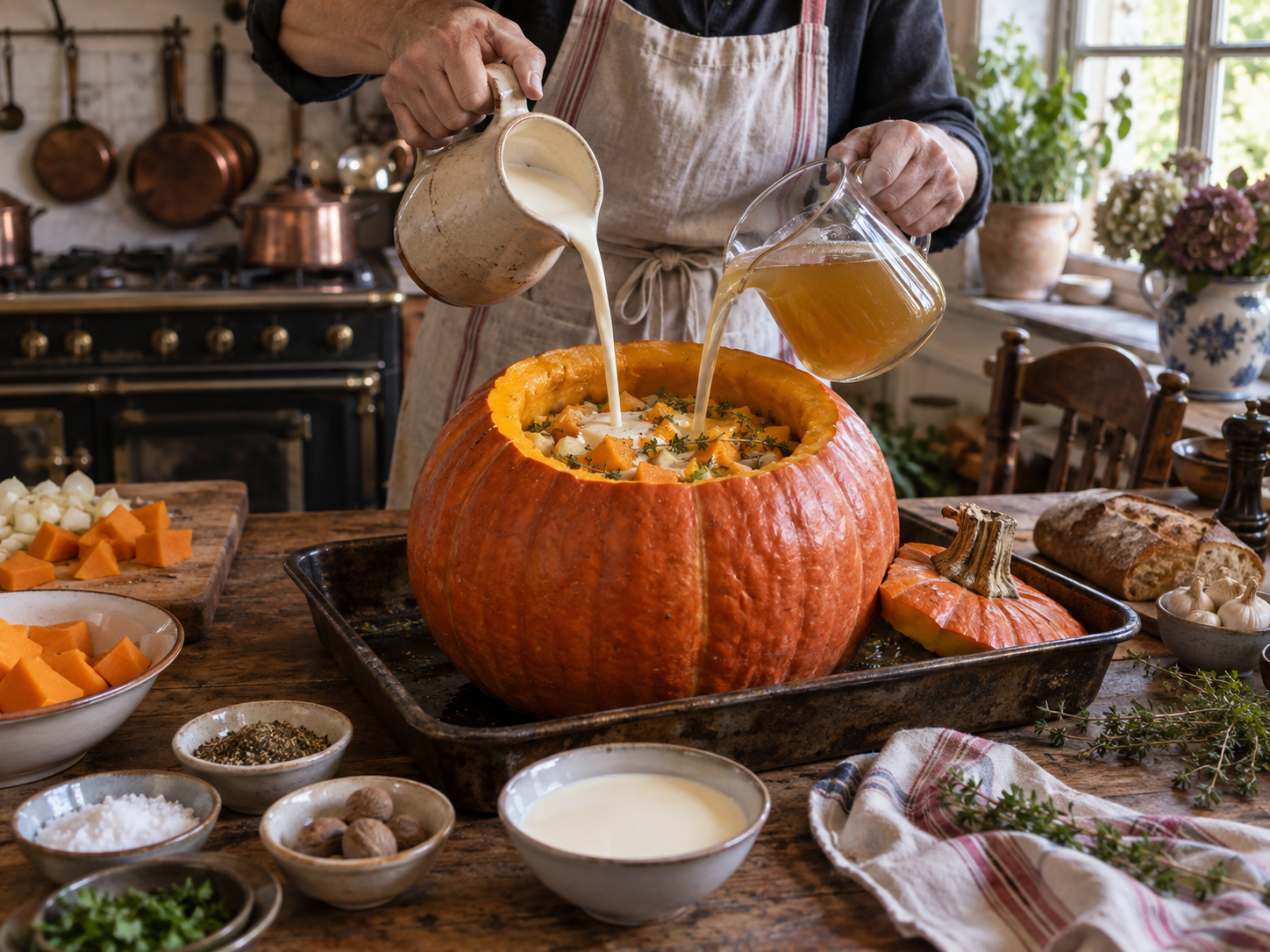
For all the theater of the shell, the soup itself must be genuinely good, and happily a great pumpkin soup is a simple thing to make. It starts, as so many French soups do, with a gentle base of onion, and often a leek, softened slowly in butter without browning until sweet and tender. To that you add the pumpkin flesh, cut into chunks, sometimes along with a potato or a carrot to give the soup a little more body, and you let it all cook briefly in the butter to deepen the flavor before the liquid goes in.
Then comes good stock, chicken or vegetable, enough to cover, and the whole lot simmers gently until the pumpkin is completely soft, which takes only around twenty minutes. Once it is tender, you blend it until perfectly smooth and silky, either with a hand blender in the pot or in batches in a jug, and return it to a low heat.
The finishing touches are what make it French. A generous swirl of cream or creme fraiche gives it richness and a velvety texture, a good grating of nutmeg lends that warm, classic autumn note, and salt and white pepper bring it into focus. The result should be smooth, warming, and gently sweet, the pure flavor of the pumpkin lifted rather than masked by the cream and spice, and thick enough to coat a spoon without being heavy. Toasted croutons or a few roasted pumpkin seeds scattered on top add a welcome crunch, and a final thread of cream looks beautiful against the orange. A little of that contrast matters, since a smooth soup can feel monotonous without something crisp to break it up, and the seeds have the pleasing logic of returning a bit of the pumpkin to its own bowl.
Which Pumpkin to Use
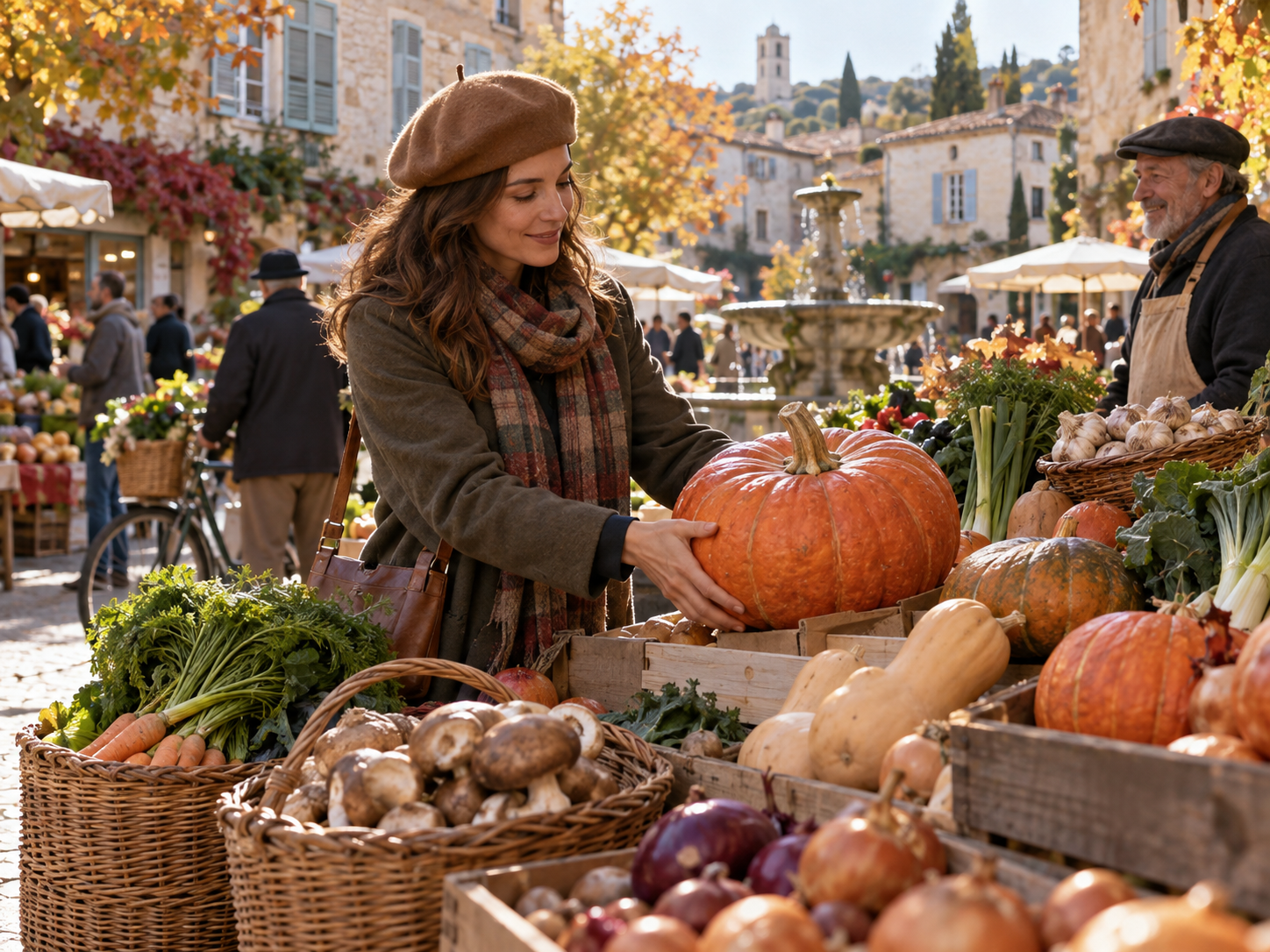
One practical thing makes the difference between a wonderful soup and a watery, bland one, and that is choosing the right pumpkin. Not all pumpkins are for eating, and the big field pumpkins bred for carving into jack-o-lanterns are exactly the wrong choice, since they are grown for size and sturdiness rather than flavor and tend to be stringy, watery, and dull. For a good soup you want a proper eating pumpkin, a sweet, dense-fleshed cooking variety, and in France that means the potiron, or one of the smaller sugar and eating pumpkins and winter squashes that share its deep, sweet, tender flesh.
There is a small tension here to navigate, because the pumpkin that makes the best soup is not always the most dramatic one to serve from. The ideal solution, if you can manage it, is to pick a variety that is both good to eat and handsome enough to bring to the table, and many of the classic French cooking pumpkins are exactly that, round and richly colored as well as delicious.
Whatever you choose, look for one with a good flat base so it sits steady and does not tip when it is full of soup, and give it a gentle press to check the flesh feels firm and heavy for its size. Get the pumpkin right and the rest of the dish almost takes care of itself, since a sweet, flavorful pumpkin needs very little help to become a lovely soup, while no amount of cream and nutmeg can rescue a watery one.
Making Soupe au Potiron
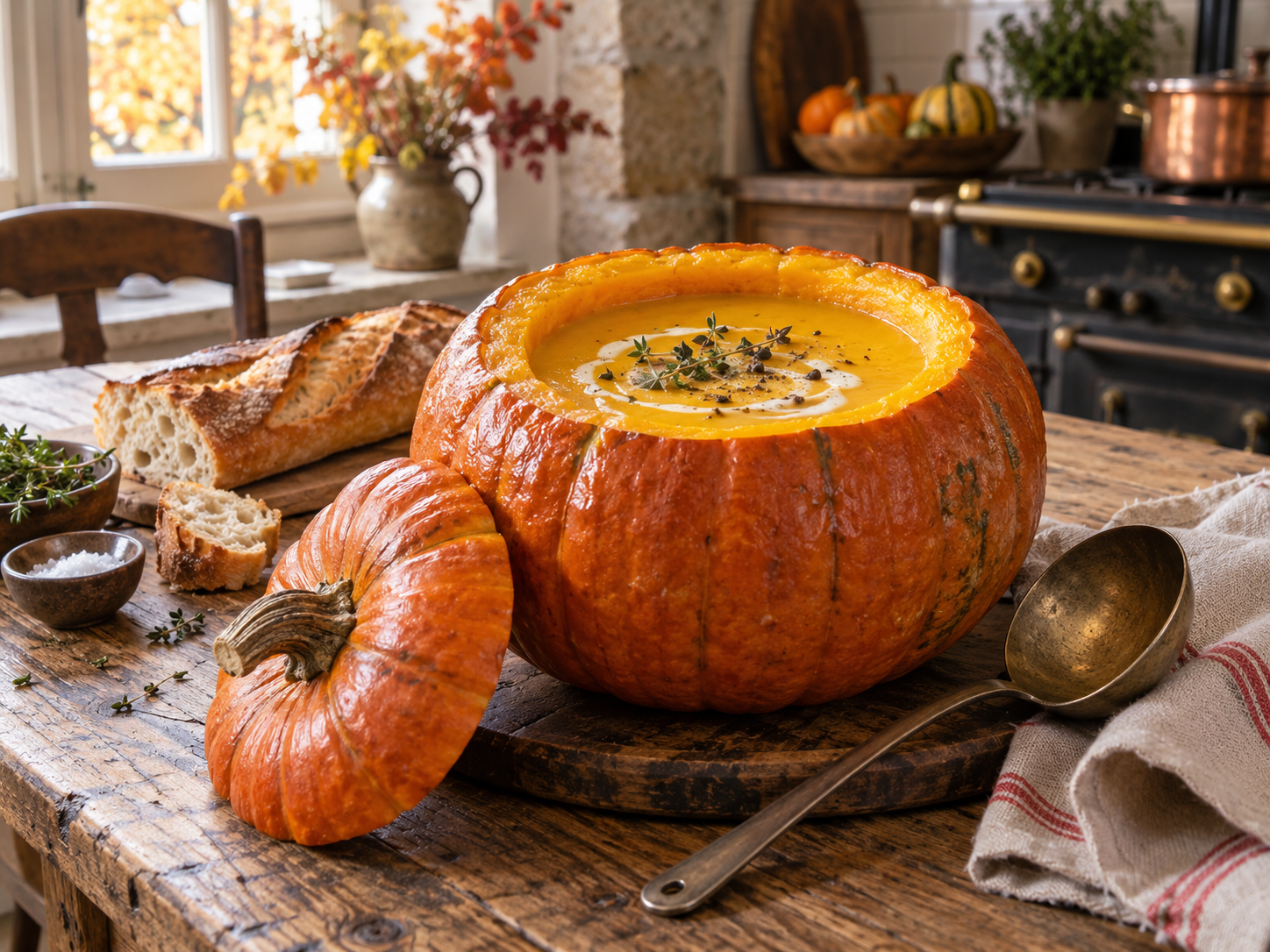
Here is a classic soupe au potiron, served in its shell, for four to six. Choose a pumpkin with a good flat base so it sits steady on the table.
Ingredients
- 1 large round pumpkin, about 2 to 3 kg, for the soup and the shell
- 2 tablespoons butter
- 1 onion, chopped
- 1 leek, sliced, optional
- 1 potato, peeled and cubed
- 1 liter chicken or vegetable stock, plus more as needed
- 150 ml cream or creme fraiche
- A good grating of nutmeg
- Salt and white pepper, to taste
- Croutons or toasted pumpkin seeds, to serve
Instructions
- Cut a wide lid off the top of the pumpkin around the stem and lift it off. Scoop out the seeds and stringy insides from both the shell and the lid, then scrape out most of the flesh, leaving the walls sturdy enough to hold soup. You want about 1 kg of flesh, cut into chunks.
- If you would like to serve in the shell, warm the empty pumpkin and its lid in a 350 F, about 180 C, oven for 15 to 20 minutes while you make the soup. Do not let the walls collapse.
- Melt the butter in a large pot over medium heat and cook the onion and leek gently until soft, without browning, about 8 minutes.
- Add the pumpkin flesh and potato and stir for a few minutes, then pour in the stock to cover and bring to a simmer.
- Simmer gently until the pumpkin and potato are completely tender, about 20 minutes.
- Blend until perfectly smooth, then return to low heat and stir in the cream, the nutmeg, and salt and white pepper to taste, adding a little more stock if it is too thick.
- Ladle the hot soup into the warmed pumpkin shell, set the lid on top, and carry it to the table. Serve from the shell, garnished with croutons or pumpkin seeds and a swirl of cream.
And do not worry if serving it in the shell feels like too much for a weeknight, since the same soup is just as delicious ladled from an ordinary pot into ordinary bowls, so keep the pumpkin tureen for the evenings you want a little autumn theater and make the soup any time the season and the craving strike.

About the Author: Ruben, co-founder of Gamintraveler.com since 2014, is a seasoned traveler from Spain who has explored over 100 countries since 2009. Known for his extensive travel adventures across South America, Europe, the US, Australia, New Zealand, Asia, and Africa, Ruben combines his passion for adventurous yet sustainable living with his love for cycling, highlighted by his remarkable 5-month bicycle journey from Spain to Norway. He currently resides in Spain, where he continues sharing his travel experiences with his partner, Rachel, and their son, Han.