
Everyone thinks they know schnitzel, a breaded, fried cutlet, so how hard could it possibly be. But the true Wiener schnitzel, the great pride of Vienna and the national dish of all Austria, is a far more particular and more wonderful thing than the generic fried cutlet most people picture, and getting it right comes down to three rules that matter far more than they seem. It has to be veal. It has to be pounded thin.
And the frying, which nearly everyone underestimates, is where the whole thing is won or lost, because the pan and the fat and the way you move them are what create the puffed, blistered, golden crust that separates a real Wiener schnitzel from an ordinary breaded cutlet. Get those three things right and you produce something genuinely special, a cutlet so light and crisp it seems to have escaped its own frying. Get them wrong and you get a flat, greasy disappointment, the sort of leaden breaded cutlet that gives schnitzel an undeserved reputation as heavy pub food. The gap between the two is enormous, and it is entirely a matter of technique rather than expensive ingredients, which is the encouraging part. Get them wrong and you get a flat, greasy disappointment. This is how the Viennese have always done it, and it is precisely why the pan, of all things, matters far more than you might ever think.
What follows is why it must be veal, why thinness is everything, the frying technique that is the real secret, how the Viennese serve it, and exactly how to make it.
It Has to Be Veal
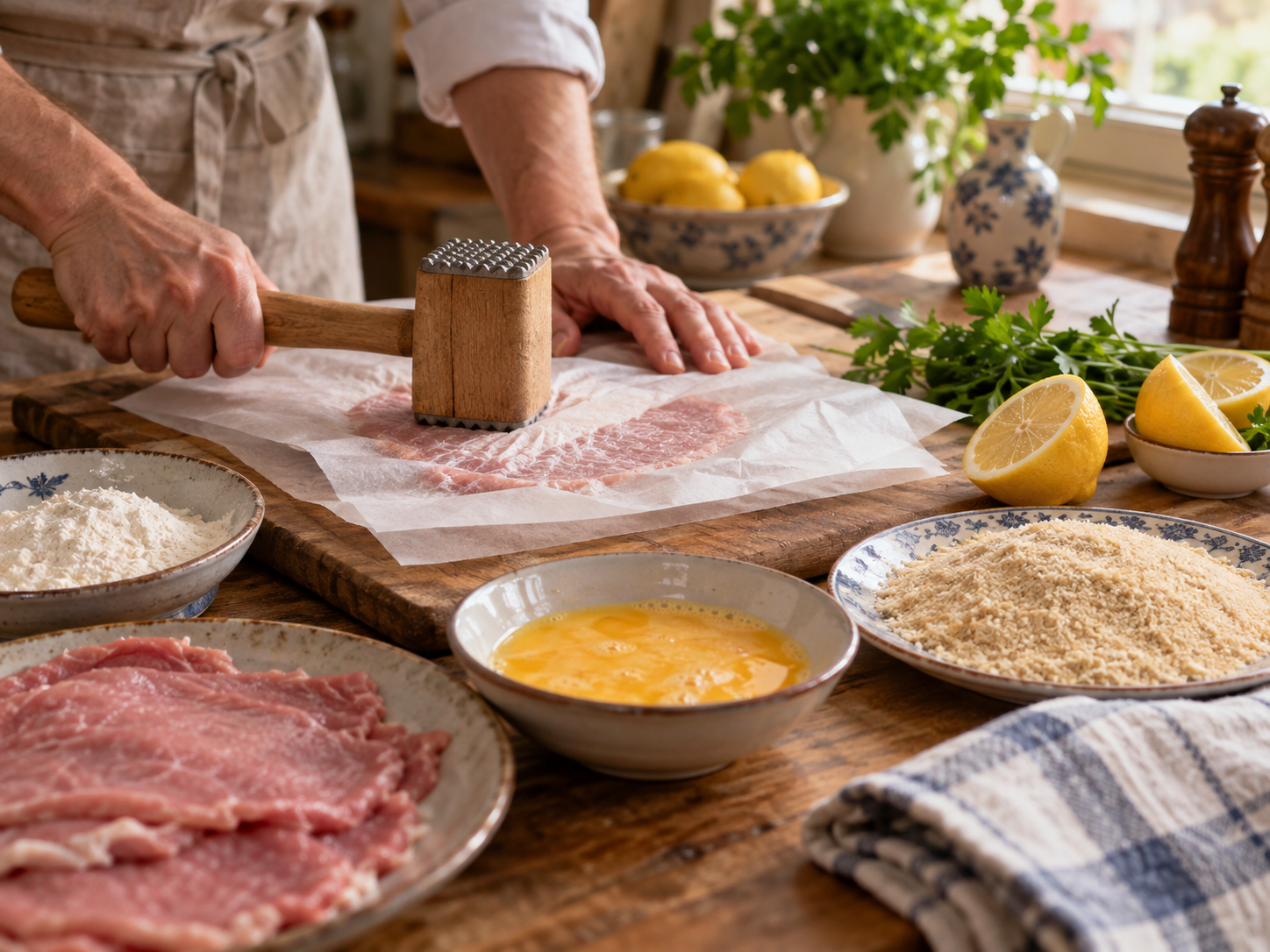
Let us start with the rule the Austrians take most seriously, so seriously that it is written into law: a true Wiener schnitzel is made of veal, and nothing else. In Austria the name Wiener schnitzel is legally protected and reserved for the veal version, which is why you will simply not find it made from anything else on an honest Austrian menu. The word Wiener simply means Viennese, from Wien, the German name for Vienna, so the name has nothing to do with hot dogs and everything to do with the city that perfected the dish.
This does not mean you can never bread and fry a pork or chicken cutlet, of course, only that when you do, it is not a Wiener schnitzel. The Austrians have precise names for the alternatives, calling the pork version Schnitzel Wiener Art, meaning Viennese-style schnitzel, or Wiener Schnitzel vom Schwein, schnitzel from pork, a careful distinction that tells you how much the veal version means to them. Pork schnitzel is delicious in its own right and enormously popular across Austria and Germany, so there is no snobbery in cooking it, only accuracy in naming it. Veal simply behaves differently under the mallet and in the pan, staying more tender and delicate, which is why the Viennese hold it as the standard against which the rest are measured. But if you want to make the real thing, the dish the Viennese are so proud of, it begins with a good veal cutlet, and everything that follows is built on that choice. A cutlet from the leg is the traditional pick, prized for being lean and tender and easy to pound into an even sheet.
Thin, and Evenly So
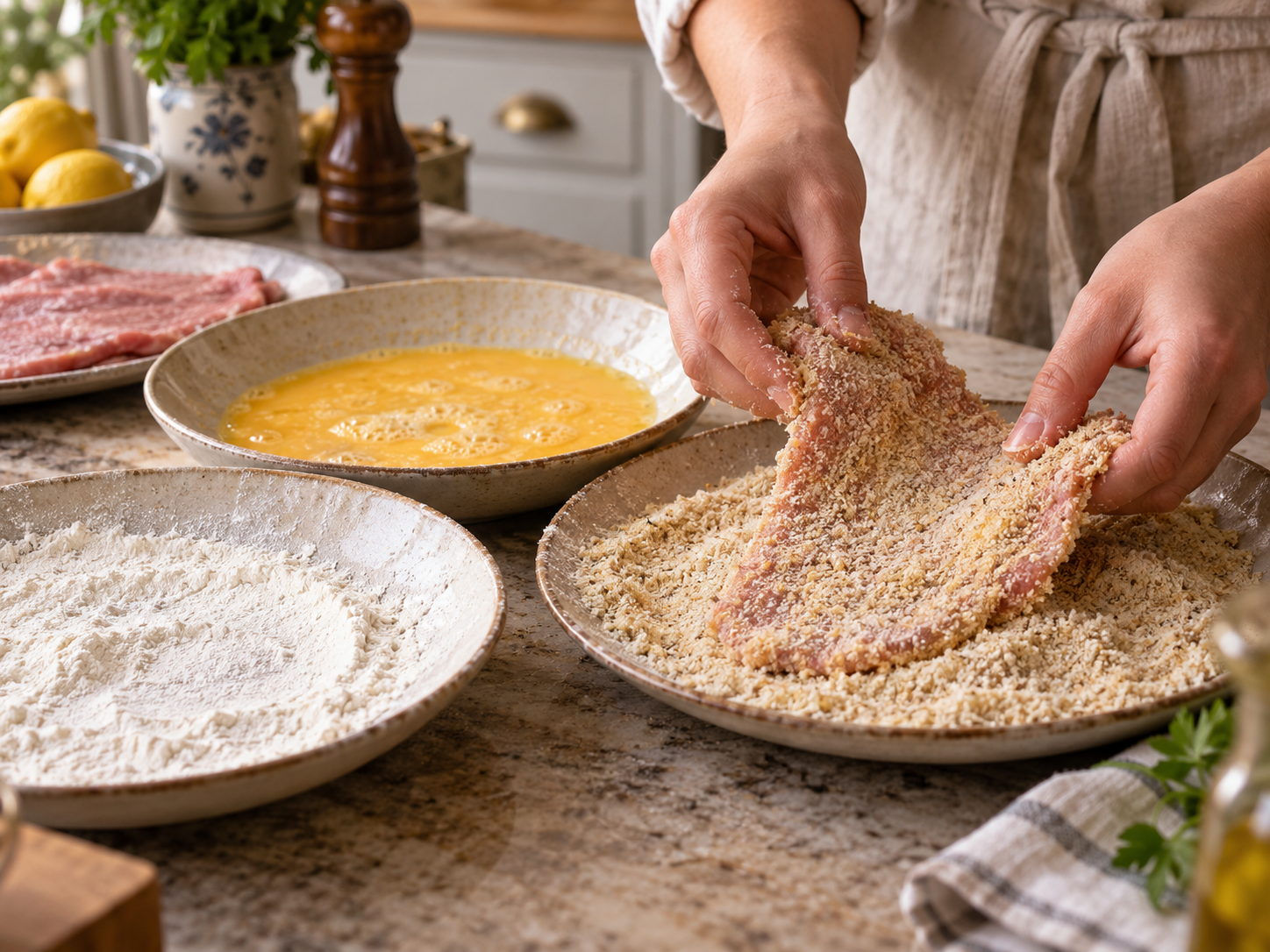
The second rule is that the cutlet must be pounded thin, and this is not a matter of saving cooking time but of the very nature of the dish. A Wiener schnitzel is meant to be a large, delicate, tender sheet of meat, pounded to around four millimeters, thinner than most people would ever dare, so that it cooks through in the brief moment it spends in the fat and stays meltingly tender rather than turning tough. The pounding also stretches the cutlet out into the wide, generous shape that traditionally drapes over the edge of the plate, so large that a proper schnitzel often overhangs its plate on every side. That dramatic size is part of the pleasure of it, a whole plate covered by a single thin, golden, crisp-edged cutlet.
The key, and the thing worth taking care over, is that the cutlet be pounded evenly rather than simply as thin as possible. You lay the veal between two sheets of plastic and work from the center outward with the flat side of a mallet, coaxing it into an even thickness all over, because an unevenly pounded cutlet will cook unevenly, some parts overdone while others lag. Even thickness matters more than sheer thinness. Done right, you end up with a broad, even, delicate sheet of veal ready to take its breading, and that thinness is what allows the fast, hot fry that gives the dish its character. A thick cutlet simply cannot become a Wiener schnitzel, however good the meat, because it cannot cook in the fleeting time the method demands. This is the step most home cooks shy away from, nervous about pounding the meat too hard, but timidity here is the enemy, and a genuinely thin cutlet is the foundation everything else rests on.
The Pan Matters More Than You Think
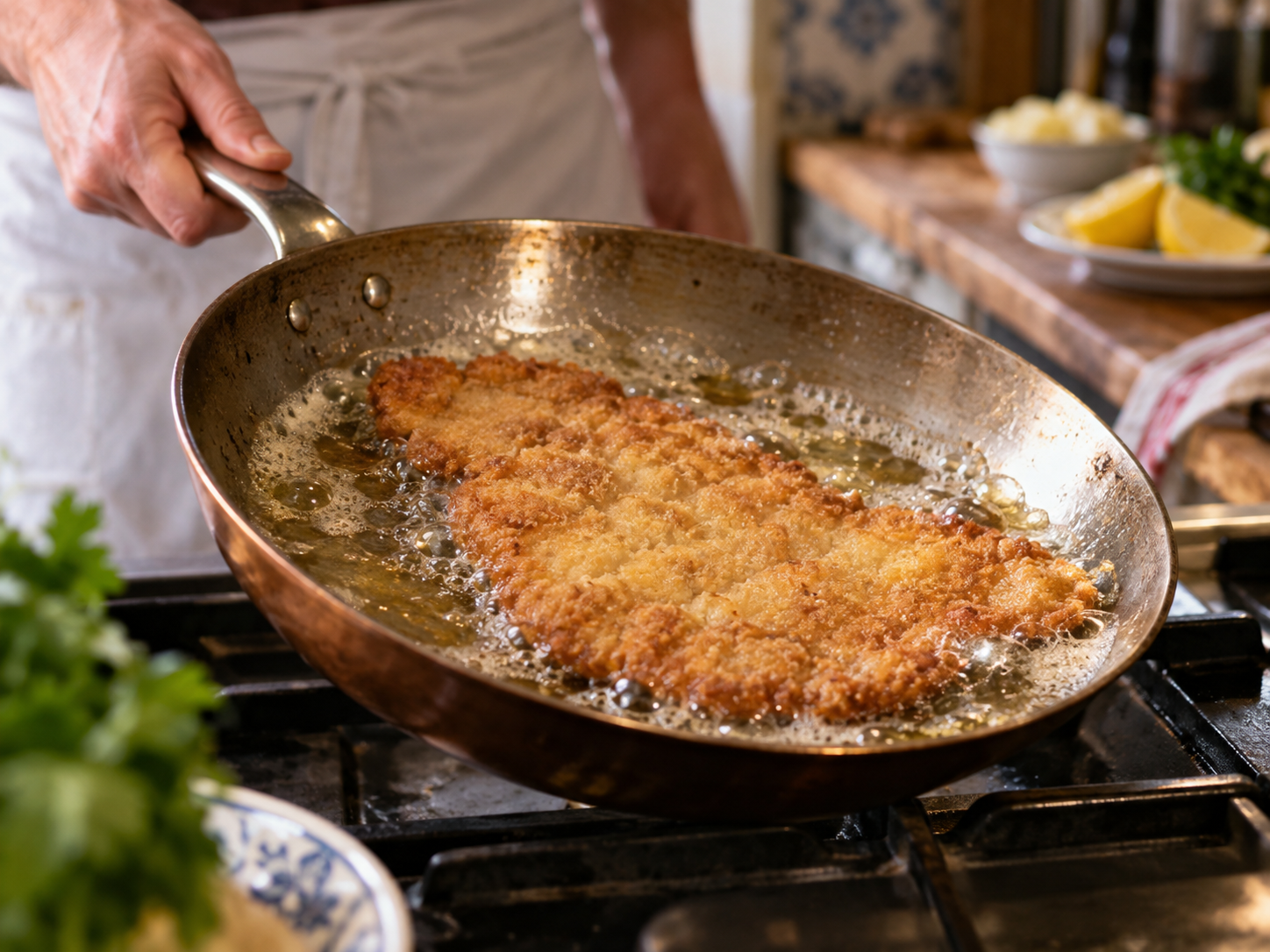
Here is the part almost everyone gets wrong, and the reason so many home schnitzels disappoint: the frying is the whole game, and it is far more particular than dropping a cutlet into a little oil. The single mark of a genuine Wiener schnitzel is a crust that puffs up and separates from the meat, forming an airy, blistered, wavy golden coating with a pocket of steam between it and the veal, a phenomenon the Austrians call souffleing. Achieving that puff is what the technique is all about, and it depends on the pan and the fat far more than on the breading itself.
To get it, you need three things working together. First, use a large pan and plenty of fat, enough hot clarified butter, lard, or oil that the schnitzel can float and swim freely rather than sit in a shallow film, since it is the fat washing over and under the cutlet that lifts the crust. Second, do not press the breadcrumbs onto the meat when you bread it, but lay them on loosely, because pressed crumbs cannot puff away from the surface. And third, and most importantly, keep the pan moving, tilting and swirling it constantly so the hot fat sloshes up and over the top of the schnitzel as it fries, which is precisely what inflates the crust into that signature souffle within seconds.
Fry it hot and fast, a couple of minutes a side until deep gold, turn it without piercing the coating, and never crowd the pan, since a crowded pan drops the temperature and steams the crust flat. Do all that and the coating billows up as it fries, crisp and golden and beautifully separate. Skimp on the fat, press the crumbs, or hold the pan still, and you get a flat, dense, greasy jacket instead. Most home versions fail on exactly these points, cooked in a thin film of oil in a still pan, which is why so many people think of schnitzel as heavy when a properly fried one is anything but. The pan really does matter more than you think.
Lemon, Always
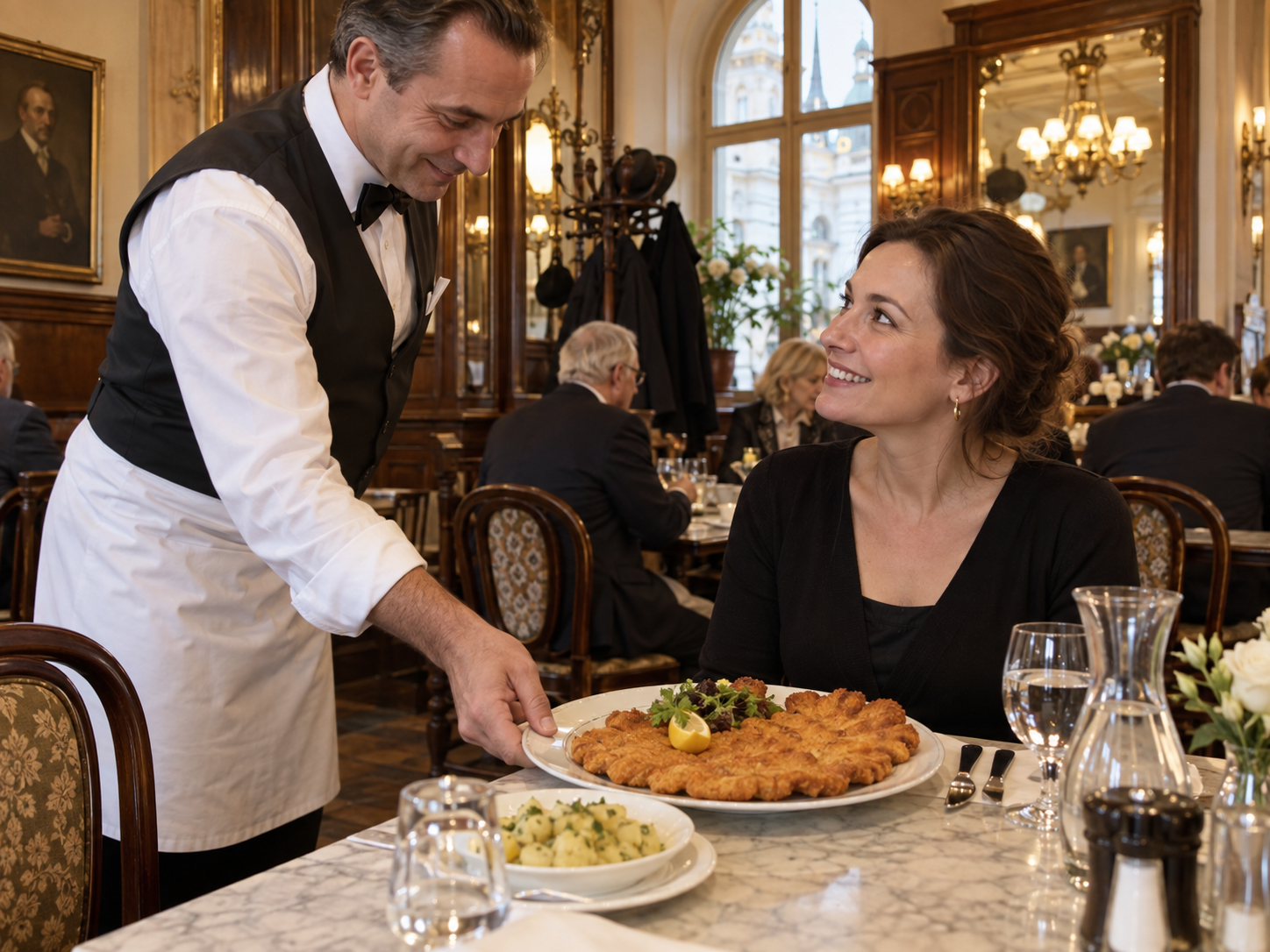
When it comes to serving, the Viennese are just as clear, and the rules are simple and worth honoring. A Wiener schnitzel is always served with a wedge of lemon, whose sharp juice, squeezed over the hot crust just before eating, cuts the richness of the fried veal perfectly and is considered essential rather than optional. That bright squeeze of lemon is as much a part of the dish as the crust itself. Skip it and the schnitzel can feel one-note and rich; add it and the whole plate comes alive, which is why every Viennese plate arrives with its wedge without your having to ask.
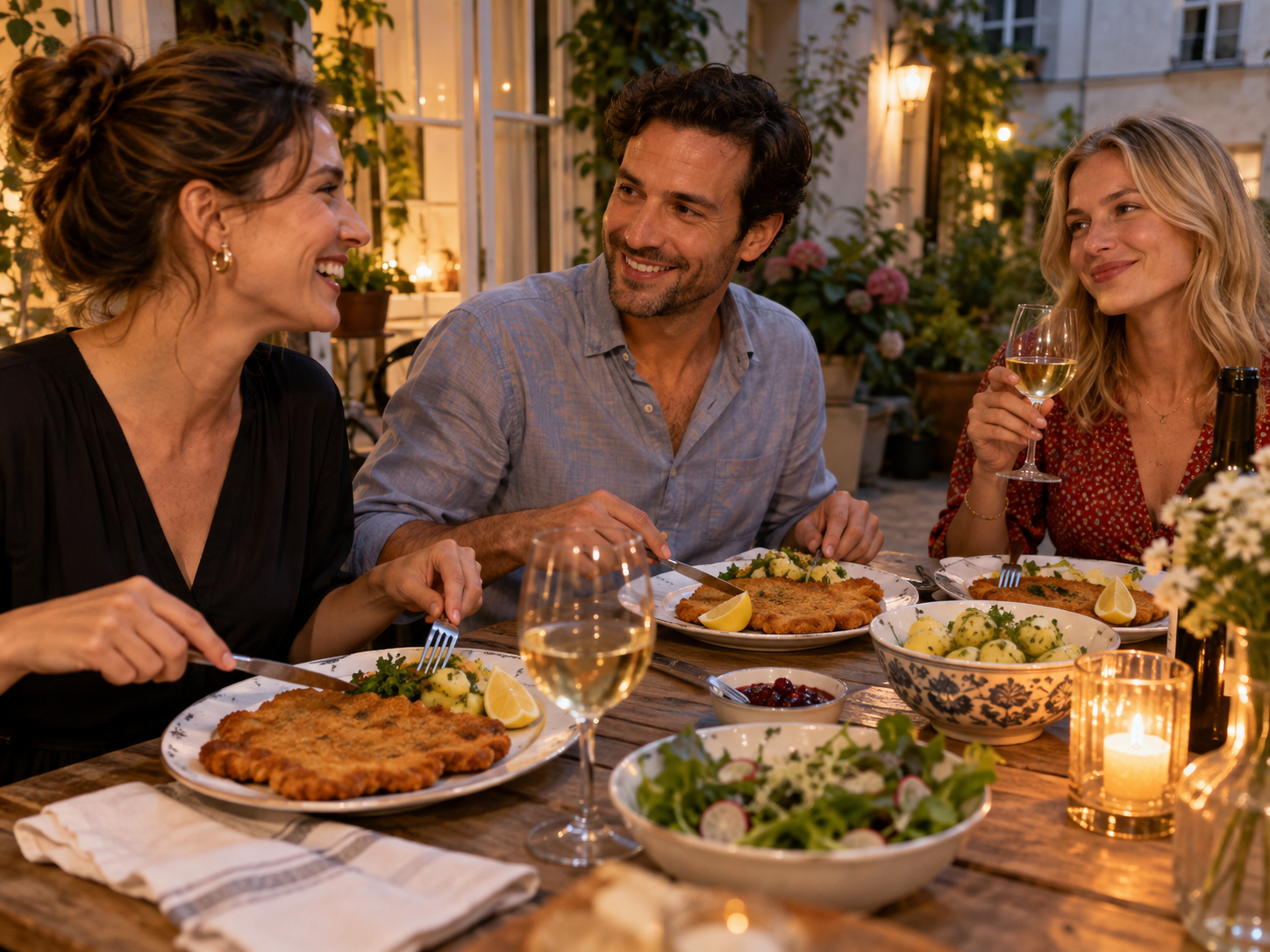
The traditional accompaniments are equally settled, and they lean toward the simple and the tart to balance the richness. Parsley potatoes, buttered and flecked with fresh parsley, are classic, as is a good tangy potato salad or a cool cucumber salad dressed with a little vinegar, and a spoonful of lingonberry jam on the side adds a sweet-sharp fruity note that suits the veal beautifully. What you will never find on a proper Wiener schnitzel is a sauce poured over it, which in Austria is considered something close to sacrilege, since a sauce would sog the precious crust that all that careful frying worked to create. The schnitzel is meant to arrive crisp and golden and dry-crusted, dressed with nothing more than lemon, its sides doing the work of balance. Everything on the plate exists to set off that crust rather than to smother it, which is the whole logic of how the Viennese serve it. Keep the plate simple and the crust unsauced, and you serve it as Vienna intends.
Making Wiener Schnitzel
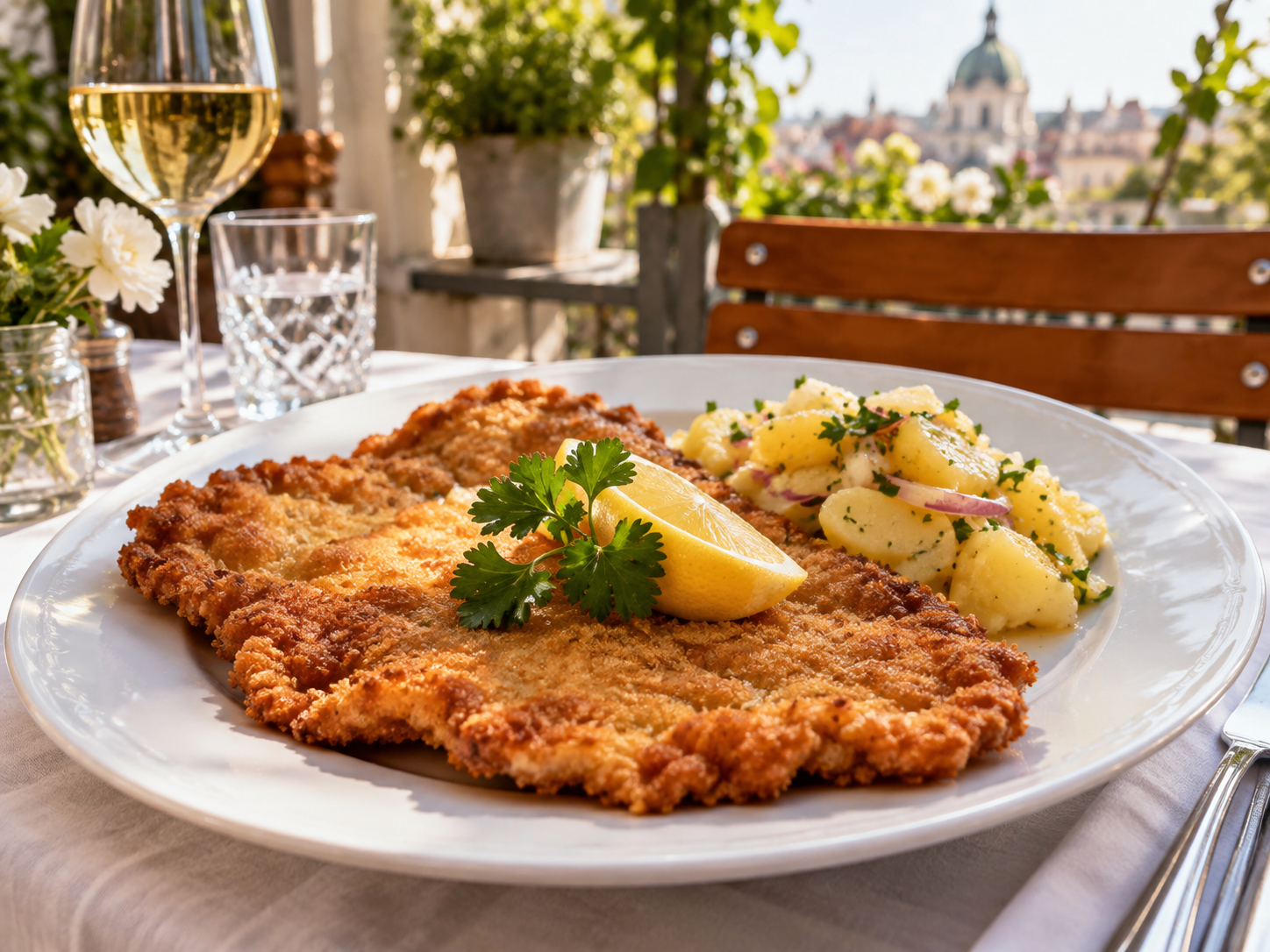
Here is a classic Wiener schnitzel, serving four. Use veal, pound it thin, and fry it in plenty of hot fat with a moving pan.
Ingredients
- 4 veal cutlets, about 150 g each, from the leg
- Salt
- 100 g all-purpose flour
- 2 eggs, lightly beaten with a splash of milk
- 150 g fine dry breadcrumbs
- Clarified butter, lard, or neutral oil, enough to fill the pan about 1 cm deep
- Lemon wedges, to serve
- Parsley potatoes, potato salad, or cucumber salad, and lingonberry jam, to serve
Instructions
- Place each veal cutlet between two sheets of plastic wrap and pound it evenly, working from the center outward, to about 4 mm thick. Season both sides with salt.
- Set up three shallow dishes: one with flour, one with the beaten egg and milk, and one with the fine breadcrumbs.
- Dredge each cutlet in flour and shake off the excess, dip it in the egg and let the excess drip off, then lay it in the breadcrumbs and coat it, without pressing the crumbs on.
- Heat a generous depth of fat in a large pan until hot, about 340 to 350 F or 170 C, so a breadcrumb sizzles instantly. There should be enough fat for the schnitzel to float.
- Lay a cutlet in the fat and immediately begin tilting and swirling the pan so the hot fat washes over the top. The crust should puff up within seconds.
- Fry for about 2 minutes, until deep golden underneath, then turn with a spatula, without piercing the coating, and fry the other side until golden.
- Lift out, drain briefly on paper, and serve at once with lemon wedges and your chosen sides.
And do not crowd the pan, working in batches and keeping the fried schnitzels warm in a low oven if you must, since a crowded pan is the surest way to lose the puff and the crispness that make the whole dish worth the effort.

About the Author: Ruben, co-founder of Gamintraveler.com since 2014, is a seasoned traveler from Spain who has explored over 100 countries since 2009. Known for his extensive travel adventures across South America, Europe, the US, Australia, New Zealand, Asia, and Africa, Ruben combines his passion for adventurous yet sustainable living with his love for cycling, highlighted by his remarkable 5-month bicycle journey from Spain to Norway. He currently resides in Spain, where he continues sharing his travel experiences with his partner, Rachel, and their son, Han.