
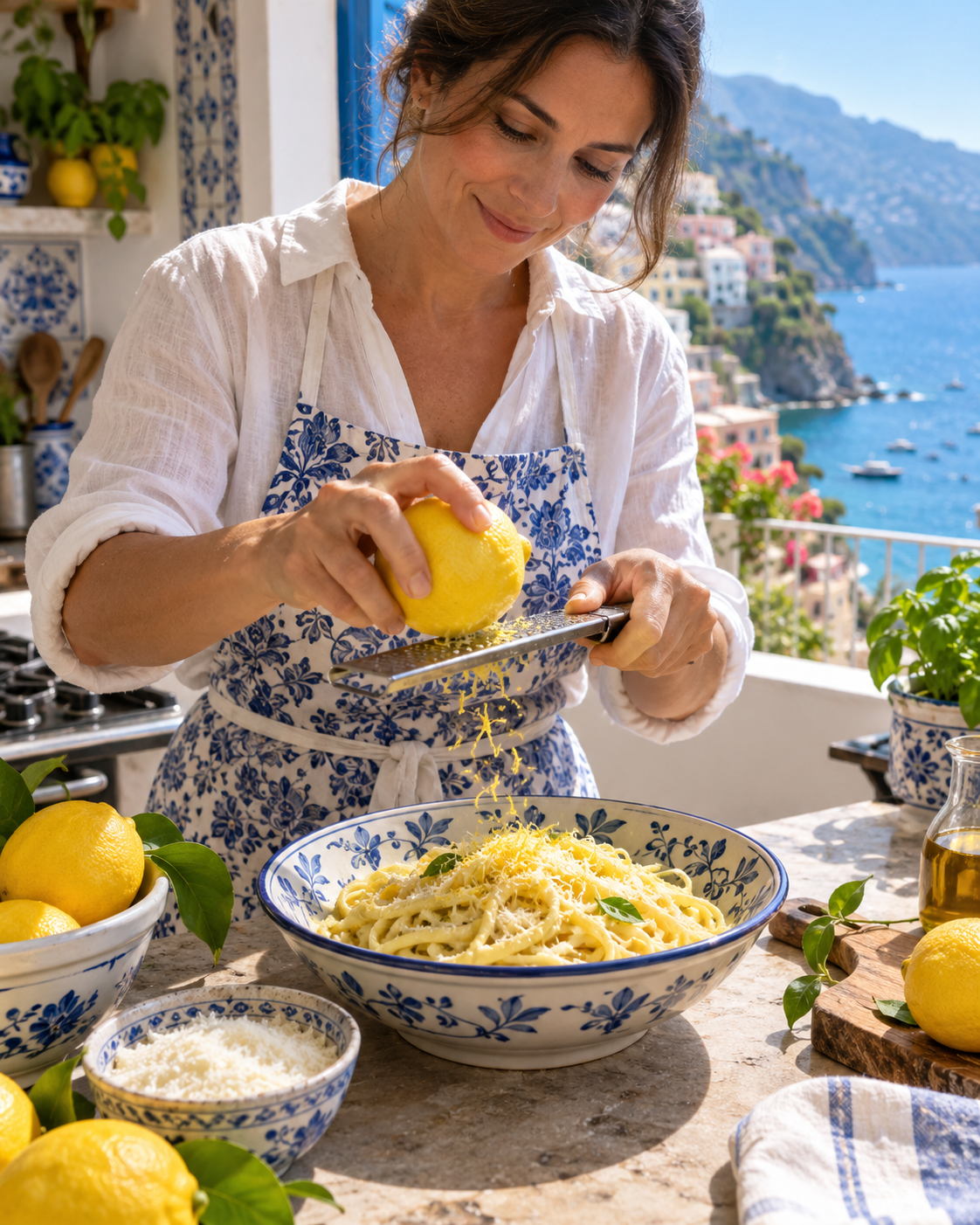
Some of the best food in the world is also the simplest, and there is no better proof than a plate of pasta al limone. This is the bright, silky lemon pasta of the Amalfi Coast, where the lemons grow the size of your fist and the cooking is built on letting a few perfect ingredients shine rather than piling on more.
It is the kind of dish that could only come from a place confident enough in its produce to keep things simple, and generous enough to share the trick freely with anyone willing to reach for a lemon. It takes essentially three things beyond the pasta itself, lemon, cheese, and butter, and yet it produces a sauce so glossy and creamy that people assume there must be cream hiding in it. There is not a drop. On a tired Tuesday, when you want something that feels like a small holiday but cannot face a project, this is the dish, ready in about fifteen minutes and tasting unmistakably of sunshine. It is living proof that you do not need much at all to eat wonderfully, only the right few things handled with a little care.
There is a whole philosophy of Italian cooking in that idea, the conviction that the finest meals come from restraint rather than abundance, and this dish may be its purest expression.
What follows is how it turns creamy without any cream, why it is the perfect weeknight rescue, the one mistake that trips people up, and exactly how to make it.
Creamy Without a Drop of Cream
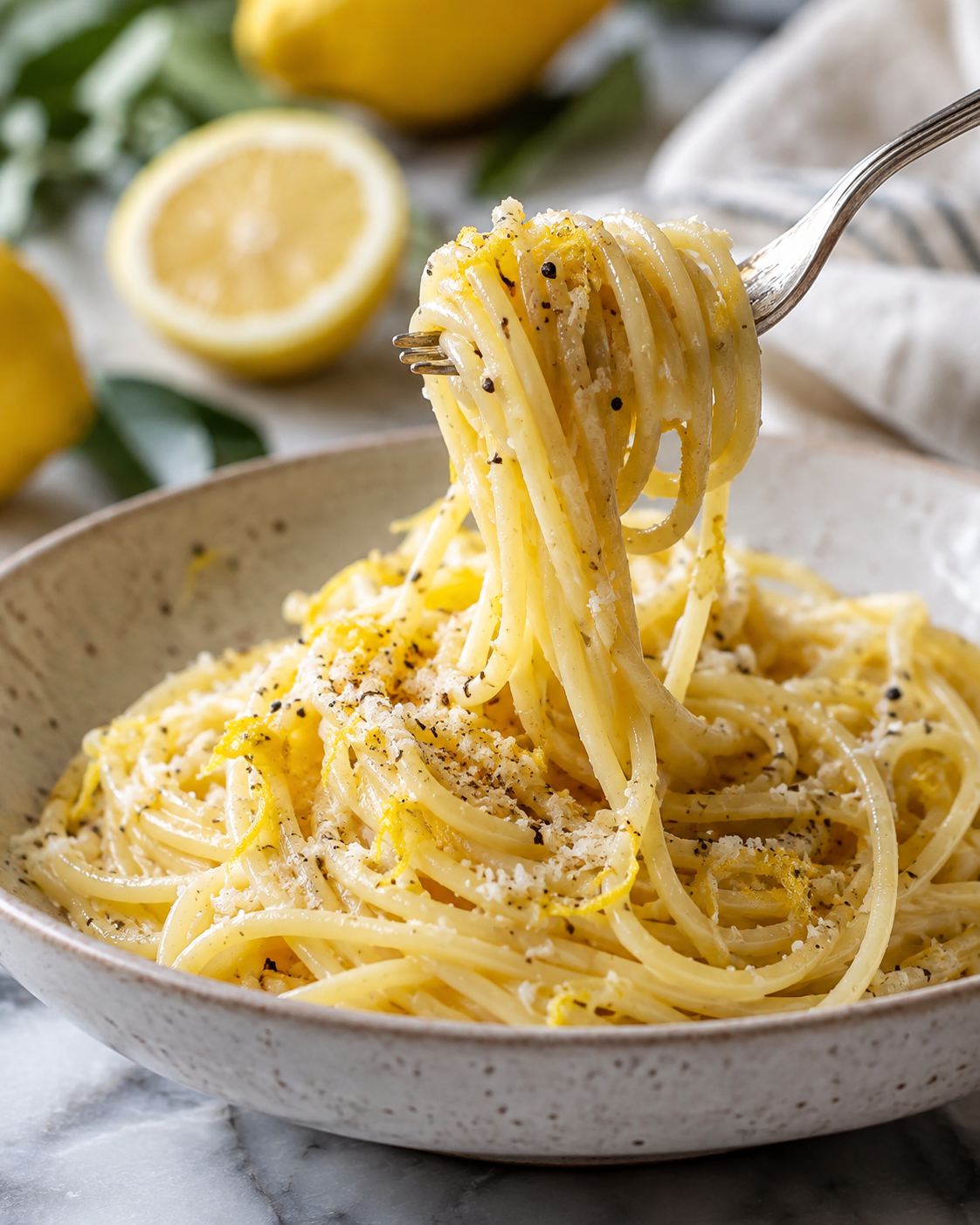
The first thing that surprises people about pasta al limone is that its luscious, clinging sauce contains no cream at all, and understanding why is the key to the whole dish. The silkiness comes instead from emulsification, the same small kitchen magic that makes so many great Italian pastas work. When you toss the hot pasta with butter, finely grated cheese, a little lemon, and a splash of the starchy water the pasta cooked in, those ingredients bind together into a smooth, glossy sauce that coats every strand, rich and creamy in texture without a drop of actual cream.
That starchy pasta water is the secret ingredient, the thing that turns fat and cheese and acid into a unified sauce rather than a greasy, clumpy mess. The starch released by the pasta as it cooks acts as the bridge, letting the butter and the cheese and the lemon juice emulsify into something velvety, exactly the way they refuse to do with plain water. It is worth saving far more of that water than you think you need, since it costs nothing and there is no worse moment than reaching for the ladle to loosen a stiffening sauce and finding the pot already drained. It is a genuinely clever piece of traditional cooking, using nothing but the pasta’s own cooking liquid to build a luxurious sauce from humble parts, and it is why the authentic version needs no cream and is all the better for it. Cream would only mute the bright lemon and weigh the dish down. The emulsion keeps it light, silky, and singing with citrus.
Once you have watched a handful of grated cheese and a ladle of cloudy water turn into a glossy sauce before your eyes, you understand why Italians guard the humble pot of pasta water so fiercely, and you never pour it all down the drain again.
Amalfi in Fifteen Minutes

The reason to keep this recipe close is that it is the ultimate weeknight rescue, a dish that feels special but demands almost nothing of you. From the moment the water boils to the plate on the table is roughly fifteen minutes, and the ingredients are the kind of thing most kitchens already have, pasta, a lemon, some butter, a wedge of cheese. There is no long list to shop for, no complicated technique, no hours of simmering, just a quick, bright, satisfying plate at the end of a long day.
What makes it more than merely convenient is how good it tastes for the effort, because a well-made pasta al limone genuinely tastes like a little trip to the Italian coast. The fresh lemon lifts and brightens everything, the cheese and butter make it rich and comforting, and the whole thing lands somewhere pleasingly between homey and elegant, far above what fifteen minutes of work has any right to produce.
It is smart enough to serve to guests and easy enough to throw together for one, which is a rare and useful combination in a recipe. On the kind of tired Tuesday when takeout beckons simply because you are worn out, this is the dish that talks you out of it, since it is faster than delivery, cheaper, and tastes like something you would pay for at a good restaurant. By the time a delivery order would even arrive, you could be sitting down to a bowl of this, and feeling rather pleased with yourself for having made it. It is the definition of a high-reward, low-effort meal, and once it is in your repertoire it never leaves. It becomes one of those quiet dependable dishes you turn to without even thinking, the answer to the question of what to cook when you are too tired to answer it at all.
The One Thing That Goes Wrong
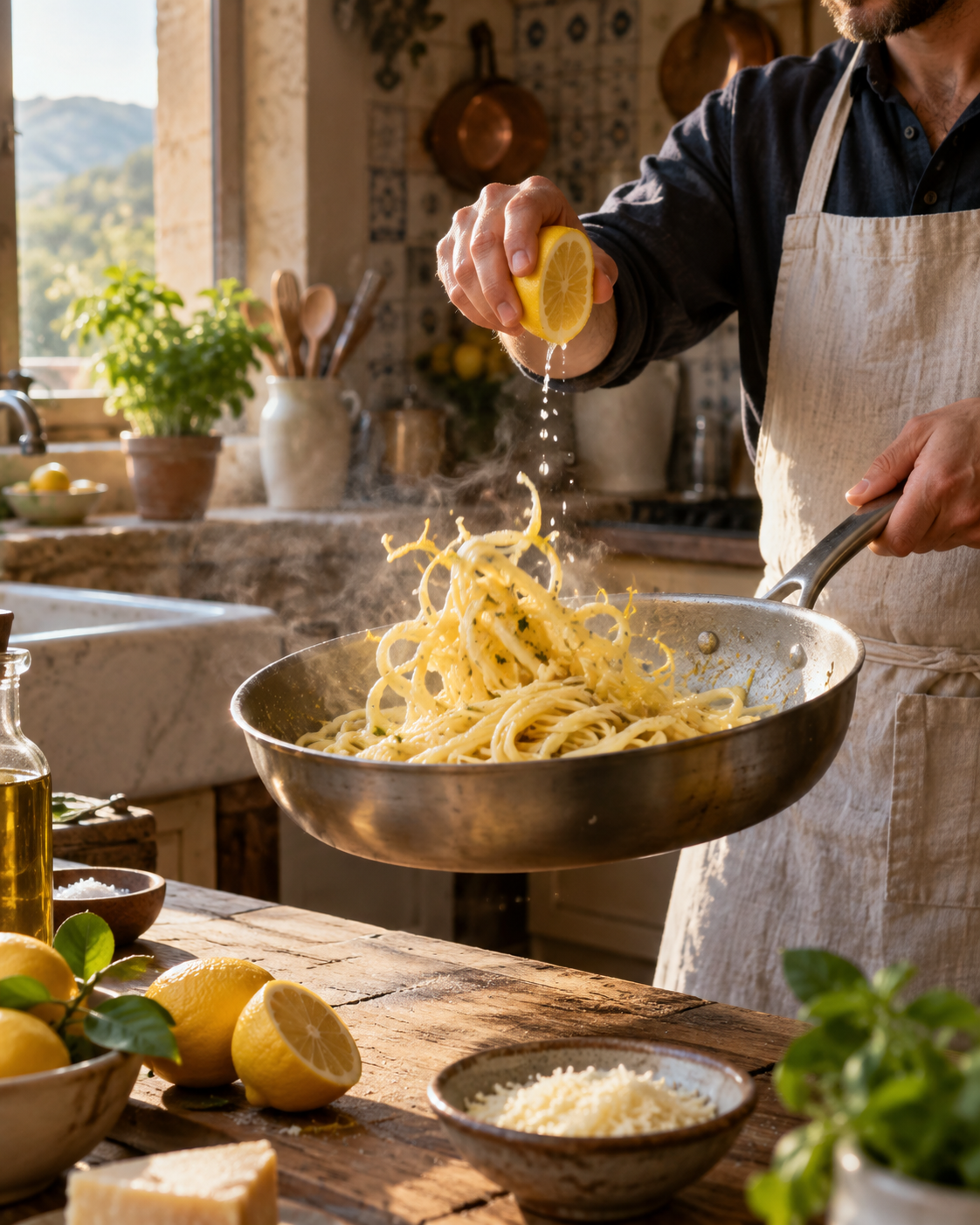
For all its simplicity, pasta al limone does have one common pitfall, and knowing it is the difference between a silky sauce and a grainy, clumpy one. The trouble almost always comes from the cheese, and specifically from adding it to a pan that is too hot or from using the wrong cheese. If you tip grated cheese into a screaming-hot pan, or stir it in over high heat, the cheese seizes and clumps instead of melting smoothly into the sauce, leaving you with stringy lumps rather than velvet. It is the single most common way the dish goes wrong, and it happens fast, which is why so many first attempts end in a grainy disappointment that puts people off trying again. The fix is to build the sauce off the heat or over very low heat, tossing the pasta with the cheese and pasta water so it emulsifies gently rather than shocking it.
Two smaller points complete the technique. Use real cheese that you grate yourself, since pre-grated cheese is coated with anti-caking agents that stop it melting cleanly and will sabotage your sauce, and grate it finely so it disappears into the emulsion. And go carefully with the lemon juice, because the biggest flavor mistake is drowning the dish in it until it turns sharp and sour. The zest is where the real lemon magic lives, all fragrance and brightness, so lean on the zest for flavor and use the juice with a lighter hand, just enough to lift the dish without turning it into lemonade. Get those three things right, gentle heat, fresh-grated cheese, and a light touch with the juice, and it comes together perfectly every time. None of them is difficult, and none takes any extra time, they are simply the small pieces of know-how that separate a silky plate from a disappointing one, and once you have them they become second nature.
Lemons Worth the Whole Dish
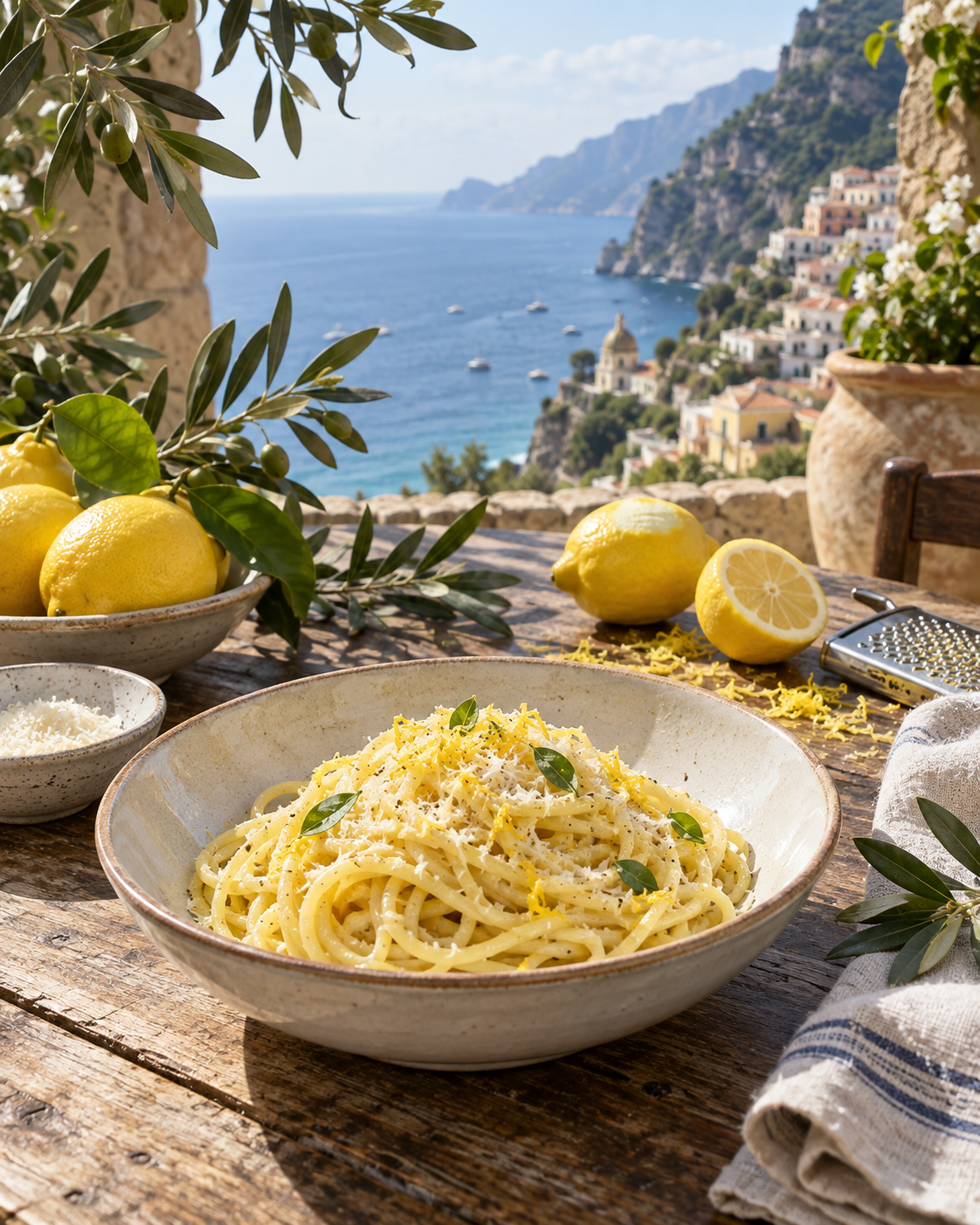
Since the entire dish rests on so few ingredients, each one genuinely matters, and none more than the lemon itself. On the Amalfi Coast this pasta is made with the region’s famous lemons, the huge, thick-skinned, intensely fragrant fruit that grows in terraced groves above the sea and perfumes the air of every town along that stretch of coast. Those lemons are sweeter and more aromatic than the ordinary supermarket kind, which is part of why the dish tastes so extraordinary in its home, but you do not need to fly to Italy to make a wonderful version.
What you do need is a good, fresh, and ideally unwaxed lemon, because so much of this dish is carried by the zest, and you cannot get clean, fragrant zest from a tired or heavily waxed fruit. If you can find Meyer lemons, with their softer, slightly sweeter flavor, they are a lovely choice, but any bright, fresh lemon will do the job beautifully as long as you treat it with respect. What matters far more than the variety is that the fruit is fresh and fragrant, so give it a sniff and a squeeze at the shop and pick the one that smells most alive. Wash it well, zest it finely so you catch only the fragrant yellow and none of the bitter white pith beneath, and use that zest generously, since it is the heart and soul of the whole plate. The juice plays a supporting role, but the zest is the star, and a good lemon, fully used, is what turns a bowl of buttery pasta into something that actually tastes of the Amalfi sun.
Making Pasta al Limone

Here is a classic pasta al limone, serving four, silky and cream-free. Reserve plenty of pasta water, and build the sauce off the heat.
Ingredients
- 400 g spaghetti or linguine
- 4 tablespoons butter
- Zest of 2 lemons and juice of 1
- 100 g Parmigiano-Reggiano, freshly and finely grated, plus more to serve
- Salt and plenty of black pepper
- Fresh basil, optional, to serve
Instructions
- Bring a large pot of salted water to a boil and cook the pasta until al dente. Before draining, reserve at least a large cupful of the starchy pasta water.
- While the pasta cooks, melt the butter gently in a wide pan over low heat, add the lemon zest, and let it warm for a minute to release its fragrance without browning.
- Add a good splash of the reserved pasta water to the butter and let it come together into a light, glossy base.
- Take the pan off the heat. Add the drained pasta along with the grated Parmigiano and the lemon juice, and toss vigorously and continuously.
- Keep tossing, adding a little more pasta water as needed, until the cheese melts into a smooth, silky sauce that clings to every strand. Do this off the heat so the cheese does not clump.
- Season with salt and a generous amount of black pepper, and taste, adding a touch more lemon juice only if it needs it.
- Serve at once, finished with extra grated cheese, a little more zest, and a few basil leaves if you like.
And do keep it simple the first time before you start adding things, since the pure version of lemon, cheese, and butter is the whole point, though once you know it you can scatter in peas, a handful of shrimp, or a little chili on the tired Tuesdays when you want a bit more.

About the Author: Ruben, co-founder of Gamintraveler.com since 2014, is a seasoned traveler from Spain who has explored over 100 countries since 2009. Known for his extensive travel adventures across South America, Europe, the US, Australia, New Zealand, Asia, and Africa, Ruben combines his passion for adventurous yet sustainable living with his love for cycling, highlighted by his remarkable 5-month bicycle journey from Spain to Norway. He currently resides in Spain, where he continues sharing his travel experiences with his partner, Rachel, and their son, Han.