
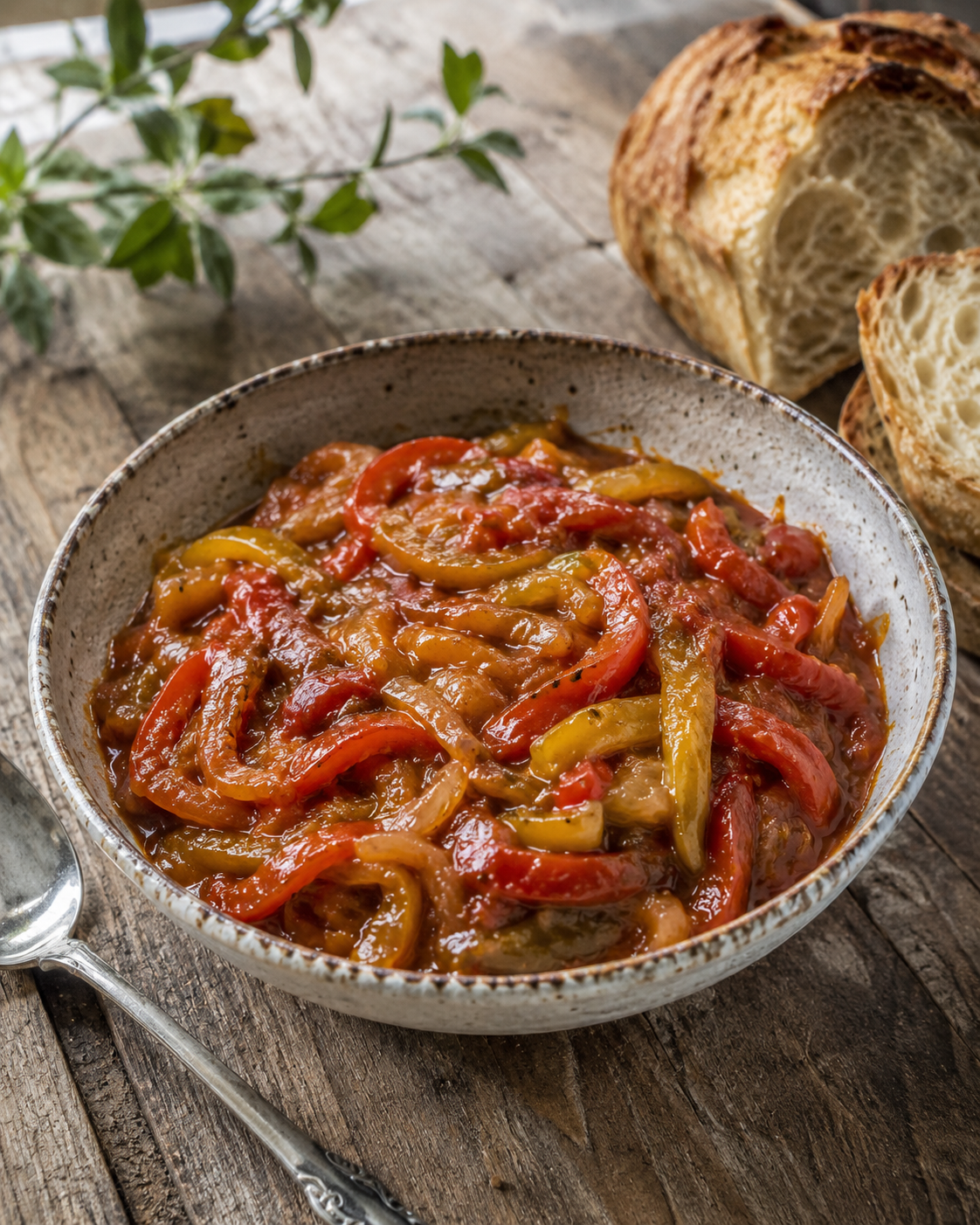
When the markets fill with sweet peppers at the end of summer, glossy and cheap and piled high in red and yellow and orange, Italian cooks know exactly what to do with them. They make peperonata, the slow-stewed pepper dish that turns a glut of cheap late-season peppers into something silky, sweet, and deeply savory, meltingly soft and glowing with olive oil. It is one of the great humble dishes of southern Italy, the kind of thing a grandmother makes in a big pan and everyone eats all week, warm or cold, on bread or beside meat or straight from the fridge with a fork. And September, when the peppers are at their sweetest and most abundant, is exactly when it wants to be made.
What follows is what peperonata actually is, the small sweet-and-sour secret that lifts it, which peppers to use, and a simple recipe that makes the most of the season’s best.
What Peperonata Actually Is
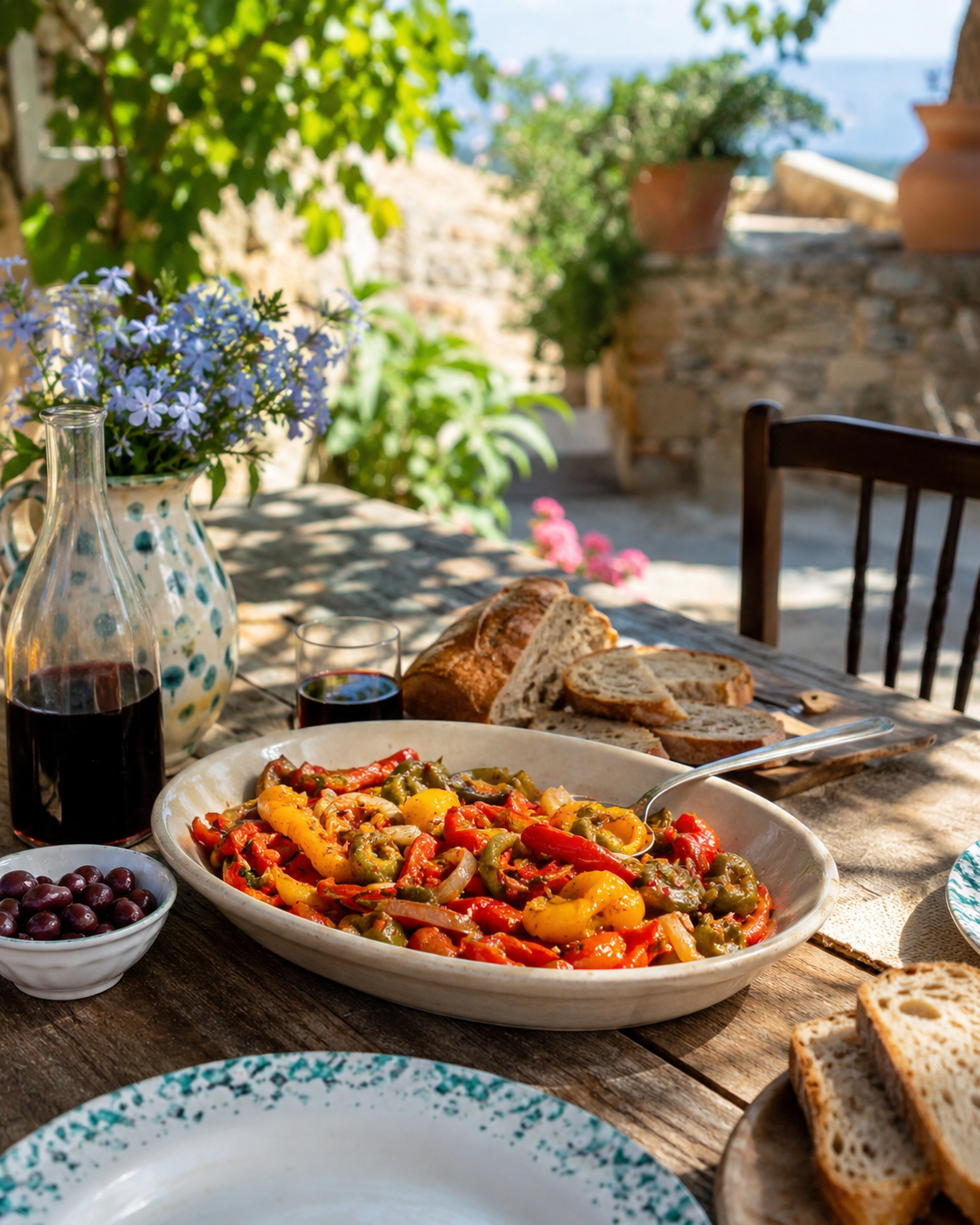
Peperonata is, at its heart, a stew of sweet peppers cooked slowly with onions, tomatoes, and good olive oil until everything collapses into a soft, sweet, silky tangle. The name comes straight from peperone, the Italian word for bell pepper, and the dish is really just the celebration of that one vegetable, coaxed by slow cooking into far more than the sum of its parts. It is southern Italian in origin, beloved across Sicily, Calabria, and Campania where peppers thrive in the Mediterranean sun, though today you will find it made all over Italy, with every region and nearly every family doing it a little differently.
The magic is entirely in the slow cooking, which is what separates a real peperonata from a quick pan of fried peppers. Given enough gentle time, the peppers release their natural sugars and turn genuinely sweet, the onions soften and caramelize, and the tomatoes melt down into a light sauce that binds the whole thing together, so what begins as a pan of raw crunchy vegetables ends as something almost jammy. It is a classic of cucina povera, Italian poor cooking, the tradition of making something wonderful from a handful of cheap ingredients and a little patience, and it asks almost nothing of you except that you do not rush it. That humility is part of its charm, since there is nothing luxurious in the shopping list and no technique to master, only good peppers, gentle heat, and time, and yet the result tastes far richer and more considered than its simple parts would ever suggest.
Why September Peppers Are Made for This
There is a reason this is a late-summer and early-autumn dish, and it comes down to the peppers themselves. Sweet peppers are at their peak in the warm months and into September, when they are ripe, sweet, cheap, and everywhere, and a dish built entirely around the pepper naturally wants to be made when the pepper is at its very best. A peperonata made from tired winter peppers is a pale thing compared to one made from the sweet, sun-ripened peppers of September, so this is genuinely a seasonal pleasure worth catching while it lasts.
It is also, quietly, a way of dealing with abundance, since September is exactly when anyone with a garden or a good market is drowning in peppers and looking for something to do with them all. Peperonata is the answer, because it uses a lot of peppers at once, keeps beautifully for days in the fridge, and only improves as it sits, so a big pan made on a Sunday feeds you in a dozen small ways through the week.
That combination of peak flavor and practical abundance is why the dish belongs to this moment in the year, and why Italian kitchens turn to it the moment the pepper harvest comes in. It is one of those recipes invented not in a restaurant but in a home, by cooks facing a basket of ripe peppers and the good problem of what to do with them, which is exactly why it has lasted so long and travels so well to any kitchen with the same happy surplus.
The Sweet-and-Sour Secret
The one detail that separates a memorable peperonata from a merely nice one is a classic Italian trick called agrodolce, meaning sweet and sour. Near the end of cooking, many traditional versions stir in a splash of vinegar and a small pinch of sugar. This little addition transforms the dish, because the vinegar cuts through the richness and the sweetness of the peppers while the sugar rounds it all out, giving the finished stew a gentle, balanced tang that keeps it from being one-note.
It is a small thing that makes a real difference, and it is worth not skipping even though the dish is perfectly edible without it. The sweetness of slow-cooked peppers can verge on cloying if left entirely alone, and that bright note of vinegar at the end is exactly what keeps each forkful interesting, lifting the whole pan and making it taste alive rather than merely soft and sweet. Use a good white wine vinegar, add it near the end so it keeps its brightness, and taste as you go, since the balance between the sweet and the sour is a personal thing and the best peperonata is tuned to your own palate. That single agrodolce touch is the signature of a cook who knows the dish.
The Peppers to Use
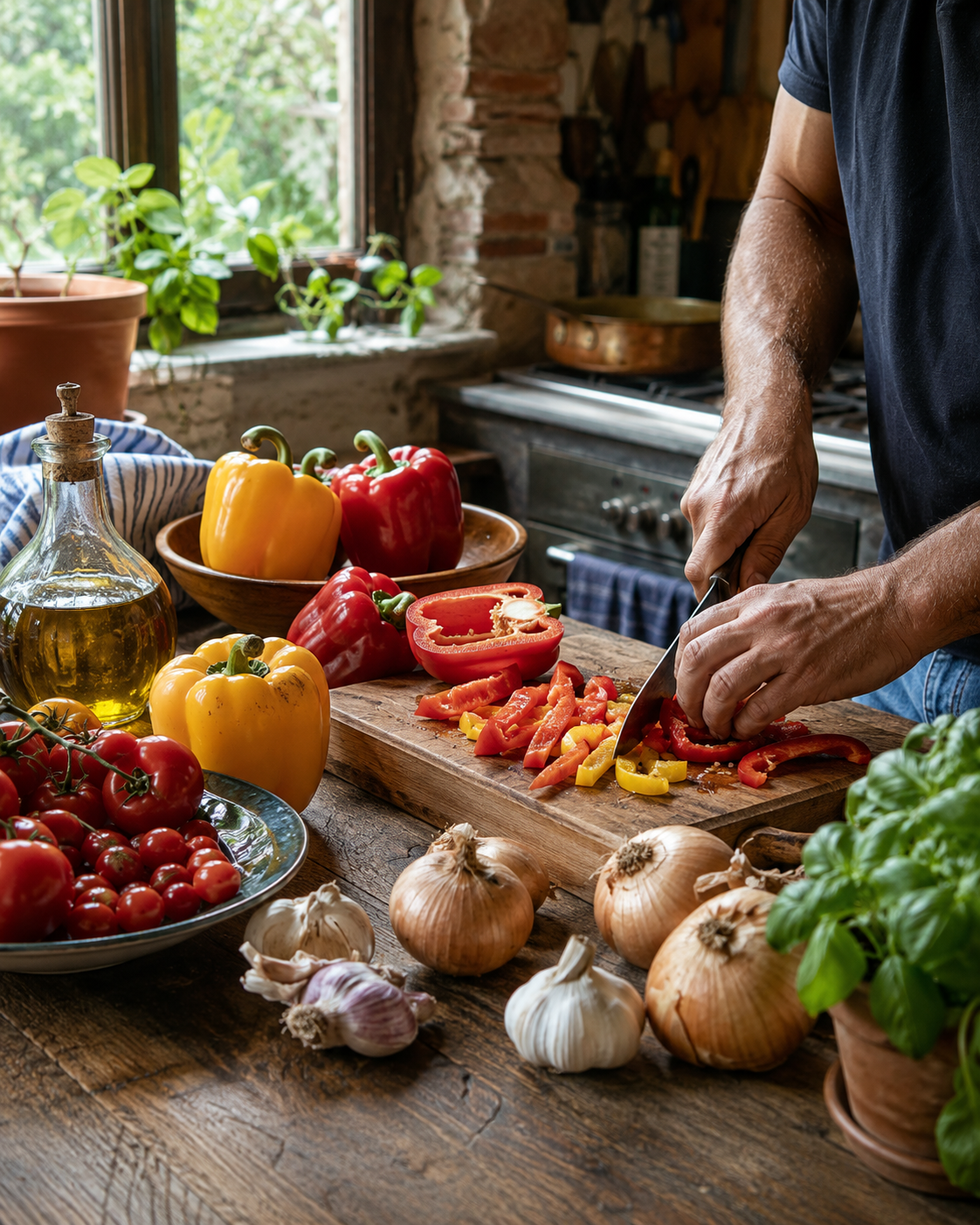
Getting the peppers right is the only choice that really matters, and the rule is simple: use red, yellow, and orange peppers, and leave the green ones out. Those ripe, colorful peppers are sweet and full-flavored, which is exactly what the dish is built on, and a mix of red and yellow and orange also makes the finished peperonata as beautiful to look at as it is to eat, all glowing warm colors in the pan.
Green peppers are simply unripe peppers, and they carry a bitter, grassy edge that works against everything peperonata is trying to be, so while a single green pepper will not ruin the dish, a pan built on them will taste sharp and vegetal rather than sweet and mellow. Reach for the reddest, ripest peppers you can find, since red are the sweetest of all, and choose ones that feel heavy for their size with smooth, unwrinkled skin, which is the sign of a fresh, juicy pepper. Slice them into strips, not too thin, because they shrink as they cook and you want them to keep some presence in the finished stew rather than disappearing entirely. Good peppers, sliced generously, are ninety percent of a good peperonata.
The Many Ways to Eat It
Part of what makes peperonata so useful to have in the fridge is that it is not one dish but a dozen, depending on how you serve it. In its home region it began as a contorno, a side dish for grilled or roasted meats, and it remains perfect in that role, its sweet softness cutting beautifully against a piece of grilled chicken, sausage, or steak. But that is only the beginning of what it can do.
Warm or at room temperature, it makes a lovely antipasto or starter, especially spooned onto toasted bruschetta with perhaps a little ricotta, and it is wonderful folded into a frittata or served alongside eggs at any time of day. It slips into a sandwich with cold cuts, tops a homemade pizza, and, tossed with a little pasta and its own oily juices, becomes a genuine dinner in its own right. It is equally at home hot from the pan or cold from the fridge, which is why a single batch stretches so far, and why Italians treat it less as a recipe than as a staple to keep on hand. Make it once and you will find yourself reaching for it all week in a different guise each time.
Getting It Right
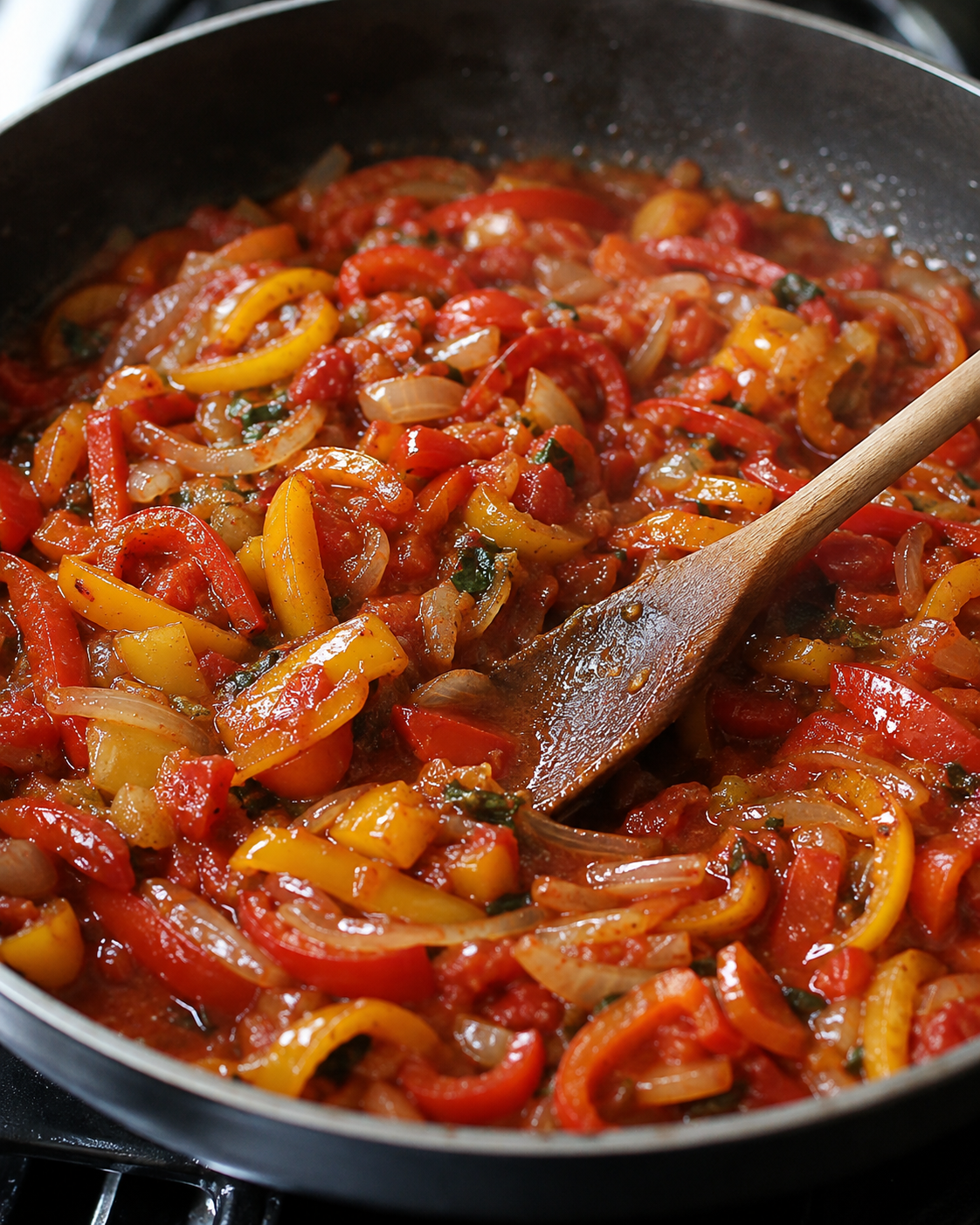
Peperonata is nearly impossible to fail, but a few small habits make it genuinely excellent. The first and most important is patience, because this is a dish that rewards slow, gentle cooking above all else, and the single most common mistake is rushing it over high heat, which fries the peppers rather than stewing them and leaves them tasting sharp instead of sweet. Keep the heat gentle, give it time, and let the vegetables soften and sweeten at their own pace, which is the whole secret.
The second is to season and taste as you go, especially at the end with the salt and the agrodolce, since the balance is everything in a dish this simple. Beyond that, feel free to make it your own with the regional touches that Italian families add. A spoonful of capers or a handful of olives brings a briny Sicilian note, a few basil leaves torn in at the end lift it with freshness, and some cooks add a cubed potato partway through to make it more of a meal. None of these are required and the plain version is glorious, but they are the small personal flourishes that turn a good peperonata into your peperonata. Cook it slow, taste it often, and finish it bright, and you cannot go far wrong.
Making the Peperonata
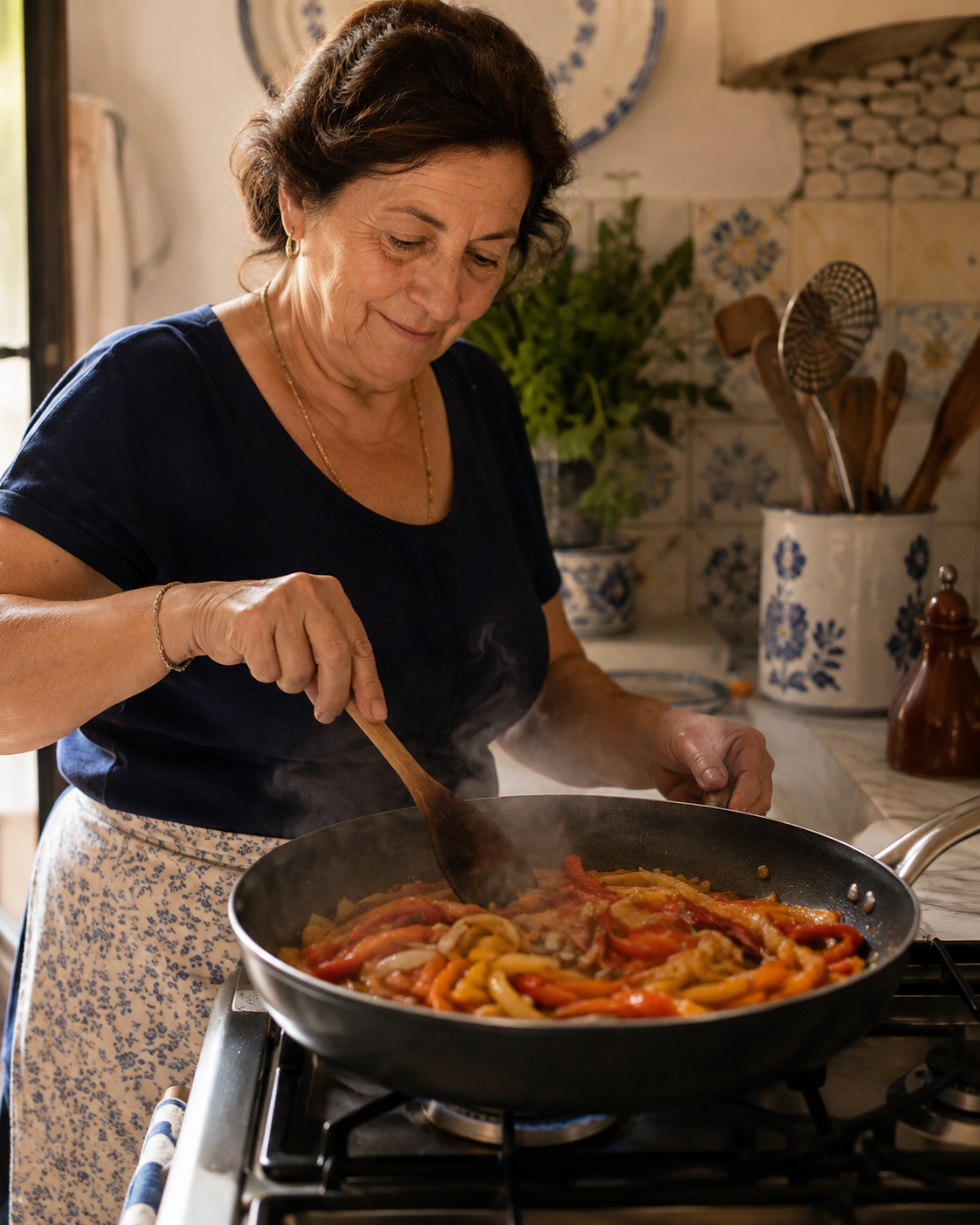
Here is a simple, traditional peperonata that makes the most of September’s sweet peppers. It serves four to six as a side and keeps well for days, tasting even better the next day.
Ingredients
- 6 sweet peppers (red, yellow, and orange), about 1 kg, roughly 2.2 lb, sliced into strips
- 1 large onion, thinly sliced
- 2 garlic cloves, sliced
- 400 g tomato passata or chopped tomatoes, about 1 3/4 cups
- 5 tablespoons extra virgin olive oil
- 1 tablespoon white wine vinegar
- 1 teaspoon sugar
- Salt and black pepper, to taste
- A few basil leaves, optional
- 1 tablespoon capers or a handful of olives, optional
Instructions
- Warm the olive oil in a large, heavy pan over medium heat. Add the sliced onion with a pinch of salt and cook gently for about 8 minutes, until soft and translucent.
- Add the sliced peppers and the garlic, stir to coat in the oil, and cook over medium-low heat for about 10 minutes, stirring now and then, until the peppers begin to soften.
- Pour in the tomato passata and a splash of water, season with salt and pepper, and add the capers or olives if using. Stir well, lower the heat, and cover.
- Simmer gently for about 25 to 30 minutes, stirring occasionally, until the peppers are meltingly soft and the sauce has thickened. Add a little water if it gets too dry.
- Stir in the vinegar and the sugar, then cook uncovered for another 5 minutes to let the flavors come together and the liquid reduce a little. Taste and adjust the salt, sugar, and vinegar to balance.
- Take off the heat and tear in the basil if using. Serve warm, at room temperature, or cold, with crusty bread alongside.
And of course the pan is yours to shape, since every Italian family makes peperonata a little differently, sweeter or sharper, with capers or olives or neither, so treat these amounts as a starting point and cook it the way your own table likes it best.

About the Author: Ruben, co-founder of Gamintraveler.com since 2014, is a seasoned traveler from Spain who has explored over 100 countries since 2009. Known for his extensive travel adventures across South America, Europe, the US, Australia, New Zealand, Asia, and Africa, Ruben combines his passion for adventurous yet sustainable living with his love for cycling, highlighted by his remarkable 5-month bicycle journey from Spain to Norway. He currently resides in Spain, where he continues sharing his travel experiences with his partner, Rachel, and their son, Han.