
Some of the best things in the kitchen were never planned, and few prove it better than the tarte Tatin, France’s beloved upside-down apple tart. The story goes that it was born of a mistake in a small country hotel more than a century ago, when a distracted cook left her apples caramelizing too long and, rather than throw them out, laid the pastry on top and shoved the whole pan in the oven. When she turned it out, the apples had become something glorious, glossy and deep amber and melting, and an accidental dessert became one of the classics of French cooking. It is still named after the hotel and the sisters who ran it, and it is still made the same upside-down way, apples below and pastry above, flipped at the last moment to reveal the caramel.
What follows is the story of how a village tart conquered Paris, what actually makes a tarte Tatin work, and a recipe that is far easier to pull off than its elegant reputation suggests.
The Accident at the Hotel Tatin
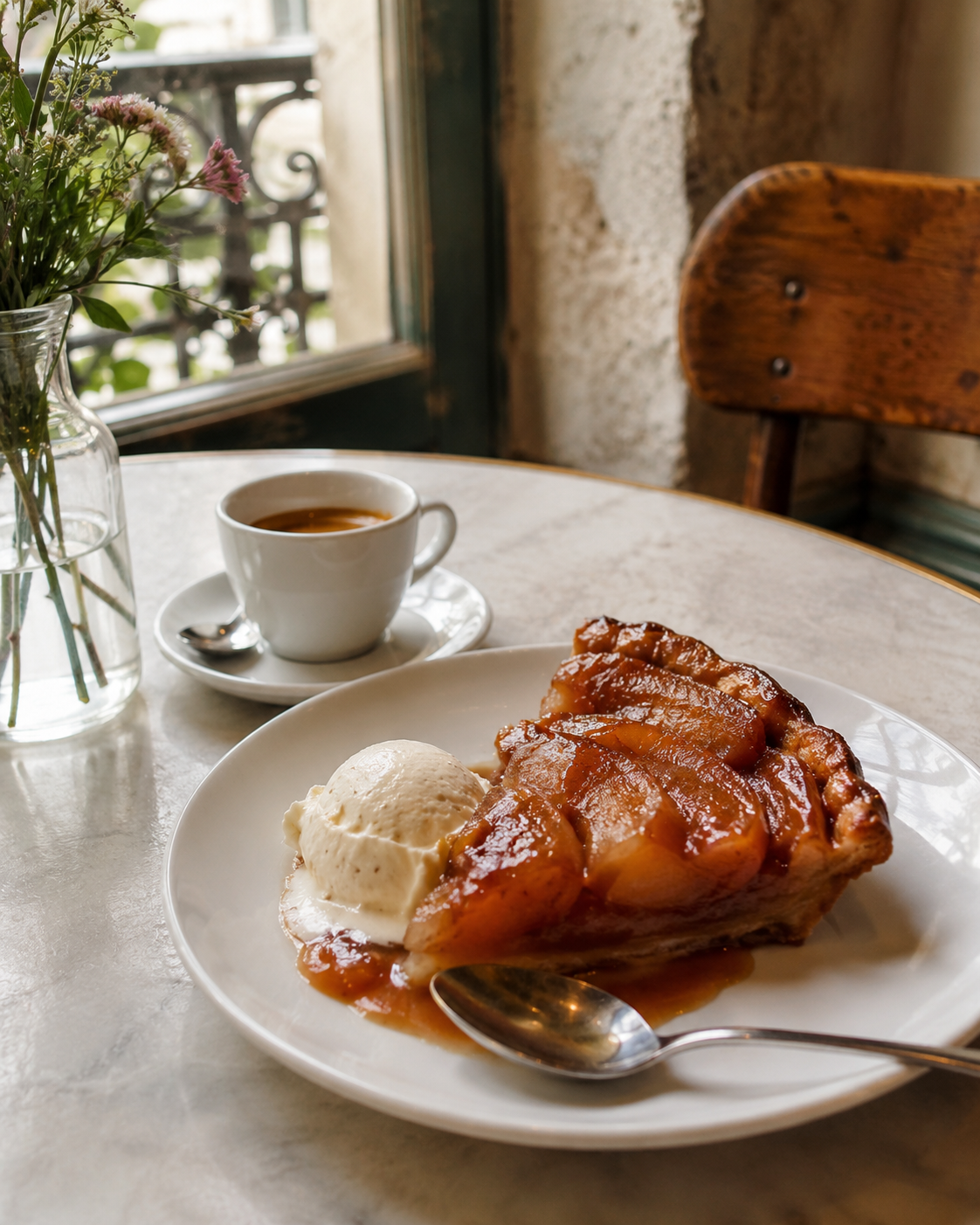
The tart comes from the 1880s and a small railway hotel called the Hotel Tatin, in the sleepy village of Lamotte-Beuvron, deep in the wooded, marshy Sologne region of France’s Loire Valley, about a hundred miles south of Paris. The hotel was run by two unmarried sisters, Stephanie and Caroline Tatin, who had taken it over after their father died, with Caroline managing the front of house and the books while Stephanie ruled the kitchen, turning out meals for the hunters and travelers who stopped at the inn across from the station.
The most popular version of the legend places the accident during a busy hunting season, when Stephanie, overworked and by many accounts a little scattered, was making her well-known apple tart and left the apples cooking in butter and sugar for far too long. Smelling the burning, and with guests waiting and no time to start again, she made a quick decision that turned a ruined pan into a masterpiece. She laid the pastry straight on top of the caramelizing apples and put the whole thing in the oven to finish, then turned it out upside down to serve, and the guests were so delighted with the deep, jammy, caramelized result that the mistake became the hotel’s signature dish. Whether the story is exactly true hardly matters now, because the hotel certainly existed, the sisters certainly made a famous apple tart, and the dessert that bears their name has never left the French table since.
How a Village Tart Conquered Paris
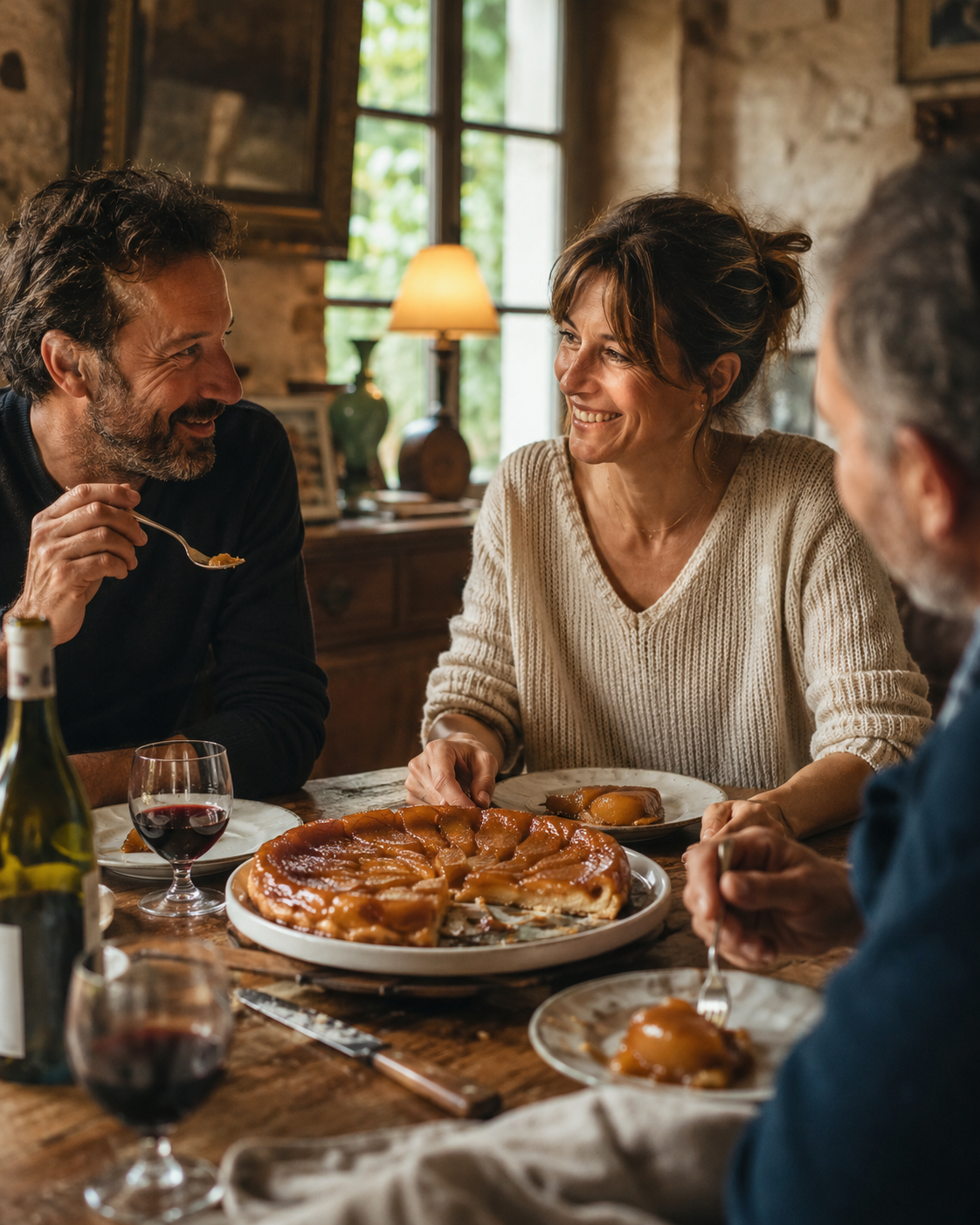
A dish born in a rural inn might have stayed a local curiosity, but the tarte Tatin had a lucky champion. Word of the extraordinary apple tart reached the great gastronome Curnonsky, the most famous food writer of his day, who declared it a marvel and helped carry its fame toward the capital. From there it caught the attention of Maxim’s, the legendary Paris restaurant, whose owner supposedly became determined to get his hands on the sisters’ secret recipe by whatever means necessary.
The tale that followed is the kind of thing that turns a dessert into a legend, because Maxim’s is said to have sent a cook disguised as a gardener to the Hotel Tatin to spy out the method and steal it back to Paris. True or embellished, the story captures how badly the city wanted this country tart, and once Maxim’s put it on the menu, the tarte Tatin became a sensation and then a permanent classic of French cuisine.
From a distracted afternoon in a village kitchen to the tables of the most fashionable restaurant in Paris, the tart made a journey few dishes ever manage, and it did it all on the strength of a happy accident and a pan of overcooked apples. The Hotel Tatin still stands in Lamotte-Beuvron to this day, still serving the tart that made its name, so the whole story is not merely a legend attached to a recipe but a place you could actually visit, order the dessert, and taste the direct descendant of that first rescued pan.
What Makes a Tarte Tatin
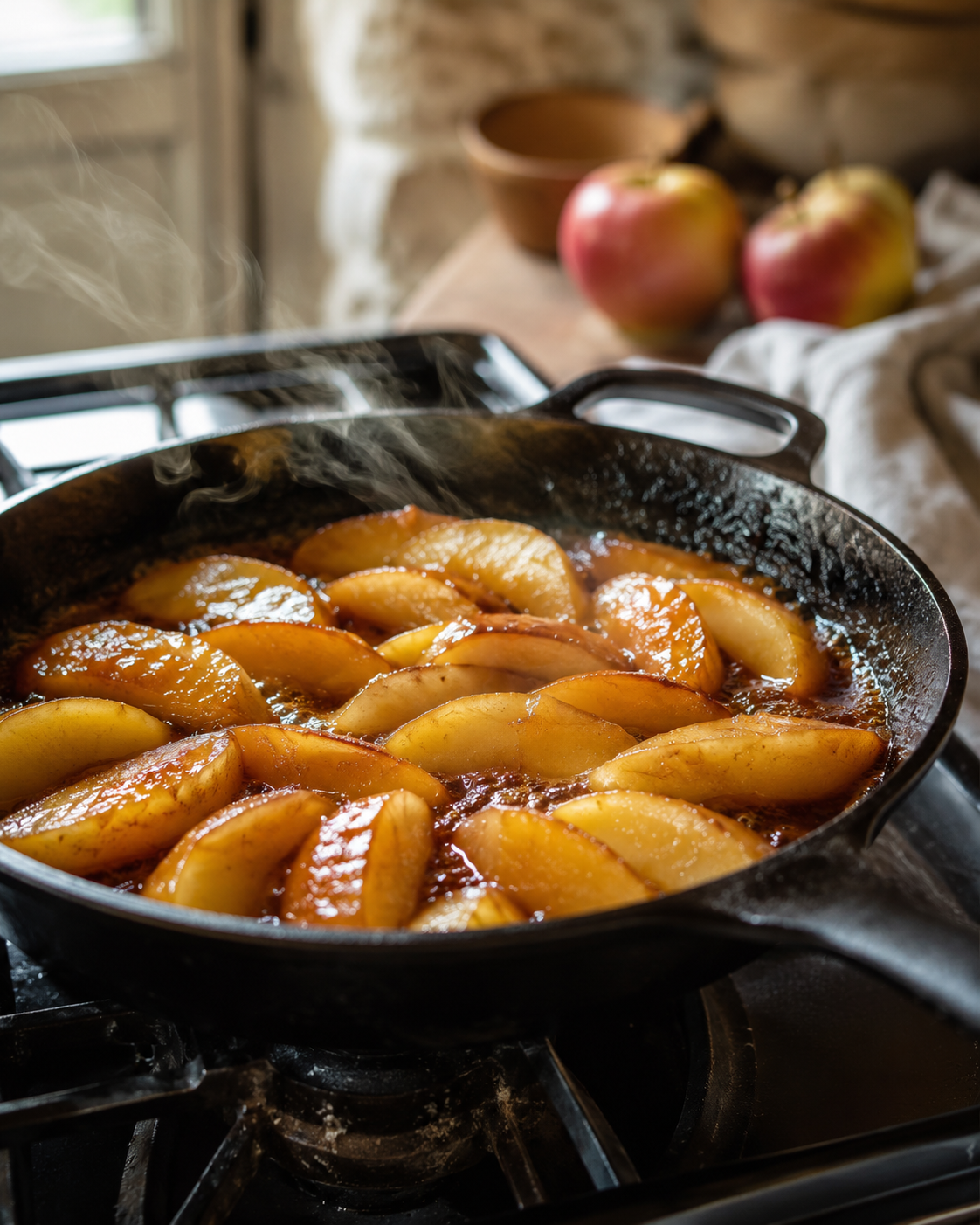
Strip away the romance and a tarte Tatin is a beautifully simple idea, which is that you cook apples in caramel in a pan, lay pastry over the top, bake it, and then flip the whole thing over so the apples end up on top and the pastry underneath. That upside-down method is the entire secret, because baking the apples beneath the pastry lets them soak in the caramel and turn soft and jammy while the pastry above stays crisp, and the final flip reveals a glistening amber surface that looks far more difficult than it was.
The genius of the technique is what the inversion does to the fruit. Sitting in the buttery caramel through the whole bake, the apples cook down into something dense and deeply flavored rather than the loose filling of an ordinary pie, and the caramel works its way through every piece. There are really only four ingredients at the heart of it, apples, sugar, butter, and pastry, which is part of why the dish endures, since it turns the humblest handful of things into something that feels like a genuine occasion. Get the caramel right and choose the right apples, and the rest is close to foolproof, whatever its fancy reputation might suggest. That gap between how hard it looks and how simple it is may be the tart’s greatest charm, because a dessert that appears to belong in a Paris patisserie turns out to be within reach of anyone with a frying pan, a few apples, and the nerve to flip it.
The Apples That Actually Work
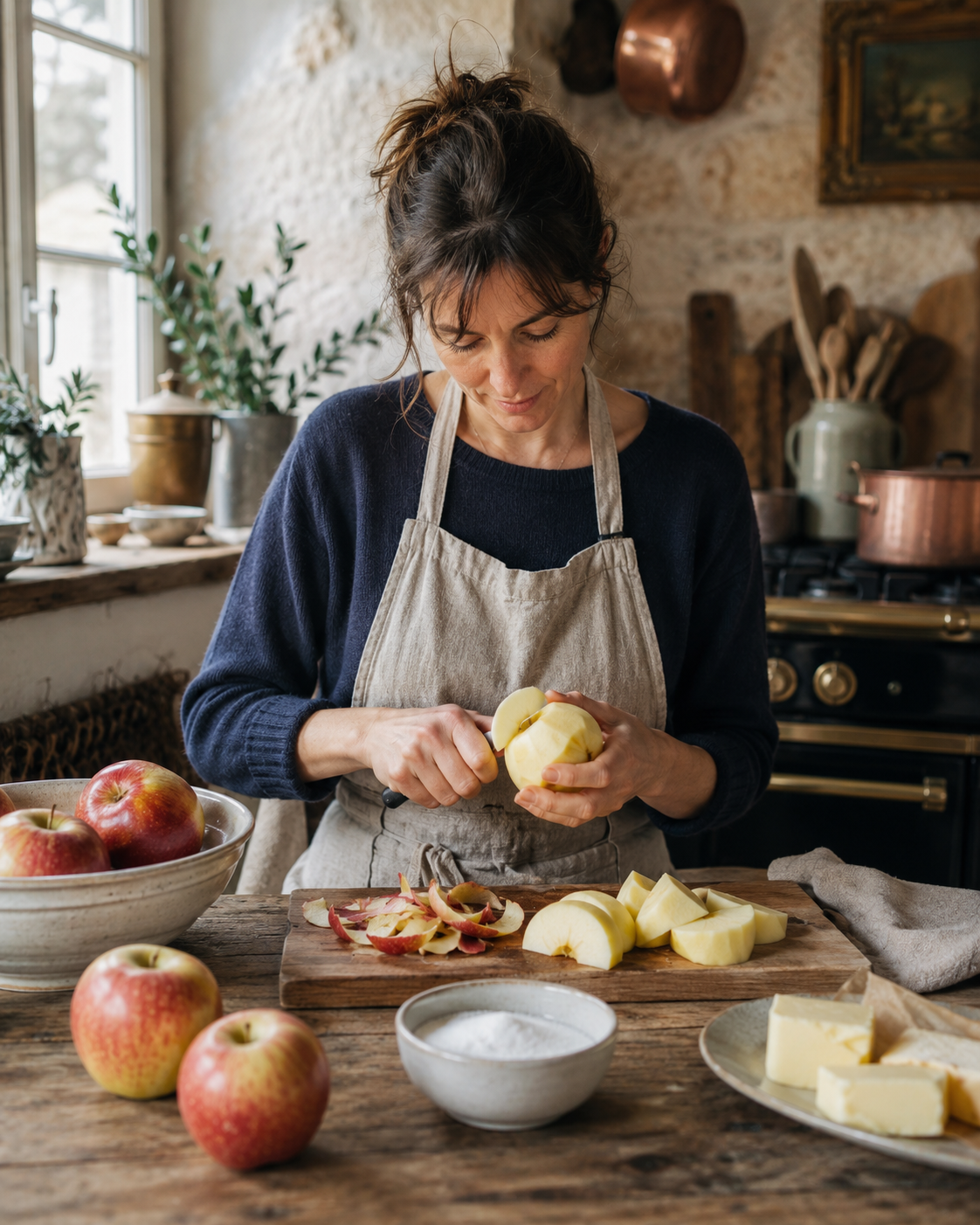
The single most important choice you make is the apple, because the wrong one turns to mush and the right one holds its shape through the long cooking. You want a firm apple that stays intact under heat, something with enough structure to survive being caramelized and baked without collapsing into sauce, since a soft eating apple will disintegrate and leave you with a sludgy tart rather than the neat, glossy wedges the dish is famous for. This is not the moment for whatever is softest in the fruit bowl.
Good choices are the firm, slightly tart varieties that cooks have always used for this, from the French Reine des Reinettes to the widely available Golden Delicious, which despite its ordinary reputation genuinely holds up beautifully here, along with other firm apples like Braeburn or Honeycrisp. A touch of tartness is welcome too, because it balances the sweetness of all that caramel and keeps the tart from cloying. Peel them, quarter or halve them, and pack them in snugly, since they will shrink as they cook and you want the finished tart generously full of fruit rather than sparse. Choose well here and half the battle is already won. It is worth buying a few more apples than you think you need, too, because they reduce so much in the caramel that a pan which looks crowded when raw will settle into a modest layer once cooked, and a thin tart is a disappointment after all that effort.
The Two Things That Go Wrong
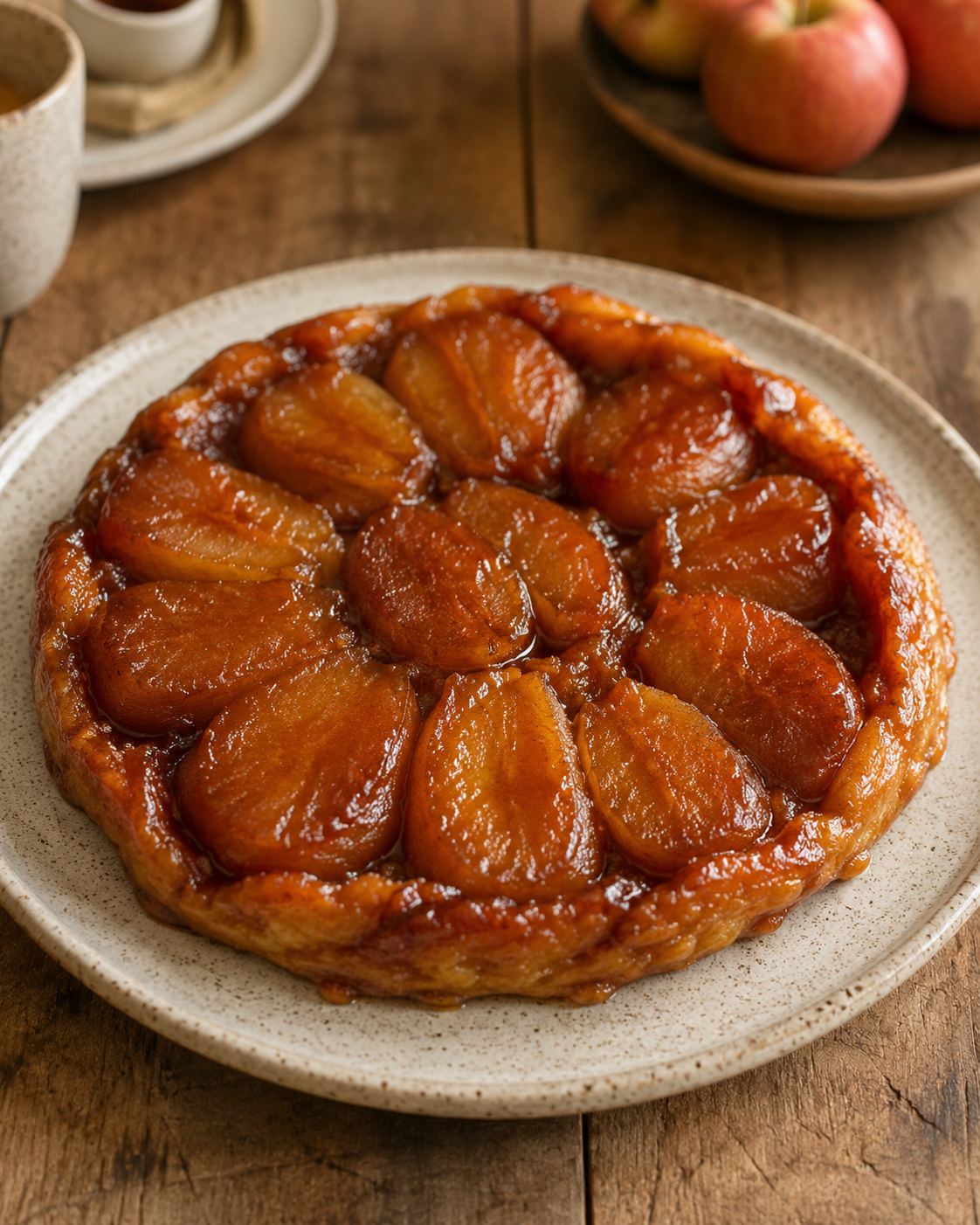
Tarte Tatin is forgiving, but two moments trip people up, and knowing them in advance takes away most of the fear. The first is the caramel, because it is the soul of the dish and it can catch you out, since sugar cooked to caramel goes from perfect amber to burnt and bitter in a matter of seconds if you look away. The cure is simply to watch it closely, take it off the heat the moment it reaches a deep golden color, and remember that it keeps cooking from its own heat for a moment after, so err on the side of slightly early rather than slightly late.
The second is the flip, the nerve-racking moment of turning the hot tart out of the pan upside down onto a plate, which looks alarming and is genuinely the one dramatic step. The trick is confidence and a little care, letting the baked tart rest just a few minutes so the caramel settles but not so long that it glues itself to the pan, then placing your serving plate firmly over the top and turning the whole thing over in one committed motion. If a few apples stick behind, it is no disaster, since you simply lift them off and set them back in place, and no one will ever know. Master those two moments, the caramel and the flip, and everything between them is easy.
Serving It the French Way
A tarte Tatin is meant to be eaten warm, ideally not long out of the oven while the caramel is still soft and the whole thing is at its most fragrant, which is part of why it makes such a fine dinner-party dessert, since it wants to be served fresh rather than made far ahead. The warmth is not a small detail but part of the pleasure, because a tarte Tatin that has gone cold and set firm loses much of its melting, jammy magic, so time it to come out near the end of the meal.
The classic accompaniment is something cool and creamy to set against the warm caramel, so the French serve it with a spoon of creme fraiche, a scoop of vanilla ice cream, or a little pouring cream, and any of the three is perfect. The gentle tang of creme fraiche is especially good against the sweetness, cutting through the caramel the way the apple’s own tartness does. Beyond that it needs nothing, no sauce, no garnish, no fuss, just the warm tart and the cool cream, which is exactly the kind of honest simplicity the whole dish was born from. It is proof that the most impressive-looking desserts are often the least complicated ones.
Baking Your Own Tarte Tatin
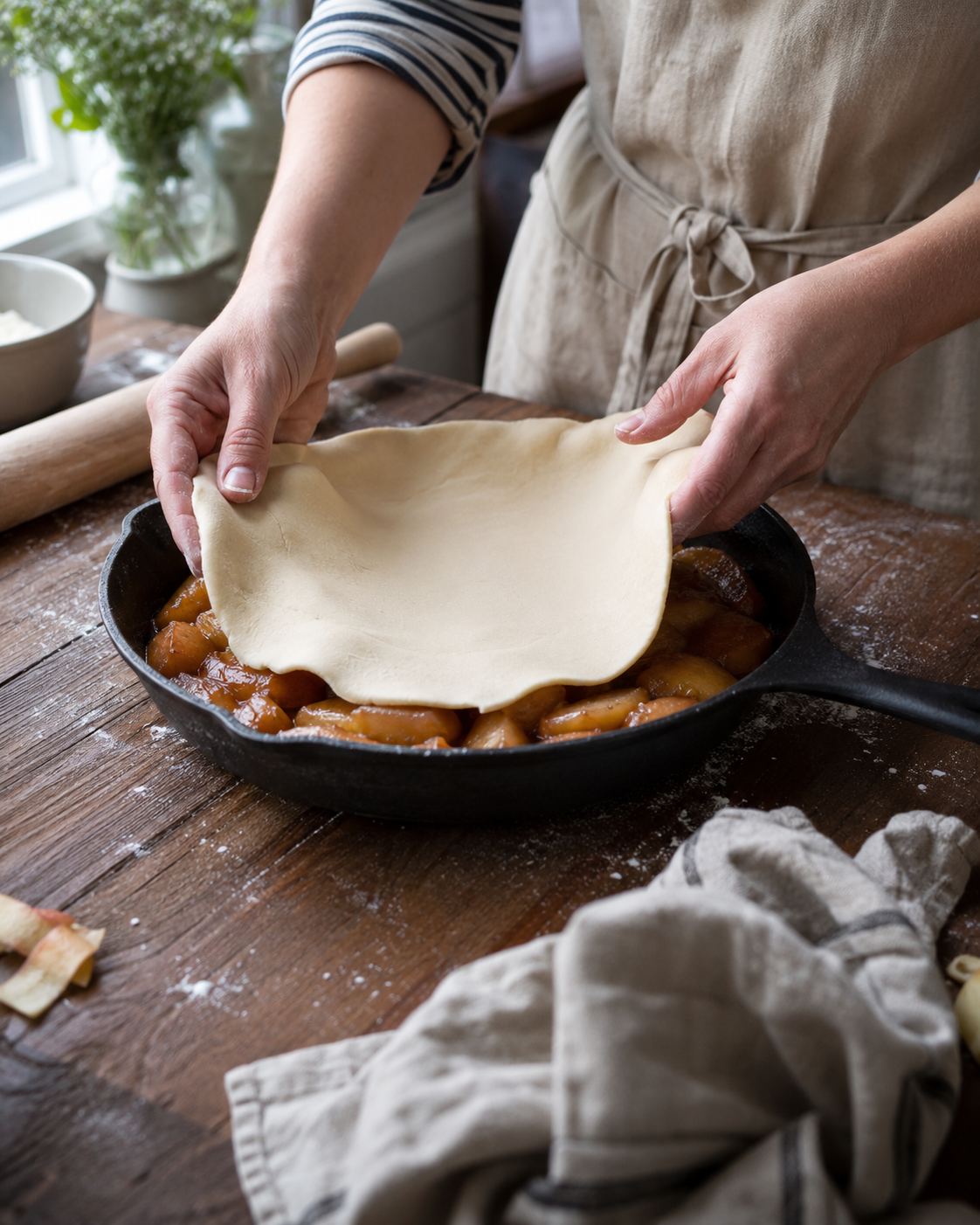
Here is a straightforward tarte Tatin that honors the original, made in an ovenproof pan so the caramel, the apples, and the pastry all happen in one dish. It serves six to eight and takes about an hour, most of it hands-off.
Ingredients
- 6 to 8 firm apples, such as Golden Delicious or Braeburn, about 1.2 kg, roughly 2.6 lb
- 150 g granulated sugar, about 3/4 cup
- 100 g unsalted butter, about 7 tablespoons
- 1 sheet all-butter puff pastry or shortcrust, about 250 g
- 1 pinch salt
- Creme fraiche or vanilla ice cream, to serve
Instructions
- Preheat the oven to 190 C, about 375 F. Peel, halve, and core the apples.
- In a roughly 24 cm ovenproof frying pan or tarte Tatin dish, melt the butter and sugar together over medium heat. Let it cook, stirring occasionally, until it turns into a deep golden caramel, watching closely so it does not burn. Take it off the heat as soon as it reaches a rich amber color, and stir in the pinch of salt.
- Arrange the apple halves snugly in the caramel, rounded side down, packing them in tightly since they will shrink. Return the pan to low heat and cook for about 15 to 20 minutes, until the apples have softened slightly and taken on the caramel.
- Roll out the pastry and cut a circle just larger than the pan. Lay it over the apples and tuck the edges down inside the pan, around the fruit.
- Bake for about 25 to 30 minutes, until the pastry is puffed, crisp, and golden brown.
- Let the tart rest for about 5 minutes, no longer, so the caramel settles but does not set hard. Place a serving plate over the pan, and with a firm, confident motion, invert the whole thing so the tart drops onto the plate apples-up.
- If any apples stick to the pan, simply lift them off and set them back in place. Serve warm, with creme fraiche or vanilla ice cream.
And of course, once you have the method the tart is yours to play with, since the same upside-down trick works beautifully with pears, quinces, or plums in place of apples, so treat this as the classic starting point and let the seasons and your own taste take it from there.

About the Author: Ruben, co-founder of Gamintraveler.com since 2014, is a seasoned traveler from Spain who has explored over 100 countries since 2009. Known for his extensive travel adventures across South America, Europe, the US, Australia, New Zealand, Asia, and Africa, Ruben combines his passion for adventurous yet sustainable living with his love for cycling, highlighted by his remarkable 5-month bicycle journey from Spain to Norway. He currently resides in Spain, where he continues sharing his travel experiences with his partner, Rachel, and their son, Han.