
There is a small culinary riddle hiding on every tapas bar counter in Spain, and most visitors walk right past it. On one plate sit little fillets of fish, pearly white, glistening with olive oil and flecked with garlic and parsley, bright and fresh and tangy. On another sit fillets of what looks like a completely different creature, deep brown, intense, salty, packing a savory punch that lingers on the tongue. They have different names, different flavors, different textures, and different prices, and they are served in completely different ways. And yet, here is the riddle: they are the exact same fish. Spain, almost uniquely among the world’s cuisines, takes one humble little anchovy and turns it into two entirely different delicacies, giving each its own name and its own place at the table. This is the story of that fish, why the same creature becomes two such different things, and how you can make the fresh, white version yourself at home.
What makes this worth understanding is that it is a perfect window into the Spanish love of taking something humble and treating it with real care and imagination. In English we have just one word, anchovy, for both versions, which means most of us never even notice there is a distinction to be made. But the Spanish language insists on two separate words, and behind those two words lie two completely different traditions of preparing the same small fish, one quick and fresh, the other slow and deep. Learning to tell them apart, and to make one of them, is a small but genuine step into the heart of how Spain eats.
Here is what these two versions actually are, how the same fish becomes two such different things, which one to use when, and a real recipe for making the fresh white version in your own kitchen. This is a joyful and simple bit of food knowledge rather than anything complicated, and the pleasure of it lies in how one small fish can teach you so much, so let me introduce you properly to the little anchovy that lives two lives.
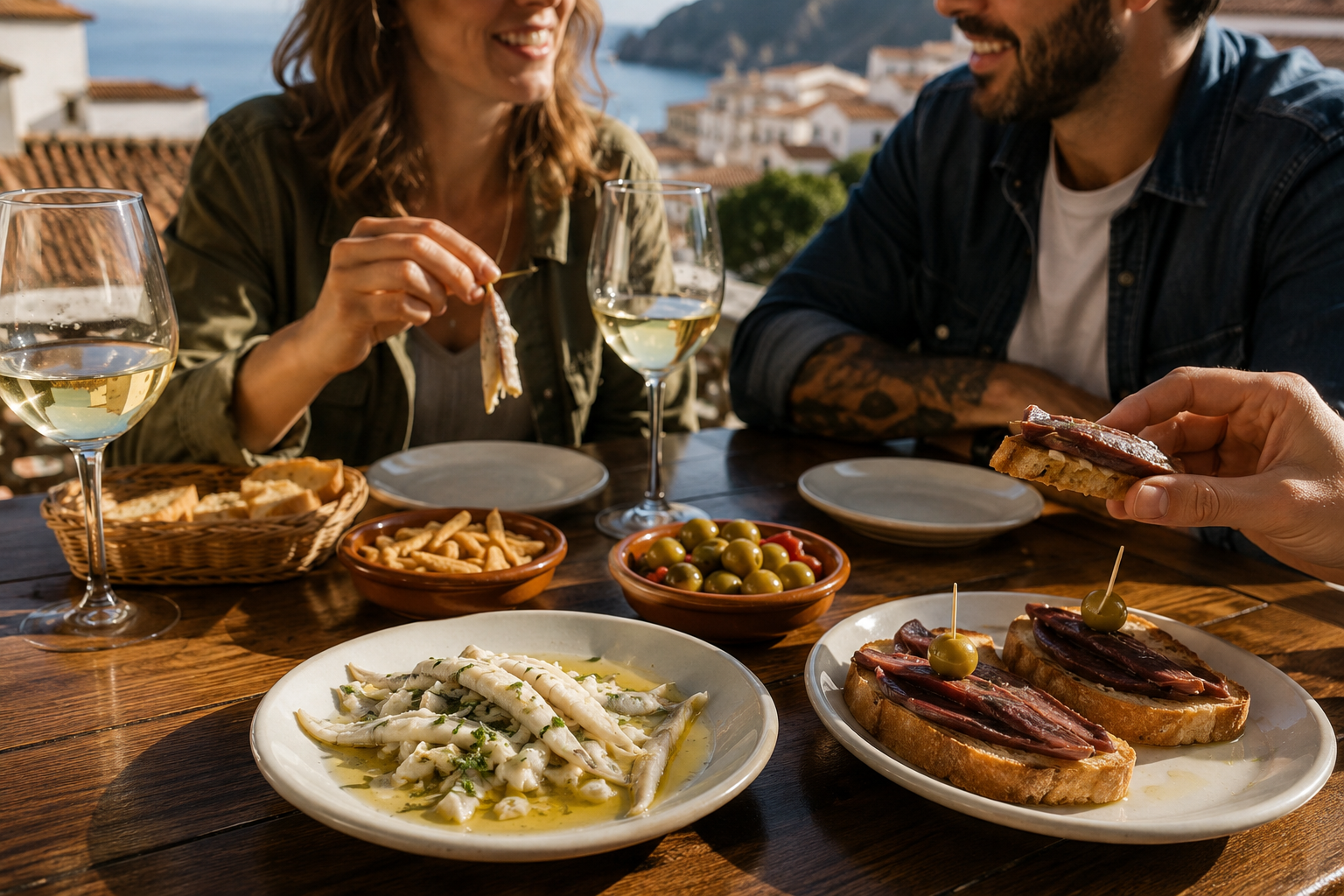
One Fish, Two Names
The whole story begins with a quirk of the Spanish language, which does something most languages do not, giving the very same fish two different names depending on how it has been prepared. That distinction is the key to everything.
The fish itself is always the same. Whether it ends up white and tangy or brown and intense, the creature underneath is one and the same small oily fish, an anchovy that swims in great schools through the Mediterranean and the Atlantic and is caught mostly in spring and summer. There is no difference whatsoever in the animal itself, only in what human hands choose to do to it afterward. This is worth pausing on, because it runs against our usual assumption that a strong difference in taste must come from a difference in the raw material. Here the raw material is identical, caught from the same waters in the same season, and everything that separates the two products, the color, the texture, the flavor, even the price, is created entirely by the method of preparation. The fish is a blank canvas, and Spain has learned to paint two utterly different pictures on it. That freezing-then-vinegar safety point is also worth understanding, because it explains something about the dish. Since the vinegar cooks the fish only chemically rather than with heat, the fresh anchovies must first be frozen to make them safe, a step every careful Spanish cook takes as second nature. It is a small ritual that sits quietly behind the bright plate of white fillets, and it is the one thing a home cook must never skip.
But its name changes with its treatment. In Spanish, the fresh, vinegar-marinated fish is the boquerón, while the same fish cured slowly in salt is the anchoa, so the language itself marks the two preparations as distinct things. It is a distinction English simply does not make, which is why an English speaker can eat both for years without realizing they began as the same fish. There is something telling in the fact that Spanish bothered to invent two words where most languages make do with one. A language tends to grow extra vocabulary around the things a culture cares about most, and the existence of both boquerón and anchoa is a quiet signal of just how seriously Spain takes this little fish and both of the very different things it can become. The two words are, in their way, a small monument to a national obsession.
The White One, Bright and Fresh
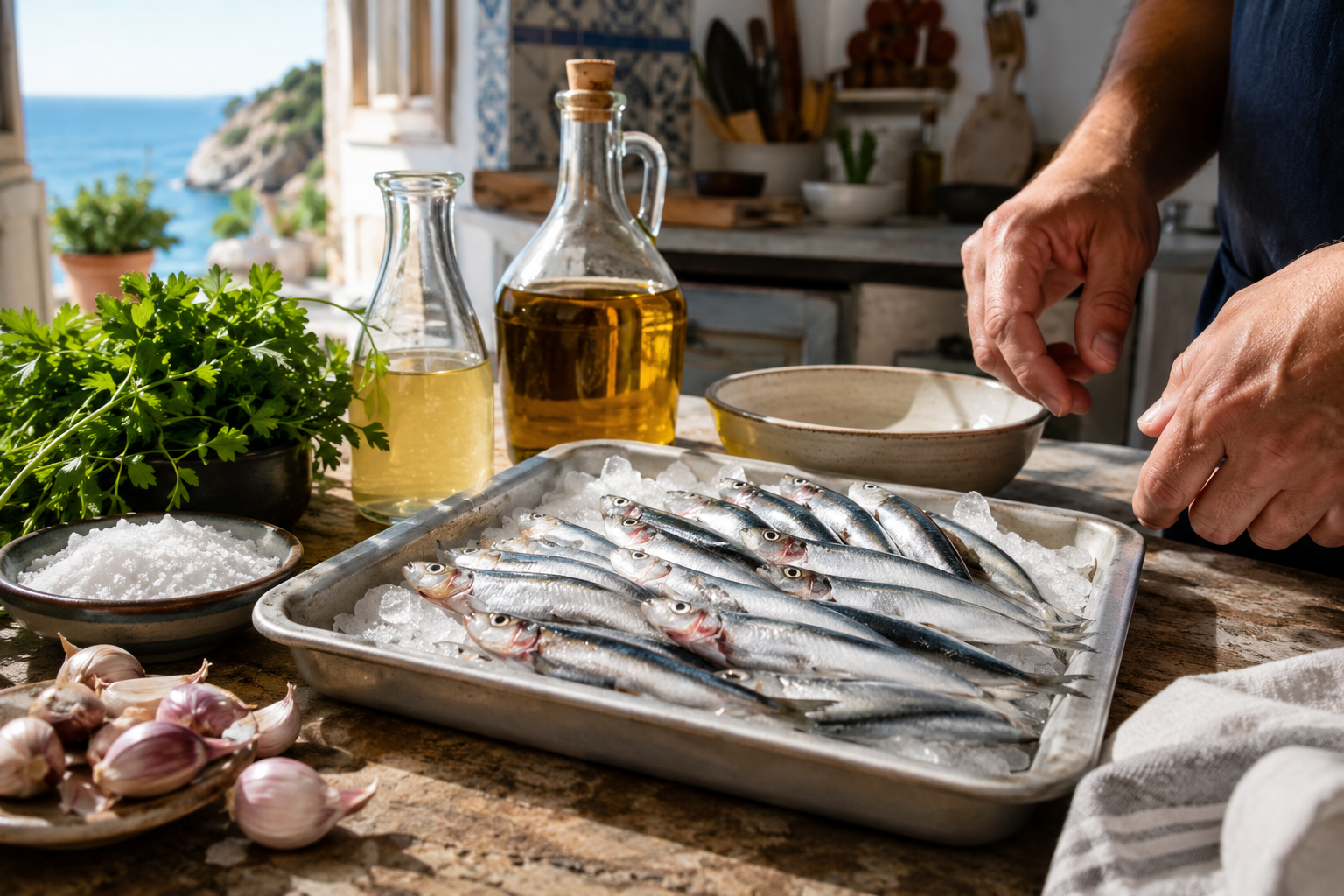
The first of the two is the version most people find surprising, the pale, fresh, tangy fillets that taste nothing like the anchovy of a pizza. This is the boquerón in vinegar, and it is a revelation.
It is the fish lightly pickled, not cured. To make these, fresh anchovy fillets are marinated in vinegar, which does something rather magical, the acid in the vinegar cooks the fish without heat, turning the flesh firm, opaque and pearly white, so the result is fresh and delicate rather than heavy. It is the same principle as a ceviche, where citrus juice cooks raw fish, and the transformation happens in mere hours rather than months.
Its flavor is a summer delight. The finished boquerones are bright, tangy and light, with a clean acidity balanced by good olive oil and the punch of garlic and parsley, so they taste of freshness and sunshine rather than deep savory intensity. This is the anchovy as a cool, refreshing summer tapa, the kind of thing you eat on a hot afternoon with an ice-cold beer, and it could not be further from the intense little fish most foreigners picture. In the south, and especially in Málaga, where the locals are so fond of them that they are nicknamed after the fish, a plate of these white fillets is as much a part of summer as the heat itself. They arrive cold, glistening, scattered with green parsley, and they disappear in minutes, washed down with something cold and fizzy while the afternoon stretches out.
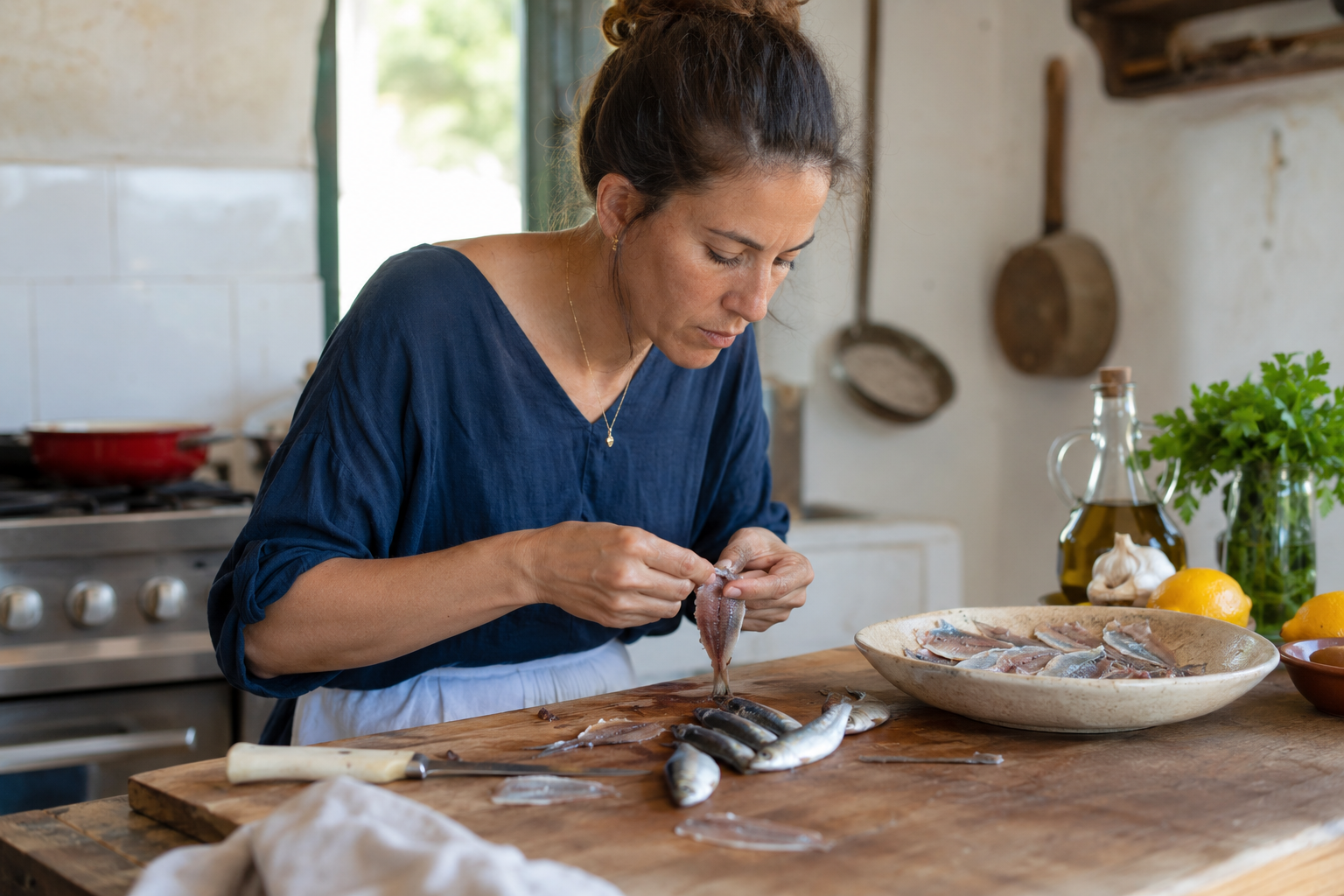
The Brown One, Deep and Intense
The second version is the one the wider world already knows, even if it does not know its proper Spanish name, the deep brown, powerfully savory fillet packed in oil. This is the anchoa, and it is a completely different experience.
It is the fish cured slowly in salt. To make these, the same fresh anchovies are packed in salt and left to cure for many months, during which the fish’s own natural processes transform it entirely, breaking down the flesh and building a deep, concentrated savory flavor, so the result is intense where the white version is light. After curing, the fillets are cleaned and packed in olive oil, ready to deliver their powerful punch. The months of slow curing are what build the anchoa’s astonishing depth, as the fish essentially ripens like a cheese or a cured ham, its flavor concentrating and deepening with time. This is why a good tin of cured anchovies costs so much more than a plate of fresh boquerones, and why the finest examples, from the cold northern waters, are treated as a genuine delicacy rather than a cheap store-cupboard staple. The best of them are hand-filleted, glossy and mahogany-colored, and eaten with real reverence, often simply on bread, so that nothing distracts from their extraordinary savory depth. A single one of these fine cured fillets, laid across a piece of good bread with perhaps a little butter, is a complete and luxurious mouthful in its own right, which is why the best examples command prices that surprise people used to thinking of anchovies as the cheapest thing in the shop.
Its flavor is pure umami. The cured anchoa is deeply savory and rich, bursting with the mouth-filling quality known as umami, so a single small fillet can flavor an entire dish, which is exactly how it is often used. This is the anchovy that melts into a pasta sauce or crowns bread with tomato, or lends its salty depth to countless other dishes, a concentrated flavor bomb rather than a fresh, standalone bite meant to be admired on its own.
Same Fish, Opposite Products
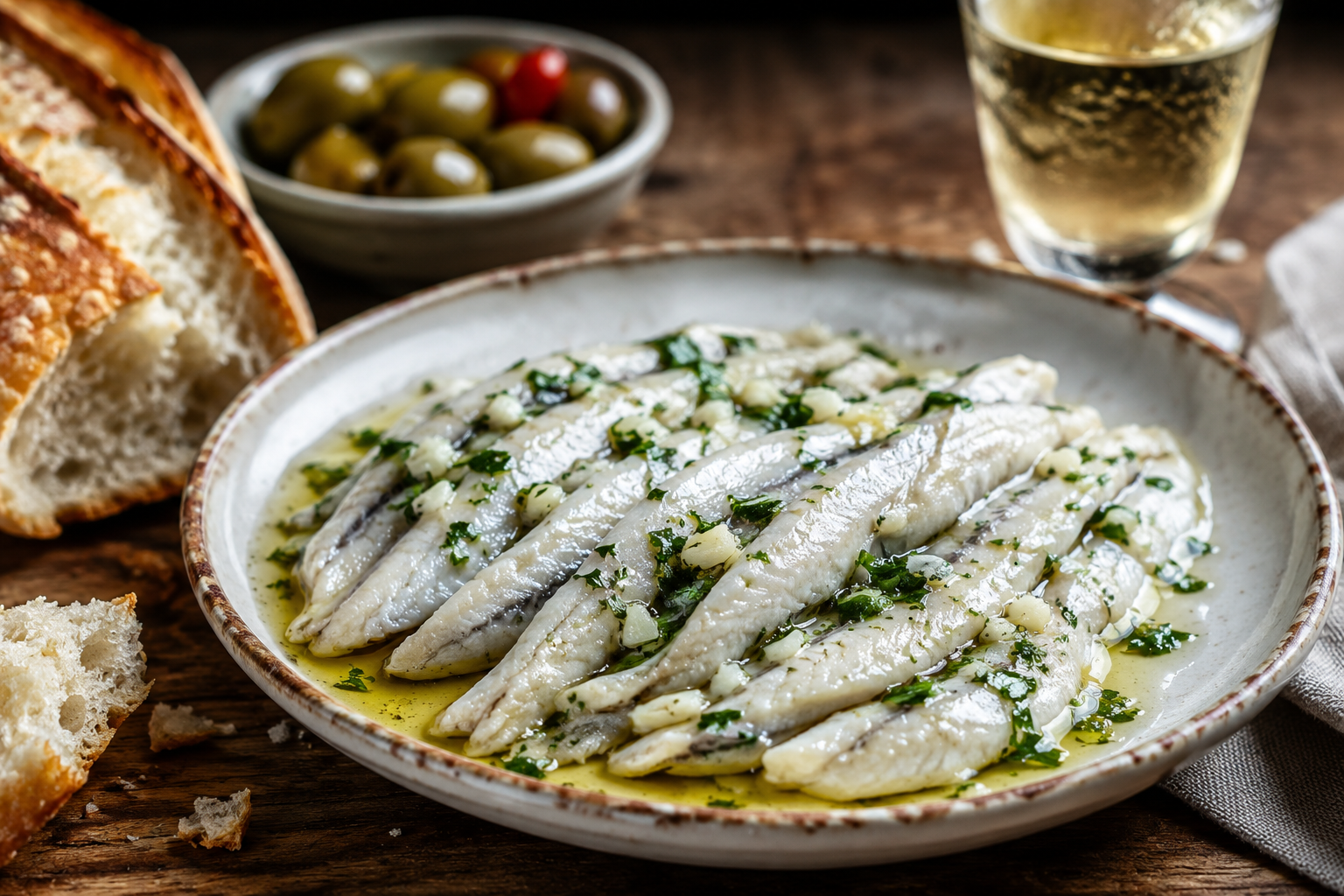
Setting the two side by side reveals just how completely one fish can be transformed, because the boquerón and the anchoa are in almost every respect opposites, despite their shared origin. The contrast is total.
Everything about them differs. One is white, the other brown, one fresh and tangy, the other cured and intensely savory, one is made in hours, the other over many months, one is a light summer refreshment, the other a concentrated flavor bomb, so from a single small fish come two products that could hardly be more different. It is a truly remarkable demonstration of how preparation alone can reshape an ingredient. Cooks spend fortunes chasing rare ingredients, yet here is one modest fish that, depending purely on whether it meets vinegar or salt, becomes two things a diner would never guess were related. It is a reminder that technique, patience and knowledge are ingredients too, often more powerful than anything you can buy, and that the humblest starting material can yield the most surprising results in the right hands.
And they are not interchangeable. Because they are such different products, you cannot simply swap one for the other, since the fresh boquerón cannot deliver the deep savory punch a cured anchoa gives, and the intense anchoa would overwhelm a dish meant for the light freshness of a boquerón, so knowing which is which really matters in the kitchen. Understanding the difference is not mere trivia but practical knowledge that changes how you cook and eat. Once you know it, you order more confidently at the bar, choosing the bright white boquerones when you want something fresh and the cured anchoa when you want depth, and you shop more wisely, reaching for the right product for the dish you have in mind. It also saves you from the disappointment of buying a tin of intense cured anchovies expecting the light, fresh fillets you enjoyed on a summer terrace, a mistake many a returning traveler has made.
Which One to Reach For
Given that they are so different, the natural question is when to use each, and happily the answer follows directly from their characters. Each has its own natural home, and once you know both, you will find yourself reaching instinctively for the right one.
Reach for the white boquerón as a fresh tapa. When you want a light, bright, refreshing bite to enjoy on its own, ideally cold with a beer on a warm day, the vinegar-marinated boquerón is the one, served alone or with bread as a fresh summer appetizer, so it shines as a standalone tapa rather than a background flavor. This is the version to make at home and serve to friends as something a little special. It never fails to impress people who think they do not like anchovies, because the fresh boquerón is such a different creature from the salty fillet they are bracing themselves for. Watching someone take a cautious first bite and then reach happily for another is one of the small pleasures of serving them, and it is a lovely way to gently overturn a lifetime of anchovy prejudice.
Reach for the brown anchoa to add deep savory flavor. When you want to add a powerful savory, salty depth to something, whether melted into a sauce, laid over bread and tomato, or built into a classic skewer of olive and pepper, the cured anchoa is what you want, an intense flavoring element rather than a fresh bite. The famous Basque skewer of olive, anchovy and pepper, for instance, traditionally uses the cured version rather than the white.
Making the Fresh White Version at Home
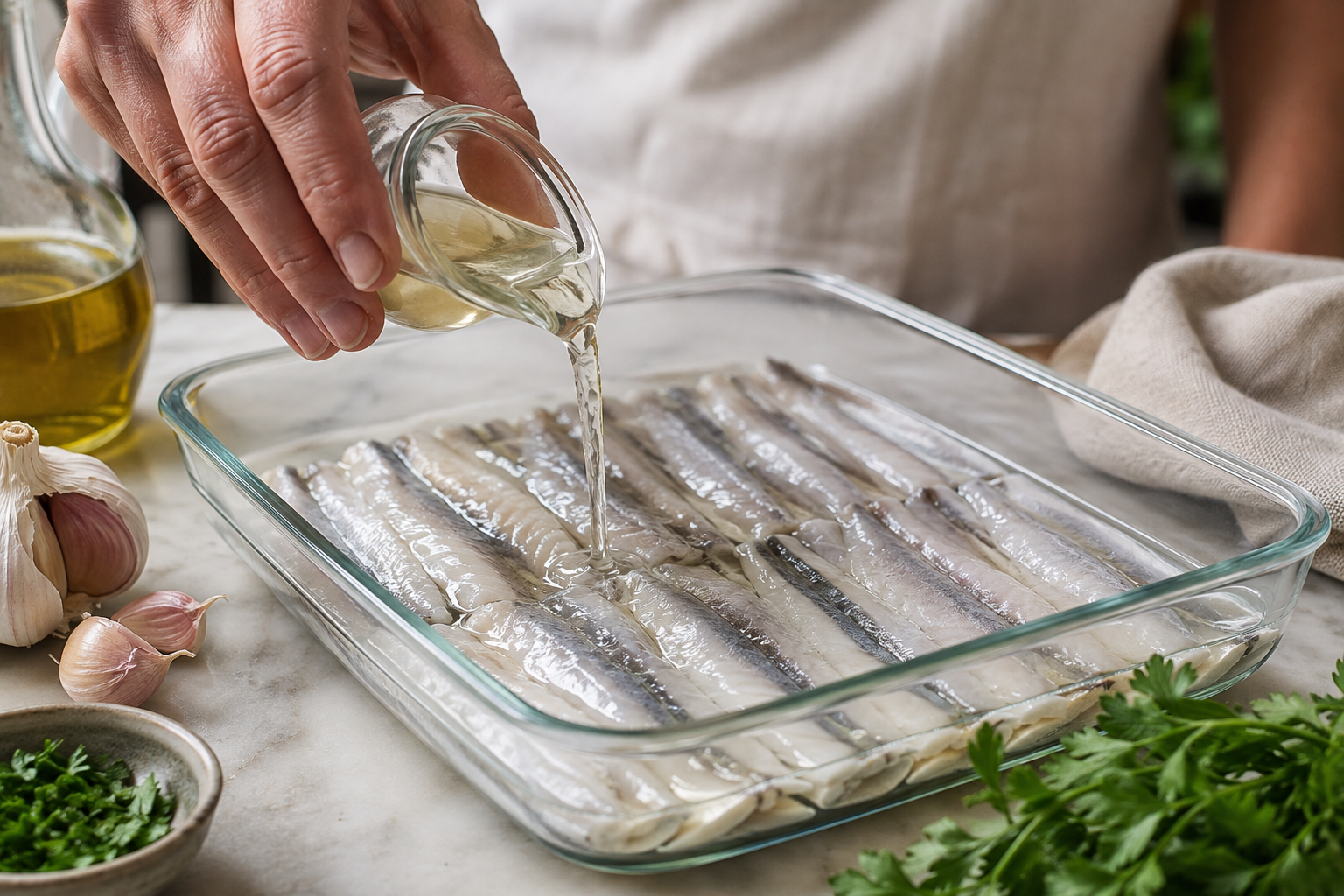
The wonderful news is that while the cured anchoa is a months-long process best left to the experts, the fresh boquerón you can make at home, and it is genuinely simple. There is just one crucial safety step you must not skip.
Here is the whole method, start to finish.
Boquerones en Vinagre (Spanish Marinated Anchovies)
Makes a generous tapa for 4 to 6 / about 30 minutes of work plus freezing and marinating time
Ingredients:
- 500 grams (about 1 pound) of very fresh whole anchovies
- 250 millilitres (about 1 cup) of white wine vinegar
- 120 millilitres (about half a cup) of water
- 1 teaspoon of salt, plus more for seasoning
- 3 or 4 cloves of garlic, finely chopped
- A generous handful of fresh parsley, finely chopped
- Good extra virgin olive oil, for dressing
Method:
- Clean the anchovies by pinching off each head and pulling it away, which takes most of the guts with it. Open each fish along the belly, remove the backbone, and separate it into two fillets. Rinse the fillets gently in cold water and pat them dry.
- This step is essential for safety. Lay the fillets flat in a dish and freeze them for at least two days to kill any parasites, since the fish will not be cooked with heat. Do not skip this.
- Thaw the fillets in the refrigerator. Lay them skin-side down in a shallow non-metallic dish.
- Mix the vinegar, water, and the teaspoon of salt, and pour it over the fillets so they are fully submerged. Cover and refrigerate for about 3 to 6 hours, until the flesh has turned firm and white all the way through.
- Drain off the vinegar mixture. Do not leave them marinating much longer than needed, or they will turn tough.
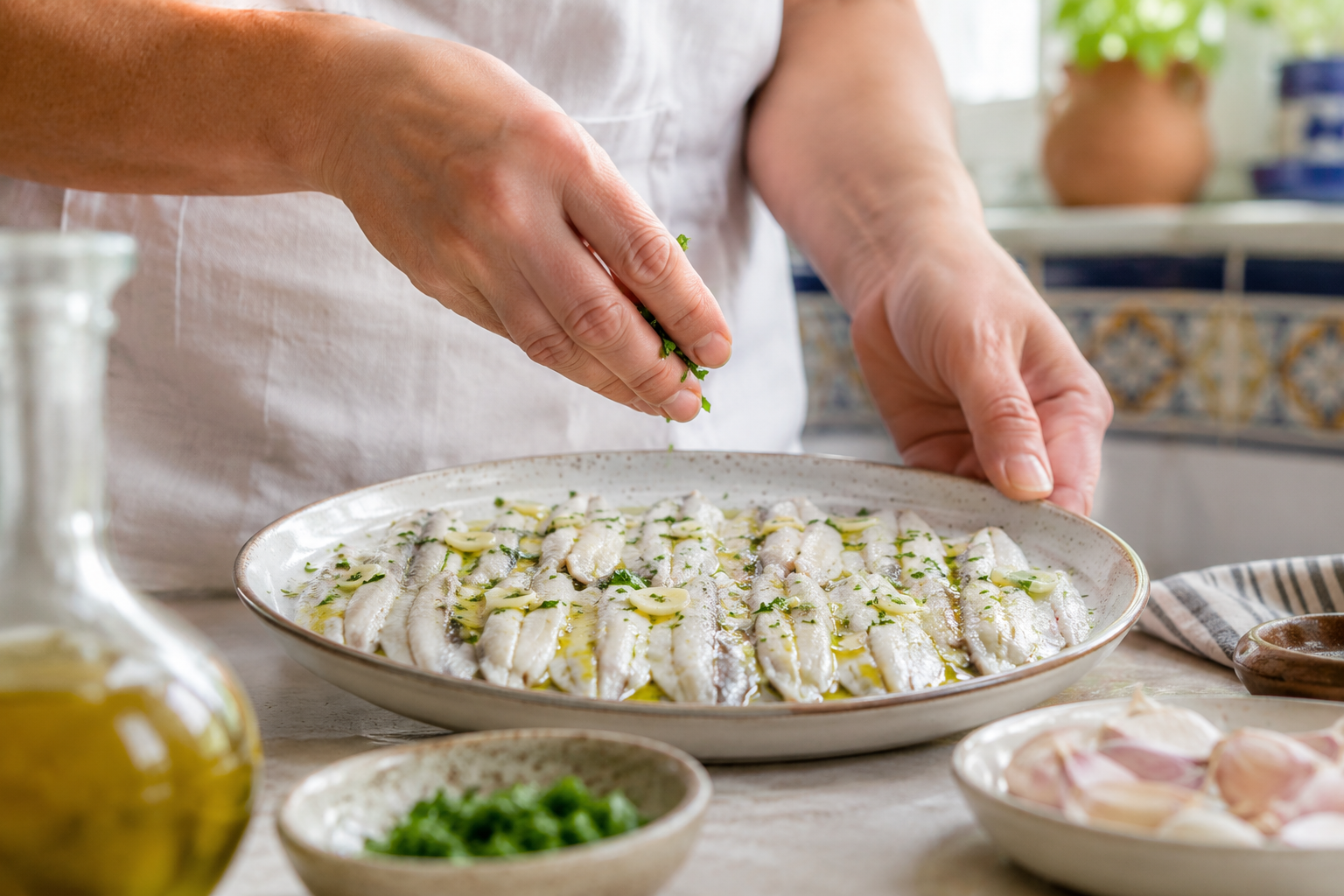
- Arrange the white fillets on a plate, scatter over the chopped garlic and parsley, and drizzle generously with good olive oil and a little pinch of salt. Serve cold, ideally with a cold beer.
Two Lives of One Little Fish
The lasting charm of this small culinary story is that it captures something essential about the way Spain cooks, taking a humble, inexpensive little fish and, through two completely different acts of care, turning it into two distinct delicacies, each with its own name, character and place on the table. That a single creature can become both a bright summer refreshment and a deep savory treasure is a small marvel of the kitchen.
What makes it worth knowing is not only the pleasure of understanding what you are eating, but the way it opens a window onto a whole philosophy of food, one that finds richness not in expensive ingredients but in the patient transformation of simple ones. The little anchovy, treated one way, becomes the fresh white boquerón, and treated another, becomes the deep brown anchoa, and in that doubling lies a quiet lesson about care and craft.
So the next time you find yourself at a Spanish bar and see two plates of anchovies that look nothing alike, you will know the secret they share, that they are one and the same fish leading two different lives. Order both at once if you can, and taste them in the same sitting, the cool white boquerón and the deep brown anchoa, one after the other. Marvel at how a single creature can be so utterly transformed by nothing more than the choice between vinegar and salt, and perhaps then go home and make the fresh white version yourself. It is one of the most satisfying small things you can cook, requiring no special skill and only a little patience, and every time you do, you will taste for yourself that little bit of Spanish genius that quietly turns one modest fish into two.

About the Author: Ruben, co-founder of Gamintraveler.com since 2014, is a seasoned traveler from Spain who has explored over 100 countries since 2009. Known for his extensive travel adventures across South America, Europe, the US, Australia, New Zealand, Asia, and Africa, Ruben combines his passion for adventurous yet sustainable living with his love for cycling, highlighted by his remarkable 5-month bicycle journey from Spain to Norway. He currently resides in Spain, where he continues sharing his travel experiences with his partner, Rachel, and their son, Han.