

Among all the factors that researchers have connected to a longer, healthier life, one keeps surfacing that has nothing to do with diet, exercise, or medicine. It is the simple matter of having a reason to get out of bed in the morning, a sense of purpose. Study after study, across continents and cultures, has found that people with a strong sense of purpose tend to live longer and age better. The Japanese have a word for it, ikigai, one of the threads researchers point to when they try to explain why certain communities produce so many healthy people in their nineties and beyond. What makes this especially interesting is that a sense of purpose is not something you are simply born with or without, but something that a way of life can nurture or neglect, and here a certain style of European retirement quietly does something many others do not. It keeps people woven into daily life in ways that sustain exactly this sense of mattering. This is what the research actually shows about purpose and longevity, and how some European ways of aging seem to build it in.
Before going further, the essential caveat must be stated plainly, because it shapes how all of this should be read. The research on purpose and longevity is about association, not proof of cause. People with purpose tend to live longer, but that does not establish that purpose itself extends their lives, and holding that distinction firmly in mind is what separates an honest understanding from an overreaching one. Purpose appears to be deeply entangled with a whole engaged way of living, and untangling cause from consequence is exactly what this kind of research cannot fully do. Someone with a strong sense of purpose is likely also to be more active, better connected to others, and more inclined to look after themselves, and each of those things independently supports health. So when purposeful people turn out to live longer, it is truly hard to say how much of the credit belongs to purpose itself and how much to the healthier life that tends to accompany it. That difficulty is not a flaw in the studies but an inherent limit of observing people rather than running controlled experiments on them.
Here is what the studies on purpose and mortality actually found, why a sense of purpose might be connected to longevity, how some European patterns of retirement seem to preserve it, and the important limits of what any of this can claim. This is a factual overview of research rather than medical advice, and I am not a doctor, so nothing here is a diagnosis or a prescription, but the science is truly fascinating and worth understanding with care.
The Studies That Keep Finding It
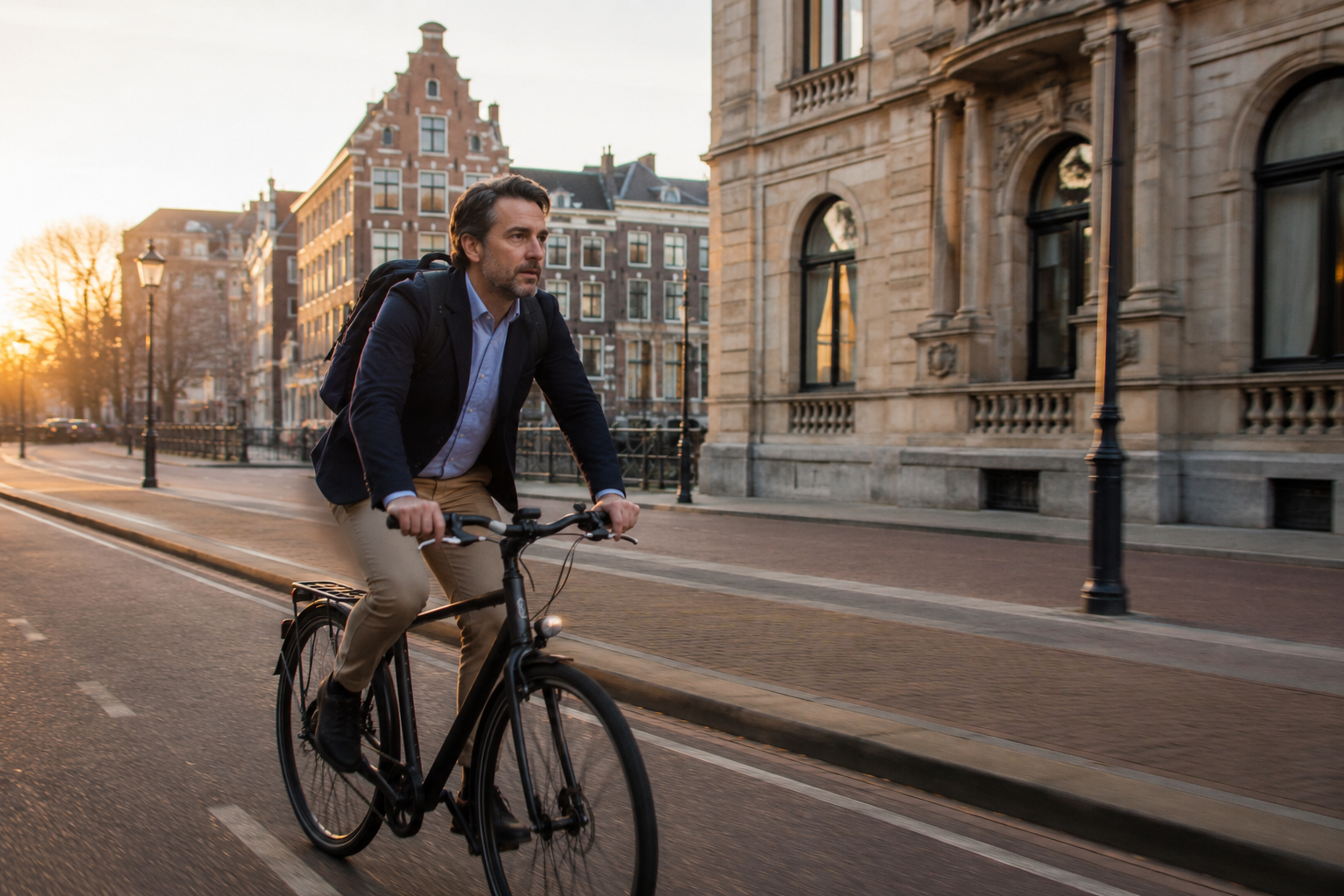
What gives this idea its weight is not a single striking study but a remarkable consistency across many of them, conducted in different countries with different populations. The pattern keeps reappearing.
American research found it clearly. In a major study of older adults, drawing on long-running projects that followed people for years, researchers found those with a higher sense of purpose had a substantially lower risk of dying, an association that held even after accounting for age, sex, education and other factors, so purpose stood out as a meaningful marker of who lived longer. Related work associated a strong sense of purpose with a later onset of dementia and more years lived free of it.
Japanese research found the same. In a large study following tens of thousands of Japanese adults for years, those who reported ikigai, a sense that life is worth living, had significantly lower mortality, even after adjusting for the usual health and demographic factors, so the finding proved to hold across a very different culture. That the same pattern appears across such different cultures is why researchers take it seriously, since a finding that holds in societies as unlike each other as the United States and Japan is far harder to dismiss as a quirk of one place or one way of measuring.
Purpose That Outlasts a Career
One of the most important findings for anyone thinking about retirement is that the longevity association with purpose does not depend on being employed, which matters enormously for how we think about later life. Purpose after work counts just as much.
The benefit is not tied to a job. Research found the link between purpose and longer life held regardless of age and of whether people had retired, so a sense of purpose appears to matter across the whole span of adult life, not only the working years. The reason to get up in the morning need not be a career to count.
This reframes what retirement can be. Because purpose after work is associated with the same benefits as purpose during it, retirement emerges not as the end of meaningful engagement but as a stage for finding new sources of purpose, so the challenge of later life is less about rest than about continued mattering. The people who seem to thrive in retirement are often those who replace the structure and significance of work with something else that gives their days direction. For decades, a career supplies not only income but a reason to rise, a set of relationships, and a sense of being useful, and when it ends, that scaffolding can vanish all at once. The retirees who flourish tend to rebuild it deliberately, through volunteering, caregiving, learning, creative pursuits, or deep involvement in family and community, finding new answers to the question of what the day is for. Those who do not can find retirement unexpectedly hollow, however financially comfortable it may be.
Why Purpose Might Be Connected to Longevity

Given the consistency of the association, researchers have proposed several reasons why a sense of purpose might be truly bound up with living longer, though it is important to treat these as hypotheses rather than established mechanisms. The proposed pathways are plausible but unproven.
Purpose travels with healthier living. People with purpose tend also to be more physically active, more socially connected, and more engaged in their health, so part of the association may reflect the healthier lives that purposeful people tend to lead, rather than a direct effect of purpose itself. Purpose, in this view, is partly a marker of a whole engaged way of living that supports health in many ways at once.
Biological pathways have been suggested too. Beyond behavior, researchers have pointed to possible links between purpose and lower inflammation, reduced stress, and better preserved cognition even in the presence of brain changes, so several biological routes have been proposed. Which of these, if any, really drives the association remains an open question that observational research alone cannot settle.
How Some European Retirements Preserve It

Here is where the research meets daily life, because certain patterns common in European aging seem, almost incidentally, to preserve the very ingredients that the studies associate with purpose. The structures of ordinary life do a quiet kind of work.
Daily rhythms keep people engaged. In many European communities, older people remain woven into daily life through the walk, the market, the gathering in the plaza or café, the long shared midday meal, so the day retains a shape and a set of small, meaningful engagements. These rhythms give structure and social contact to lives that might otherwise drift, sustaining a sense of being part of something. There is a quiet genius to a culture in which the elderly are simply expected to be out among everyone else, buying bread, sitting in the square, greeting neighbors by name, because it means that connection and routine require no special effort or arrangement. The day comes with its own built-in shape, and the person is carried along by the ordinary current of communal life rather than having to construct a reason to leave the house each morning from scratch.
Family and community keep people needed. Beyond routine, many European cultures keep older people involved with extended family and community, caring for grandchildren, active in civic life, holding a valued place rather than being set aside, so the elderly retain roles that make them feel needed. To be needed, to have a role that matters to others, is a powerful source of purpose. An older person who helps raise grandchildren, whose cooking anchors the family meal, whose advice is sought and whose presence is assumed, occupies a place that gives every day meaning. This stands in sharp contrast to arrangements in which the elderly are moved out of the flow of family and community life and left with little to do and no one depending on them, a situation the research would predict to be corrosive precisely because it strips away the sense of mattering that purpose depends on.
The Blue Zones Clue

The connection between purpose and longevity appears most vividly in the so-called Blue Zones, the handful of places around the world where people live unusually long, several of which lie in or near Europe. These communities offer a living illustration of the pattern.
Purpose has a name in these places. In the longest-lived communities, a sense of purpose is often so central that the local culture has a specific word for it, from the Japanese ikigai to a Costa Rican expression meaning a reason to live, so the reason to get up in the morning is there not an abstraction but a named and cherished part of life. Researchers consistently identify purpose as one of the shared features of the world’s longest-lived populations.
The lesson is about a way of life. What the Blue Zones suggest is that longevity is associated not with any single habit but with a whole way of living in which purpose, community, activity and simple daily engagement are woven together, so purpose is best understood as one strand in a larger fabric. It is not that these people pursue longevity directly, but that they live in ways that keep meaning and connection present, and long life appears to follow. This is perhaps the most useful way to hold the whole idea. Nobody in these communities wakes up trying to live to a hundred. They wake up to tend a garden, to see friends, to fulfill a role in a family or a village, and the longevity is a byproduct of a life arranged around meaning rather than a goal pursued for its own sake. The lesson is less about adding a purpose to your day as a health measure than about building a life in which purpose is simply present.
The Limits of What This Shows
Now comes the necessary counterweight, the careful account of what this research cannot establish, because the appeal of the idea makes it easy to overstate. The association is real, but it must be read with care.
Cause and effect remain tangled. Because these are observational findings, it is genuinely difficult to know whether purpose extends life, or whether healthier people simply find purpose easier to maintain, so the direction of the arrow is not settled. It is entirely possible that good health fosters purpose as much as purpose fosters health, and the studies cannot fully separate the two. A person in robust health has the energy and freedom to pursue goals, maintain relationships, and stay engaged, all of which feed a sense of purpose, while illness and frailty can erode it. So the arrow may point in both directions at once, with health and purpose reinforcing each other in a loop that observational research can describe but not disentangle. This does not make the association meaningless, but it does mean it should be read as a rich correlation rather than a simple lever to pull.
And it is a pattern, not a promise. These findings describe tendencies across large groups, not guarantees for any individual, so no one should treat a sense of purpose as a personal insurance policy against illness or death, nor read its absence as a sentence. The research points to something real and worth taking seriously at the level of populations, while saying nothing certain about how any single life will unfold.
Living With a Reason to Get Up

The lasting value of this body of research is that it points, again and again and across very different cultures, to a simple and humane truth, that having a reason to get up is associated with living longer and aging better, and it need not be grand. It can be as ordinary as a garden to tend, a grandchild to help raise, or a daily ritual that gives the day its shape.
What makes the European example so instructive is not that any country has deliberately solved the problem, but that certain traditional patterns of daily life happen to preserve the very things the research associates with purpose, keeping older people engaged, needed and woven into the rhythms of their communities. Whether by design or by inheritance, these ways of living tend to protect against the isolation and aimlessness that can shadow later life, and in doing so they quietly supply what the studies keep pointing to.
So while no one can promise that a sense of purpose will add years to your life, the research gives good reason to believe that a life with meaning, structure and connection is a richer and very likely a healthier one, whatever its length. The reason to get up in the morning is worth cultivating not as a longevity trick but as the substance of a good life, and if the data are right that it may also help us age well, that is all the more reason to build our later years, wherever we live, around the things that make us glad to wake.

About the Author: Ruben, co-founder of Gamintraveler.com since 2014, is a seasoned traveler from Spain who has explored over 100 countries since 2009. Known for his extensive travel adventures across South America, Europe, the US, Australia, New Zealand, Asia, and Africa, Ruben combines his passion for adventurous yet sustainable living with his love for cycling, highlighted by his remarkable 5-month bicycle journey from Spain to Norway. He currently resides in Spain, where he continues sharing his travel experiences with his partner, Rachel, and their son, Han.