
Every January, millions of Americans make the same promises to themselves. This is the year they will finally get in shape, get organized, get their lives together, and for a week or two the gyms are packed before, quietly, almost all of the resolutions dissolve back into the very routines they were meant to replace. It has become a ritual almost defined by its predictable failure, repeated faithfully year after year. The French, meanwhile, have a reset of their own, but they hold it at a completely different time of year and, crucially, it tends to stick. They call it la rentrée, the return, and it arrives every September as the whole country comes back from summer at once, refreshed and ready to begin again. Where January’s reset so often fizzles, September’s actually works, and understanding why reveals something worth borrowing about how fresh starts really happen.
The contrast is striking once you notice it. Americans pin their great annual reset to the first of January, the dead of winter, the morning after a long party, and lean on sheer willpower to carry it. The French pin theirs to early September, after a genuine rest, when the entire society turns the same page together. These are two completely different theories of how to begin again, and the French one, it turns out, is built on far sturdier foundations. It is less a matter of national character than of timing and structure, both of which France happens to get right.
Here is what la rentrée actually is, why the French treat September as their true new year, why their reset succeeds where the January version so often fails, and what anyone, anywhere, can take from it. This is a look at a cultural rhythm and a bit of gentle reflection rather than a set of instructions, and everyone’s life runs differently, but the logic behind la rentrée is truly useful for anyone who has ever watched their own fresh starts crumble.
What La Rentrée Actually Is
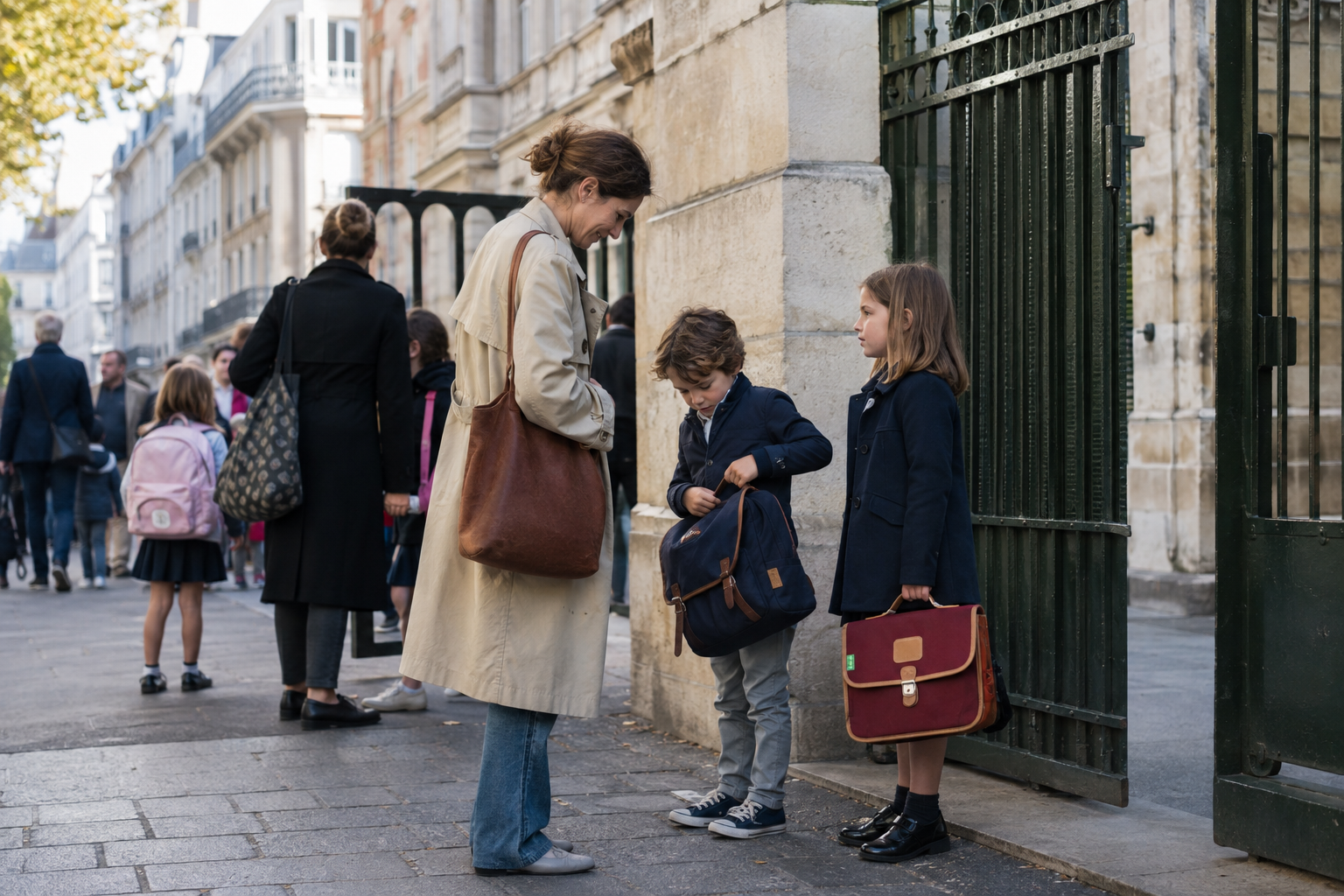
To understand the comparison, you first have to understand that la rentrée is far bigger than its literal meaning suggests. The word simply means the return or the re-entry, and at its narrowest it refers to the return to school after the long summer break, but in French life it has swollen into something much larger.
It is a return to everything at once. La rentrée marks the moment when the whole of France comes back from summer, not just children returning to classrooms but adults returning to work, politicians returning to parliament, and the entire cultural and social life of the country starting up again after the great pause of August, so it functions as a collective national restart rather than a mere school date. When the French speak of la rentrée, they mean the country switching back on.
The scale of it is what surprises outsiders. There is a rentrée for the schools, a rentrée for the workplaces, even a famous rentrée littéraire when hundreds of new novels flood the bookshops at once, along with new theatre seasons, new television, and fresh political battles, so the return touches every corner of national life simultaneously. It is not one sector reopening but all of them, together, in the same few days of early September. This simultaneity is precisely what gives la rentrée its peculiar power, and what most distinguishes it from the staggered, individual way fresh starts tend to happen elsewhere. When schools, offices, government, publishing, theatre and television all crank back to life in the same week, the effect is less like a series of separate reopenings and more like an entire nation inhaling at once. You cannot help but feel the shift, whether you have children in school or not, because the whole atmosphere around you changes character overnight.
Why September Is France’s Real New Year

Here is the heart of the comparison, because for the French, September carries the fresh-start energy that Americans invest in January. The turning of the calendar year in winter is, in France, a quieter and more indulgent affair, while the true sense of new beginnings arrives with the autumn return.
The French themselves say as much. It is widely observed in France that la rentrée feels more like a genuine new year than the first of January ever does, a time of fresh resolutions, new goals, and renewed energy carrying more real meaning than the midwinter holiday, so many French people treat September, not January, as the moment to begin again. The first of January, by contrast, is spent largely with family and good food, an extension of the December holidays rather than a launchpad.
This inversion catches many foreigners off guard. Someone arriving in France expecting the great annual reset to happen in winter finds instead that the country’s fresh-start energy is concentrated in early autumn, when the light is still good and the summer’s rest is fresh in everyone’s bodies, so the whole rhythm of the year is shifted from what they are used to. Once you see it, though, the September timing starts to look less like a quirk and more like wisdom. There is a certain logic to anchoring renewal to the end of summer rather than the depths of winter, and the more you consider it, the more the January convention looks like the odd one out. Autumn has always carried a whiff of new beginnings for anyone who ever went to school, that particular mix of fresh notebooks and slight dread, and the French have simply refused to grow out of it. They have kept, into adult life and across the whole society, the intuition that the year truly turns not in January but in September.
The Rest That Comes First

The first reason la rentrée works so much better than the January reset is that it follows a real period of rest, rather than the depleted aftermath of a holiday sprint. This difference in what precedes the reset turns out to matter enormously.
Consider what comes before each. The French rentrée follows the long summer holiday, a genuine stretch of weeks in which much of the country truly stops, rests, travels and recovers, so people arrive at September restored and with real energy to spend on new beginnings. August in France is not a busy month with a party at the end but a true pause, and people return from it refreshed rather than exhausted. This is not a small or incidental difference. A reset attempted by a rested person and a reset attempted by an exhausted one are almost different activities, however similar the resolutions themselves may sound. Energy is the raw material of change, the fuel that carries a new intention through the difficult early days before it becomes a habit, and the French simply arrive at their reset with far more of it in the tank. The January resolver, running on fumes after weeks of festivity, is trying to accelerate with an empty tank.
The January reset has no such foundation. It arrives instead at the tail end of a frantic, indulgent holiday season, in the cold and dark of midwinter, when people are often tired, overfed and depleted rather than rested, so they attempt their great fresh start from a position of exhaustion rather than renewal. Asking depleted people to summon the energy for major change is a poor design, and it is precisely the design of the January resolution.
The Whole Country Turns the Page Together

The second reason la rentrée succeeds is that it is collective, a reset the entire society undertakes at the same moment, which makes it vastly easier to sustain than a private resolution pursued alone. Fresh starts are far more powerful when everyone around you is making one too.
The social momentum is enormous. Because all of France returns and resets together in early September, an individual’s own fresh start is carried along by a powerful current of collective renewal, with everyone from colleagues to neighbours to the entire culture visibly beginning again at the same time, so you are swimming with the tide rather than against it. New routines are easier to build when the whole world around you is rebuilding its routines at the same moment.
The January resolution, by contrast, is often a lonely affair. While many people do make resolutions, they pursue them largely in private, each person struggling alone against their own habits with little collective structure to lean on, so the reset depends almost entirely on individual willpower, a notoriously unreliable fuel. A fresh start you make by yourself, with the rest of life carrying on unchanged around you, is a fragile thing.
Structure Instead of Willpower
The third and perhaps most important reason is that la rentrée comes with built-in structure, new external circumstances that make change easier, rather than relying on the sheer force of good intentions. This is the difference between changing your life and merely resolving to.
September truly changes people’s circumstances. The return to school and work brings real new schedules, timetables and routines, an actual restructuring of daily life that naturally creates openings for new habits to take hold, so the fresh start is scaffolded by changed circumstances rather than left to hang on willpower alone. When your entire schedule resets, slipping a new habit into the new structure is far easier than bolting one onto an unchanged life.
January offers no such scaffolding. The resolution is typically made while everything else in life stays exactly the same, the same job, the same schedule, the same commute and routines, so the person must generate all the change from within, through willpower, against the inertia of an unchanged environment, which is exactly why so many resolutions fail by February. Nothing about the first of January really alters the shape of your days, and that is the fatal flaw.
What Anyone Can Borrow From It
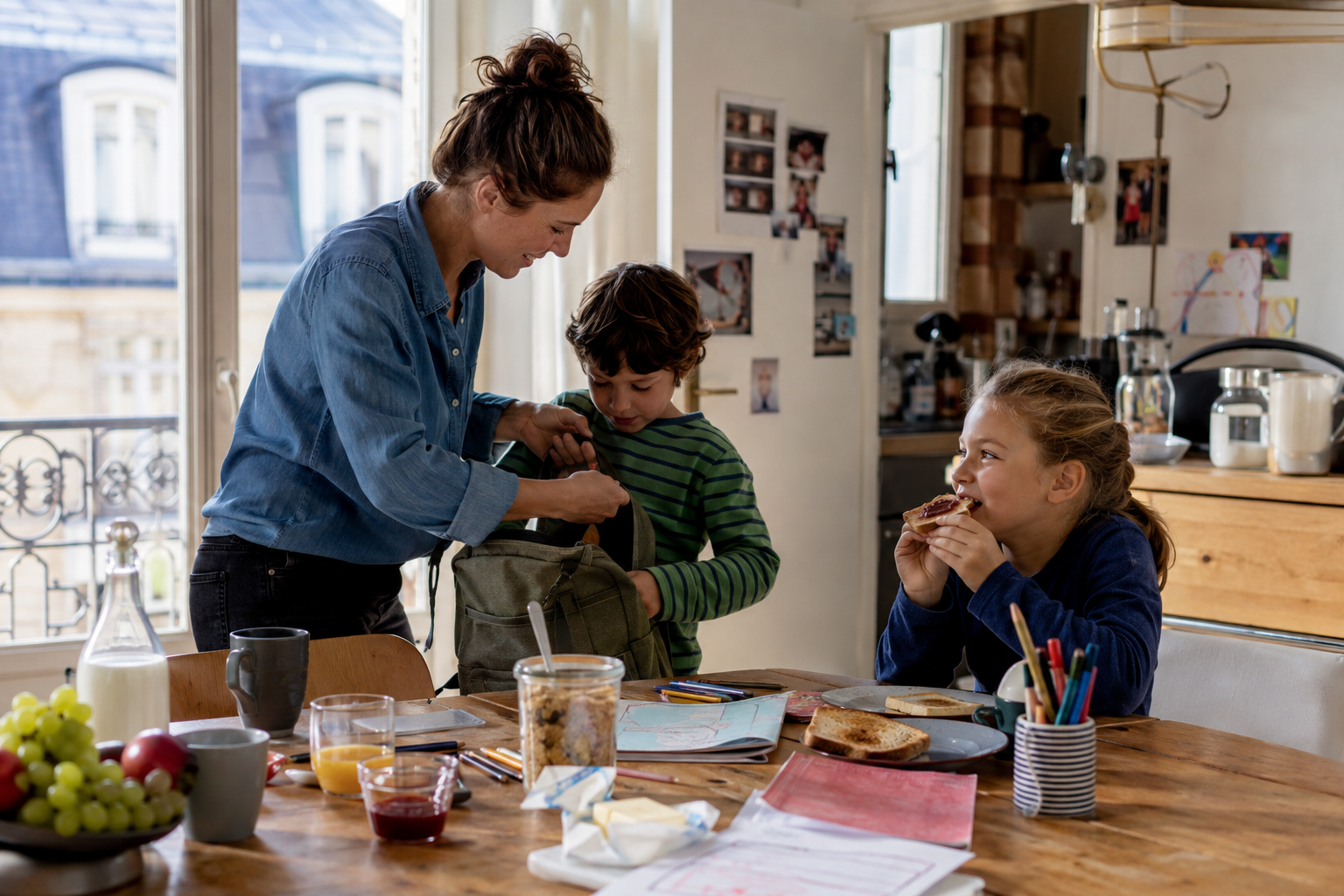
The lovely thing about understanding la rentrée is that its lessons are not uniquely French, but principles anyone can apply to make their own fresh starts more likely to stick. You do not need to live in France to borrow the logic behind why its reset works.
The principles are portable. La rentrée teaches that a reset works best when it follows real rest rather than exhaustion, when it is anchored to a natural change in your circumstances rather than an arbitrary date, and when it can draw on shared momentum rather than lonely willpower, so you can deliberately time your own fresh starts to align with these conditions. A new job, a move, a change of season, the start of a school year for your own children, any of these offers the kind of structural opening that makes change easier. The trick is to stop treating January as the only permitted starting line and to start noticing the natural starting lines your own life already offers. Most people have several a year if they look, moments when circumstances shift enough to make a new habit easier to slot in, and those moments are far more promising than an arbitrary date on a cold calendar. Timing a change to coincide with one of them is not a trick or an evasion, but simply a matter of working with the grain of your life instead of against it.
The deeper lesson is about timing and design. Rather than forcing a reset onto the coldest, darkest, most depleted moment of the year and relying on willpower to sustain it, you can choose to begin again when you are rested, when your circumstances are naturally shifting, and when you have some support around you, so you set yourself up to succeed rather than to struggle. The French have not discovered a secret unavailable to others, only stumbled onto a better time and structure for beginning again. And because it is a matter of design rather than culture, it travels. Nothing about resting before you reset, leaning on others while you do it, or attaching change to a genuine shift in circumstances is uniquely French, or even uniquely European. These are simply the conditions under which human beings actually manage to change, quietly ignored by the January tradition and quietly honoured by the September one. Anyone willing to notice the difference can arrange their own fresh starts accordingly.
The Reset Worth Copying

The lasting insight of la rentrée is that the success of a fresh start depends far less on willpower and far more on timing and circumstances, which is exactly why the French September reset tends to work where the American January one so often does not. It is not that the French are more disciplined, but that they attempt their great annual renewal at a moment designed for success rather than one designed for failure.
What makes this so worth knowing is that it hands you a better model for your own new beginnings. By resetting after rest rather than exhaustion, alongside others rather than alone, and on the back of real structural change rather than an arbitrary date, you dramatically improve the odds that a fresh start will really take hold, whatever the calendar says. The lesson of la rentrée is that you can choose your own new year, and choose it wisely.
So this September, as France streams back from its beaches and turns the page together, consider quietly joining them. Rather than waiting for January to make the same doomed promises in the cold, use the natural reset of early autumn, the changing season, the returning routines, the general sense of beginning again, to start whatever you have been meaning to start. You may find, as the French have long known, that September is a far better time than January to begin again, and that a reset built on rest and rhythm, rather than willpower alone, is the kind that truly lasts. The calendar, after all, is only a suggestion, and you are free to decide when your own year begins.

About the Author: Ruben, co-founder of Gamintraveler.com since 2014, is a seasoned traveler from Spain who has explored over 100 countries since 2009. Known for his extensive travel adventures across South America, Europe, the US, Australia, New Zealand, Asia, and Africa, Ruben combines his passion for adventurous yet sustainable living with his love for cycling, highlighted by his remarkable 5-month bicycle journey from Spain to Norway. He currently resides in Spain, where he continues sharing his travel experiences with his partner, Rachel, and their son, Han.