
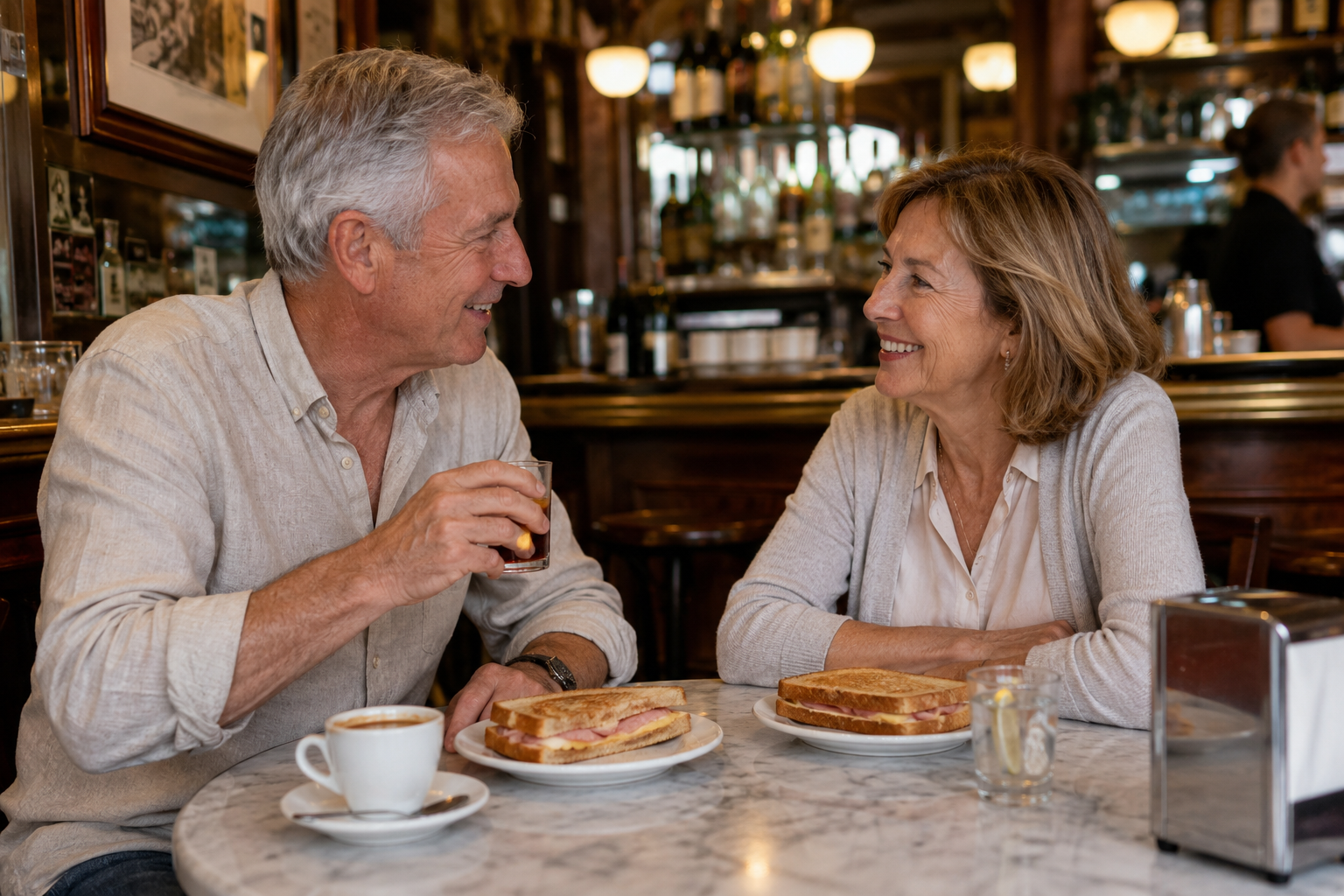
Order a bikini in a bar in Barcelona and no one will bat an eye. You will get a hot pressed sandwich of ham and cheese, crisp and golden on the outside, molten within, one of the most ordinary and beloved snacks in the whole city. Order the same thing by that name anywhere else in Spain, though, and you may get a puzzled look, because outside Catalonia this humble toastie goes by the far more sensible name of mixto. The bikini is a Barcelona thing, and while the sandwich itself is simplicity itself, just ham and cheese pressed between bread, the story of how it got its odd little name is one of the best small tales in Spanish food. It has nothing to do with swimsuits, and everything to do with a nightclub and a dictator.
That is the delightful thing about the bikini. The sandwich is good, honest, uncomplicated fare, the kind of thing you eat without thinking, but the name carries a whole hidden history, a story of Barcelona nightlife, French imports, and the small absurdities of life under a regime that policed even the words on a menu. Knowing where the name comes from turns a simple ham and cheese toastie into a little piece of the city’s past, which is exactly why the bikini is worth more than a passing bite.
Here is the real story behind the bikini’s name, why Barcelona alone calls its ham and cheese toastie this, and how to make a proper one at home. There is a real recipe below, so you can press your own bikini and eat a small piece of Barcelona history. The sandwich takes minutes to make and is delicious, but by the end you may agree that in this rare case, the story really is better than the sandwich.
The Sandwich Itself
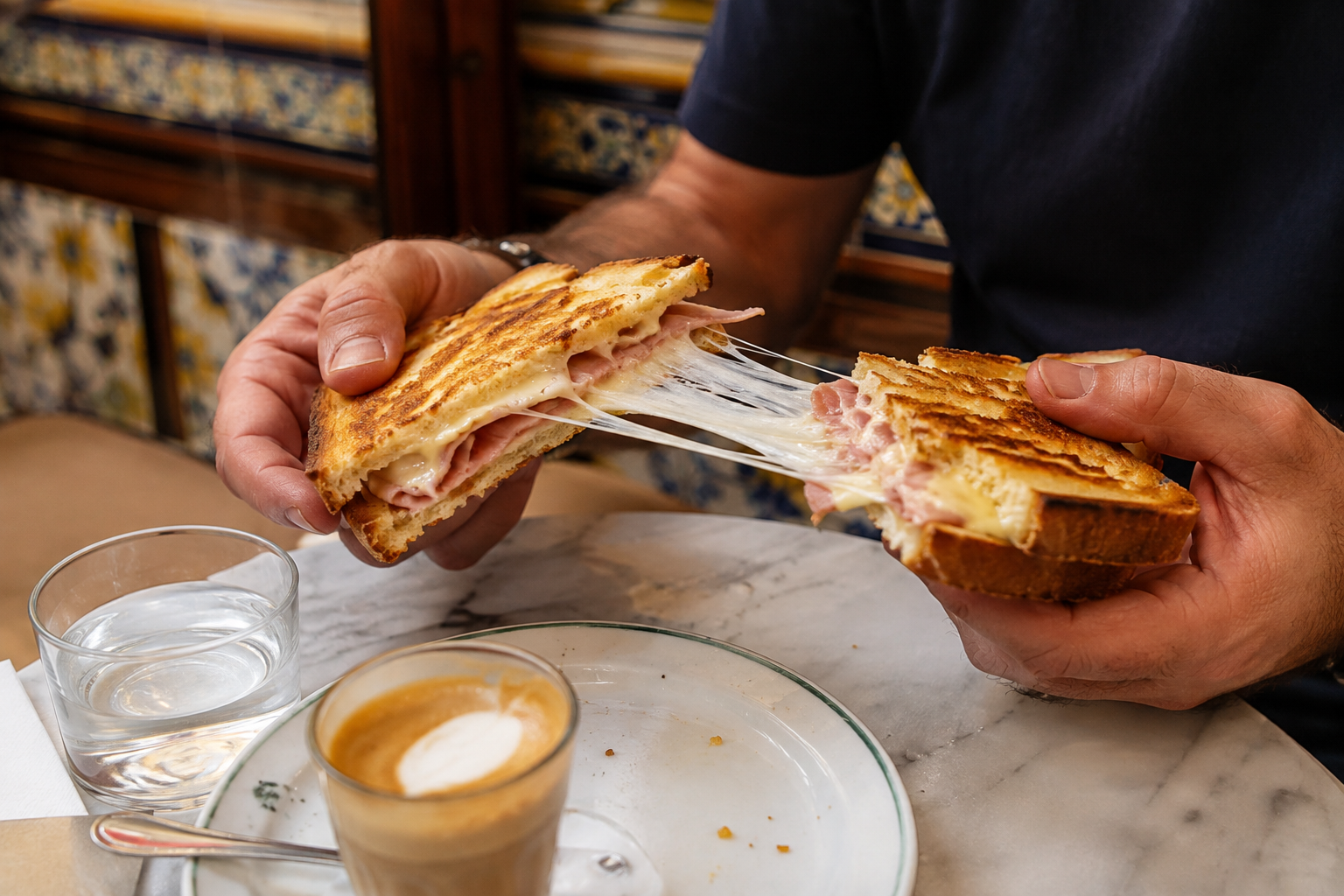
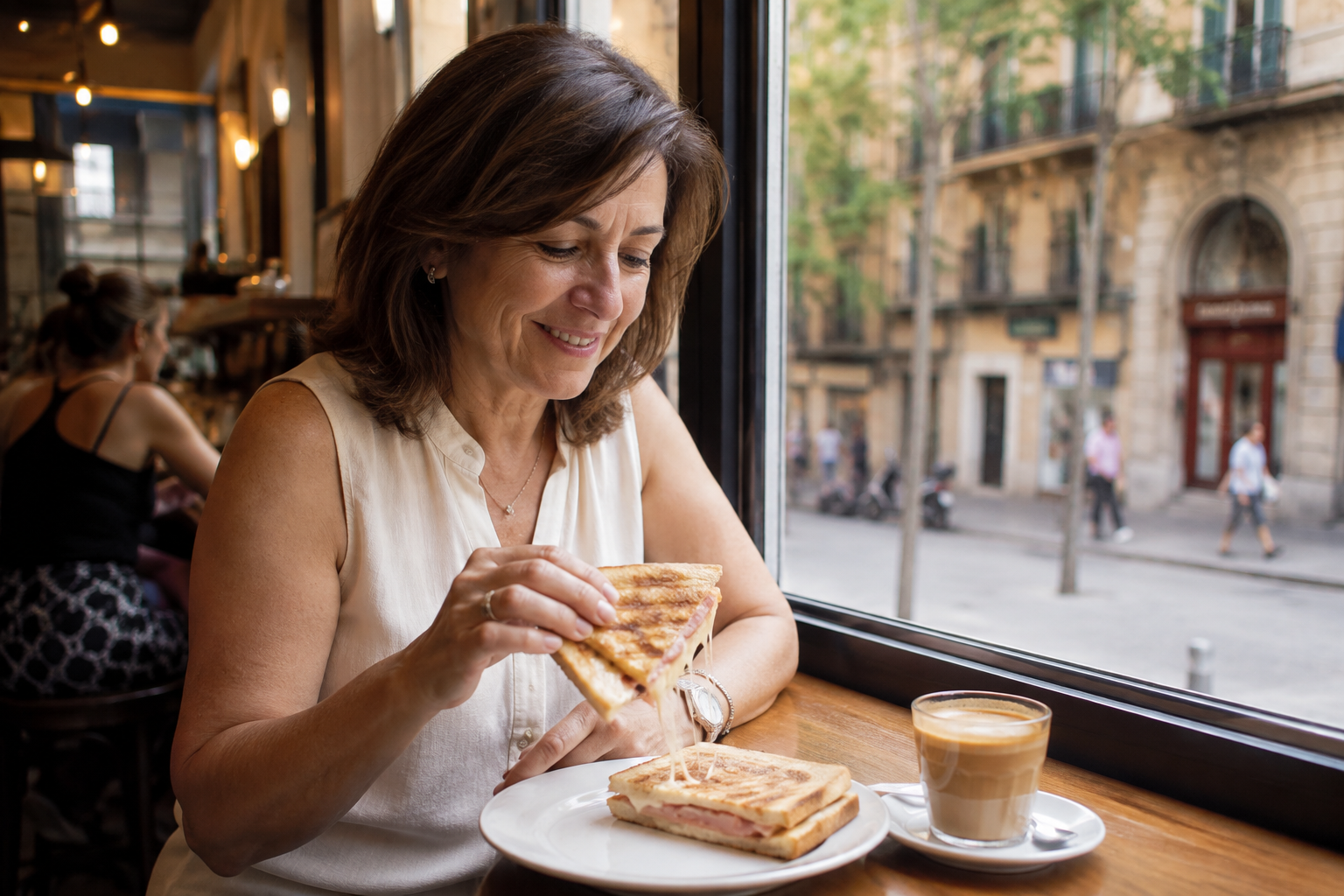
Before the story, it is worth being clear about what a bikini actually is, because it could hardly be more straightforward. At its heart, the bikini is a hot pressed sandwich of ham and cheese, closely related to the French croque monsieur that inspired it, served warm so the cheese melts and the bread crisps.
The essentials are few. You take slices of soft white bread, fill them with good ham and a cheese that melts well, and press and grill until the outside is golden and the cheese inside turns soft and gooey, and that is the whole thing, a Catalan cousin of the grilled cheese found the world over. It is the definition of simple comfort food, quick to make and reliably satisfying.
Over the years it has taken on a Spanish accent. While the original followed the French model with its particular ham and cheese, the Catalan bikini has come to be made with Spanish ingredients, often jamón serrano or ibérico in place of the French ham, and Spanish cheeses in place of the original, and the most celebrated modern versions add a luxurious touch of truffle. What began as a French import has become thoroughly, deliciously Catalan. This quiet transformation is part of what makes the bikini feel so at home in Barcelona now, despite its foreign roots. A sandwich that arrived speaking French has, over seventy years, learned to speak Catalan, trading its Gruyère and its Gallic ham for the flavors of the peninsula and settling into the everyday rhythm of the city’s bars. It is a small example of how food travels, arriving as one thing and becoming another, absorbed so completely that most people never think of it as an import at all.
The Name That Makes No Sense
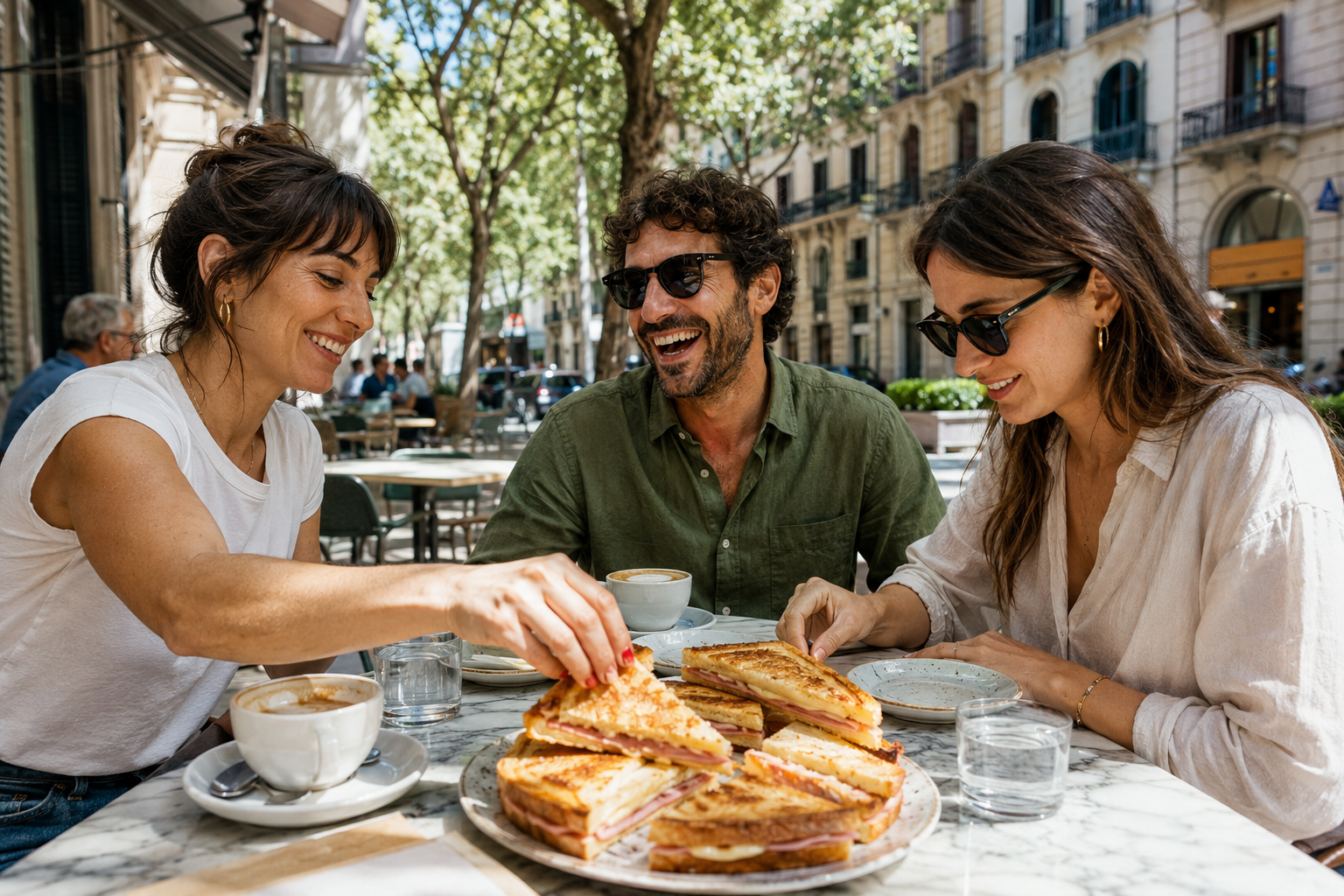
Here is where the bikini gets interesting, because the name is genuinely baffling until you know the story. A bikini, to almost everyone in the world, is a swimsuit, and there is nothing remotely beachy or swimsuit-related about a hot ham and cheese sandwich, so the Catalan use of the word seems, at first, completely inexplicable.
The confusion is real and often comedic. Because the name is used only in Catalonia, Spaniards from elsewhere and visitors alike are frequently baffled, and there are plenty of stories of people ordering a bikini in a bar outside Catalonia and being met with bewilderment, since everywhere else the same sandwich is simply a mixto. The word belongs to Barcelona and its region alone, a little piece of local vocabulary that does not travel.
So where on earth does it come from? The answer has nothing to do with the swimsuit and everything to do with a specific place in Barcelona, and once you hear it, the strange name suddenly makes perfect sense. The bikini is named not for what it looks like, but for where it was born. This is the sort of naming that happens more often than you might think, where a food takes its name not from any quality of its own but from a place, a person, or an accident of circumstance. Once you know the mechanism, the mystery evaporates and something more charming takes its place, the sense of a word quietly carrying a hidden story. The bikini is one of the purest examples, a name so disconnected from the thing it describes that it can only be explained by history.
A Nightclub Called Bikini
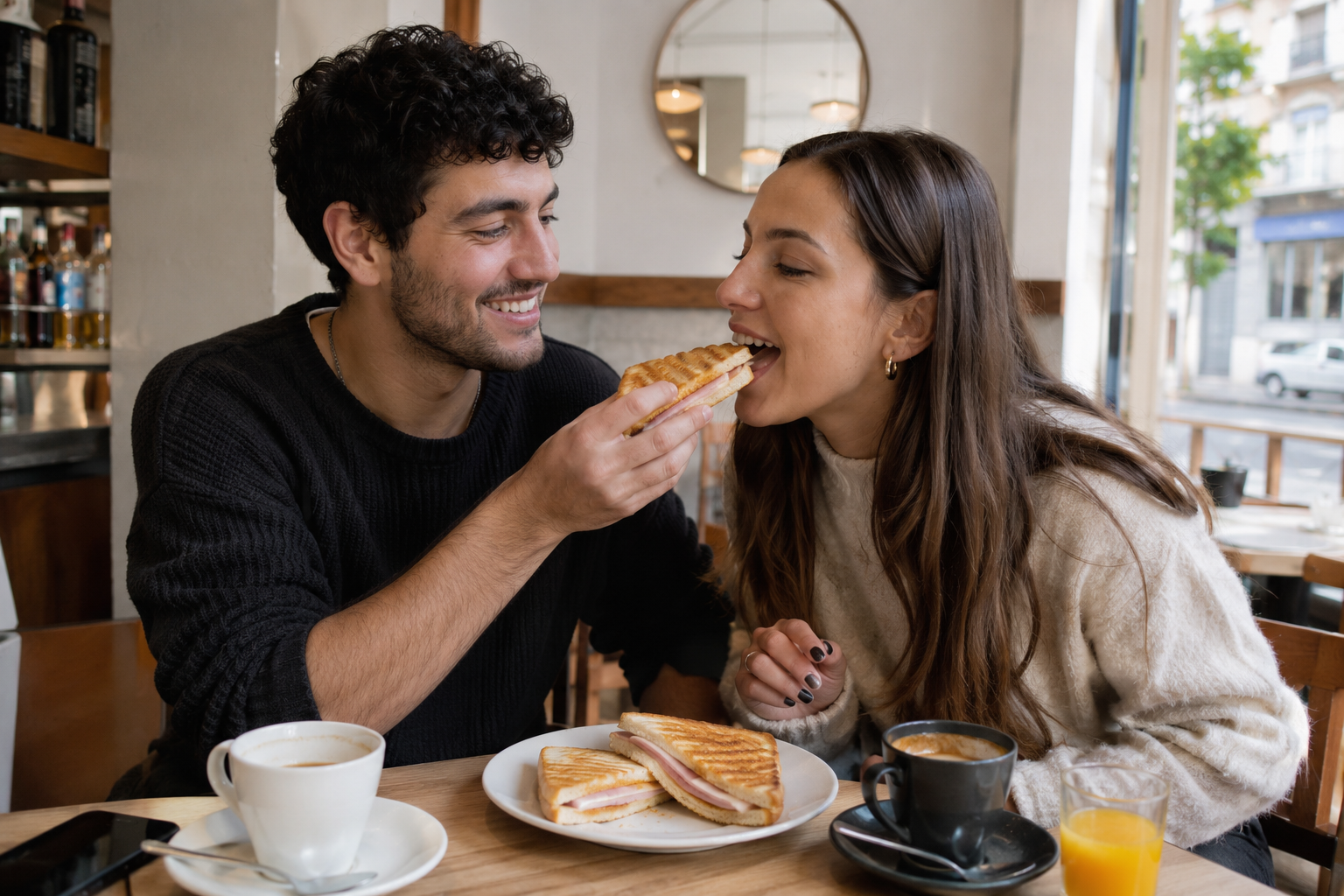
The story begins in 1953, when a Barcelona venue called La Sala Bikini opened its doors. This was the birthplace of the sandwich’s name, and knowing a little about the place explains everything that followed.
La Sala Bikini was a fashionable spot. It opened as a dance hall and entertainment venue, a lively place with a terrace and even mini golf, where people came to enjoy music, dancing and food, and it quickly became a well-known fixture of Barcelona social life. It was exactly the sort of modern, forward-looking establishment that wanted to offer its patrons something a little sophisticated and continental to eat.
That something was a French sandwich. Among the offerings was an adaptation of the croque monsieur, the French grilled ham and cheese sandwich, brought in to give the venue a fashionable European flair, and this sandwich proved to be a genuine hit with the club’s clientele. People came for the music and the dancing, and they stayed, increasingly, for the sandwich, which began to develop a reputation of its own. It is easy to picture how it happened, a fashionable crowd out for the evening, ordering this novel French-style toastie between dances, and word spreading that the place to eat one was Bikini. A dish can become associated with a venue that way almost by accident, and once the association takes hold it can outlast everything else about the place. The sandwich was becoming, without anyone quite deciding it should, the thing the club was known for.
The Dictator and the Menu
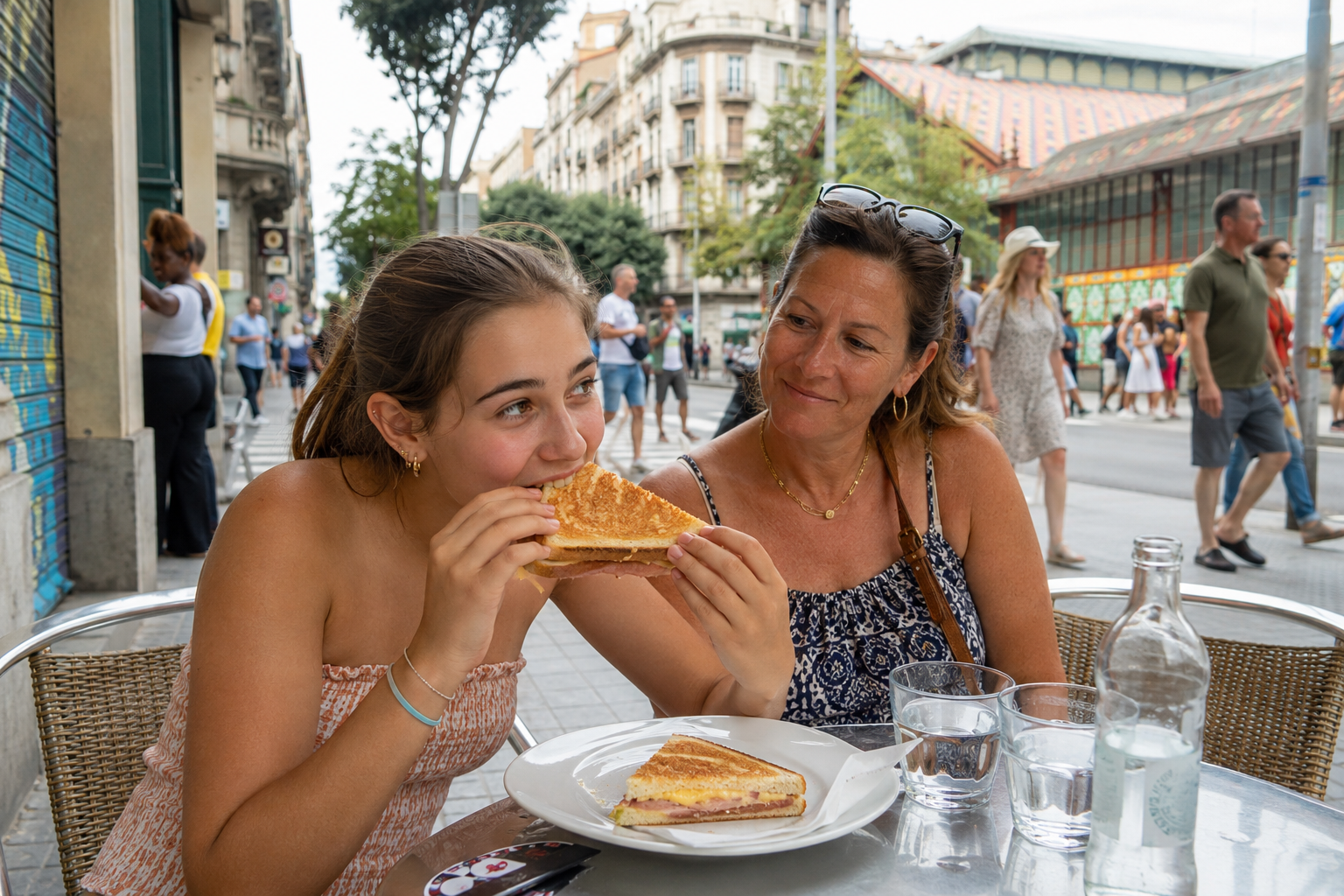
Now comes the twist that turned a club’s sandwich into a city’s word, and it involves the political reality of Spain at the time. In 1953, Spain was under the dictatorship of Francisco Franco, whose regime enforced strict rules about language, including a prohibition on foreign words like French or English on menus.
This created an awkward problem for the club. Since the sandwich could not be advertised by its French name, croque monsieur, because foreign words were forbidden, the venue simply listed it as the bocadillo de la casa, the house sandwich, a plain Spanish name that sidestepped the language rules entirely. The French sandwich went underground, in a sense, hiding behind a modest Spanish label.
But the customers had their own idea. Rather than calling it the house sandwich, patrons began asking for the sandwich they make at Bikini, and over time that phrase collapsed into a single word, until people were simply ordering a bikini. The name of the club became the name of the sandwich, a piece of Barcelona slang born from a nightclub and a censor’s rule.
Why the Story Outlasts the Club
What makes the tale especially lovely is that the club itself is still there, and still trading on the fame of the sandwich it accidentally named. The story did not end in the 1950s but continues, quietly, to this day.
The venue has evolved with the times. La Sala Bikini still exists, now known as the Bikini Club, though these days it is far better known as a music venue and nightclub than as the home of a sandwich, its culinary legend long since overtaken by its life as a music venue. The sandwich, meanwhile, escaped the club entirely and took on a life of its own across the city.
And escape it did, thoroughly. The bikini spread from that one venue to become a staple of tapas bars throughout Barcelona and Catalonia, ordered daily by people who may have no idea that they are invoking the name of a 1950s nightclub every time they ask for one, so the word has long outlived any memory of its origin for most of those who use it. The sandwich became so ordinary that its extraordinary little history was forgotten, which is part of what makes rediscovering it such a pleasure. There is something poignant in that, the way a thing can become so woven into daily life that the story of where it came from simply falls away. The people ordering bikinis today are not thinking of Franco or of a Belgian club owner or of a censor’s rulebook, only of a quick and tasty lunch. And yet the history is still there, dormant inside the word, waiting for anyone curious enough to ask why on earth a ham and cheese sandwich shares its name with a swimsuit.
The Recipe
Here is how to make a proper bikini at home. The method could not be simpler, and the only real keys are good ingredients and pressing it well so the outside crisps and the cheese melts. This makes two sandwiches.
Bikini (Catalan Ham and Cheese Toastie)
makes two, about ten minutes
Ingredients:
- White sandwich bread, four slices
- Butter, softened, or olive oil, for the bread
- Cooked ham or jamón serrano, four slices
- Cheese that melts well, such as a mild Gruyère or a Spanish melting cheese, enough for two sandwiches
- Optional, a little truffle butter for a luxurious version
Method:
- Lightly butter or oil the outer sides of the bread slices, the sides that will touch the pan.
- Build each sandwich by layering cheese, then ham, then more cheese between two slices of bread, so the cheese sits against the bread on both sides to help it melt and bind.
- If using truffle butter, spread a thin layer on the inside of the bread before adding the filling.
- Heat a frying pan, sandwich press, or plancha over medium heat.
- Press the sandwich in the pan, weighting it down with a spatula or a second pan if you have no press, and cook until the underside is golden and crisp.
- Flip and press the other side until it too is golden and the cheese is fully melted.
- Cut in half and serve at once, while hot and crisp.
That is all there is to it, a hot, crisp, molten ham and cheese toastie in about ten minutes, exactly as they make it in Barcelona.
Getting It Right
Simple as it is, a few small things separate a good bikini from a great one, and they are all easy to attend to. The most important is the cheese, so choose one that melts smoothly and generously, since a bikini lives or dies on that molten interior, and a cheese that stays stubborn and firm will disappoint.
The bread and the pressing matter too. Use a soft white bread that will crisp nicely on the outside while staying tender within, and press the sandwich firmly so it turns thin and compact with a properly crunchy crust, which is what distinguishes a real bikini from a lazy untoasted sandwich. The contrast of crisp outside and soft, melting inside is the whole pleasure of the thing.
The final flourish is optional but worth knowing. The most celebrated modern bikinis, served in some of Barcelona’s smartest tapas bars, gild the simple sandwich with a little truffle, whether truffle butter or a shaving of the real thing, which turns the humble toastie into something quietly luxurious, so if you want to taste the bikini at its most refined, a touch of truffle is the way. But even without it, made well with good ham and melting cheese, the plain bikini is a small joy.
More Than a Sandwich
The lasting charm of the bikini is that it proves how much history a humble food can carry, how a plain ham and cheese toastie can hold within its name a whole story of nightclubs and dictators and the small ways ordinary life bends around them. The sandwich is good, but the story is unforgettable, and knowing it makes every bikini taste a little richer.
What makes it worth knowing is exactly that layering of the everyday and the historical. You can make and eat a bikini in fifteen minutes, a quick and satisfying snack, and yet in doing so you are handling a small artifact of Barcelona’s past, a word smuggled out of a 1950s nightclub under the nose of a censor and into the everyday speech of a city. Few sandwiches carry so much in so little.
So the next time you want a ham and cheese toastie with a side of history, make yourself a bikini. Press the bread until it is golden, let the cheese melt into the ham, and as you eat, remember that you are enjoying a sandwich named not for a swimsuit but for a Barcelona dance hall, rechristened by clever customers dodging a dictator’s language laws. The toastie will be delicious, quick and comforting, but the story behind its name, as you now know, is even better than the sandwich itself. Not every lunch comes with a piece of history folded inside it, and this one quietly does.

About the Author: Ruben, co-founder of Gamintraveler.com since 2014, is a seasoned traveler from Spain who has explored over 100 countries since 2009. Known for his extensive travel adventures across South America, Europe, the US, Australia, New Zealand, Asia, and Africa, Ruben combines his passion for adventurous yet sustainable living with his love for cycling, highlighted by his remarkable 5-month bicycle journey from Spain to Norway. He currently resides in Spain, where he continues sharing his travel experiences with his partner, Rachel, and their son, Han.