
There is a dish in Madrid that looks, at first glance, like something went slightly wrong in the kitchen. A pile of fried potatoes, a couple of fried eggs slumped on top with their yolks split and running everywhere, maybe some salty cured ham thrown carelessly over the lot. It is not neat, it is not fancy in the least, and it is one of the most beloved plates in the whole city. This is huevos rotos, broken eggs, and its glorious messiness is the entire point. The yolks are meant to be broken, to run down and soak into the crisp potatoes and salty ham, and the dish is defined not by any clever technique but by the deliberate, delicious absence of one. If you can fry a potato and fry an egg, you can make Madrid’s favorite comfort food, because there is truly nothing else to it.
That is what makes huevos rotos so wonderful and so worth knowing. In a world of recipes that demand precision and skill, here is a dish that is famous precisely for requiring neither, a plate whose whole charm lies in its rustic simplicity and refusal to be refined. It is peasant food elevated to an icon, humble ingredients you already have transformed into something you will crave, and the only real skill it asks is the willingness to break the eggs and let the mess happen. It is, in the best sense, cooking without technique.
Here is what huevos rotos really is, where it comes from, why the broken yolks are the whole secret, and exactly how to make this Madrid classic at home. There is a real recipe below, the traditional method, so you can put a plate of Madrid on your own table tonight. Once you tear into that first forkful of crisp potato coated in runny yolk and salty ham, you will understand why this unpretentious pile of broken eggs is one of the dishes Madrileños love most.
Madrid on a Plate
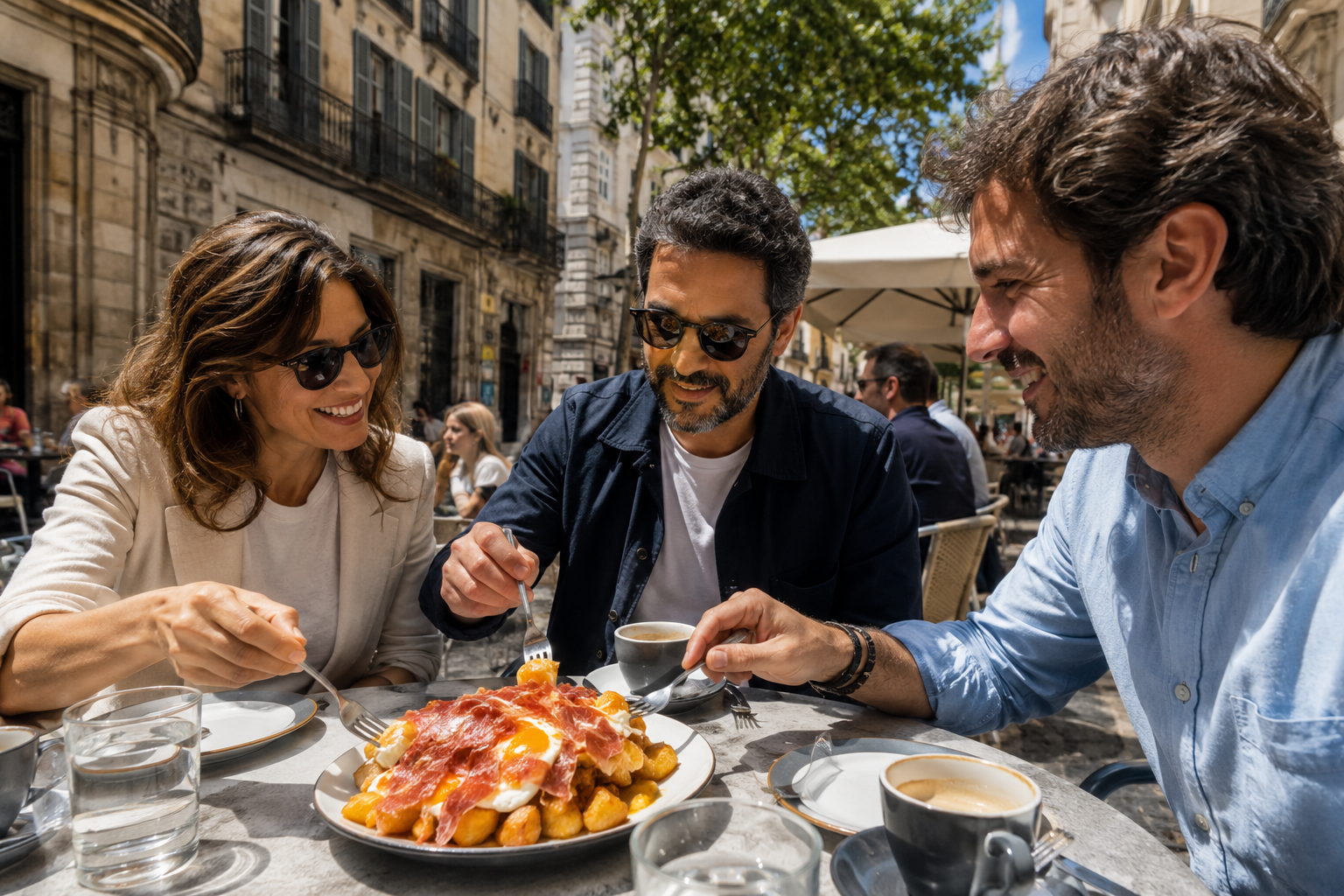
To understand huevos rotos is to understand something about how Madrid eats, because this dish captures the city’s food culture in a single messy plate. It is unfussy, generous, deeply satisfying, and built from cheap and humble ingredients, which is exactly the spirit of the best Madrid cooking.
The dish belongs everywhere in the city. Huevos rotos turns up in humble neighborhood taverns and grand old restaurants alike, eaten by everyone from workers grabbing a filling lunch to families out for a treat, so it crosses every line in a way few dishes do, beloved up and down the social scale. It is the kind of food that a fancy restaurant is proud to serve and a corner bar makes brilliantly, which tells you something about how good the simple version really is. There is something quietly democratic about a dish like this, in the best Spanish way. It does not belong to the rich or the poor, the humble cook or the celebrated chef, but to everyone at once, which is part of why Madrileños feel such affection for it. A plate that costs almost nothing to make and yet turns up proudly on the menus of famous restaurants is a rare and lovely thing, and it says a great deal about a food culture that prizes flavor and generosity over fuss.
Its role in the day is worth knowing too. While it might look like breakfast to an outsider, with its eggs and potatoes, huevos rotos in Spain is more typically a lunch, a dinner, or a late-night dish, and it has a particular reputation as the perfect restorative after a long night out, a warm and comforting plate to set the world right again. It is comfort food in the truest sense, the thing you reach for when you want to feel looked after. Ask anyone who has spent real time in Madrid and they will likely have a memory attached to it, a late lunch that stretched into the afternoon, a plate shared after a long night, a tavern where they first understood what the fuss was about. The dish carries that weight of everyday memory precisely because it is so ordinary, the food of unremarkable good days rather than special occasions. That is the quiet power of comfort food, and huevos rotos has it in abundance.
Where the Broken Eggs Came From
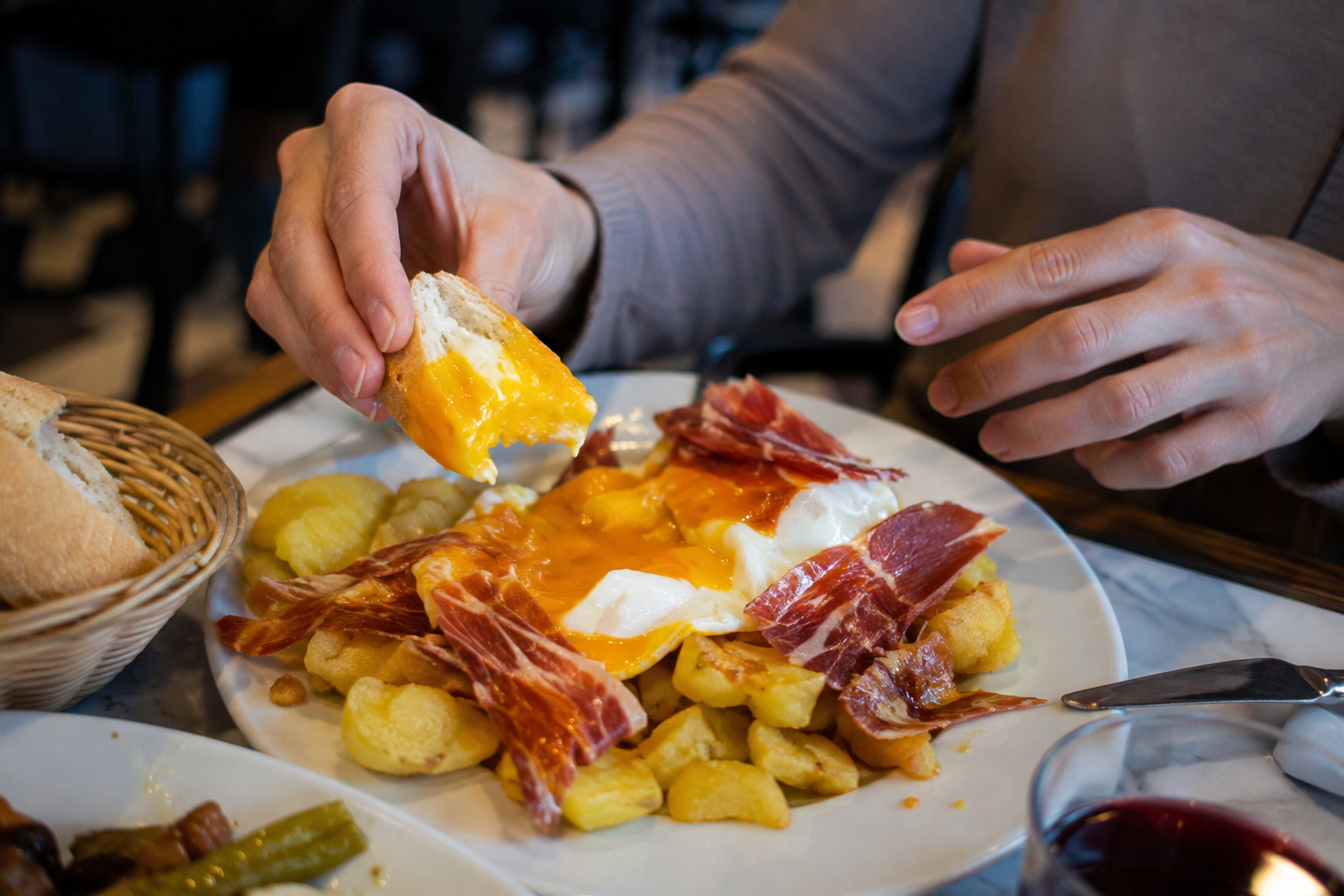
Like many great humble dishes, huevos rotos has origins in thrift, in making something wonderful out of very little, and the story behind it is as charming as the plate itself. This was food born of necessity that became food loved for pleasure.
The dish has deep roots in simple home cooking. Eggs and fried potatoes have been a staple of Spanish kitchens forever, a cheap and filling combination that stretched a little protein into a satisfying meal, so the basic idea is old and humble, the food of ordinary households making do with what they had. The fried egg is such a fixture of Spanish life that Velázquez painted an old woman frying eggs into a famous canvas four centuries ago.
The modern fame of the dish, though, has a more specific origin. Huevos rotos as Madrid knows it today is closely associated with a legendary Madrid tavern, Casa Lucio, whose owner Lucio put the dish on the menu in the 1970s, and the story goes that the idea came from his grandmother, who when an egg broke would rescue it by breaking it over fried potatoes. From that happy accident of thrift, a grandmother saving a broken egg, grew one of the most iconic plates in the city. It is a fittingly humble origin for a humble dish, and a reminder that a great many beloved foods began exactly this way, as clever solutions to the problem of not wasting anything. The grandmother who broke her ruined egg over the potatoes was not inventing a signature dish but simply refusing to throw food away, and in doing so she stumbled onto something better than what she had set out to make. The best cooking often works like that, arriving sideways out of necessity rather than ambition.
Why Broken Is the Whole Point
The name huevos rotos means broken eggs, and understanding why the eggs are broken is understanding the entire dish, because the brokenness is not a flaw but the defining feature. This is a dish built around a single, simple, glorious action.
The magic is in the running yolk. The eggs are fried so the whites are set but the yolks stay soft and liquid, and then, either in the pan or at the table, the yolks are deliberately broken so the golden liquid runs down over everything beneath, coating the potatoes and ham in rich, silky yolk. That flood of warm yolk is what binds the dish together and makes it so irresistible, turning a pile of separate ingredients into one glorious, unified mouthful.
This is why the dish is sometimes called by another name. In some places they are known as huevos estrellados, meaning smashed or starry eggs, a name that captures the same essential act of breaking the eggs across the potatoes, so whichever name you meet, the idea is identical. The breaking is not a step to be tidied away but the very heart of the thing, the moment the plate becomes what it is meant to be.
Zero Technique Required
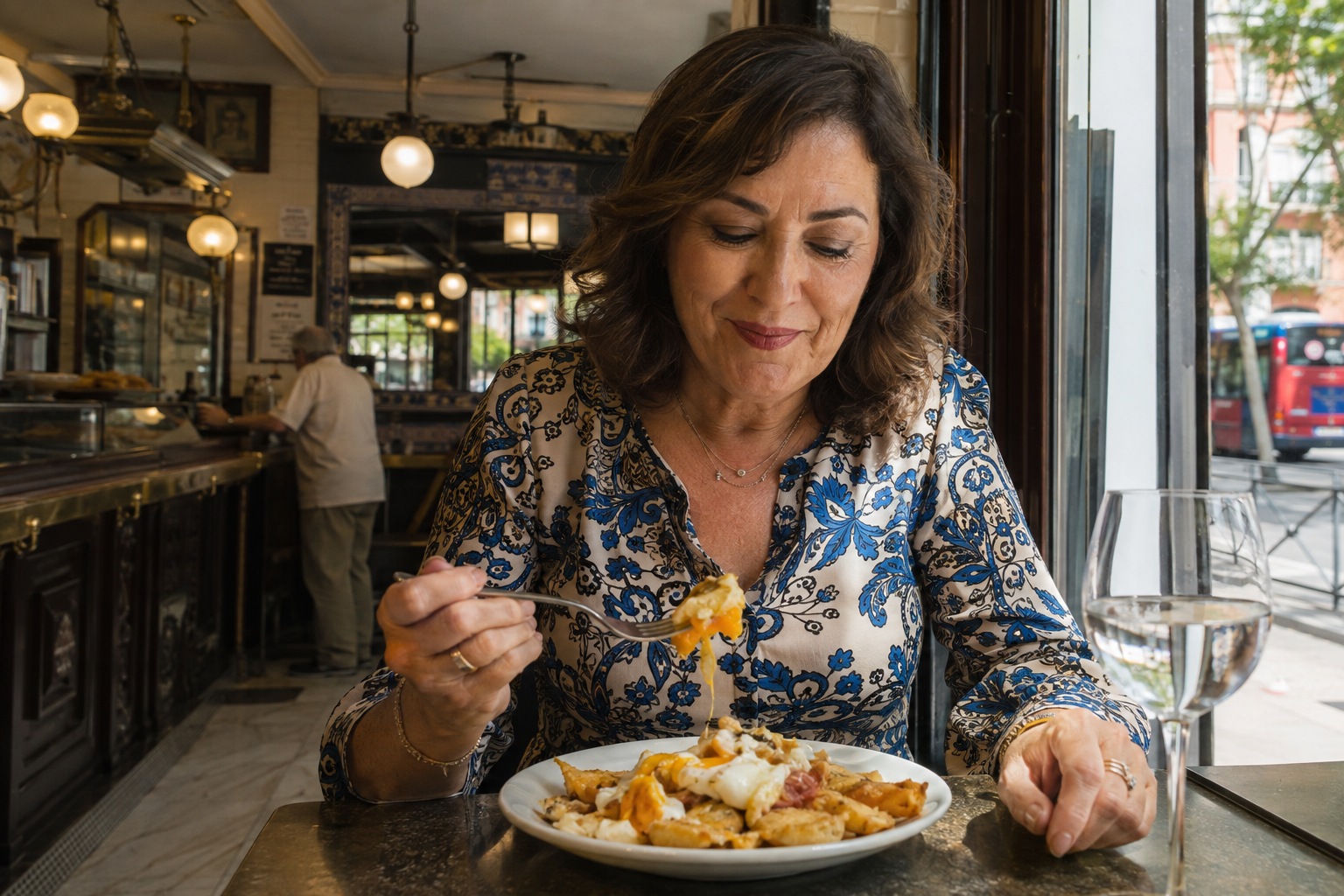
Here is the promise the dish makes and keeps: there is essentially no technique involved, nothing to master, nothing that can go badly wrong if you can manage a frying pan. This is what makes huevos rotos such a joy for anyone who feels unsure in the kitchen.
The whole method is just frying two easy things. You fry potatoes until golden, you fry eggs until the whites set and the yolks stay runny, you pile one on the other and break the yolks, and that is the entire recipe, with no sauces to balance, no timings to nail precisely, no skills to have practiced. The only two things you need to get roughly right are cooking the potatoes crisp and not overcooking the eggs so the yolks stay liquid, and neither is remotely difficult.
This is the great gift of the dish. Huevos rotos tastes like a beloved restaurant classic while asking almost nothing of the cook you could make, so it rewards you far out of proportion to the effort, which is the definition of a perfect everyday recipe. It is proof that impressive, deeply satisfying food does not have to be complicated, and that sometimes the least refined dish on the table is the one everyone fights over. This is a lesson worth carrying beyond this one plate, because the fear of cooking often comes from imagining that good food requires expertise most of us do not have. Huevos rotos quietly demolishes that idea. It shows that the gap between a sad plain plate and a truly craveable one can be as small as good olive oil, a little patience with the potatoes, and the confidence to leave the yolks runny and break them at the table. Master this, and you have learned something that applies to a hundred other simple dishes.
The Recipe
Here is the traditional method for huevos rotos. The only things to remember are to fry the potatoes properly and to keep the yolks runny, and the dish will take care of itself. This makes a generous plate for two to share.
Huevos Rotos (Spanish Broken Eggs)
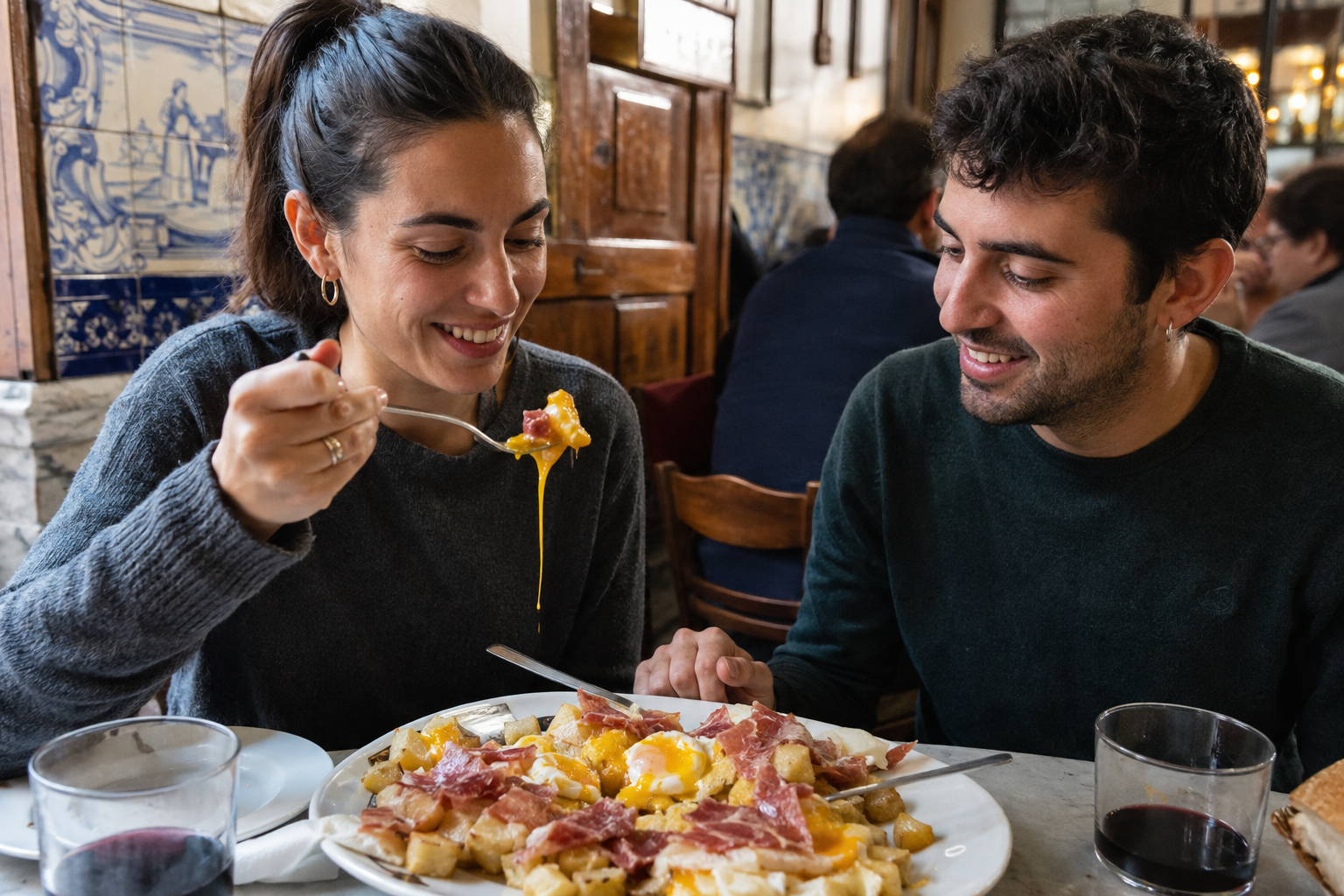
serves two, about twenty-five minutes
Ingredients:
- Potatoes, two large, peeled and cut into thin batons or slices
- Olive oil, plenty for frying
- Eggs, four
- Jamón or chorizo, a few slices or a handful, optional
- Salt, to taste
- Smoked paprika, a pinch, optional
Method:
- Heat a generous amount of olive oil in a frying pan over medium heat.
- Add the potatoes and fry, turning now and then, until golden and tender, about ten to fifteen minutes, then remove and drain on paper towels and season with salt.
- If using chorizo, fry it briefly in the same pan until it colors, then set aside. Jamón can simply be laid on at the end.
- In the same oil, crack in the eggs and fry gently until the whites are set but the yolks remain soft and runny.
- Spread the fried potatoes on a serving plate, lay the eggs over the top, and add the jamón or chorizo.
- Season with salt and a pinch of smoked paprika if you like.
- Right before eating, break the yolks with a fork or knife so they run down and coat the potatoes and ham, then dig in at once.
That is the whole thing, a plate of proper Madrid comfort food from a few humble pantry staples and about twenty-five minutes of thoroughly easy cooking.
Getting It Just Right
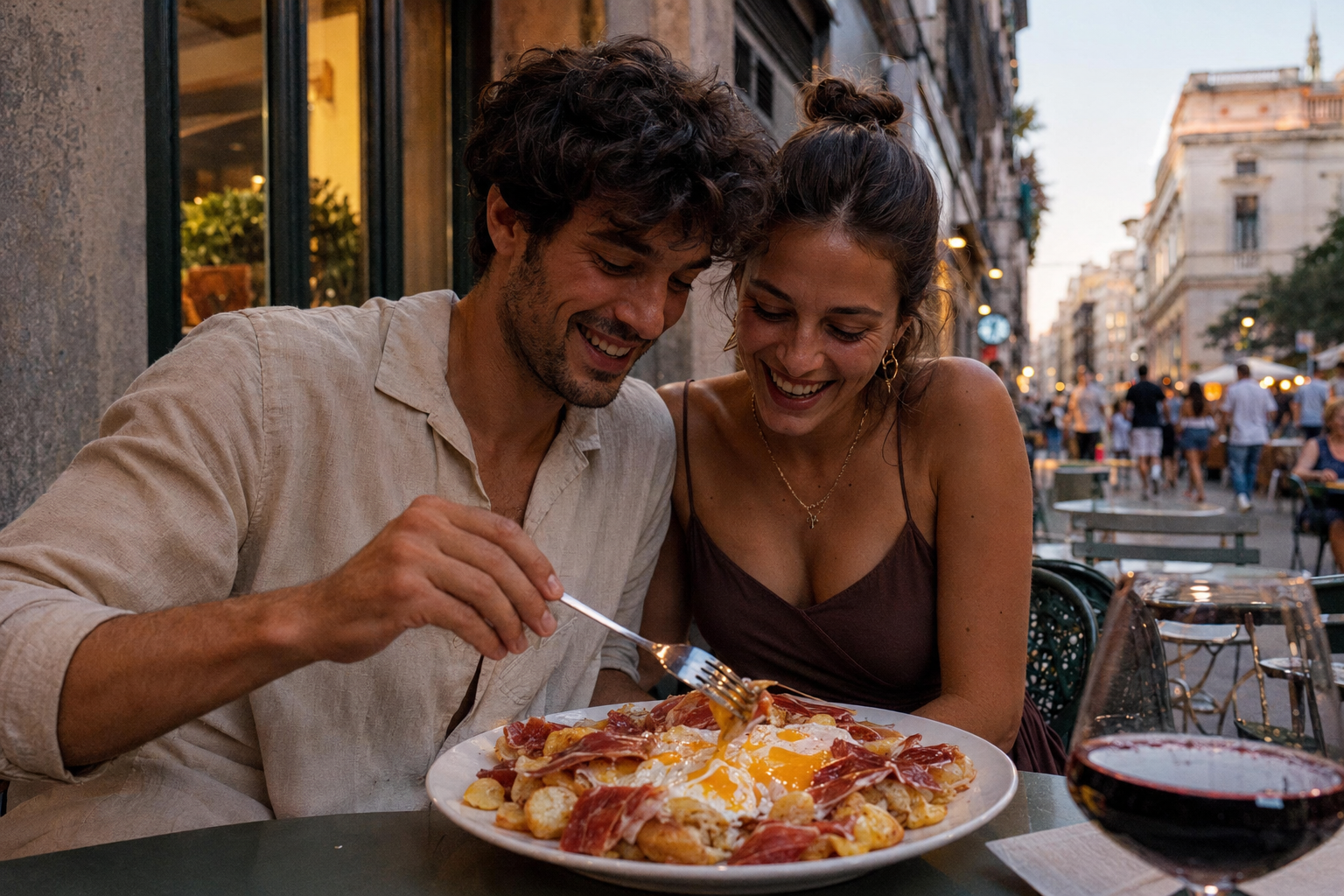
Although the dish is nearly foolproof, a few small touches lift a good plate of huevos rotos into a great one, and they are all easy to honor. The most important is the olive oil, so use a good one and be generous with it, since the potatoes and eggs both fry in it and it carries much of the flavor, which is why Spanish cooks never skimp on it here.
The two components each reward a little care. Fry the potatoes patiently so they turn properly golden and tender rather than pale and soft, giving them the crisp-edged texture that stands up to the yolk, and watch the eggs closely so you pull them while the whites are just set and the yolks still fully liquid, because an overcooked yolk that cannot run defeats the entire purpose. Runny yolks are non-negotiable.
Timing and toppings finish the job. Serve huevos rotos immediately, while the potatoes are still crisp and the eggs hot, since it does not wait well, and choose a topping you love, whether classic jamón, spicy chorizo, or, for a meatless version, some fried peppers or mushrooms in their place. The dish is endlessly forgiving of what you put on top, so long as the potatoes are crisp, the yolks are runny, and it all reaches the table at once.
A Plate Worth Breaking Into
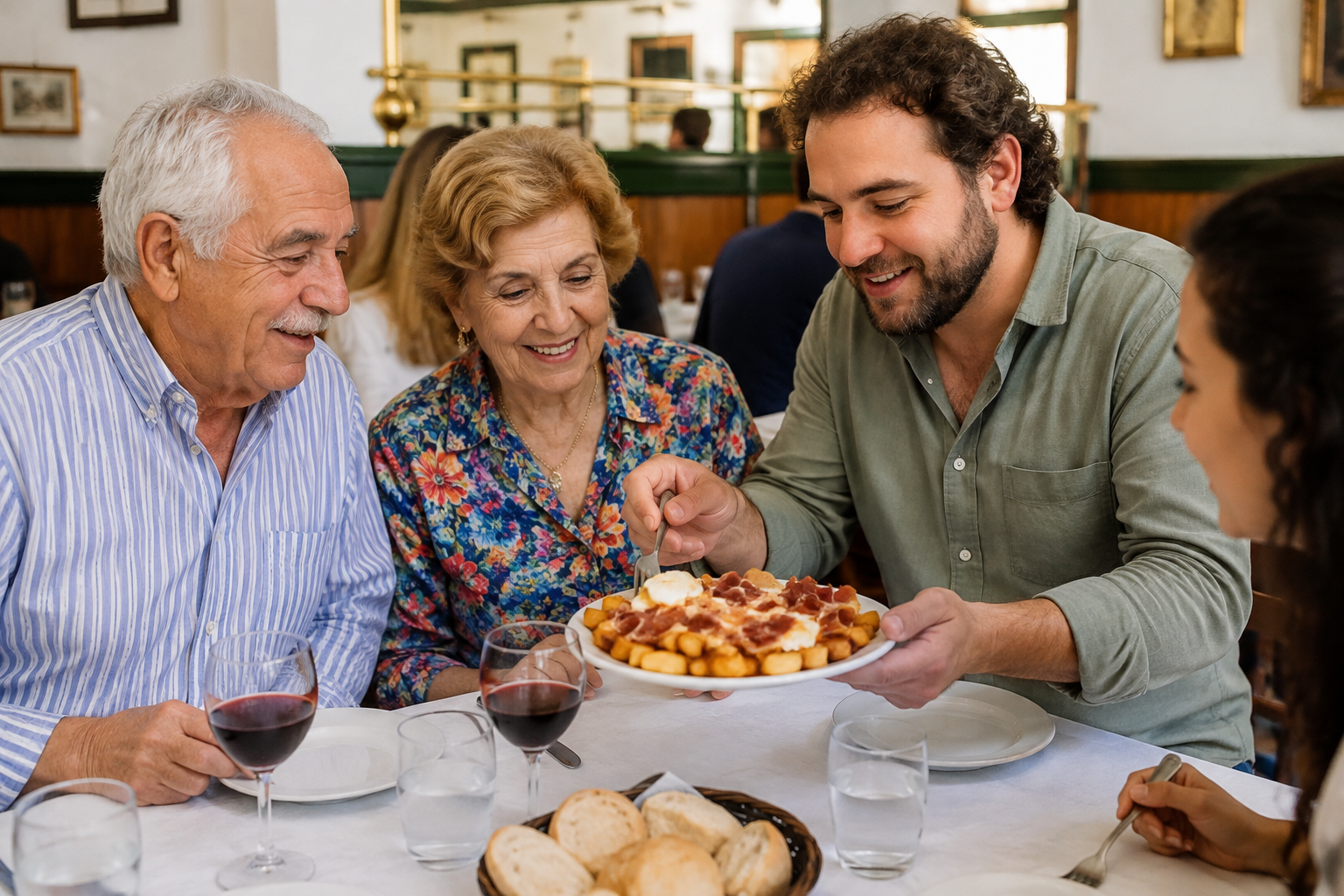
The lasting joy of huevos rotos is that it delivers so much pleasure from so little, a genuinely iconic Madrid dish that anyone can make on a weeknight from potatoes, eggs and whatever salty topping is to hand. It asks no skill and forgives every clumsiness, yet it produces a plate that tastes like the city itself, generous and unpretentious and deeply comforting.
What makes it worth adding to your regular rotation is exactly this rare combination of ease and reward. Few dishes this simple to make are this satisfying to eat, which is precisely why it has stayed a staple of Madrid life for generations, equally at home in a humble bar and a grand restaurant, and equally welcome as a quick lunch or a late-night restorative. Once it is in your repertoire, you will reach for it whenever you want maximum comfort for minimum fuss.
So the next time you want to eat like a Madrileño without any of the work, fry up some potatoes, slip a few eggs on top, throw over some ham, and break those yolks with abandon. Let the golden yolk run into every crisp corner of the potatoes, add a little salt and paprika, and eat it straight away while it is hot and glorious. Huevos rotos was never meant to be neat or clever, only honest and delicious, and one messy, yolk-soaked forkful is all it takes to understand why Madrid loves its broken eggs so much. It is the taste of the city at its most unpretentious and its most generous, a whole way of eating captured in a plate you can throw together on a Tuesday.

About the Author: Ruben, co-founder of Gamintraveler.com since 2014, is a seasoned traveler from Spain who has explored over 100 countries since 2009. Known for his extensive travel adventures across South America, Europe, the US, Australia, New Zealand, Asia, and Africa, Ruben combines his passion for adventurous yet sustainable living with his love for cycling, highlighted by his remarkable 5-month bicycle journey from Spain to Norway. He currently resides in Spain, where he continues sharing his travel experiences with his partner, Rachel, and their son, Han.