
The Tuscans eat so many beans that the rest of Italy teases them for it, calling them mangiafagioli, the bean-eaters, and they wear the nickname with pride. At the heart of that devotion is a dish so simple it barely counts as a recipe, just white beans warmed in good olive oil with garlic and sage, seasoned with salt and pepper and finished with a generous pour of the best oil in the house. It is the kind of thing a Tuscan grandmother makes without measuring anything, without writing anything down, because it lives in her hands rather than on paper. She learned it by watching her own mother and grandmother, and she measures the oil by eye and the sage by instinct, adjusting to the beans in front of her the way a musician adjusts to a room. And in its quick version, using beans from a can or jar, it comes together in about ten minutes and makes a dinner good enough to serve to anyone.
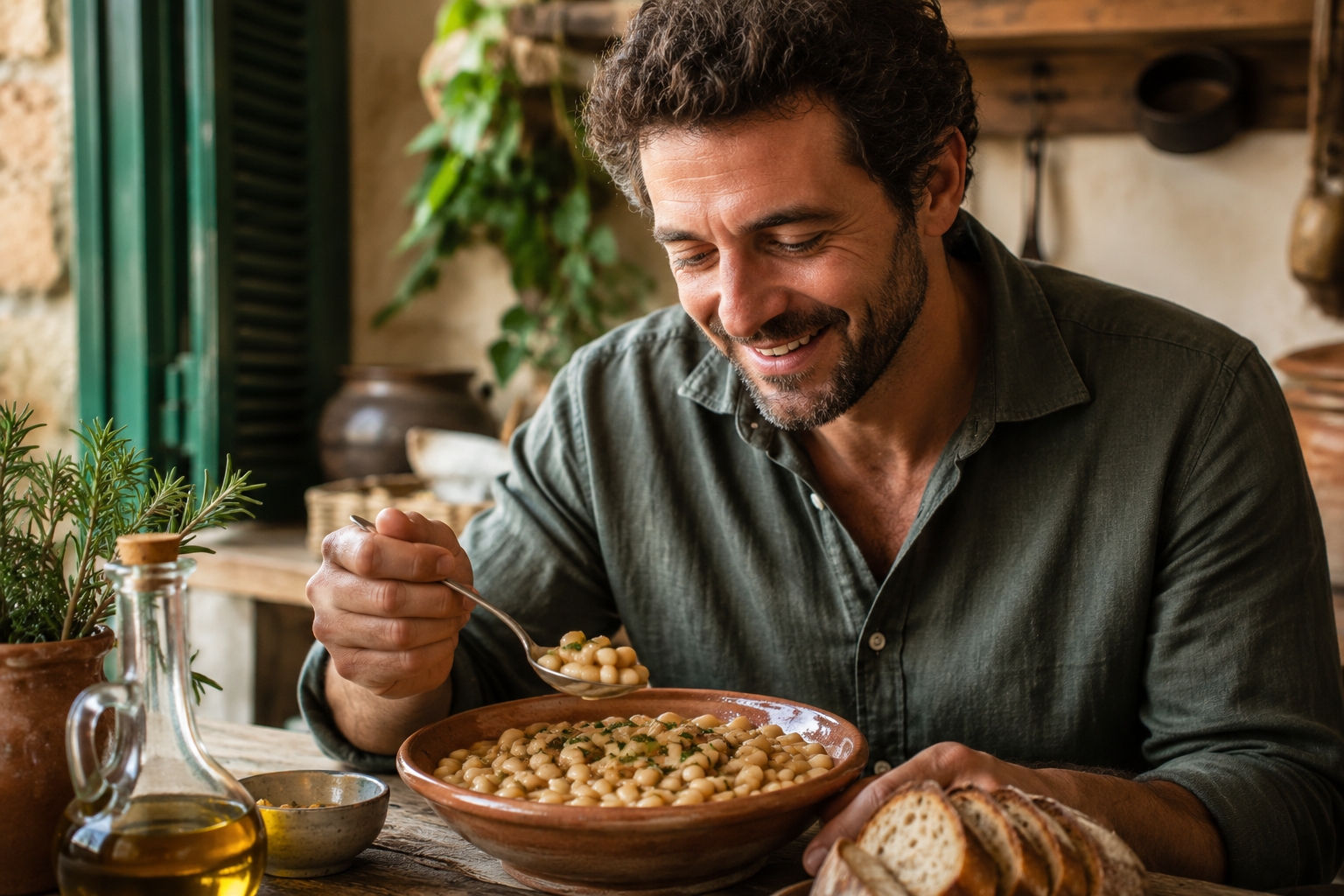
This dish, known in Italy as fagioli all’olio, beans in oil, is a perfect example of what the Italians call cucina povera, the poor kitchen, the tradition of making deeply satisfying food from humble, inexpensive ingredients. There is nothing fancy about it, no cream, no stock, no long list of components, just beans, oil and a couple of aromatics, and yet the result is somehow greater than the sum of those plain parts. It is proof that great cooking is often a matter of good ingredients treated simply rather than clever techniques piled high. This is a lesson Italian home cooking teaches over and over, but few dishes make the case as plainly as this one. There is nowhere to hide in a bowl of beans and oil, no sauce to mask a mediocre ingredient, no technique to distract from a dull one, which is exactly why the quality of what you start with matters so much. Simplicity is not the easy option here but the demanding one, and it rewards good beans and good oil as surely as it exposes poor ones.
Here is what makes Tuscan white beans so special, how the traditional version is made, how to make the quick ten-minute version tonight, and all the ways to enjoy them. There is a real recipe below, the fast weeknight method that keeps the dish honest to its roots while fitting a busy life. This is comfort food at its most elemental, and once you taste how much flavor comes from so little, you will understand why an entire region built its cooking around the humble bean.
The Tuscan Love of Beans
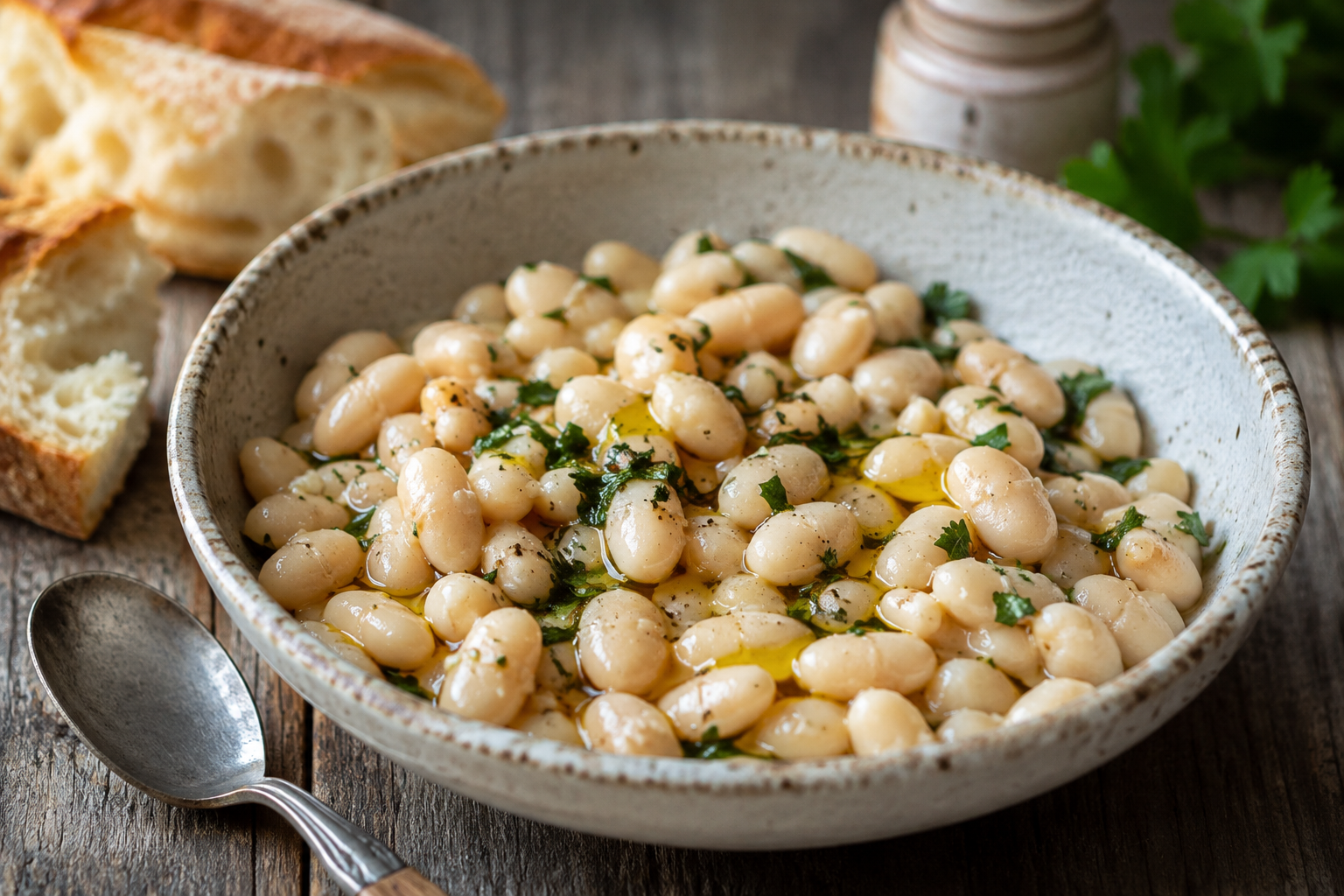
To understand this dish, you have to understand the Tuscan relationship with beans, which is truly a point of regional identity. Beans are so central to Tuscan cooking that they appear on tables across the region constantly, cooked in dozens of ways, and the plain preparation of white beans dressed in olive oil is the foundational expression of that love, the dish from which so many others grow.
The reason lies in the philosophy of the local cooking. Tuscan cuisine is the classic home of cucina povera, the art of turning cheap, local ingredients into hearty and delicious food, and beans are the perfect vehicle for it, being inexpensive, filling, nourishing and endlessly adaptable. In a tradition that prizes making much from little, the humble cannellini bean is a hero, and dressing it with good oil is the purest way to honor it.
There is also the matter of what grows there. Tuscany produces some of the world’s most celebrated olive oil, peppery and green and intensely flavored, and a dish that is essentially beans plus olive oil is a way of showcasing that liquid gold, so the pairing is not arbitrary but deeply rooted in the land. The beans provide a soft, neutral canvas, and the region’s magnificent oil provides the color, which is why the quality of the oil matters so much here. It helps to think of the dish the way you might think of good bread and good butter, where the bread is the vehicle and the butter is the point. Here the beans are the bread and the oil is the butter, and no one would dream of putting cheap margarine on a fine loaf. The whole preparation exists to carry that peppery green oil to your mouth in the most flattering possible way, and everything else is in service of that.
What Makes the Dish
The magic of fagioli all’olio comes from just a few elements working in perfect harmony, and understanding each one helps you make the dish well. At its base are the beans themselves, traditionally cannellini, the creamy white Italian beans whose soft texture and mild flavor make them the ideal foundation, soaking up the oil and aromatics around them.
Then there is the herb that defines the dish, which is sage. More than any other flavoring, sage is what makes a pot of beans taste specifically Tuscan, its warm, slightly camphorous, savory aroma perfuming the beans and oil in a way that is unmistakable, so that sage is not an optional garnish but the essential signature of the whole preparation. Garlic joins it as a quiet supporting player, lending depth without dominating, usually left whole or barely crushed so its presence is felt rather than tasted sharply.
Above all, though, there is the olive oil, which is not merely an ingredient here but the soul of the dish. Because the beans are so plain, the olive oil carries most of the flavor, both the everyday oil used to warm and cook the beans and, crucially, the generous finishing pour of the very best extra virgin olive oil added at the end, which is where the dish gets its richness and its peppery, fruity depth. Skimp on the oil, or use a dull one, and the dish falls flat, so this is the place to use your finest bottle.
The Traditional Way
It is worth knowing how the dish is made in its full traditional form, even if you make the quick version most nights, because the slow method is where its soul lives. In the classic preparation, dried cannellini beans are soaked overnight, then simmered very gently for one to two hours with whole garlic cloves, a branch of sage, and sometimes a halved tomato, cooked slowly so the beans turn creamy and tender while staying whole rather than collapsing.
The slowness is the point. Cooked gently over a long, low heat, the beans absorb the flavors of the sage and garlic from within and develop a silky, buttery texture that no quick method fully replicates, which is why Tuscans have always cooked their beans this unhurried way, sometimes even overnight in a wine flask nestled in the embers of a dying fire. This is bean cookery as a slow, patient ritual, and the result is sublime. There is a reason the traditional cooks refused to rush it, and it is not mere sentiment. Beans cooked too fast or at too rough a boil burst their skins and turn to mush, losing the very quality that makes them special, the contrast between a whole, intact bean and its creamy interior. Only low, slow heat coaxes them to tenderness while keeping them whole, which is why the old methods took their time. The quick version accepts a small compromise on that ideal in exchange for a great deal of saved time.
At the end, always, comes the anointing. However the beans are cooked, they are dressed while still warm with a generous pour of peppery, new-season Tuscan olive oil, along with salt and pepper, and this final flourish of raw, high-quality oil is what transforms them from merely cooked beans into fagioli all’olio, so the finish matters as much as the cooking. It is a dish that begins and ends with olive oil.
The Ten-Minute Version
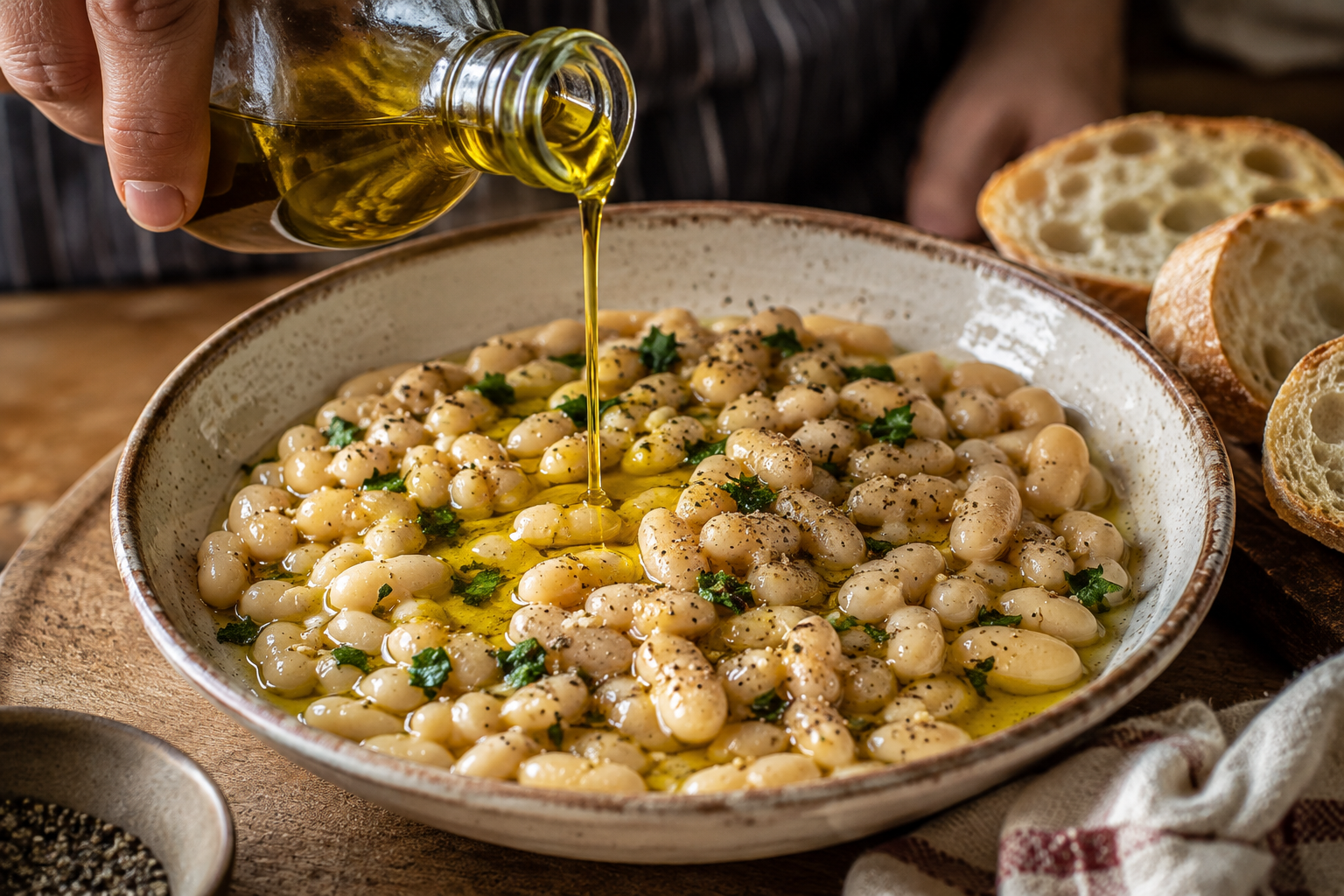
For a weeknight, though, you do not need to soak and simmer for hours, because using good canned or jarred cannellini beans lets you make a properly delicious version of this dish in about ten minutes, and authentic Italian cooks embrace this shortcut without apology. Here is how.
Quick Tuscan White Beans (Fagioli all’Olio) serves four as a side or two as a main, about ten minutes
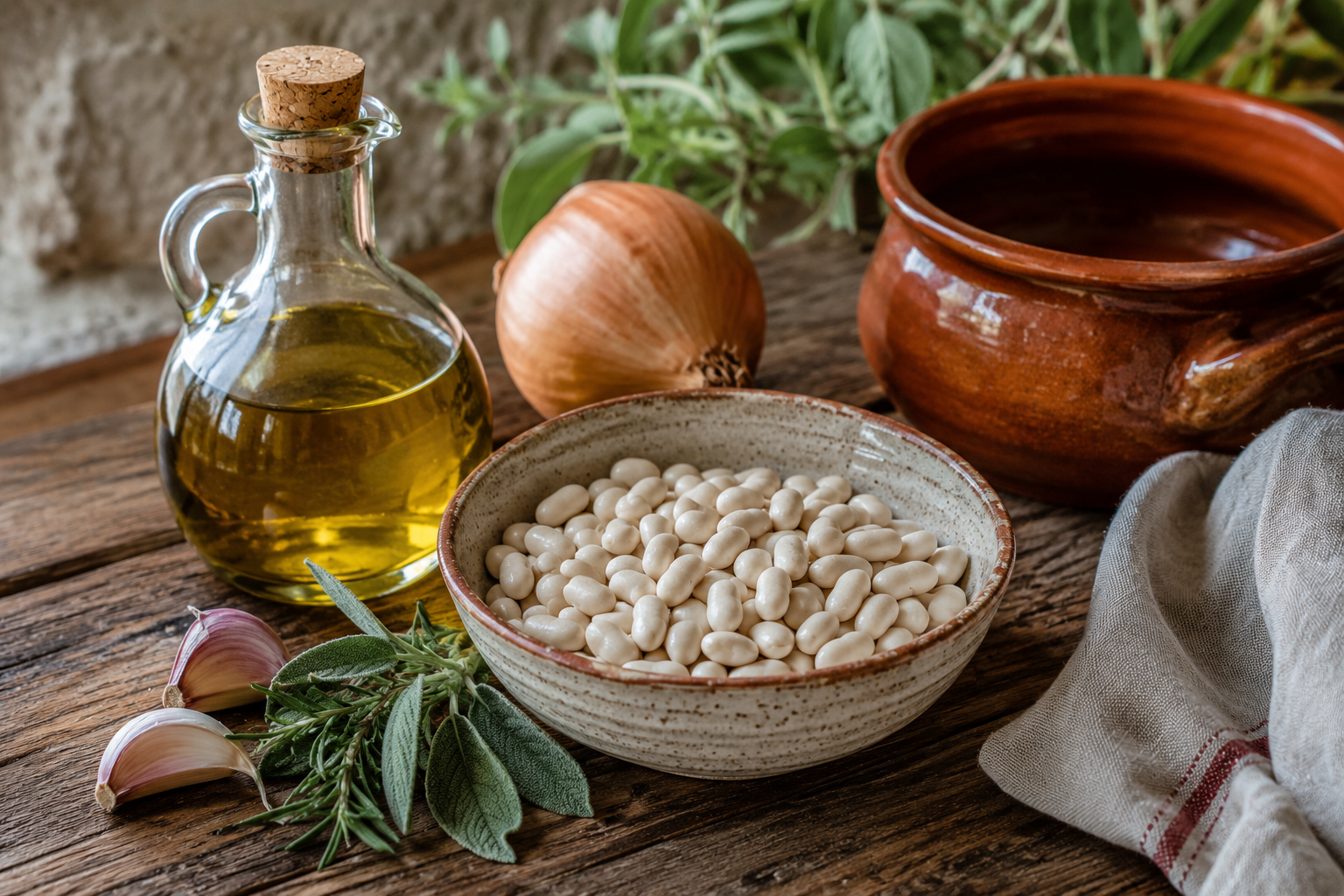
Ingredients:
- Canned or jarred cannellini beans, two cans, drained and rinsed
- Extra virgin olive oil, three tablespoons for cooking, plus more of your best oil to finish
- Garlic, two cloves, peeled and lightly smashed
- Fresh sage, six to eight leaves
- Salt, to taste
- Black pepper, to taste
- Optional: a pinch of red pepper flakes
Method:
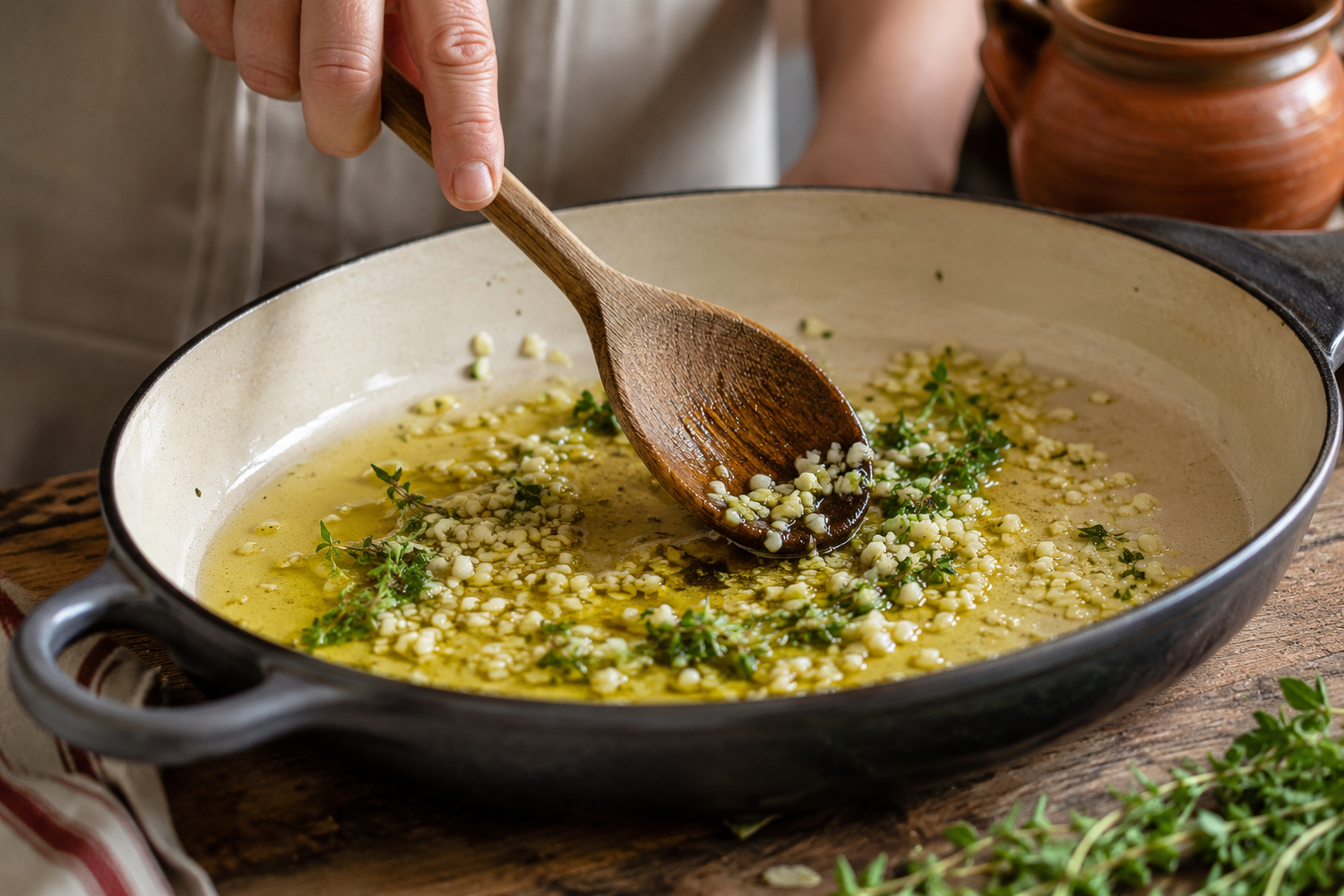
- Warm the three tablespoons of olive oil in a wide pan over medium-low heat, and add the smashed garlic and the sage leaves.
- Cook gently for a minute or two, until the garlic turns pale golden and the oil is fragrant with sage, being careful not to let the garlic burn.
- Add the drained beans and a pinch of salt, and stir gently to coat them in the oil, warming them through for about five minutes.
- Season with salt and pepper to taste, and add the red pepper flakes if using.
- Turn off the heat, remove the garlic if you like, and finish with a generous drizzle of your best extra virgin olive oil right before serving.
That is all there is to it, warm and fragrant and ready in about ten minutes, and if you use good beans and finish with good oil, it tastes far more special than the effort suggests.
Getting the Most From It
A few small choices make the quick version as good as it can be, and they are all easy. The most important is the quality of the two things doing the most work, the beans and the finishing oil, so buy the best canned or jarred cannellini you can find, since good ones are creamy and whole while cheap ones can be mushy and bland, and save your finest olive oil for the final drizzle.
Treating the beans gently matters too. Because canned beans are already cooked, they need only to be warmed through and coated in the flavored oil, not boiled hard, which would break them apart, so keep the heat moderate and stir gently to keep the beans whole and creamy. The goal is tender, intact beans glistening with oil, not a mash.
The finishing oil is the step people are tempted to skip, and it is the one that matters most. That final raw pour of your best oil is not a garnish but the heart of the dish’s flavor, the peppery, fruity note that makes it taste Tuscan rather than merely like warm beans, so be generous with it and do not substitute the everyday oil you cooked with. This single step is the difference between good and memorable.
The Many Ways to Serve Them
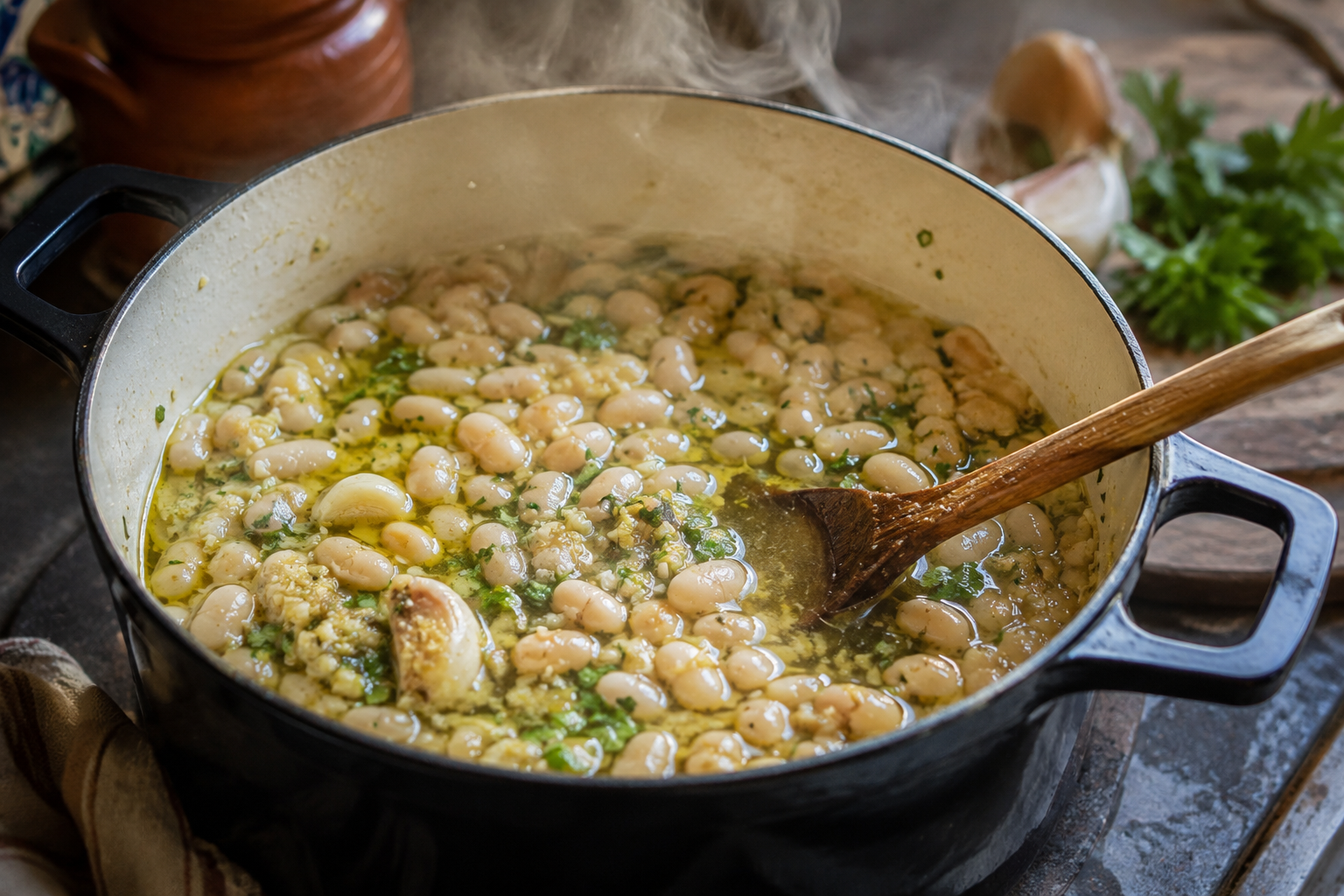
Tuscan white beans are as versatile as they are simple, at home in a dozen roles on the table. In their homeland they are a classic side dish, served most famously alongside the great Florentine steak, the bistecca alla fiorentina, and with grilled sausages and meats, where their creamy mildness balances the rich, charred protein perfectly.
But they are far more than a side. Piled on grilled or toasted bread rubbed with garlic, they become a wonderful crostini or bruschetta, drizzled with more oil, and they make a satisfying light main course all on their own with a hunk of crusty bread to mop up the oil. They pair beautifully with sautéed bitter greens, fold into soups and pasta e fagioli, and turn up in salads with tuna and onion, so a pot of these beans is the starting point for many meals.
They also keep and travel well between temperatures. The beans are delicious hot, warm, or at room temperature, which makes them wonderfully flexible for entertaining or for eating over a couple of days, and many people think they taste even better after resting a while as the flavors settle. Made once, they earn their place in the refrigerator as something you are glad to return to.
The Wisdom of Simple Food
The lasting lesson of Tuscan white beans is that some of the most satisfying food comes not from complexity but from restraint, from taking a few humble ingredients and treating them with respect rather than burying them under technique. A can of beans, good olive oil, a clove of garlic, and a few leaves of sage should not add up to something memorable, and yet in the Tuscan hands that perfected this dish, they do.
What makes it worth learning is exactly that gap between the effort and the reward, the way ten minutes and a handful of pantry staples produce a dish with real soul and centuries of tradition behind it. This is food that asks almost nothing of you and gives a great deal back, which is the quiet genius of cucina povera, and once you have made it a few times, it becomes one of those effortless dinners you return to again and again.
So the next time you want something nourishing and delicious without any fuss, reach for a can of white beans, warm them in good oil with garlic and sage, and finish them with a generous pour of your best olive oil. Serve them with bread and a glass of wine, and taste how a dish no grandmother ever bothered to write down can still be one of the best simple dinners you know how to make. The Tuscans built a whole cuisine on beans treated this way, and one bowl explains exactly why. It is the taste of a place that learned, over centuries, that you do not need much to eat well, only good ingredients and the sense to leave them mostly alone.

About the Author: Ruben, co-founder of Gamintraveler.com since 2014, is a seasoned traveler from Spain who has explored over 100 countries since 2009. Known for his extensive travel adventures across South America, Europe, the US, Australia, New Zealand, Asia, and Africa, Ruben combines his passion for adventurous yet sustainable living with his love for cycling, highlighted by his remarkable 5-month bicycle journey from Spain to Norway. He currently resides in Spain, where he continues sharing his travel experiences with his partner, Rachel, and their son, Han.